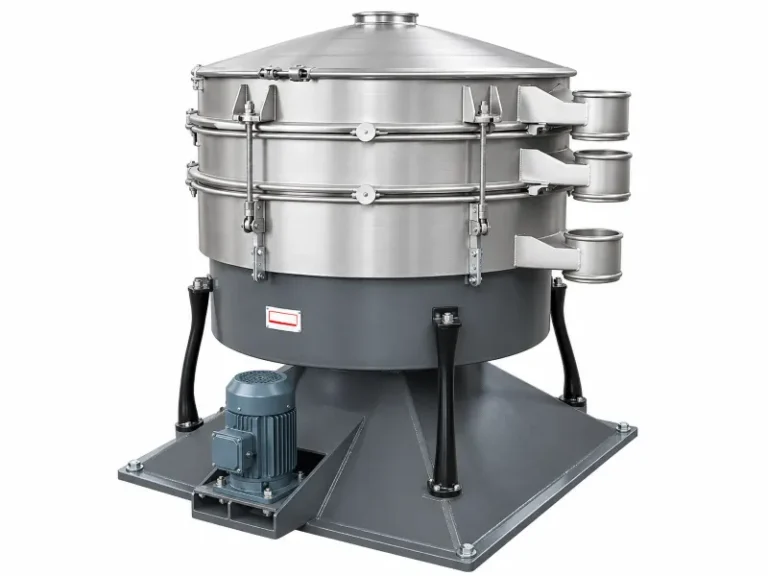
محطة تفريغ الأكياس مع الغربال: كيفية التعامل مع التغذية بالدفعات دون التحميل الزائد على الغربال
A bag dump station with sifter receives bagged powder and screens it before the next process. Emptying a bag too quickly can leave powder piling up on the mesh, even when the hourly production target is modest.
To prevent overloading, match the flow reaching the screen to its tested capacity for your powder and mesh opening. This may mean slowing bag emptying or adding a buffer hopper with controlled discharge. A dust-free bag dump station helps capture dust during loading, while a clear discharge path allows screened material to move to the next process.
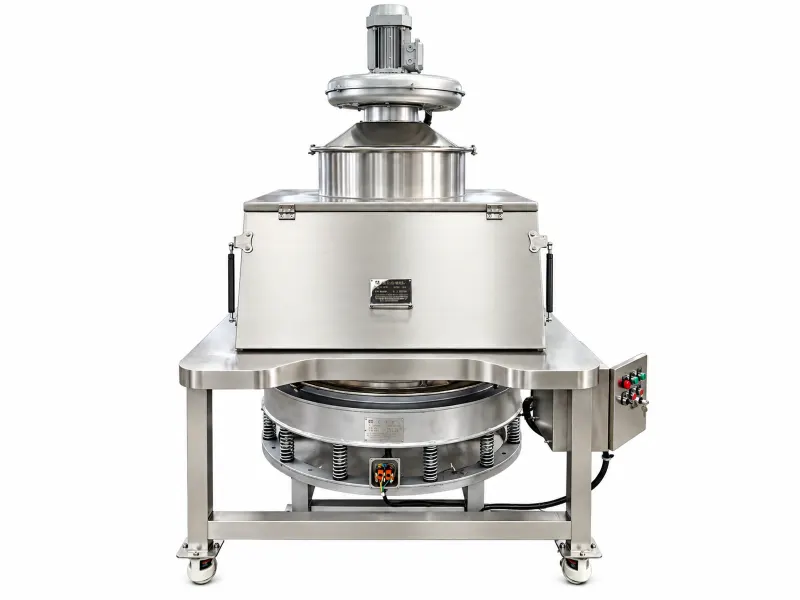
Why Does Batch Bag Feeding Overload a Sifter?
Batch feeding can deliver powder faster than the screen can process it. The amount reaching the mesh during each pour matters as much as the total handled per hour.
Bag-Emptying Rate Can Exceed Screening Capacity
Consider a hypothetical example: emptying one 25 kg bag every five minutes gives an average feed rate of 300 kg/h. If each bag is emptied in ten seconds, the average flow during that pour is equivalent to 9,000 kg/h.
That figure describes the ten-second pour. The actual flow reaching the mesh depends on any hopper and feeding device between the bag and the screen.
Concentrated Feeding Creates Uneven Screen Loading
Powder often lands directly below the inlet, forming a deep pile while other areas of the screen remain underused. Fine particles within the pile have fewer opportunities to reach the mesh, and material can accumulate faster than it passes through.
Slowing the pour and spreading the feed more evenly can help use more of the screening area.
Material Buildup Can Worsen Blinding and Dust Release
Cohesive, damp or very fine powders may agglomerate or block screen openings. Heavy feeding can worsen this buildup, although accumulated powder alone does not prove that the mesh is blinded.
Rapid bag emptying also releases a burst of dust. If extraction is insufficient or filters are loaded, less dust may be captured.
| Observation | What to Check First |
|---|---|
| Buildup follows each pour and improves when feeding slows | Feed rate and distribution |
| Buildup continues at a lower feed rate | Mesh openings and powder condition |
| Powder accumulates beneath the screen | Discharge restrictions and downstream capacity |
How to Reduce Overloading During Bag Feeding
Pour steadily and let accumulated material clear before adding another bag. If manual pouring remains uneven, consider a buffer hopper with controlled discharge.
For persistent blinding, choose a cleaning method suited to the powder. Ultrasonic deblinding may help some fine powders, but feed control is still needed. Increase the mesh opening only if the product specification allows it.

How to Match Bag Feeding to Actual Sifting Capacity
Bag handling, screening and downstream discharge need to work at compatible rates. Faster bag emptying increases output only when the rest of the system can accept the extra material.
Check Bag Handling Time and Tested Screening Capacity
Record bag weight, emptying time, the interval between bags and how many bags operators load in succession. Test the sifter with the actual powder and required mesh opening, since moisture, flowability and bulk density affect output.
Use the tested capacity to set the feeding schedule. Our guide to سعة الغربال الاهتزازي المضمّن explains the main factors.
Adjust Feeding and Dust Extraction to the Material
Where a suitable screw feeder is installed, variable-speed control allows its output to be adjusted to the screening rate. Automatic adjustment also requires suitable sensors and controls.
For poorly flowing powders, check hopper discharge and whether flow assistance is needed. Hard lumps may require separate lump-breaking equipment.
Review dust extraction during repeated bag emptying. Loaded filters or insufficient airflow can reduce dust capture. Select any fan or filtration upgrade to suit the powder, extraction hood and ducting; higher airflow alone does not establish higher screening capacity.
Standardize the Bag Feeding Procedure
Use a consistent sequence: open the bag, verify the material, feed at the agreed rate and clean up as required. Set handling times from production trials, allowing time for the site’s material checks.
Train operators to recognize slow hopper discharge, rising material levels and reduced dust capture. Make it clear when to pause feeding and investigate a problem.
For baking soda, see our small-bag sodium bicarbonate feeding procedure for the sequence from starting extraction to removing empty bags and cleaning the station.
Link Feeding to Equipment Readiness
Where fitted, sensors can monitor hopper level, motor current, temperature and extraction pressure. Alarms alert operators to conditions that need checking.
Interlock the controlled feeder with the sifter and downstream equipment so feeding pauses when either is unavailable. A “ready to feed” indicator can help operators know when to resume manual bag emptying.
Set the production pace around the slowest stage. If average input keeps exceeding the system’s processing rate, even a large buffer hopper will eventually fill.
When Do You Need a Buffer Hopper and Controlled Feeder?
A buffer hopper and controlled feeder are useful when bags are emptied faster than the sifter can process the powder. The hopper holds incoming material, while the feeder regulates its flow onto the screen.
Direct Feeding for Manageable Bag Loads
A bag dump station can feed directly into an غربال اهتزازي مضمّن when the bag weight, pouring rate and powder characteristics suit its screening capacity.
Test several bags at the intended operating pace. Direct feeding may be sufficient if the sifter handles each load without persistent buildup and the discharge remains clear.
Buffer Storage for Short Feeding Surges
A buffer hopper provides temporary storage while the sifter processes the previous load. Size its usable volume around the largest expected accumulation, the powder’s bulk density and enough space above the normal operating level. Holding one full bag may not be enough when operators empty several bags in quick succession.
The hopper must also discharge reliably. Powder that bridges above the outlet can interrupt feeding despite adequate storage space.
Controlled Discharge to the Sifter
A hopper with an unrestricted outlet may still release powder too quickly. A suitable screw feeder or other metering device delivers it at a rate the sifter can handle.
Select the feeder for the powder and required output. A conveyor designed mainly to transfer material may not provide consistent feed control. Our vacuum conveyor and screw conveyor comparison explains the feeding differences to consider.

How to Run and Verify a Stable Bag Dumping Cycle
Test the bag dump station with sifter at the normal production pace. A single bag passing through does not confirm that the system can handle repeated feeding.
Check Before Feeding
Confirm that the receiving hopper has enough space, discharge paths are clear, and the sifter and dust extraction system are ready. Follow the startup sequence specified for the equipment.
Test Several Bags in Succession
Use the actual powder, screen mesh and planned feeding interval. Record:
- How long each bag takes to empty and the time between bags.
- Whether powder buildup increases with each bag.
- Actual throughput during steady operation.
- How much usable fine powder leaves with the oversize material.
If buildup keeps increasing, reduce the feed rate and check screening and discharge conditions.
See a Connected System Example
لدينا لغربلة الدقيق والنقل بالتفريغ combines a bag feeding station, an inline vibratory screen and downstream vacuum transfer. It shows how the equipment can be connected. Feeding rates still need to be checked for each powder and production schedule.
الخاتمة
A bag dump station with sifter works best when feeding, screening and discharge rates are matched. To discuss a suitable setup, send us your powder details, bag weight, feeding frequency, required capacity and mesh opening. Our team can help select the equipment and feeding arrangement for your line.
الأسئلة الشائعة
Can I Empty a Full Bag Directly into the Sifter?
Yes, if the sifter can handle the powder at the rate you pour it. Bag weight, emptying time, powder flowability and mesh opening all matter. Confirm performance with several bags at your normal feeding pace, using the intended powder and screen.
Will a Larger Hopper Prevent Screen Overloading?
A larger hopper holds more powder, but its discharge rate still needs to be controlled. A buffer hopper with a suitable feeder can help manage short surges. It cannot make up for a system that consistently receives more material than it can process.If powder hangs up above the outlet and then drops onto the screen in bursts, check for hopper bridging and uneven discharge before specifying a larger hopper.
How Fast Can Operators Feed Bags into the Station?
Set the feeding interval using bag weight, tested screening capacity and downstream receiving rate. During repeated bag feeding, watch whether material levels keep rising. If they do, slow feeding and check for restrictions before setting a faster production pace.
Can Ultrasonic Deblinding Solve Batch Feeding Overload?
Ultrasonic deblinding can help keep mesh openings clear when suitable fine powders stick to or block the screen. It does not regulate incoming material. If powder arrives too quickly, slower pouring or controlled feeding is still needed.
Can a Bag Dump Station Be Connected to My Existing Sifter?
Often, yes. Check the inlet size, installation height, structural support and cleaning access. The connection must accommodate sifter movement, and the feeding rate must suit its actual capacity. Equipment drawings and details of the downstream process help determine a workable arrangement.
What Information Is Needed for a Bag Dump Station with Sifter Quotation?
Send the powder name, bulk density, bag weight, emptying time and feeding frequency. Include the required throughput, mesh opening, downstream equipment and available installation height. Mention moisture, poor flowability or special cleaning needs. A layout drawing helps clarify equipment positioning and connections.