Leitfaden zur Auswahl von Vibrationssiebmaschinen: So wählen Sie die richtige Maschine für die Pulversiebung
Einführung
Choosing the right vibratory sifter depends on the material properties, target particle size, screen mesh, required capacity, and screening purpose. Fine, sticky, static-prone, or difficult-to-screen powders may also require a suitable mesh-cleaning system or ultrasonic screening.
This guide explains how to select a vibratory sifter for powder screening based on these factors and how to match the machine configuration to your production requirements.
What Factors Should You Consider When Choosing a Vibratory Sifter?
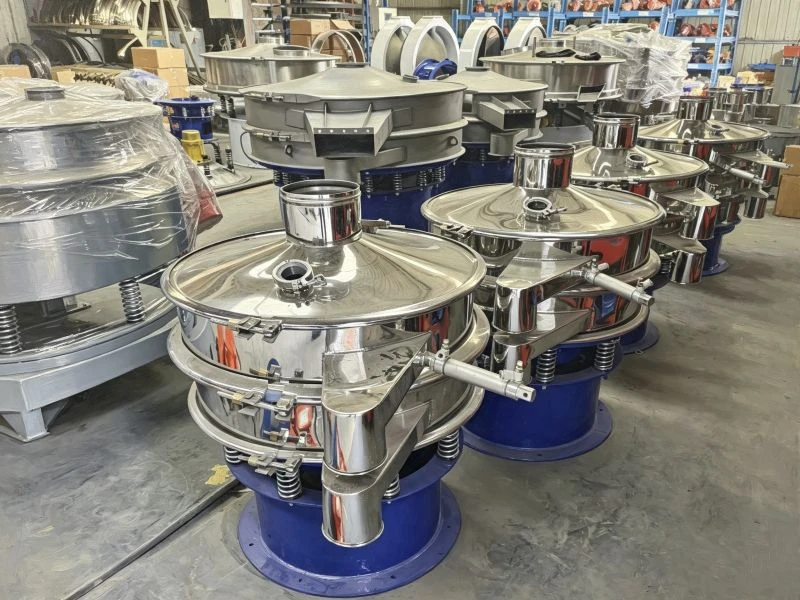
Choosing the right vibratory sifter for powder screening mainly depends on the screening purpose, required capacity, and material properties.
1. Define the Screening Purpose
First, decide whether you need fine or coarse screening.
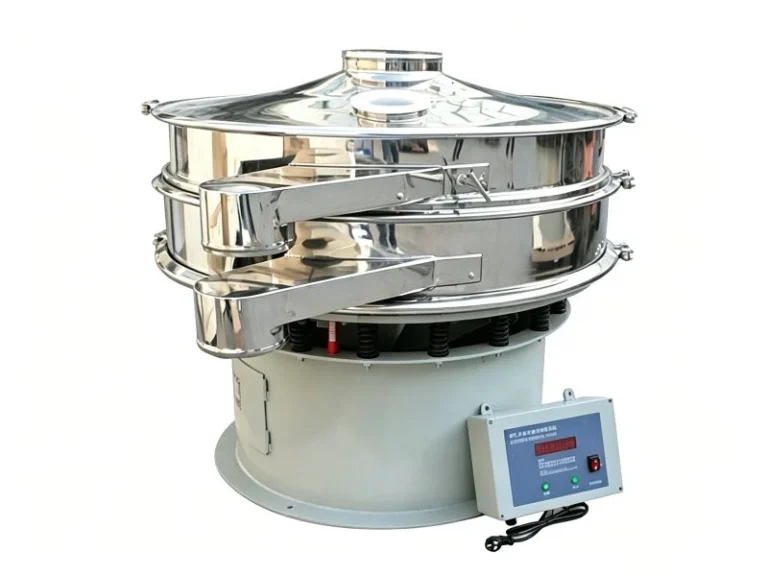
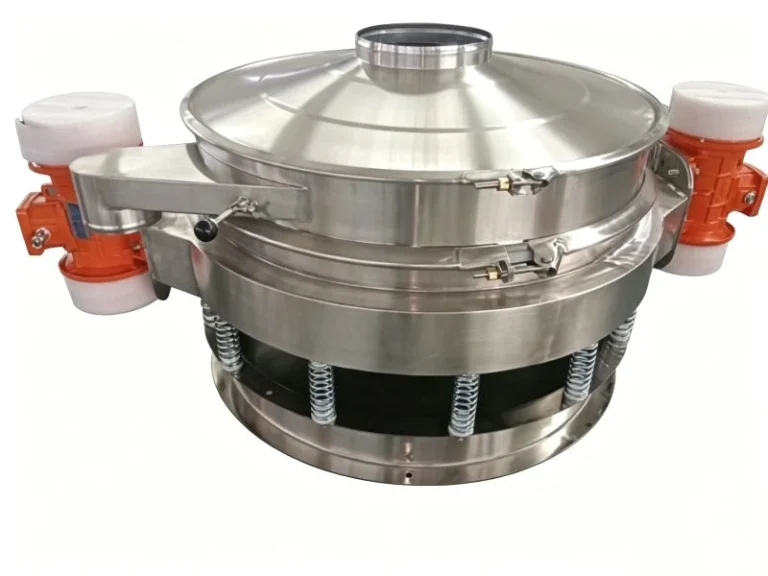
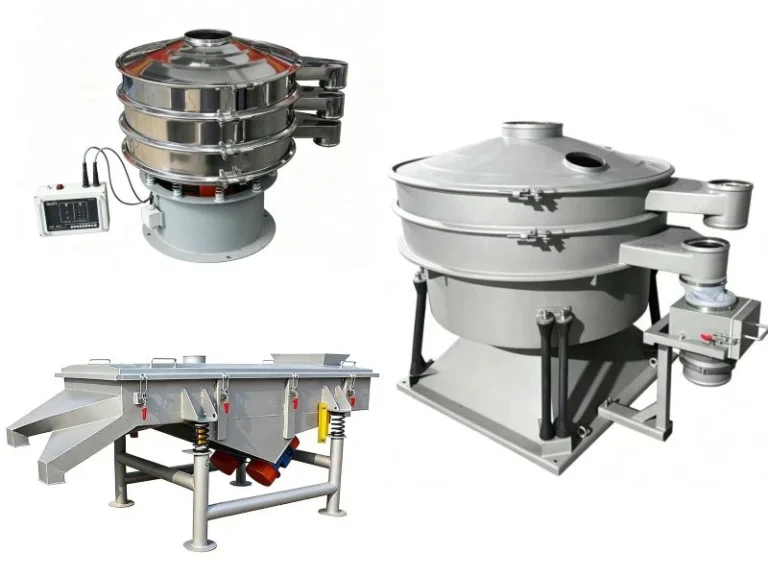
For fine screening of powders and fine particles, a vibro sifter machine can be used for particle separation and classification. For very fine powders, an ultrasonic system can also be added to improve screening performance. For coarse screening and fast separation of larger particles, a linear vibrating screen or inline vibratory screen may be more suitable.
2. Check the Required Capacity
Estimate the amount of material that needs to be processed per hour based on your production requirements. Different vibratory sifter models have different capacities, so the selected machine should meet the required output of your production line.
Screening output can also change with material bulk density, mesh size, flowability, and feed rate. For a detailed explanation, see what determines inline vibratory screen capacity.
3. Consider the Material Properties
Material properties also affect the choice of machine and screen configuration.
- Particle size distribution: Check the particle size range and composition. Materials with a wide size range may require two or more screening decks.
- Moisture: Moist or sticky materials can build up on the mesh and reduce screening efficiency. Anti-blinding or mesh-cleaning solutions may be needed.
- Particle shape: Flat, round, and cylindrical particles have different flow behavior and may require different screening conditions.
- Corrosiveness: For corrosive materials, stainless steel or other corrosion-resistant materials may be required.
- Static electricity: Fine powders that tend to stick to the mesh may benefit from an Ultraschall-Siebsystems.
In practice, start with the required separation size and capacity, then check whether the powder is free-flowing, sticky, moist, abrasive, or prone to static and agglomeration. These factors determine the suitable screen mesh, screen area, number of decks, and whether an additional mesh-cleaning system is needed.

Choose a Vibratory Sifter Based on Powder Properties
Powder type is one of the first factors to consider when choosing a vibratory sifter. Fine powders, coarse powders, static-prone materials, sticky powders, and abrasive materials have different screening needs. Powder flowability and the tendency to clog the screen also affect screening performance.
Coarse particles (above 6 mesh, about 3 mm and larger): A linear vibrating screen or conventional vibrating screen is suitable for high-capacity screening and abrasive materials. It is not suitable for high-frequency screening.
Regular fine powders (6–200 mesh, about 0.074–3 mm): A standard vibratory sifter can handle many free-flowing powders within this range. The required screen diameter and vibration settings should be selected according to the target mesh size, material flowability, and required capacity.
For fertilizer powders and granules, see our fertilizer screening machine comparison to assess rotary and linear vibrating screens by material size, capacity and screening purpose.
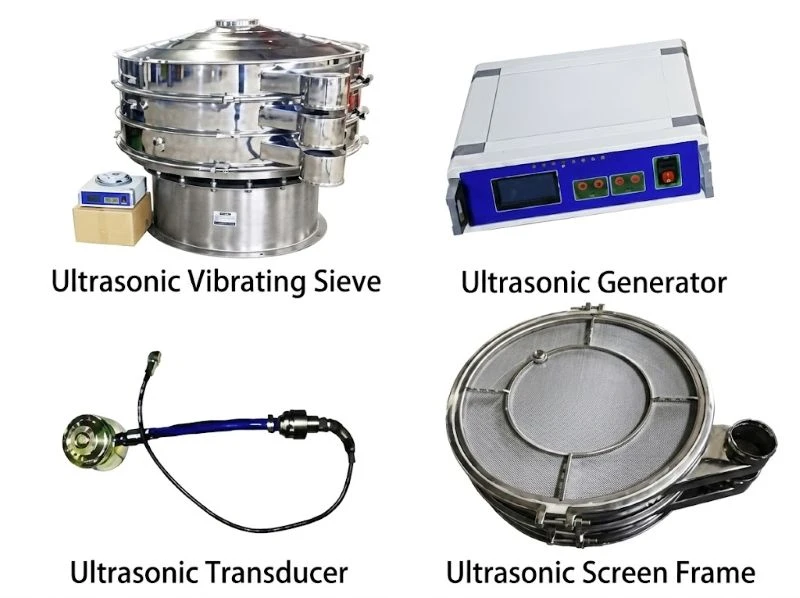
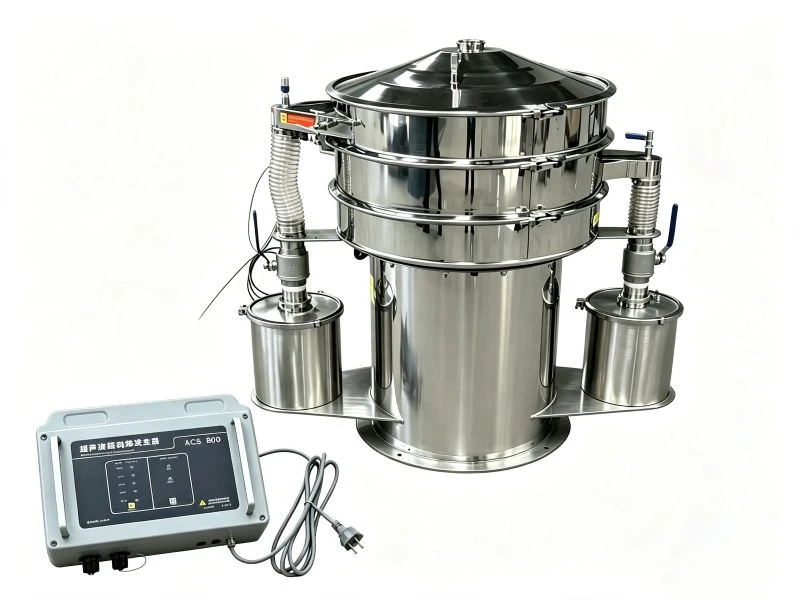
Ultrafine powders (below 200 mesh, about 0.074 mm and smaller): An Ultraschall-Vibrationssieb is recommended for fine powder screening. The 20–40 kHz ultrasonic vibration helps break up powder agglomeration and reduce screen clogging. For screening at 325 mesh or finer, ultrasonic screening is often needed to maintain stable screening efficiency.For more details on fine mesh applications, see our Leitfaden zum Sieben von 200–500 Mesh Pulver.
Agglomerating or static-prone powders, such as graphite powder, titanium dioxide, and nylon powder: An ultrasonic vibratory sifter is preferred, together with an anti-static screen and proper grounding.
Sticky or high-moisture powders (above 15% moisture): Consider bouncing balls or an ultrasonic screen-cleaning system. For highly sticky materials, ultrasonic cleaning can provide better screening performance.
Highly corrosive materials, such as acids, alkalis, and salts: Use 304 or 316L stainless steel for material-contact parts. For strong acid, strong alkali, or chloride environments, 316L stainless steel is recommended.
Flammable, explosive, or easily oxidized powders, such as aluminum powder, titanium powder, and 3D printing metal powders: A flameproof/explosion-proof vibratory sifter is required, together with an inert gas protection system using nitrogen or argon. A fully enclosed structure helps prevent powder leakage.
In short, before choosing a powder screening machine, identify the key properties of your material. Is it fine or coarse? Does it flow easily or tend to stick? Is it abrasive or fragile? These properties directly affect the screen mesh size, screen-cleaning method, and vibratory sifter configuration.
How to Match Vibratory Sifter Size to Capacity and Mesh Size
Screening capacity depends on more than the machine diameter. Mesh size, bulk density, particle size distribution, flowability, moisture, feed rate, and material behavior on the screen can all affect actual output.
Finer mesh generally reduces the amount of material that can pass through the screen within a given time. If higher capacity is required, a larger screening area may be needed. For fine powders that cause mesh blinding or adhesion, improving screen cleaning may also help maintain stable throughput.
Before selecting a vibratory sifter size, confirm the target mesh size and required capacity in kg/h or t/h. For difficult materials, screening tests are recommended before confirming the final machine diameter and configuration.
Choose the Right Screening Configuration
The screening configuration depends on how many particle sizes you need to separate and how the machine will be used.
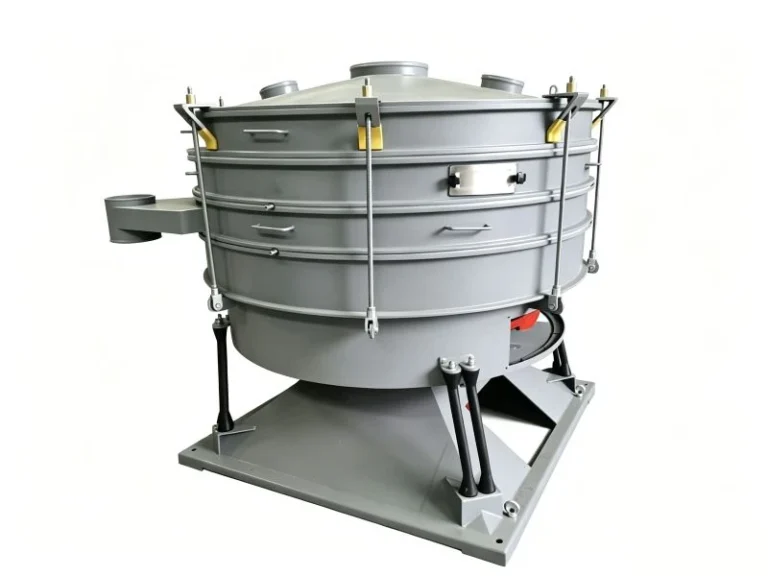
For single-size separation or impurity removal, a single-deck vibratory sifter is usually enough. If the material needs to be separated into several particle sizes, a multi-deck vibratory sifter can provide multiple screening levels in one machine.
For production, choose between batch and continuous screening based on the process. Batch screening is suitable for smaller or intermittent production, while continuous screening is better for high-volume production lines. When the sifter needs to connect directly with other equipment, an Inline-Vibrationssieb can be used for continuous material feeding and discharge.
Which Vibratory Sifter Is Right for Your Powder?
Use the table below to quickly match your powder characteristics and screening requirements with the right vibratory sifter configuration.
| Your Requirement | Empfohlene Richtung |
| General powder screening | Standard vibratory sifter |
| Free-flowing fine powder | Standard fine-mesh vibratory sifter |
| Ultrafine or difficult-to-screen powder | Ultrasonic screening system |
| Screen blinding or powder agglomeration | Ultrasonic or other screen-cleaning system |
| Sticky or high-moisture powder | Bouncing balls or ultrasonic cleaning |
| Multiple particle sizes | Multi-deck vibratory sifter |
| High production capacity | Larger screening area |
| Kontinuierliche Produktion | Inline or continuous screening configuration |
| Food or pharmaceutical powder | Sanitary stainless-steel configuration |
| Korrosive Materialien | 304 or 316L stainless steel |
| Metal powder or difficult-to-screen materials | Material-specific and safety-focused configuration |
| Laboratory particle-size testing | Laboratory vibrating sieve |
For milk powder applications, hygiene, mesh aperture and actual throughput need to be assessed together. Our milk powder sifter selection guide explains how to match these requirements to your powder and production process.
Fazit
To choose the right vibratory sifter, first confirm the material properties, target mesh size, required capacity, and number of particle sizes to be separated. Then determine the suitable screen diameter, number of decks, material of construction, and mesh-cleaning method.
For free-flowing powders, a standard vibratory sifter may be sufficient. For fine powders affected by static, agglomeration, adhesion, or screen blinding, an ultrasonic screening system may provide more stable screening.
Providing the material name, particle size, target mesh, and required capacity will help determine the appropriate machine configuration.