What Is a Gas-Protected Ultrasonic Vibrating Screen and How Does It Work?
Einführung
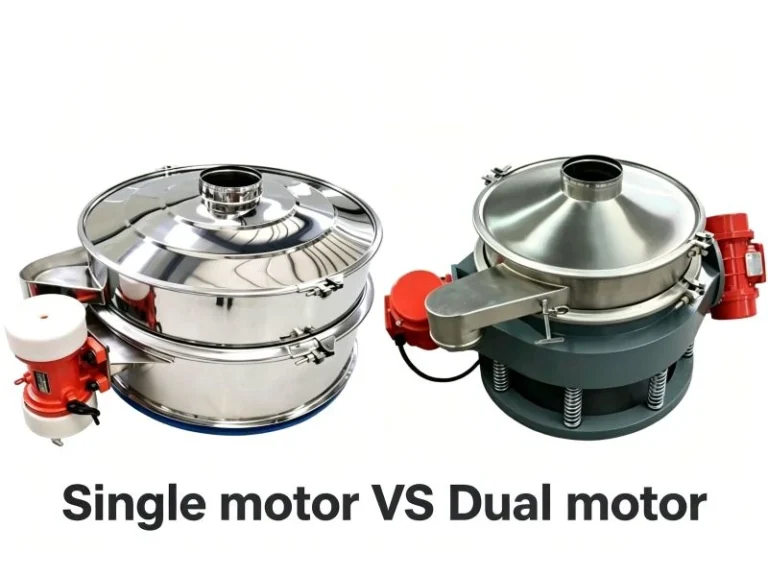
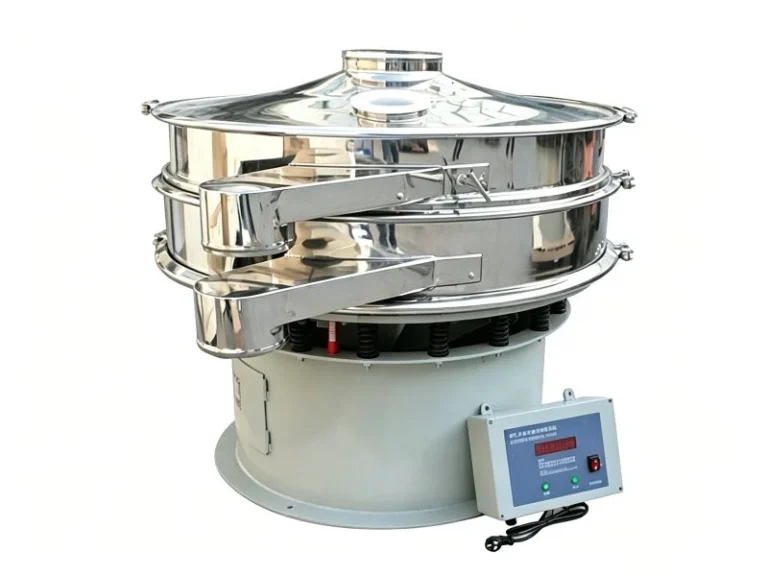
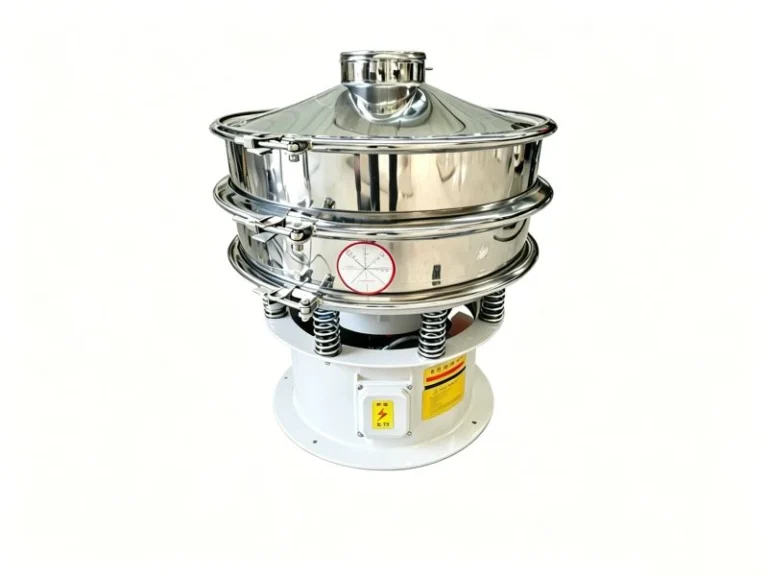
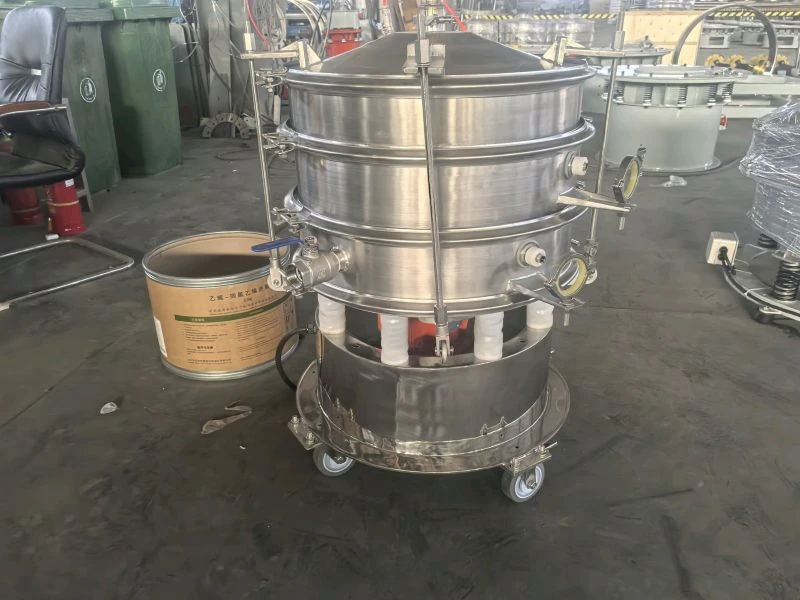
A gas-protected ultrasonic vibrating screen is a sealed screening machine that combines inert gas protection with ultrasonic screening technology. It is designed for fine powders that are sensitive to oxygen, moisture, static electricity, or screen clogging. Nitrogen or argon can be introduced into the screening chamber to reduce contact with ambient air, while the ultrasonic system helps improve fine powder screening and reduce mesh blockage.
What Is a Gas-Protected Ultrasonic Vibrating Screen?
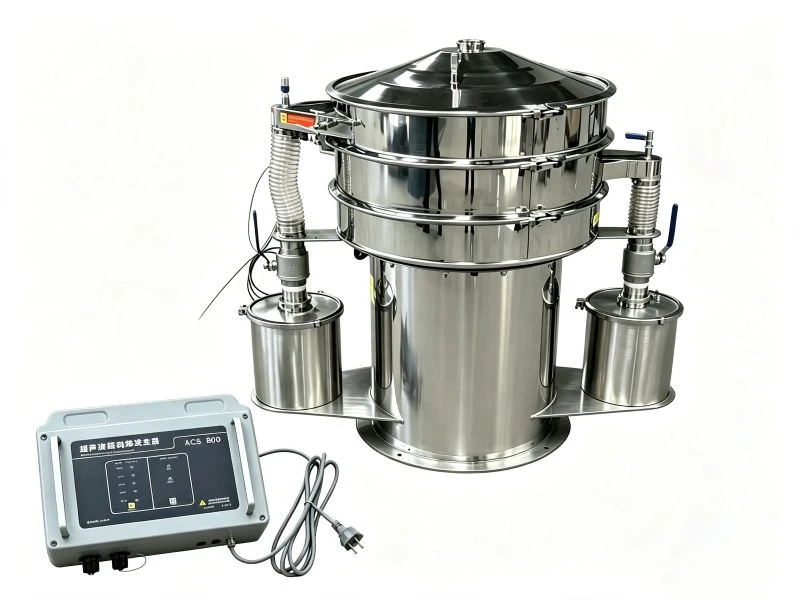
A gas-protected Ultraschall-Vibrationssieb combines a sealed screening chamber, inert gas protection, and ultrasonic vibration. It is designed for fine powders that require both controlled-atmosphere screening and ultrasonic assistance to reduce mesh clogging.
How Gas Protection and Ultrasonic Screening Work Together
A gas-protected ultrasonic vibrating screen combines inert gas protection with ultrasonic screening to provide a controlled screening environment for fine and sensitive powders. The two systems work together: gas protection helps keep the material away from oxygen and moisture, while ultrasonic vibration improves screening performance and reduces mesh clogging.
Gas Protection
During the screening process, the powder remains inside a sealed chamber filled with an inert gas atmosphere. The system maintains a slightly positive pressure and a low-oxygen environment, reducing the contact between the powder and oxygen or moisture. This is particularly important for oxidation-sensitive powders, metal powders, and other reactive materials.
For applications involving combustible or reactive powders, the screening system can be configured with appropriate grounding, anti-static measures, and explosion-protection components according to the material properties and process requirements.
Ultrasonic System
The ultrasonic system converts electrical energy into high-frequency mechanical vibration through an ultrasonic transducer and applies it to the screen mesh.
The high-frequency vibration helps fine particles pass through the mesh more easily, reduces powder adhesion and mesh clogging, and improves screening stability. This makes the equipment suitable for Feinputverabsiebung, metal powder classification, and other difficult-to-screen materials.
Why Use Gas Protection During Powder Screening?
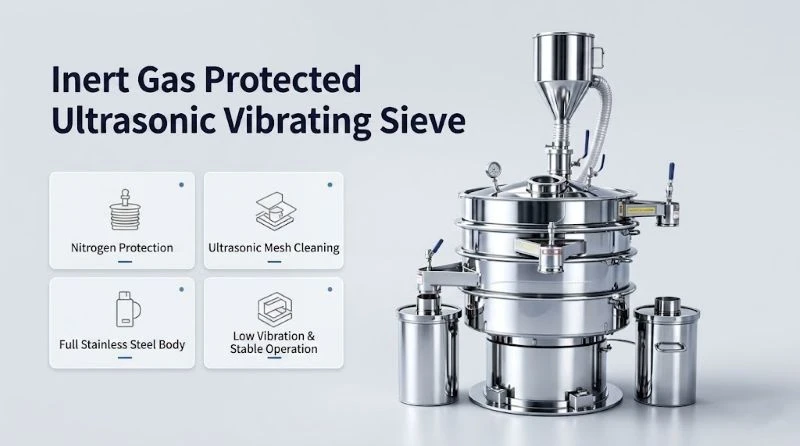
Gas protection creates a controlled, sealed screening environment that helps protect sensitive powders from oxygen, moisture, and contamination while maintaining stable screening conditions. It is especially useful for metal powders, reactive materials, and other fine powders that require controlled-atmosphere screening.
1. Airtight and Dust-Free Screening
The vibratory sifter uses a fully enclosed structure with reliable sealing components to prevent powder leakage during the screening process. This sealed screening design helps reduce dust emissions and keeps the screening environment clean, making it suitable for applications with strict environmental and dust-control requirements.
2. Protection Against Oxidation
Inert gas protection reduces the contact between the material and oxygen during screening, helping prevent oxidation and maintain material quality and stability. This makes the equipment suitable for oxidation-sensitive powders, including certain metal powders, alloy powders, and other reactive materials.
3. Reduced Exposure to Moisture
The sealed chamber and controlled gas atmosphere help reduce the material’s exposure to ambient moisture. This is useful for moisture-sensitive powders that require controlled processing conditions.
4. Controlled Screening Environment
The combination of a sealed chamber and inert gas supply provides more controlled screening conditions for sensitive powders. For combustible or reactive materials, appropriate grounding, anti-static, and explosion-protection measures should also be considered according to the application.
What Materials Need Gas-Protected Ultrasonic Screening?
Gas-protected ultrasonic vibrating screens are mainly used for fine, reactive, oxidation-sensitive, or moisture-sensitive powders that need a controlled screening environment.
Metallpulver
Metallpulver
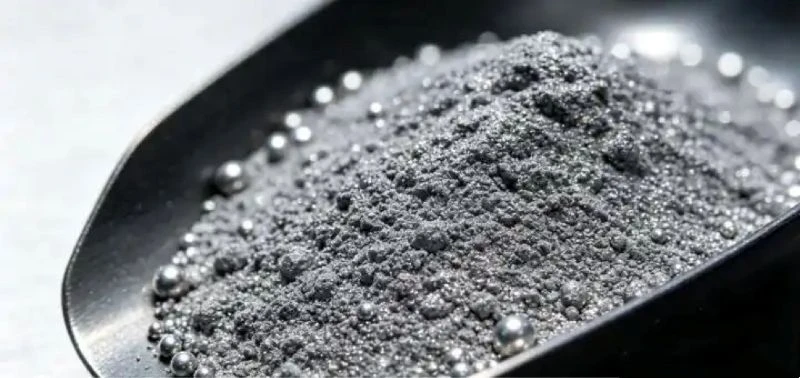
Fine metal powders such as aluminum, titanium, stainless steel, and nickel alloy powders may require controlled screening conditions because of oxidation, static, or other material characteristics. Ultrasonic screening also helps reduce mesh clogging during fine metal powder screening.
3D Printing Powders
Used for metal powder screening and powder recycling in 3D printing, helping control particle size while reducing exposure to oxygen and moisture.
Lithium Battery Materials
Lithium Battery Materials
Fine battery cathode and anode materials, including lithium battery powders and graphite, may require controlled screening conditions to reduce exposure to moisture or ambient air. Ultrasonic vibration also helps reduce mesh clogging and improve screening stability for fine battery powders.
Chemical and Reactive Powders
Suitable for fine chemical powders and other oxidation-sensitive or moisture-sensitive materials that require sealed and controlled-atmosphere screening.
Gas-Protected vs. Conventional Ultrasonic Vibrating Screen
Both conventional and gas-protected ultrasonic vibrating screens use ultrasonic vibration to reduce mesh clogging and improve fine powder screening. The main difference is the screening environment.
A conventional ultrasonic vibrating screen is suitable for general fine powders, while a gas-protected system adds a sealed chamber and inert gas such as nitrogen or argon to reduce the material’s exposure to oxygen and moisture.
| Vergleich | Conventional Ultrasonic Vibrating Screen | Gasgeschützter Ultraschall-Vibrationssieb |
|---|---|---|
| Ultrasonic Screening | Yes | Yes |
| Screening Environment | Standard or enclosed | Sealed and controlled |
| Inert Gas Protection | No | Nitrogen or argon |
| Oxygen Exposure | Normal atmospheric exposure | Reduced oxygen exposure |
| Mesh Anti-Blinding | Ultraschallschwingung | Ultraschallschwingung |
| Suitable Materials | General fine powders | Oxidation-sensitive, moisture-sensitive, or reactive powders |
| Typische Anwendungen | Fine powder classification | Metal powders, 3D printing powders, battery materials, and other sensitive powders |
For powders that only require fine screening and mesh anti-blinding, a conventional ultrasonic vibrating screen is generally sufficient. If the material also needs protection from oxygen or moisture during screening, a gas-protected ultrasonic vibrating screen is more suitable.
How to Choose a Gas-Protected Ultrasonic Vibrating Screen?
Choosing the right gas-protected ultrasonic vibrating screen depends on the material, screening requirements, gas protection, and safety conditions.
Materialeigenschaften
Consider particle size, bulk density, flowability, moisture sensitivity, oxidation sensitivity, and static electricity.
Screen Mesh and Layers
Select the appropriate mesh size and number of screening layers based on the required particle size and separation stages.
Screening Capacity
Choose the screen diameter and machine configuration according to the required processing capacity.
Nitrogen or Argon Protection
Select nitrogen or argon based on the material’s oxidation sensitivity and process requirements.
Explosion-Proof and Anti-Static Design
For metal powders and other combustible dusts, consider explosion-proof construction, grounding, and anti-static protection to improve screening safety.
The final configuration should be selected according to the material, particle size, target mesh, required capacity, gas type, and safety requirements. For a broader comparison of screening equipment and selection factors, see our Leitfaden zur Auswahl von Vibrationssieben.

Common Faults and Maintenance for Gas-Protected Ultrasonic Vibrating Screens
High Oxygen Content in the Chamber
If the oxygen content remains high, first check the sealing system, gas supply, valves, and pipelines for leaks or loose connections. Replace damaged seals and ensure the gas supply system is operating properly.
Reduced Ultrasonic Screening Performance
If screening efficiency decreases or the screen becomes clogged, check the ultrasonic generator, transducer, and screen mesh. Make sure the ultrasonic system is operating normally and remove any material buildup on the screen surface.
Regular Maintenance
Regularly inspect the chamber seals, gas connections, valves, screen mesh, ultrasonic generator, and transducer. After operation, clean residual powder according to the material and process requirements, and replace damaged or deformed screens and worn sealing components when necessary. For more information on ultrasonic system settings and screening adjustment, see how to set up and adjust an ultrasonic vibrating screen.
Fazit
A gas-protected ultrasonic vibrating screen combines inert gas protection with ultrasonic screening to provide efficient and stable screening for fine and oxidation-sensitive powders. It helps reduce exposure to oxygen and moisture, minimize mesh clogging, and improve screening accuracy.
If you are looking for a gas-protected ultrasonic vibrating sieve for metal powder(aluminum), 3D printing powder, battery materials, or other fine powders, contact us with your material, particle size, capacity, mesh size, and gas requirements. Our factory can provide a customized screening solution based on your process needs.