Tapiokastärke-Sieben: Auswahl eines Inline-Siebs für die Trockenpulververarbeitung
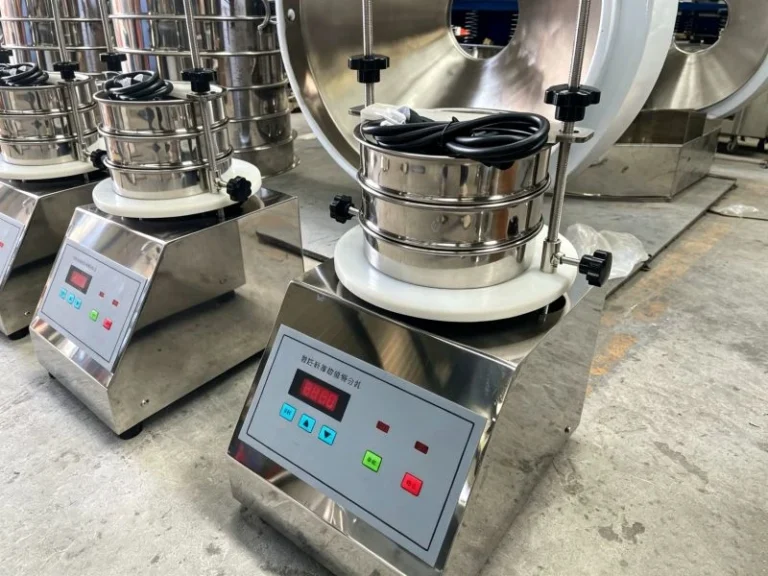
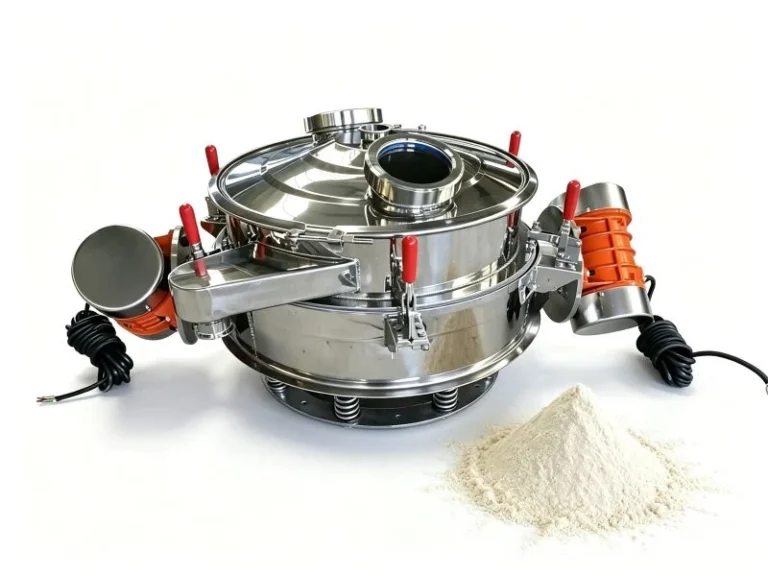
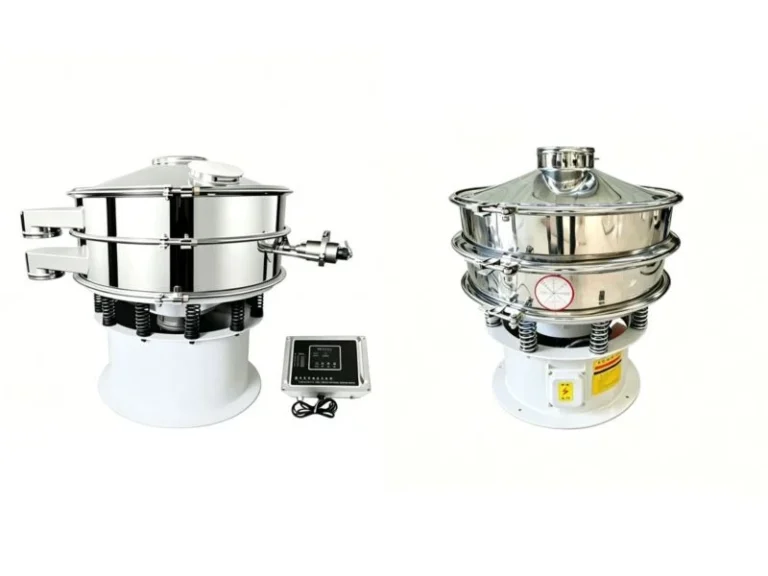
In dry tapioca starch processing, lumps and oversized particles can cause problems during mixing, conveying, and packaging. Tapioca starch screening removes these particles before the powder moves to the next stage. An inline sifter is useful for continuous dry powder processing, particularly when screening is required between conveying and packaging equipment.
The choice of sifter depends on the starch’s moisture content, required particle size, hourly capacity, and feeding system. Screen mesh and machine size also matter. A screen that is too fine may clog frequently or slow down production.

Why Does Dry Tapioca Starch Need Screening?
Tapioca starch can absorb moisture and form lumps during drying, storage, or transport. Coarse particles and small amounts of foreign material may also remain after earlier processing steps. Screening removes particles larger than the selected mesh opening, leaving a more uniform powder for mixing, conveying, or packing.
Common Screening Problems in Tapioca Starch Processing
- Lumps and agglomerates: Moisture and pressure during storage can cause starch powder to stick together. These lumps make feeding and mixing more difficult.
- Übergroße Partikel: Coarse particles can affect powder consistency and may cause trouble in downstream equipment.
- Foreign materials: Fibers, sand, and other unwanted particles may remain from earlier processing. A screen can separate them if they are larger than its openings.
Where Is Screening Used in a Starch Production Line?
The screening position depends on what needs to be removed.
- After drying and milling: Remove lumps and coarse particles before the starch enters the next process.
- Before mixing: Check for agglomerates that could affect blending with other dry ingredients.
- Before packaging: Remove remaining oversized particles or foreign material before filling bags or containers.
Safety Screening vs. Particle Size Grading
Safety screening, also known as check screening, removes lumps and oversized contaminants while allowing acceptable starch powder through. It is often used before mixing or packaging.
Particle size grading serves a different purpose. It separates powder into specific size ranges, sometimes using several screen decks.
An inline sifter is generally better suited to continuous check screening when the job is to remove lumps and oversized particles from the powder flow.
How to Choose the Right Inline Sifter for Tapioca Starch
Start with the screening requirement. Is the machine removing occasional lumps, or does the starch need to meet a finer particle size specification? This affects the mesh size, machine diameter, and expected throughput. The powder’s moisture content and the way it enters the sifter also need to be considered.
Choose the Right Mesh Size for Tapioca Starch
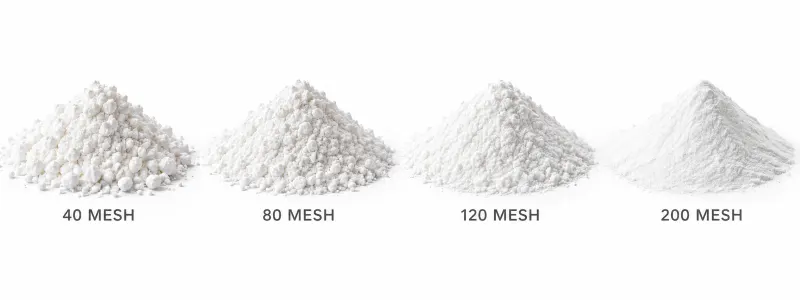
Mesh size affects how much starch passes through the screen and which particles are retained. Smaller openings give finer separation, but they can also slow down screening.
- 40 mesh: Often considered for coarse screening to remove larger lumps and foreign particles.
- 120 mesh: May be used when finer particle separation is required, depending on the starch specification.
- 60 mesh: An option when the required separation falls between coarse impurity removal and finer screening.
There is little benefit in choosing a finer screen than the product requires. It may lower throughput and cause more frequent mesh blockage. The final mesh size should be checked against the required particle size, preferably using a sample of the actual starch. For other powder types and screening requirements, see our Leitfaden zur Auswahl von Vibrationssieben.
Match Sifter Capacity to Your Production Line
The hourly capacity of a tapioca starch screening machine changes with mesh size, powder moisture, bulk density, feeding rate, and screen diameter.
Take a line that needs to process 800 kg/h. That figure is the required capacity, not a guarantee that any particular sifter will achieve it. A finer screen or poorly flowing starch may reduce the actual output.
Before choosing a machine, provide:
- Required throughput in kg/h
- Starch moisture content and bulk density
- Required mesh size
- Feeding rate and daily operating hours
These details give the equipment supplier a clearer basis for sizing the sifter.
Select Food-Contact Materials and Hygienic Features
SS304 stainless steel is commonly used for parts that contact food-grade tapioca starch. SS316L may be needed where cleaning chemicals or specific hygiene requirements call for higher corrosion resistance.
Pay attention to the machine’s construction as well:
- Smooth product-contact surfaces that are easy to clean
- Sealed connections to limit starch dust leakage
- Screens that can be accessed and replaced without difficulty
- Few corners or gaps where powder can collect
Prevent Mesh Blinding and Starch Buildup
Fine starch can become trapped in screen openings, particularly when the powder contains moisture or soft lumps. As more openings become blocked, less material passes through.
Several operating practices can reduce this problem:
- Keep the starch sufficiently dry before screening.
- Feed the screen at a steady rate.
- Use only the mesh fineness required by the process.
- Check the screen regularly and remove accumulated powder.
If fine starch continues to block the mesh, an ultrasonic sieving machine may be worth considering. Ultrasonic vibration can help reduce powder buildup in the screen openings. The sifter must be compatible with the ultrasonic system, and its effect should be checked using the actual material.
Plan the Inlet, Outlet, and Feeding System
An inline sifter may receive starch from a hopper, Schneckenförderer, or vacuum feeding system, depending on its design. It can also be installed ahead of packaging equipment.
Check the inlet and outlet sizes, available installation height, and discharge direction before ordering. The feeding system should deliver material at a suitable, consistent rate.
If the sifter will be installed in a pneumatic conveying line, its pressure and airflow compatibility must also be confirmed.
For equipment selection, share your target capacity, mesh size, starch condition, and production line layout with the supplier.
Tapioca Starch Screening Example: An Ultrasonic Inline Sifter
A food processing company in Africa contacted Yuanjing Machinery about frequent screen blockage during cassava starch screening. Fine powder was clogging the existing equipment, forcing operators to stop production for cleaning.
Bei diesem cassava starch screening project, Yuanjing recommended an 800 mm ultrasonic inline vibrating screen with a 100 mesh screen for the customer’s production requirements.
Customer Screening Requirements
The customer needed to address four issues:
- Maschenverstopfung: Fine starch particles were blocking the screen openings.
- Production interruptions: Operators had to stop the equipment regularly to clean the mesh.
- Screening specification: The required mesh size was 100 mesh, with a target output of 800 kg/h.
- Wartung: The replacement machine needed to be straightforward to operate and clean.
Recommended Equipment Configuration
The selected equipment had the following specifications:
| Position | Spezifikation |
|---|---|
| Ausrüstung | Ultraschall-Inline-Vibrationssieb |
| Siebdurchmesser | 800 mm |
| Maschenweite | 100 Mesh |
| Target Capacity | 800 kg/h |
| Motorleistung | 1.5 kW |
| Screening System | Dual vibration motors + ultrasonic system |
The ultrasonic system was included to reduce fine powder buildup on the mesh. The inline arrangement allowed the starch to pass through the screening stage continuously.
After installation, the customer reported much less mesh clogging and an output of approximately 800 kg/h.
Need an Inline Sifter for Tapioca Starch?
Choosing the right sifter starts with your actual powder and production requirements. Share your mesh size, target capacity (kg/h), starch moisture content, and feeding method with Yuanjing Machinery.
Our engineers can help you choose a suitable inline sifter and check how it fits into your existing production line.
Request a Screening Solution | View Inline Sifter Specifications
FAQ
1. What mesh size is best for tapioca starch screening?
The best mesh size depends on the screening purpose. A 20–40 mesh screen may be used to remove larger lumps and impurities, while 80–120 mesh may be considered for finer screening. The final choice depends on the required particle size, starch moisture content, and processing capacity.
2. Can an inline sifter remove lumps from dry tapioca starch?
Yes. An inline sifter for tapioca starch can separate lumps and oversized particles from dry starch powder. It is commonly used for check screening before mixing or packaging. However, large or hard lumps may require a separate lump-breaking process before screening.
3. How much tapioca starch can an inline sifter process per hour?
Die screening capacity of an inline sifter depends on screen diameter, mesh size, moisture content, and feeding rate. Larger screens generally offer higher capacity, while finer mesh sizes may reduce throughput. For example, an 800 mm ultrasonic inline sifter achieved approximately 800 kg/h in one reported cassava starch application. Actual capacity should be confirmed through testing.
4. Can an inline sifter be connected to a continuous starch production line?
Yes. An inline vibrating sifter can be integrated into a continuous tapioca starch processing line before mixing, conveying, or packaging. It can work with hoppers, screw conveyors, or suitable feeding systems. The inlet, outlet, installation height, and feeding rate must match the existing equipment.
5. When is ultrasonic screening needed for cassava starch?
Ultrasonic screening for cassava starch is worth considering when fine powder repeatedly blocks the screen mesh. Ultrasonic vibration helps reduce mesh blinding and maintain powder flow. It is especially useful for fine screening applications where conventional vibration is insufficient. Not every tapioca starch screening process requires an ultrasonic system.
6. How can mesh clogging be prevented during dry tapioca starch screening?
To reduce mesh clogging in tapioca starch screening, keep the powder dry, maintain a steady feeding rate, and avoid using unnecessarily fine mesh. Regular screen inspection and cleaning also help. If fine starch continues to block the openings, an ultrasonic mesh cleaning system may improve screening performance.
Need an Inline Sifter for Tapioca Starch?
Not sure which mesh size or sifter diameter fits your starch processing line? Send us your required capacity, starch moisture content, and screening specifications. Our team can help you select an Inline-Vibrationssieb for your application.