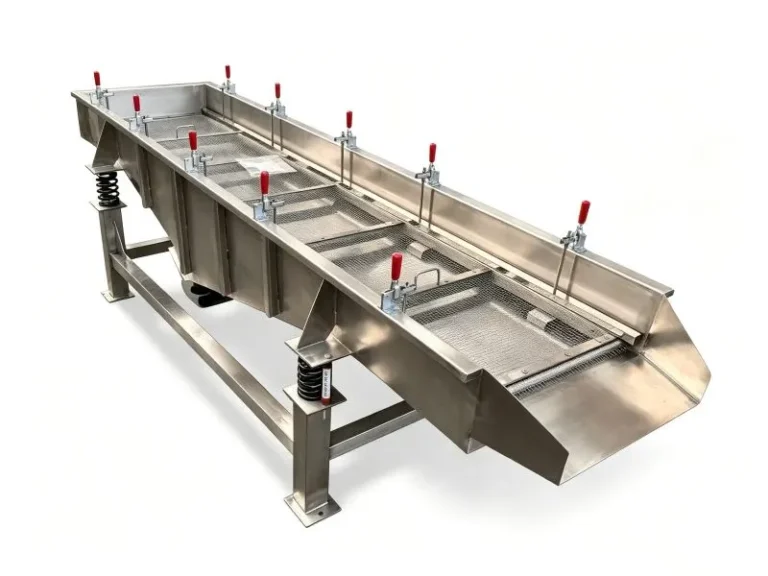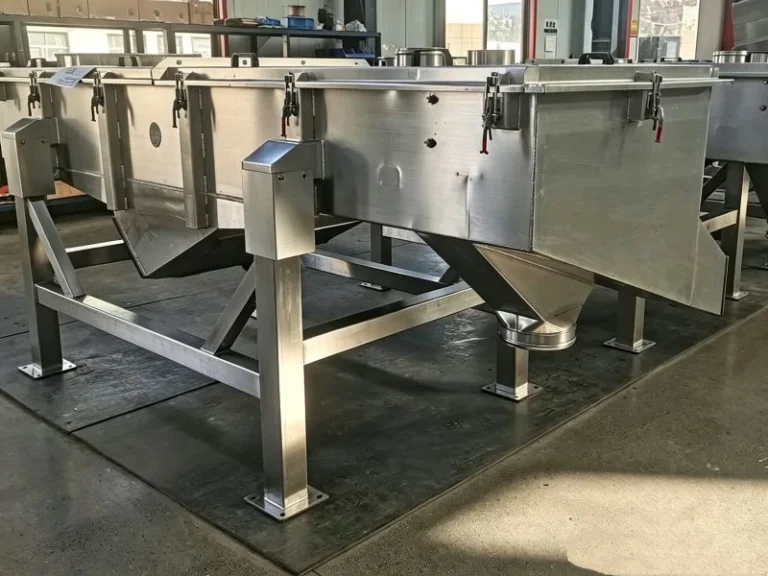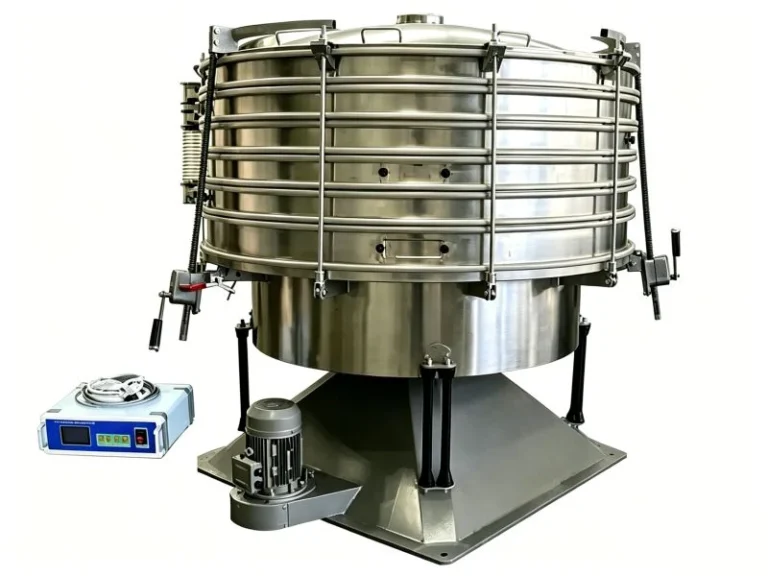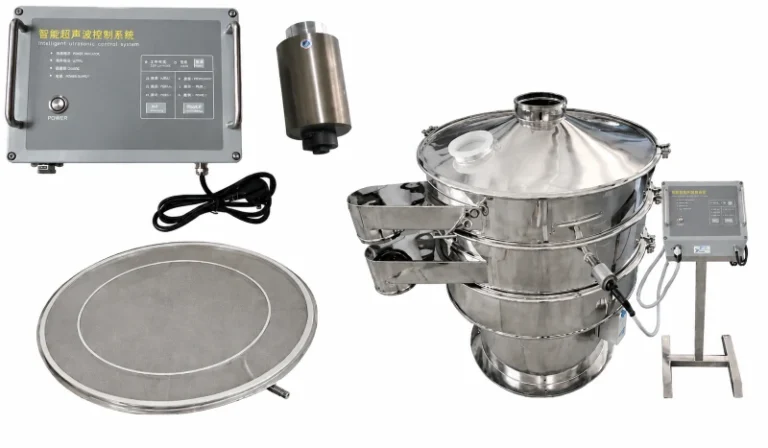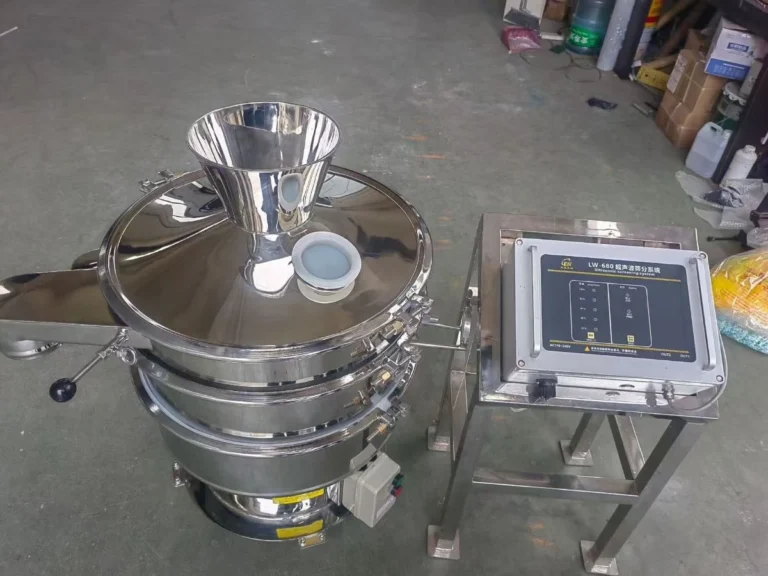
Siebung von PTFE-Verbundpulver: 600-mm-Zwangsvibrationssieb
The main challenge in this PTFE composite powder screening inquiry was how easily the material caked. According to the customer, a layer just a few centimeters deep could form lumps under its own weight.
The non-granulated powder had a flour-like texture. The customer needed an 850-micron screen and a target throughput of 100 kg/h.
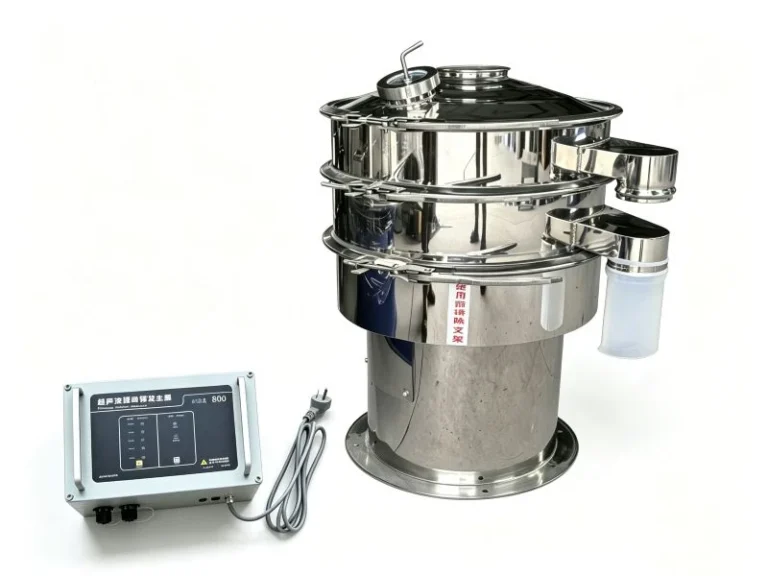
We recommended a YJ-600-1 forced vibrating sieve with a 600mm nominal size, a single screen deck, and bouncing-ball mesh cleaning. The proposed machine has no top cover, allowing easier feeding.

Projektübersicht
The customer described PTFE composite powders containing fillers such as graphite, coke, carbon fiber, or minerals. These powders could cake during transportation or when affected by temperature changes.
| Position | Kundenanforderung |
|---|---|
| Material | Non-granulated PTFE composite powder |
| Texture | Similar to flour |
| Screen opening | 850 microns |
| Target throughput | 100 kg/h |
| Handling problem | Caking during transportation, with temperature changes, and under its own weight |
| Equipment customization | Acceptable where needed for the material |
What We Learned from the Customer
The distinction between granulated PTFE and a fine composite powder mattered here. We could not select the machine on the assumption that the material would flow freely.
The customer’s description of caking in shallow piles also drew our attention to the feed rate. If powder entered faster than it could pass through the mesh, material could build up on the screen and become more difficult to handle.
We therefore considered a forced mechanism to assist powder movement, along with a cleaning system beneath the mesh.
Feeding access was another point in the discussion. The customer reported that dust generation was not a major concern, while a top cover would make loading less convenient. For this application, we proposed leaving the top open.
Recommended Screening Solution
We recommended the YJ-600-1, a 600mm single-deck Rundschwingsieb fitted with a forced mechanism to assist powder movement across the 850-micron mesh.
A Forced Mechanism to Assist Screening
The forced mechanism provides mechanical assistance in addition to vibration. It helps move powder over the screen and encourages passage through the mesh.
The intention is to help handle loose agglomerates that interfere with screening. Hard, compacted lumps are a different issue: a forced sieve is not a grinder, and those lumps may need separate treatment.
The mechanism design and operating settings still need to be checked with a representative sample. For this PTFE composite powder, that assessment should include friction, temperature rise, and whether the filler characteristics are preserved.
Bouncing Balls Beneath the Screen
The proposed machine includes a bouncing-ball cleaning system beneath the mesh. During vibration, the balls act on the screen to help dislodge powder from the openings.
This complements the forced mechanism above the screen. Its effectiveness will depend on how the customer’s actual formulation behaves during testing.
For more on why powder collects in mesh openings, see our guide to Feinpulver-Siebmaskenverstopfung.
No Top Cover for Easier Feeding
The open-top arrangement gives the operator easier access for loading and a view of the powder on the screen. This makes it possible to spot buildup and adjust feeding.
The decision reflects the customer’s report of limited dust generation. Moving parts will still require appropriate guarding.
Gerätespezifikationen
| Position | Vorgeschlagene Konfiguration |
|---|---|
| Ausrüstung | Forced vibrating sieve |
| Modell | YJ-600-1 |
| Nenngröße | 600 mm |
| Siebdecks | Single deck |
| Screen opening | 850 microns |
| Target capacity | 100 kg/h, subject to material testing |
| Main product-contact surfaces | Edelstahl 304 |
| Base | Kohlenstoffstahl |
| Forced mechanism | Kohlenstoffstahl |
| Standard power supply | 380 V, 50 Hz, three-phase |
| Screen cleaning | Bouncing-ball system beneath the screen |
| Beschickungsanordnung | Open top without a lid |
The carbon steel forced mechanism needs a separate material check. If any of its parts contact the powder, those surfaces will not be 304 stainless steel. We need to confirm whether this is acceptable for the customer’s product-purity requirements; stainless steel contact components can be considered if necessary.
Equipment Features in Daily Use
For this material, the forced mechanism is intended to assist powder that tends to agglomerate or collect on the screen. The bouncing balls address a separate problem—powder lodged in the mesh openings. Performance will depend on the formulation, the condition of the incoming powder, and how firmly its lumps have formed.
Feeding also matters. Since the customer reported caking under the powder’s own weight, we recommend a controlled, consistent feed rather than placing a large batch on the screen at once. The feeding method should be checked during the sieve trial.
Different fillers may change the screening behavior. A PTFE compound containing carbon fiber should not automatically be treated as identical to one containing graphite, coke, or mineral fillers. Contact materials, mechanism settings, and mesh cleaning should be confirmed for the formulation being processed.
Customer Feedback and Project Status
The feedback available so far concerns the material and feeding requirements. The customer explained the shallow-layer caking problem and reported limited dust generation. These details informed the choice of a forced mechanism and the proposed open-top arrangement.
The project is currently at the equipment selection stage. There are no production results or post-installation comments to report yet. A material trial is needed to confirm whether the machine can reach 100 kg/h through the 850-micron screen and whether the screened powder remains suitable for the next production step.
Unser Leitfaden zu evaluating industrial sieving trials explains how to assess throughput, yield, and separation quality.
Talk to Us About Your PTFE Powder
If your PTFE composite powder cakes during storage, transport, or feeding, kontaktieren Sie unser Team with the formulation, required screen opening, target throughput, and feeding method.
Tell us when the lumps form and how hard they become. These details help us review the forced mechanism, product-contact materials, and testing requirements before finalizing the machine configuration.