
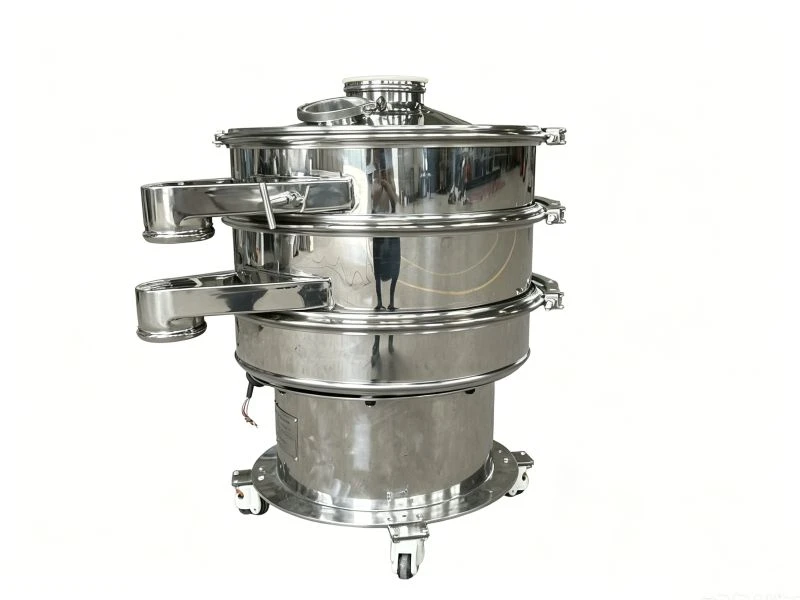
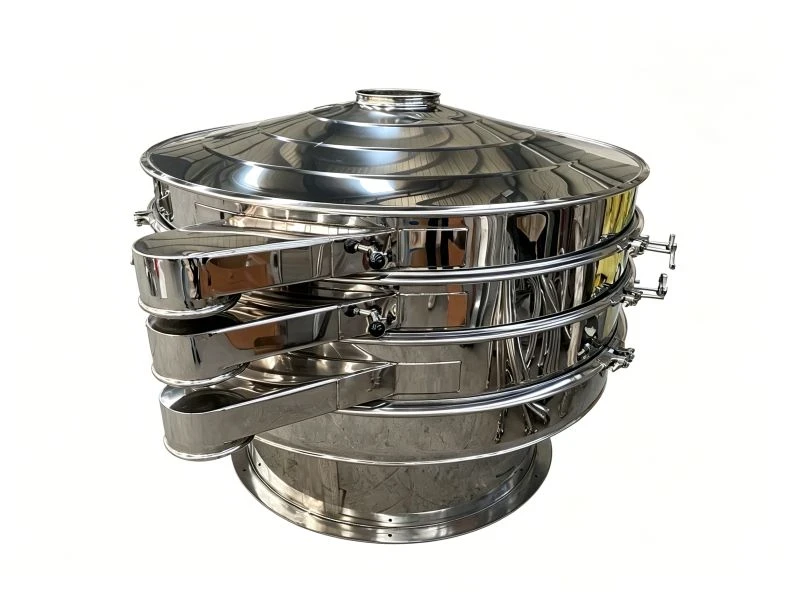
Stainless Steel Vibrating Sieve for Industrial Screening
Achieve efficient and accurate screening with our stainless steel vibrating sieve. Designed for powder classification, particle sizing, impurity removal, and liquid filtration, this machine provides high screening efficiency while maintaining product quality. Available in SS304 and SS316L construction, it meets the hygiene and corrosion-resistance requirements of food, pharmaceutical, chemical, and industrial applications. Custom mesh sizes, machine diameters, and voltage configurations ensure the right solution for your production line.
Applications: Powder Screening | Particle Classification | Liquid Filtration | Quality Control
What is a Stainless Steel Vibrating Sieve?
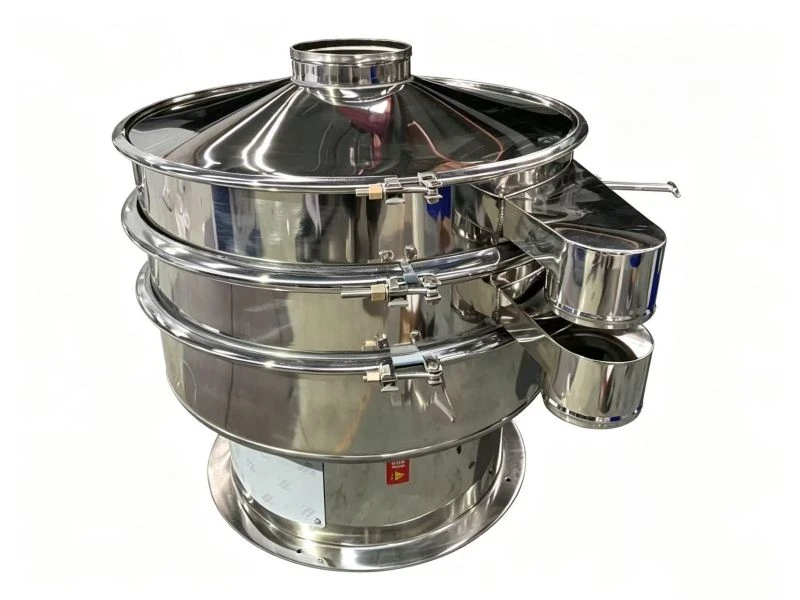
Stainless steel vibrating screens are screening devices constructed from stainless steel, designed to classify, remove impurities from, and filter powders, granules, and slurries.
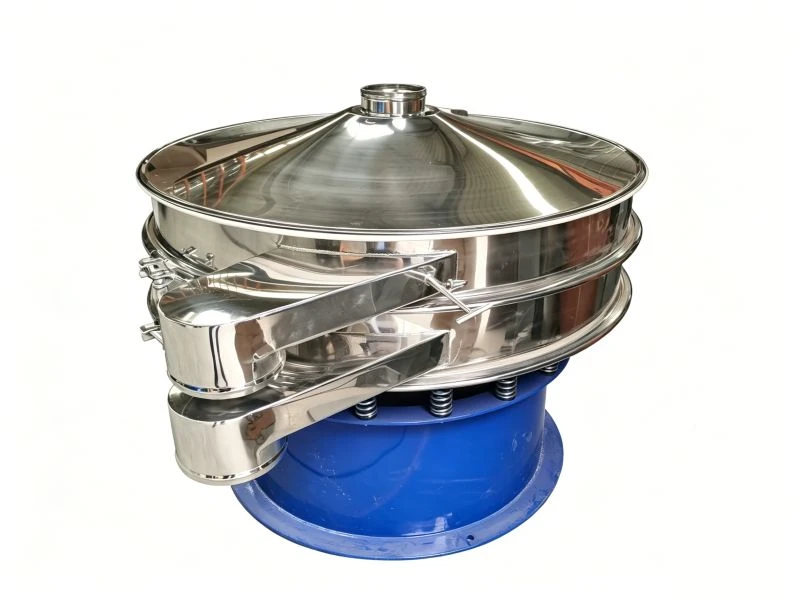
Fabricated from SUS304 or 316L stainless steel and featuring a mirror-polished finish—with internal and external surface roughness values of 0.1–0.2 Ra—these screens ensure that materials remain uncontaminated during processing. They are primarily used in the food, pharmaceutical, and chemical industries to screen various raw materials, fine powders, ultrafine powders, and wet or dry substances, effectively removing oversized particles and contaminants to enhance product quality.
Edelstahl-Vibrationssieb Working Principle
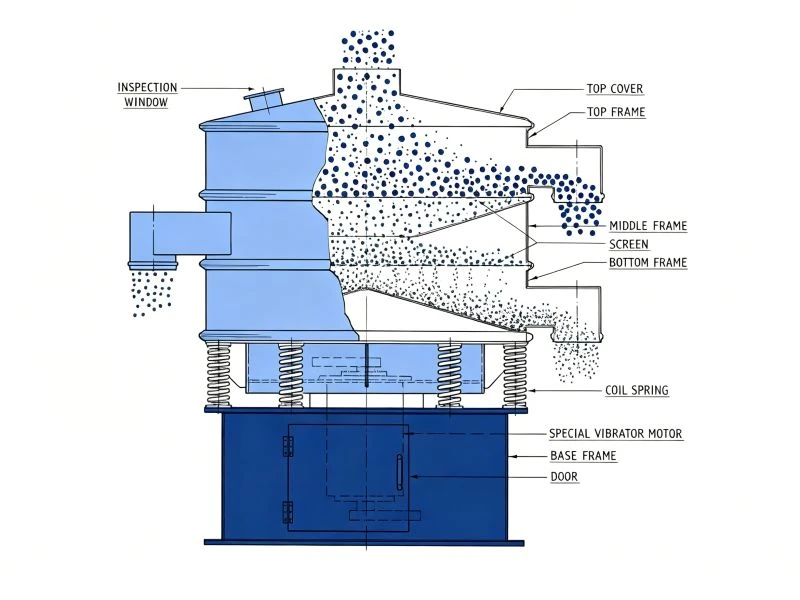
A stainless steel vibrating sieve uses a vibration motor to generate three-dimensional motion, causing material to move across the screen surface. As the material vibrates, particles smaller than the mesh openings pass through the screen, while oversized particles are separated and discharged through a different outlet.
This process enables the effective screening, classification, and impurity removal of powders, granules, and liquids. Its unique design allows material to remain on the screen surface for a longer duration compared to other screening machines, resulting in relatively higher throughput. During operation, the low-speed rotation of the stainless steel vibrating sieve extends the equipment’s service life, reduces maintenance costs and noise levels, and enhances operational safety.
Stainless Steel Vibrating Sieve Details
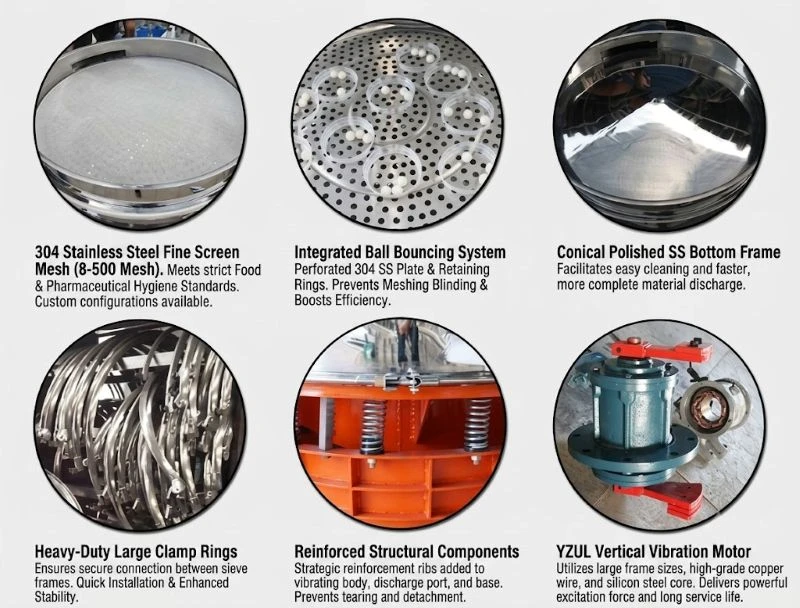
1.Screen Mesh-Maintains tension, facilitating material movement along the direction of vibration (whether horizontal or vertical). A single machine can achieve both vigorous and gentle material separation.
2.Bouncing Balls-Prevent material from clogging screen apertures, thereby improving throughput and screening efficiency.
3.Bottom Frame-Available in 304 or 316 stainless steel; designed to collect the undersize material.
4.Clamping Ring-Secures the upper and lower screen frames, maintaining uniform mesh tension to ensure screening accuracy and efficiency.
5.Damping Springs-Allow the upper assembly of the machine to vibrate freely; they help minimize power consumption, prevent vibration transmission to the floor, and reduce noise.
6.Vibrating Motor-Generates multi-planar vibration, accelerating the movement of material across the various screen decks.
Merkmale
- High-efficiency, compact, and durable stainless steel vibrating screen; capable of screening all types of powders and viscous liquids.
- Easy screen replacement, simple operation, and convenient cleaning.
- Non-clogging mesh; prevents dust from flying; capable of screening down to 500 mesh (0.028 mm).
- Automatic discharge of impurities and oversized materials; suitable for continuous processing lines.
- Long screen service life; quick screen replacement (takes only 3–5 minutes).
- Compact size; saves space and is easy to move.
Structure
The components of a stainless steel Industrielle Vibrationssiebmaschinen include: a dust cover, an inlet, a screen mesh, a screen frame, and an outlet.
Inlet
The buffer plate design ensures an even flow of material onto the screen surface, while the inspection port allows for material monitoring.
Dust Cover
It contains the material, protecting both the machine and the surrounding environment from dust.
Vibrating Motor
This motor generates multi-planar vibration, accelerating the movement of material across the various screens.
Damping Springs
These allow the upper section of the machine to vibrate freely, helping to minimize power consumption, prevent vibration transmission to the floor, and reduce noise.
Siebgewebe
Maintained under tension to facilitate material movement along the direction of vibration—whether horizontal or vertical—enabling the machine to achieve both vigorous and gentle material separation.
Discharge Outlet
The outlet size can be customized, and the discharge rate can be adjusted via a valve as required.

Edelstahl-Vibrationssieb Technische Spezifikationen
| Modell | 400 | 600 | 800 | 1000 | 1200 | 1500 | 1800 |
| Screen Diameter (mm) | Φ380 | Φ580 | Φ780 | Φ970 | Φ1170 | Φ1470 | Φ1770 |
| Effective Screening Area (m²) | 0.1 | 0.23 | 0.41 | 0.65 | 0.99 | 1.58 | 2.32 |
| Mesh Specification (Mesh) | 2—400 | 2—400 | 2—400 | 2—400 | 2—400 | 2—400 | 2—400 |
| Number of Layers | 1-3 | 1-3 | 1-3 | 1-3 | 1-3 | 1-3 | 1-3 |
| Vibration Motor (kW) | 0.25 | 0.55 | 0.75 | 1.1 | 1.5 | 2.2 | 3 |
Anwendungen
The stainless steel vibrating sieve is widely used across multiple industries due to its efficient, hygienic, and precise screening capabilities:
Lebensmittelindustrie
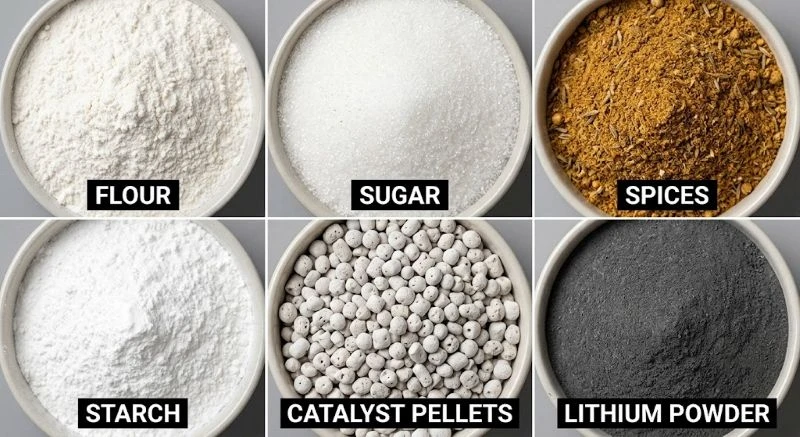
Screening flour, sugar, spices, starch, wheat bran and other powders to ensure consistent particle size and remove impurities.
Pharmazeutische Industrie
Classifying powders, granules, and active ingredients while meeting strict sanitary and hygiene standards.
Chemische Industrie
Separating chemical powders, catalysts, and additives with corrosion-resistant stainless steel construction.
New Energy Industry
Screening materials such as lithium powders, battery components, graphite powder,and other energy-related powders and granules for uniformity and quality control.
304 vs 316L Stainless Steel: Which Should You Choose?
Compared to 304 stainless steel, 316L stainless steel contains 2–3% molybdenum, offering superior resistance to acid and alkali corrosion as well as higher temperature tolerance—capable of withstanding temperatures up to 1,300°C. In contrast, 304 stainless steel is suitable for screening materials involving mild acids or alkalis, with a material temperature limit of 800°C.
Both SS304 and SS316L are widely used in vibrating sieves. The right choice depends on your material characteristics, operating environment, and hygiene requirements.
SS304 Stainless Steel Vibrating Sieve
You process food powders, grains, sugar, flour, or feed.The material is non-corrosive.
You need a cost-effective solution.Standard industrial hygiene requirements are sufficient.
SS316L Stainless Steel Vibrating Sieve
The material contains salt, chlorides, or corrosive chemicals.The equipment requires frequent chemical cleaning.
You work in pharmaceutical or high-purity applications.Maximum corrosion resistance is required.
SS304 VS SS316L
Mesh Selection Guide
Choosing the right mesh is essential for efficient screening and high product quality. The strategy depends on your material type, particle size, and processing conditions.
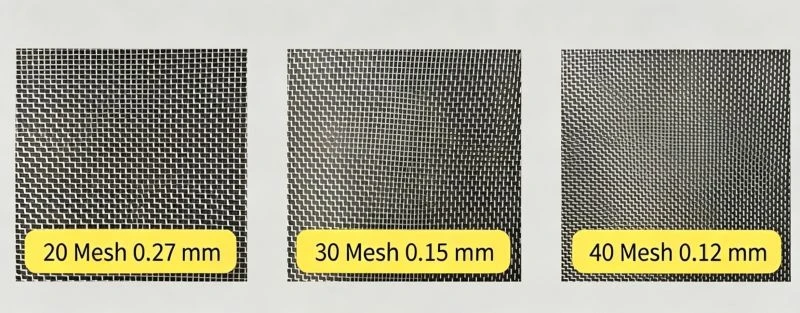
- Remove oversized particles: Use a coarser mesh above the target size to prevent clogging and ensure fast throughput.
- Remove fines: Use a finer mesh below the target size to improve product purity and achieve precise separation.
- Multi-grade classification: Employ a multi-deck sieve with descending mesh sizes so that each deck efficiently separates different particle sizes.
- Sticky or moist materials: Select larger apertures and consider anti-blinding devices to reduce blockage and maintain continuous operation.
- Liquid or slurry screening: Choose mesh according to particle size and flow rate to avoid clogging and ensure consistent screening efficiency.
- High-capacity screening: For large production volumes, optimize mesh size and deck configuration to maintain throughput without compromising separation quality.
Unsere Fälle
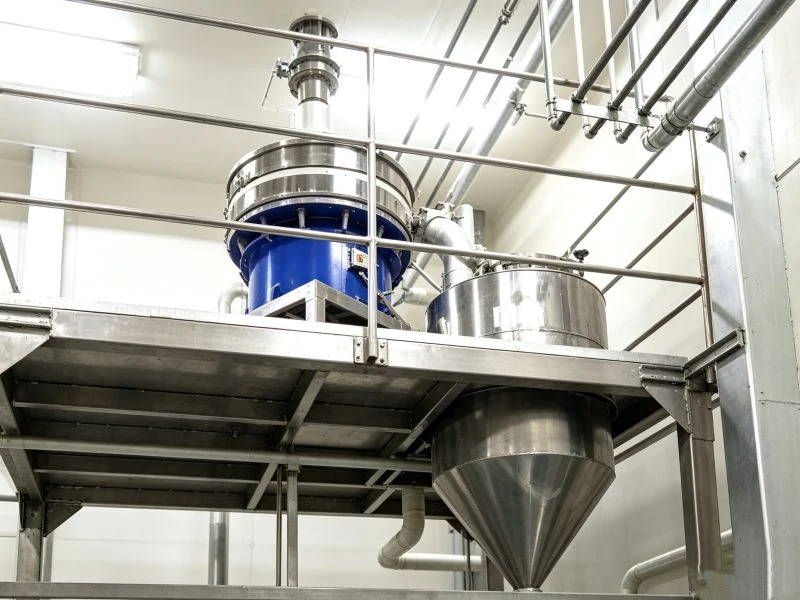
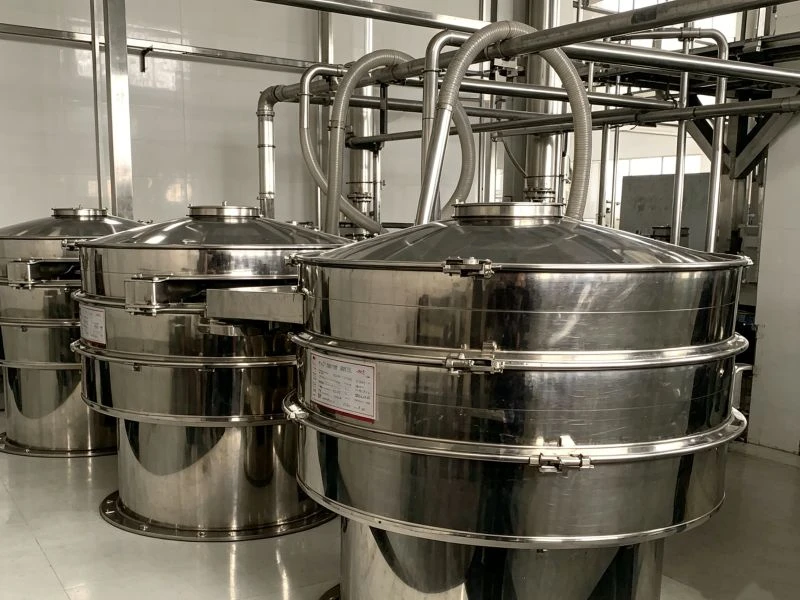
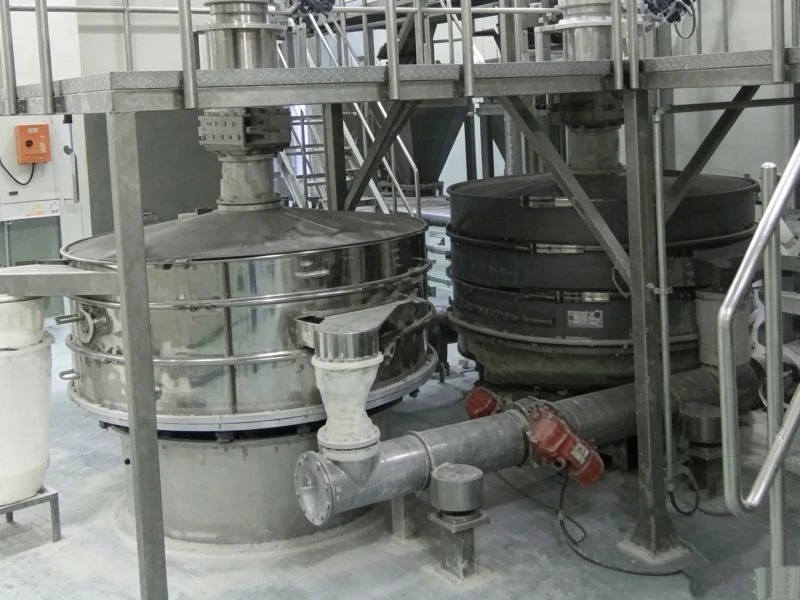
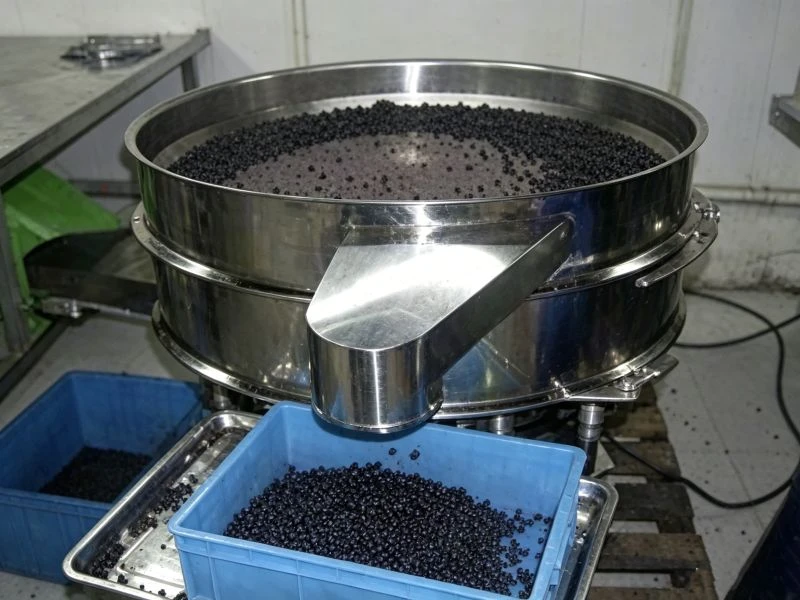
Product Solution
Recommended industrial screening solutions for different materials and processing requirements.
| Material | Maschenweite | Kapazität (kg/h) | Model (Layers) |
| Mehl | 80/100 | 1000 | YJ-800-2S |
| spices | 60/80 | 400–800 | YJ-600-2S |
| Reis | 14 | 1500 | YJ-1000-1S |
| Saft | 100 | 1000 | YJ-1200-1S |
| Sesame | 20 | 1200 | YJ-1000-1S |
| fertilizer | 100/150 | 3000 | YJ-1500-2S |
| Feed | 40 | 1600 | YJ-800-1S |
| Kunststoffgranulat | 35 | 3800 | YJ-1800-1S |
Related Products
Rotations-Vibrationssieb
Rotary Vibrating Screen | Vibro Sifter The rotary vibrating screen is designed for efficient separation of powders, granules, and liquids. It delivers stable performance, high screening accuracy, and reliable operation in continuous production. We offer flexible configurations, including multi-deck designs, ultrasonic systems, and food-grade materials to meet different processing requirements. YuanJing provides practical screening solutions…Inline-Vibrationssieb
Inline Vibratory Screen for Continuous Production Lines Inline vibratory screens are built for continuous production lines, allowing powders and liquids to be screened directly in the pipeline. The compact design saves space while maintaining stable and accurate separation performance. They are widely used in food, pharmaceutical, and chemical processing. What is an inline vibratory screen?…Schneckenförderer
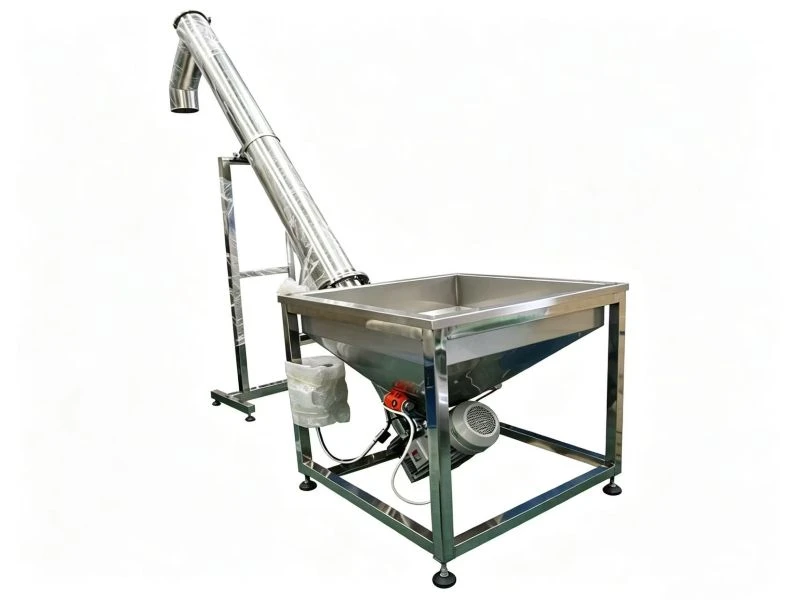
Industrial Screw Conveyor Systems for Bulk Material Handling Industrial screw conveyors are designed for continuous, efficient handling of bulk materials such as powders, granules, and semi-solids. With a compact structure and enclosed design, they ensure stable conveying performance, reduced dust emission, and low maintenance in various industrial applications. YuanJing provides customised screw conveyor solutions based…Vakuumförderer-Zuführsystem
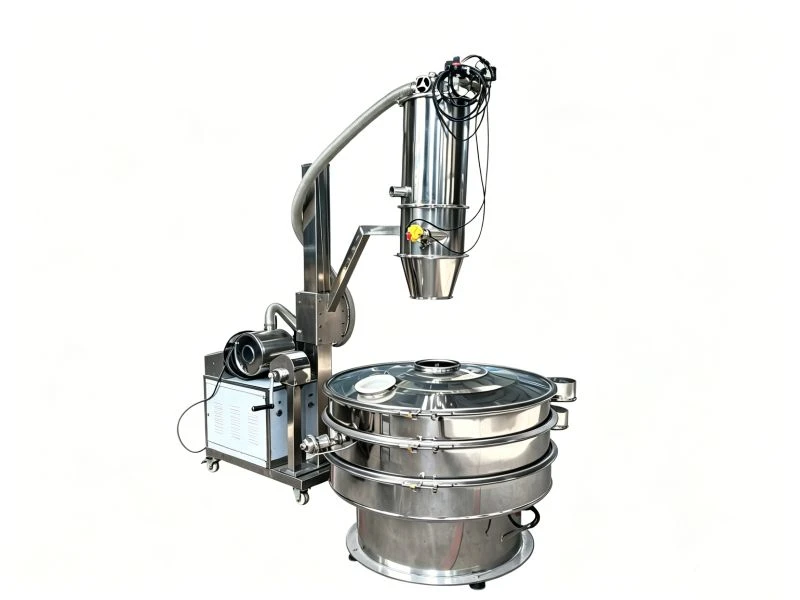
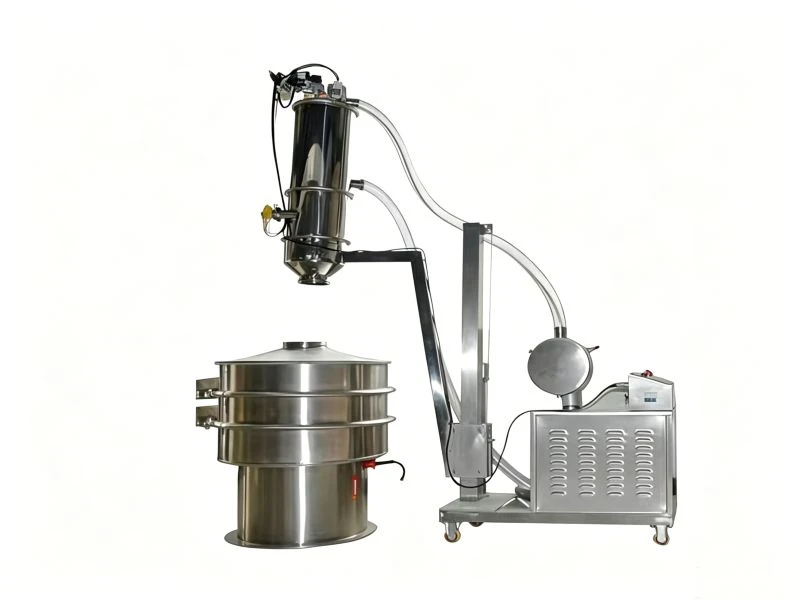
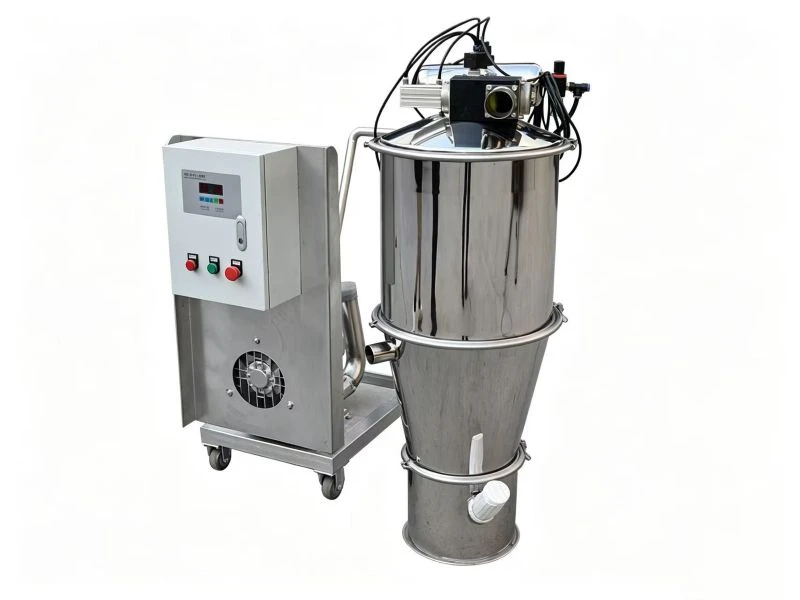
Industrial Vacuum Conveyor System Solutions for Powder & Bulk Materials Vacuum conveyor systems automatically transfer various materials into the hoppers of packaging machines, injection molding machines, and crushers. They can also feed mixed materials directly into mixers (such as V-type, 2D, and 3D mixers), significantly reducing manual labor and eliminating dust spillage during feeding. As…
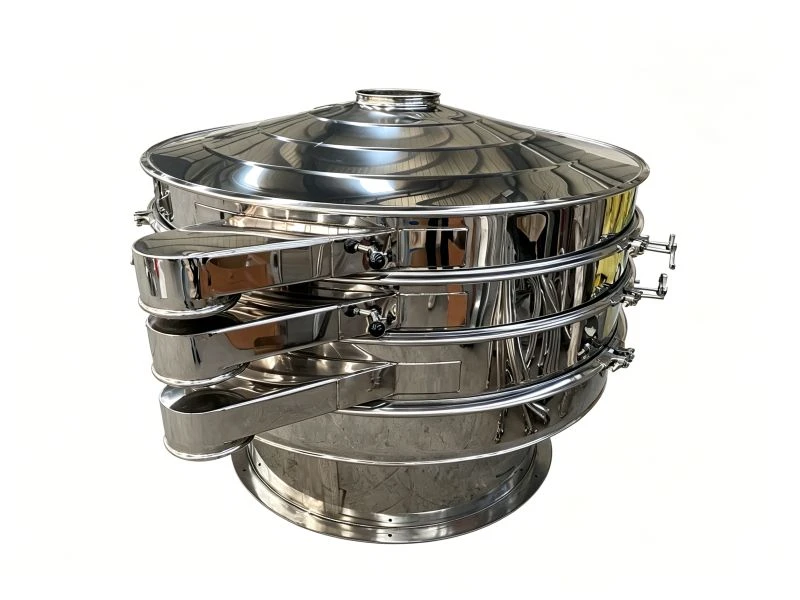
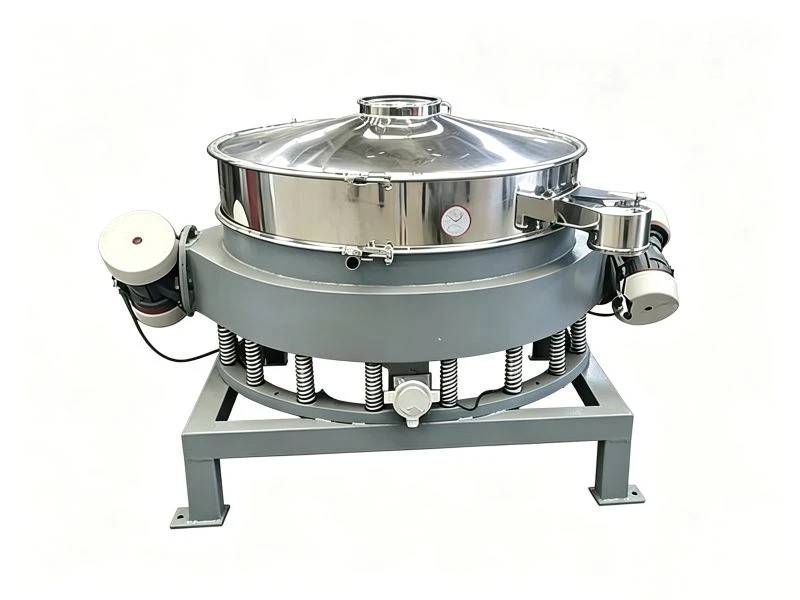
Vibrating Screen and Conveyor Machine Manufacturer & Supplier
Built for precision screening, reliable performance, and flexible industrial applications,
Yuanjing rotary vibrating screens are trusted by customers worldwide.

Global Project Experience
Yuanjing products are exported to 50+ countries and regions, serving industries including food, chemicals, pharmaceuticals, mining, and new energy.
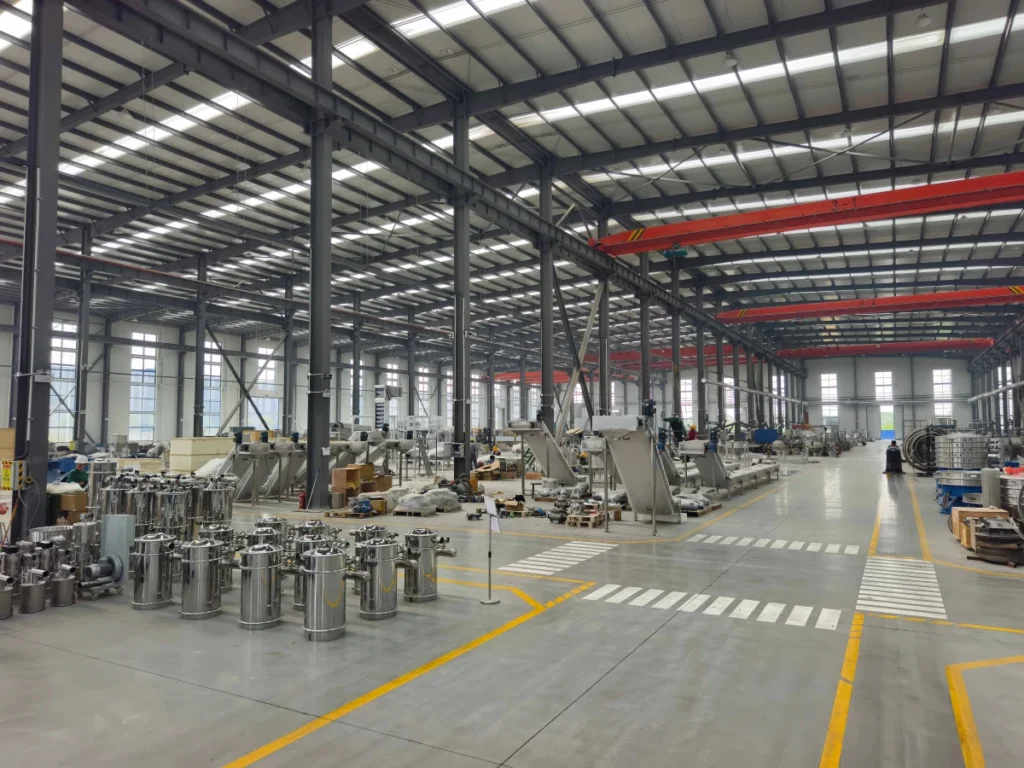
Strong Manufacturing Capability
Advanced production lines with laser cutting, CNC machining, automatic welding, and strict quality inspection ensure consistent product quality.
Accurate & Stable Separation
Optimized vibration design delivers even material flow, high screening accuracy, and stable long-term operation.
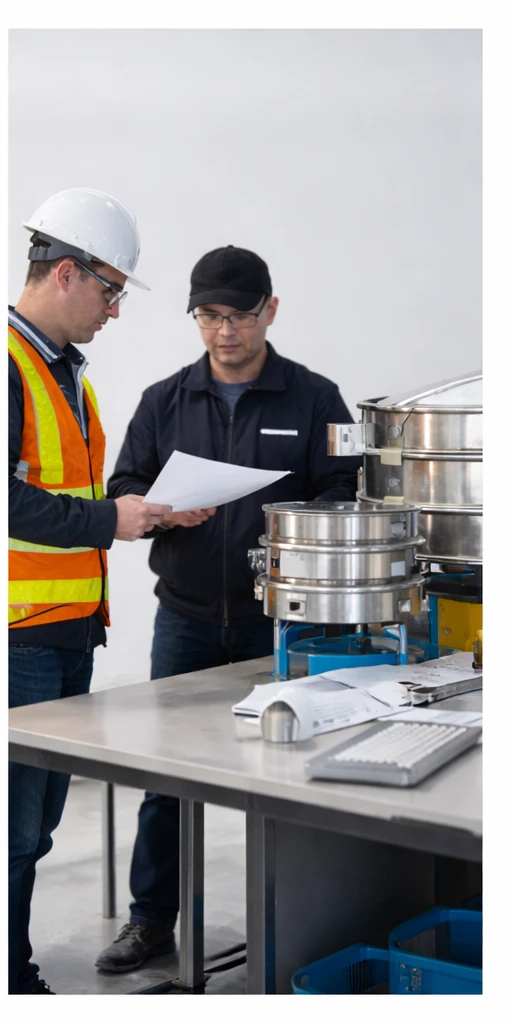
Individuelle Sieblösungen
Yuanjing offers flexible configurations in diameter, mesh size, deck layers, and material options to fit your exact process requirements.
FAQs
Individuelle Lösung erhalten
Wir können maßgeschneiderte Sieb- und Fördergerätelösungen anbieten, die auf verschiedene Materialien und Produktionsanforderungen zugeschnitten sind.
Senden Sie uns Ihre Anforderungen, und unser Team wird die richtige Lösung und ein schnelles Angebot innerhalb von 24 Stunden bereitstellen.