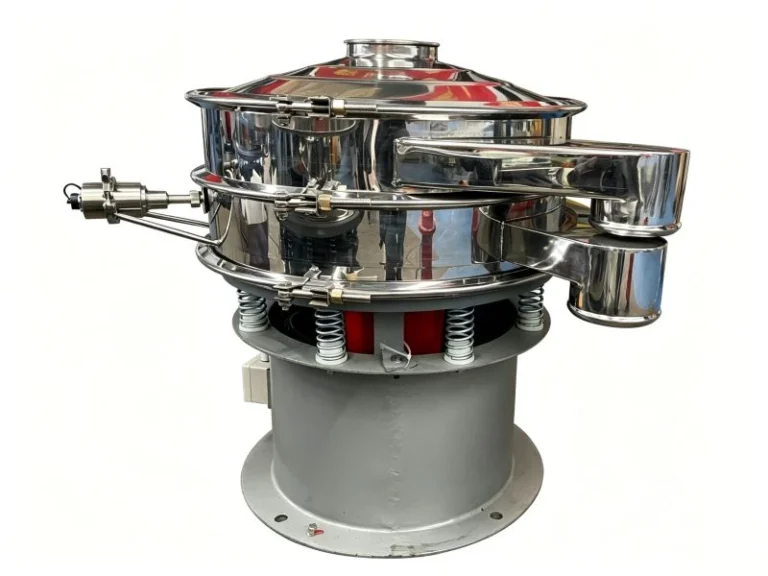
Jak poprawić wydajność przesiewania za pomocą przesiewacza wibracyjnego liniowego?
Wprowadzenie
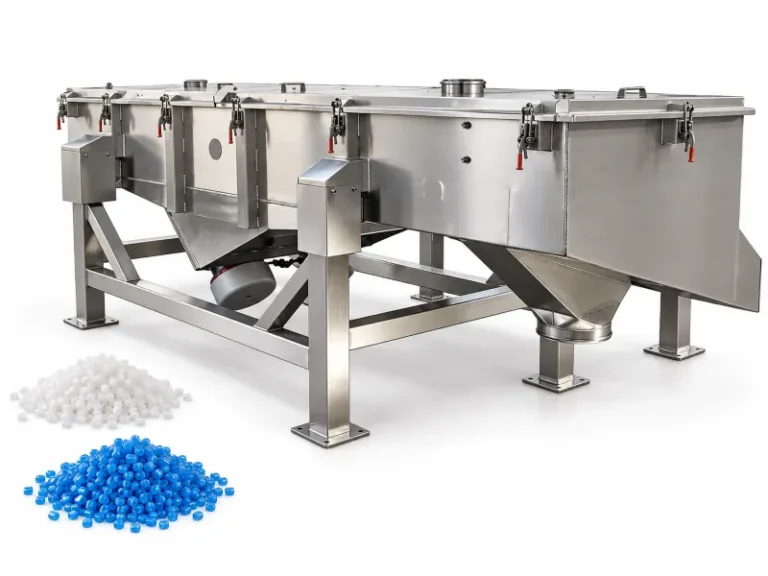
Linear vibrating screen efficiency is mainly affected by material characteristics, screen mesh, feed rate, vibration parameters, screen inclination, and material distribution across the screen surface. If these factors are not properly matched, screening efficiency and capacity may decrease, while mesh blockage and material accumulation may increase.
Improving screening performance therefore requires balancing material flow, effective screening area, vibration settings, and feeding conditions rather than simply increasing vibration force or feed rate.
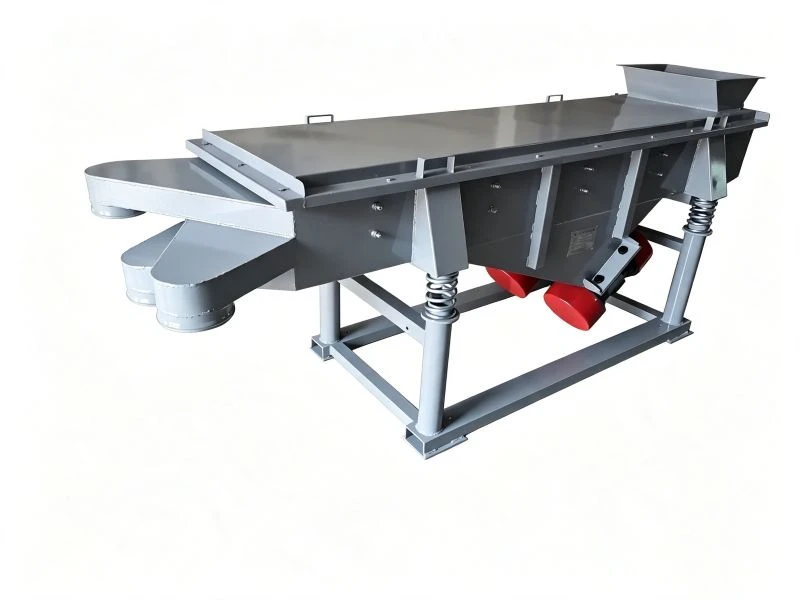
What Factors Affect Linear Vibrating Screen Efficiency?
Linear vibrating screen efficiency depends on how well the material, screen mesh, feeding conditions, and vibration settings work together. Understanding these factors helps identify the cause of low screening efficiency or unstable screening capacity.
Material Characteristics
Particle size, moisture, bulk density, and flowability affect how material moves and passes through the screen mesh. Fine, moist, or sticky materials are more likely to accumulate or block the mesh, reducing screening efficiency.
Screen Mesh Size and Open Area
The screen mesh must provide the required separation while maintaining sufficient open area. If the mesh is too fine or becomes blocked, the effective screening area decreases, which can reduce both screening efficiency and capacity.
If you are unsure which mesh size, screen area, or machine configuration is suitable for your material, see our guide on how to choose the right linear vibrating sieve.
Feed Rate and Material Distribution
Excessive or unstable feeding can create a thick material layer and prevent particles from contacting the screen surface effectively. A stable feed rate and even material distribution help use the available screening area more efficiently.
Vibration Amplitude and Frequency
Vibration amplitude and frequency influence material movement, stratification, and contact with the screen mesh. Higher vibration is not always better. The vibration settings should match the material characteristics and required screening performance.
Screen Inclination and Material Residence Time
Screen inclination affects material flow speed and residence time. A larger inclination can move material faster but may reduce screening time, while a smaller inclination can increase residence time but may limit throughput.
Screen Mesh Blinding
Fine, sticky, or moist particles can block mesh openings during continuous operation. As the open screening area decreases, screening efficiency and capacity may gradually decline. Regular inspection and suitable anti-blinding measures help maintain stable performance.
Wideo
How to Improve Linear Vibrating Screen Efficiency
Improving linear vibrating screen efficiency requires the right balance between screen mesh, feed rate, vibration settings, and material flow. In most cases, stable operating conditions are more important than simply increasing vibration force or feeding more material.
- Select the correct screen mesh.
Choose a mesh size that matches the required particle separation. An unnecessarily fine mesh can reduce screening capacity and increase the risk of blockage. - Keep the feed rate stable.
Avoid sudden increases or excessive feeding. Overloading creates a thicker material layer, making it harder for particles to reach and pass through the screen mesh. - Distribute material evenly.
Feed material across the available screen width rather than concentrating it in one area. Even distribution improves screen surface utilization and helps maintain consistent screening performance. - Adjust vibration settings to the material.
Set the amplitude and frequency according to particle size, bulk density, and flowability. Excessive vibration does not necessarily improve screening efficiency and may shorten material residence time. - Prevent screen mesh blinding.
Fine, moist, or sticky materials can gradually block mesh openings and reduce the effective screening area. Clean the mesh regularly and use a suitable anti-blinding method when necessary. - Inspect worn or damaged screen mesh.
Check the mesh for wear, looseness, or damage during routine maintenance. Replace worn mesh when it begins to affect screening accuracy, material flow, or capacity.
The best screening performance comes from matching the mesh, feed conditions, and vibration parameters to the material rather than adjusting one factor alone.
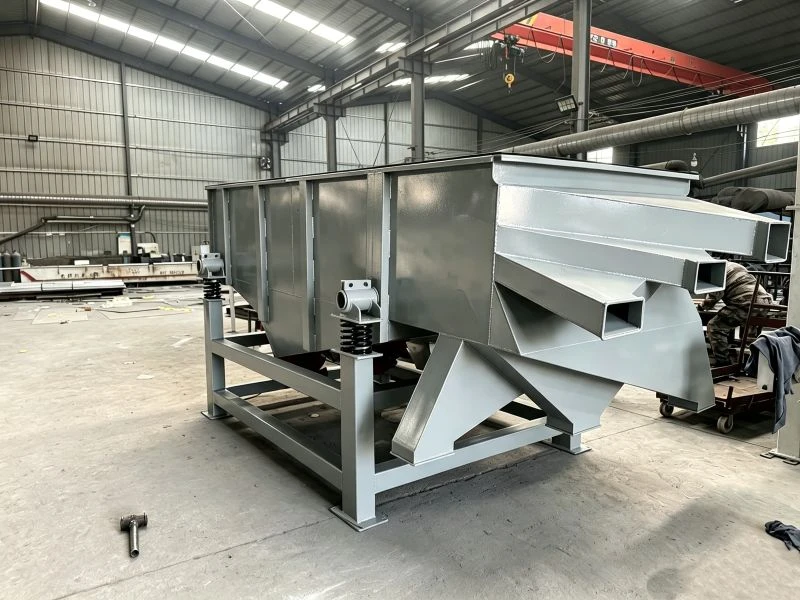
Linear Vibrating Screen Troubleshooting
| Problem | Possible Cause | Adjustment |
|---|---|---|
| Low screening efficiency | Excessive feed rate | Reduce and stabilize feeding |
| Material accumulates | Poor flowability or improper vibration | Adjust feeding and vibration settings |
| Mesh blocks frequently | Fine, sticky, or moist material | Check mesh and anti-blinding method |
| Low screening capacity | Mesh too fine or insufficient screening area | Review mesh size and screen area |
| Uneven material flow | Uneven feeding | Improve feed distribution |
For more detailed solutions to mesh blockage, abnormal vibration, poor screening, and other operating problems, see our vibratory sifter troubleshooting guide.
Case Study: Improving Lime Powder Screening Efficiency with a Linear Vibrating Screen
An overseas coatings manufacturer required a screening process for lime powder, but their existing equipment suffered from low efficiency and significant production bottlenecks.
After an assessment by the technical team at Yuanjing Machinery, the root causes were identified as improper motor angles—leading to uneven material distribution—and a mismatch between vibration amplitude parameters and material characteristics. The linear vibrating screen solution provided by Yuanjing addressed these issues through two key measures:
1. Recalculating and adjusting the motor mounting position so that the line of action of the resultant force passed through the equipment’s center of gravity, thereby resolving the issue of material flow deviation.
2. Reconfiguring the eccentric weights based on the density and particle size of the lime powder to achieve the optimal amplitude, preventing problems such as material “floating” (airborne particles) or excessive compaction that hinders screening.
The results were remarkable: compared to the client’s original equipment, the Yuanjing linear motion vibrating screen delivered an hourly throughput increase of over one tonne. This tangible boost in efficiency successfully resolved the client’s production bottleneck.
For an example of production line integration, please refer to our glass and paper scrap screening case study. This project features a custom linear vibrating screen with discharge outlets positioned to match the customer’s downstream receiving points.

How to Maintain a Linear Vibrating Machine for Long-Term Efficiency?
1. Properly control the amplitude
For lightweight materials, reduce the motor’s eccentric block setting to lower the amplitude and minimize impact-related wear on the screen mesh.
2. Match the excitation force appropriately
Excessive excitation force can cause the screen mesh to detach and accelerate wear; adjust the force to the standard operating range as required.
3. Properly maintain shock-absorbing springs
Abnormal screen body oscillation or a drop in screening efficiency indicates spring aging; replace the entire set simultaneously to prevent equipment damage caused by uneven load distribution.
4. Select equipment suited to the material + Clean promptly
Use stainless steel screen frames and mesh for corrosive materials; clear residual material from the screen surface after each operation to prevent caking, mesh clogging, and corrosion of the screen body.
Wnioski
Improving linear vibrating screen efficiency requires the right balance of screen mesh, feed rate, vibration settings, and material flow. Regular mesh inspection and cleaning also help prevent screen blinding and maintain stable screening capacity.
There is no single setting that works for every material. Particle size, moisture, bulk density, required mesh size, and production capacity should all be considered when adjusting screening conditions.
If you need equipment configured for your material, mesh size, and required capacity, explore our linear vibrating screen solutions or contact us for a customized screening recommendation.