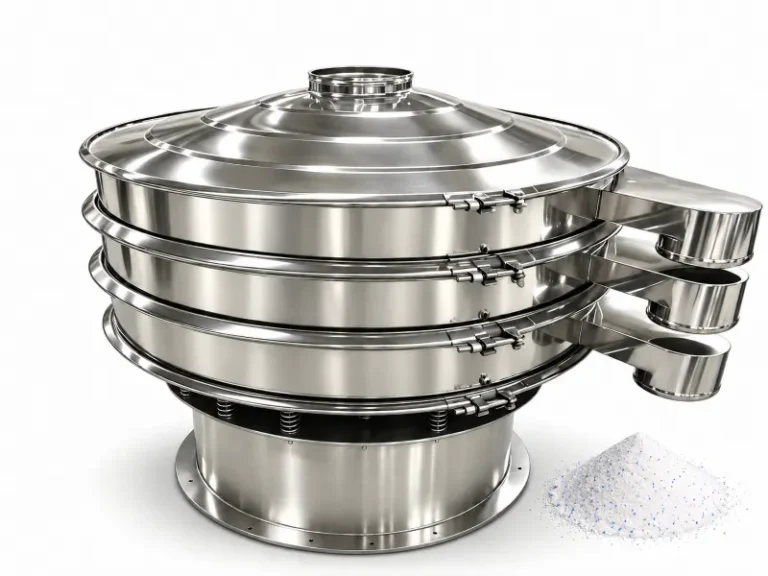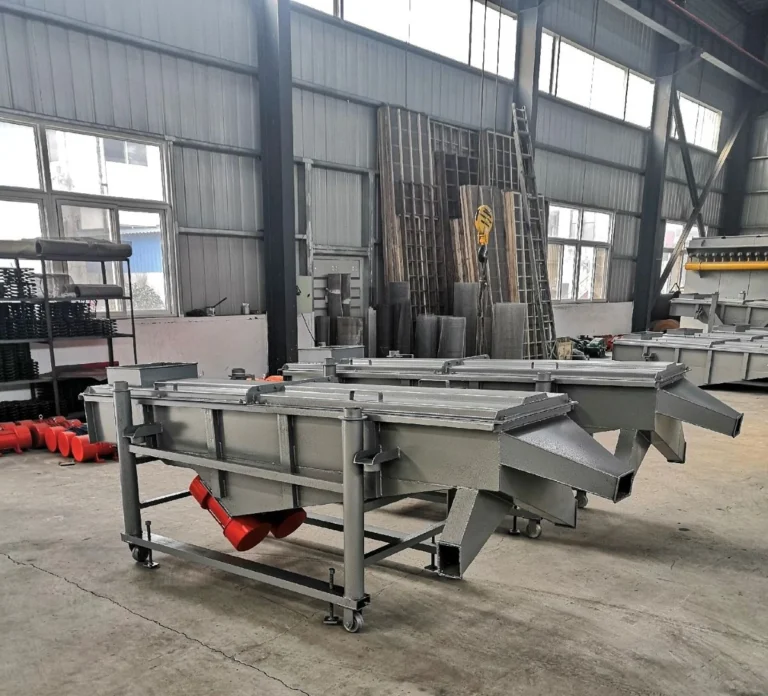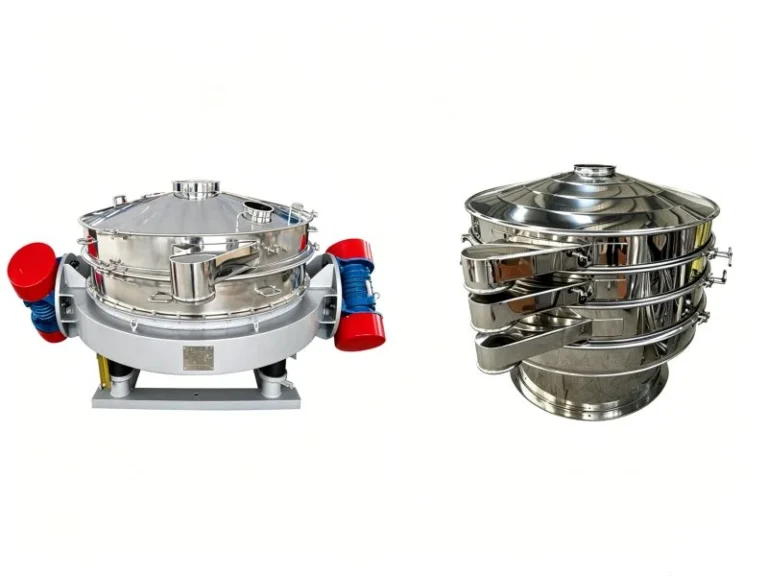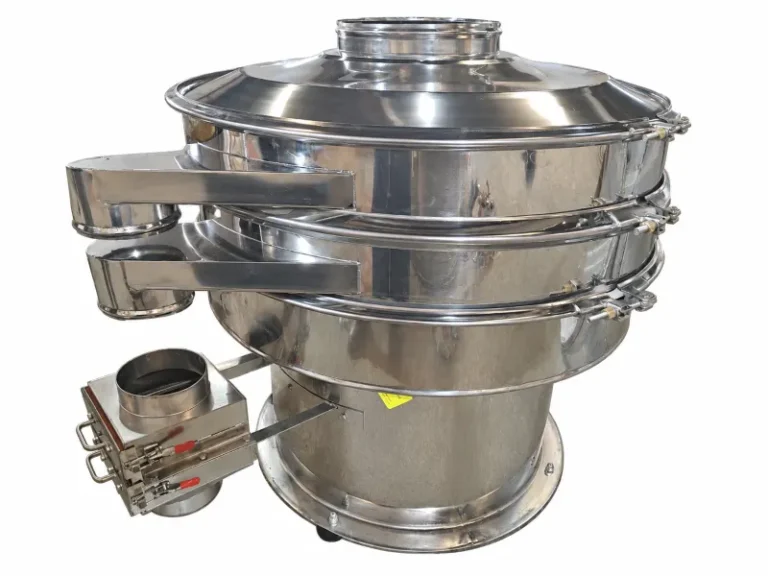
Przesiewanie sody kalcynowanej: ograniczanie zatykania sit i dobór materiałów
Soda ash screening becomes harder when the material picks up moisture and forms lumps during storage or handling. Damp powder can stick to the mesh and block the openings, forcing operators to stop production for cleaning. Under damp conditions, unsuitable contact materials may also corrode and contaminate the product.
Before asking for a model or price, tell the supplier whether you handle light or dense soda ash, how well it flows and how often the mesh needs cleaning. Those details are more useful than a nominal capacity figure when deciding on seals, mesh cleaning and contact materials.
Why Does Soda Ash Cause Mesh Blinding?
Moisture is often the starting point. Soda ash exposed to humid air can cake, and damp particles may cling to the mesh wires. As the deposits spread, fewer openings remain available. Output drops even though the feed rate and machine settings have stayed the same.
Light soda ash generally releases more airborne dust during handling than the denser, more granular grade. Its fine particles also need closer attention to containment and adhesion at the mesh. Dense soda ash usually produces less dust, but exposure to moisture can still cause caking.
Soda ash forms an alkaline solution in water. If damp deposits or cleaning liquids remain in contact with the equipment, check material compatibility against the operating temperature, impurities and cleaning chemicals.
For soda ash screening, the feed condition and operating environment should guide both the cleaning system and the choice of contact materials.

Why Consider a Direct Discharge Sifter for Soda Ash?
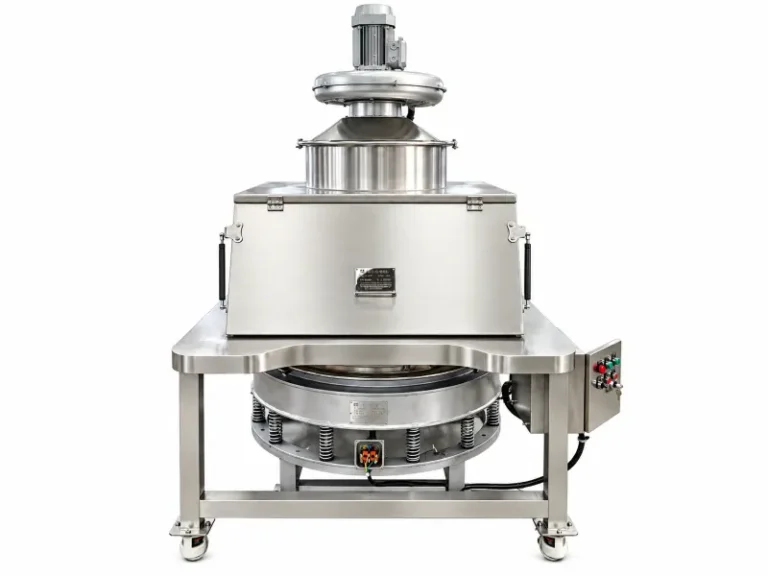
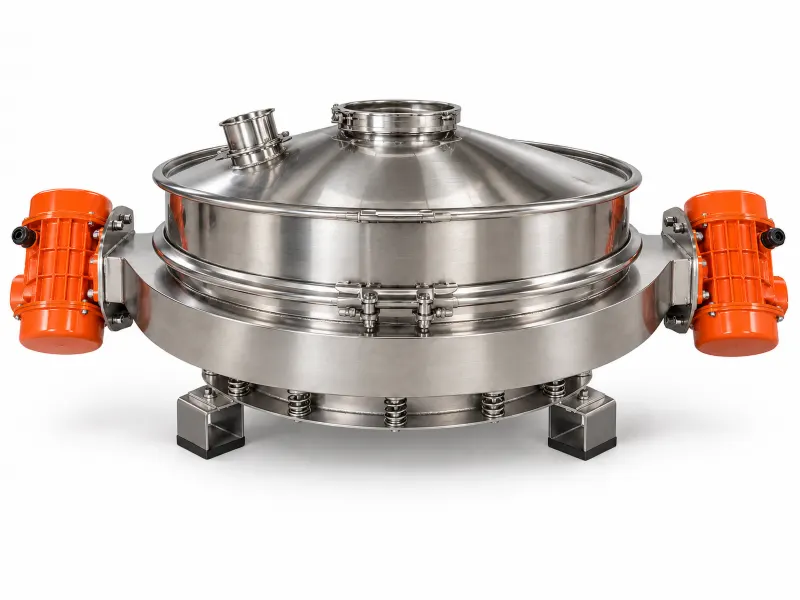
In a direct discharge sifter, material that passes through the mesh leaves through the outlet below the screening area. Oversized lumps and foreign particles stay above the mesh for removal.
This short discharge path suits reasonably free-flowing soda ash that needs check screening. Material can leave as soon as it passes through, reducing unnecessary time on the screen.
There are limits, though. A direct discharge arrangement cannot restore the flow of heavily caked powder or stop damp particles from sticking to the wires. The seals, feed rate and mesh cleaning system still need to match the application.
If you need several precisely separated size fractions, confirm that requirement with the supplier before choosing this arrangement.
How to Configure a Sifter for Soda Ash Screening
1. Match Dust Containment to Light or Dense Soda Ash
Confirm the grade first, then observe what happens when the material is fed into the machine.
With light soda ash, pay close attention to the inlet, outlet and cover seals. Securely clamped flexible connections and suitable sealing strips help contain the powder. If the line has dust extraction, the sifter connections need to work with it.
Our guide to dust control at powder transfer points covers connection seals, extraction and enclosed discharge arrangements.
Dense soda ash generally produces less dust. A simpler sealing arrangement may be acceptable if the handling conditions allow it, but necessary containment should remain in place.
Dust containment and explosion protection require separate decisions. Pure sodium carbonate is not flammable or combustible, so visible dust alone does not establish a need for an explosion-protected motor.
If other materials or the surrounding process create a classified hazardous area, specify the motor and other electrical components for that area.
2. Select Mesh Cleaning Based on Actual Blinding
Ask two questions before choosing between bouncing balls and ultrasonic deblinding:
- What screening aperture does the process require?
- How often does the mesh block during normal production?
Give the supplier the aperture in micrometres and the mesh standard as well as the mesh number. Otherwise, quotations may be based on different interpretations of the same requirement.
For coarser screening where blockage is infrequent, bouncing ball cleaning may be enough. Its mechanical arrangement is simple and straightforward to maintain.
Fine screening, a high proportion of fine powder or repeated adhesion to the mesh may justify ultrasonic deblinding. Use representative material to test the choice; mesh number alone does not tell the whole story.
For an explanation of how vibration reaches the screen mesh and helps keep apertures clear, read our guide to ultrasonic mesh deblinding.
An 80 Mesh Light Soda Ash Application
One customer screening light soda ash at 80 mesh had to stop for mesh cleaning every two to three days when using bouncing balls.
After switching to ultrasonic cleaning, the customer reported less frequent shutdowns. That result belongs to this installation. A different feed or production line may behave differently.
If you have no cleaning history to work from, make an initial selection based on the required aperture and check it in a material trial. Run the trial long enough to see whether deposits build up. A clear mesh in the first few minutes does not show how it will perform over a production run.
3. Confirm the Product Contact Materials
Check the screen body, mesh and other contact parts against the moisture condition, temperature, impurities and cleaning process.
For routine dry soda ash screening, 304 stainless steel is a common option, subject to compatibility confirmation.
Where damp service, contaminants or cleaning chemicals affect corrosion resistance, discuss stal nierdzewna 316L with the supplier. Product cleanliness requirements may also influence the specification.
Moisture alone is not enough to decide that 316L is necessary. The material recommendation needs to account for the full service conditions.
Have the manufacturer state the grades of both the body and the mesh in writing before the final price negotiation. This makes it easier to compare quotations and spot any change in the contact materials.
What If the Soda Ash Is Already Damp or Caked?
Check whether the powder still flows. Slight moisture uptake and heavy caking need different responses.
Slightly damp soda ash may still be screened if it remains free flowing. When adhesion makes bouncing ball cleaning ineffective, test ultrasonic deblinding with the actual feed.
Heavily caked or excessively wet material may need suitable drying or lump breaking before it reaches the screen. Feeding it directly onto the mesh can quickly cause blockage and reduce throughput.
Also check where the moisture enters the process. A stronger cleaning system will not, on its own, solve a storage or handling problem.
What to Send the Manufacturer Before Requesting a Quote
Describe the soda ash screening duty in enough detail for the supplier to assess the configuration.
| Informacje | Co należy potwierdzić |
|---|---|
| Soda ash grade | Light or dense |
| Feed condition | Dry, slightly damp or visibly caked |
| Cel przesiewania | Removal of lumps, foreign particles or another specified separation |
| Mesh specification | Aperture, mesh number and applicable standard |
| Production requirement | Normal and peak feed rates |
| Blinding history | Cleaning frequency and current cleaning method |
| Contact materials | Required grades and relevant cleaning conditions |
| Instalacja | Connections, dust extraction and any hazardous area requirements |
The quotation should name the mesh cleaning method, contact material grades, mesh specification and sealing arrangement. If explosion protection is required, ask for the applicable certification details.
Put the agreed specifications into the equipment acceptance criteria so they can be checked on delivery.
If you are still comparing equipment types, our przewodnik wyboru przesiewacza wibracyjnego explains the broader selection factors.
Discuss Your Soda Ash Screening Requirement
Send us the soda ash grade, moisture condition, required aperture and target throughput. If you already run a sifter, include the cleaning method and how often operators have to stop to clear the mesh.
We can use that information to review the seals, mesh cleaning system and contact materials before recommending a configuration.
Czy potrzebuję ultradźwiękowego przesiewacza wibracyjnego do drobnego proszku?
Does Light Soda Ash Always Need Ultrasonic Screening?
No. It depends on the aperture, feed condition and actual blinding frequency.
Bouncing balls may be adequate when blockage is infrequent. Ultrasonic deblinding is worth testing when fine powder or adhesion repeatedly interrupts production. The 80 mesh application above illustrates one customer’s experience; it is not a universal cutoff for selecting ultrasound.
How Should Capacity Be Confirmed for Soda Ash Screening?
Use the actual material grade, production aperture, normal and peak feed rates, and representative feed condition. Agree on an operating margin with the supplier and verify throughput through testing where needed.
If the machine will use several meshes, confirm performance at the finest required aperture. Our guide to wydajność przesiewacza wibracyjnego w linii explains how material properties, aperture and feeding conditions affect output.
Is 316L Always Better Than 304 for This Application?
The service conditions determine the appropriate grade. For routine dry operation, 304 may be suitable after compatibility confirmation. Damp deposits, impurities, temperature and cleaning chemicals may justify evaluating 316L.
Ask the supplier to explain the recommendation against your operating conditions and confirm the supplied grades in writing.
Why Does My Soda Ash Sifter Keep Clogging After Cleaning?
If the mesh blocks again soon after cleaning, check the feed condition and how material enters the machine. Damp powder can quickly coat the wires, while uneven feeding may leave a thick layer over the screen.
Record when the blockage returns and inspect the deposits. Confirm that the installed aperture matches the required separation, then check whether the current mesh cleaning system is effective. Changing the cleaning method may help, but moisture pickup or excessive feeding also needs attention.
What Information Is Needed for a Light Soda Ash Sieving Trial?
Provide a representative sample, the required aperture and mesh standard, normal and peak feed rates, and the acceptable amount of oversized material in the screened product.
The sample should reflect production conditions, including any moisture or caking normally present. Ask the supplier to record sustained throughput, mesh buildup, cleaning interruptions and the material collected at each outlet. A short trial with unusually dry powder may give a misleading picture of daily operation.
Can an Existing Direct Discharge Sifter Be Upgraded with Ultrasonic Deblinding?
It may be possible, but the existing screen assembly needs to be checked first. The mesh frame, transducer mounting, resonance components and generator must form a compatible system. Adding a generator alone is not enough.
Send the supplier the machine model, screen diameter, mesh specification and photos or drawings of the frame. Include the powder condition and current cleaning frequency so the supplier can assess whether a retrofit is practical or a replacement screen assembly is needed.