غربلة مسحوق المنظفات: كيفية إزالة التكتلات والتحكم في حجم الحبيبات
تزيل غربلة مسحوق المنظف التكتلات كبيرة الحجم وتفصل الحبيبات لتلبية مواصفات حجم الجسيمات المطلوبة. قد يكفي غربال واحد للتحقق من وجود جسيمات كبيرة الحجم قبل التعبئة. وتتطلب إزالة كل من الجسيمات الخشنة والجسيمات الدقيقة الزائدة نقطتي فصل لجمع النطاق الحجمي المطلوب. تعتمد فتحات الغربال المناسبة على متطلبات المنتج النهائي وسلوك المسحوق أثناء الاختبار. يمكن للغربلة إزالة التكتلات، لكنها لا تستطيع إصلاح المسحوق المتضرر بسبب الرطوبة أو سوء التخزين.

لماذا يشكّل مسحوق المنظف تكتلات؟
يمكن أن يتكتل مسحوق المنظف عندما تتسبب الرطوبة في التصاق الجسيمات ببعضها أثناء المعالجة أو التخزين. ويعتمد الميل إلى التكتل على التركيبة والرطوبة والتعبئة ومدة التخزين. يساعد تحديد موضع تشكّل التكتلات في معرفة أين تلزم الغربلة وأي ظروف في المراحل السابقة تحتاج إلى المعالجة.
امتصاص المكونات للرطوبة
تمتص بعض مكونات المنظف الرطوبة من الهواء، مما يجعل أسطح الجسيمات لزجة ويسمح للجسيمات المتجاورة بالترابط. وتختلف الاستجابة باختلاف التركيبة، لذا لا يوجد حد واحد للرطوبة ينطبق على جميع مساحيق الغسيل.
الظروف الرطبة والتخزين المطوّل
يمكن أن تؤدي الأكياس غير المحكمة الإغلاق والتعرض للهواء الرطب إلى التكتل. ويمنح التخزين لفترة أطول الرطوبة مزيدًا من الوقت للتغلغل في المسحوق غير المحمي بصورة كافية. افحص إحكام إغلاق العبوات وظروف المستودع ومدة التخزين عند ظهور تكتلات في المواد المخزنة.
التكتلات بعد الخلط والمناولة
قد تكون التكتلات موجودة بالفعل بعد الخلط أو تتشكل أثناء التخزين المؤقت قبل التعبئة. قارن عينات من هذه المراحل لتحديد موضع المشكلة. إذا خرج المسحوق من الخلاط بحالة جيدة لكنه وصل إلى خط التعبئة متكتلًا، فافحص مراحل التخزين والنقل بينهما.
التكتلات غير المرغوبة مقابل الحبيبات المقصودة
ليست الجسيمات الكبيرة عيوبًا بالضرورة. فقد تحتوي تركيبات المنظفات على حبيبات أو إضافات مُشكّلة عمدًا يجب أن تبقى في المنتج. حدّد حد الغربلة وفقًا لمواصفات المنتج النهائي بدلًا من اعتبار كل جسيم كبير نفاية.
كيفية إزالة التكتلات دون فقدان المنظف الصالح للاستخدام
تبدأ إزالة التكتلات بالتمييز الواضح بين الحبيبات المقبولة والمواد الكبيرة غير المرغوب فيها. اختر فتحة غربال تحتجز المواد غير المرغوب فيها، ثم افحص المواد المرفوضة للتأكد من عدم التخلص من منظف صالح للاستخدام.
فصل التكتلات الكبيرة عن المنتج المقبول
تمر الجسيمات المقبولة عبر الغربال إلى مخرج المنتج. أما التكتلات الأكبر من الفتحات فتبقى على الغربال وتتجه نحو مخرج المواد الخشنة. وقد تحتجز الفتحة الصغيرة أكثر من اللازم الحبيبات الجيدة إلى جانب التكتلات، مما يزيد من فقدان المنتج.
إذا كان المسحوق يستوفي بالفعل مواصفات حجم الجسيمات، فقد يكفي فحص المواد الكبيرة. وعندما تكون هناك حاجة أيضًا إلى إزالة الجسيمات الدقيقة الزائدة، راجع الفرق بين غربلة السلامة وتصنيف الجسيمات قبل اختيار التهيئة المناسبة.
تحقّق مما إذا كانت التكتلات تحتاج إلى معالجة منفصلة
قد تتفكك التكتلات الهشة أثناء الغربلة، لكن التكتلات الصلبة قد تتطلب تفكيكًا منفصلًا. لا تدفعها عبر شبكة الغربال بالقوة لمجرد استعادة المزيد من المنتج.
افحص التكتلات المرفوضة قبل تحديد ما إذا كان ينبغي إعادة معالجتها. ويجب أن تظل حالتها من حيث الرطوبة وتركيبها وجودتها مستوفية لمتطلبات إعادة الاستخدام.
ضع الغربال في موضع تشكّل التكتلات
قارن العينات بعد الخلط، وبعد التجفيف والتبريد حيثما ينطبق ذلك، وقبل التعبئة. ضع الغربال حيث يمكنه التقاط المواد المسببة للمشكلة المحددة.
يمكن لغربال نهائي بالقرب من خط التعبئة التقاط المواد الكبيرة التي تشكلت في المراحل السابقة. ومع ذلك، فإن التكتل المتكرر يتطلب أيضًا معالجة ظروف التشغيل أو التخزين التي تسببت فيه.
| حالة المادة | ما ينبغي تقييمه |
|---|---|
| عدد قليل من التكتلات الكبيرة في مسحوق مقبول بخلاف ذلك | التحقق من الغربلة لإزالة المواد الكبيرة |
| الجسيمات الخشنة والجسيمات الدقيقة الزائدة معًا | التصنيف لجمع نطاق الأحجام المطلوب |
| تكتلات صلبة أو مسحوق رطب بشكل واضح | جودة المنتج ومدى ملاءمته لإعادة المعالجة |
| وجود الكثير من الحبيبات المقبولة في المواد المستبعدة | فتحة المنخل وانسداد فتحاته ومعدل التغذية |

كيفية اختيار فتحات المناخل للتحكم في حجم حبيبات مسحوق الغسيل
يبدأ اختيار المنخل بتحديد نطاق حجم الحبيبات المطلوب والكمية المسموح بها من الجسيمات كبيرة الحجم والدقائق الناعمة. حدد نقاط الفصل أولاً، ثم تأكد من أن المناخل المقترحة يمكنها الوفاء بهذه الحدود عند استخدامها مع مسحوق الغسيل الفعلي.
تحديد نطاق الأحجام المقبول وحدود الأحجام الخارجة عنه
حدد الحدين الأعلى والأدنى لحجم الجسيمات، إلى جانب النسبة المسموح بها من المواد خارج هذا النطاق. ينبغي أن تستند هذه المتطلبات إلى مواصفات المنتج النهائي.
حلل عينة ممثلة من مادة التغذية قبل اختيار المنخل. يحتاج المسحوق الذي يحتوي على تكتلات عرضية إلى ترتيب غربلة يختلف عن المسحوق الذي يحتوي على كميات كبيرة من الجسيمات الخشنة والدقائق الناعمة معاً.
استخدام مرحلتين للغربلة لجمع نطاق أحجام محدد
يمكن لمنخل واحد إزالة التكتلات كبيرة الحجم. وعندما يلزم فصل كل من الجسيمات الخشنة والدقائق الناعمة عن المنتج، تكون هناك حاجة إلى منخلين بفتحتي غربلة مختلفتين.
على سبيل المثال، يمكن تقييم نطاق مستهدف اسمي قدره 8–1.2 مم باستخدام منخل علوي بفتحات 1.2 مم ومنخل سفلي بفتحات 0.8 مم:
| مرحلة الغربلة | المادة المفصولة | المخرج |
|---|---|---|
| المادة المحتجزة على المنخل العلوي ذي الفتحات البالغة 1.2 مم | الجسيمات والتكتلات كبيرة الحجم | مخرج المواد الخشنة |
| المادة التي تمر عبر فتحات 1.2 مم ولكنها تبقى على المنخل ذي الفتحات البالغة 0.8 مم | فئة الحجم المستهدف | مخرج المنتج |
| Passes through the 0.8 mm lower screen | الجسيمات الدقيقة | Fines discharge |
This is an illustrative configuration, not a standard specification for washing powder. Particle shape, orientation and operating conditions affect passage through the openings, so the resulting fractions must be checked during testing.
For a broader explanation of the screen deck and outlet arrangement, see how each separation point determines where coarse material, product and fines are collected.
Specify Aperture Size, Not Just Mesh Count
State the required opening in millimeters or microns. If using a mesh count, also confirm the mesh standard, wire diameter and actual aperture.
Mesh count alone does not fully describe a screen. Wire diameter affects the opening and available open area, both of which influence material passage and throughput.
Check Particle Size and Composition at Every Outlet
Compare the particle size distributions of the feed, accepted product, coarse rejects and fines. This shows whether each fraction is reaching the intended outlet.
If different ingredients have different particle sizes, also check that screening has not changed the blend composition. Larger additive granules may be intentional components of the formulation. Removing them could produce powder that meets a size limit but no longer meets the intended composition.
How to Configure and Validate a Detergent Powder Screening Machine
Once the separation points are defined, match the machine to the required feed rate, material behavior and installation space. A production trial should confirm stable output, acceptable product recovery and limited granule damage.
Match the Screen Configuration to the Separation Duty
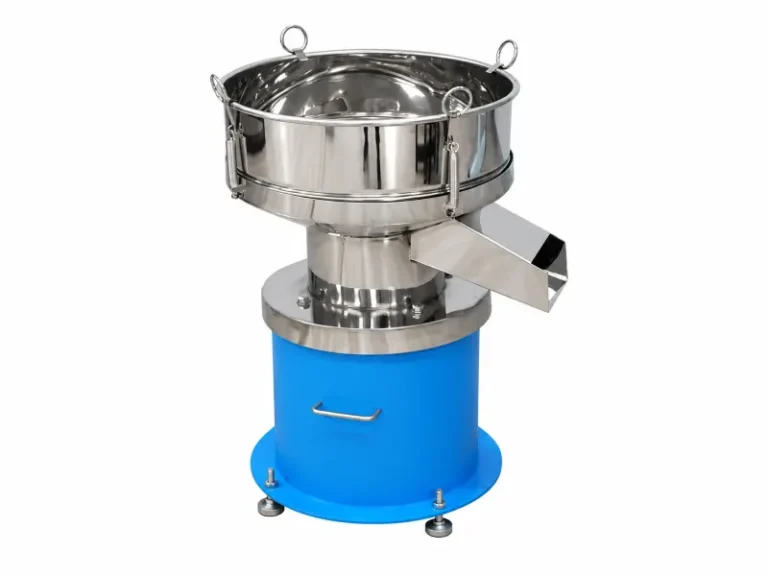
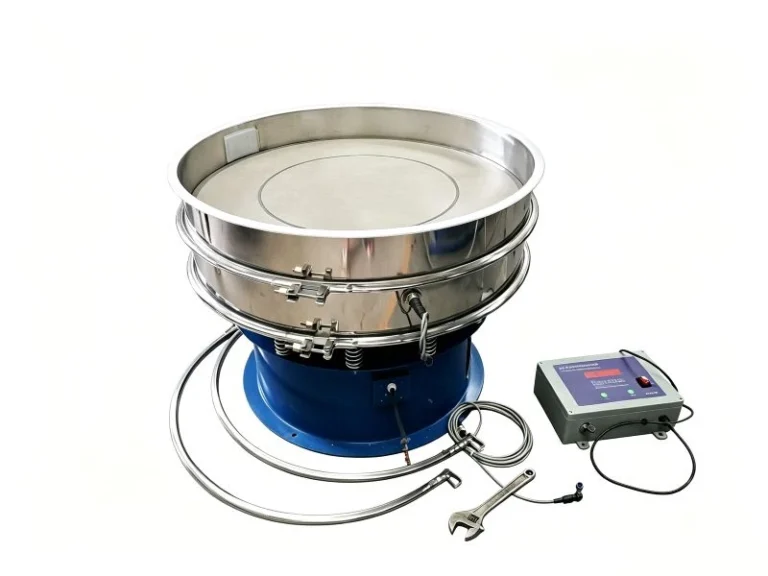
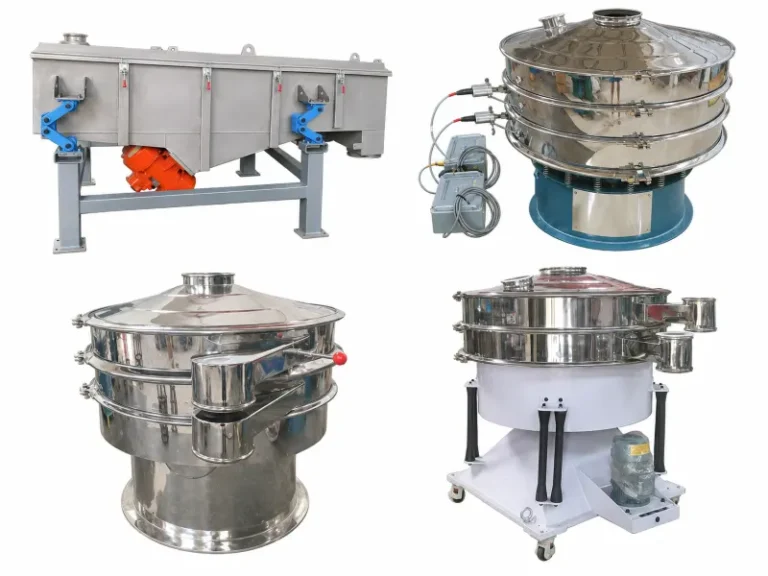
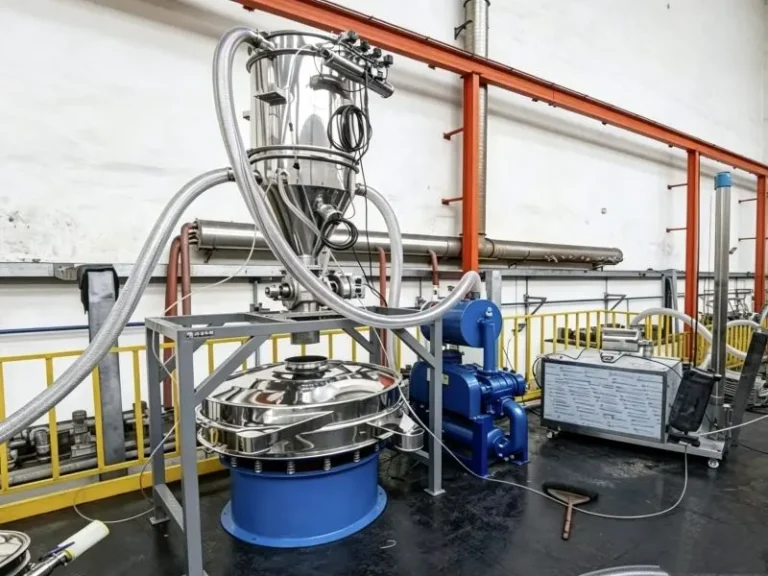
For removing occasional oversized lumps before packaging, evaluate a single-deck آلة غربلة مسحوق المنظفات. An inline screen may suit installations with a direct material flow path, while a rotary vibrating screen offers flexibility for general screening and grading.
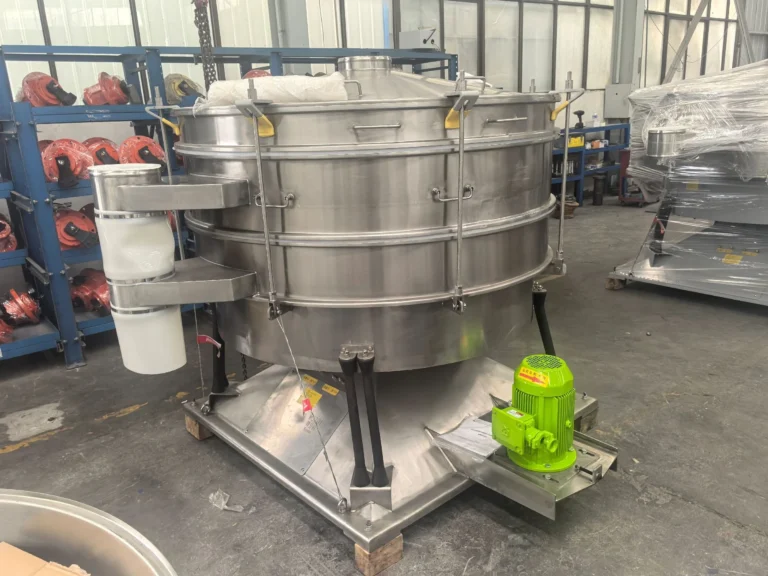
Where both coarse particles and fines must be removed, consider a غربال اهتزازي متعدد الطوابق. For fragile granules, a tumbler screen may also be worth testing.
Size the screening area for normal and peak feed rates. Check that contact materials and seals suit the formulation and cleaning method, and that the machine provides enclosed connections and easy access for inspection.
Control Feeding and Check for Mesh Blinding
Feed the powder steadily and distribute it across the screen. Surges can create a thick material bed, reducing the opportunity for acceptable particles to pass through the openings.
During the trial, inspect the mesh for buildup and check whether output falls as the run continues. If blockage develops, review moisture, feed loading and screen condition before choosing a cleaning system. Bouncing balls or ultrasonic cleaning may help, depending on the mesh and material. Our guide to screen blinding causes and prevention explains these checks in more detail.
Limit Granule Breakage During Screening and Transfer
Compare feed and discharge samples for newly generated fines. Take samples around transfer points as well as the screen to identify where breakage occurs.
If granules are being damaged, assess vibration settings, time on the screen and transfer drop heights. Make adjustments within the equipment supplier’s operating limits, then check that the required separation and throughput are maintained.
Validate Throughput, Size Compliance and Product Recovery
Agree on acceptance criteria before testing. Run representative material at the expected production rate for long enough to reveal buildup, blinding or changes in output.
| Test item | What to record |
|---|---|
| Throughput | Feed and accepted-product mass per unit of operating time |
| Size compliance | Particle size distribution at each outlet, including oversize and fines |
| Product recovery | Accepted-product mass and usable material lost in the reject streams |
| Granule condition | Changes in fines content or visible particle damage |
| استقرار التشغيل | Feed consistency, blocked screen area and cleaning interruptions |
Check the material balance across all outlets, including material remaining inside the machine.
Accepted-product yield (%) = Accepted-product mass ÷ Feed mass × 100
The yield target depends on how much off-size material was present in the feed. A high yield alone does not prove effective screening; the collected product must also meet its particle size and composition requirements.
If a trial misses the agreed limits, identify the cause, adjust the configuration and repeat the affected checks before approving the machine for production.
الأسئلة الشائعة
What Mesh Size Is Suitable for Detergent Powder Screening?
Choose the aperture according to the particles you need to retain and remove. An oversize check before packaging may require a different opening from granule classification. Specify the opening in millimeters or microns and confirm performance with a representative washing powder sample.
Can One Screening Machine Remove Both Lumps and Fine Powder?
Yes. A machine with two suitable screen decks can discharge oversized lumps, collect the desired granules and remove fines separately. A single screen provides only one separation point and cannot isolate a middle size range when both coarse particles and fines are present.
Why Are Good Detergent Granules Appearing in the Rejects?
The opening may be too small, or acceptable granules may reach the reject outlet before passing through. Check for mesh blockage, uneven feeding and material buildup. Particles close to the aperture size can also be difficult to separate.
Where Should a Washing Powder Sieve Be Installed Before Packaging?
Position it where it can intercept lumps formed during processing or storage. Check whether downstream conveyors or holding bins cause further agglomeration or granule damage. The best location depends on where the problem occurs and how material reaches the packaging machine.
Can Screening Prevent Detergent Powder from Caking Again?
Screening removes existing oversized lumps but does not prevent new ones from forming. If washing powder cakes after screening, check moisture exposure, product temperature, packaging seals and storage conditions. Repeated caking requires attention to its cause as well as removal of affected material.
What Information Is Needed for a Detergent Powder Screening Trial?
Provide a representative sample, feed particle size distribution, target size range, moisture content, bulk density and required throughput. Describe problems such as lumps before packaging or frequent mesh blockage, and include installation space and connection requirements.
Request a Detergent Screening Evaluation
Send us your material sample details, target particle size and required capacity. We can help assess a suitable آلة غربلة مسحوق المنظفات and configuration for testing.