Criba vibratoria rotatoria personalizada: tamaños, materiales, pisos y configuraciones de cribado
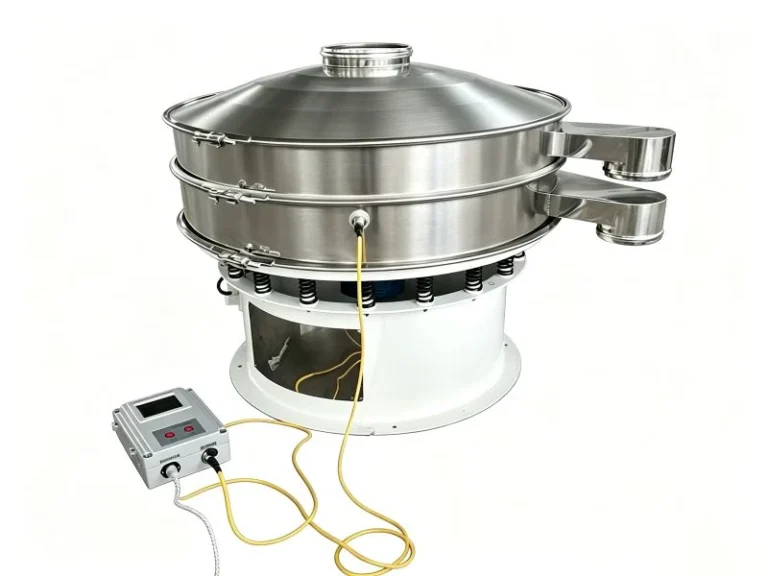
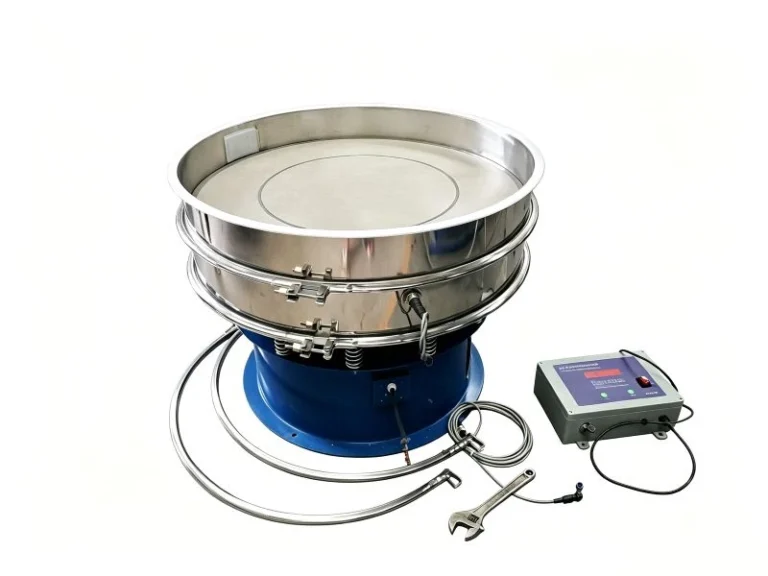
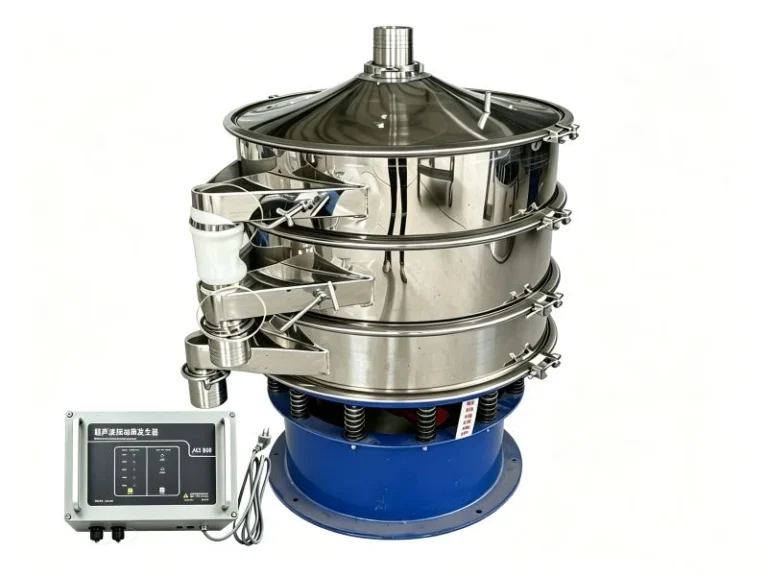
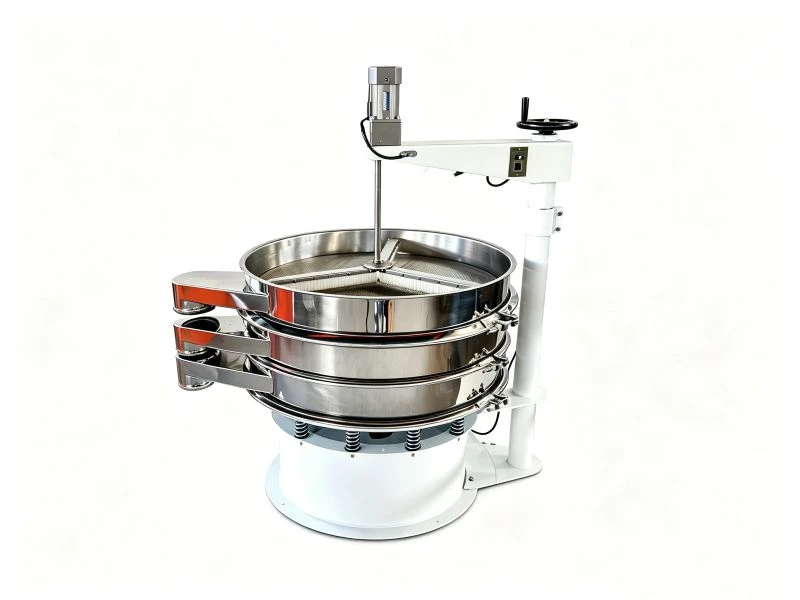
A custom rotary vibrating screen can be built around the material, required capacity, particle size, and layout of the production line. Common options include screen diameter, machine material, number of decks, mesh size, cleaning system, and inlet and outlet design.
A food powder line may need SS304 construction and a sanitary finish. Pharmaceutical applications may require SS316L and a sealed structure. Fine powders may need ultrasonic mesh cleaning, while high-capacity production may call for a larger screening area or multiple decks.
What Can Be Customized on a Rotary Vibrating Screen?
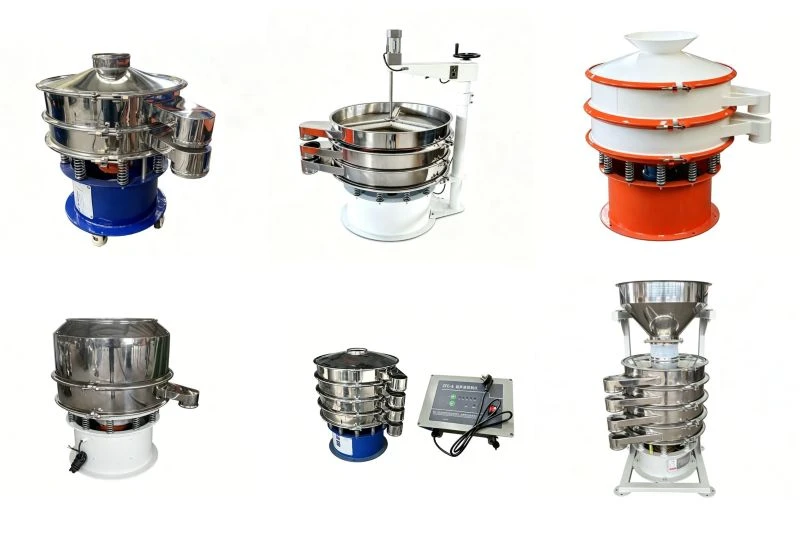
A custom criba vibratoria rotatoria can be configured in several ways to suit the material and production process.
The main options include screen diameter, machine construction material, number of screening decks, screen mesh and opening size, mesh cleaning system, feed inlet and discharge outlet, sealing and dust control, and motor and electrical configuration.
Screen diameter is mainly related to screening area and required output. Material selection is based on the product being screened and the working environment. Deck number depends on how many size fractions need to be separated.
Mesh cleaning is also important. Bouncing balls are suitable for many standard applications, while ultrasonic or brush cleaning may be needed for fine or sticky powders.
When the machine needs to connect with existing equipment, the inlet and outlet of the Custom Rotary Vibrating Screen can be made to match the production line.
Videos relacionados
How to Choose the Right Screen Size and Capacity?
The size of a custom rotary vibrating screen should be selected according to the required capacity, material characteristics, mesh size, and available installation space.
A larger screen provides more screening area and can handle higher output. However, screen diameter alone does not determine capacity. Material properties, mesh size, moisture, and feed conditions all affect actual output.
Screen Diameter and Screening Area
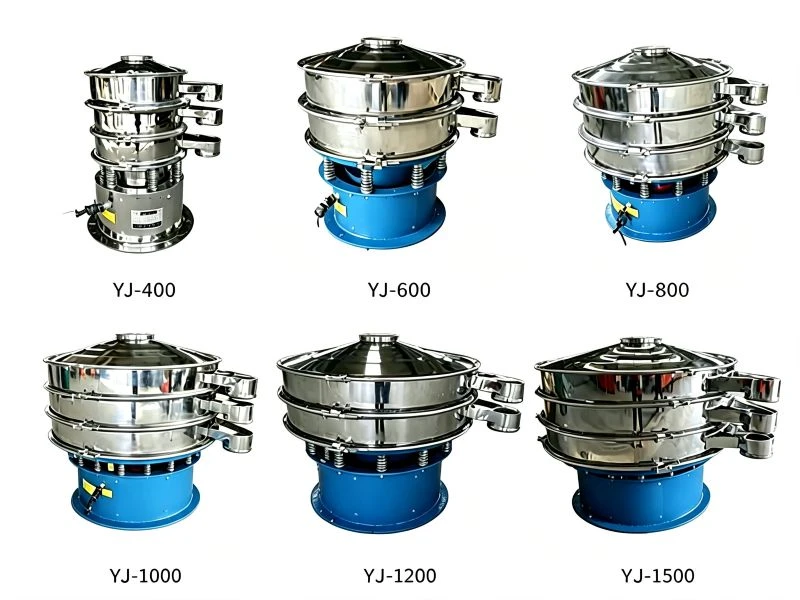
Common rotary vibrating screen diameters include 600, 800, 1000, 1200, and 1500 mm. Larger sizes are available for applications with higher capacity requirements.
A larger screening area gives the material more space to move across the mesh. This is useful for fine powder, where particles need enough time to pass through small openings.
Installation space also needs to be checked before choosing the diameter. The factory should have enough room around the machine for feeding, discharge, cleaning, screen replacement, and routine maintenance.
For a custom rotary vibrating screen, the diameter should be selected together with the required capacity rather than as a separate specification.
Capacity Requirements
Actual screening capacity is affected by material type, particle size, moisture content, mesh size, feed rate, required screening accuracy, and number of decks.
For example, fine powder usually has a lower capacity than coarse granules on the same screen. Fine particles are more likely to remain on the mesh or block the openings, especially when a fine screen is used.
When asking for a custom rotary vibrating screen, provide the required capacity in kg/h or tons/h. This gives the manufacturer a useful starting point for selecting the screen diameter and configuration.
When Do You Need a Larger Screen?
A larger tamizador vibratorio industrial is normally used when the required output is high or when the material needs more screening area.
Fine powder is one common case. A larger screening area can help maintain production capacity when using a fine mesh.
If floor space is limited, a multi-deck design can be a practical alternative. Several screening stages can be installed in one machine without simply increasing the machine diameter.
The machine should also be operated within its suitable capacity range. Continuous overloading can reduce screening performance and increase wear on the screen mesh and machine components.
Which Material and Deck Configuration Should You Choose?
The material of a custom rotary vibrating screen should match the product and working conditions.
Carbon steel is commonly used for general industrial screening, including minerals, sand, and abrasive materials. SS304 is widely used for food powders and applications with general hygiene requirements. SS316L is more suitable for pharmaceutical powders, high-purity products, and some corrosive materials. PP can also be considered for certain chemical applications.
Deck number is based on the required separation. A single-deck screen is suitable when only one size needs to be removed or separated. A multi-deck rotary vibrating screen can produce several size fractions in one machine.
| Screening Requirement | Recommended Configuration | Aplicaciones típicas |
| General industrial screening | Carbon steel | Minerals, sand, abrasive materials |
| Food powder screening | SS304 | Flour, starch, sugar, spices |
| Pharmaceutical powder screening | SS316L | Pharmaceutical powders, fine chemicals |
| Corrosive materials | SS316L or PP | Chemical powders, corrosive materials |
| One size separation | Single deck | Removing oversize or fine particles |
| Two or more size fractions | Multi-deck screen | Powder and granule classification |
| Fine powder screening | Fine mesh + ultrasonic cleaning | Fine chemicals, coating powder, battery materials |
| Sticky or easy-to-clog materials | Brush or ultrasonic cleaning | Sticky powder, fine powder |
| High-capacity screening | Larger screen diameter | Continuous production, high-output lines |
| Limited installation space | Compact or multi-deck design | Small production lines, space-limited plants |
Our 20-unit rotary vibrating screen project illustrates how 316L stainless steel contact parts and screen configurations were specified for a customer’s abrasive screening requirements.
For a practical two-deck example, see our magnesium granule screening case, using 2mm and 0.5mm screen openings to obtain the required ≤0.5mm fraction.
Which Cleaning System Is Right for Your Material?
The cleaning system of a custom rotary vibrating screen should be selected according to the material and mesh size. Its main purpose is to reduce mesh blockage and keep the screening process stable.
Bouncing Ball Cleaning
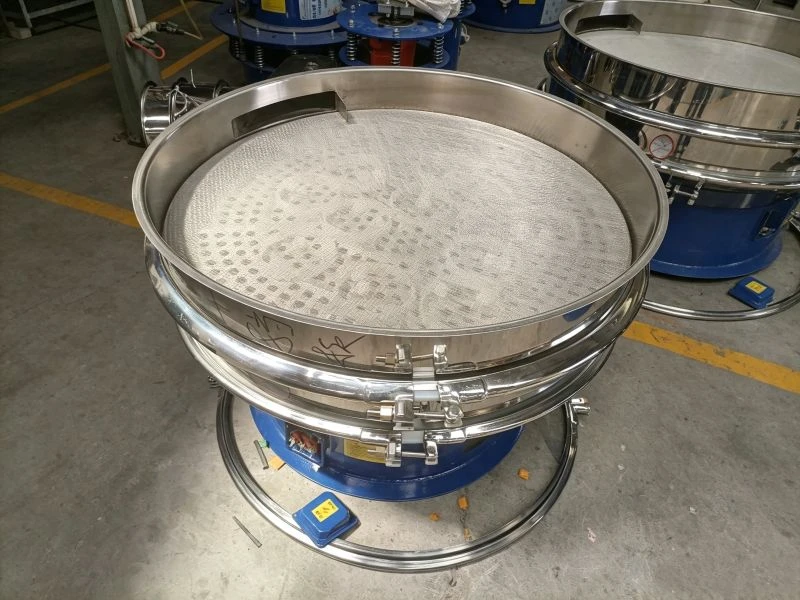
Bouncing balls are installed underneath the screen mesh. During operation, they move with the vibration of the machine and knock particles away from the mesh.
This is a simple option for common powders, granules, food ingredients, and other dry materials. It works well when mesh blockage is not a major problem.
Ultrasonic Cleaning
An ultrasonic system adds high-frequency vibration to the screen mesh. It helps fine particles pass through the openings and reduces mesh blockage.
It is often used for fine chemical powders, pharmaceutical powders, coating powders, and other materials that are difficult to screen through fine mesh.
When a fine mesh is required and bouncing balls are not enough to keep the openings clear, an ultrasonic system can be added to the custom rotary vibrating sifter.
Brush Cleaning
A brush cleaning system uses brushes to remove material from the screen surface. It is useful for sticky powders and lightweight materials that tend to remain on the mesh.
For sticky powder screening, brush cleaning can help reduce material build-up and keep the screening rate more stable.
What Custom Designs Are Available for Different Applications?
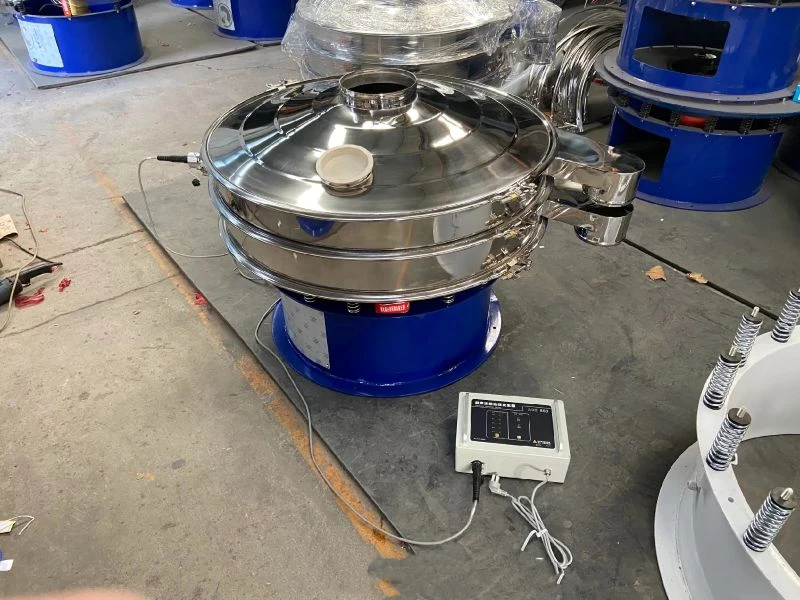
Some applications need changes beyond screen diameter and mesh size. A custom rotary vibrating screen can also be built around hygiene requirements, dust control, material properties, and the layout of the production line.
Food and Pharmaceutical Applications
Food and pharmaceutical powder screening commonly uses SS304 or SS316L construction.
Material-contact parts can be made from stainless steel with a suitable surface finish for easier cleaning. Pharmaceutical and high-purity applications may require SS316L, a sealed structure, and a suitable surface finish to reduce contamination and simplify cleaning.
Dust-Tight and Sealed Design
Fine powders can produce dust during feeding and screening. A sealed rotary vibrating screen helps keep the material inside the screening chamber and reduces powder leakage.
This type of design is commonly used for fine chemical powders, food powders, pharmaceutical powders, coating powders, and other dusty materials.
A dust collection system can also be connected when required by the production process.
Customized Inlet and Outlet
The inlet and outlet of a custom rotary vibrating screen can be positioned and sized to suit the existing production line.
The feed inlet may need to connect with a hopper, feeder, or conveyor. The discharge outlet may need to line up with a conveyor, storage bin, or downstream processing equipment.
This type of customization is useful when replacing an existing screen without making major changes to the surrounding equipment.
Corrosion-Resistant Construction
SS316L or PP can be considered when the material is corrosive.
The final material selection should take into account the chemical properties of the product, operating temperature, cleaning method, and expected service conditions.
For food, pharmaceutical, and chemical applications, surface finish is also important. The surface should be easy to clean and suitable for the working environment.

What Information Is Needed for a Custom Rotary Vibrating Screen?
Before selecting a custom rotary vibrating screen, the following information should be provided.
Material
State the material name and describe any important properties, such as moisture, stickiness, abrasiveness, or corrosiveness.
Particle Size
Provide the feed particle size and the required separation size. If the required mesh size or micron size is already known, include it.
Capacidad
Provide the required processing capacity, such as 500 kg/h, 2 tons/h, or 10 tons/h.
Number of Size Fractions
State how many particle sizes need to be separated. One separation may only require a single deck, while several fractions may require a multi-deck screen.
Construction Material
Specify whether the machine should be made from carbon steel, SS304, SS316L, PP, or another material.
Cleaning System
Bouncing balls are suitable for many standard materials. Fine or sticky powders may require ultrasonic or brush cleaning.
Production Line Layout
If the custom rotary vibrating screen will be installed in an existing line, provide the inlet and outlet dimensions, connection positions, and available installation space.
Special Requirements
Also provide any special requirements, such as dust-tight or fully enclosed design, explosion-proof motor, sanitary construction, corrosion-resistant construction, special surface finish, customized voltage, and special inlet or outlet position.
A standard vibro sifter machine is suitable for many routine screening jobs. A custom rotary vibrating screen is more useful when the material is difficult to screen, the required capacity is high, the mesh is very fine, or the machine needs to connect directly with an existing production line.
For equipment selection, the most useful information is the material, particle size, required capacity, mesh size, number of fractions, and installation requirements. These details give the manufacturer a clear starting point for selecting the screen size and configuration.
Conclusión
When selecting a screening system, simply grasp the three core principles: “Material Characteristics – Type Matching,” “Production Requirements – Model Selection,” and “Operating Environment – Material Determination.” This will allow you to quickly find the most suitable screening equipment and achieve efficient and stable production.
If you are unsure which configuration you need, send us your material, particle size, required capacity, mesh size, number of screening fractions, and installation requirements. Our team can recommend a suitable screen size and configuration based on your application.
Contact us to discuss your screening requirements and obtain a custom rotary vibrating screen solution.