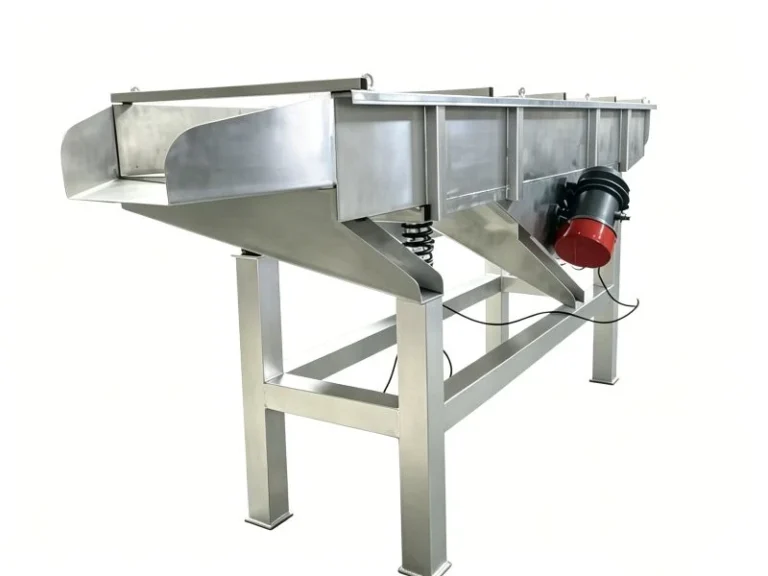
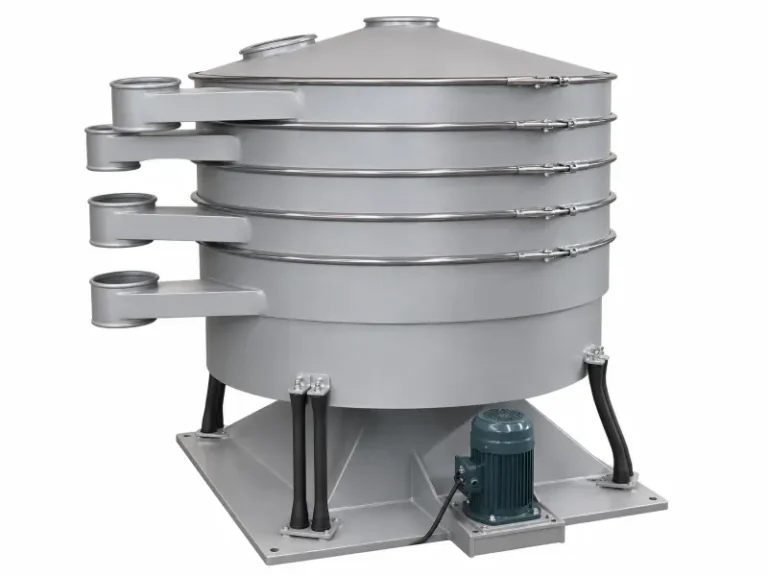
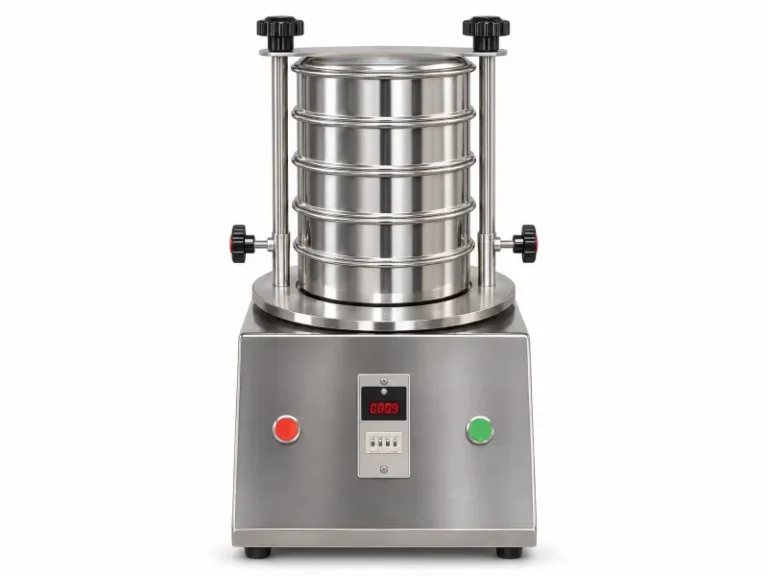
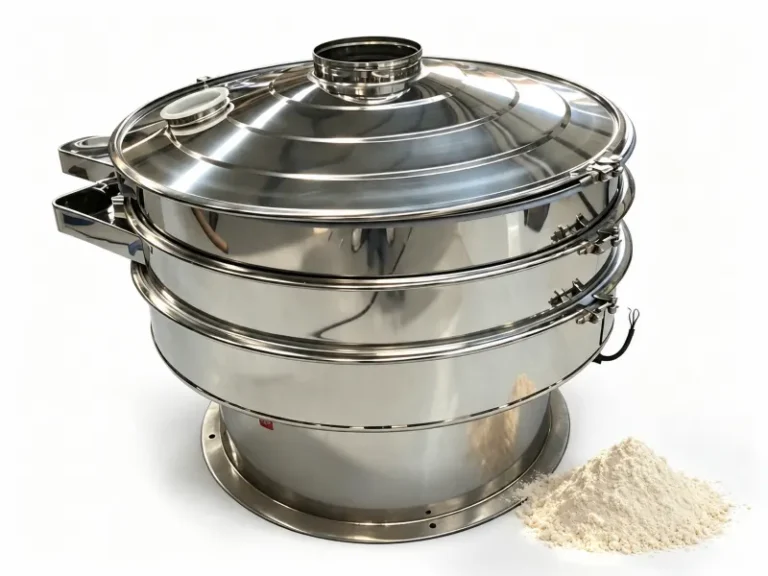
맞춤형 원형 진동 스크린: 크기, 재료, 데크 및 스크리닝 구성
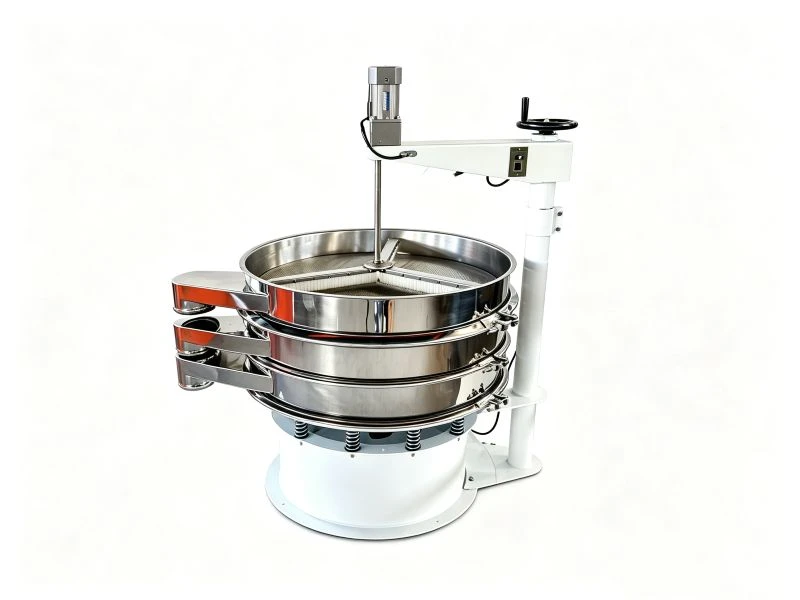
맞춤형 회전 진동 스크린은 재료, 요구 용량, 입자 크기 및 생산 라인의 레이아웃에 맞춰 제작할 수 있습니다. 일반적인 옵션으로는 스크린 직경, 기계 재질, 데크 수, 메시 크기, 세척 시스템, 입구 및 출구 설계가 있습니다.
식품 분말 라인에는 SS304 구조와 위생 마감이 필요할 수 있습니다. 제약 응용 분야에는 SS316L과 밀폐 구조가 필요할 수 있습니다. 미세 분말에는 초음파 메시 세척이 필요할 수 있으며, 고용량 생산에는 더 큰 스크리닝 면적이나 다중 데크가 필요할 수 있습니다.
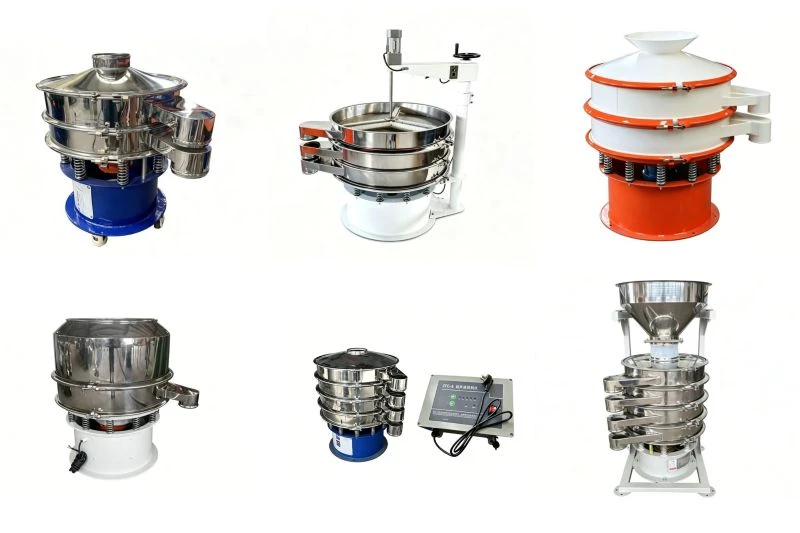
회전 진동 스크린에서 맞춤화할 수 있는 것은 무엇인가요?
맞춤형 회전 진동 스크린 은(는) 재료와 생산 공정에 맞게 여러 가지 방식으로 구성할 수 있습니다.
주요 옵션으로는 스크린 직경, 기계 구조 재질, 스크리닝 데크 수, 스크린 메시 및 개구 크기, 메시 세척 시스템, 공급 입구 및 배출 출구, 밀봉 및 분진 제어, 모터 및 전기 구성이 있습니다.
스크린 직경은 주로 스크리닝 면적과 요구 출력과 관련이 있습니다. 재질 선택은 스크리닝되는 제품과 작업 환경에 기반합니다. 데크 수는 분리해야 하는 크기 분획의 수에 따라 달라집니다.
메시 세척도 중요합니다. 바운싱 볼은 많은 표준 응용 분야에 적합하지만, 초음파 또는 브러시 세척이 미세하거나 점착성 있는 분말에 필요할 수 있습니다.
기계를 기존 장비와 연결해야 하는 경우, 맞춤형 회전 진동 스크린의 입구와 출구를 생산 라인에 맞게 제작할 수 있습니다.
당사의 1000 mm flaxseed screening machine for a Canadian customer combined several of these requirements: a workshop-specified diameter, two screen decks, full 304 stainless steel construction, and a 220 V, 60 Hz, single-phase supply.
Salt processing brings moisture, contact materials and cleaning access into the same equipment decision. Our guide to rotary vibrating screen configuration for inorganic salts discusses these requirements alongside mesh and deck selection.
관련 동영상
올바른 스크린 크기와 용량을 선택하는 방법은?
맞춤형 회전 진동 스크린의 크기는 요구 용량, 재료 특성, 메시 크기 및 사용 가능한 설치 공간에 따라 선택해야 합니다.
더 큰 스크린은 더 많은 스크리닝 면적을 제공하고 더 높은 출력을 처리할 수 있습니다. 그러나 스크린 직경만으로 용량이 결정되지는 않습니다. 재료 특성, 메시 크기, 수분 및 공급 조건이 모두 실제 출력에 영향을 미칩니다.
스크린 직경과 스크리닝 면적
일반적인 회전 진동 스크린 직경에는 600, 800, 1000, 1200, 1500mm가 있습니다. 더 높은 용량 요구 사항이 있는 응용 분야에는 더 큰 크기를 사용할 수 있습니다.
더 큰 스크리닝 면적은 재료가 메시를 가로질러 이동할 더 많은 공간을 제공합니다. 이는 입자가 작은 개구를 통과할 충분한 시간이 필요한 미세 분말에 유용합니다.
직경을 선택하기 전에 설치 공간도 확인해야 합니다. 공장에는 공급, 배출, 세척, 스크린 교체 및 일상 유지보수를 위해 기계 주변에 충분한 공간이 있어야 합니다.
맞춤형 회전 진동 스크린의 경우, 직경은 별도의 사양이 아니라 요구 용량과 함께 선택해야 합니다.
용량 요구 사항
실제 스크리닝 용량은 재료 유형, 입자 크기, 수분 함량, 메시 크기, 공급 속도, 요구 스크리닝 정밀도 및 데크 수에 영향을 받습니다.
예를 들어, 미세 분말은 일반적으로 동일한 스크린에서 굵은 과립보다 용량이 낮습니다. 미세 입자는 특히 미세 스크린을 사용할 때 메시에 남아 있거나 개구를 막을 가능성이 더 높습니다.
맞춤형 회전 진동 스크린을 요청할 때는 요구 용량을 kg/h 또는 톤/h로 제공하십시오. 이는 제조업체가 스크린 직경과 구성을 선택하는 데 유용한 출발점을 제공합니다.
쌀의 경우, 용량 수치는 스크리닝 작업도 명시해야 합니다. 느슨한 미세물 제거와 작은 부서진 낟알 분리는 스크린에 서로 다른 요구를 부과합니다. 저희 쌀 스크리닝 모델 선택 가이드 는 요구 공급 속도와 함께 확인해야 할 사항을 설명합니다.
If your packing line needs a fixed hourly output, check what the quoted screening capacity covers before you approve the screen diameter.
언제 더 큰 스크린이 필요한가요?
더 큰 산업용 진동 체은(는) 일반적으로 요구 출력이 높거나 재료에 더 많은 스크리닝 면적이 필요할 때 사용됩니다.
미세 분말이 일반적인 사례 중 하나입니다. 더 큰 스크리닝 면적은 미세 메시를 사용할 때 생산 용량을 유지하는 데 도움이 될 수 있습니다.
바닥 공간이 제한된 경우, 다중 데크 설계가 실용적인 대안이 될 수 있습니다. 기계 직경을 단순히 늘리지 않고도 여러 스크리닝 단계를 하나의 기계에 설치할 수 있습니다.
기계는 또한 적절한 용량 범위 내에서 작동해야 합니다. 지속적인 과부하는 스크리닝 성능을 저하시키고 스크린 메시와 기계 부품의 마모를 증가시킬 수 있습니다.
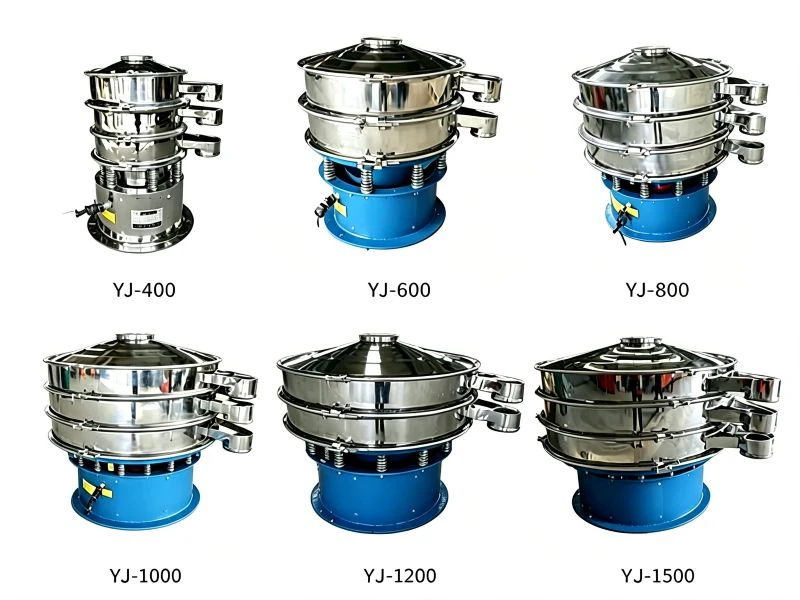
어떤 재질과 데크 구성을 선택해야 하나요?
맞춤형 회전 진동 스크린의 재질은 제품 및 작업 조건과 일치해야 합니다.
탄소강은 광물, 모래 및 연마재를 포함한 일반 산업 스크리닝에 일반적으로 사용됩니다. SS304는 식품 분말 및 일반 위생 요구 사항이 있는 응용 분야에 널리 사용됩니다. SS316L은 제약 분말, 고순도 제품 및 일부 부식성 재료에 더 적합합니다. PP는 특정 화학 응용 분야에도 고려할 수 있습니다.
데크 수는 요구 분리에 기반합니다. 단일 데크 스크린은 하나의 크기만 제거하거나 분리해야 할 때 적합합니다. 다중 데크 회전 진동 스크린은 하나의 기계에서 여러 크기 분획을 생산할 수 있습니다.
데크 수를 확정하기 전에, 각 데크의 메시 개구를 지정하고 어떤 분획이 제품, 재작업 또는 미세물로 수집될지 식별하십시오.
| 스크리닝 요구 사항 | 권장 구성 | 일반적인 응용 분야 |
| 일반 산업 스크리닝 | 탄소강 | 광물, 모래, 연마재 |
| 식품 분말 스크리닝 | SS304 | 밀가루, 전분, 설탕, 향신료 |
| 제약 분말 스크리닝 | SS316L | 제약 분말, fine chemicals |
| Corrosive materials | SS316L or PP | Chemical powders, corrosive materials |
| One size separation | 단일 데크 | Removing oversize or fine particles |
| Two or more size fractions | Multi-deck screen | Powder and granule classification |
| Fine powder screening | Fine mesh + ultrasonic cleaning | Fine chemicals, coating powder, battery materials |
| Sticky or easy-to-clog materials | Brush or ultrasonic cleaning | Sticky powder, fine powder |
| High-capacity screening | Larger screen diameter | Continuous production, high-output lines |
| Limited installation space | Compact or multi-deck design | Small production lines, space-limited plants |
당사의 20-unit rotary vibrating screen project illustrates how 316L stainless steel contact parts and screen configurations were specified for a customer’s abrasive screening requirements.
For a practical two-deck example, see our magnesium granule screening case, using 2mm and 0.5mm screen openings to obtain the required ≤0.5mm fraction.
Which Cleaning System Is Right for Your Material?
The cleaning system of a custom rotary vibrating screen should be selected according to the material and mesh size. Its main purpose is to reduce mesh blockage and keep the screening process stable.
Bouncing Ball Cleaning
Bouncing balls are installed underneath the screen mesh. During operation, they move with the vibration of the machine and knock particles away from the mesh.
This is a simple option for common powders, granules, food ingredients, and other dry materials. It works well when mesh blockage is not a major problem.
Ultrasonic Cleaning
An ultrasonic system adds high-frequency vibration to the screen mesh. It helps fine particles pass through the openings and reduces mesh blockage.
It is often used for fine chemical powders, pharmaceutical powders, coating powders, and other materials that are difficult to screen through fine mesh.
When a fine mesh is required and bouncing balls are not enough to keep the openings clear, an ultrasonic system can be added to the custom rotary vibrating sifter.
Brush Cleaning
A brush cleaning system uses brushes to remove material from the screen surface. It is useful for sticky powders and lightweight materials that tend to remain on the mesh.
For sticky powder screening, brush cleaning can help reduce material build-up and keep the screening rate more stable.
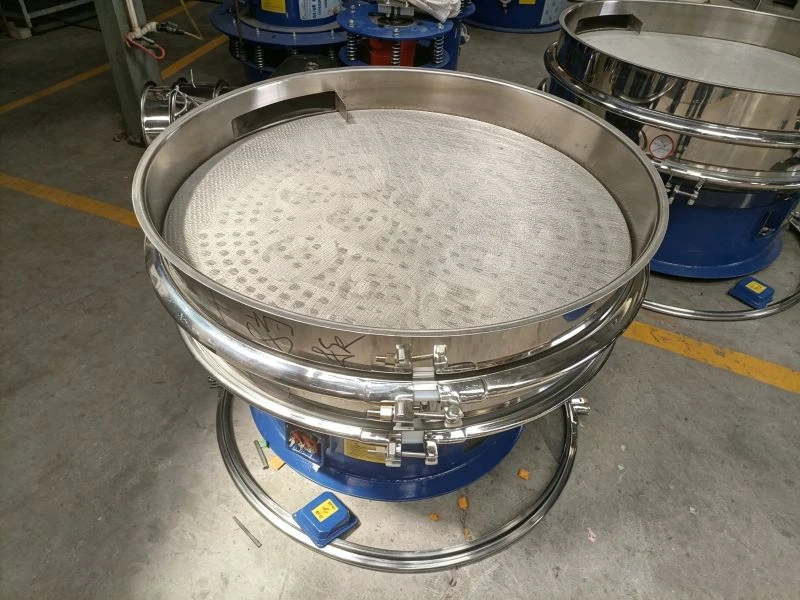
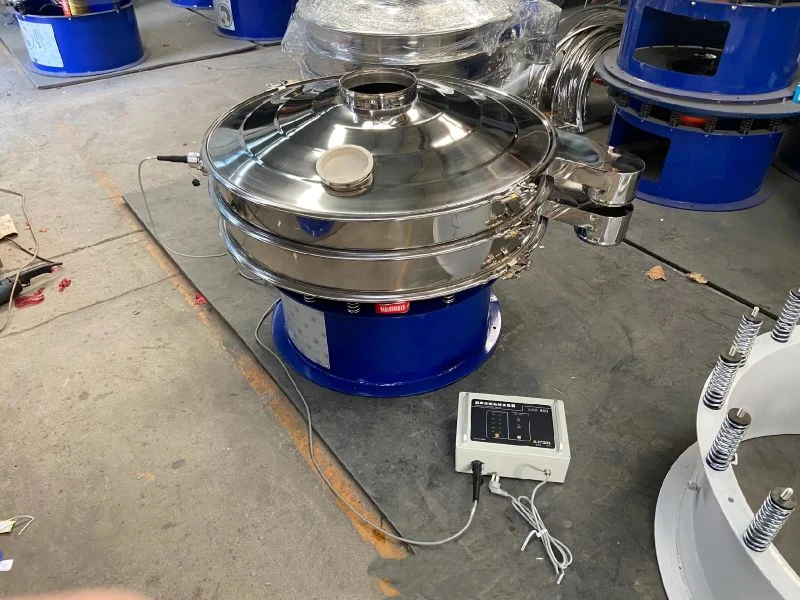
What Custom Designs Are Available for Different Applications?
Some applications need changes beyond screen diameter and mesh size. A custom rotary vibrating screen can also be built around hygiene requirements, dust control, material properties, and the layout of the production line.
Food and Pharmaceutical Applications
Food and pharmaceutical powder screening commonly uses SS304 or SS316L construction.
Material-contact parts can be made from stainless steel with a suitable surface finish for easier cleaning. Pharmaceutical and high-purity applications may require SS316L, a sealed structure, and a suitable surface finish to reduce contamination and simplify cleaning.
For a Sri Lankan customer, easy cleaning and screen replacement were priorities alongside a limited budget. Their turmeric powder sifter configuration included 304 stainless steel construction, quick-release frames, a removable upper working screen, and bouncing-ball cleaning.
Dust-Tight and Sealed Design
Fine powders can produce dust during feeding and screening. A sealed rotary vibrating screen helps keep the material inside the screening chamber and reduces powder leakage.
This type of design is commonly used for fine chemical powders, food powders, pharmaceutical powders, coating powders, and other dusty materials.
A dust collection system can also be connected when required by the production process.
Customized Inlet and Outlet
The inlet and outlet of a custom rotary vibrating screen can be positioned and sized to suit the existing production line.
The feed inlet may need to connect with a hopper, feeder, or conveyor. The discharge outlet may need to line up with a conveyor, storage bin, or downstream processing equipment.
This type of customization is useful when replacing an existing screen without making major changes to the surrounding equipment.
Corrosion-Resistant Construction
SS316L or PP can be considered when the material is corrosive.
The final material selection should take into account the chemical properties of the product, operating temperature, cleaning method, and expected service conditions.
For food, pharmaceutical, and chemical applications, surface finish is also important. The surface should be easy to clean and suitable for the working environment.

What Information Is Needed for a Custom Rotary Vibrating Screen?
Before selecting a custom rotary vibrating screen, the following information should be provided.
재질
State the material name and describe any important properties, such as moisture, stickiness, abrasiveness, or corrosiveness.
Particle Size
Provide the feed particle size and the required separation size. If the required mesh size or micron size is already known, include it.
용량
Provide the required processing capacity, such as 500 kg/h, 2 tons/h, or 10 tons/h.
Number of Size Fractions
State how many particle sizes need to be separated. One separation may only require a single deck, while several fractions may require a multi-deck screen.
Construction Material
Specify whether the machine should be made from carbon steel, SS304, SS316L, PP, or another material.
Cleaning System
Bouncing balls are suitable for many standard materials. Fine or sticky powders may require ultrasonic or brush cleaning.
Production Line Layout
If the custom rotary vibrating screen will be installed in an existing line, provide the inlet and outlet dimensions, connection positions, and available installation space.
Special Requirements
Also provide any special requirements, such as dust-tight or fully enclosed design, explosion-proof motor, sanitary construction, corrosion-resistant construction, special surface finish, customized voltage, and special inlet or outlet position.
A standard 진동 체 기계 is suitable for many routine screening jobs. A custom rotary vibrating screen is more useful when the material is difficult to screen, the required capacity is high, the mesh is very fine, or the machine needs to connect directly with an existing production line.
For equipment selection, the most useful information is the material, particle size, required capacity, mesh size, number of fractions, and installation requirements. These details give the manufacturer a clear starting point for selecting the screen size and configuration.
결론
When selecting a screening system, simply grasp the three core principles: “Material Characteristics – Type Matching,” “Production Requirements – Model Selection,” and “Operating Environment – Material Determination.” This will allow you to quickly find the most suitable screening equipment and achieve efficient and stable production.
If you are unsure which configuration you need, send us your material, particle size, required capacity, mesh size, number of screening fractions, and installation requirements. Our team can recommend a suitable screen size and configuration based on your application.
Contact us to discuss your screening requirements and obtain a custom rotary vibrating screen solution.