Pruebas industriales de tamizado: cómo evaluar el rendimiento, el rendimiento y la calidad de separación
Industrial sieving trials show whether a machine can process your material at the required rate while meeting product specifications. A useful trial measures sustained throughput, product yield and separation quality under representative production conditions.
The key is to establish how much acceptable product the machine delivers, where usable material is lost and whether performance holds throughout the run.

What Should Industrial Sieving Trials Verify?
Before testing, define the required separation and agree on measurable acceptance criteria. These give the supplier and customer a common basis for judging the results.
Define the Product Specification
Identify which particles should be removed, retained or collected as separate grades. Specify the target size range and the permitted amounts of oversize and fines in each product.
For multiple product fractions, agree on the separation points and intended outlet for each grade. Our guide to multi-deck sifter configuration explains how these requirements relate to screen openings and deck numbers.
Agree on Acceptance Criteria
| Requirement | What to Define Before Testing |
|---|---|
| Throughput | Minimum sustained feed rate while meeting product specifications |
| Separation quality | Maximum oversize and fines allowed in the product |
| Target fraction recovery | Minimum proportion of target-size material recovered at the correct outlet |
| Estabilidad de funcionamiento | Acceptable output variation and cleaning interruptions |
Laboratory particle size analysis checks the composition of feed and outlet samples. The equipment trial establishes whether the machine can maintain the required separation during operation.
Nuestra PTFE composite powder screening requirements provide an example of a project awaiting validation: an 850-micron screen, a target throughput of 100 kg/h, and powder that cakes under its own weight. The trial still needs to establish whether the proposed configuration meets the throughput target while preserving the material condition needed downstream.
How to Prepare and Run a Representative Sieving Trial
Use material and feeding conditions that reflect production. Record the configuration so successful results can be reproduced.
Prepare the Material and Trial Screens
Record the batch, particle size distribution, moisture content, bulk density and flowability. Avoid drying or conditioning the sample unless production includes the same treatment.
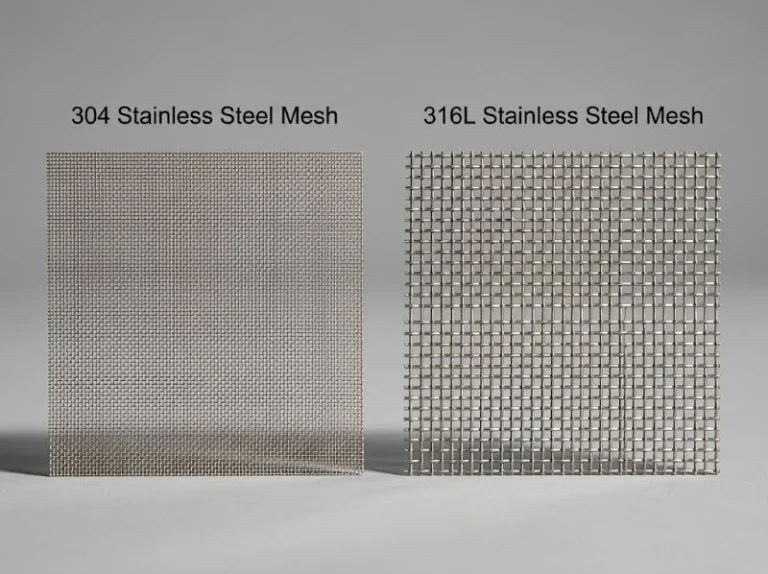
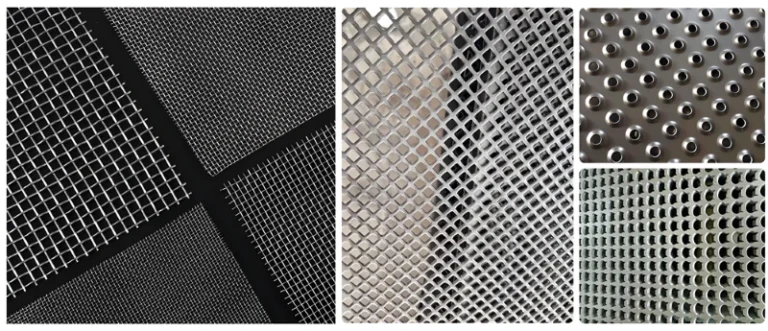
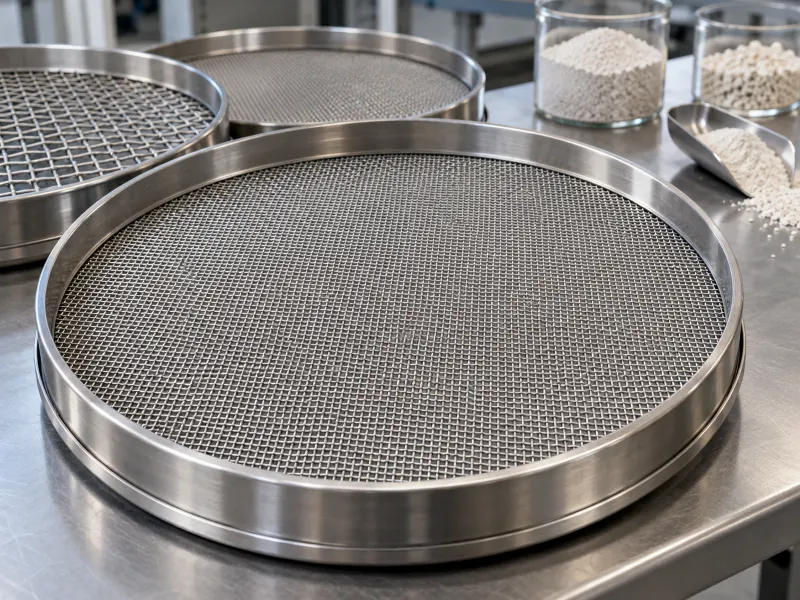
Select trial screen openings from the required product specification and feed size distribution. Record the actual aperture in microns alongside mesh count, since wire diameter also affects the opening.
Prepare enough material for startup, steady operation, configuration changes and repeat runs. The quantity depends on the feed rate and planned test duration.
Check the Equipment and Establish a Baseline
Inspect the mesh, clamps, seals and discharge paths before startup. Prepare separate, labelled collection containers for each outlet. Record screen area, deck arrangement, cleaning devices and machine settings.
Start the equipment according to its operating instructions, then introduce material evenly. Allow feed and discharge rates to stabilize before collecting data. Change one variable at a time when testing different feed rates or settings.
Collect Timed Samples
Measure feed and outlet masses over corresponding periods, accounting for material transit time. Take representative samples from the feed and every outlet for particle size analysis.
Keep startup and final emptying records separate from steady-state measurements. Record buildup, blinding and any interruptions during each run.
How to Measure Throughput, Yield and Separation Quality
Use weighed material and timed collection periods to calculate performance. Keep the measurement period and moisture basis consistent across the feed and product streams.
Measure Throughput and Yield
| Metric | Calculation |
|---|---|
| Feed throughput, kg/h | Feed mass ÷ measurement time in hours |
| Accepted product output, kg/h | Mass of product meeting the agreed specification ÷ measurement time in hours |
| Outlet yield, % | Mass collected at the selected outlet ÷ feed mass × 100 |
| Target fraction recovery, % | Target-size mass at the intended outlet ÷ target-size mass in the feed × 100 |
Feed throughput measures the total material processed. Accepted product output measures the product delivered within specification. Yield describes how much feed reaches an outlet, while recovery tracks how much of the desired size fraction reaches the correct outlet.
Check Particle Size Compliance and Mass Balance
Analyze feed and outlet samples using suitable test sieves or an agreed particle size measurement method. Measure oversize and fines in the product, then inspect the other outlets for misplaced usable material.
Compare feed mass with all collected outputs, accounting for samples removed, separately collected losses and changes in material held inside the machine. Avoid counting samples twice if they are already included in an outlet total. Investigate unexplained differences before accepting the results.
For fragile materials, collected fines include both existing particles and any generated during processing. See how tea screening trials assess fines removal and leaf integrity together.
Rotary Vibrating Screen Trial Results
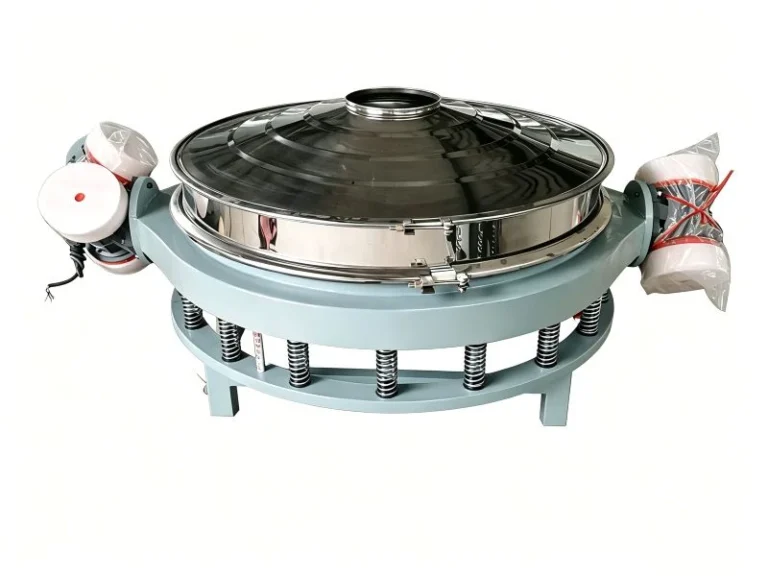
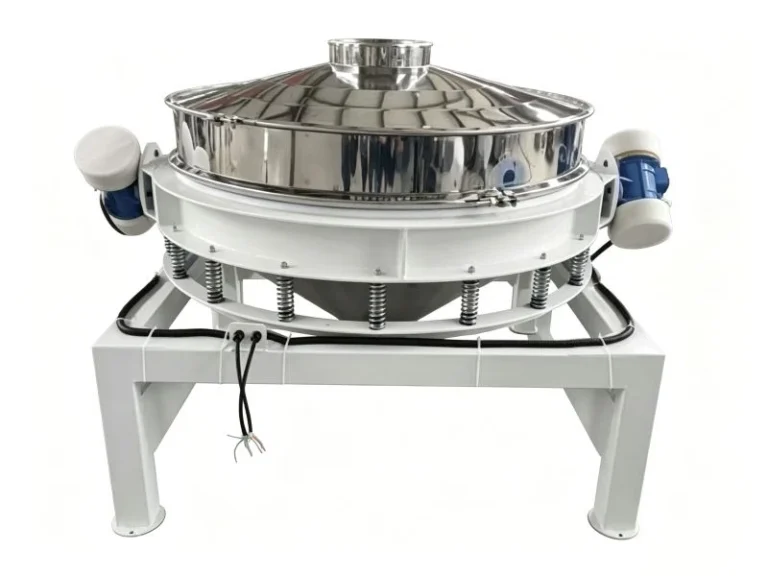
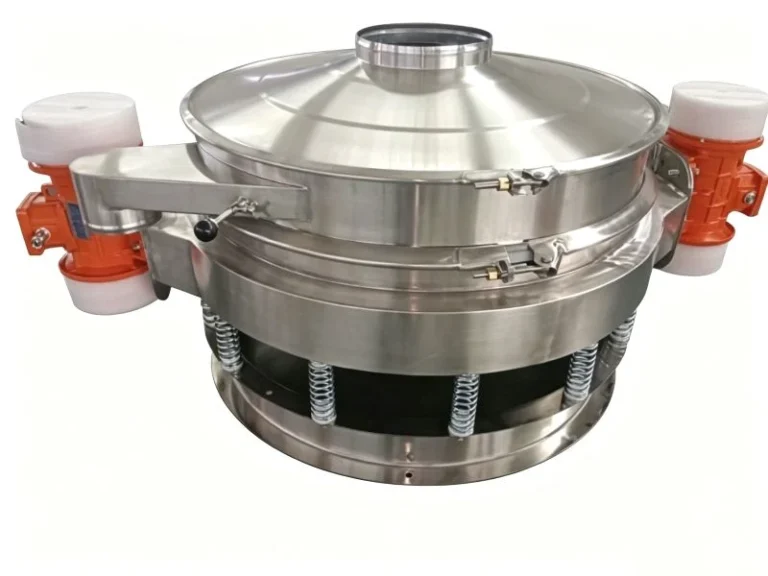
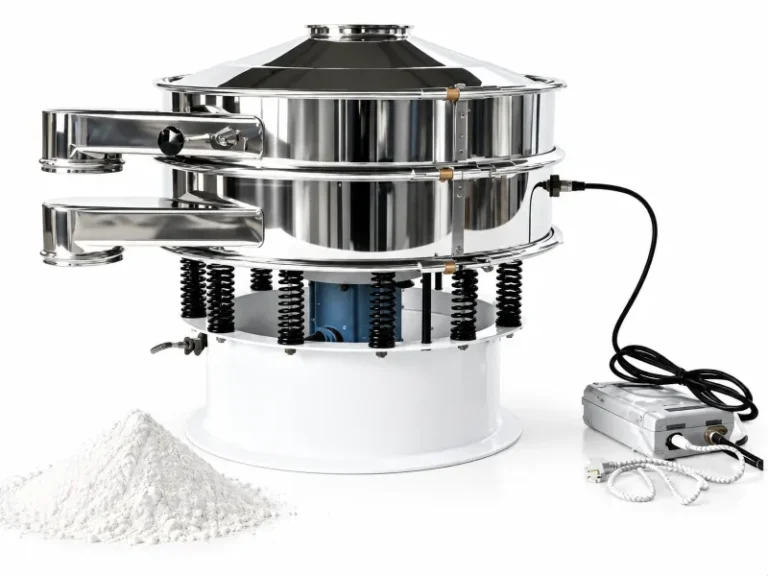
The following rotary vibrating screen trials recorded throughput and passing rates for four materials using different mesh sizes and cleaning configurations.
| Material | Tamaño de malla | Configuración del equipo | Throughput | Passing Rate |
|---|---|---|---|---|
| Arena de cuarzo | Malla 40 | Criba vibratoria rotativa | Approx. 2,500 kg/h | Above 99.5% |
| Talco en polvo | 200 mesh | Three-deck rotary vibrating screen with bouncing-ball cleaning | Approx. 800 kg/h | 98% |
| Alumina | 500 mesh | Rotary vibrating screen with ultrasonic assistance | Approx. 200 kg/h | 95% |
| Electrolytic copper powder | Malla 800 | Rotary vibrating screen with ultrasonic assistance and imported screen mesh | 80–120 kg/h | Above 90% |
These figures apply to the materials and configurations tested, rather than a capacity range for one machine. Because the materials differ, the results do not isolate the effect of mesh size or ultrasonic assistance.
For your application, confirm throughput using representative material and the required screen aperture. Check product particle size distribution alongside the recorded passing rate to establish whether the separation meets your specification.
How to Interpret Trial Results and Compare Configurations
Compare configurations at the required product quality and recovery level. The highest feed rate may not deliver the highest acceptable product output.
Compare Under Matched Conditions
Use comparable material batches, screen apertures and sampling methods. Document differences in machine size, screen area, deck arrangement and cleaning systems.
When testing an tamiz vibratorio ultrasónico, compare it with the baseline under otherwise matched conditions. Record whether ultrasonic assistance improves sustained output, recovery or cleaning intervals.
Investigate Changes in Performance
| Trial Result | Qué verificar |
|---|---|
| High throughput, but product outside specification | Sampling, screen damage, bypass and feed loading |
| Acceptable quality, but low recovery | Target-size material leaving through other outlets |
| Output falls during the run | Blinding, buildup and feed fluctuations |
| Unexplained mass balance difference | Weighing, timing, collection losses and retained material |
For blockage-related losses, see our guide to cegamiento de la malla con polvo fino.
Include cleaning stops when evaluating production output. Divide accepted product mass by the total elapsed period, including interruptions, to calculate the effective output rate.
Confirm Repeatability and Scale-Up Conditions
Repeat the preferred configuration to check consistency. Extend testing where gradual buildup or batch variation could affect performance.
A short trial on a smaller machine cannot establish full-scale capacity by screen area alone. Feeding, material distribution, screen loading and discharge arrangements also need confirmation.
The final trial report should record the material, configuration, operating conditions and measured results against each acceptance criterion. Identify any conditions still requiring validation.
Conclusión
Industrial sieving trials provide a practical basis for choosing equipment that delivers acceptable product at the required production rate.
Send Yuanjing your material name, target particle size, required capacity and current screening problem. We can review suitable máquina tamizadora vibratoria configurations and discuss trial arrangements for your application.
Contacte a Yuanjing to discuss your material and screening requirements.
Preguntas frecuentes
What information should I provide before an industrial sieving trial?
Provide the material name, particle size distribution, target screen aperture, required throughput and acceptable oversize or fines limits. Include moisture content, bulk density and any issues with sticking, agglomeration or screen blinding.
How much material is needed for a sieving trial?
The quantity depends on the planned feed rate, test duration, number of configurations and repeat runs. Supply enough material to reach stable operation and collect representative samples. Agree on the quantity with the equipment supplier before shipping.
How is screening throughput measured during a trial?
Measure the feed mass processed over a timed period of stable operation, then divide by the time in hours to obtain kg/h. Record accepted product output separately. Include cleaning interruptions when calculating effective production output.
What is the difference between sieving yield and recovery?
Sieving yield is the mass collected at an outlet divided by the total feed mass. Recovery is the target-size material collected at the intended outlet divided by the target-size material originally present in the feed. A high yield does not necessarily mean the product meets its particle size specification.
How can a trial show whether ultrasonic screening is needed?
Compare conventional and ultrasonic-assisted screening using the same material, screen aperture and comparable operating conditions. Check sustained output, particle size compliance, recovery and cleaning frequency. Ultrasonic assistance is worth considering when the trial shows a useful improvement in these results.
Can sieving trial results guarantee full-scale production capacity?
Trial results establish performance for the material, equipment and conditions tested. Full-scale capacity also depends on feed consistency, material distribution, discharge arrangements and batch variation. Confirm these conditions and repeat the preferred configuration before agreeing on production performance.