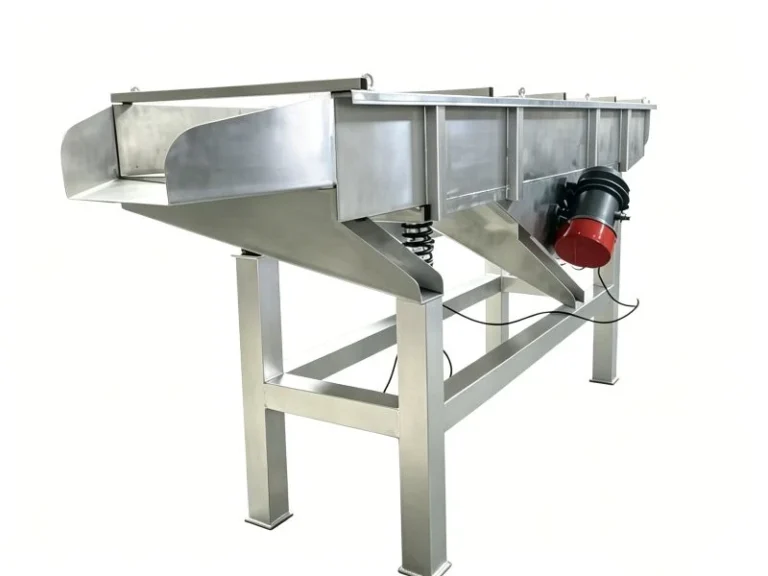
産業用ふるい分け試験:処理能力、歩留まり、分離品質の評価方法
産業用ふるい分け試験は、機械が要求される処理能力であなたの材料を処理し、製品仕様を満たせるかどうかを示します。有用な試験では、代表的な生産条件下での持続的なスループット、製品歩留まり、分離品質を測定します。.
重要なのは、機械がどれだけ許容可能な製品を供給するか、使用可能な材料がどこで失われるか、そして運転中を通じて性能が維持されるかどうかを確立することです。.

産業用ふるい分け試験で検証すべきことは何か?
試験前に、必要な分離を定義し、測定可能な合格基準に合意します。これにより、サプライヤーと顧客が結果を判断するための共通の基盤が得られます。.
製品仕様を定義する
どの粒子を除去、保持、または別のグレードとして回収すべきかを特定します。各製品の目標サイズ範囲と、許容されるオーバーサイズおよび微粉の量を指定します。.
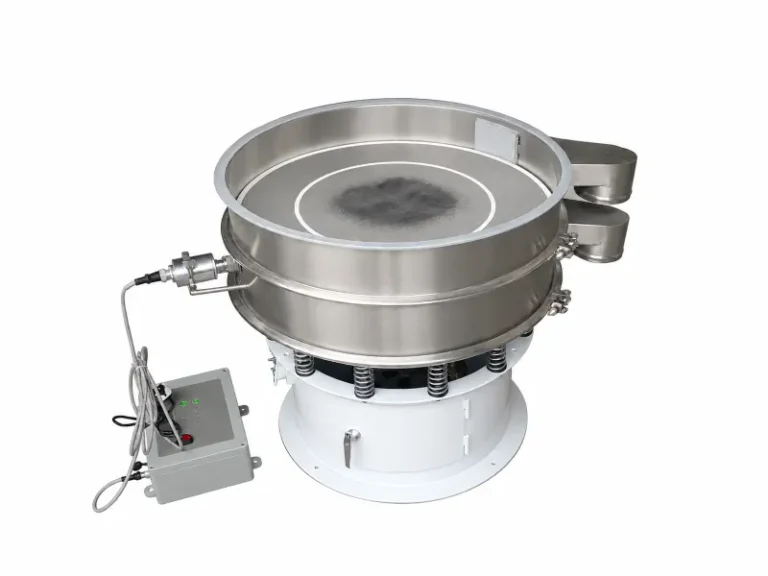
複数の製品フラクションについては、各グレードの分離点と意図する出口に合意します。以下のガイドで multi-deck sifter configuration これらの要件がスクリーン開口部とデッキ数にどのように関係するかを説明します。.
合格基準に合意する
| 要件 | 試験前に定義すべきこと |
|---|---|
| 処理能力 | 製品仕様を満たしながらの最小持続供給速度 |
| 分離品質 | 製品中に許容される最大オーバーサイズおよび微粉 |
| 目標フラクション回収率 | 正しい出口で回収される目標サイズ材料の最小割合 |
| 運転安定性 | 許容される出力変動と清掃中断 |
実験室での粒度分析は、供給原料と出口サンプルの組成を確認します。機器試験は、機械が運転中に必要な分離を維持できるかどうかを確立します。.
当社の PTFE composite powder screening requirements provide an example of a project awaiting validation: an 850-micron screen, a target throughput of 100 kg/h, and powder that cakes under its own weight. The trial still needs to establish whether the proposed configuration meets the throughput target while preserving the material condition needed downstream.
代表的なふるい分け試験の準備と実施方法
生産を反映した材料と供給条件を使用します。成功した結果を再現できるように構成を記録します。.
材料と試験用スクリーンを準備する
バッチ、粒度分布、含水率、かさ密度、流動性を記録します。生産に同じ処理が含まれない限り、サンプルの乾燥やコンディショニングは避けてください。.
必要な製品仕様と供給サイズ分布から試験用スクリーン開口部を選択します。線径も開口部に影響するため、メッシュ数とともに実際の開口径をミクロンで記録します。.
起動、定常運転、構成変更、繰り返し運転に十分な材料を準備します。数量は供給速度と計画された試験時間によって異なります。.
設備を確認し、ベースラインを確立する
起動前にメッシュ、クランプ、シール、排出経路を検査します。各出口用に別々のラベル付き回収容器を準備します。スクリーン面積、デッキ配置、清掃装置、機械設定を記録します。.
運転手順に従って設備を起動し、材料を均等に投入します。データ収集前に供給速度と排出速度を安定させます。異なる供給速度や設定を試験する際は、一度に一つの変数のみを変更します。.
時間指定サンプルを採取する
材料の通過時間を考慮して、対応する期間における供給原料と出口の質量を測定します。粒度分析のために、供給原料とすべての出口から代表的なサンプルを採取します。.
起動時と最終排出時の記録は、定常状態の測定値とは別に保管します。各運転中の堆積、目詰まり、中断を記録します。.
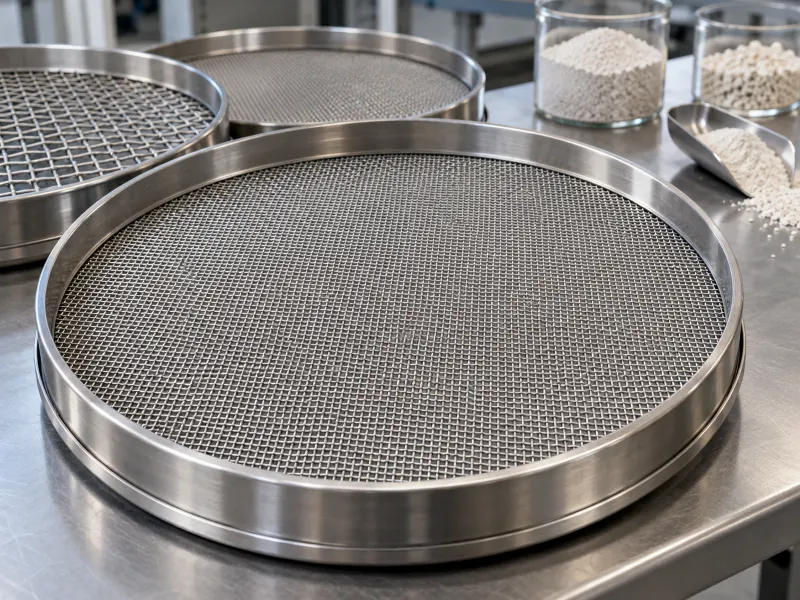
処理能力、歩留まり、分離品質の測定方法
計量された材料と時間指定回収期間を使用して性能を計算します。供給原料と製品ストリーム間で測定期間と水分基準を一貫させます。.
処理能力と歩留まりを測定する
| 指標 | 計算 |
|---|---|
| 供給処理能力、kg/h | 供給質量 ÷ 測定時間(時間) |
| 合格製品出力、kg/h | 合意された仕様を満たす製品の質量 ÷ 測定時間(時間) |
| 出口歩留まり、% | 選択された出口で回収された質量 ÷ 供給質量 × 100 |
| 目標フラクション回収率、% | 意図する出口での目標サイズ質量 ÷ 供給原料中の目標サイズ質量 × 100 |
供給処理能力は処理された総材料を測定します。合格製品出力は仕様内で供給された製品を測定します。歩留まりはどれだけの供給原料が出口に到達するかを表し、回収率はどれだけの所望のサイズフラクションが正しい出口に到達するかを追跡します。.
粒度適合性と物質収支を確認する
適切な試験用ふるいまたは合意された粒度測定方法を使用して、供給原料と出口サンプルを分析します。製品中のオーバーサイズと微粉を測定し、誤配置された使用可能な材料がないか他の出口を検査します。.
供給質量をすべての回収出力と比較し、除去されたサンプル、別途回収された損失、機械内部に保持された材料の変化を考慮します。サンプルが既に出口合計に含まれている場合は二重計上を避けます。結果を受け入れる前に、説明のつかない差異を調査します。.
For fragile materials, collected fines include both existing particles and any generated during processing. See how tea screening trials assess fines removal and leaf integrity together.
回転振動ふるい試験結果
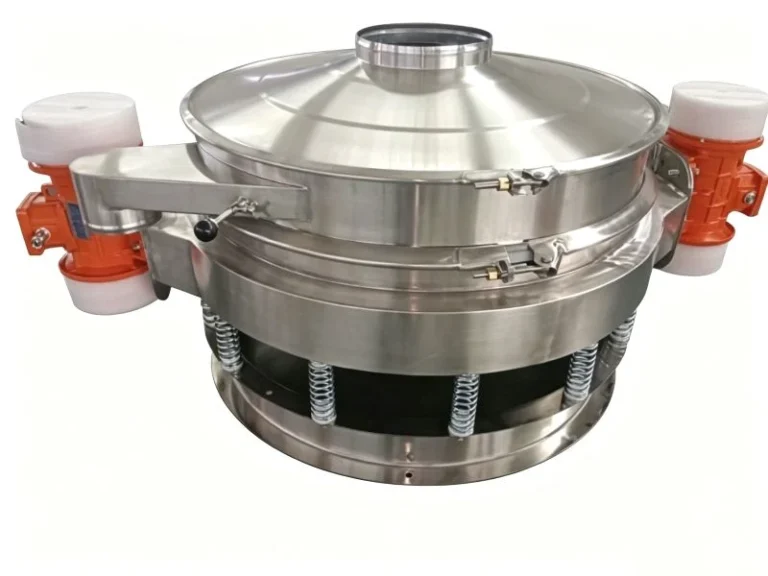
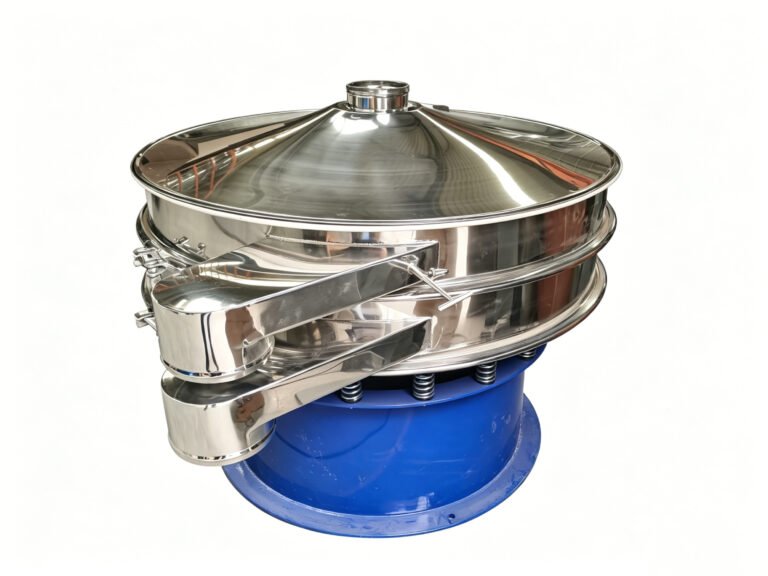
The following rotary vibrating screen trials recorded throughput and passing rates for four materials using different mesh sizes and cleaning configurations.
| 材質 | メッシュサイズ | 設備構成 | 処理能力 | Passing Rate |
|---|---|---|---|---|
| 珪砂 | 40 mesh | 回転振動スクリーン | Approx. 2,500 kg/h | Above 99.5% |
| タルク粉末 | 200 mesh | Three-deck rotary vibrating screen with bouncing-ball cleaning | Approx. 800 kg/h | 98% |
| Alumina | 500メッシュ | Rotary vibrating screen with ultrasonic assistance | Approx. 200 kg/h | 95% |
| Electrolytic copper powder | 800 mesh | Rotary vibrating screen with ultrasonic assistance and imported screen mesh | 80–120 kg/h | Above 90% |
These figures apply to the materials and configurations tested, rather than a capacity range for one machine. Because the materials differ, the results do not isolate the effect of mesh size or ultrasonic assistance.
For your application, confirm throughput using representative material and the required screen aperture. Check product particle size distribution alongside the recorded passing rate to establish whether the separation meets your specification.
How to Interpret Trial Results and Compare Configurations
Compare configurations at the required product quality and recovery level. The highest feed rate may not deliver the highest acceptable product output.
Compare Under Matched Conditions
Use comparable material batches, screen apertures and sampling methods. Document differences in machine size, screen area, deck arrangement and cleaning systems.
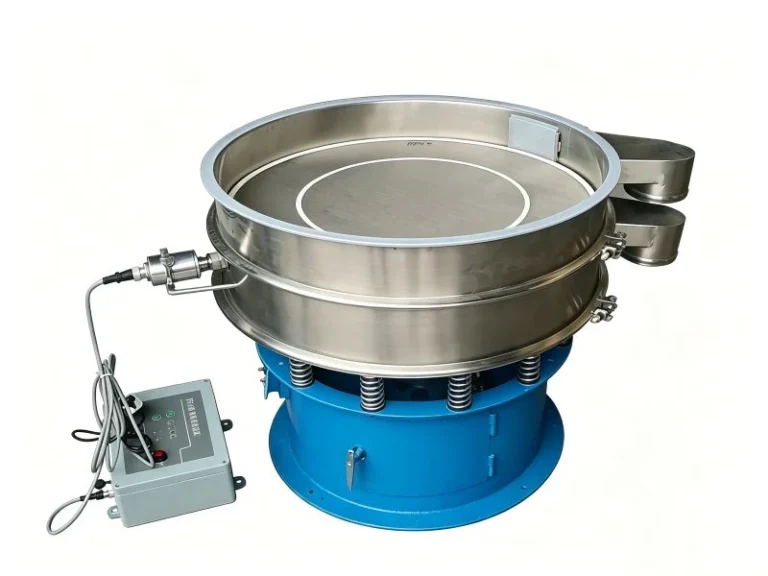
When testing an は、微細粉体を従来の振動ふるいでスクリーニングするのが困難な場合に、より良い選択です。, compare it with the baseline under otherwise matched conditions. Record whether ultrasonic assistance improves sustained output, recovery or cleaning intervals.
Investigate Changes in Performance
| Trial Result | 確認すべきこと |
|---|---|
| High throughput, but product outside specification | Sampling, screen damage, bypass and feed loading |
| Acceptable quality, but low recovery | Target-size material leaving through other outlets |
| Output falls during the run | Blinding, buildup and feed fluctuations |
| Unexplained mass balance difference | Weighing, timing, collection losses and retained material |
For blockage-related losses, see our guide to 微粉体のスクリーンブラインディング.
Include cleaning stops when evaluating production output. Divide accepted product mass by the total elapsed period, including interruptions, to calculate the effective output rate.
Confirm Repeatability and Scale-Up Conditions
Repeat the preferred configuration to check consistency. Extend testing where gradual buildup or batch variation could affect performance.
A short trial on a smaller machine cannot establish full-scale capacity by screen area alone. Feeding, material distribution, screen loading and discharge arrangements also need confirmation.
The final trial report should record the material, configuration, operating conditions and measured results against each acceptance criterion. Identify any conditions still requiring validation.
結論
Industrial sieving trials provide a practical basis for choosing equipment that delivers acceptable product at the required production rate.
Send Yuanjing your material name, target particle size, required capacity and current screening problem. We can review suitable バイブロシフター機 configurations and discuss trial arrangements for your application.
袁静(Yuanjing)にお問い合わせ to discuss your material and screening requirements.
微細粉体に超音波振動ふるいが必要ですか?
What information should I provide before an industrial sieving trial?
Provide the material name, particle size distribution, target screen aperture, required throughput and acceptable oversize or fines limits. Include moisture content, bulk density and any issues with sticking, agglomeration or screen blinding.
How much material is needed for a sieving trial?
The quantity depends on the planned feed rate, test duration, number of configurations and repeat runs. Supply enough material to reach stable operation and collect representative samples. Agree on the quantity with the equipment supplier before shipping.
How is screening throughput measured during a trial?
Measure the feed mass processed over a timed period of stable operation, then divide by the time in hours to obtain kg/h. Record accepted product output separately. Include cleaning interruptions when calculating effective production output.
What is the difference between sieving yield and recovery?
Sieving yield is the mass collected at an outlet divided by the total feed mass. Recovery is the target-size material collected at the intended outlet divided by the target-size material originally present in the feed. A high yield does not necessarily mean the product meets its particle size specification.
How can a trial show whether ultrasonic screening is needed?
Compare conventional and ultrasonic-assisted screening using the same material, screen aperture and comparable operating conditions. Check sustained output, particle size compliance, recovery and cleaning frequency. Ultrasonic assistance is worth considering when the trial shows a useful improvement in these results.
Can sieving trial results guarantee full-scale production capacity?
Trial results establish performance for the material, equipment and conditions tested. Full-scale capacity also depends on feed consistency, material distribution, discharge arrangements and batch variation. Confirm these conditions and repeat the preferred configuration before agreeing on production performance.