How to Choose Vibrating Screen Parts
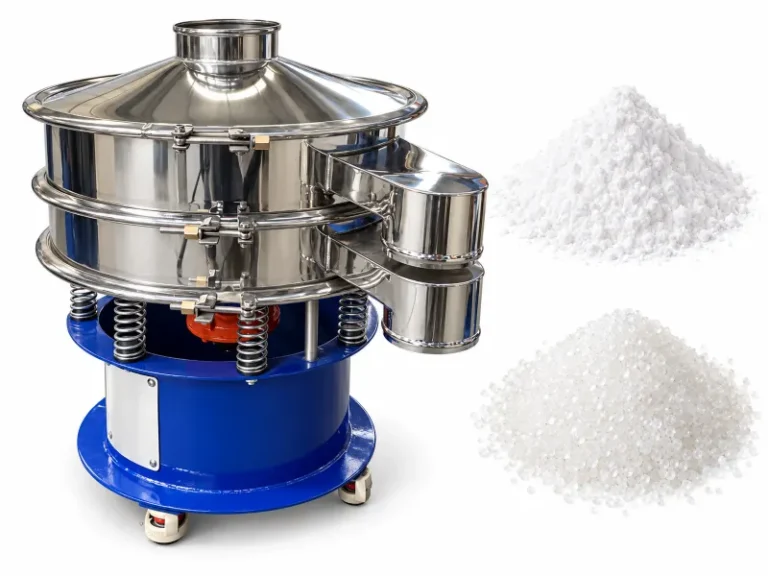
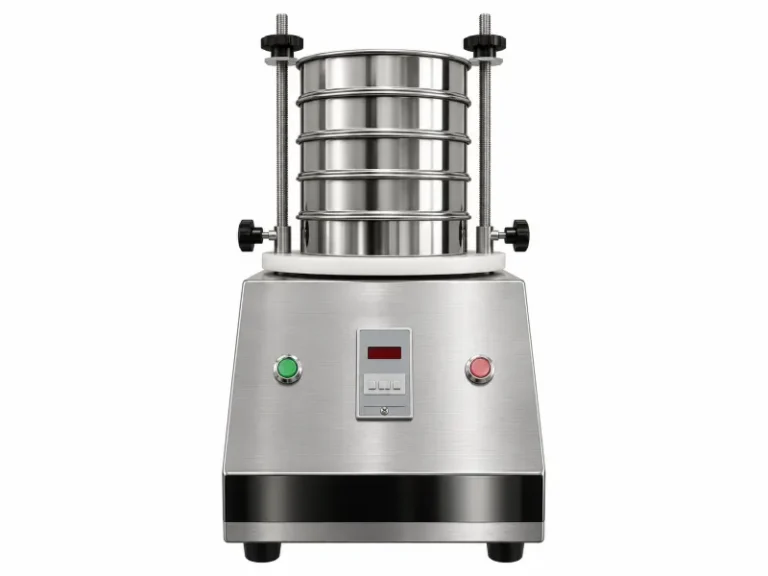
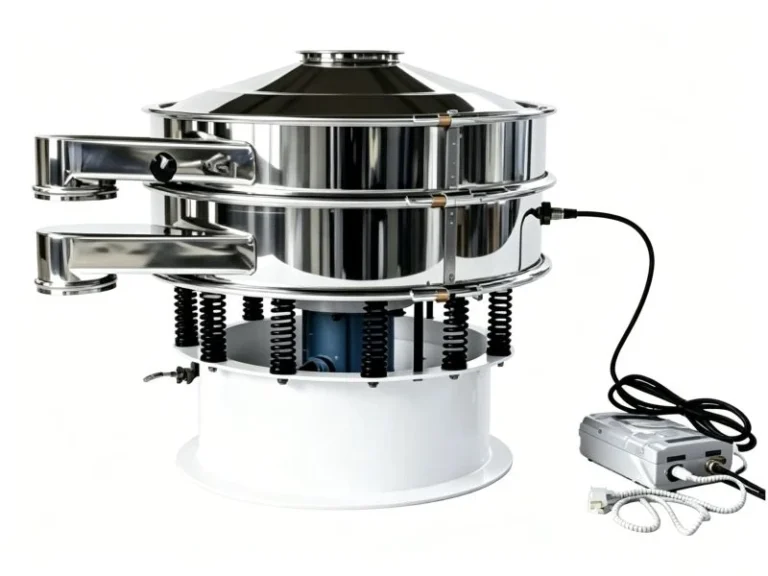
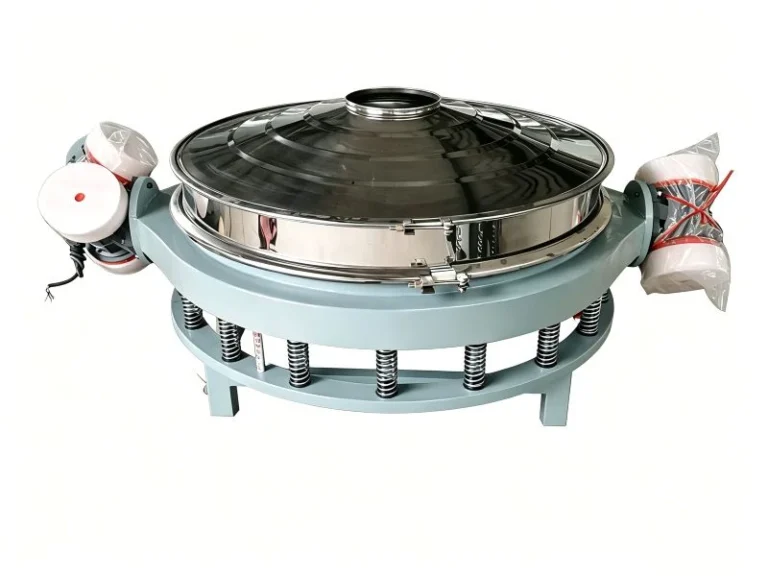
When choosing vibrating screen parts, start with two questions: What material are you screening, and what has changed on the machine? Flour and milk powder may look similar, yet the required screen openings can be quite different. Likewise, powder escaping around a screen frame could point to a loose clamp ring or a gasket that has hardened. Where the powder ends up often gives you the first clue.
The table below identifies the vibrating screen parts to inspect for five common symptoms.
| What you notice | Part to inspect | What to look for |
|---|---|---|
| Oversized particles in the screened product | Maille de tamis | A tear or damaged area that lets coarse particles pass |
| Powder escaping at a frame joint | Clamp ring and gasket | A loose clamp bolt, a gap between flanges, or a cracked or hardened gasket |
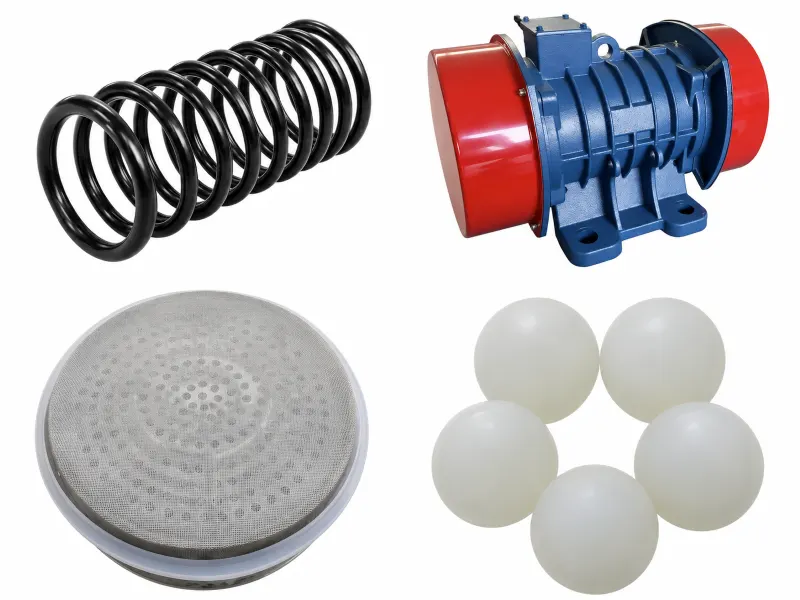
| The screen body tilts or moves unevenly | Support springs | A visibly shorter spring or cracks at a support position |
| Screen openings repeatedly clog | Mesh and cleaning balls | Blocked openings and balls that no longer clear the underside of the mesh effectively |
| Vibration weakens and discharge slows | Vibration motor | Loose eccentric weights or low supply voltage |
How to Choose Screen Mesh for Flour, Milk Powder, and Sand
Of all vibrating screen parts, the mesh has the most direct effect on what reaches the product outlet. Choose the mesh material for the operating conditions and the opening size for the particles you want to separate.
Which stainless steel mesh suits the material?
| Mesh material | Typical application | Selection consideration |
|---|---|---|
| Acier inoxydable 304 | Food ingredients, pharmaceutical powders, and general chemical products | A common, cost-effective choice for general service |
| Acier inoxydable 316L | Applications involving acids, alkalis, salts, or chlorides | Consider this grade when corrosion resistance is a priority. Confirm compatibility with the actual process material. |
| 430 stainless steel | Coarse screening of minerals and quartz sand | An option for coarse-duty applications where hardness matters |
What mesh size works for flour, milk powder, or sand?
Mesh count describes the number of openings per linear inch. A higher count generally means a smaller opening. The ranges below are starting points for different screening tasks. When ordering replacement mesh, specify the required opening in millimeters or microns as well as the mesh count.
| Tâche de tamisage | Material examples | Reference mesh count | Ouverture approximative |
|---|---|---|---|
| Coarse screening | Sand, feed pellets, plastic flakes | 4–60 mesh | 0.3–5 mm |
| Intermediate screening | Flour, corn flour, ceramic glaze materials | 80–200 mesh | 0.08–0.18 mm |
| Fine screening | Milk powder, protein powder, finely milled herbal powders | 250–400 mesh | 0.038–0.06 mm |
For example, a flour processor removing coarse particles and a dairy processor grading fine milk powder should specify how large a particle may pass into the finished product. Both applications fall under food ingredient screening, but they can require different mesh openings.
When should screen mesh be replaced? A general replacement interval is 6–12 months, although corrosive service can shorten it to weeks. If coarse particles begin appearing in the screened product, inspect the mesh for damage even if it was installed recently.
Which Clamp Ring Fits a Rotary Vibrating Screen?
Clamp rings are vibrating screen parts that secure adjoining sections of the machine. A typical ring has two semicircular sections joined by stainless steel bolts. To identify a replacement, first check which two components the ring holds together.
| Clamp ring type | Typical mounting position |
|---|---|
| Small clamp ring | Between the dust cover and the screen frame |
| Medium clamp ring | Between an ultrasonic mesh frame and the adjoining screen frames |
| Large clamp ring | Between a two-piece mesh frame assembly and the adjoining screen frames |
Common clamp materials include 304 stainless steel, 316L stainless steel, and carbon steel. The descriptions small, medium, et large identify positions in this arrangement. Include the machine model and ring dimensions when requesting a replacement.
For powder leaking at a joint, check flange seating first. During assembly, one person can hold the flanges together while another tightens the clamp evenly. A loose ring can let powder escape, while excessive tightening can strip the threads. Check the clamp bolts during weekly inspections. If the joint still leaks after the flanges are seated and the clamp is secure, inspect the gasket.
How to Choose a Vibrating Screen Gasket: U-Shaped or V-Shaped?
A vibrating screen gasket seals the joint between adjoining components and cushions their contact during operation. When ordering vibrating screen parts for a leaking frame, identify the gasket profile, mounting position, and material. A photograph of the old gasket’s cross-section is particularly helpful because a top view can make different profiles look alike.
| Gasket profile | Typical location | Main function |
|---|---|---|
| U-shaped gasket | Around the outer edge of the mesh frame, between the mesh assembly and the screen frame | Seals and cushions the assembly, limits slipping, and contains dust |
| V-shaped gasket | Between the lower frame and vibrating body, or where the upper frame meets the dust cover | Seals the joint and cushions vibration |
U-shaped gaskets for rotary screens are available for frame sizes including Ø400, Ø600, Ø800, Ø1000, Ø1200, Ø1500, Ø1800, and Ø2000 mm. Material options include natural rubber, food-grade silicone, heat-resistant silicone, polyurethane, and PTFE.

Rubber or silicone for a sifter gasket?
Rubber is a common, economical choice for materials handled at ambient temperature without significant oil or corrosive exposure. Silicone is commonly selected for food and pharmaceutical powders. For hot, oily, or chemically aggressive materials, confirm that the specific gasket grade suits the process. YuanJing’s industrial vibratory sifters and replacement accessories include rubber and silicone sealing options.
Inspect gaskets about every six months and whenever the frame is opened. Frequent disassembly can shorten the life of a V-shaped seal. Cracks, hardening, loss of elasticity, or visible damage are reasons to replace it sooner.
When Should Vibrating Screen Springs Be Replaced?
Support springs absorb vibration and reduce the shock and noise transmitted during operation. These vibrating screen parts also affect how evenly the screen body sits on its supports. If the machine starts leaning to one side, compare spring lengths and inspect the spring surfaces.
| Machine or service condition | Spring selection reference |
|---|---|
| Small or medium-sized screen | Rubber springs may be suitable |
| Large screen weighing more than 15 metric tons | Helical steel or composite springs may be suitable |
A length reduction of more than 10% from the original length or a visible crack is a reason to replace the springs at the affected support position as a set. Matching the springs at that position helps the screen body sit evenly and reduces uneven motion.
Which Sieve Cleaning Balls Work for Food Powders?
Sieve cleaning balls bounce beneath the mesh and strike its underside to dislodge particles from blocked openings. They are useful vibrating screen parts to inspect when throughput falls and powder remains on the screen surface.
Common options include standard rubber balls, silicone balls, and oil- or heat-resistant rubber balls. Silicone cleaning balls are widely used for food powders. When replacing them, measure the existing ball diameter and check the operating temperature and cleaning action required.
| Spécification | Silicone cleaning ball reference |
|---|---|
| Common diameters | 10, 15, 20, 25, 28, 30, 35, 40, 45, 50, and 100 mm |
| Temperature range | −60°C to 200°C, depending on the grade |
| Rebound | Approximately 55%–80%, depending on the specification |
| Relevant characteristics | Resilience, flexibility, wear resistance, and a smooth surface |
Cleaning balls are wear parts. If the mesh repeatedly blinds, inspect both the blocked openings and the balls underneath. The pattern of blockage can help identify whether a change in cleaning method is needed. See the guide to les causes et la prévention du colmatage des tamis.
How to Select a Vibration Motor and Diagnose Weak Vibration
The vibration motor supplies the force that moves material across the screen. For a new installation, motor selection depends in part on the weight of the equipment and the material it carries. Too little excitation force can lead to weak vibration, slow discharge, and buildup. Excessive force can increase noise and power consumption and may damage the structure.
| Type d’équipement | Indicative excitation force |
|---|---|
| Small vibrating hopper | 5–10 kN |
| Medium-sized vibratory feeder | 15–30 kN |
| Large linear vibrating screen | 50–100 kN |
| Heavy-duty mining equipment | 150 kN or more |
These ranges give an indication of scale. For a replacement motor, identify the machine model and existing drive arrangement. A linear vibrating sieve with a dual-motor drive, for example, needs to be assessed as a complete drive system.
What if a previously reliable screen starts vibrating less?
A gradual or sudden loss of vibration calls for a fault check before ordering a larger motor. The timing of the change helps distinguish a selection issue on a new machine from a fault on one that previously ran well.
| Symptom | Possible causes | Inspection or maintenance action |
|---|---|---|
| Bearing temperature rises above 75°C | Insufficient lubrication, a blocked vent, or bearing wear | Check lubrication and ventilation. If the temperature remains excessive, inspect the bearing and replace it if worn. |
| Excitation force drops noticeably | Loose eccentric weights or low supply voltage | Check the eccentric-weight fasteners and have the supply voltage measured. |
| Motor fails to start | Loss of a supply phase or damaged windings | Have the supply circuit and winding resistance checked. |
For maintenance planning, reference intervals are about two weeks of operation for regreasing and 1,500 operating hours for bearing inspection. Use the motor manufacturer’s lubrication schedule and temperature limits for the installed model.
Conclusion: How to Specify the Right Replacement Part
The quickest way to narrow down vibrating screen parts is to describe what the material should do, what it is doing now, and where the problem appears. Oversized particles at the fine-product outlet point you toward the mesh. Powder escaping between two decks points you toward the clamp and gasket. A screen that has recently started discharging slowly calls for a check of the mesh and drive.
For help selecting vibrating screen parts, contact YuanJing Machinery about a replacement. For a mesh inquiry, include the material name and target opening or particle size. For a clamp, gasket, spring, or cleaning ball, send the machine model, dimensions of the existing part, and a photo showing where it fits. If the part name is unclear, a close-up of the damaged area and a wider photo of the assembly provide a practical starting point.
FAQ
1. What mesh size should I use for flour, corn flour, or milk powder?
For intermediate screening of flour or corn flour, 80–200 mesh is a starting range. Fine screening of milk powder may call for 250–400 mesh. Give the supplier the largest particle that may pass into the finished product so the opening can be matched to the job.
2. Why is powder leaking around my vibrating screen frame?
Check the exact joint where the powder escapes. A loose clamp bolt or unevenly seated flanges can leave a gap. If the joint is seated correctly and the clamp is secure, inspect the gasket for cracks, hardening, or loss of elasticity. Replace a damaged gasket before applying more force to the clamp.
3. How can I tell whether my vibro sifter needs a U-shaped or V-shaped gasket?
A U-shaped gasket typically wraps around the outer edge of the mesh frame. A V-shaped gasket is commonly used at the lower frame-to-body joint or between the upper frame and dust cover. Send a photo of the gasket cross-section, its installed position, and the frame diameter to confirm the fit.
4. Can I replace just one cracked vibrating screen spring?
Replace the springs as a set at the affected support position when a spring is visibly cracked or has lost more than 10% of its original length. This helps keep the support characteristics consistent at that position.
5. Which cleaning balls should I order for a food powder sifter?
Silicone cleaning balls are a common choice. Measure the diameter of a ball already fitted to the machine and specify the powder, operating temperature, and any food-contact requirements. If clogging is the reason for replacement, include a photo showing where the mesh blinds.
6. Does slow discharge mean the screen needs a more powerful motor?
If the machine previously handled the same material well, first check for loose eccentric weights, low supply voltage, and blocked mesh. For a new installation or a motor replacement, select the excitation force for the machine and its material load. An oversized motor can increase noise, power use, and stress on the screen body.