
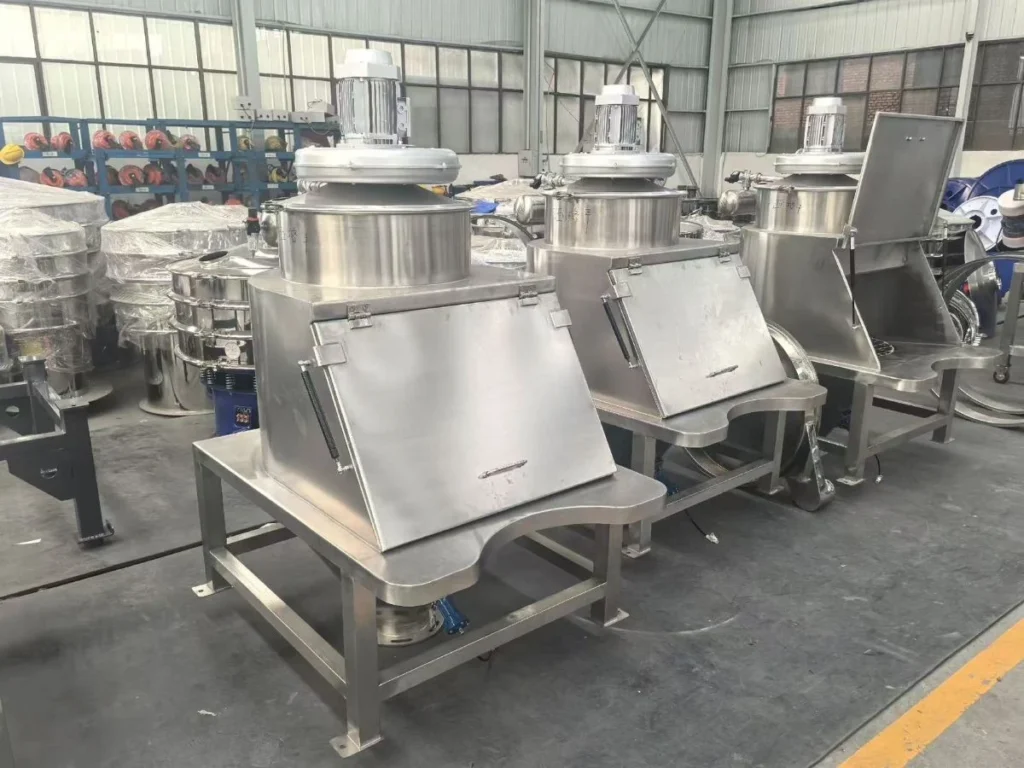
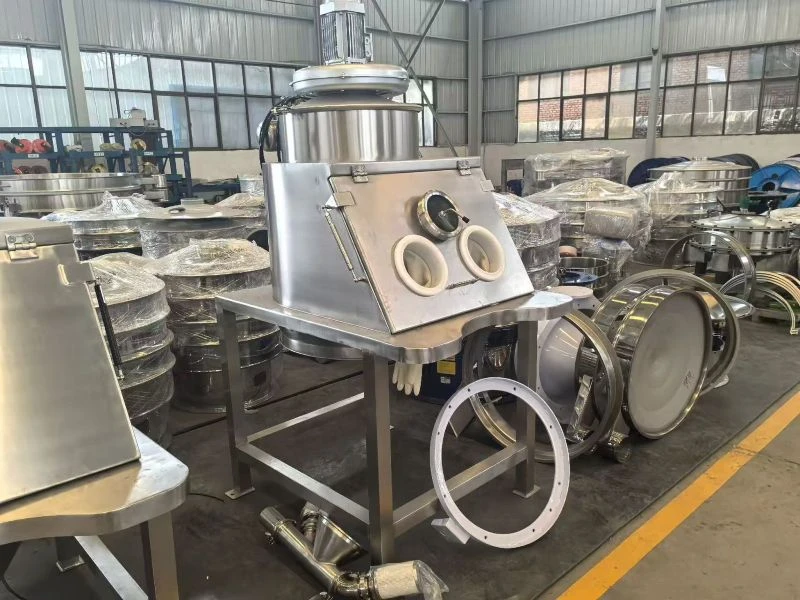
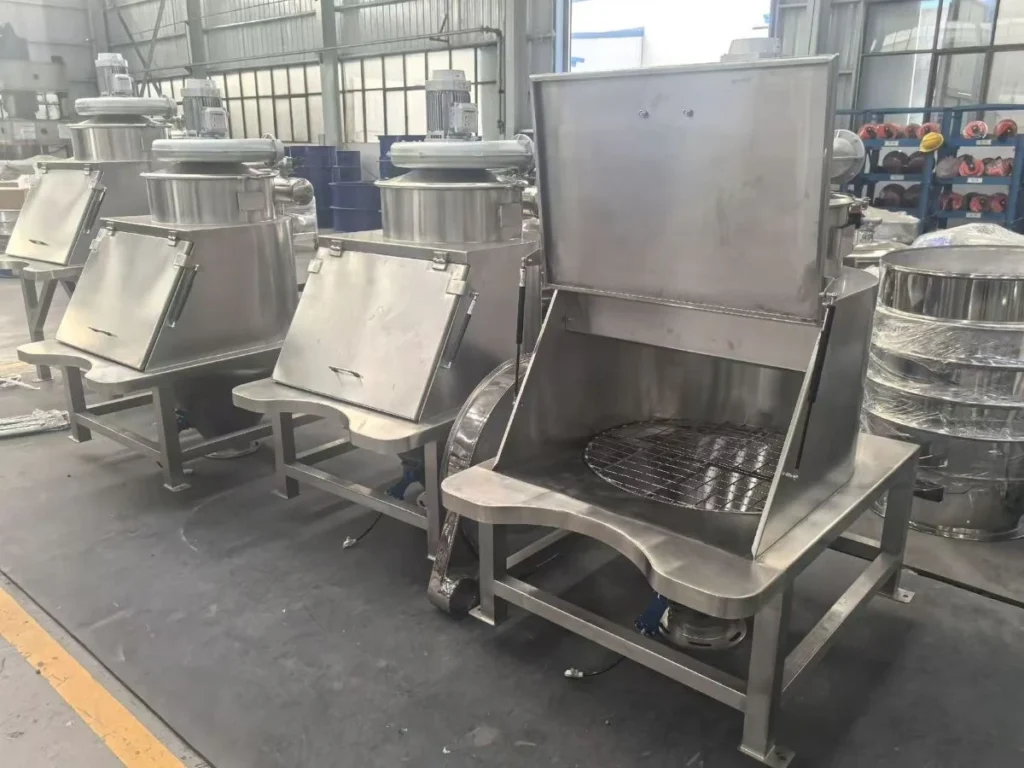
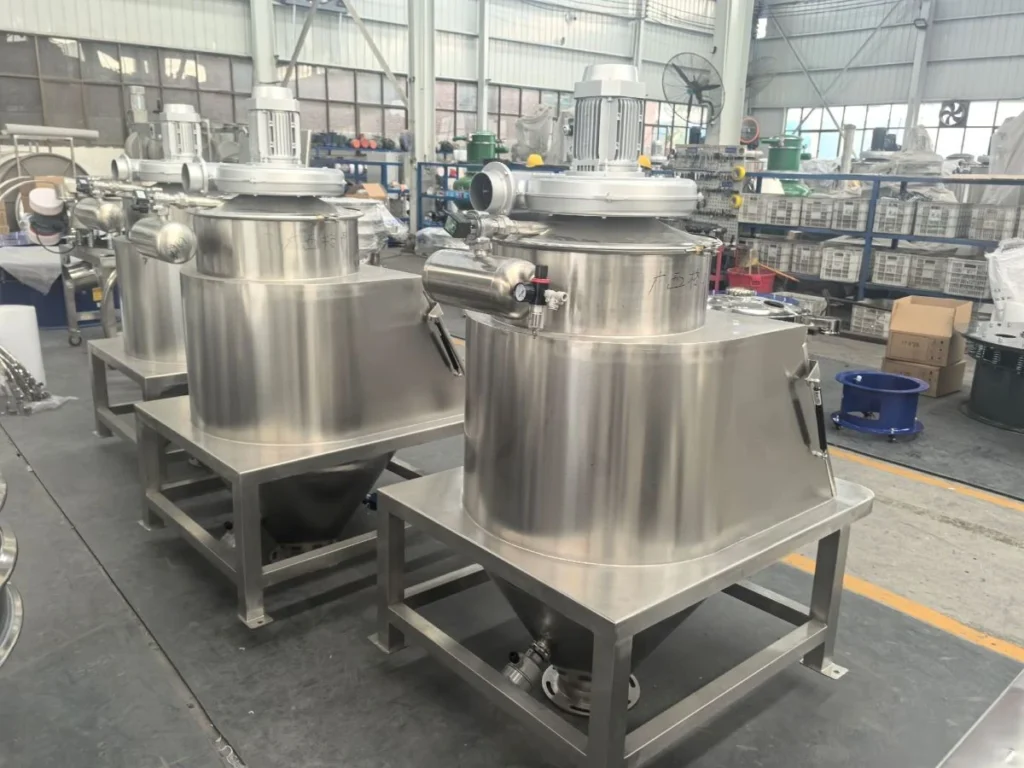
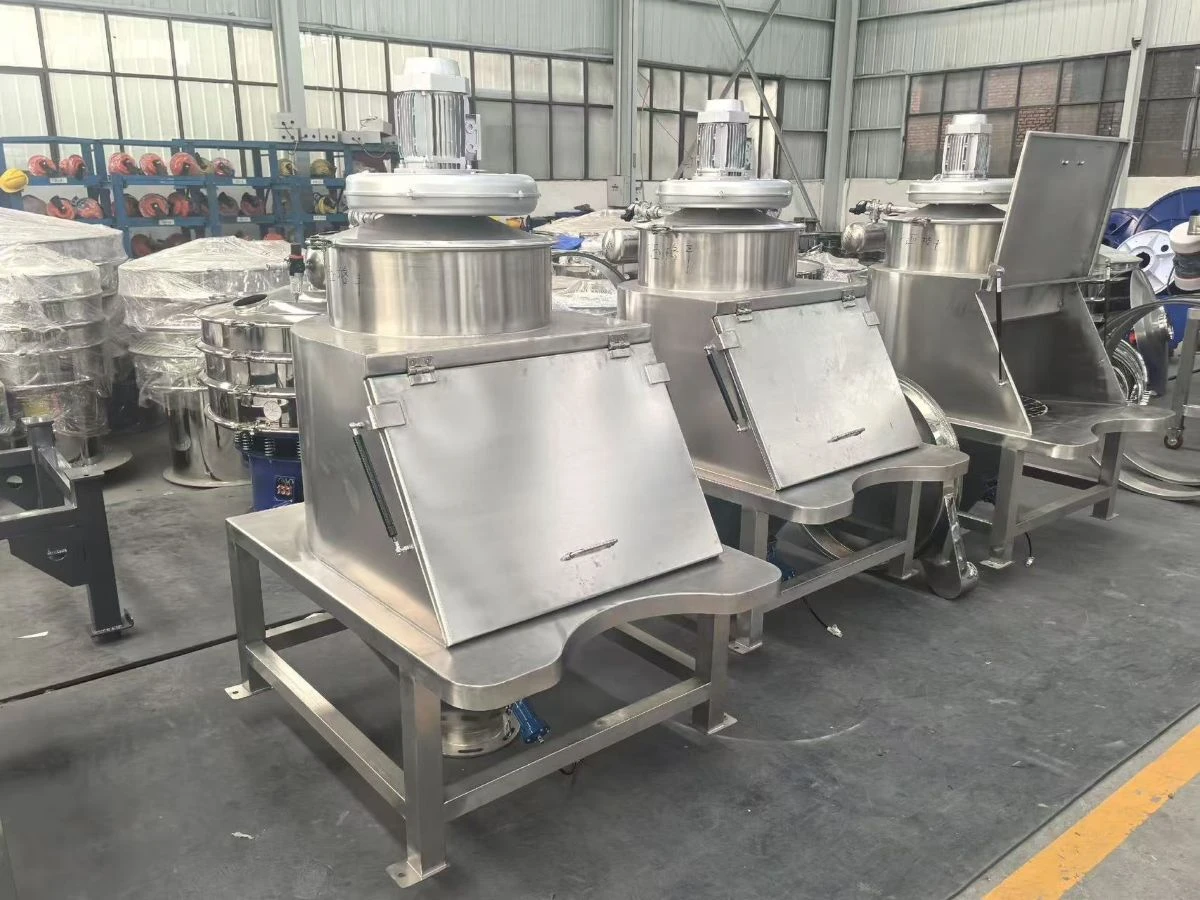
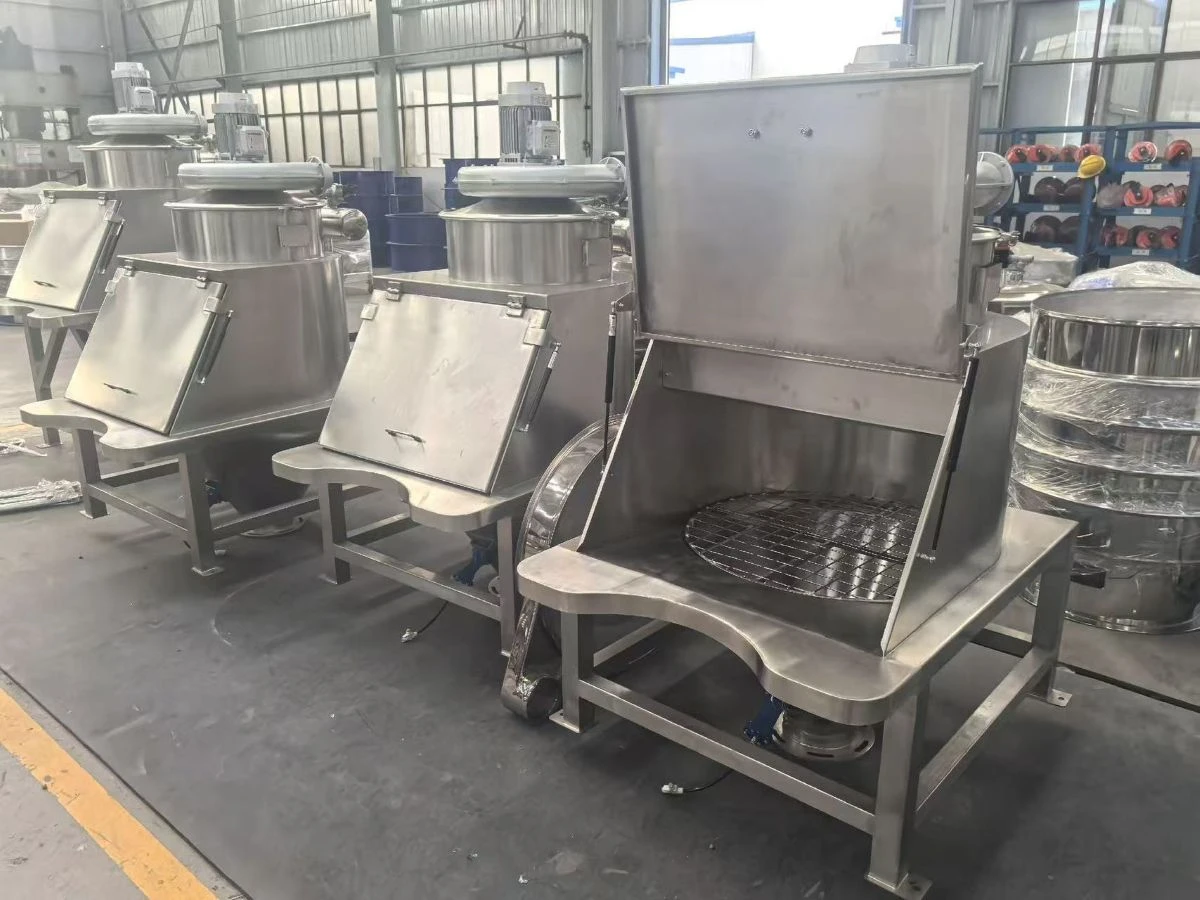
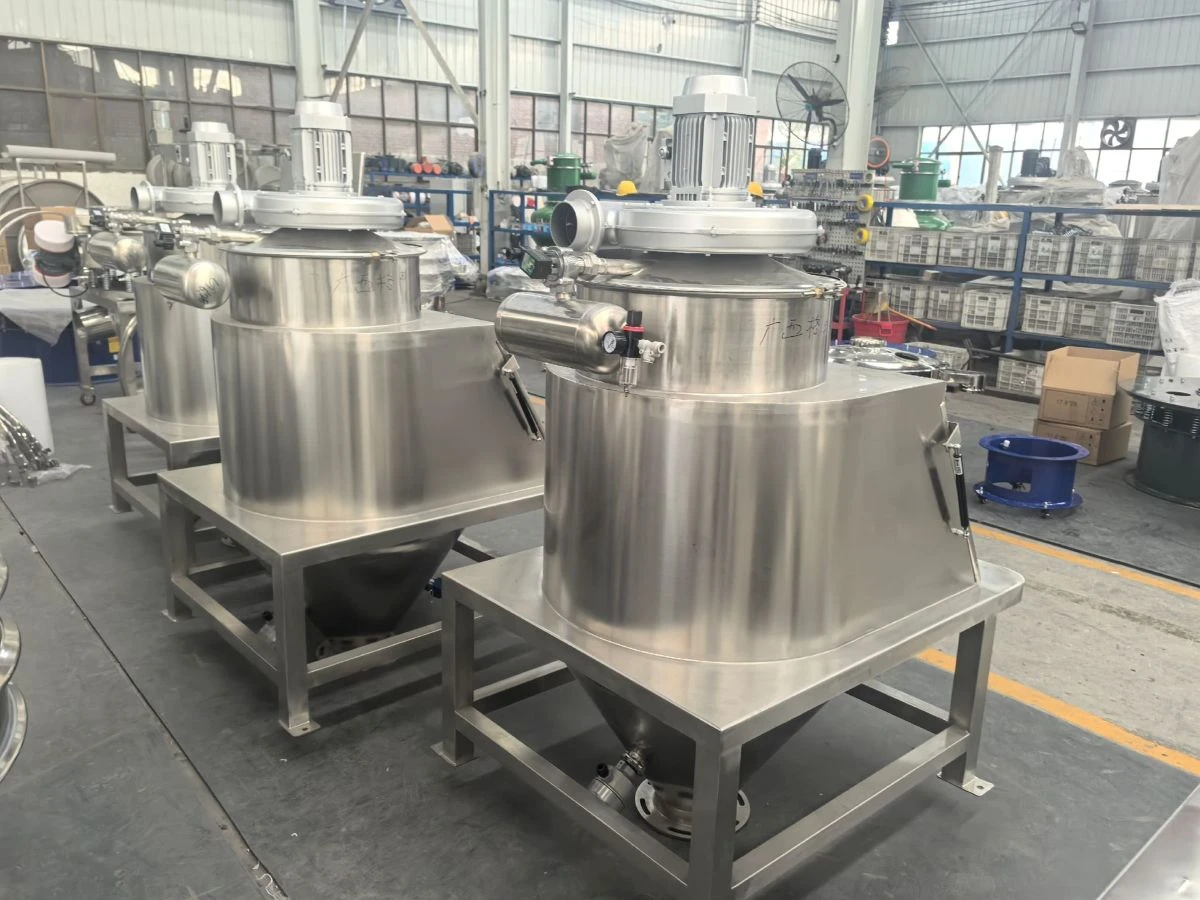
Maximise Efficiency with Dust Free Bag Dump Station
The dust free bag dump station is capable of handling the unpacking, unloading, and conveying of bulk materials in the form of powders, granules, and small chunks from ton bags. It is widely used in industries such as petrochemicals, active pharmaceutical ingredients (APIs), plastics, carbon black, mining, food additives, and cement.
Overall, as an environmentally friendly piece of equipment, the dust-free bag dump station offers the advantage of effectively controlling dust dispersion, protecting the work environment, reducing labour intensity, improving production efficiency, lowering labour costs, and minimising environmental pollution. In the future, with the development of industry and increased environmental awareness, dust-free bag dump stations will play a vital role in an even wider range of industries.
What is a Dust Free Bag Dump Station?
A dust free bag dump station is a transfer device that utilises negative-pressure dust collection. It is designed for opening bags and feeding materials during the production process. It allows materials to be stored before conveyance and, when used in conjunction with a dust collection system, effectively prevents dust from becoming airborne. It effectively isolates dust and powder generated during feeding from related equipment and personnel. Under the negative pressure created by the fan, dust and powder are drawn into the filtration system, separating the gas from the material. When a sufficient amount of material accumulates, it falls into the hopper due to its own weight.
When using a station de vidange de sacs avec tamiseur, match the bag-emptying rate to the screen’s capacity. Our guide explains when slower pouring is enough and when a buffer hopper with controlled feeding may be needed.
Working Principle of Dust Free Bag Dump Station
Alimentation
The operator places the raw material at the feed inlet of the feeding station. When the raw material enters the feed inlet, compressed air inside the feeding station blows it up and conveys it through the pipeline to the designated location.
Conveyance
The raw material is conveyed through the pipeline by compressed air. During this process, friction between the raw material and the inner walls of the pipeline is minimal, reducing material loss and dust generation.
Separation
When the raw material reaches the designated location, the separation device inside the feeding station separates the material from the air. The separated material is collected, while the air is expelled from the equipment.
Collection
The separated material is collected and transported via piping to the next stage of production.
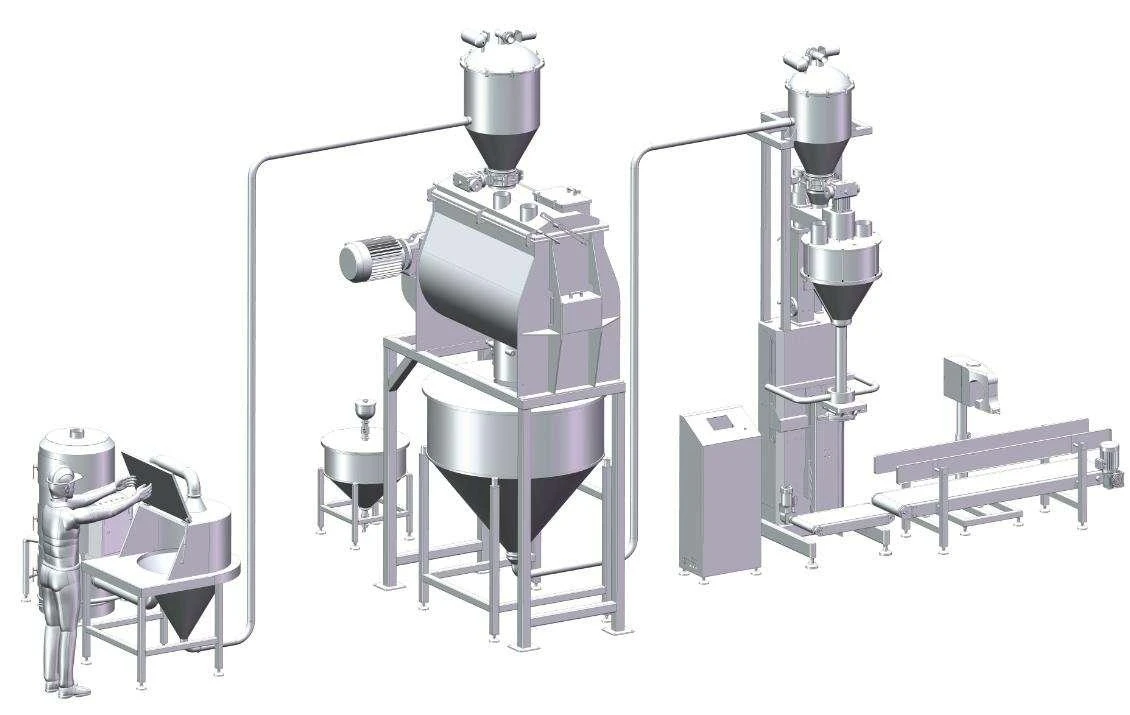
Structure of Station de vidange de sacs sans poussière
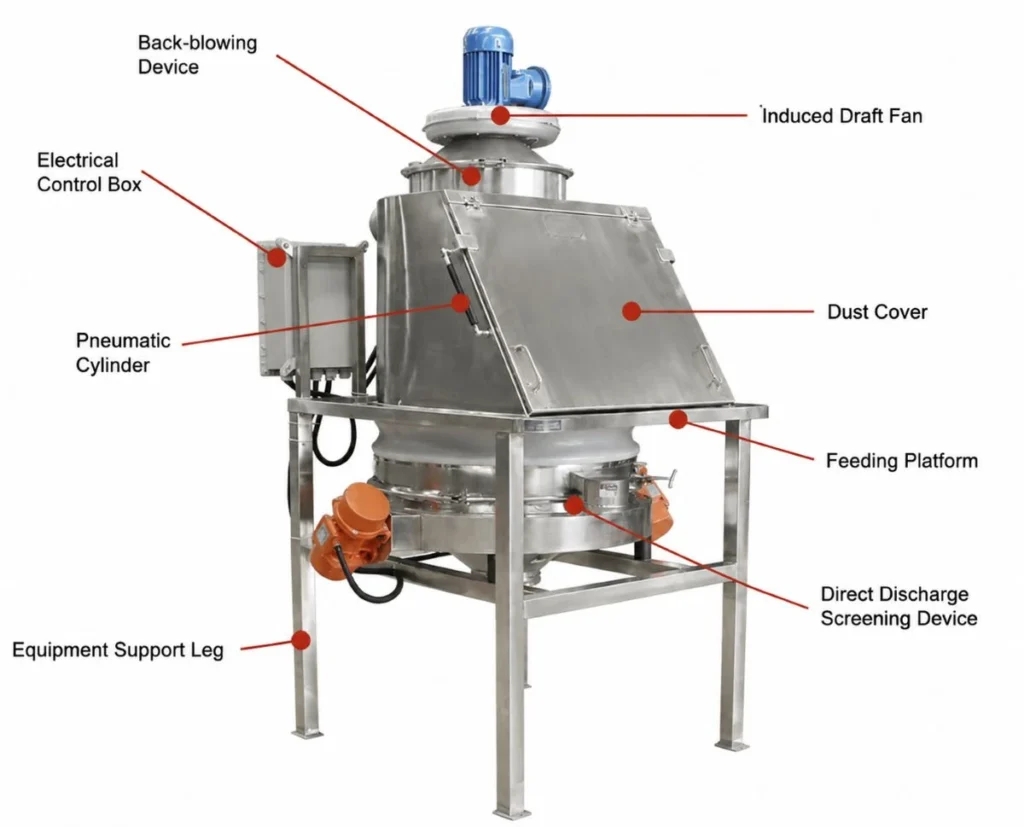
1. The dust free bag dump station consists of two main components: an upper section dedicated to dust collection, and a lower section dedicated to raw material screening or conveying.
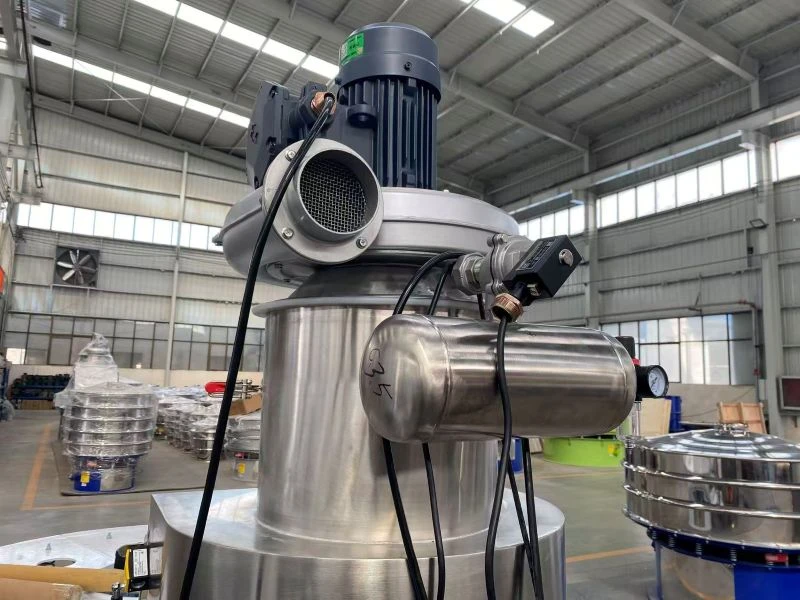
2. In the upper section, a negative-pressure blower draws airborne dust into high-density filter cartridges. After a period of operation, a pulse-jet system initiates a back-flushing sequence to clean the cartridges; the dislodged dust falls back down into the lower section to undergo screening via a direct-discharge sieve. This back-flushing mechanism enables the recovery and reuse of materials, thereby ensuring that no raw materials are lost.
3. Lower Screening Equipment: The unit can be integrated with various downstream devices, including tamis vibrant en lignes, rotary vibrating screens, ultrasonic vibrating screens, screw conveyors, as well as positive-pressure or vacuum conveying systems.
4. The specific configuration is determined based on the client’s requirements regarding the suitability of the material screening process and the method of material reception.
Caractéristiques
1.Haute efficacité
The dust free bag dump station employs a highly efficient feeding system that quickly and accurately conveys and dispenses materials, thereby improving production efficiency.
2. Safety
The dust free bag dump station’s enclosed feeding method prevents dust leakage, reduces the risk of production accidents, and ensures operator safety.
3.Environmental Friendliness
The dust free bag dump station’s negative-pressure gas adsorption technology effectively reduces dust emissions, minimising environmental pollution.
4. Flexibility
Le la station de vidange de sacs en vrac features a flexible structural design that can be customised to meet different production requirements, offering strong adaptability.
Technical Parameters
The following are standard dust free bag dump station specifications; we also offer customised non-standard solutions tailored to your specific material characteristics and operating conditions.
| Modèle | Length × Width (mm) | Capacité | Dust Collector Power (kW) | A (mm) | B (mm) | C (mm) |
| YJ-800 | 800 × 800 | 1T | 1.1 | 2000 | 1530 | 3650 |
| YJ-1000 | 1000 × 1000 | 2T | 1.1 | 2270 | 1530 | 4200 |
| YJ-1400 | 1400 × 1400 | 2T | 1.1 | 2500 | 1930 | 4500 |
Applications
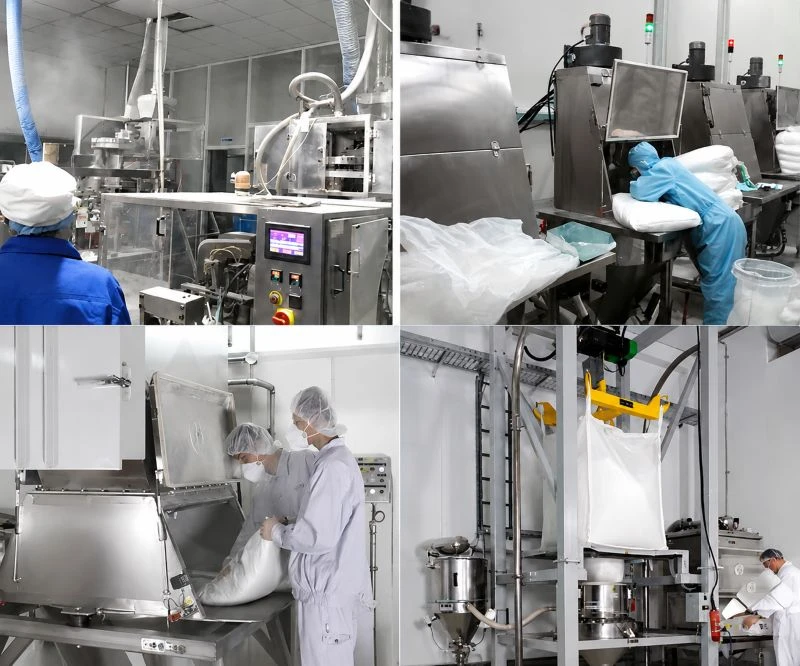
Industrie alimentaire
Ensure hygienic, dust-free handling of powders, baking soda,flour, banana powder and ingredients while maintaining product quality and operator safety.
Industrie pharmaceutique
Safely unload powders and active ingredients with zero contamination risk, complying with strict GMP standards.
Chemical & Powder Handling
Minimise dust emission and material loss during the unloading of chemicals, Sulfur,powders, and granules, improving workplace safety.
Cosmetics & Nutraceuticals
Maintain product purity and protect operators while efficiently handling fine powders used in cosmetics and supplements.
Dust Free Bag Dump Station Selection Guide
The dust free feeding station is a critical piece of equipment for resolving issues related to airborne dust and material contamination during the powder feeding process; it is widely utilised across industries such as chemicals, lithium batteries, food, and pharmaceuticals. When selecting a unit, the following key factors must not be overlooked:
Dust Collection System
Opt for a design featuring negative-pressure dust extraction combined with pulse-jet back-flushing. This configuration ensures high dust removal efficiency, thereby effectively preventing dust spillage and ensuring compliance with environmental regulations and GMP standards.
Materials and Workmanship
It is recommended that all parts in direct contact with the material be constructed from 304 or 316 stainless steel. For the food and pharmaceutical sectors, a sanitary-grade polished finish is mandatory to prevent material contamination and corrosion; equipment should be fabricated in strict accordance with specific client requirements.
System Integration & Scalability
The equipment must be compatible with auxiliary systems—such as transport pneumatique sous vide,système d'alimentation à convoyeur à vide et screw conveyors—to facilitate automated feeding operations and minimise the need for manual intervention.For cleaner powder handling, see our guide to dust control in conveying and sieving systems.
Customisation and After-Sales Support
Given the nature of non-standardised equipment, adaptability is paramount. Select a manufacturer capable of providing customised solutions tailored to the specific characteristics of your materials and operational environment, while also prioritising a provider known for rapid and responsive after-sales service.
Détails
 Back-blowing Bag
 Electrical Control Cabinet
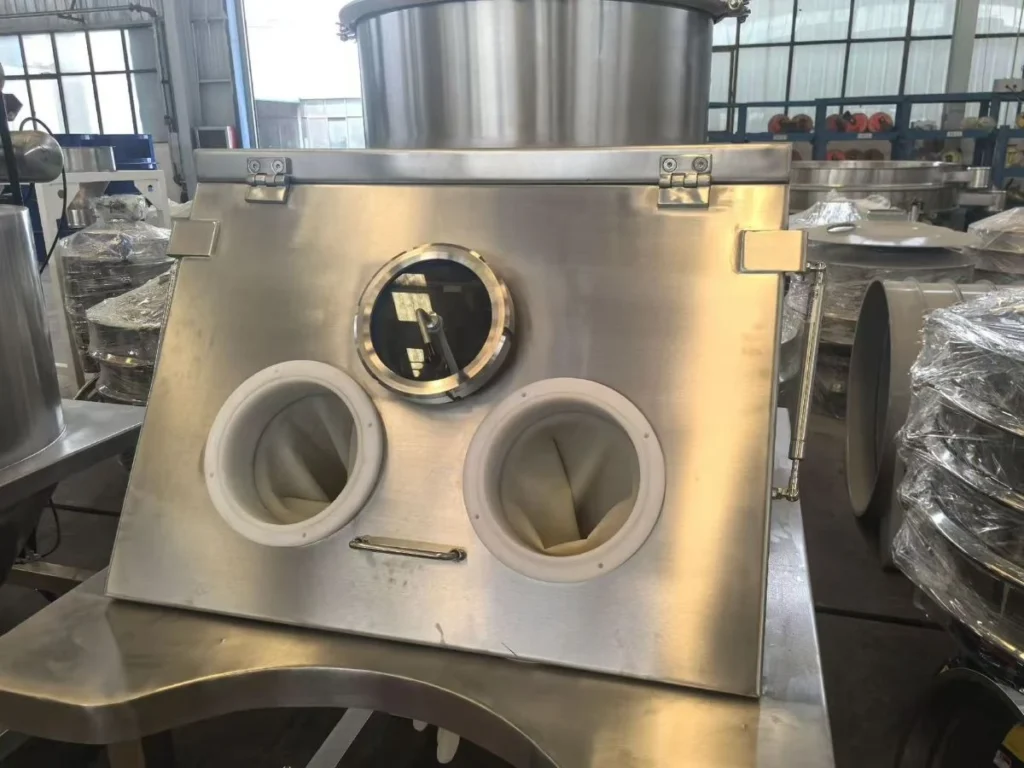 Glovebox
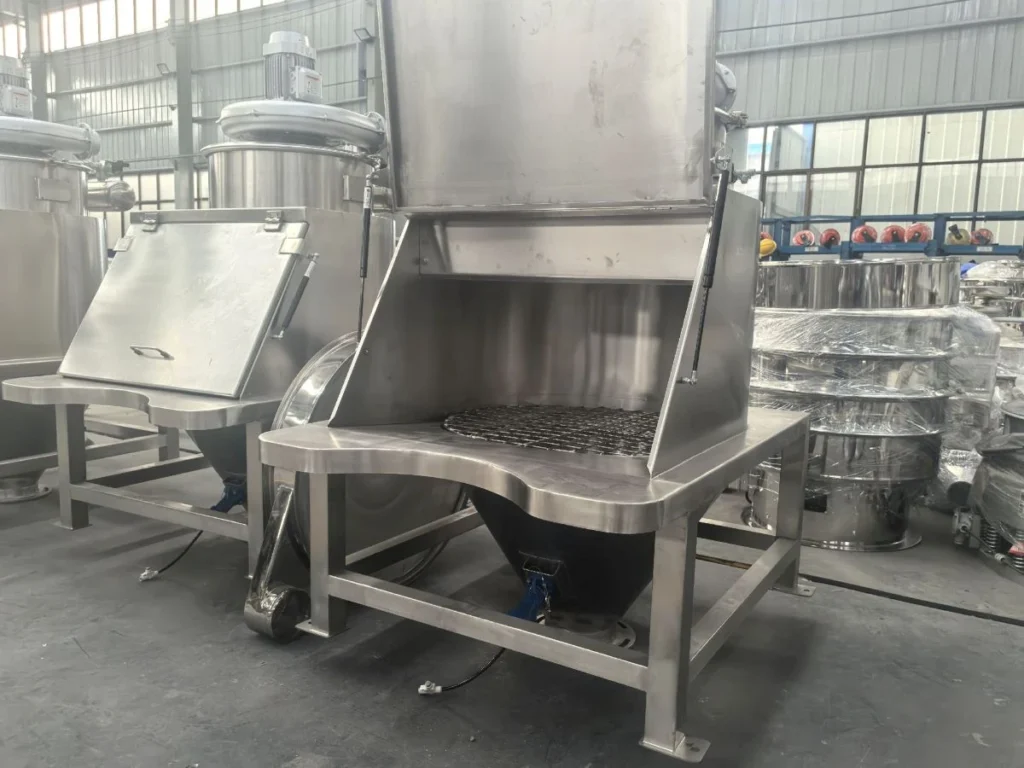 Space Frame
Maintenance & Care
To ensure the long-term, stable operation of the dust Free bag dump station, regular maintenance and care are required. Specific procedures include:
1.Periodically inspect the fasteners on all equipment components for looseness; tighten them promptly if necessary.
2. Periodically clean out accumulated material from the interior of the equipment to maintain internal cleanliness.
3. Check the operational status of the dust collection system to ensure it is functioning correctly.
4. Lubricate the equipment at regular intervals to ensure smooth and proper operation.
Notre dust-free bag dump station maintenance checklist covers what to inspect before the first bag of a shift, where to look for powder after cleaning, and which components to check each month.
Case
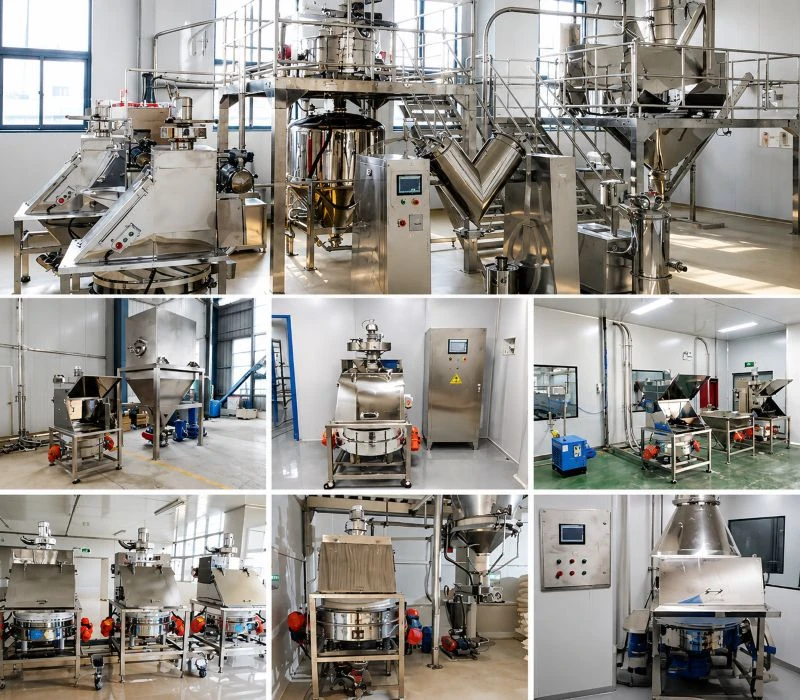
For a customer requiring dust-free feeding and screening for milk powder, we recommended a polished 304 stainless steel feeding station paired with an inline vibratory screen. The proposed arrangement combined feeding-point dust control with 1.5 mm screening before filling.
Produits associés
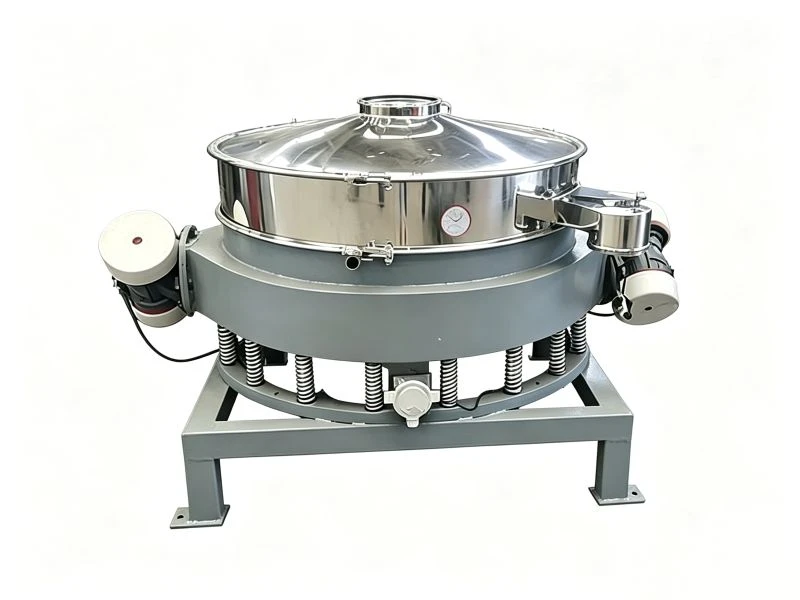
Crible vibrant rotatif
Tamis vibrant rotatif | Tamiseur vibratoire Le tamis vibrant rotatif est conçu pour la séparation efficace des poudres, granulés et liquides. Il offre des performances stables, une haute précision de criblage et un fonctionnement fiable en production continue. Nous proposons des configurations flexibles, notamment des conceptions à plusieurs étages, des systèmes ultrasoniques et des matériaux de qualité alimentaire pour répondre aux différentes exigences de traitement. YuanJing fournit des solutions de criblage pratiques…Tamis vibrant en ligne
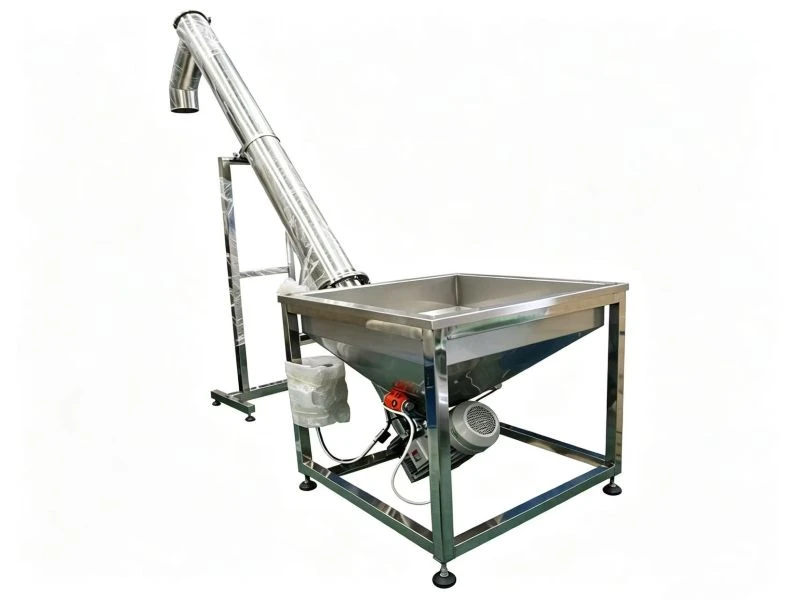
Tamis vibratoire en ligne pour les lignes de production continues Les tamis vibratoires en ligne sont conçus pour les lignes de production continues, permettant aux poudres et aux liquides d'être criblés directement dans le pipeline. La conception compacte économise de l'espace tout en maintenant des performances de séparation stables et précises. Ils sont largement utilisés dans le traitement alimentaire, pharmaceutique et chimique. Qu'est-ce qu'un tamis vibratoire en ligne ?…Convoyeur à vis
Systèmes de convoyeurs à vis industriels pour la manutention de matériaux en vrac Les convoyeurs à vis industriels sont conçus pour une manipulation continue et efficace de matériaux en vrac tels que les poudres, les granulés et les semi-solides. Avec une structure compacte et une conception fermée, ils assurent des performances de convoyage stables, une réduction des émissions de poussière et une faible maintenance dans diverses applications industrielles. YuanJing fournit des solutions de convoyeurs à vis personnalisées basées sur…Système d'alimentation par convoyeur à vide
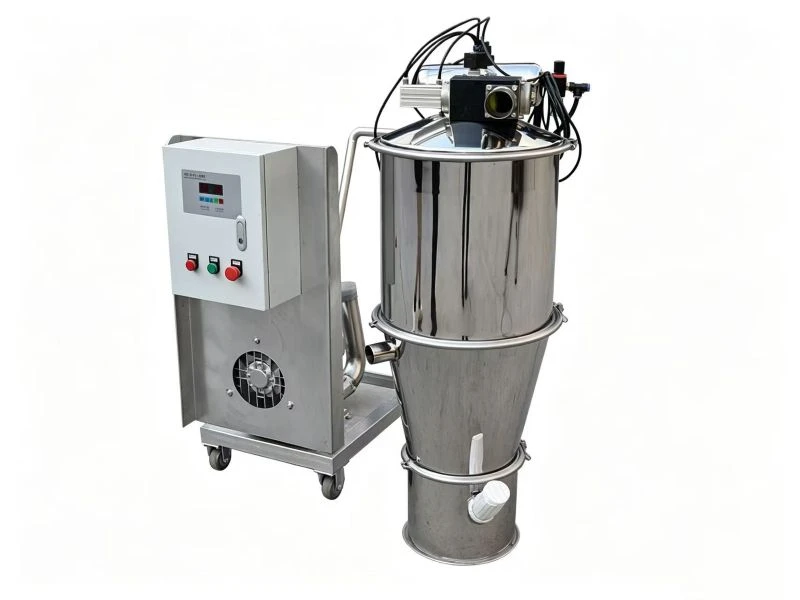
Solutions de systèmes de convoyeurs à vide industriels pour poudres et matériaux en vrac Les systèmes de convoyeurs à vide transfèrent automatiquement divers matériaux dans les trémies des machines d'emballage, des machines de moulage par injection et des concasseurs. Ils peuvent également alimenter directement les mélangeurs en matériaux mélangés (tels que les mélangeurs de type V, 2D et 3D), réduisant considérablement la main-d'œuvre manuelle et éliminant les déversements de poussière pendant l'alimentation. En tant que…
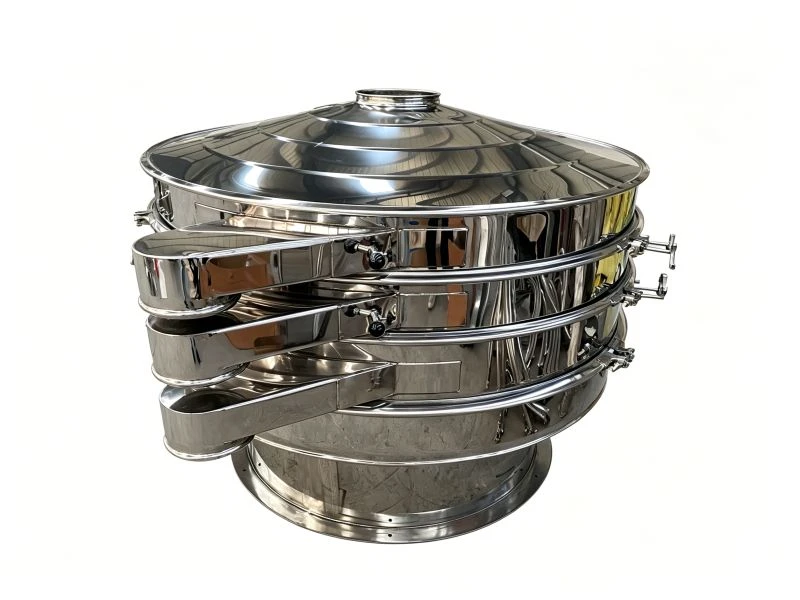
Fabricant et fournisseur de tamis vibrants et de convoyeurs
Conçus pour un tamisage de précision, des performances fiables et des applications industrielles variées,
les tamis vibrants rotatifs Yuanjing bénéficient de la confiance de clients dans le monde entier.

Expérience de projets à l’international
Les produits Yuanjing sont exportés vers plus de 50 pays et régions et répondent aux besoins des secteurs de l’alimentation, de la chimie, de la pharmacie, des mines et des nouvelles énergies.
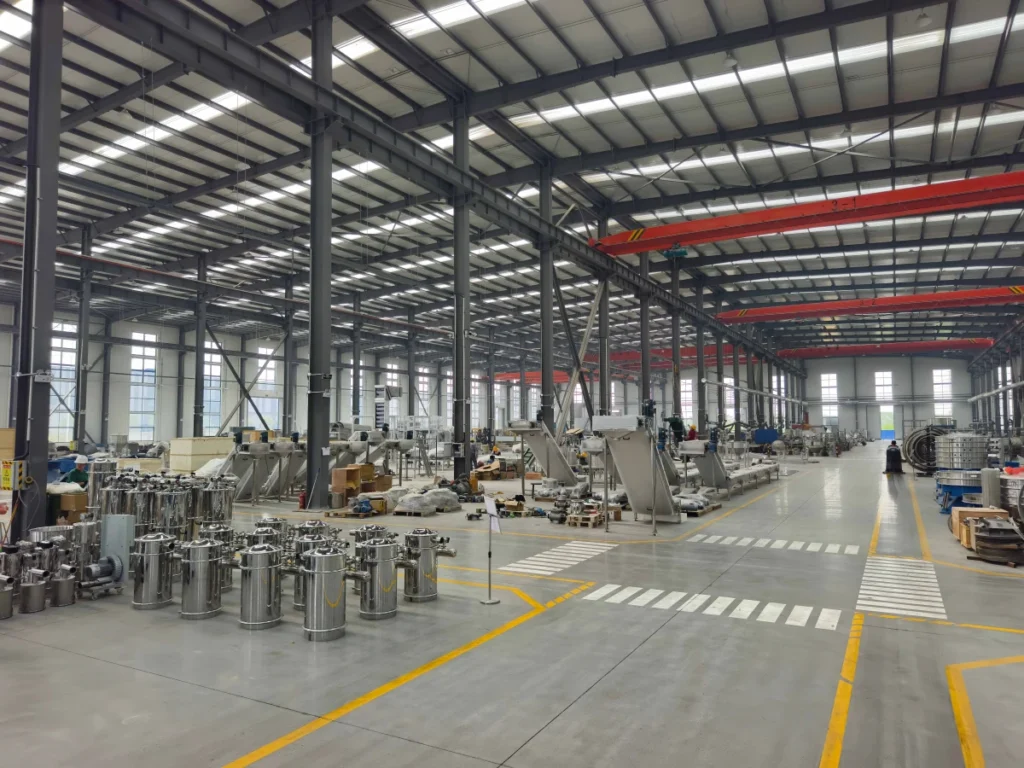
Solides capacités de fabrication
Des lignes de production avancées intégrant la découpe laser, l’usinage CNC, le soudage automatisé et un contrôle qualité rigoureux garantissent une qualité constante des produits.
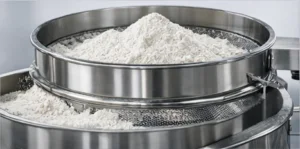
Séparation précise et stable
Une conception vibratoire optimisée assure un écoulement uniforme des matériaux, une grande précision de criblage et un fonctionnement stable à long terme.
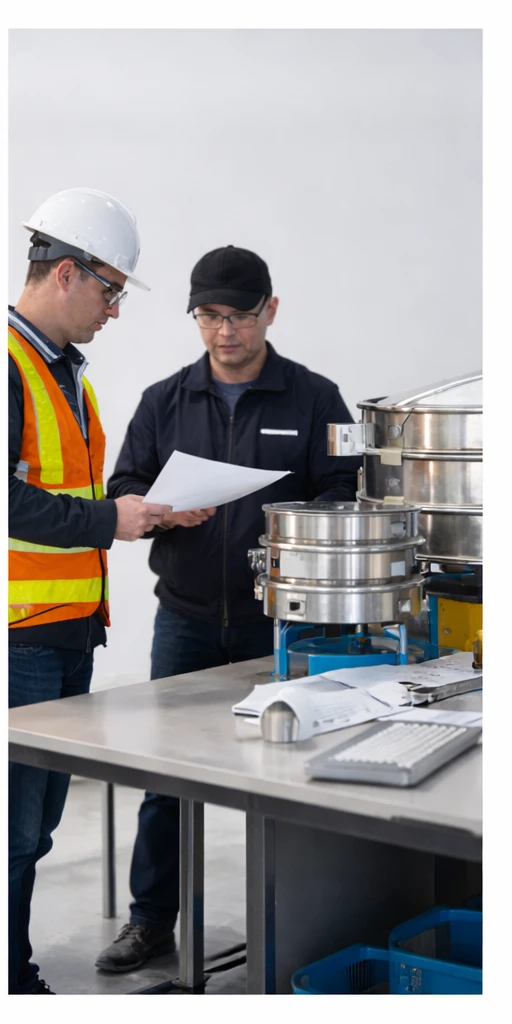
Solutions de criblage personnalisées
Yuanjing propose des configurations flexibles en matière de diamètre, de taille des mailles, de nombre d’étages et de matériaux, afin de répondre précisément aux exigences de votre procédé.
FAQ
Obtenir une solution personnalisée
Nous pouvons fournir des solutions personnalisées d'équipements de criblage et de convoyage adaptées à différents matériaux et exigences de production.
Envoyez-nous vos exigences, et notre équipe fournira la bonne solution et un devis rapide dans les 24 heures.