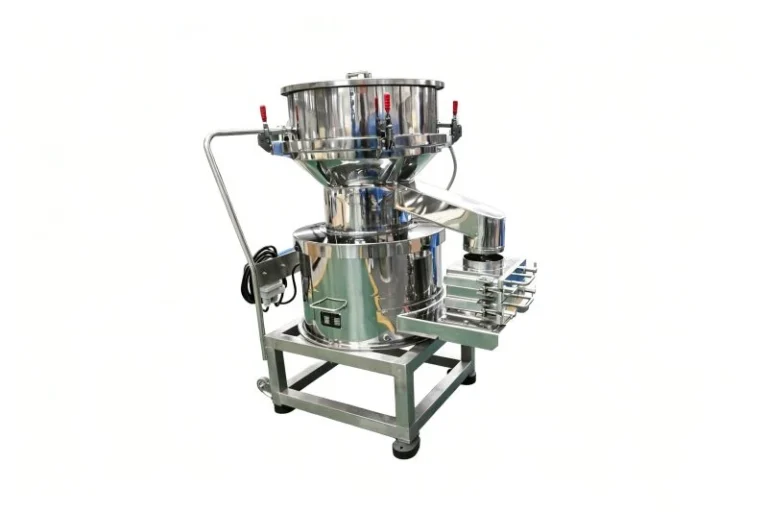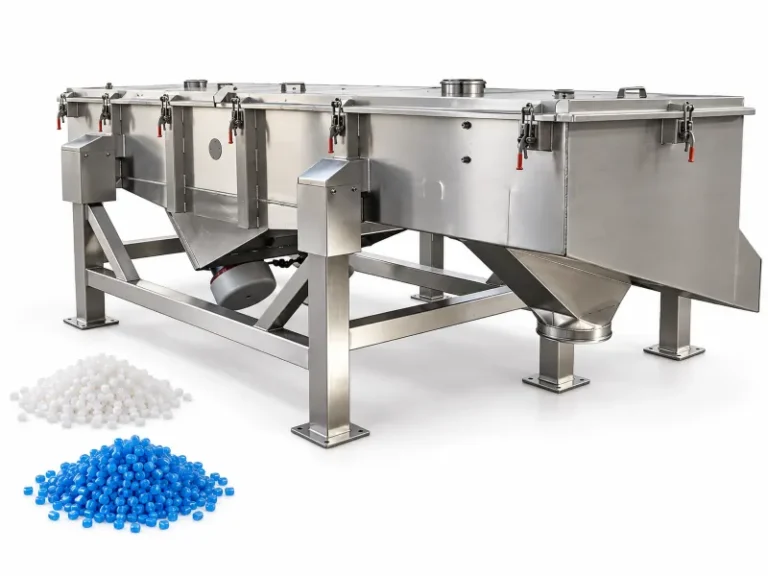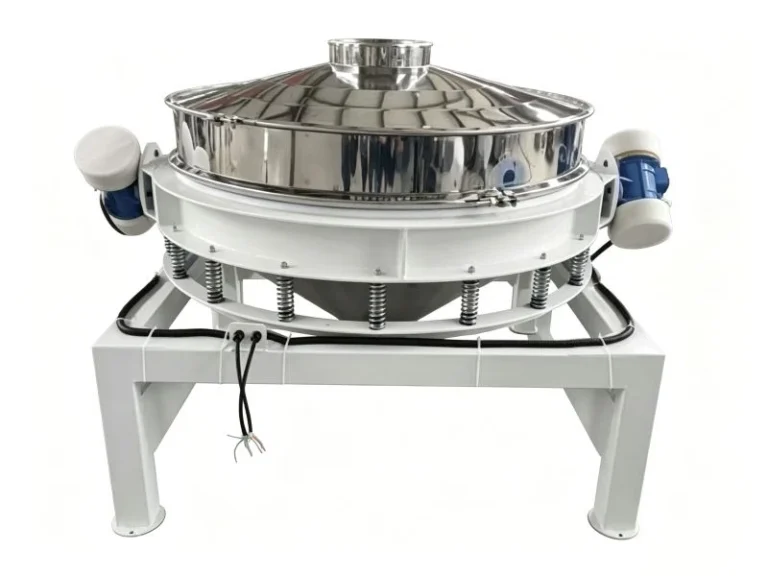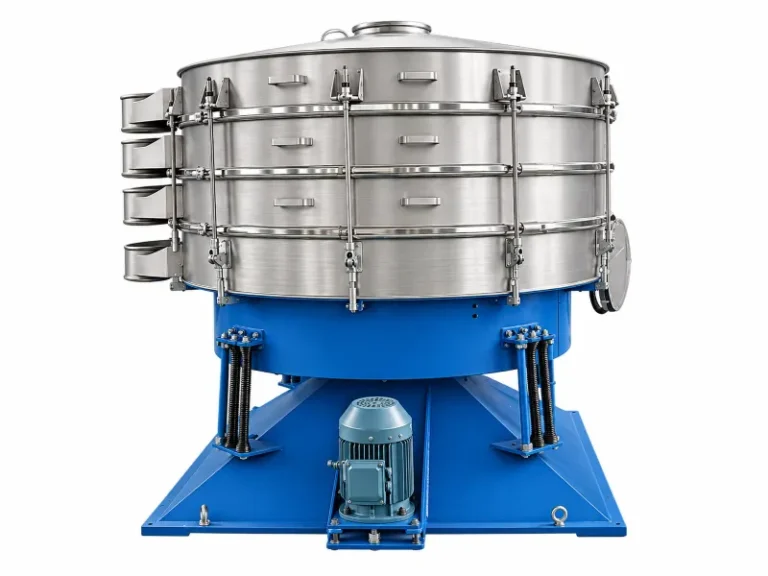
Applicazioni e risultati di vagliatura della macchina setacciatrice per polveri metalliche
Iron powder prepared for pressing, stainless steel powder used in 3D printing, and copper powder processed for conductive materials have different screening requirements. Some operations need to remove oversized particles, while others focus on particle classification or recovering usable powder after production.
A metal powder sieving machine separates particles according to their ability to pass through a screen opening. Its practical value lies in delivering powder that meets a defined size specification while limiting material loss and maintaining consistent throughput. Understanding the application makes these results easier to evaluate.

Where Is Metal Powder Sieving Used in Production?
Incoming Powder Screening
Before mixing, pressing, or further processing, metal powders may require screening to remove oversized particles, larger agglomerates, or screen-retained foreign material introduced during handling and storage.
This step helps control what enters the next process. However, screening separates by size rather than chemical composition. Contaminants similar in size to acceptable powder may pass through the mesh and require other quality-control methods.
Particle Classification After Powder Production
Powder production typically generates a distribution of particle sizes. Metal powder classification separates this material into fractions suitable for different specifications or downstream processes.
The objective is a suitable particle-size distribution, rather than identical particles. Some powder metallurgy formulations require a controlled combination of sizes, so removing too much of one fraction may alter the intended blend.
Screening Recovered Powder
Recovered powder from additive manufacturing may contain oversized spatter particles and agglomerates. Screening removes the retained fraction before the remaining material undergoes further checks for reuse.
In these applications, a metal powder sieving machine supports recovery but does not determine whether powder is fully suitable for another production cycle. That decision also depends on the relevant material and process specifications.

Applications for Different Metal Powders
Iron and Steel Powder for Powder Metallurgy
Iron powder screening before blending and pressing helps remove oversized particles and larger lumps. This reduces unwanted variation in the feedstock and supports more consistent preparation for subsequent processing.
The immediate screening result is better control of particle size. Final component density and sintering quality also depend on the formulation, compaction conditions, and furnace process. Useful checks include oversized material remaining in the accepted powder and usable fines carried into the rejected fraction.
If iron powder builds up at the oversize outlet during continuous screening, check the discharge opening as well as the load on the deck. Our guide covers both in its section on linear screen configuration for iron powder.
Stainless Steel and Titanium Alloy Powder for 3D Printing
Stainless steel powder sieving and titanium alloy powder screening can be used for incoming material checks and post-build powder recovery. The required acceptance limits depend on the additive manufacturing process and the powder specification.
A metal powder sieving machine can retain larger spatter particles and agglomerates, reducing the likelihood of their return to the powder supply. For valuable alloys, minimizing acceptable powder lost with this retained material is also important.
Passing the screen does not confirm oxygen content, particle shape, or flowability. Recovered powder still needs the checks required by the production process before reuse.
Copper and Nickel Powder for Conductive Materials
Copper and nickel powders are used in some conductive formulations and electronic materials. Where particle size matters, oversized particles or agglomerates can interfere with subsequent mixing, dispersion, or coating consistency.
Copper powder screening helps reduce the oversized fraction before formulation. For fine powders that adhere to the mesh, sustained passage through the screen is particularly important. Results should be evaluated through particle-size control and acceptable powder recovery; screening alone does not establish improved electrical conductivity.
Nickel-Based Alloy Powder for Thermal Spraying
Metal powder used in thermal spraying must meet the feedstock requirements of the specific process. Classification can separate overly coarse and fine fractions to obtain the specified size range.
Here, a metal powder sieving machine helps provide more consistent feedstock for powder delivery and spraying. Coating adhesion, porosity, and other properties still depend on material composition and spray parameters, so they require separate process validation.
What Screening Results Can Be Achieved?
Fewer Oversized Particles and Retained Agglomerates
The most visible result is separation of oversized material from acceptable powder. Inspecting the retained fraction can also reveal unusual lumps or foreign material that warrant investigation upstream.
A metal powder sieving machine does not grind coarse particles into fine powder. Its role is to separate existing particles, although some loosely bound agglomerates may disperse during processing.
Powder Fractions That Match the Application
Classification can produce separate fractions for different uses. When both upper and lower particle-size limits apply, the collected product should be tested against the complete specification.
A nominal screen opening alone does not describe the full particle-size distribution. Sampling the accepted fraction provides stronger evidence of suitability than visual inspection or the mesh designation alone.
Less Usable Powder Lost with Oversize
When fine particles cannot pass efficiently, some acceptable powder may leave through the oversize outlet. Improving passage can reduce this loss, which matters particularly for expensive alloy powders.
For this reason, evaluating a metal powder sieving machine should include both accepted and retained material. Weighing each fraction and checking its size composition helps distinguish genuine oversize removal from avoidable loss of usable powder.
More Consistent Continuous Operation
A high initial discharge rate is not enough if screen blockage develops later. Sustained performance means maintaining acceptable product quality and throughput without excessive interruptions for cleaning.
Production records should therefore cover a representative operating period, including output changes, cleaning stops, and powder retained inside the equipment.
How Ultrasonic Assistance Affects Fine Metal Powder Screening
Fine metal powders may adhere to the mesh, form agglomerates, or block screen openings. Ultrasonic assistance transfers high-frequency vibration to the screen to help reduce adhesion and blinding, giving particles more opportunities to pass through suitable openings.
For difficult copper, stainless steel, or alloy powders, potential benefits include more continuous fine-powder passage, less screen buildup, and longer intervals between cleaning stops. These improvements depend on the actual powder and operating conditions.
Ultrasonic assistance does not guarantee a fixed throughput increase or break every hard lump. Compare results using the same feedstock, screen opening, and feeding conditions, and examine acceptable fines remaining in the oversize fraction.
When assessing an ultrasonically assisted metal powder sieving machine, the useful question is whether it maintains the required separation over time. Our guide to vagliatura di polveri da 200–500 mesh explains fine-mesh blockage and powder passage in more detail.

How to Verify Metal Powder Screening Performance
A practical trial should assess product quality and operating performance together. Looking at the powder or measuring a brief burst of output cannot establish the overall result.
Record the powder type, feed particle-size distribution, screen opening, feeding rate, and test duration. Collect samples from every outlet and evaluate:
- Accepted powder size: Does the product meet the downstream specification?
- Oversized particle carryover: Does unacceptable coarse material remain in the accepted fraction?
- Usable powder recovery: How much acceptable material leaves with the oversize?
- Sustained throughput: Is output maintained throughout the trial?
- Cleaning and material loss: Are frequent stops, internal buildup, or powder leakage observed?
Results from different powders or screen openings should not be treated as directly comparable. Clear test conditions make the findings more useful for production planning.
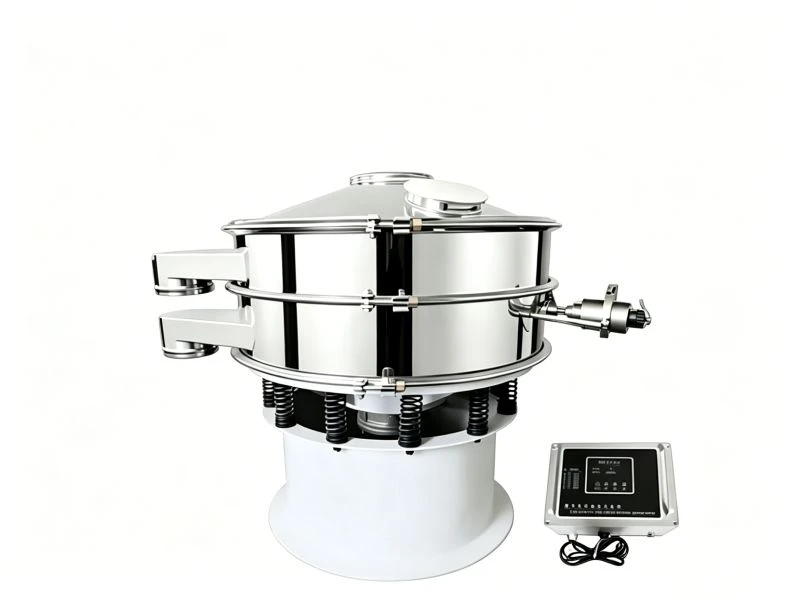
The value of a metal powder sieving machine is demonstrated by measurable separation: unwanted coarse particles are retained, the required fraction is recovered, and operation remains consistent.
For equipment details, explore Yuanjing’s apparecchiature per la vagliatura delle polveri metalliche. If you need help defining a configuration, see our guida alla setacciatura delle polveri metalliche covering mesh, screen types, and protection systems. Share your powder information, target particle-size range, and throughput requirements with Yuanjing to discuss an application-specific screening assessment.
Domande frequenti
1. What are the applications of metal powder screening?
Metal powder screening is used for incoming powder checks, particle-size classification, and recovered powder processing. Common applications include iron powder for powder metallurgy, stainless steel and titanium alloy powders for 3D printing, copper powder for conductive materials, and alloy powders for thermal spraying.
2. Can sieving remove impurities from metal powder?
Sieving can remove oversized particles, larger agglomerates, and foreign material retained by the screen. It cannot reliably remove contaminants similar in size to acceptable powder or separate materials by chemical composition. Additional quality checks are needed when chemical purity is critical.
3. Can metal 3D printing powder be reused after sieving?
Sieving can remove larger spatter particles and agglomerates from recovered 3D printing powder. However, passing through the screen does not establish suitability for reuse. The powder must also meet applicable requirements for particle-size distribution, composition, oxygen content, and other process-specific properties.
4. How does ultrasonic screening improve fine metal powder recovery?
Ultrasonic screening helps reduce powder adhesion and mesh blockage, allowing suitable fine particles to pass more consistently. This can reduce usable powder lost through the oversize outlet. The improvement depends on powder characteristics and operating conditions and should be verified through comparative testing.
5. How can metal powder screening results be verified?
Collect and weigh material from each outlet, then check the particle-size distribution of the accepted and retained fractions. Evaluate oversized particle carryover, usable powder loss, sustained throughput, and cleaning frequency. Record the feedstock, screen opening, feeding rate, and test duration to make comparisons meaningful.