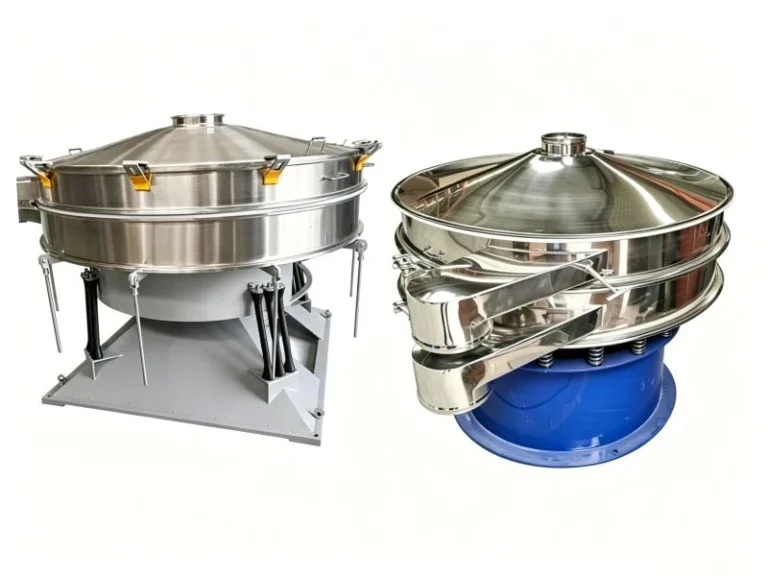
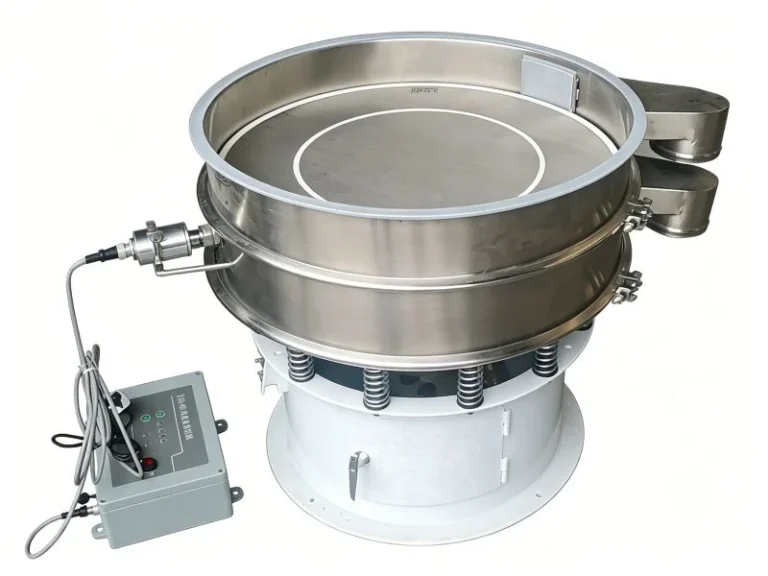
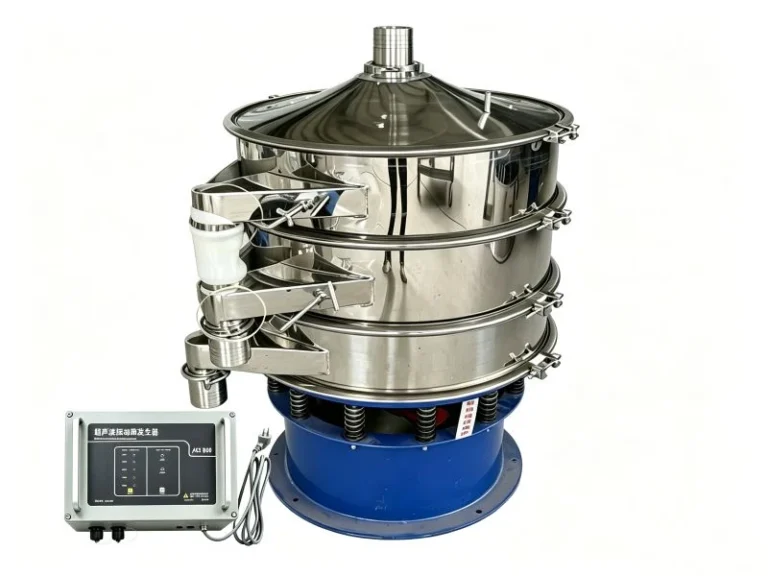
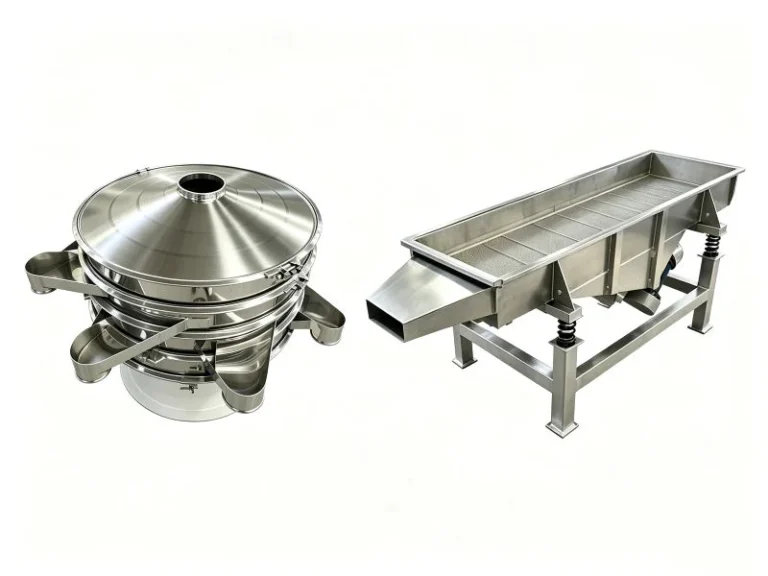
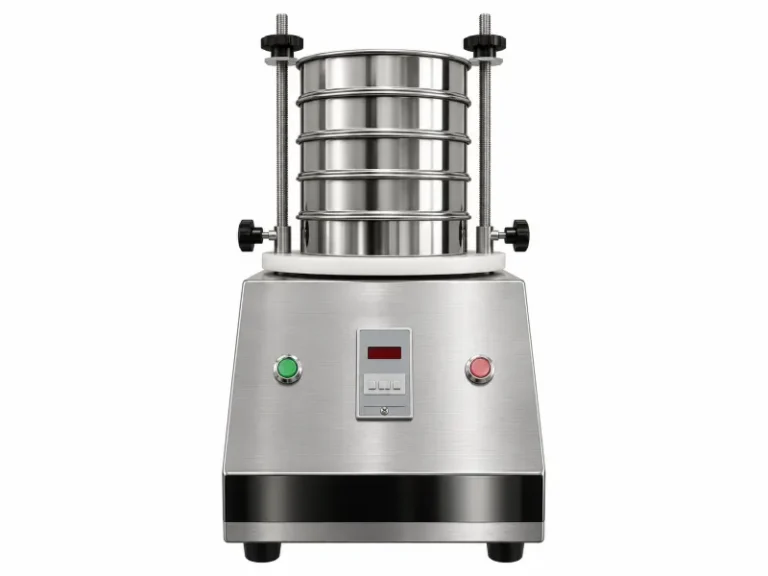
Setaccio vibrante lineare per pellet di mangime: rimozione di fini e pellet sovradimensionati
Un vaglio vibrante lineare per pellet di mangime rimuove i fini sciolti, i piccoli frammenti e i pezzi sovradimensionati dopo il raffreddamento o prima dell'insacco. Per la sola rimozione dei fini dei pellet di mangime, un solo piano di vagliatura può essere sufficiente. Due piani separano fini, pellet accettabili e materiale sovradimensionato in tre uscite. La configurazione dipende dalla dimensione e dalla forma dei pellet, dall'umidità e dalla portata della linea. Anche la portata di alimentazione è importante: il vaglio deve gestire la produzione senza causare inutili rotture dei pellet.

Perché vagliare i pellet di mangime prima dello stoccaggio o dell'insacco?
Gli ingredienti grezzi e il mangime finito richiedono tagli di vagliatura diversi. Prima della lavorazione, il compito è rimuovere le particelle grossolane e le impurità sovradimensionate. Prima del confezionamento, è quello di tenere fuori dal prodotto finito fini, frammenti sottodimensionati e grumi.
Ingredienti grezzi per mangimi: rimuovere particelle grossolane e impurità
Polvere di crusca di riso, cereali, farina di soia, farina di ossa, polvere di calcio e altri additivi minerali possono essere vagliati con un vaglio vibrante lineare. I dati applicativi includono 10–80 mesh vagli e quantità di lavorazione di 500–1.000 kg, a seconda del materiale e della separazione richiesta.
Per gli ingredienti in grani, la vagliatura può avvenire prima del condizionamento e della decorticazione, poi di nuovo dopo la macinazione per rimuovere il materiale grossolano rimanente.
Vagliatura dei pellet di mangime dopo il raffreddamento e prima dell'insacco
Dopo il raffreddamento, un vaglio vibrante lineare per pellet di mangime separa la polvere sciolta e i piccoli frammenti dal prodotto. La rimozione dei pezzi sovradimensionati e dei grumi richiede un altro taglio di vagliatura. I mangimi pellettati, sbriciolati ed estrusi necessitano ciascuno di aperture adatte al loro intervallo di dimensioni richiesto.
I dati applicativi elencano specifiche del vaglio da 1,5 mm a 60 mesh e quantità di lavorazione di 2–20 tonnellate. Questi coprono diversi prodotti per mangimi e configurazioni di macchine, piuttosto che un'unica configurazione per ogni linea.
Le quantità sopra riportate non hanno una base temporale dichiarata. Confermare se si riferiscono alla portata oraria o a quantità per lotto prima di utilizzarle per la selezione dell'attrezzatura.
Impostare limiti dimensionali diversi per pellet e mangime sbriciolato
Un frammento scartato dal mangime in pellet interi può essere accettabile nel mangime sbriciolato. La vagliatura del mangime sbriciolato dovrebbe trattenere le piccole particelle richieste rimuovendo il materiale al di sopra e al di sotto dell'intervallo specificato.
Impostare i limiti dimensionali per il prodotto in lavorazione, che sia per pollame, bestiame o mangime acquatico, prima di scegliere le aperture del vaglio.
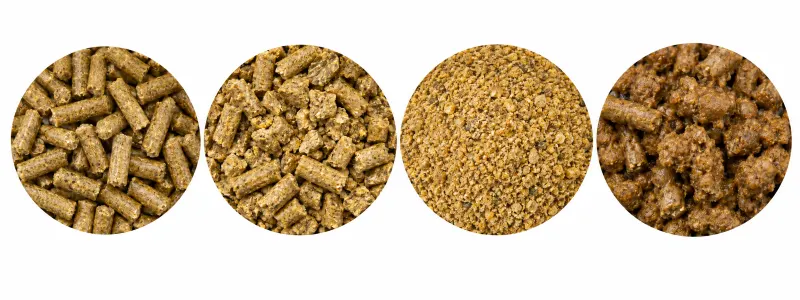
Come separa un vagliatore per pellet di mangime i fini e i pezzi sovradimensionati?
A setaccio vibrante lineare per pellet di mangime sposta il materiale su una superficie di vagliatura. Le particelle che passano attraverso le aperture cadono; il materiale trattenuto viaggia verso un'uscita separata.
Vagliatura a singolo piano per la rimozione dei fini dei pellet di mangime
I fini e i piccoli frammenti passano attraverso il vaglio. I pellet rimangono sopra e si muovono verso l'uscita di scarico.
Anche i pezzi sovradimensionati rimangono sul vaglio. Un singolo piano quindi non può raccoglierli separatamente dai pellet accettabili.
Vagliatore per pellet di mangime a doppio piano: tre uscite separate
Il piano superiore ha aperture più grandi e trattiene i pezzi sovradimensionati e i grumi. Il materiale che passa raggiunge il piano inferiore, dove i fini cadono e i pellet accettabili rimangono.
| Posizione di vagliatura | Materiale separato | Uscita |
|---|---|---|
| Trattenuto sul piano superiore | Pezzi sovradimensionati e grumi | Sovradimensionato |
| Trattenuto sul piano inferiore | Pellet accettabili | Prodotto |
| Passante attraverso il piano inferiore | Fini e frammenti sottodimensionati | Fini |
La vagliatura può rimuovere i pellet di mangime troppo lunghi?
Un pellet lungo e stretto può passare attraverso un'apertura con l'estremità per prima. Il suo diametro, la sua lunghezza e il suo orientamento influenzano tutti il passaggio, così come la forma dell'apertura. Se la lunghezza dei pellet è un requisito di qualità rigoroso, testare campioni rappresentativi per verificare se la vagliatura può soddisfarlo.
Come scegliere le aperture del vaglio e la capacità per i pellet di mangime
Per dimensionare un vaglio vibrante lineare per pellet di mangime, iniziare con i tagli dimensionali richiesti e la portata massima che il vaglio riceverà. Le aperture controllano quali particelle passano. L'area di vagliatura influisce sulla quantità di materiale che la macchina può gestire. Entrambe devono essere verificate con campioni reali di mangime.
Definire la dimensione dei pellet e l'obiettivo di vagliatura
Fornire il diametro e l'intervallo di lunghezza dei pellet, la dimensione accettabile del prodotto e la proporzione di fini e pezzi sovradimensionati.
Gli intervalli seguenti sono riferimenti iniziali. Verificarli rispetto ai requisiti del materiale e del prodotto finito prima di ordinare un vaglio.
| Applicazione | Intervallo di mesh di riferimento | Scopo della vagliatura |
|---|---|---|
| Pulizia degli ingredienti grezzi: mais e farina di soia | 10–30 mesh | Remove oversized impurities, such as stones and lumps, where their size allows separation |
| Powdered feed grading | 60–120 mesh | Control powder fineness |
| Finished feed pellet grading | 8–40 mesh | Separate size fractions and remove fines |
| Fine grading and feed additives | 120 mesh and finer | Meet finer particle-size requirements |
Specify Screen Openings in Millimeters
A higher mesh count generally means smaller openings, but wire diameter and the mesh standard also affect the opening size. Specify the openings in millimeters and state whether they are square, round, or slotted.
A finer screen is not always a better choice. Smaller openings can reduce throughput and block more easily. With cylindrical pellets, check length and orientation as well as diameter.
For suitable feed products, openings within the 1.5–6 mm range can be evaluated. The final choice still depends on the required separation.
Size the Screener for Peak Feed Mill Output
Size the screen for the highest expected feed rate, including surges from upstream equipment. Account for fines content, moisture, and feed distribution across the deck. If the material forms a deep bed, fines may leave with the product before reaching the openings.
State capacity requirements in kg/h o t/h. A general machine rating does not guarantee the same throughput with feed pellets.
Check Fines Removal with a Material Trial
When testing a linear vibrating screen for feed pellets, run representative material at the required feed rate and sample every outlet.
| Test Item | Cosa verificare |
|---|---|
| Residual fines in the product | Does the remaining fines content meet the product requirement? |
| Acceptable pellets in the fines outlet | How much usable product is being lost? |
| Material in the oversize outlet | Are oversized pieces being removed without excessive rejection of acceptable pellets? |
| Actual throughput and operating stability | Can the screen handle the required production flow consistently? |
| Pellet breakage before and after screening | Are screening or transfer conditions causing additional damage? |
Use these results to confirm the openings, number of decks, screen area, and operating settings. For a broader comparison of machine types and selection factors, see our screening equipment selection guide.
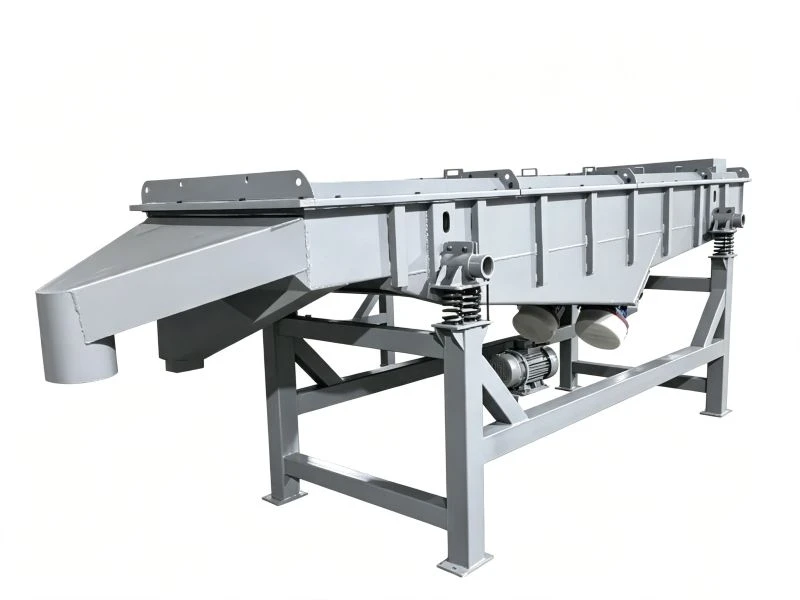
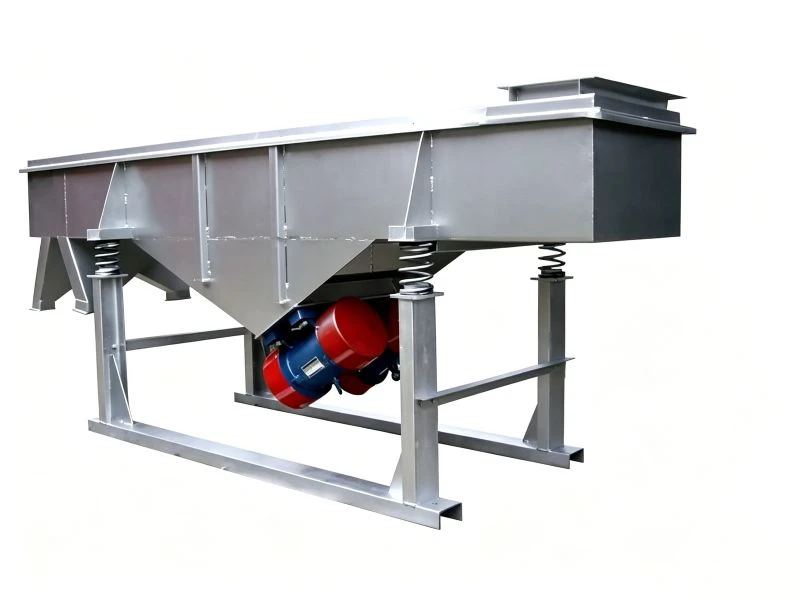
How to Reduce Pellet Breakage and Screen Blockage
Check moisture, oil content, and bulk density alongside throughput and separation requirements when choosing the screen area, contact materials, and vibration settings. During operation, watch how the feed spreads and moves across the deck.
Keep Feeding Even and Limit Transfer Drops
Spread feed across the screen width rather than letting it pile up at the inlet. Keep transfer drops short where practical to reduce impact damage.
For feed pellet screening before bagging, check the discharge chutes as well. Rough handling after the screen can create fresh fines just before packaging.
Send acceptable pellets to packaging and collect fines and oversized material separately. Before returning rejected material for reprocessing, check its condition and follow the plant’s rework procedure.
Adjust Vibration to Pellet Strength
On a linear vibrating screen for feed pellets, adjust vibration so pellets move steadily and fines have time to reach the openings. Too much vibration can increase breakage; too little material movement can cause buildup.
When adjusting the machine, sample each outlet. Look for additional fragments and acceptable pellets being discharged with the rejected material.
What Causes Feed Pellet Screen Blockage?
Moist or oily feed can coat the screen surface. Particles close to the opening size can become lodged in individual holes. These problems need different responses.
A compatible bouncing-ball cleaning system may dislodge trapped particles, but it may not clear sticky oil deposits. High-moisture or high-fat feeds may require changes to material conditioning and cleaning routines. Our guide to screen blockage causes and prevention covers further checks.
Keep the Screen Accessible for Maintenance
Consider Acciaio inossidabile 304 for material-contact parts, with surfaces and joints that can be cleaned easily. Material grade alone does not establish compliance with feed hygiene requirements.
Leave access to the decks and outlets for inspection. Confirm enclosure and dust extraction connections where needed.
Record the following in a maintenance log:
- Daily checks: Loose mounting bolts, unusual noise, material buildup, and damaged seals.
- Screen condition: Tension, wear, and tears that could let material bypass the intended separation.
- Motor and bearings: Lubrication and inspections carried out according to the motor manufacturer’s instructions, including the specified grease type and service intervals.
- Operating current: Readings taken under comparable conditions. Investigate changes alongside feed load, vibration, and bearing temperature.
Screening separates material by size. Foreign objects that pass through the same openings as acceptable feed may remain in the product, so other contamination controls are still needed.
Need a linear vibrating screen for feed pellets? Discutete le vostre esigenze di vagliatura with us and provide your feed type, pellet dimensions, required throughput, and the sizes you need to remove.
Domande frequenti
1. Can One Feed Pellet Screener Remove Both Fines and Oversized Pellets?
Yes. A double-deck feed pellet screener can separate material into three streams. The upper deck retains oversized pieces and lumps. The lower deck retains acceptable pellets while fines pass through. A single-deck screen used for fines removal cannot collect oversized pieces separately from the product.
2. What Screen Opening Should I Use for Feed Pellet Fines Removal?
Choose the opening according to the smallest acceptable particle size, then check it with actual feed samples. Pellet diameter, length, and shape affect passage. Specify the opening in millimeters and include the hole shape. Although 1.5–6 mm openings can be evaluated for suitable products, this range is not a recommendation for every feed.
3. Where Should a Feed Pellet Screen Be Installed: After Cooling or Before Bagging?
After cooling is a common position for removing fines and lumps from pelleted feed. Screening before bagging can help remove fragments generated during later handling. Choose the location based on where unwanted material appears, and keep transfers after screening short and gentle to avoid creating fresh fines.
4. Can the Same Screener Handle Whole Pellets and Crumbled Feed?
Yes, provided the screen openings and operating settings suit each product. Crumbled feed screening must retain smaller particles that might be rejected from whole-pellet feed. When changing products, review the required size range, replace screens where needed, and check samples from each outlet for product loss and remaining fines.
5. How Do I Choose Feed Pellet Screener Capacity for My Production Line?
Specify the peak feed rate in kg/h or t/h, including surges from upstream equipment. Fines content, moisture, bulk density, screen openings, and usable screen area all affect throughput. Confirm capacity with representative material while checking separation quality. A machine’s general capacity rating alone is not enough to select a model.
6. Why Are Fines Still Present After Feed Pellet Screening?
Check for uneven feeding, a deep material bed, blocked openings, or damaged screens. Fines may leave with the pellets if they cannot reach the openings before discharge. Compare samples at the screen outlet and bagging point as well: if fines increase between them, downstream handling may be breaking the pellets.