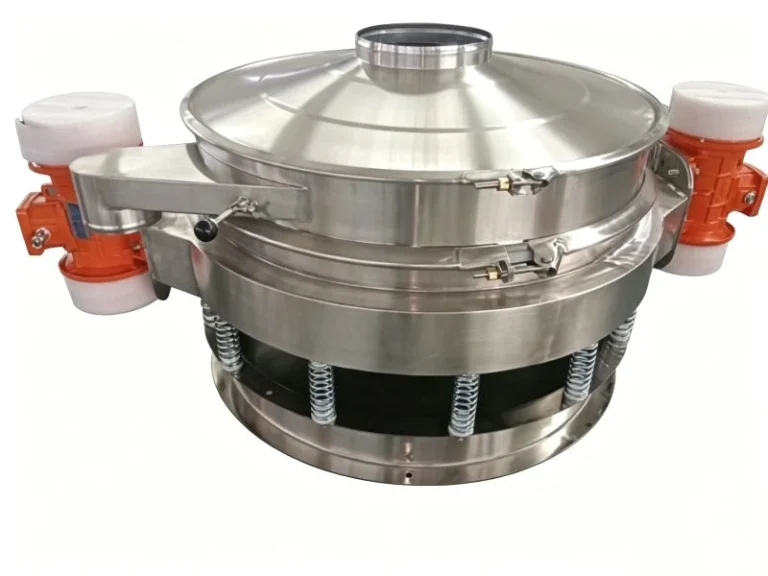
Fertilizer Screening Machine: Rotary vs Linear Vibrating Screen
Choosing a fertilizer screening machine depends on the material and the separation you need. A linear vibrating screen is often a good starting point for continuous grading of fertilizer granules. A rotary vibrating screen offers flexibility for powder screening and multiple size grades. Particle size, moisture, required capacity and corrosion risk should guide the final choice.

Rotary vs Linear Vibrating Screen: Key Differences for Fertilizer
How Material Moves Across the Screen
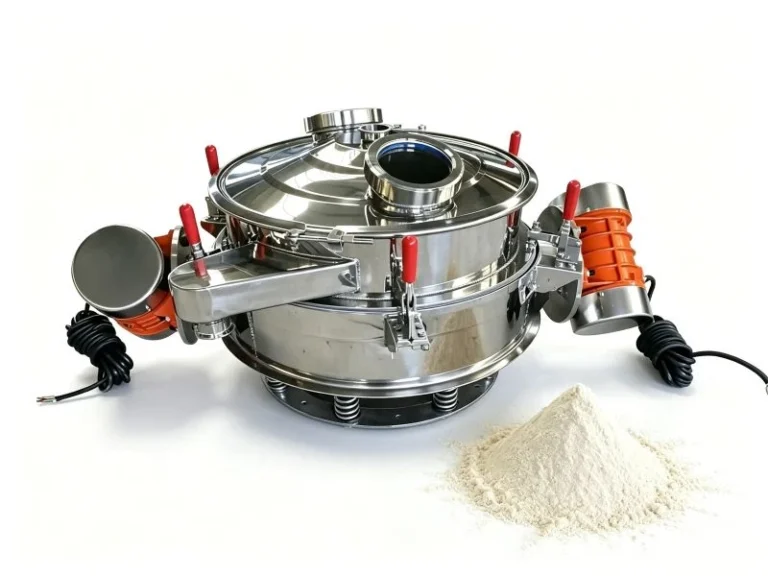
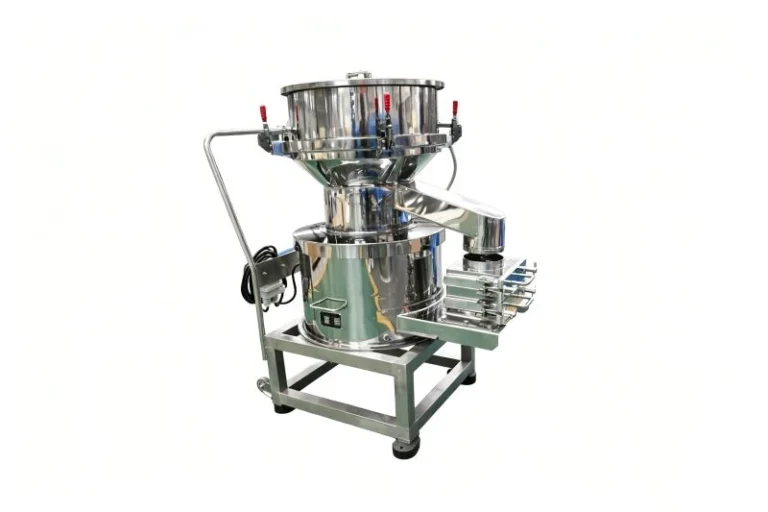
A 回転振動スクリーン uses three-dimensional vibration. Fertilizer enters near the center, spreads across the circular screen and moves toward the discharge outlet. Fine particles pass through the mesh, while larger particles leave through a separate outlet.
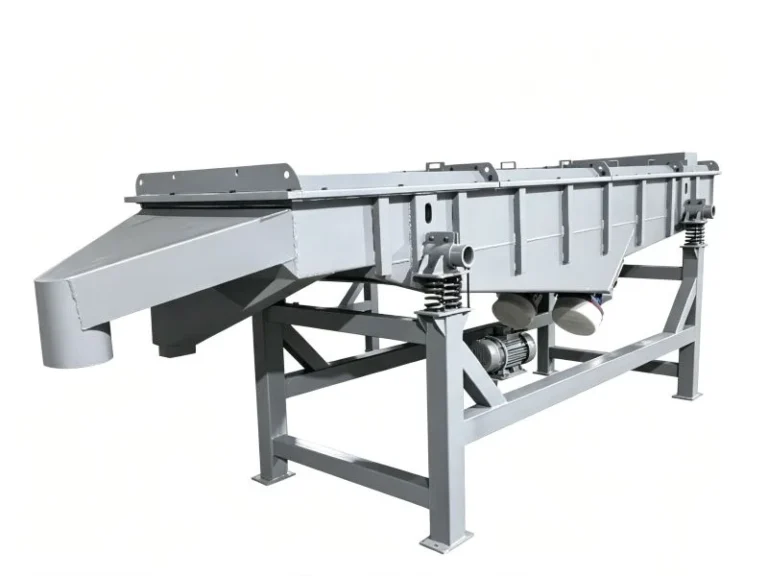
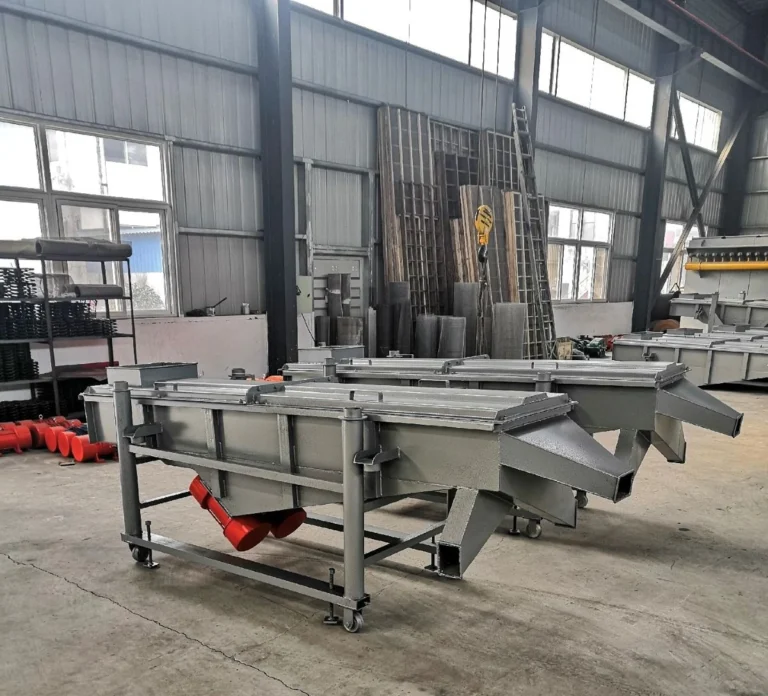
A linear vibrating screen uses two motors to move material forward along a rectangular screen deck. Particles smaller than the screen opening pass through; larger particles continue to the discharge end. This movement works well with continuous feeding.
Particle Size and Number of Grades
For fertilizer applications, a rotary screen can be configured with 40–200 mesh for powders and 4–20 mesh for granules. Multiple decks can separate the material into several grades in one pass.
Linear screens can also have multiple decks. The right screen openings depend on the finished product specification. For example, grading NPK granules may require separate outlets for fines, saleable granules and oversized particles.
Capacity and Production Line Layout
Linear screens are often considered for large, continuous streams of fertilizer granules. Rotary screens are useful when powder screening, a compact layout or flexible multistage separation is the priority.
Capacity alone does not determine the best machine. Feed particle size, bulk density, moisture, screen opening and the proportion of fines all affect actual output. A rotary screen can also handle granules at production scale: Yuanjing lists an NPK application at 2–5 mm and 2,000 kg/h.
Dust Control and Maintenance
Fine fertilizer powder can create dust around an open screen. An enclosed rotary screen helps contain the material; a linear screen can also be fitted with a cover and sealed connections. For either machine, check how the inlet and outlets connect to the production line.
The screen mesh, seals and springs need regular inspection. A damaged mesh can let unwanted particles into the finished fertilizer, while a worn seal can cause leakage.
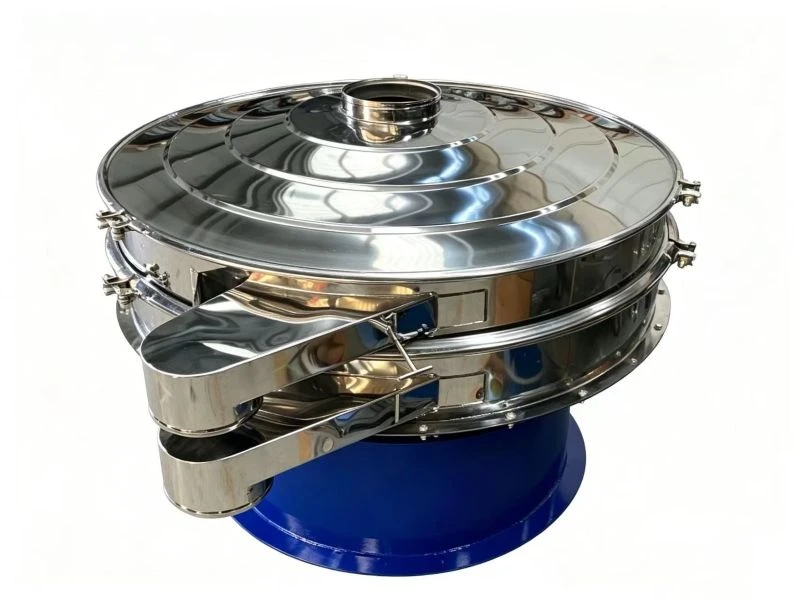
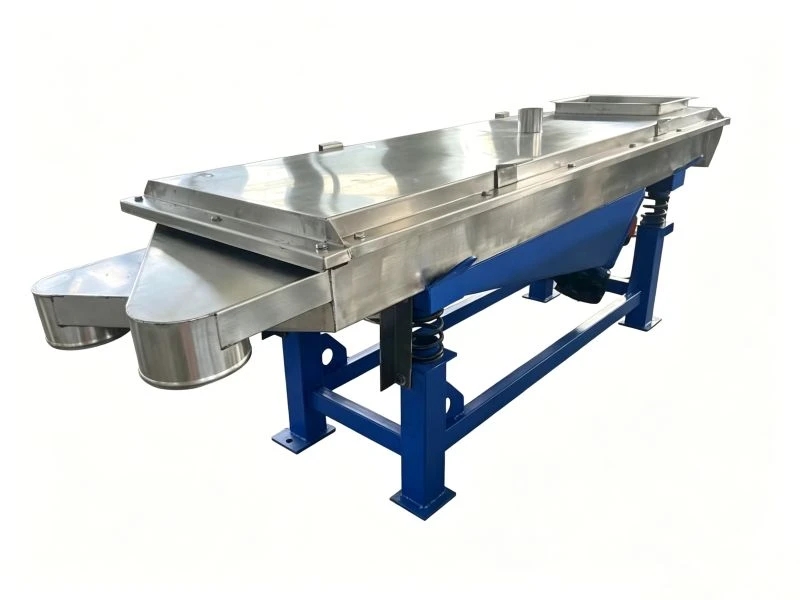
Which Screen Fits Your Fertilizer Material?
NPK and Compound Fertilizer Granules
After granulation, NPK and compound fertilizers are screened to remove fines and oversized particles. A linear vibrating screen is a practical first option for high-volume, continuous grading. A rotary screen may be a better fit when the line needs a compact machine or several size grades.
4–20 mesh is a common starting range for granular fertilizer, but the final screen opening must match the required particle size. An opening that is too small holds back acceptable granules and reduces output. An opening that is too large allows unwanted material into the finished product.
Urea and Water-Soluble Fertilizer Powders
Powdered fertilizer may need screening after crushing or blending to remove lumps and foreign material. For phosphorus, potassium and compound fertilizer powders, 40–200 mesh is a useful range to consider. Applications requiring a finer, more uniform powder may use 80–200 mesh.
A rotary vibrating screen is an option for enclosed powder screening and multigrade separation. A linear screen can also process fertilizer powder when its screen area, feed rate and layout suit the task.
Organic Fertilizer and Irregular Granules
Organic fertilizer can contain irregular particles, fibers and debris. A linear screen can be evaluated for continuous granule grading and impurity removal. A rotary screen can be considered when space is limited or the process needs several output grades.
Material condition matters. Damp or sticky fertilizer may not spread or pass through the mesh as expected, so a trial with a representative sample is advisable.
Moist or Caking Fertilizer
Fertilizer that absorbs moisture can form lumps and block screen openings. A screen cleaning device may help, but heavily caked material may need drying or other preparation before screening. Check how the material flows and whether the selected mesh stays clear during a sustained trial.
関連動画
How to Choose a Fertilizer Screening Machine for Your Line
Define the Feed and Required Output
First, identify the job: removing contaminants, separating fines from finished granules, or producing several particle size grades. Record the feed size and specify what should leave each outlet.
Match the Screen Opening, Decks and Capacity
Choose the screen opening from the target product size, rather than selecting mesh by fertilizer name alone. State the required capacity in kg/h or t/h and the number of output grades. Adding decks can create more grades, but the machine must still achieve the required throughput at each screening step.
For more detail on rotary screen configurations, see the 回転振動スクリーン選定ガイド.
Check Moisture and Corrosion Requirements
304 stainless steel can be used for material-contact parts in many fertilizer applications. For more corrosive materials, such as certain acidic fertilizers, 316L stainless steel may be considered. A carbon steel support frame can sometimes reduce cost if it does not contact the material. Confirm the material specification against the fertilizer being processed.
If clogging is a concern, ask about screen cleaning options and test them with the actual feed.
Confirm the Choice With a Material Trial
A trial should check throughput, the particle size of each output, mesh blockage, dust leakage and discharge stability. To get a useful equipment recommendation, provide:
| Information | Details to share |
|---|---|
| 材質 | Fertilizer name and powder or granule form |
| Feed | Particle size, moisture and tendency to cake |
| Target | Required product size and number of grades |
| 容量 | Feed rate and required finished-product output |
| Installation | Available space and inlet and outlet positions |
| Construction | Corrosion and dust-control requirements |
You can also review Yuanjing’s agricultural fertilizer applications for examples of materials and screening duties.
Fertilizer Screening Examples: Which Would You Consider First?
High-Volume NPK Granule Sizing
Start by evaluating a linear vibrating screen. Its forward material flow suits continuous separation of fines, saleable granules and oversize material. Confirm the openings, number of decks and capacity with an NPK sample. A rotary screen is also worth comparing if the layout or grading requirements favor it.
Urea Powder Screening
Start by evaluating an enclosed rotary vibrating screen. The aim may be to remove lumps or contaminants before packing or further processing. Confirm the required mesh and check whether the powder flows freely. A linear screen may also be suitable for the required capacity and line layout.
Multiple Grades of Organic Fertilizer
Evaluate both machines. A linear screen may suit continuous grading of free-flowing granules. A rotary screen may suit a compact multigrade arrangement. If the feed is damp, fibrous or sticky, test it before selecting either design.
微細粉体に超音波振動ふるいが必要ですか?
Is a Rotary or Linear Vibrating Screen Better for NPK Granules?
For a high-volume continuous line, a linear screen is a good first option to evaluate. A rotary screen can also process NPK granules. Compare the machines using your target particle size, required output and available space.
Can One Screen Handle Both Fertilizer Powder and Granules?
A machine may use different meshes for different products, but screening capacity and performance will change. If you plan frequent changeovers, also check how long mesh replacement and cleaning will take.
What Information Is Needed to Size a Fertilizer Screening Machine?
Provide the fertilizer type, feed and target particle sizes, moisture content, required hourly capacity, number of output grades and installation space. Include a representative sample when possible.
How Can Screen Clogging Be Reduced With Moist Fertilizer?
Check whether the feed needs drying, select an appropriate opening and assess a screen cleaning device. Test the proposed setup with the actual fertilizer because moisture and caking behavior vary by formulation.
Need help choosing a fertilizer screening machine? Send Yuanjing your fertilizer details, target particle size and required hourly capacity for a suitable screening configuration.