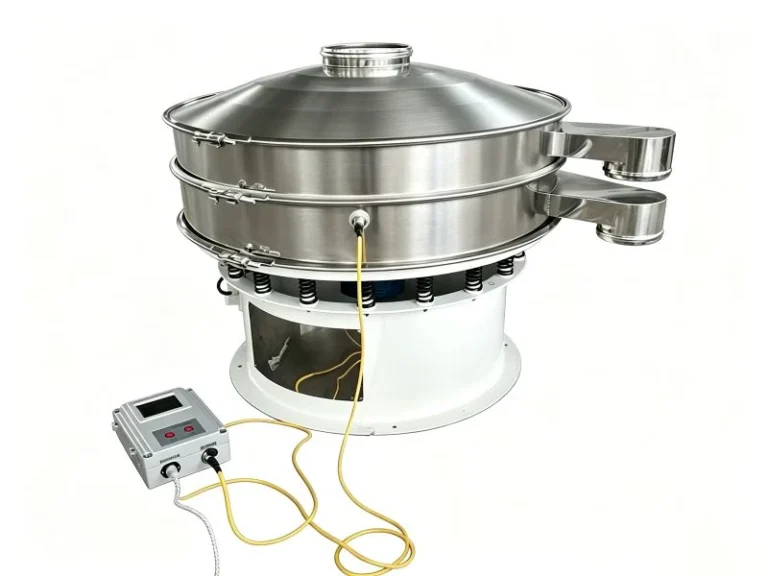
Przesiewacze wibracyjne dla przemysłu farmaceutycznego: Przewodnik wyboru
Wprowadzenie
Pharmaceutical vibrating screeners are used to screen pharmaceutical powders and granules, remove oversized particles and impurities, and keep particle size consistent during production. The right screener depends on the material, required mesh size, capacity, and screening accuracy. For fine or difficult-to-screen powders, an ultrasonic vibrating sieve can help reduce screen clogging and improve screening performance.
This guide explains how to select a vibrating screener for pharmaceutical applications, from general powder and granule screening to fine powder and continuous production lines.
Pharmaceutical Applications of Vibrating Screeners
Pharmaceutical vibro sifters are mainly used for screening pharmaceutical powders, granules, and pharmaceutical extracts. They help remove oversized particles, reduce screen blockage, improve screening efficiency, and reduce material waste during production.
1. Screening Pharmaceutical Powders
Pharmaceutical powders such as APIs, excipients, and other fine powders are usually screened before blending, tablet compression, or packaging.
During pharmaceutical powder screening, materials may contain excessive fibers or have high viscosity, low bulk density, or static electricity. These properties can reduce screening capacity and make continuous operation more difficult. They can also make screen cleaning more difficult, resulting in lower production efficiency and increased labor requirements.
An ultrasonic screen cleaning system can effectively reduce these problems and help prevent screen blockage. For lightweight and highly adhesive materials, ultrasonic screening can improve production efficiency and screening accuracy, reduce manual work, and minimize the waste of finished materials.
2. Screening Pharmaceutical Granules
Pharmaceutical granules are usually screened after granulation or drying to remove oversized particles and control particle size. For many Chinese and Western medicine granules, the required fineness is generally within the 10–50 mesh range, while the amount of particles that cannot pass through a 10-mesh or 65-mesh screen should not exceed 8%.
When several particle size ranges are required, a multi-deck vibrating screener can separate pharmaceutical granules into different size fractions in one screening process.
3. Screening Pharmaceutical Extracts
After coarse filtration from a storage tank, liquid pharmaceutical extracts can enter a pharmaceutical vibrating screening machine for further screening. The smallest screen can reach 625 mesh, or approximately 20 microns.
The machine can automatically discharge residues and operate continuously. This helps reduce screen blockage and maintain continuous screening. It can also improve material recovery and reduce manual labor.
During natural sedimentation, some usable liquid may be lost together with the residue. A vibrating screener can help recover more finished slurry from the waste material while making the discharged residue drier and reducing waste.
Herbal extracts often contain a high amount of liquid. Using a vibrating screener for pharmaceutical extracts can help recover more usable product, reduce material waste, and lower production costs.
Related Videos
How to Choose a Pharmaceutical Vibrating Screener
Choosing a pharmaceutical vibrating screener depends on the material, mesh size, capacity, screening requirements, and cleaning needs. Pharmaceutical powders, fine powders, and granules can differ in flowability, adhesion, static electricity, and particle size, so the screener should be configured according to the actual process.
1. Consider the Material
First, determine whether you need to screen pharmaceutical powder, fine powder, or pharmaceutical granules. For lightweight, adhesive, or static-prone powders, conventional screening may cause screen clogging and lower efficiency. In these applications, an ultrasonic screen cleaning system can help improve screening performance.
2. Choose the Mesh Size and Screening Accuracy
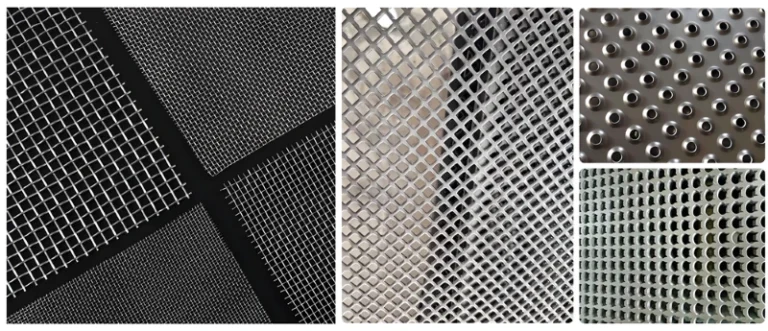
The mesh size should match the required particle size range. A single-deck screener is suitable for basic screening, while a multi-deck vibrating screener can separate materials into different particle size ranges.
For fine pharmaceutical powder or materials that tend to clog the mesh, an ultrasonic vibrating sieve can help improve material passage and reduce screen blockage.
3. Match the Screener to the Required Capacity
Select the pharmaceutical vibrating screener according to the required production capacity in kg/h. Actual capacity is also affected by material density, feed rate, particle size, moisture, mesh size, and the number of screening decks.
For continuous production, the screener should have enough screening area and capacity to maintain a stable material flow.
4. Select the Decks and Production Method
A single-deck screener is usually suitable when only one screening size is required. A multi-deck vibrating screener is better when several particle size ranges need to be separated.
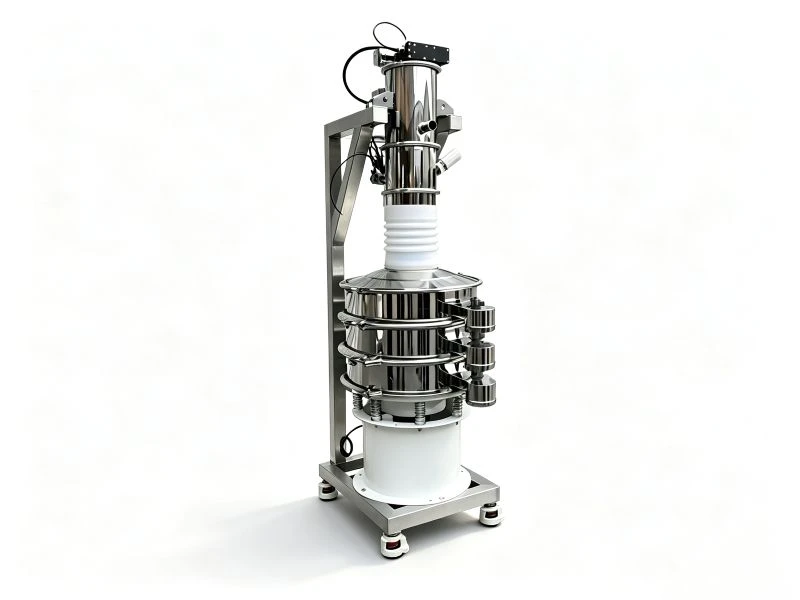
For production lines that require continuous screening and direct connection with upstream and downstream equipment, an inline vibro sifter .
5. Check Material and Cleaning Requirements
Pharmaceutical screening equipment should also meet the cleaning and material requirements of the production process. Common options include SS304 and SS316L, along with easy-to-clean screens, accessible components, good sealing, and reduced material residue.
For applications with higher requirements for corrosion resistance, cleaning, or product-contact surfaces, ss316l may be considered based on the process requirements.
For pharmaceutical powder and granule screening, consider the material, mesh size, capacity, deck configuration, and cleaning requirements first. A vibro sifter machine is suitable for general screening, an ultrasonic vibrating sieve can be used for fine or difficult-to-screen powders, and an inline vibro sifter is suitable for continuous production lines.
When Is Ultrasonic Screening Needed for Pharmaceutical Powders?
Ultrasonic screening is mainly used when fine pharmaceutical powders are difficult to screen with a conventional vibrating sieve. Lightweight, cohesive, or electrostatic powders can stick to the mesh and cause screen blinding, reducing screening capacity and accuracy. In these cases, an ultrasonic vibrating sieve can help keep the mesh open and improve powder passage.
For fine pharmaceutical powders, an ultrasonic screening system is especially useful when:
Fine mesh is required: Fine powders often need smaller mesh openings, which are more likely to become blocked during screening.
The material is lightweight or adhesive: Lightweight and highly adhesive powders can stick to the screen surface and reduce screening efficiency.
Static electricity affects screening: Electrostatic powders may adhere to the mesh and make continuous screening more difficult.
The system ultradźwiękowy applies high-frequency vibration to the screen mesh, helping reduce powder buildup and mesh blockage. No dust generation; capable of fine-particle screening down to 28 μm and fine-particle filtration down to 5 μm.This can improve screening efficiency, maintain more stable material flow, and reduce material loss and manual cleaning.
For pharmaceutical powder screening where fine mesh, stable screening, or continuous operation is required, an ultrasonic vibrating sieve can be considered when conventional screening cannot provide the required performance.Ultrasonic vibration replaces the traditional screening method of increasing amplitude to prevent mesh clogging; this reduces mechanical wear on the screen, extending its service life by 30% to 50%.
Which Vibrating Screener Is Right for Pharmaceutical Processing?
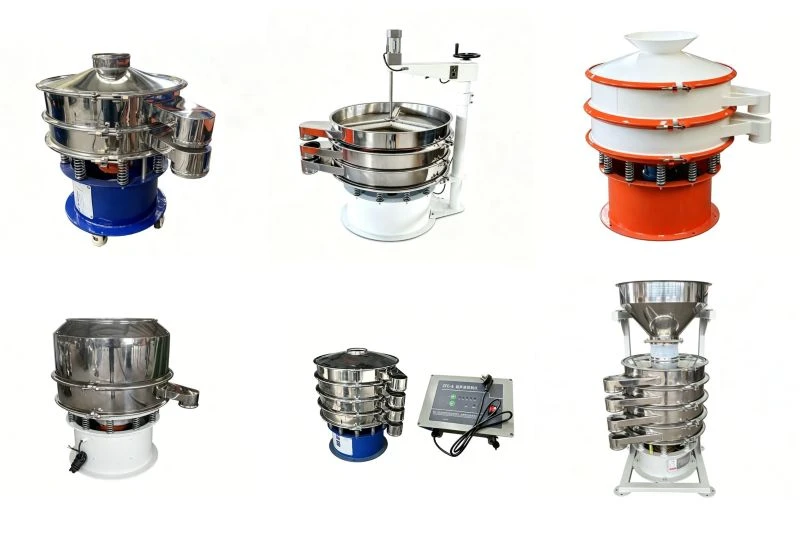
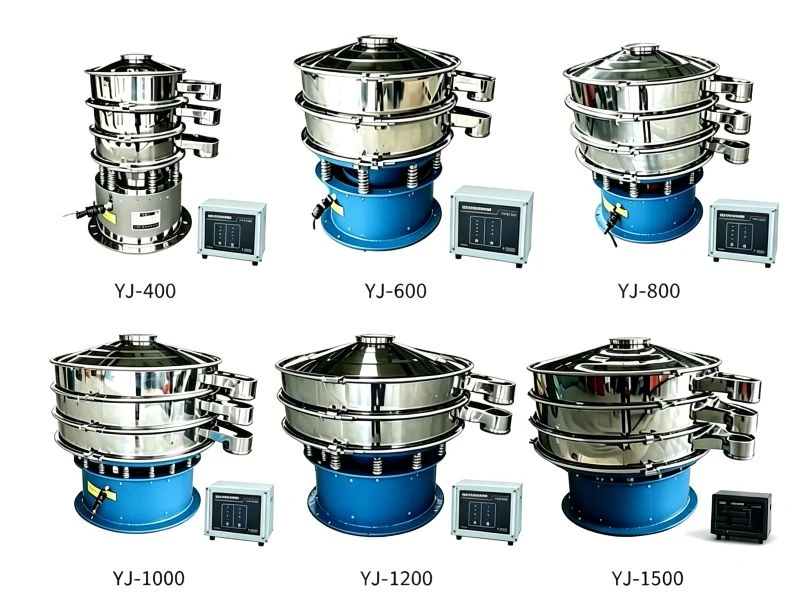
Different pharmaceutical materials and production processes require different screening methods. A standard vibro sifter is suitable for general powder and granule screening, while ultrasonic and gyratory screening are better suited to fine or difficult-to-screen materials. The tumbler screening machine is particularly well-suited for screening ultra-fine powders down to 20 microns. It does not damage the particles and meets high-precision screening requirements.For continuous production lines, an inline vibro sifter can be used to connect the screening process with upstream and downstream equipment.
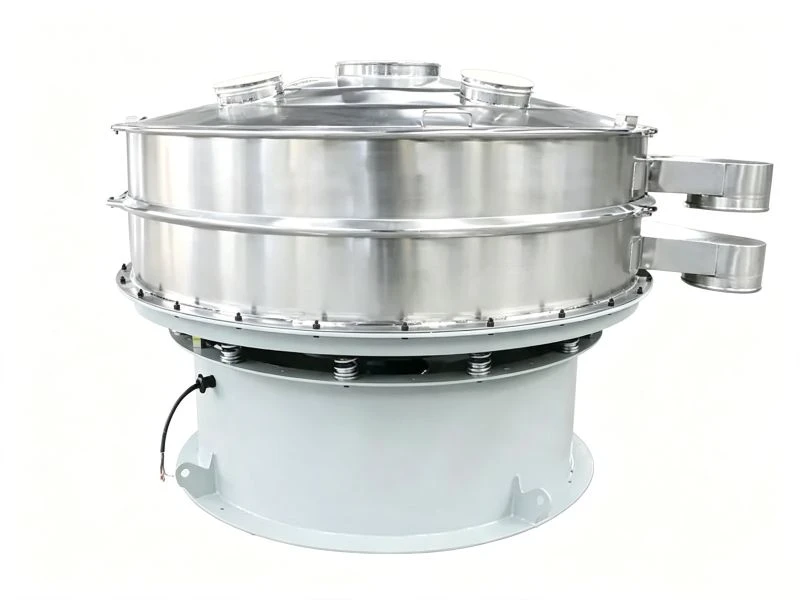
Vibro Sifter Machine for General Pharmaceutical Screening
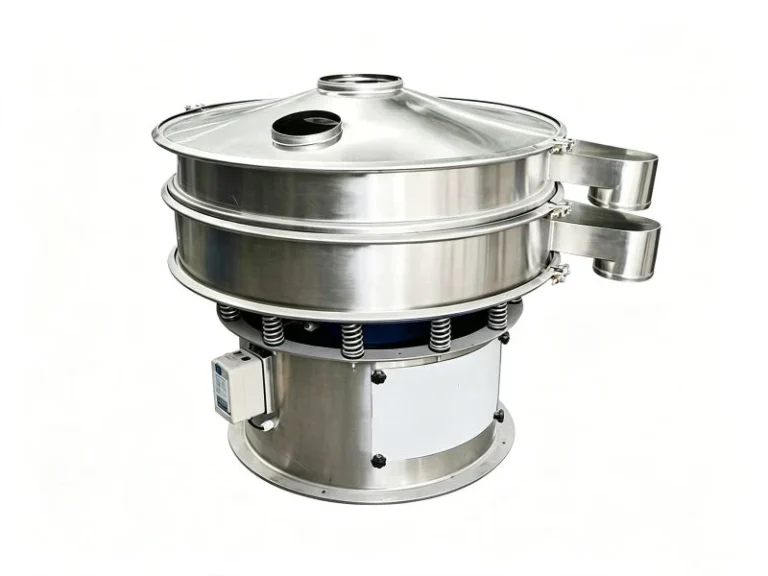
A vibro sifter machine is suitable for general pharmaceutical powder and granule screening. It can remove oversized particles, agglomerates, and impurities while helping maintain consistent particle size. Single-deck or multi-deck configurations can be selected according to the screening requirements.
Ultrasonic Vibrating Sieve for Fine Pharmaceutical Powders
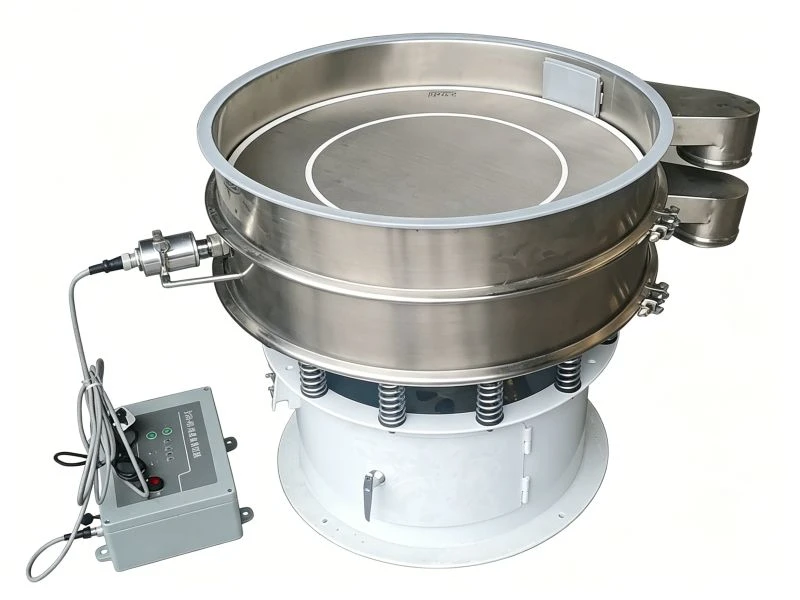
Ultradźwiękowe sito wibracyjne jest lepszym wyborem, gdy drobny proszek jest trudny do przesiewania za pomocą konwencjonalnego przesiewacza wibracyjnego. is suitable for fine pharmaceutical powders that are prone to screen clogging, static electricity, or poor flow. The ultrasonic system helps reduce material buildup on the mesh and improve powder passage, making it useful when fine mesh screening is required.
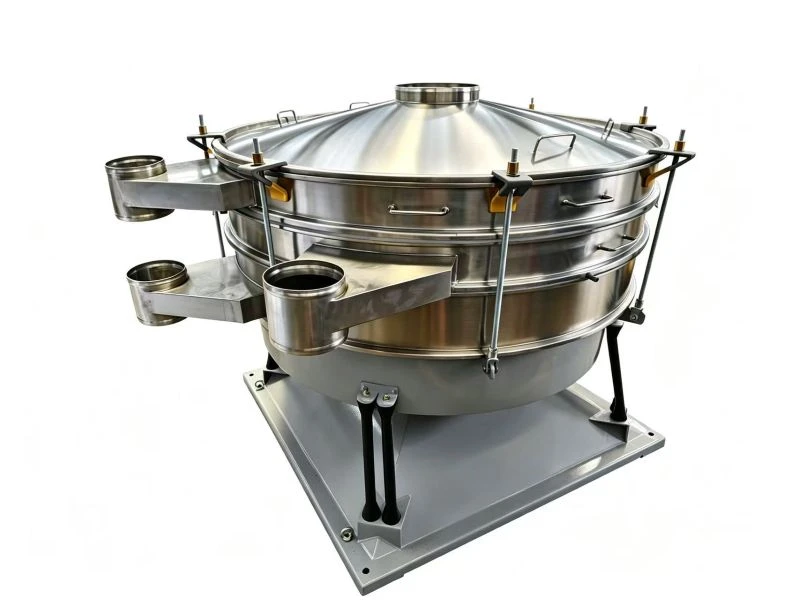
Tumbler Screening Machine for Ultra-Fine Powder Screening
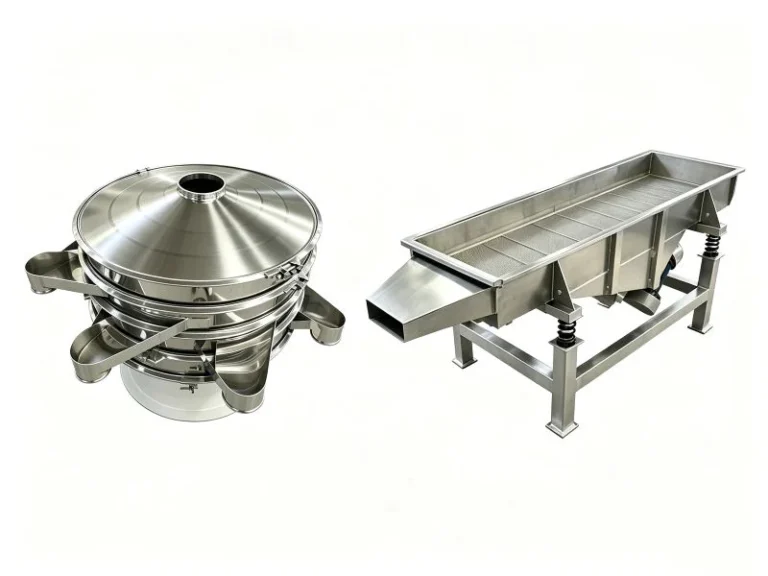
A tumbler screening machine is suitable for ultra-fine powder screening when gentle screening is important. Its low-impact screening motion helps reduce damage to the material and maintain the original particle size and material integrity. It can be considered for pharmaceutical powders that need fine classification without excessive impact or particle breakage.
Inline Vibro Sifter for Continuous Production
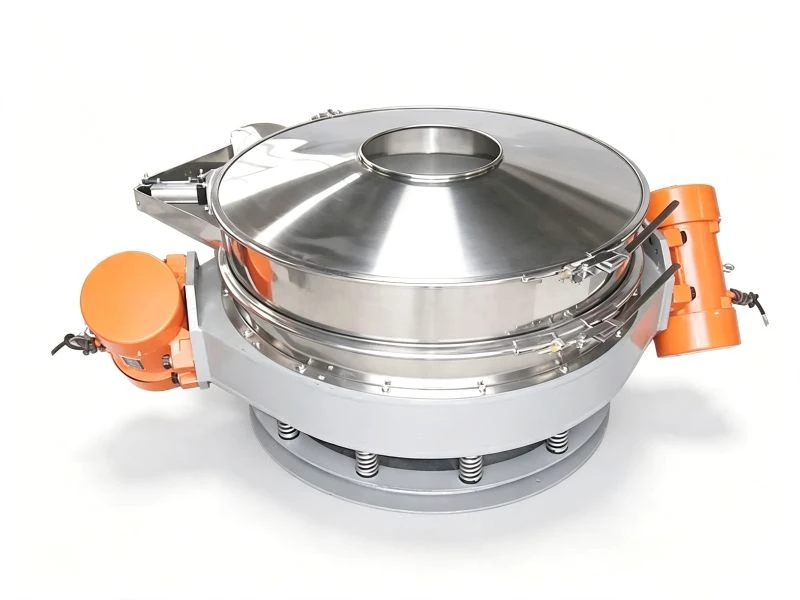
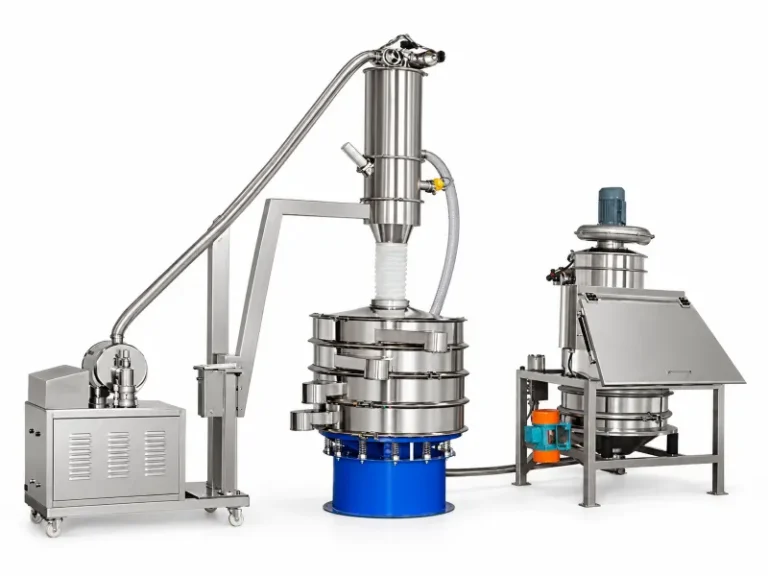
Ultradźwiękowe sito wibracyjne inline vibro sifter is designed for continuous screening and can be connected directly to other equipment in a production line. It is suitable when pharmaceutical powders or granules need to be screened continuously between feeding, processing, and discharge stages.
Wnioski
Before selecting a pharmaceutical vibrating screener, confirm the material type, particle size, mesh size, required capacity, and screening accuracy. Also consider the number of screening decks, SS304 or SS316L construction, cleaning requirements, and whether ultrasonic screening is needed for fine powders.
If you are not sure which pharmaceutical vibrating screener is suitable for your material or production process, contact us with your material type, required capacity, and screening requirements. Our team can recommend a suitable screening solution and machine configuration for your application.