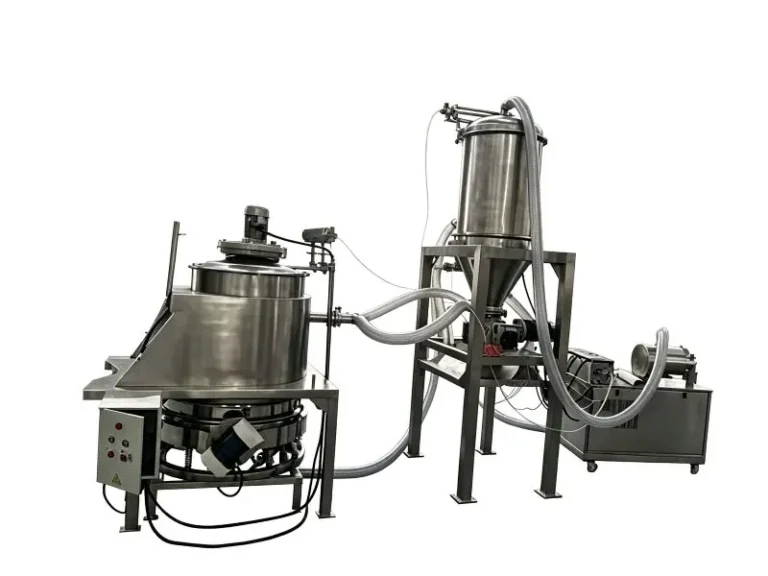
Vitamin C Powder Screening: An Australian Customer Case Study
Przegląd projektu
An Australian vitamin manufacturer contacted us about a vitamin C powder screening project aimed at improving impurity removal before downstream processing. The customer needed a solution that could support its production schedule while addressing mesh blockage, inconsistent screening performance, and manual cleaning requirements.
During our discussions, the customer also highlighted the importance of dust containment, easy cleaning, and protecting raw material quality. These requirements helped define the equipment selection: a circular tumbler screen equipped with an ultrasonic system.
Customer Requirements and Screening Challenges
Clarifying the Screening Objective
The customer’s primary objective was impurity removal rather than separating the powder into several particle-size grades. Acceptable vitamin C powder needed to pass through the mesh, while oversized particles and impurities larger than the screen openings were retained.
The specified screening requirement was 100 mesh, with a target throughput of 1,500 kg/h. This made both separation performance and continuous handling capacity central to the project.
Addressing Mesh Blinding
Fine powder can adhere to the mesh or block screen openings, reducing the available screening area. As the mesh becomes obstructed, powder passes through more slowly, potentially increasing cleaning interruptions and operator involvement.
The customer specifically requested an ultrasonic system to help address this issue. This requirement made anti-blinding performance an important part of the equipment selection, alongside screen diameter and throughput.
For background on this challenge, see our guide to screen clogging causes and prevention.
Considering Cleanliness and Product Quality
The customer also raised concerns about vitamin C’s sensitivity to light, heat, and oxygen. Its requirements therefore included good sealing, convenient cleaning, and minimizing unnecessary material exposure during screening.
These considerations extended beyond machine capacity. Equipment access, material residue, and the screening machine’s connection to the surrounding production process also needed attention.
Our Solution: An 1800 mm Ultrasonic Tumbler Screen
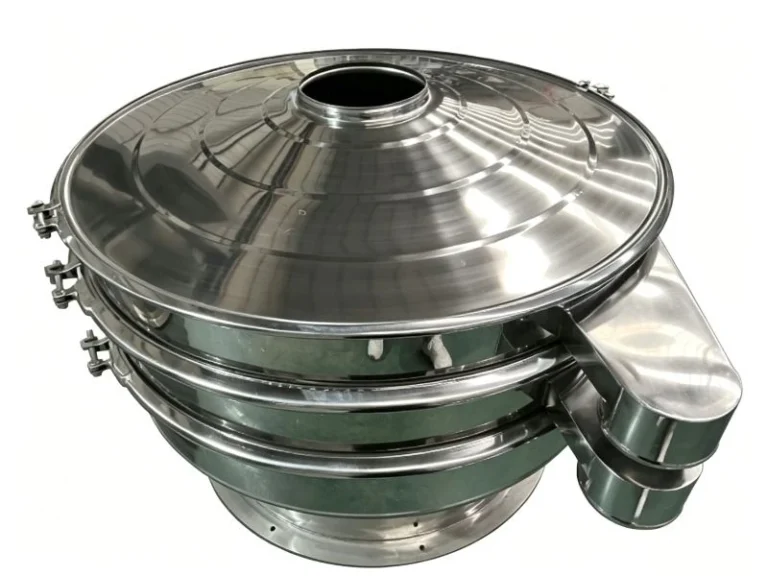
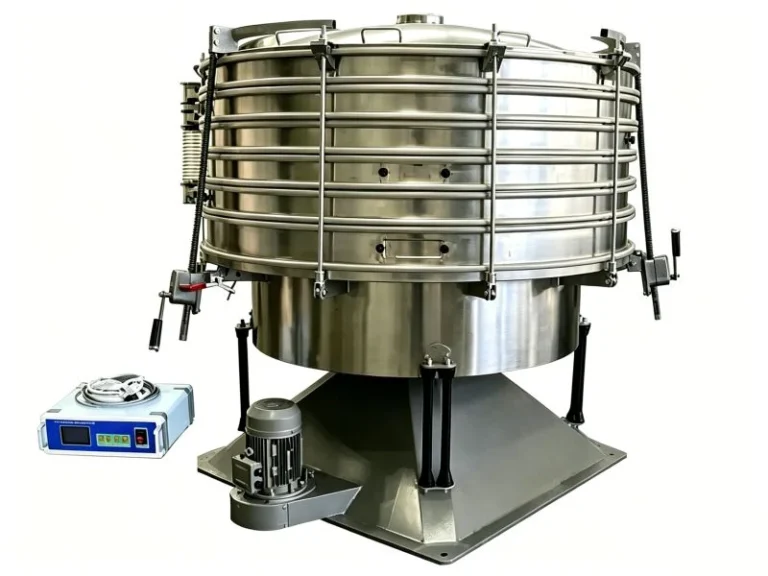
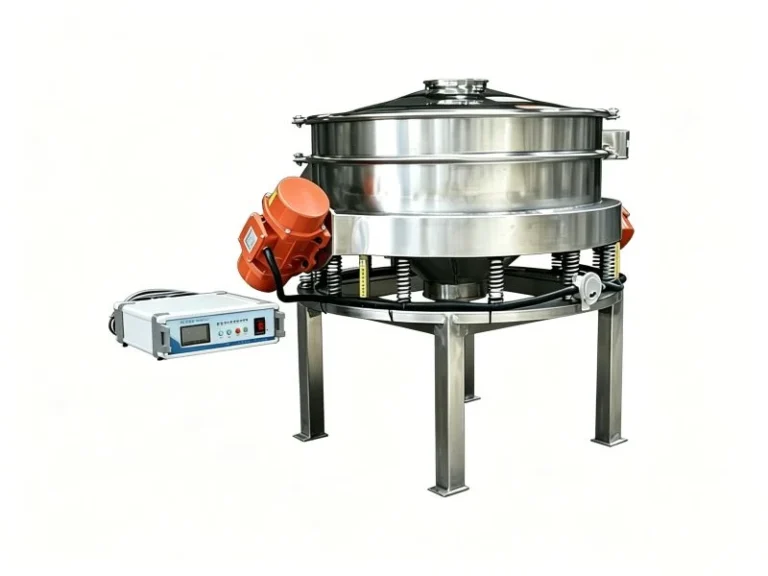
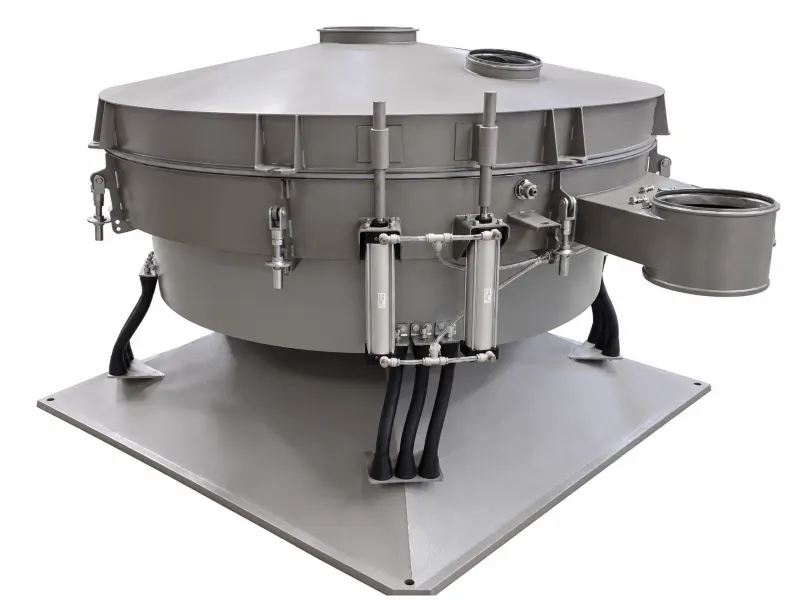
After reviewing the customer’s stated requirements, we selected an 1800 mm ultradźwiękowy przesiewacz bębnowy for the application.
The solution combined a large screening surface with ultrasonic assistance to support fine powder passage and reduce the effects of mesh blinding.
Matching Screen Size to the Throughput Requirement
The 1800 mm size was selected for the customer’s target processing requirement of 1,500 kg/h.
Its screening surface provides space for powder distribution and contact with the mesh. The tumbling motion moves material across the screen, allowing acceptable particles to pass through while directing retained material toward the oversize outlet.
Uniform feeding remains important. Feed rate and material distribution must be matched to screening performance to avoid localized buildup and make effective use of the screen area.
Adding Ultrasonic Assistance
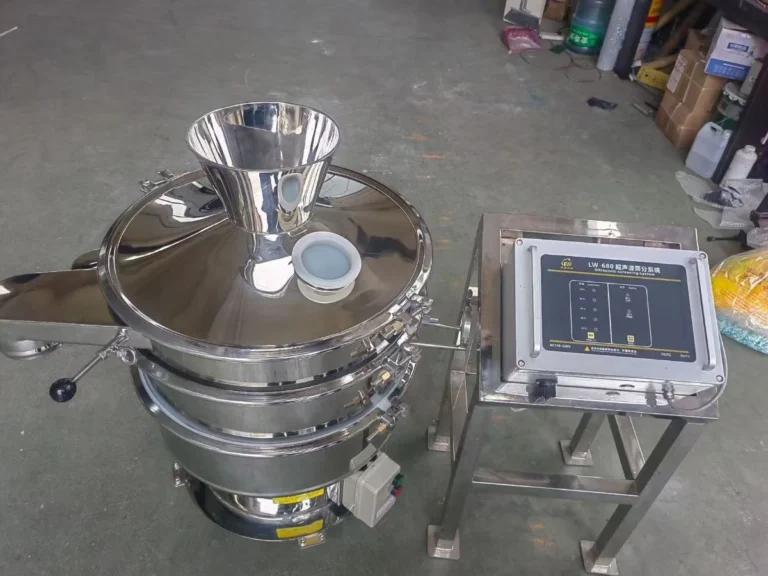
As requested by the customer, the machine was equipped with an ultrasonic system to help reduce particle adhesion and blocked openings.
The two functions work together: the tumbler motion distributes and conveys the powder, while ultrasonic excitation assists in maintaining mesh permeability. This combination was selected to reduce the disruption that mesh blinding can cause during vitamin C powder sieving.
Focusing on Impurity Removal
Because this application was intended for impurity removal, the operating priority was to allow acceptable powder to pass through efficiently while discharging retained oversize material.
Feed rate, material movement, and residence time need to be balanced for this purpose. Increasing the feed rate alone does not necessarily improve usable throughput if powder begins to accumulate on the mesh.
Actual processing capacity depends on material properties and operating conditions, including particle-size distribution, moisture content, bulk density, and the proportion of oversize material.
Equipment Specifications
| Pozycja | Project Specification or Requirement |
|---|---|
| Equipment type | Circular tumbler screen with ultrasonic system |
| Selected size | 1800 mm |
| Materiał | Vitamin C raw material powder |
| Aplikacja | Impurity removal |
| Screening requirement | 100 mesh |
| Target throughput | 1,500 kg/h |
| Anti-blinding system | Ultrasonic system |
| Customer priorities | Good sealing, easy cleaning, and convenient maintenance |
The mesh aperture should be confirmed against the selected sieve standard. Construction material, motor power, number of decks, and connection dimensions are subject to the final technical agreement.
Equipment Features Relevant to This Application
Combined Tumbling and Ultrasonic Action
The machine combines material distribution across the screen with ultrasonic anti-blinding assistance. This addresses the customer’s need to handle fine powder while limiting the impact of blocked screen openings.
Adjustable Screening Conditions
Operating settings and feed rate can be adjusted to suit the powder’s behavior. This helps balance material distribution, residence time, and discharge during impurity removal.
Attention to Containment and Cleaning
Sealing and cleaning accessibility were important considerations in the project. Managing powder escape and residual material helps support the customer’s housekeeping and batch-cleaning procedures.
Equipment containment is only one part of product protection; environmental conditions and material exposure must also be managed within the customer’s production process.
Reduced Need for Manual Intervention
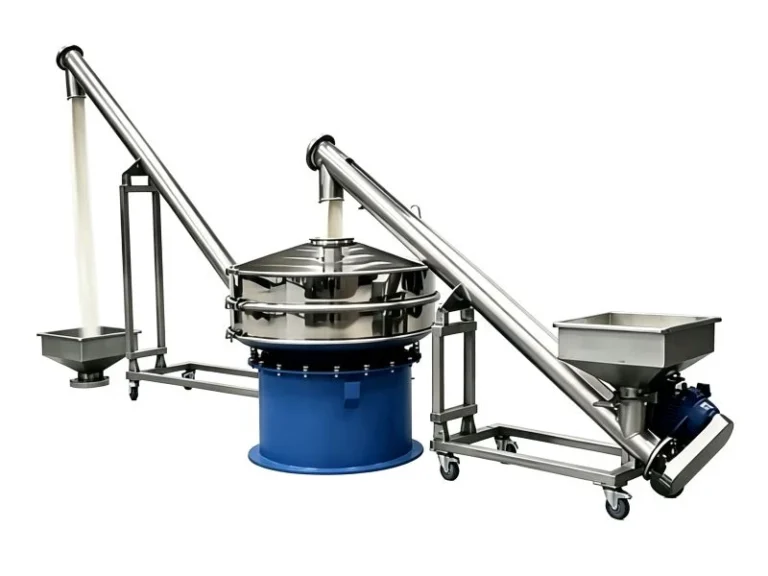
Ultrasonic assistance helps reduce the need to interrupt screening to deal with mesh blockage. Together with consistent feeding and discharge, this supports smoother integration with upstream and downstream operations.
Customer Feedback and Reported Results
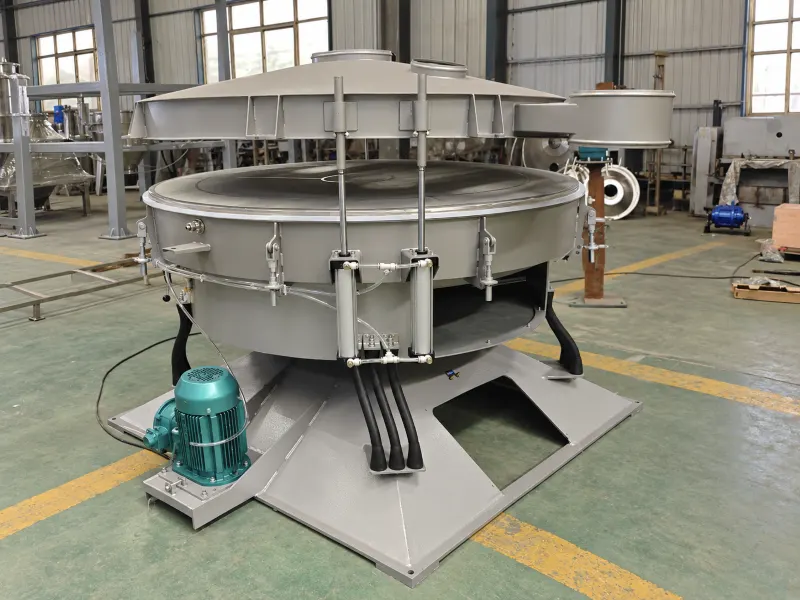
According to feedback supplied by the customer, introducing the circular tumbler screen improved screening efficiency and precision while reducing material waste and production costs.
The customer reported the following results:
| Performance Area | Customer-Reported Result |
|---|---|
| Screening efficiency | Increased to over 95% |
| Screening precision error | Controlled within ±1% |
| Product acceptance rate | Significantly improved |
| Material utilization | Reduced material waste |
| Production costs | Lower operating costs |
| Operator involvement | Less manual intervention and lower labor intensity |
| Production line performance | Improved overall operating efficiency |
These figures were supplied by the customer for this application. The definitions and measurement methods for screening efficiency and precision error are based on the customer’s own evaluation.
The customer also reported that the equipment’s automated operation reduced manual involvement in the screening process. This lowered the workload for operators and helped the screening stage run more smoothly alongside the rest of the production line.
For this manufacturer, the value of the project extended beyond separation performance. Improved material utilization and fewer manual interventions also contributed to more efficient production.
Discuss Your Vitamin C Powder Screening Requirements
Are you processing vitamin C powder or other fine powders and experiencing mesh blockage, insufficient throughput, or frequent manual cleaning?
Contact our team to discuss your application. Share your material name, feed particle size, required mesh size, target throughput, and installation requirements.
We can help assess the appropriate tumbler screen size and anti-blinding configuration for your impurity removal or classification process.