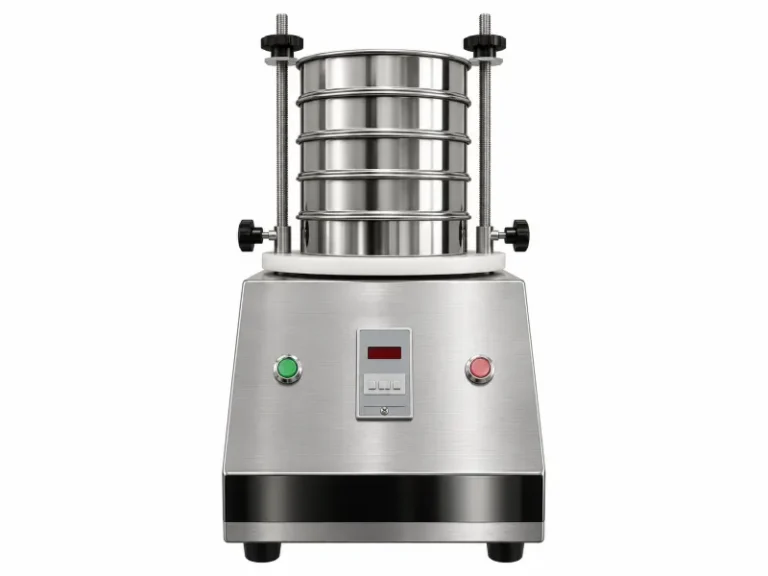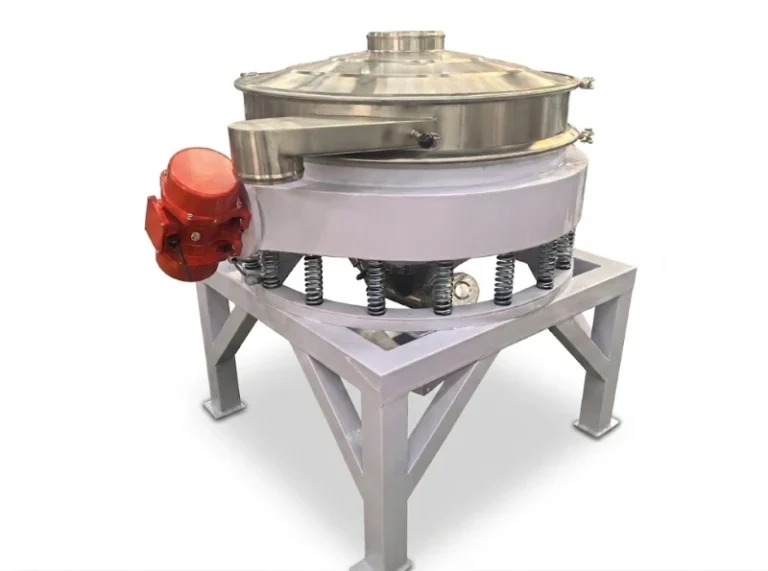
Jak wybrać sito wibracyjne do ryżu do oddzielania ryżu łamanego i usuwania drobnych cząstek
To choose a rice vibrating sieve, first decide what needs separating: loose fines before packing, smaller broken rice or several size fractions. This determines the screen openings and number of decks. Model size also depends on throughput, rice characteristics and feeding conditions.
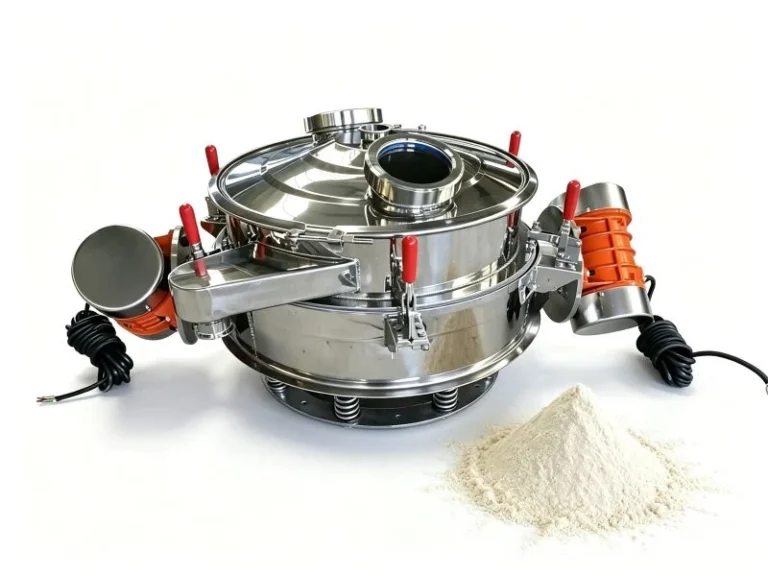
A przesiewacz wibracyjny obrotowy separates material by whether it passes through the screen openings. It can remove fines and rice fragments that differ sufficiently in size from the retained kernels. Broken kernels with widths and thicknesses close to whole kernels may need length grading.
Trials with representative rice should check fines removal, usable rice recovery and any increase in breakage at the required feed rate.
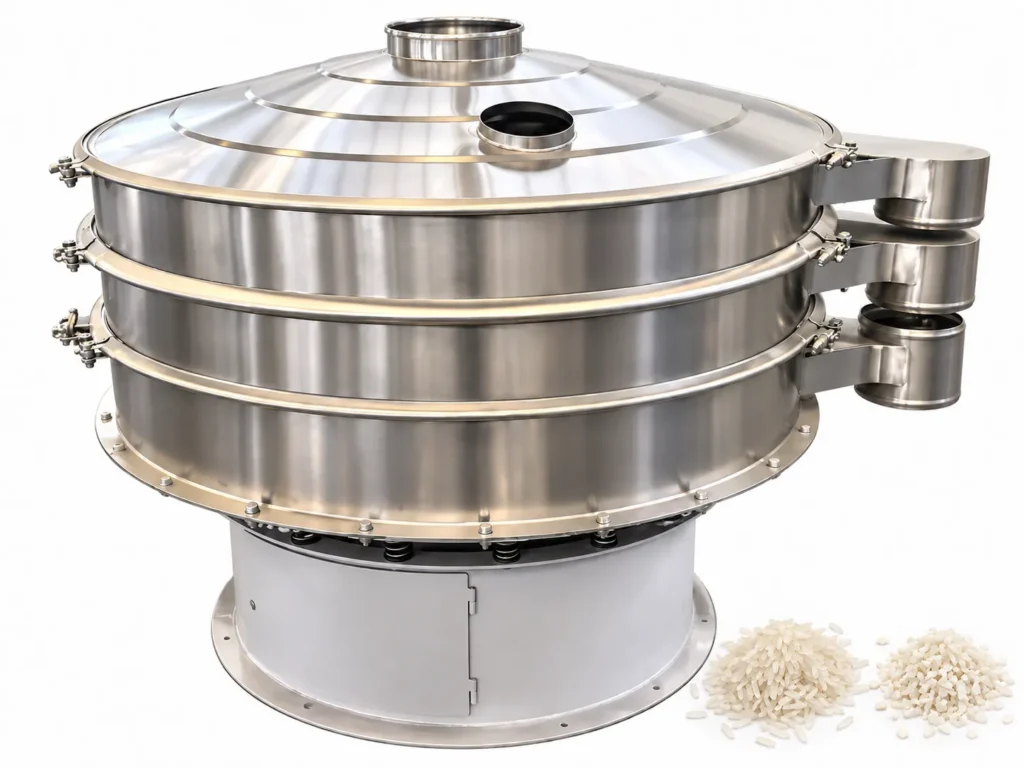
What Can a Rice Vibrating Sieve Separate in Rice Processing?
In rice processing, vibrating screening can remove impurities of a different size from the kernels, separate smaller fragments and screen out loose fines after polishing or before packing. The openings must allow the required separation while keeping usable rice in its intended outlet.
Removing Oversized Impurities and Fine Debris
Foreign material can enter rice during harvesting, handling or transport. Screening removes impurities that differ sufficiently in size from the kernels. In a two-stage arrangement, the upper screen retains oversized debris and passes rice to a lower screen, which separates smaller particles from the retained kernels.
Stones close to rice kernels in size cannot be removed reliably this way and need assessment for dedicated destoning. Lightweight husk fragments may need aspiration.
Separating Small Broken Rice for Different Product Uses
Smaller broken rice can pass through an opening that retains larger kernels, provided their dimensions differ enough. These fragments can be collected separately for uses such as rice flour production, subject to the processor’s specifications.
Kernel width, thickness and orientation affect passage through the screen, so a finer mesh does not necessarily improve broken rice separation. Sample trials should measure the broken rice left in the retained product and the usable rice lost to the smaller-fragment outlet.
Removing Loose Bran and Rice Fines After Polishing
Polishing and subsequent handling can leave loose bran, fine rice fragments and powder mixed with the rice. Screening before packing retains the kernels while passing fines small enough to fit through the mesh.
This removes loose material; powder adhering to the kernels may remain. Screening does not replace polishing or aspiration. Check the finished rice for residual fines and the undersize stream for lost rice.
When Head Rice and Broken Rice Require Length Grading
Some broken kernels are about as wide and thick as whole kernels but shorter. A vibrating screen may not separate them consistently because passing through an opening does not establish kernel length.
If the finished product has a broken-rice limit defined by length, assess a length grader as part of the process. Use the product specification and agreed inspection method when selecting the equipment.
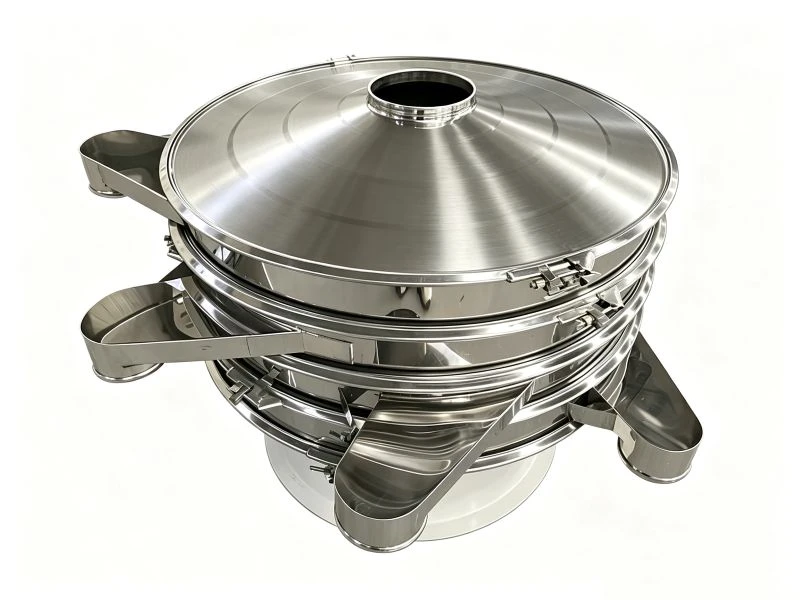
How to Choose Screen Openings and Decks for Rice Screening
For a rice vibrating sieve, screen openings depend on the kernel dimensions and what needs removing. Deck count follows the number of separation points: fines removal may need one deck, whereas collecting smaller fragments and fines separately requires a second cut.
Define Rice Dimensions and the Fines Cutoff
Measure kernel length, width and thickness, and check the size distribution of broken rice. For screening before packing, specify the permitted residual fines and acceptable loss of usable rice. These requirements give you a basis for choosing trial openings.
Specify Screen Aperture, Not Just Mesh Count
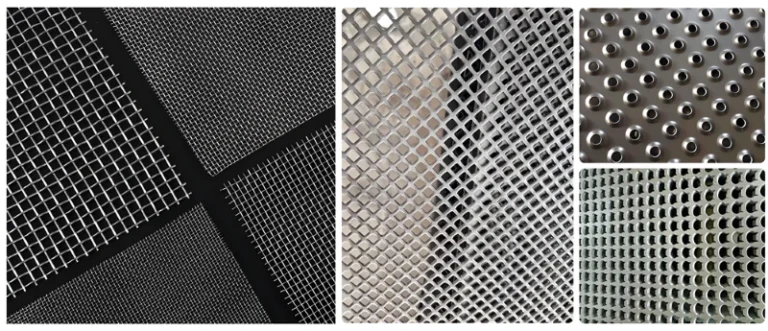
State the clear opening in millimeters or microns. Mesh count alone is insufficient because wire diameter also affects aperture size. Record the opening shape and screen construction, then test representative rice before approving the specification.
Nasz multi-deck sifter configuration guide explains how to connect screen openings, separation points and product outlets.
Single-Deck Setup for Fines Removal
A single-deck rice vibrating sieve makes one separation. Rice stays on the screen; loose fines and small fragments that fit through the openings leave through the lower outlet. Measure the fines remaining with the rice and any usable rice passing through.
Two-Deck Setup for Separate Fragment Collection
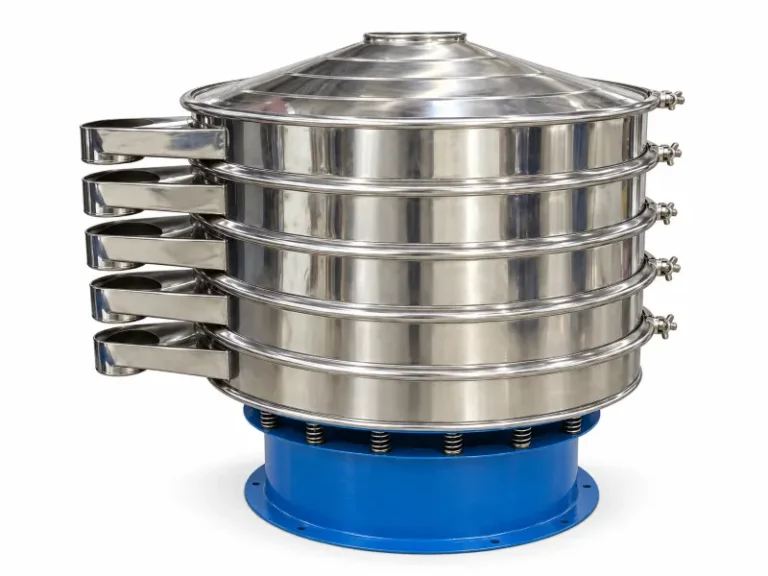
With a larger opening above a smaller one, a two-deck arrangement produces three streams. Where the material dimensions allow, these can collect larger kernels, smaller fragments and fines separately.
| Konfiguracja | Material Streams | Main Checks |
|---|---|---|
| Jeden pokład | Retained rice; undersize fines and fragments | Residual fines and usable rice loss |
| Two decks | Upper retained fraction; intermediate fraction; bottom fines | Composition and recovery at each outlet |
Check the contents of each outlet. Two decks do not ensure complete separation of whole rice, broken rice and powder, especially where kernels differ mainly in length.
If separate collection of several fractions is required, review the available multi-deck vibratory sifter configurations.
Which Rice Vibrating Sieve Model Fits Your Required Capacity?
Match the required feed rate to the screening task, openings and rice characteristics. Use the reference capacities below to shortlist models, then confirm the configuration in trials at the required production rate.
Compare Rice Vibrating Sieve Models and Reference Capacities
| Model | Screen Diameter (mm) | Screening Decks | Reference Capacity (t/h) | Typowe zastosowanie |
|---|---|---|---|---|
| YJ-600 | 600 | 1–3 | 0.1–0.5 | Small workshops and laboratory trials |
| YJ-800 | 800 | 1–3 | 0.3–1.0 | Small rice mills |
| YJ-1000 | 1000 | 1–5 | 1–2 | Medium-sized rice mills |
| YJ-1200 | 1200 | 1–5 | 2–3 | Medium-sized processing lines |
| YJ-1500 | 1500 | 1–5 | 3–5 | Large rice mills |
| YJ-1800 | 1800 | 1–5 | 5–8 | Large continuous production lines |
| YJ-2000 | 2000 | 1–5 | 8–12 | Large rice processing centers |
These capacities are preliminary selection references. Actual throughput varies with screen openings, feed composition, moisture, deck arrangement and acceptance requirements. Confirm how the diameter is defined and which configurations are available when ordering.
Match Capacity to Fines Removal or Broken Rice Separation
Fines removal before packing and smaller-fragment separation load the screen differently. Material close to the opening size is harder to separate. Uneven feeding, a deep material bed and blocked openings also reduce the effective screening area.
For a 1 t/h rice screening duty, shortlist models from the table and check residual fines and usable rice recovery at that rate. More decks provide additional separation points, not an automatic increase in capacity.
Specify Contact Materials, Mesh Cleaning and Connections
Product-contact materials, seals and cleaning access need to suit food processing. SS304 is commonly used for dry rice, but its suitability also depends on the plant’s cleaning procedures and hygiene requirements. See the available stainless steel vibrating sieve options when specifying construction materials.
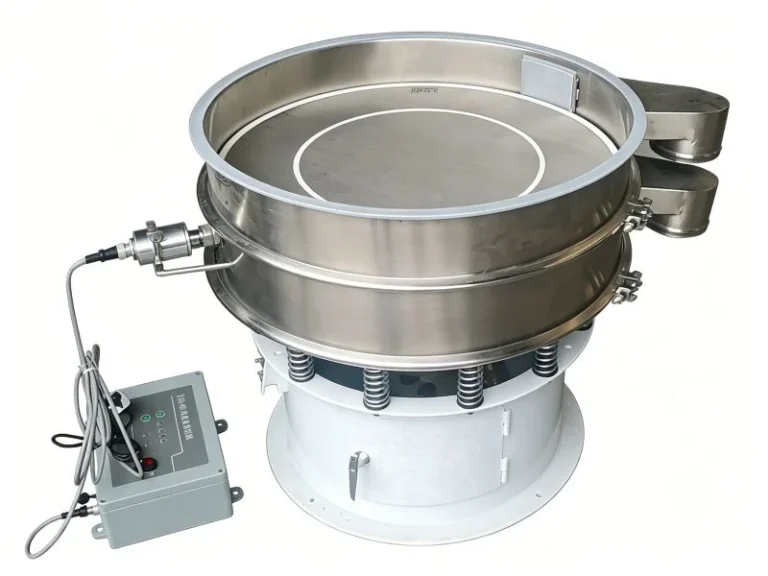
Choose mesh-cleaning devices based on blockage observed in trials. Ordinary rice screening does not automatically need ultrasonic cleaning.
Before-packing installations also need suitable inlet height, outlet positions, collection arrangements and access for screen replacement. Our custom rotary vibrating screen guide covers these installation and configuration choices.
What Affects the Price of a Rice Vibrating Sieve?
The price of a rice vibrating sieve varies with construction materials, surface finish, diameter, deck count and optional equipment. Compare quotes for the same screening duty and configuration; model size alone does not tell you what is included.
Product-Contact Materials
Specify 304 stainless steel for product-contact parts, suitable seals and documented material specifications. In high-salt or acidic conditions, consider 316L after checking compatibility with the product and cleaning chemicals.
A fully stainless steel machine generally costs more than one with stainless steel contact parts and a carbon steel base.
Internal Finish and Weld Quality
Smooth internal surfaces, burr-free welds and rounded transitions make cleaning easier and help reduce material retention. Polishing and weld finishing add fabrication cost. Stainless steel alone does not make a machine hygienically suitable.
Screen Diameter and Number of Decks
Larger machines, including models of 1200 mm and above, use more construction material and larger screening assemblies. Each extra deck adds a frame, mesh, seals and a discharge connection, raising equipment and maintenance costs.
The increase depends on the full configuration. Count the separation points needed for broken rice and fines before requesting a quote.
Mesh Cleaning and Motor Options
Bouncing-ball cleaning and ultrasonic systems add cost. Choose according to the opening size and observed blockage.
Explosion-protected motors and motors with higher ingress protection ratings also cost more. Their specification depends on the installation environment and applicable plant requirements.
Wnioski
Select the appropriate vibrating screen based on your specific screening requirements, taking into account the characteristics of the rice and your operational conditions to determine the optimal mesh aperture, number of screen decks, and processing capacity.
Need help selecting a model? Send Yuanjing your rice type, required throughput, separation goals and installation dimensions. Photos or representative samples will help us assess suitable screen openings and prepare a configuration and quotation.
Contact Yuanjing for a screening configuration and quotation.
Czy potrzebuję ultradźwiękowego przesiewacza wibracyjnego do drobnego proszku?
Can a Vibrating Screen Separate All Broken Rice from Whole Rice?
No. Screening can separate smaller fragments when their dimensions allow them to pass through openings that retain larger kernels. Broken kernels that differ mainly in length may require length grading.
What Screen Opening Should I Use to Remove Fines from Rice?
Choose trial openings from the kernel dimensions and the size of fines you need to remove. There is no single mesh specification suitable for every rice variety and product requirement. Check residual fines and usable rice loss before approving the screen.
Do I Need One or Two Screening Decks?
One deck may be enough to remove fines from retained rice. Two decks provide a second separation point when smaller fragments and fines need separate outlets. Count the required material streams before choosing the configuration.
Which Model Should I Choose for 1 Ton per Hour?
Use the reference table to identify candidates, then assess them against the screen openings, feed composition and finished-product requirements. A nominal feed rate of 1 t/h alone is not enough to determine the model.
Will Vibrating Screening Increase Rice Breakage?
It may, depending on the rice condition, vibration settings, feed impact and time spent on the screen. Compare representative feed and outlet samples during trials to identify any increase in breakage.
What Information Is Needed for an Accurate Quotation?
Provide the rice variety, normal and peak feed rates, separation goal, moisture content and available particle-size information. Include the permitted residual fines, broken-rice limit, acceptable rice loss and installation dimensions.