Difference Between Linear and Circular Vibrating Screen: Selection Guide
Introdução
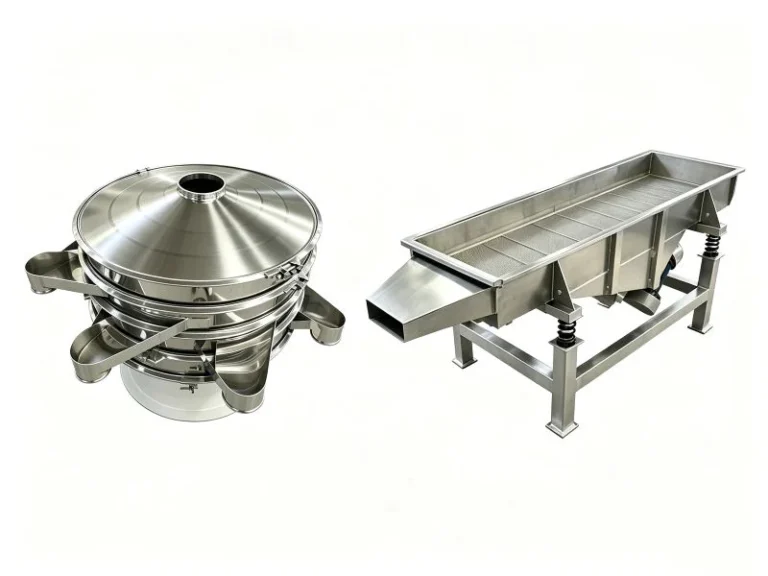
A linear vibrating screen uses straight-line motion to move material continuously across a rectangular screen surface, making it suitable for high-capacity screening of powders, granules, and bulk materials. A circular vibrating screen uses circular or three-dimensional motion to spread material across the screen, making it more suitable for fine screening, impurity removal, and precise classification.
The right choice depends mainly on material characteristics, required capacity, particle size, screening accuracy, and available installation space.
This guide compares linear and circular vibrating screens to help you determine which design better fits your screening process.
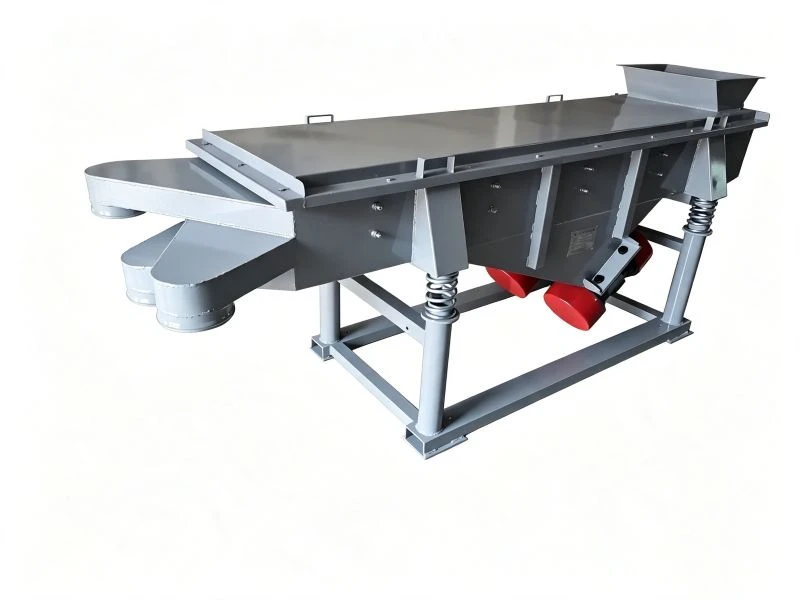
What Is a Linear Vibrating Screen?
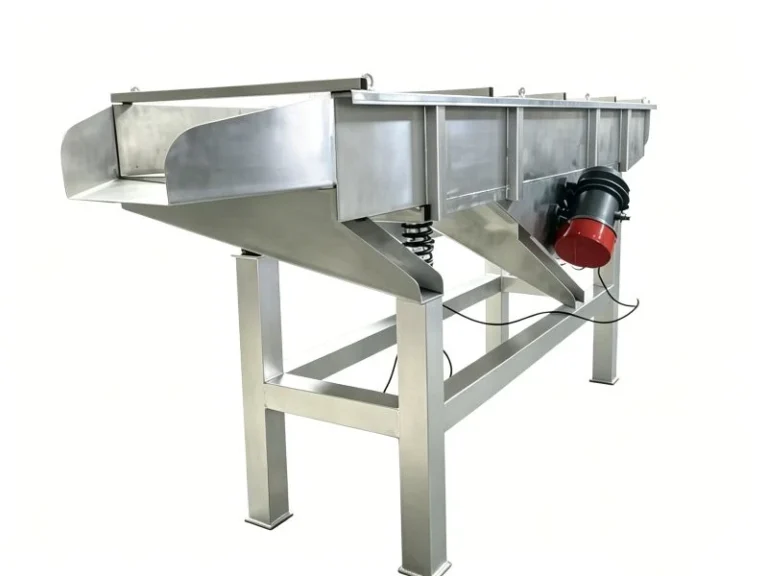
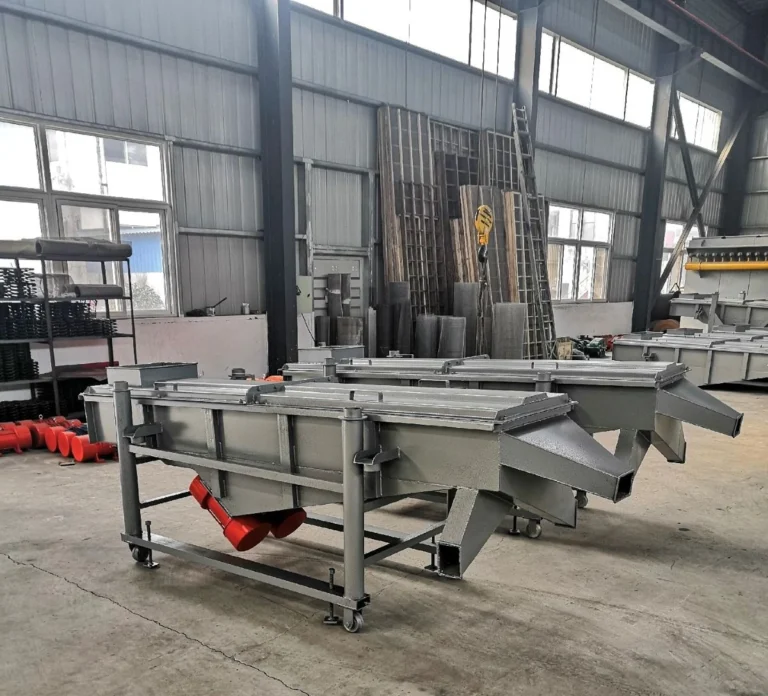
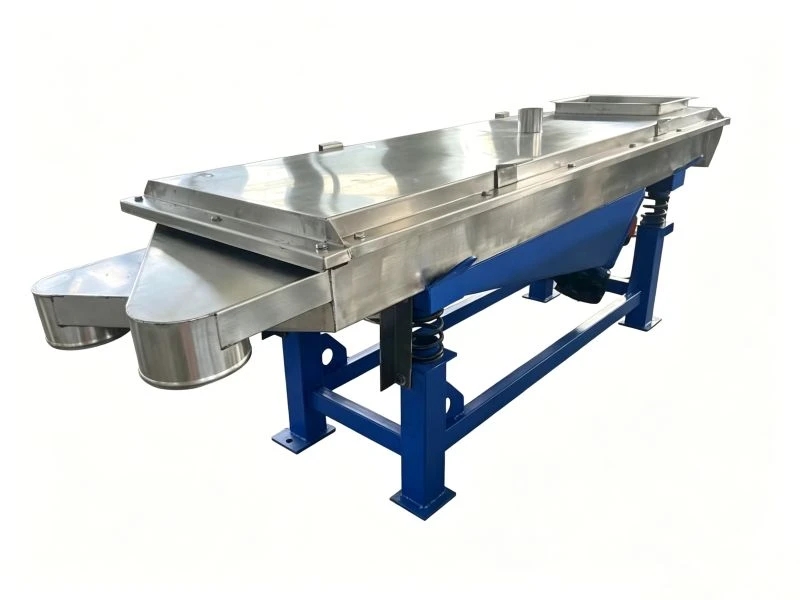
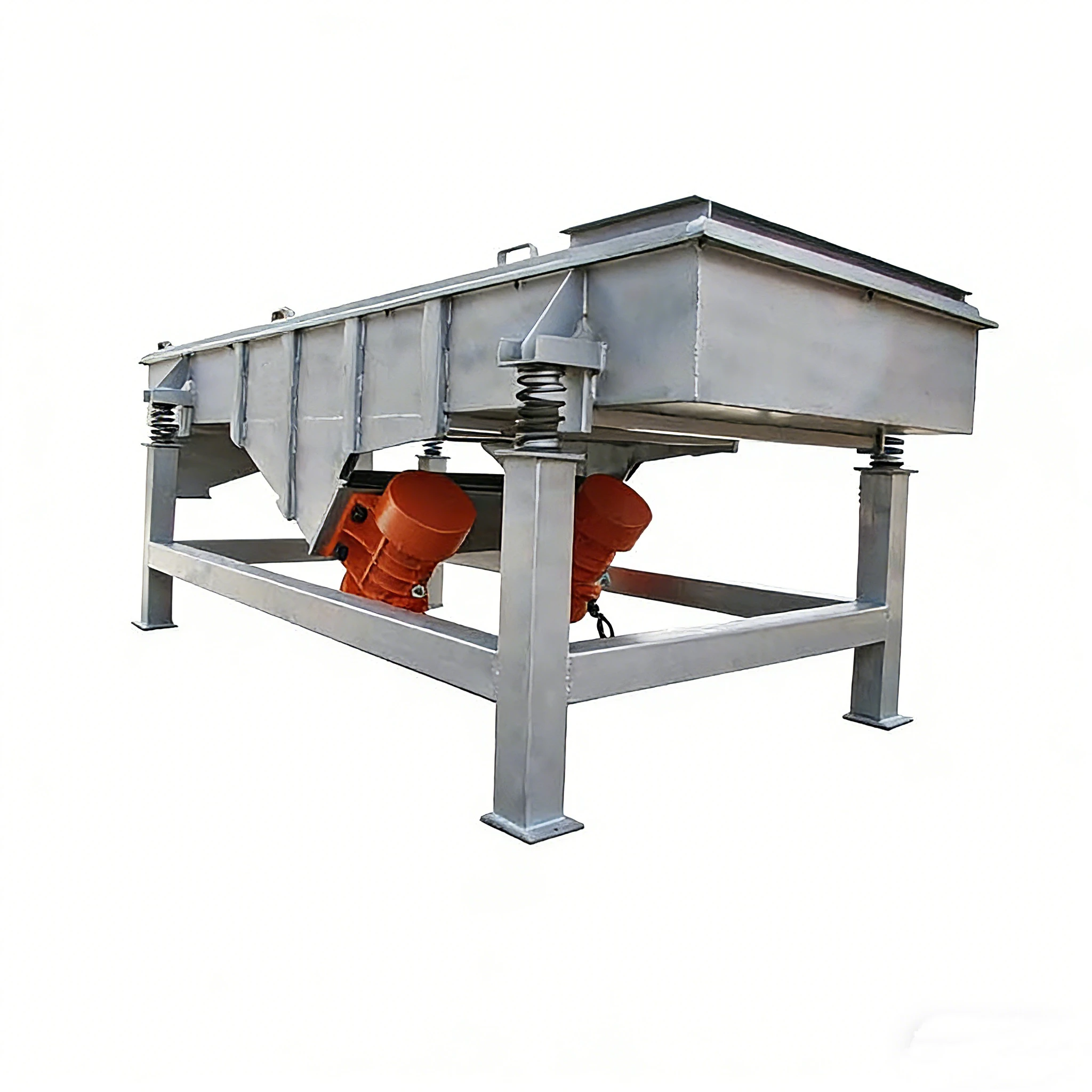
Linear vibrating screens process and move products in a straight line; the use of rectangular screen decks allows the material more time to pass through the mesh. These screens can also effectively transport product, sometimes serving as a substitute for traditional conveyors. Their length gives fine material the opportunity to separate from larger particles and pass through the screen. This makes linear screens particularly well-suited for dedusting or dewatering operations—such as removing small, loose crumbs and flour from finished biscuits.
Working Principle of Linear Vibrating Screen
A linear vibrating screen utilizes two counter-rotating motors operating at the same frequency to propel material forward in a linear, bouncing motion across the screen surface. Particles smaller than the screen apertures pass through the mesh to the layer below, thereby separating a previously disordered mixture of particles—sorting them by size to form an arrangement with fine particles at the bottom and coarse particles at the top—to achieve the objective of screening and grading the material.
Structural Features
The elongated rectangular structure provides a larger screening area, enabling higher throughput.It can be configured with single or multiple layers depending on required particle size classification.Feeding and discharge positions can be adjusted to integrate seamlessly into different production line layouts.
Advantages
Designed for large-scale production, it can handle significant volumes of material continuously.It performs particularly well in pre-screening and bulk material classification.Its structure supports conveyor systems and continuous processing setups, improving overall plant efficiency.
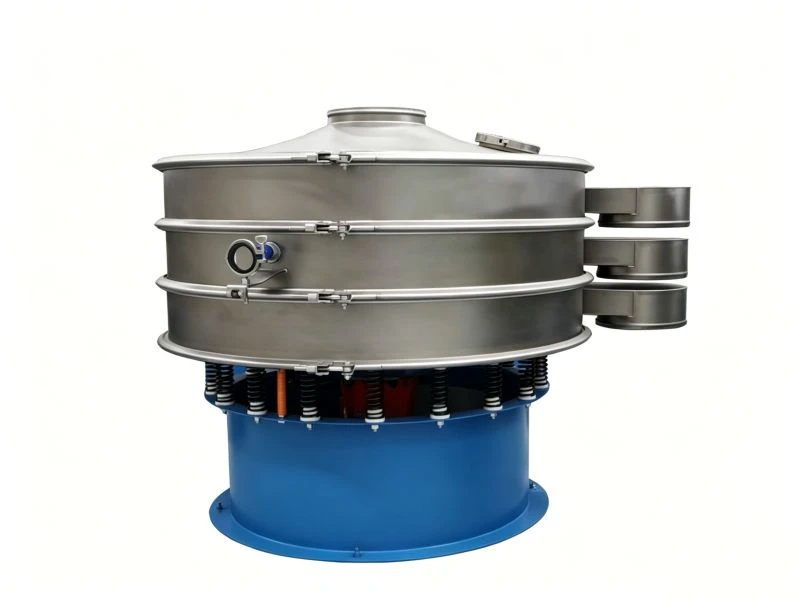
What Is a Circular Vibrating Screen?
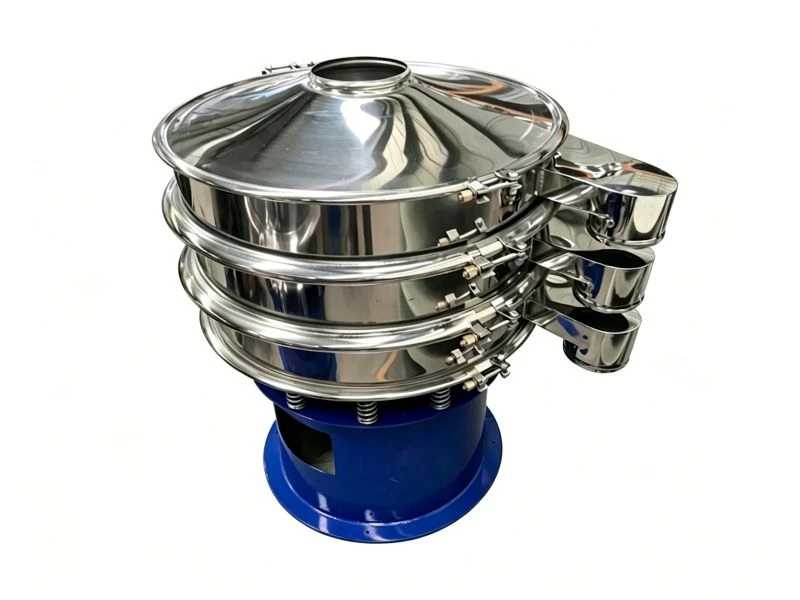
O rotary vibrating screen utilizes the simple adjustment of counterweights on the motor shaft and the resulting three-dimensional vibration to screen materials. It can be used to remove broken or undersized products and provides up to five levels of classification in a single operation—achieving precise particle size distribution and screening capabilities of up to 500 mesh—with configurations selectable based on the specific characteristics of the material being processed.
Working Principle of Circular Vibrating Screen
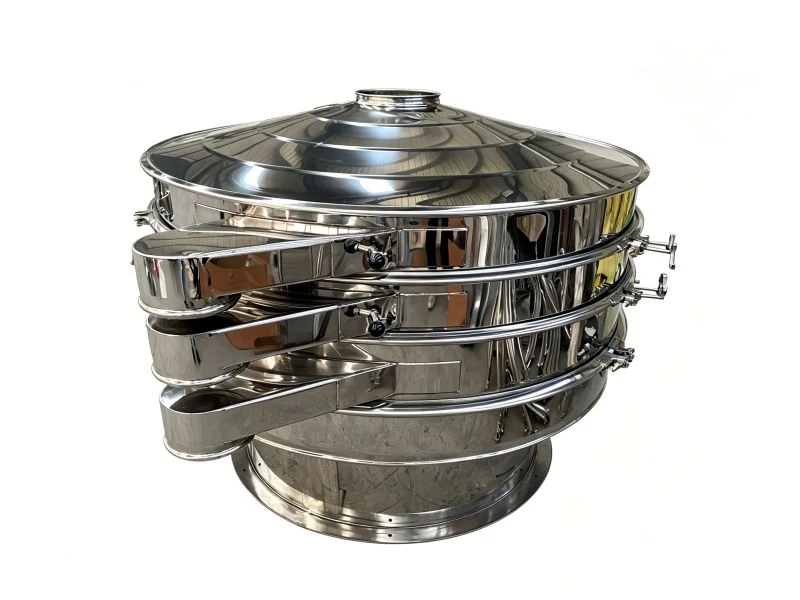
The exciting force generated by the exciter of a circular vibrating screen is a 360-degree rotational force. Material on the screen surface undergoes a circular or elliptical jumping motion resembling a “parabolic” trajectory. This throwing action is more vigorous, allowing the material to remain airborne slightly longer and ensuring more thorough contact with the screen mesh, thereby achieving the screening objective.
Structural Features
The round frame structure provides balanced vibration distribution and stable operation.It can be configured with one or multiple decks to achieve different particle size classifications.High-quality springs are used to reduce vibration transfer to the foundation, improving machine stability and service life.
Advantages
It delivers accurate particle size separation, especially for fine powders and granular materials.Widely used in industries requiring strict product consistency and quality control.The multi-directional vibration helps reduce mesh clogging and improves continuous operation efficiency.
Linear Vibrating Screen vs Circular Vibrating Screen:Differences
| Factor | Peneira Vibratória Linear | Peneira Vibratória Circular |
|---|---|---|
| Vibration Motion | Straight-line vibration | Circular / three-dimensional vibration |
| Material Flow | Moves continuously toward the discharge end | Spreads across the screen surface |
| Processing Capacity | Generally better suited to high-throughput screening | Generally suited to moderate-capacity screening |
| Screening Accuracy | Suitable for grading and bulk screening | Better suited to fine and precise screening |
| Tipo de Material | Powders, granules, and bulk solids | Fine powders and small granules |
| Fine Powder Screening | Suitable depending on material and mesh size | Generally more suitable for fine screening |
| Installation Space | Requires more horizontal space | More compact floor footprint |
| Typical Applications | Sand, plastic pellets, fertilizer, grains, bulk powders | Flour, starch, pharmaceutical and chemical powders |
Capacity and Screening Accuracy
Linear vibrating screens are generally suitable for high-throughput screening and continuous material handling. Their rectangular screen surface and linear material movement make them effective for processing powders, granules, and bulk materials.
Circular vibrating screens are more commonly used when fine screening, impurity removal, or precise particle classification is required. Their vibration pattern helps distribute material across the screen surface for more accurate separation.
Actual capacity and screening performance depend on factors such as material properties, mesh size, screen area, feed rate, and screen configuration.
Typical Applications
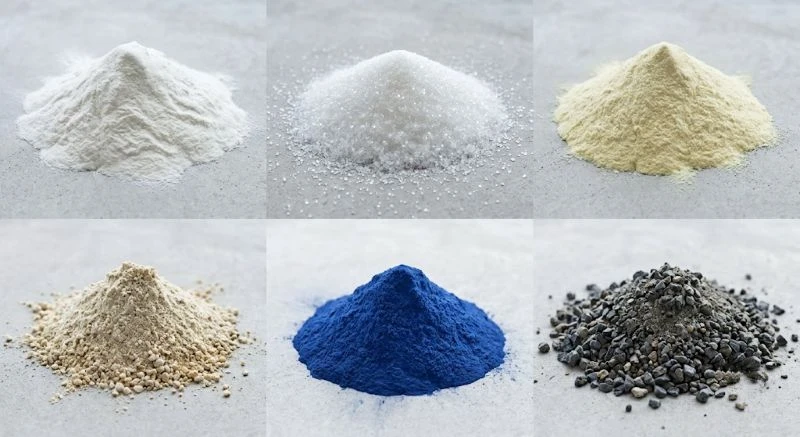
Vibrating screens are widely used in multiple industries for particle separation and material grading. The choice between linear vibrating screen and circular vibrating screen depends mainly on material type, required precision, and production capacity.
For more application examples, see our guide to linear vibrating screen applications in different industries.
| Aplicação | Linear Screen | Circular Screen |
|---|---|---|
| Flour / starch | Possible | Common choice for fine screening |
| Sugar / salt granules | Suitable | Suitable for fine impurity removal |
| Pharmaceutical powder | Possible | Common for precision screening |
| Chemical powder | Suitable for higher capacity | Suitable for fine classification |
| Plastic pellets | Very suitable | Less commonly selected |
| Quartz sand | Suitable for bulk classification | Suitable for finer fractions |
| Fertilizer | Suitable | Application dependent |
| Fine metal powder | Application dependent | Circular/ultrasonic often considered |
Which Vibrating Screen Should You Choose?
Choosing between a linear and circular vibrating screen mainly depends on your material, required capacity, screening accuracy, and production conditions.
Choose a Peneira Vibratória Linear If:
- You need high processing capacity and continuous screening.
- You are processing dry powders, granules, or bulk materials.
- Multiple particle-size classifications are required.
- Your production line has sufficient horizontal installation space.
A linear screen is often suitable when the process requires continuous particle grading and a straight feeding and discharge layout. This Indian cumin seed screening project used a two-deck linear screen to separate material through 3 mm and 1 mm screens.
Choose a Peneira Vibratória Circular If:
- Fine screening or precise classification is the priority.
- You are processing fine powders or small granules.
- Impurity removal is a primary screening requirement.
- You need a compact screening machine with a smaller footprint.
For very fine powders that are prone to mesh clogging, an ultrasonic vibrating sieve may provide better screening performance.
Common Screening Problems
Both linear and circular vibrating screens may experience screening problems depending on the material, mesh size, feed rate, and operating conditions. The most common issues include:
Screen Mesh Clogging
Fine, sticky, or high-moisture materials may block the screen openings and reduce screening efficiency. Selecting the proper mesh and using suitable anti-blocking solutions can help keep the screen surface clear. Learn more about screen clogging causes and prevention solutions.
Uneven Material Distribution
Uneven feeding can reduce the effective screening area and affect separation accuracy. A stable and uniform feed helps distribute material across the screen surface and improves screening performance.
Reduced Screening Efficiency
Low screening efficiency may result from improper feed rate, unsuitable mesh size, material characteristics, or incorrect vibration settings. Adjusting these factors according to the material and screening requirements can improve performance.
How to Improve Screening Efficiency
Screening efficiency depends on material characteristics, mesh size, feeding conditions, and equipment configuration. The following methods can help improve screening performance:
Ultrasonic System Integration
For fine or easily clogged powders, an ultrasonic sieving machine can help reduce mesh blinding and improve screening efficiency.
Proper Mesh Selection
Choose the appropriate mesh size according to the material particle size and required screening accuracy.
Feeding Control
Maintain a stable and uniform feed rate to prevent screen overloading and ensure effective use of the screening area.
Equipment Customization
Screen size, number of decks, vibration settings, and other configurations can be adjusted according to material properties and production requirements.
For linear screening applications, see our guide on how to improve linear vibrating screen efficiency and capacity.
Conclusion
Linear and circular vibrating screens serve different screening requirements. Linear vibrating screens are generally better suited to high-capacity, continuous screening of powders, granules, and bulk materials, while circular vibrating screens are commonly used for fine screening, impurity removal, and precise particle classification.
The final selection should be based on material properties, particle size, required capacity, screening accuracy, and installation conditions.
If you provide your material, required capacity, mesh size, and screening purpose, Yuanjing can recommend a suitable vibrating screen configuration for your production line.