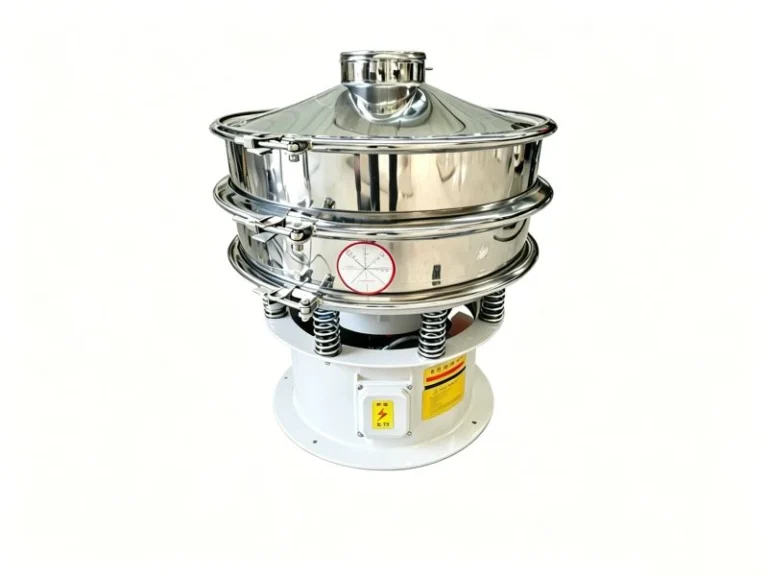
Руководство по выбору двигателя для промышленных вибрационных сит: Как повысить эффективность просеивания
The screening efficiency of industrial vibratory sifters is closely related to the motor selection. A suitable vibrating motor can improve screening performance, maintain stable material movement, and extend equipment service life. However, choosing the wrong motor may reduce production capacity, cause uneven material distribution, accelerate screen mesh wear, and increase maintenance costs.
For different applications, such as powder screening, chemical material separation, food processing, ceramic powder screening, and metal powder classification, the vibrating motor needs to match the material characteristics, screening requirements, and working environment.
A vibrating motor is not only a power source for the screening machine but also a key component that affects the overall performance of the vibration system.
Why Can’t Ordinary Motors Replace Vibrating Sifter Motors?
The motor used in industrial vibratory sifters needs to continuously withstand high-frequency impact loads. This working condition is completely different from the stable operation required by ordinary motors.
A dedicated vibrating sifter motor is specially designed to generate controlled vibration force and maintain long-term operation under heavy vibration conditions. Its main advantages are reflected in three key designs.
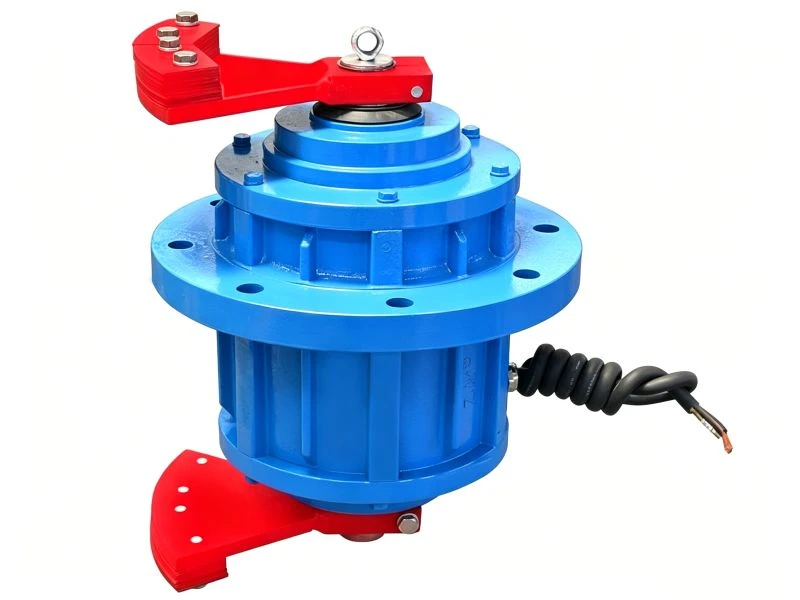
Eccentric Block Structure Generates Effective Vibration Force
Unlike ordinary motors that mainly provide rotary torque output, vibrating motors use adjustable eccentric blocks to generate directional excitation force.
By adjusting the eccentric block angle and position, the vibration force can be controlled according to different screening requirements. This structure allows materials to move properly across the screen surface and improves screening efficiency.
Reinforced Bearing System for Continuous Vibration Operation
Vibrating screen motors are equipped with stronger bearing systems and special lubrication designs to handle combined axial and radial vibration impacts.
During continuous screening operations, especially in industrial powder screening applications, the motor bearings need to withstand repeated vibration loads. A reinforced bearing structure helps reduce wear and improves equipment reliability.
Fully Enclosed Protection Design for Dusty Environments
Many industrial vibratory sifters operate in environments with fine powders and dust. Therefore, vibrating motors usually require higher protection levels, such as IP55 or above, to prevent dust from entering the motor.
If ordinary motors are used instead of dedicated vibrating motors, problems such as accelerated bearing wear, coil loosening, and reduced service life may occur. In the long run, maintenance costs can become much higher than the initial cost difference of selecting a proper vibrating motor.
How Do Material Characteristics Affect Vibrating Sifter Motor Selection?
The same motor power does not always provide the same screening performance for different materials. Motor selection should consider material properties, particle size, moisture content, and screening accuracy requirements.
For example, when screening sticky materials, the equipment may require stronger vibration amplitude to overcome material adhesion and prevent screen blockage.
However, when processing fragile crystalline materials, excessive vibration intensity may damage the particles. In this case, a lower vibration frequency may be more suitable to protect material quality.
For fine powder applications, such as ultrasonic vibrating sifter, the motor needs to maintain high-frequency and low-amplitude vibration to improve powder passing efficiency while controlling energy consumption and preventing screen deformation caused by excessive heat.
Environmental conditions also influence motor selection.
For example:
- Chemical powder screening requires better sealing performance and corrosion resistance.
- Food powder screening requires cleaner operation and reliable protection.
- Humid working environments require improved waterproof performance.
Therefore, selecting a vibrating motor is not only about power matching. The entire working condition should be considered.
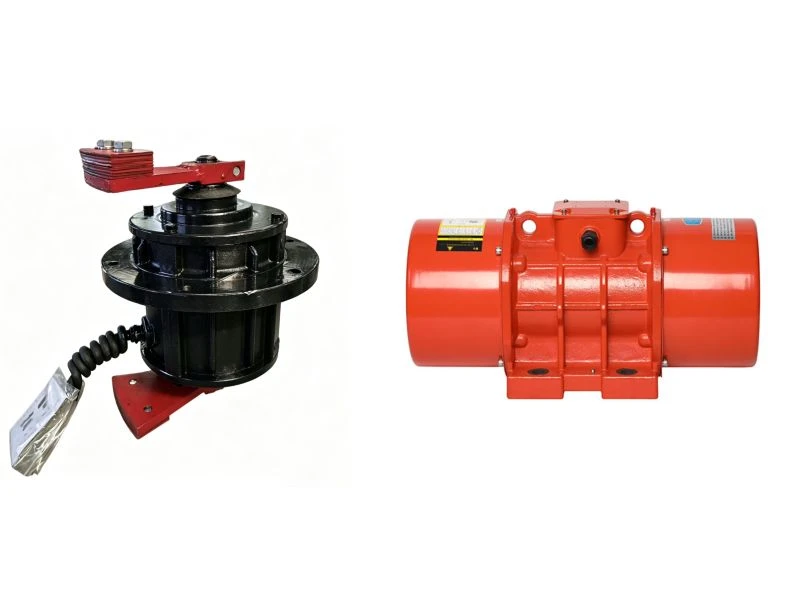
High Frequency Vibrating Motor vs Horizontal Vibrating Motor: Which One Is Better?
Different screening applications require different vibration frequencies and excitation forces. Choosing between a high frequency vibrating motor and a horizontal vibrating motor depends on the material type and screening purpose.
High Frequency Vibrating Motor for Fine Powder Screening
High frequency vibrating motors create rapid vibration movement and are suitable for precision screening applications.
Typical applications include:
- Ceramic powder screening
- Metal powder classification
- Fine particle separation
- High-precision powder processing
These motors usually use lightweight aluminum alloy housings. The vibration frequency can exceed 50Hz, making them suitable for applications that require higher screening accuracy. However, their excitation force is relatively smaller.
Horizontal Vibrating Motor for Heavy Material Screening
Horizontal vibrating motors focus more on structural strength and stronger excitation force.
They are commonly used for:
- Mining material screening
- Sand and stone classification
- Large particle separation
The excitation force can exceed 1000kg, while the vibration frequency is generally below 30Hz.
For applications involving flammable dust, explosion-proof high frequency vibrating motors are required. Their special sealing structure and anti-static design help reduce safety risks, making them suitable for industries such as chemical processing and food production.
Why Does Replacing the Motor Alone Not Always Solve Vibrating Sifter Problems?
Many users find that replacing the vibrating motor does not completely solve equipment instability. The reason is that the motor is only one part of the complete vibration system.
The performance of industrial vibratory sifters also depends on the matching of supporting components.
Control Box Matching
The control box acts as the control center of the motor system. Functions such as overload protection and frequency adjustment directly affect motor output stability.
For variable frequency vibrating motors, the motor and control system need to be properly matched to ensure stable operation.
Damping Components Affect Vibration Transmission
Damping pads and composite springs help transfer vibration energy effectively to the screen surface.
If damping components are aged or incorrectly selected, vibration energy may not be transmitted efficiently, resulting in reduced screening performance and abnormal equipment operation.
Sealing Components Protect Equipment in Different Environments
Different working conditions require different protection solutions:
- Explosion-proof environments require matching explosion-proof power boxes.
- High-frequency screening applications require durable damping components.
- Humid environments require reliable sealing strips.
When the motor and supporting components work together as a complete system, the equipment can achieve longer motor bearing life and reduce abnormal screen wear.
Why Does a Vibrating Sifter Motor Overheat After Short-Term Operation?
A vibrating sifter motor overheating problem is often related to lubrication management.
Because vibrating motors operate under continuous vibration, ordinary grease may be thrown away or lose performance over time. When lubrication becomes insufficient, direct metal contact may occur inside the bearing, causing temperature increases and accelerated wear.
Dedicated vibrating motor grease needs:
- Strong adhesion
- Good extreme pressure resistance
- Stable performance under impact loads
For example, lubricants containing molybdenum disulfide can better handle vibration impacts and improve bearing protection.
Proper lubrication is an important factor in maintaining stable operation of vibratory separation equipment.
2-Pole vs 4-Pole Vibrating Motor: How Does Motor Speed Affect Screening?
The number of motor poles directly affects vibration frequency. Rotary vibrating sifters commonly use 2-pole or 4-pole motors, and each type has different application advantages.
2-Pole Vibrating Motor
Speed:
Approximately 2900 rpm
Advantages:
- Higher vibration frequency
- Better fine powder screening efficiency
Suitable for:
- Powder materials
- Fine particles
- Precision screening applications
4-Pole Vibrating Motor
Speed:
Approximately 1450 rpm
Advantages:
- More stable operation
- Better for heavy materials
Suitable for:
- Large particles
- High-density materials
When selecting motor poles, users should consider material characteristics, screening accuracy, and production requirements together.
What Happens If the Vibrating Sifter Motor Rotates in the Wrong Direction?
The rotation direction of the vibrating motor directly affects screening performance.
If the motor rotation direction is incorrect, materials may move abnormally on the screen surface, resulting in:
- Lower screening efficiency
- Uneven material distribution
- Poor separation results
- Increased equipment stress
Normally, materials should move outward in a spiral pattern. If materials move toward the center instead, the motor phase sequence may be incorrect.
To correct the problem:
- Stop the machine and disconnect the power supply.
- Exchange any two-phase power lines.
- Run the equipment without load for about 5 minutes.
- Confirm normal vibration before feeding materials.
Operating with the wrong rotation direction for a long time may turn a simple electrical issue into a mechanical problem.
Conclusion: Proper Motor Selection Improves Industrial Vibratory Sifters Performance
The performance of industrial vibratory sifters depends on the complete vibration system, not only the motor itself.
From motor type selection, vibration frequency, material characteristics, supporting components, lubrication management, and rotation direction, every factor can affect screening efficiency and equipment service life.
Choosing the right vibrating motor for your screening application helps improve production stability, reduce maintenance costs, and ensure reliable operation in industries such as chemical processing, food production, ceramics, and powder manufacturing.
A correct motor selection strategy is the foundation for achieving efficient and stable screening performance.