Thiết bị sàng bột công nghiệp: Cách chọn máy phù hợp
Giới thiệu
Choosing industrial flour sifting equipment is not simply a matter of selecting the largest machine. The right flour sifter needs to match the flour characteristics, required capacity, mesh size, screening accuracy, and production-line layout.
For small or medium-scale applications, a standard flour sifter machine may be enough for removing lumps and foreign particles. Larger flour mills and food processing plants may require a high-capacity sifter or an inline flour sifter for continuous production.
This guide explains the main factors to consider when selecting flour screening equipment and how to choose between different sifter configurations.
What to Consider When Choosing Industrial Flour Sifting Equipment
When choosing industrial flour sifting equipment, first check the characteristics of the flour, including particle size, moisture content, and whether it tends to form lumps. These factors affect the choice of screen mesh and screen cleaning method. Next, consider the required capacity, screening accuracy, and number of grades to determine the right flour sifter machine configuration. The machine type should also match the production process and feeding and discharge layout. For continuous production lines, direct connection with upstream and downstream equipment is especially important. Finally, check the food hygiene requirements, cleaning and maintenance needs, and available installation space before selecting the industrial flour sifting equipment.
Which Flour Sifter Machine Should You Choose?
The best industrial flour sifting equipment depends on the screening task and production volume.
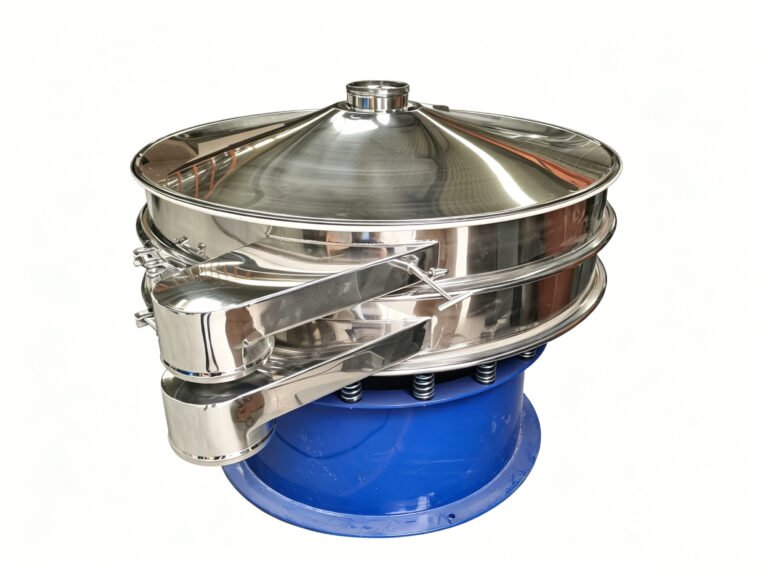
For routine flour screening, a vibro sifter provides a flexible solution for removing lumps and impurities. When the process requires continuous high-volume screening and direct connection with other equipment, an Inline Vibratory Screen is generally more suitable.
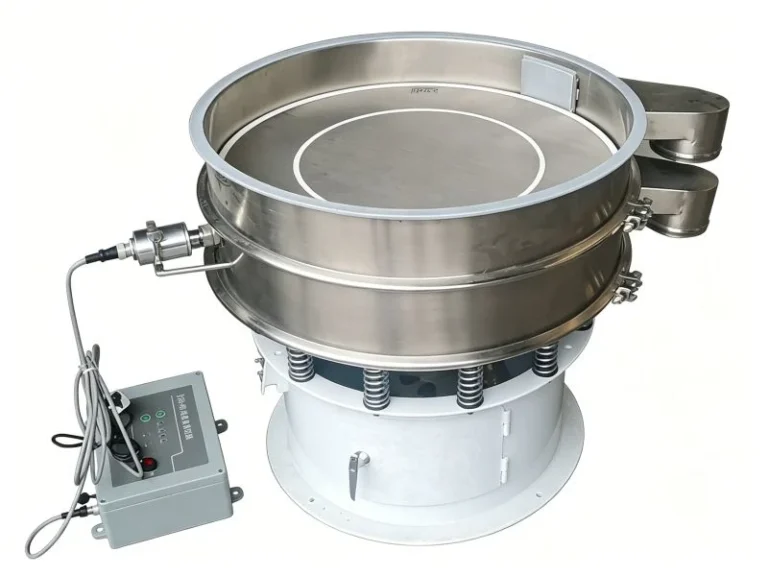
For fine powders that are difficult to screen or tend to block the mesh, an ultrasonic vibrating sieve can be considered.
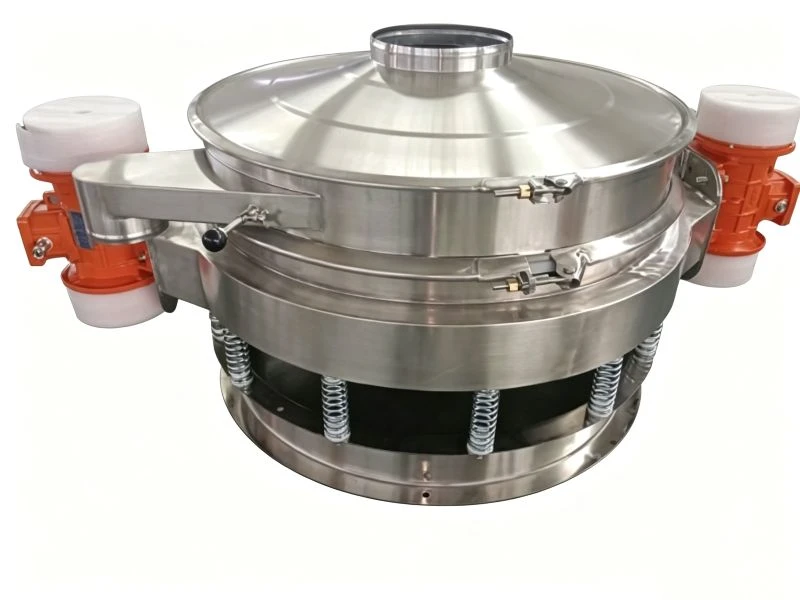
Rotary Vibrating Screen for Flour
A rotary vibrating screen is commonly used for flour screening, impurity removal, and particle separation.
With multiple screen layers, one machine can separate different particle sizes. This makes it useful when the application requires both screening and grading.
According to the original equipment specifications, the rotary vibrating screen can handle approximately 100–3,300 kg/h depending on material and configuration, with fine powder screening capability up to 500 mesh.
It is a practical option for:
- Routine flour screening
- Lump removal
- Foreign-particle separation
- Fine screening
- Multi-size separation
- Small and medium production
Inline Vibratory Screen for Continuous Flour Processing
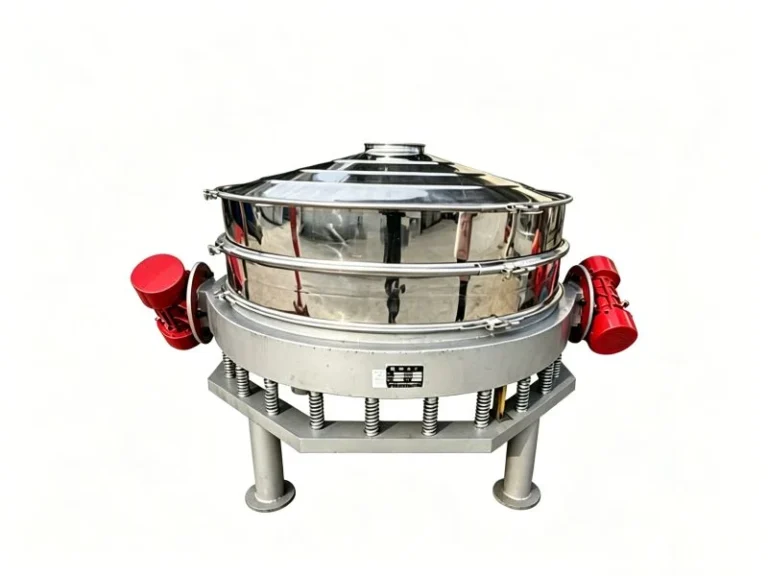
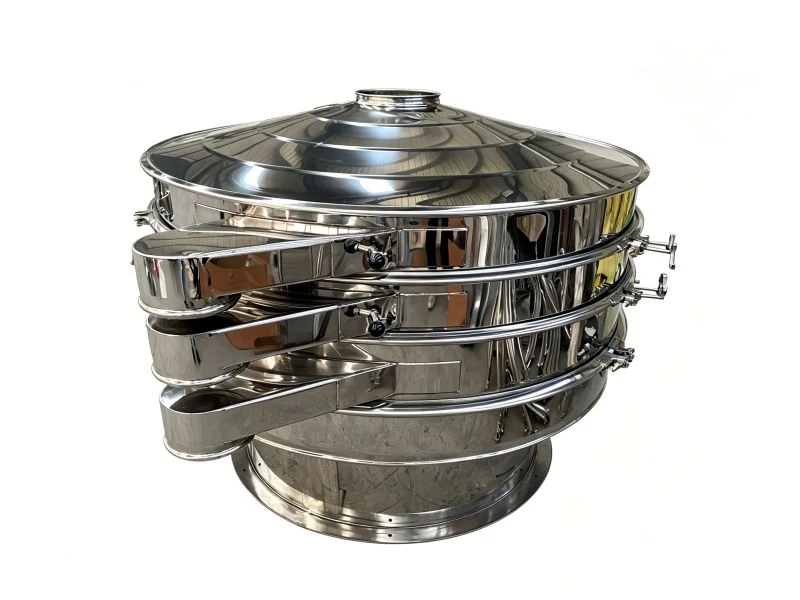
Một sàng rung nội tuyến is designed for continuous material flow. Its inlet and outlet are arranged vertically, allowing flour to enter and discharge directly through the machine.
This layout reduces unnecessary material transfer and makes the sifter easier to connect with upstream and downstream equipment.
Depending on machine size and material conditions, the original specification gives a capacity of up to 30 tons per hour.
An inline flour sifter is therefore a better fit for:
- High-volume flour processing
- Continuous production
- Direct feeding and discharge
- Automated production lines
- Processes where fast material discharge is important
How to Select Flour Sifter Capacity and Mesh Size
Capacity and mesh size should be selected together. Choosing a industrial flour sifting equipment only according to the required hourly output can result in insufficient screening area or unstable operation.
Flour Sifter Capacity
First determine the actual amount of flour that needs to be screened per hour.
For example, if the required production rate is 1,500 kg/h, the machine configuration should be selected according to:
- Flour type
- Moisture content
- Bulk density
- Kích thước lưới
- Phương thức cấp liệu
- Number of screen layers
For higher production volumes, a high-capacity flour sifting machine or inline flour sifter may be more appropriate.
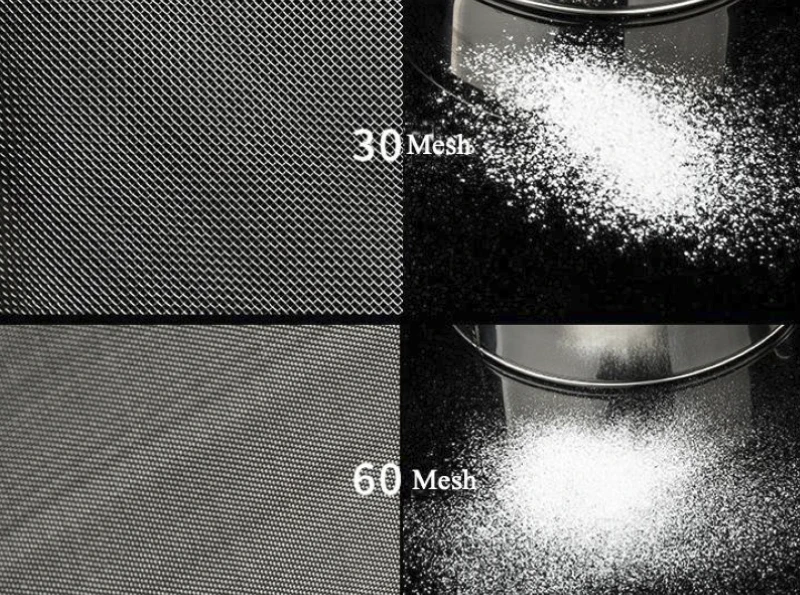
Flour Sifter Mesh Size
A higher mesh number generally means smaller openings and finer screening. However, finer mesh can also reduce throughput and increase the possibility of mesh clogging.
As a general reference:
- 20–40 mesh: coarse screening and lump removal
- 60–80 mesh: commonly used for bakery applications such as bread, cakes, and biscuits
- 100 mesh and above: finer powder screening
The final mesh specification should always be confirmed according to the flour characteristics and required screening result rather than selected from mesh number alone.
What Features Matter for Commercial Flour Sifting?
For a commercial flour sifter, capacity and mesh size are only part of the selection. For industrial flour sifting equipment for food processing, the machine should also be easy to clean, simple to maintain, and suitable for the way flour moves through the production process.
Stainless steel construction is preferred for flour processing, especially on product-contact parts. A simple, enclosed design also helps reduce flour dust and makes routine cleaning easier. If the sifter needs to connect directly with upstream and downstream equipment, the feeding and discharge layout should be checked before installation.
For continuous production, a flour sifter for production line should match the existing feeding system, discharge position, and available space. This is especially important when the sifter is installed between two processing stages.
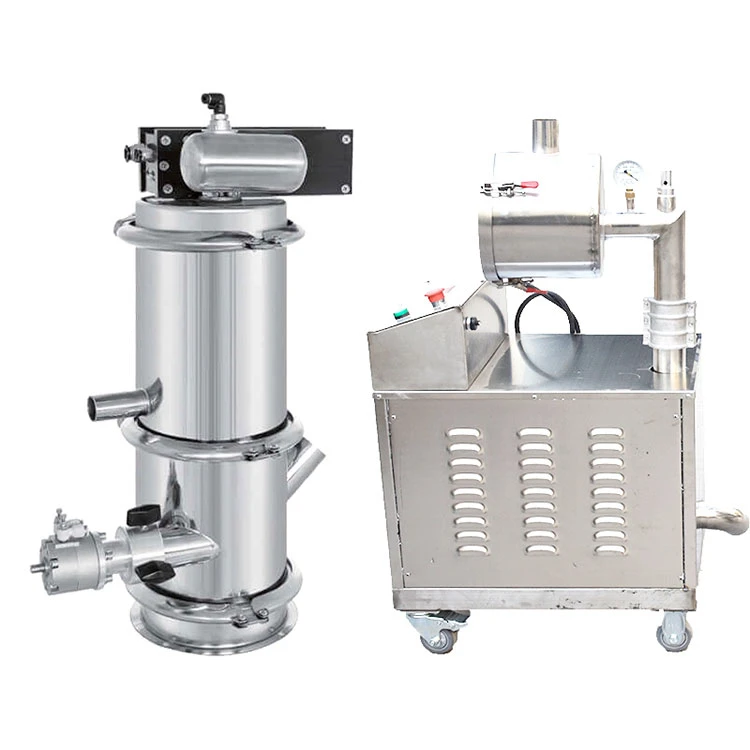
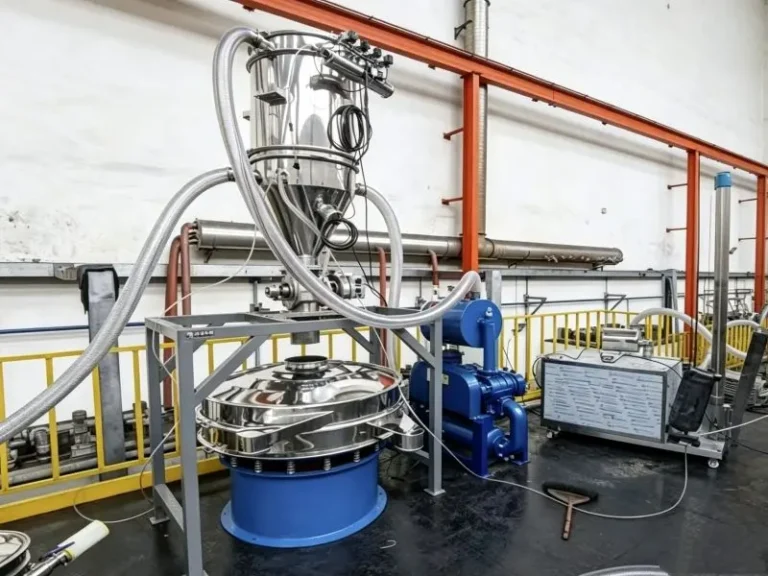
For the flour industry, we have designed a specialized machine for bag emptying—the dust-free feeding station. It can be paired with a vibrating screen to handle the unloading and screening of small-batch or bagged flour while completely eliminating dust pollution.
How to Choose the Right Flour Sifting Equipment for Your Application
The right industrial flour sifting equipment depends on the screening requirement, production capacity, and process layout.
| Screening Requirement | Recommended Equipment | Screening Characteristics |
| Standard flour screening | Sàng Rung | Suitable for routine flour screening, lump removal, and impurity separation |
| Fine flour screening | Vibratory Sifter / Ultrasonic Vibrating Sieve | Selection depends on mesh size, powder characteristics, and screening requirements |
| Continuous production | Sàng rung dạng thẳng | Direct feeding and discharge make it easy to integrate into a production line |
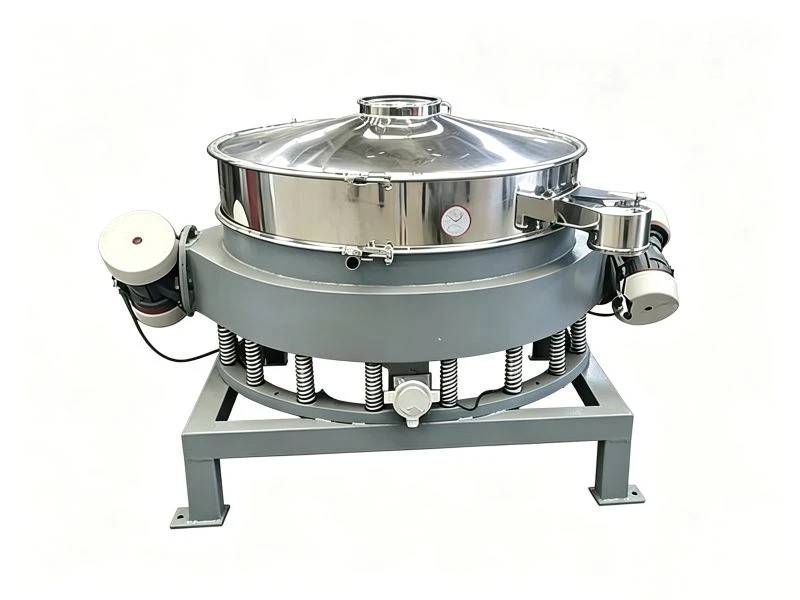
| High-volume flour screening | Large Vibratory Sifter / Inline Vibratory Screen | Larger screening area for higher processing capacity |
| Multi-size separation | Multi-layer Vibratory Sifter | Separates different particle sizes in a single machine |
| Fine powder or powder prone to mesh clogging | Ultrasonic Vibrating Sieve / Ultrasonic Inline Vibratory Screen | Helps reduce mesh clogging and improve fine powder screening stability |
Quick Selection Guide
Use the following as a simple starting point:
Standard flour screening → Vibro Sifter
Continuous production → Inline Vibratory Screen
High-volume screening → Large Vibro Sifter or Inline Vibratory Screen
Fine or difficult-to-screen flour → Sàng rung siêu âm
The final equipment configuration should still be based on the actual flour, capacity, mesh size, and feeding method.
Kết luận
Choosing the right industrial flour sifting equipment depends on more than capacity alone. Flour characteristics, mesh size, screening accuracy, production volume, and process layout should all be considered.
For standard flour screening, lump removal, and impurity separation, a vibro sifter is a practical choice. For high-volume and continuous production, an inline vibratory screen offers direct feeding and discharge with easier production-line integration. When fine flour or difficult-to-screen powder tends to clog the mesh, an ultrasonic vibrating sieve can provide more stable screening.
The best flour sifter should match your actual material, required capacity, and production process. If you can provide the flour type, required output, mesh size, and feeding method, the equipment configuration can be selected more accurately.