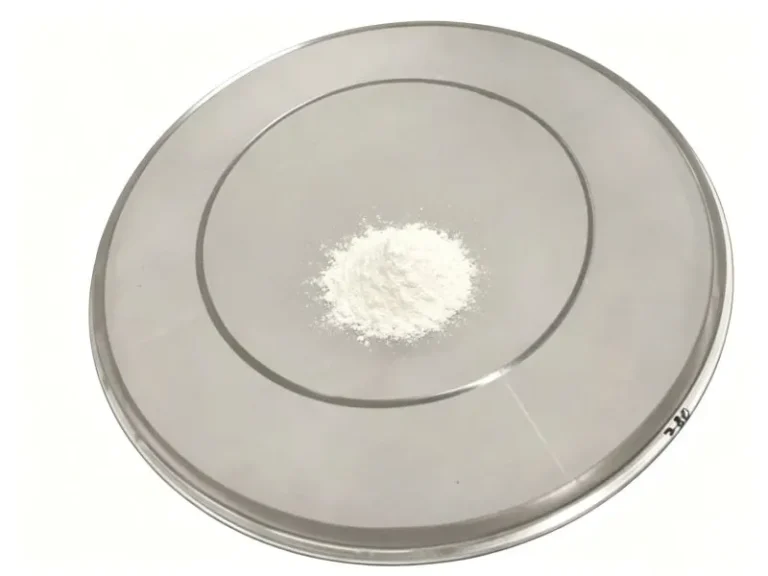
أي غربال يُستخدم للمسحوق الناعم؟ دليل شامل لاختيار الغربال الاهتزازي الصناعي المناسب
عند اختيار غربال اهتزازي صناعي لفحص المسحوق الناعم، يجب مراعاة عدة عوامل رئيسية، بما في ذلك حجم الجسيمات، وخصائص المادة، ومحتوى الرطوبة، وطاقة الإنتاج، ودقة الفصل المطلوبة. غالبًا ما تطرح المساحيق الناعمة تحديات شائعة مثل انسداد الشبكة، والتكتل الساكن، وضعف النفاذية عبر الغربال، وعدم اتساق التصنيف. يمكن لاختيار نظام صناعي متوافق بشكل صحيح أن يقلل بفعالية من انسداد الغربال، ويحسّن توحيد المنتج، ويعزز كفاءة الإنتاج الإجمالية.
يستعرض دليل الاختيار هذا أنواعًا مختلفة من الغرابيل الاهتزازية الصناعية للفحص، بما في ذلك الغرابيل الاهتزازية الدوارة، والشاشات الاهتزازية بالموجات فوق الصوتية، والغرابيل المتأرجحة. من خلال تقييم نعومة المسحوق، والتماسك، والسلوك الكهروستاتيكي، وحجم الإنتاج، يمكنك تحديد الحل المناسب من بين الغرابيل الاهتزازية لمعالجة المساحيق، وتجنب التجارب المتكررة، وتحقيق تصنيف جسيمات مستقر وخالٍ من الانسداد وعالي الدقة.
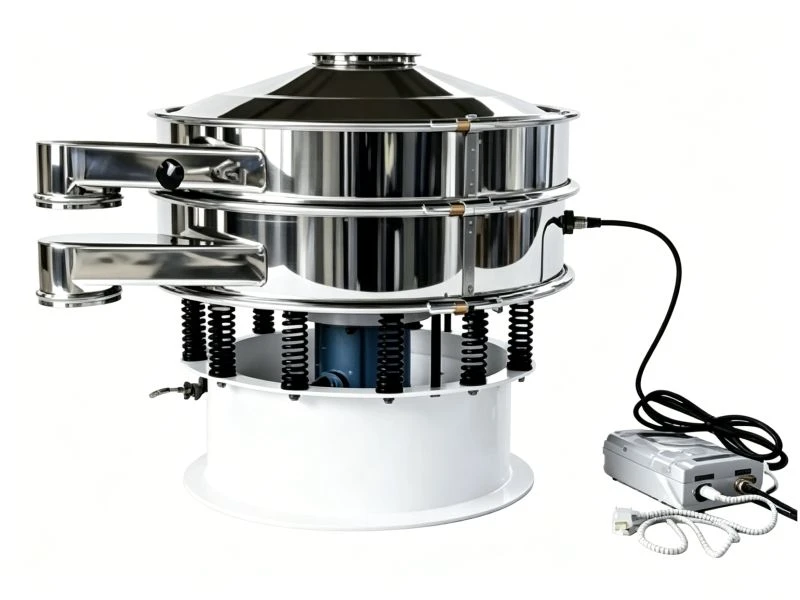
لماذا يُعد فحص المسحوق الناعم أكثر تحديًا من المواد الخشنة
يُعد فحص المسحوق الناعم أكثر صعوبة من فصل المواد الخشنة لأن عدة عوامل فيزيائية ومادية تتفاعل وتقلل من كفاءة الفحص.
حجم الجسيمات الصغير، الكهرباء الساكنة تؤدي إلى التصاق المسحوق
المساحيق ذات حجم الجسيمات ≤50 ميكرومتر لديها طاقة سطحية عالية للغاية، مما يجعلها تتكتل معًا مثل المغناطيس. يمكنك أن تشعر بها وهي تلتصق ببعضها عند فركها بيدك.
2. خطر كبير لانسداد الغربال
قد تعلق بعض الجسيمات في ثقوب الغربال، أو قد تدخل الكتل الصلبة مباشرة، مما يسد الغربال. تزيد الشاشات الاهتزازية التقليدية من السعة لتنظيف الغربال، لكن هذا يجعل المادة أكثر انضغاطًا فقط، مثل بناء كرة ثلجية.
سهولة التكتل
أثناء الغربلة، تهتز المادة على سطح الغربال. يتسبب الجاذبية والاحتكاك في تكتل الجسيمات المتناثرة في البداية مرة أخرى، مما يشكل “تكتلًا ثانويًا”. يُحتجز المسحوق الناعم في هذه الكتل، مما يمنعه من المرور عبر الغربال.
الرطوبة تؤثر على الغربلة
حتى التغيرات الصغيرة في محتوى الرطوبة يمكن أن تغير خصائص المسحوق بشكل كبير. يميل المسحوق الرطب قليلاً إلى أن يصبح لزجًا وأقل سيولة، مما يبطئ مروره عبر الغربال ويزيد من خطر الانسداد.
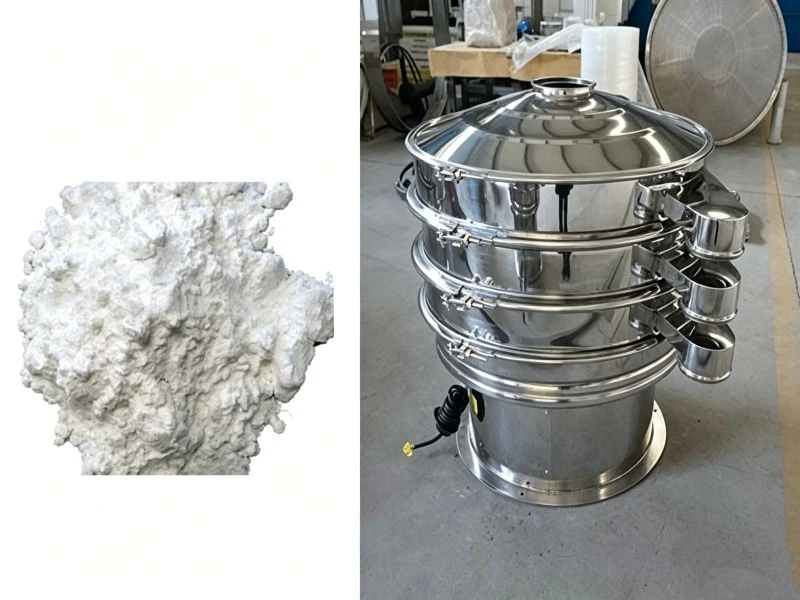
ما هو حجم الشبكة الأفضل لغربلة المسحوق الناعم؟
يعتمد اختيار غربال الشبكة الناعمة المناسب بشكل أساسي على حجم جسيمات المادة ومستوى دقة الفصل المطلوب. في تطبيقات فحص المساحيق الصناعية، يحدد حجم الشبكة مباشرة ما إذا كانت الجسيمات يمكن أن تمر بكفاءة أو تُحتجز على سطح الغربال.
يوفر الجدول أدناه مرجعًا عمليًا بين حجم الجسيمات، والشبكة الموصى بها، والتطبيقات النموذجية:
رمل الكوارتز
10–140 شبكة. تُستخدم الشبكة المنخفضة للغربلة الخشنة لإزالة الشوائب، بينما تُستخدم الشبكة العالية للتصنيف الدقيق؛ النطاق واسع نسبيًا.
النشا
80–120 شبكة. النطاق شائع الاستخدام للنشا الغذائي والصناعي، ويوازن بين النعومة وكفاءة الغربلة.
كاثود بطارية الليثيوم أيون
200–400 شبكة. متطلبات عالية لتوزيع حجم الجسيمات؛ تؤثر دقة الغربال مباشرة على أداء البطارية.
مسحوق النحاس
500 شبكة وما فوق. تتطلب تطبيقات مثل الملاط الموصّل نعومة عالية؛ بعض التطبيقات تستخدم بالفعل 600 أو 800 شبكة.
| الشبكة | الفتحة | الشبكة | الفتحة | الشبكة | الفتحة |
| 5 | 4 مم | 50 | 3 مم | 170 | 09 مم |
| 8 | 36 مم | 60 | 25 مم | 200 | 075 مم |
| 10 | 2 مم | 70 | 2 مم | 230 | 063 مم |
| 16 | 18 مم | 80 | 18 مم | 270 | 053 مم |
| 20 | 85 مم | 100 | 15 مم | 325 | 045 مم |
| 30 | 6 مم | 120 | 125 مم | 400 | 038 مم |
| 40 | 425 مم | 140 | 1 مم | 500 | 0.028 mm |
Types of Industrial Vibratory Sifters Used for Fine Powder
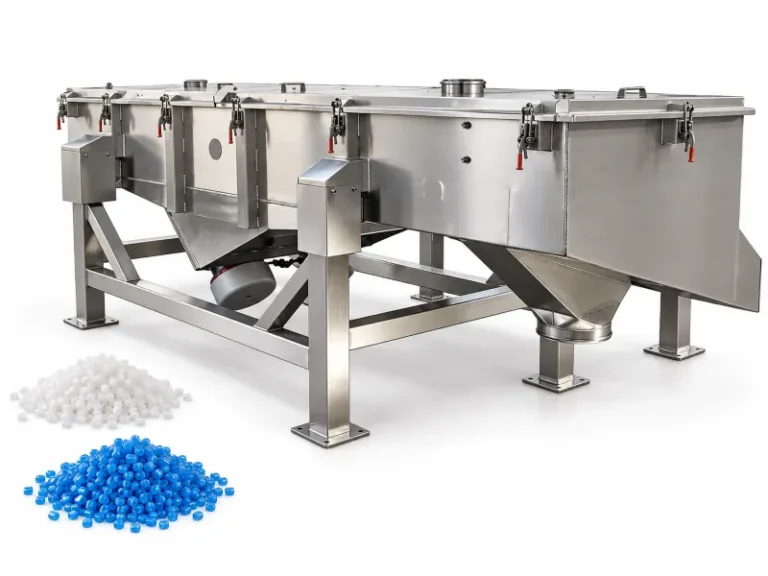
Industrial Vibratory Sieve
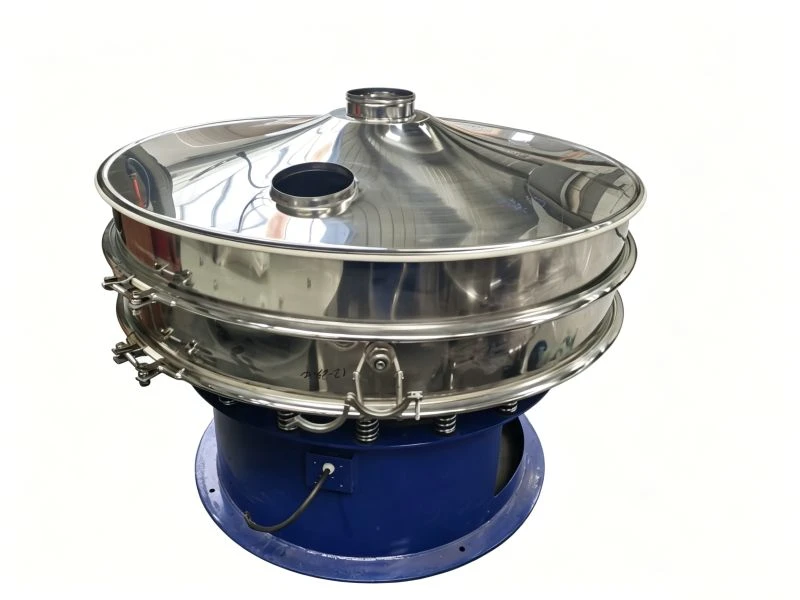
The industrial vibro sifter is the most widely used equipment in fine powder processing.This type of industrial vibratory sifter is well-suited for medium to fine powders with relatively good flowability. It is commonly used in food, chemical, and pharmaceutical industries where consistent throughput is required.
Stable and continuous operation for high-volume production
Suitable for general fine powder applications
Works well with standard mesh size ranges
Simple structure with easy maintenance
However, when dealing with very fine or sticky powders, traditional vibratory systems may experience mesh blinding or reduced efficiency without additional anti-blocking features.
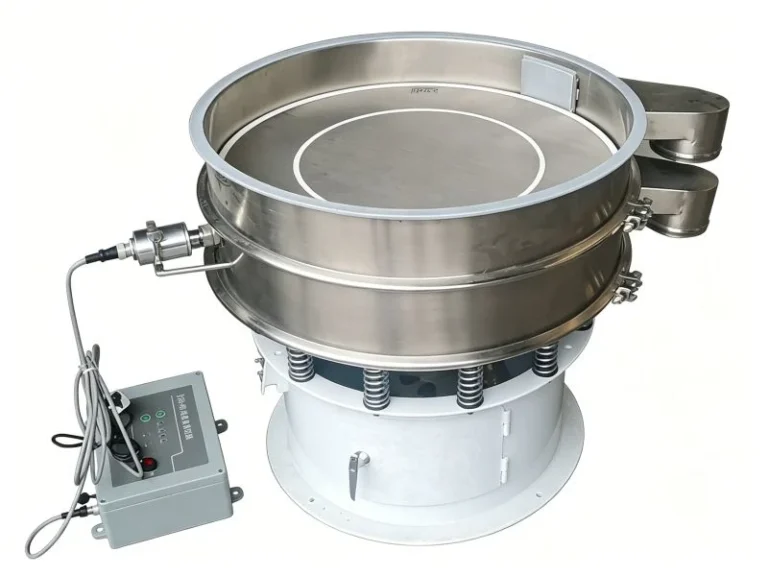
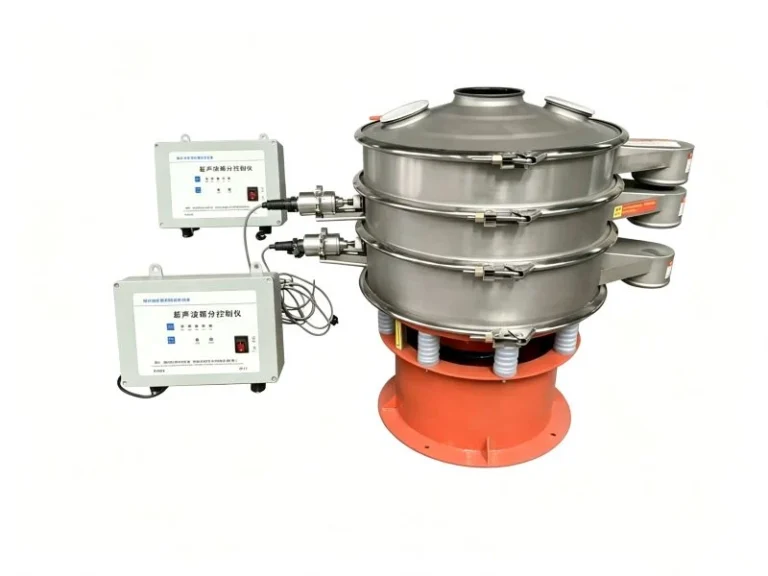
غربال اهتزازي بالموجات فوق الصوتية
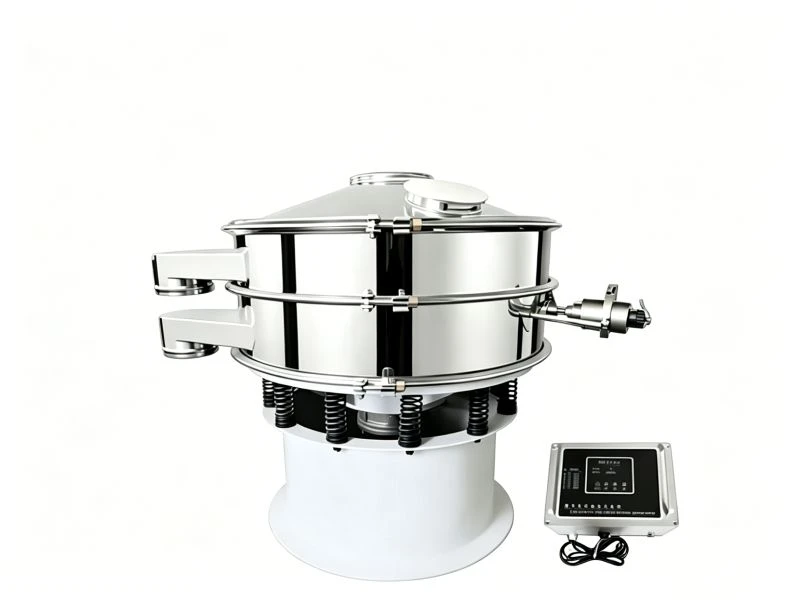
هذا شاشة اهتزازية بالموجات فوق الصوتية superimposes 30kHz high-frequency ultrasound onto traditional three-dimensional vibration, causing the screen mesh to vibrate continuously with a small amplitude. This breaks the surface tension of the powder, fundamentally solving the problem of screen clogging. It exhibits extremely high screening efficiency, especially for ultrafine powders of 200 mesh and above.
Eliminates mesh clogging and blinding
Significantly improves screening accuracy for ultrafine powders
Ideal for sticky, electrostatic, or lightweight powders
Enhances throughput without increasing mesh size
It is commonly used in high-precision industries such as pharmaceuticals, battery materials, and fine chemicals where consistent particle distribution is critical.
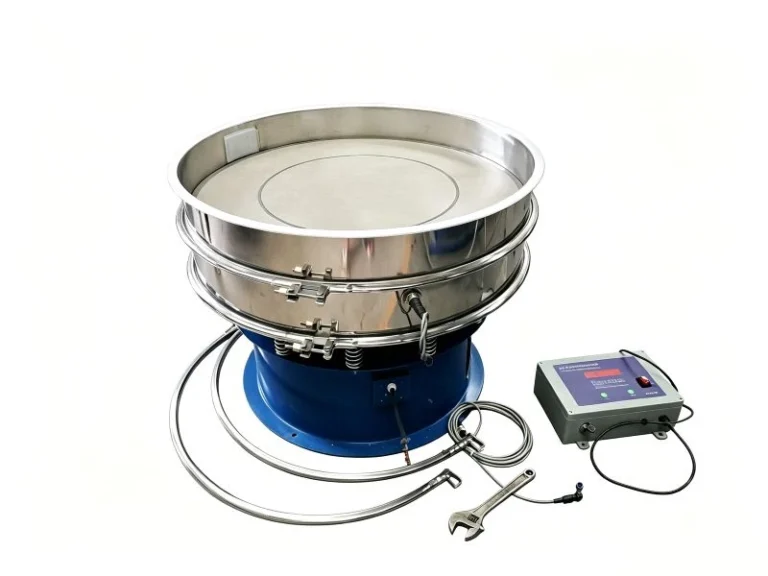
Tumbler Screen Machine
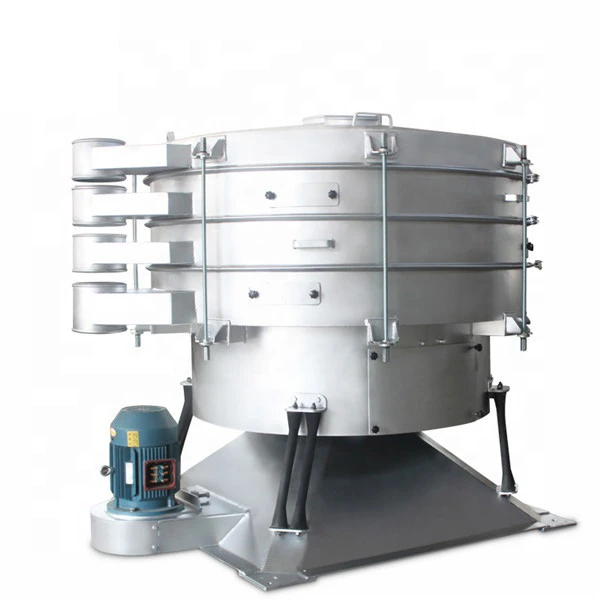
The tumbler sifter simulates manual sieving motion through a low-frequency, three-dimensional tumbling movement. This gentle screening action allows particles to spread evenly across the screen surface, increasing contact time and improving separation efficiency.
It is especially suitable for fragile or irregularly shaped particles that could be damaged by high vibration intensity.
Gentle screening action protects fragile particles
High precision separation for complex particle shapes
Excellent for large-capacity fine classification
Reduces particle degradation during screening
ال شاشة دوارة is often chosen for applications requiring high accuracy and low product breakage, such as specialty chemicals and high-value powders.For ultra-fine powders with higher mesh sizes, an ultrasonic system can also be installed to improve screening efficiency.
When to configure an ultrasonic screening system
1. Fineness
For particles ≤100μm, ordinary industrial vibratory sifters are insufficient for fine sieving; adding ultrasonic filters is recommended. For particles ≤50μm, adding ultrasonic filters is strongly recommended; without them, continuous production is extremely difficult. Ultrasonic systems can process particles down to 35μm.
2. Moisture
For ultrafine powders with a moisture content >3%, a water film easily forms on the sieve, causing particles to clump together. The self-cleaning effect of ultrasonic waves can break up this water film, with immediate results.
3. Viscosity
Some materials have extremely high static electricity (such as certain resin powders), or a very high apparent specific gravity, or a fibrous or flaky structure. Without ultrasonic filters, the sieve will clog quickly.
Related Videos of Industrial Vibratory Sifters
Maintenance Tips for Industrial Vibratory Sifters
Proper maintenance is essential to keep industrial vibratory sifters for powder processing running efficiently and to ensure stable powder screening performance over time. Regular checks help prevent downtime, reduce wear, and maintain consistent separation quality.
Daily inspection
Check vibration status, fastening parts, and screen condition before operation.
Mesh replacement
Replace damaged or worn mesh promptly to avoid product contamination or reduced accuracy.
Cleaning procedures
Clean the sieve after each batch, especially when handling sticky or fine materials, to prevent clogging.
Lubrication
Regularly lubricate moving components to ensure smooth operation and reduce mechanical wear.
Preventive maintenance
Schedule routine inspections of motors, seals, and structural parts to detect issues early and extend equipment lifespan.
الخاتمة
For applications involving fine or challenging materials, choosing the right setup of Related Videos of industrial vibratory sifters for powder processing is critical to achieving consistent results and long-term production reliability. A well-matched system ensures stable operation, reduces clogging risk, and improves overall screening efficiency.
If you need a tailored solution for your specific material, our professional guidance on equipment selection and mesh configuration can help you achieve better screening performance and lower operational costs.