Individuelles rotierendes Vibrationssieb: Größen, Materialien, Decks und Siebkonfigurationen
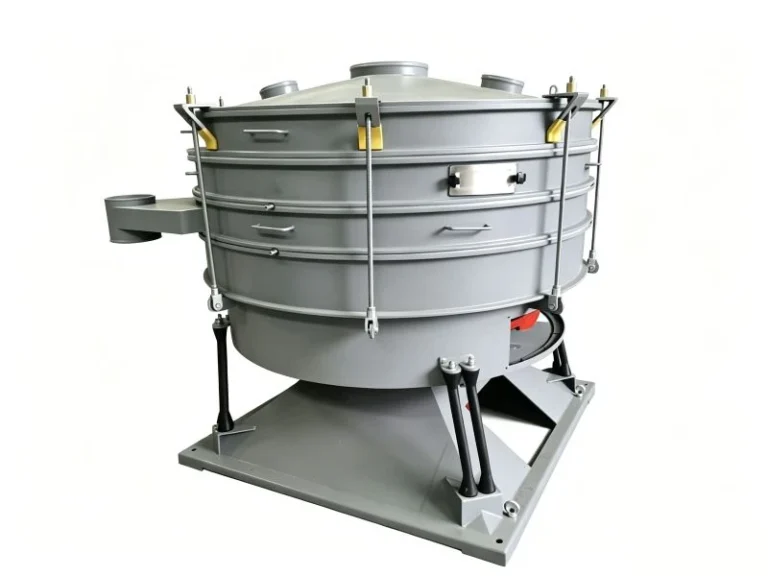
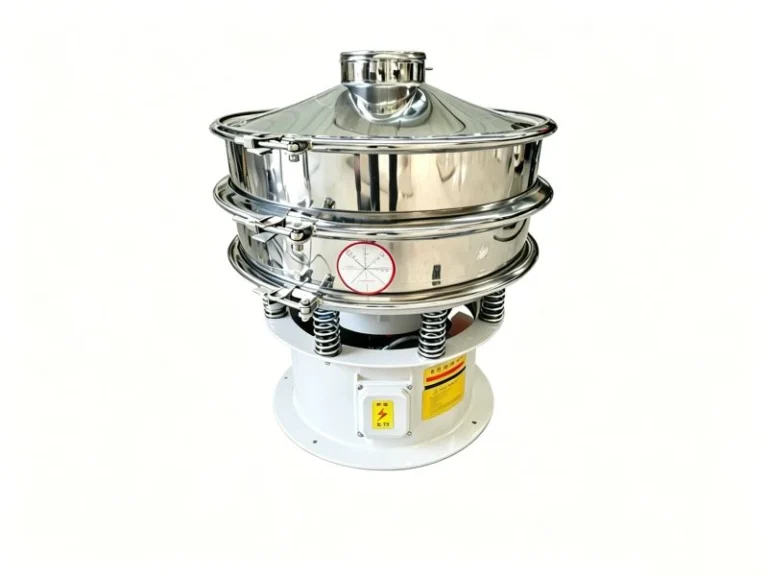
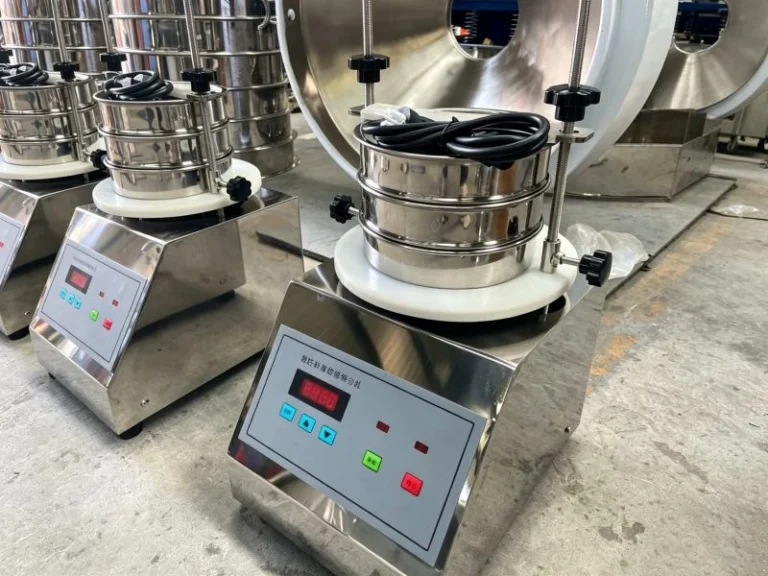
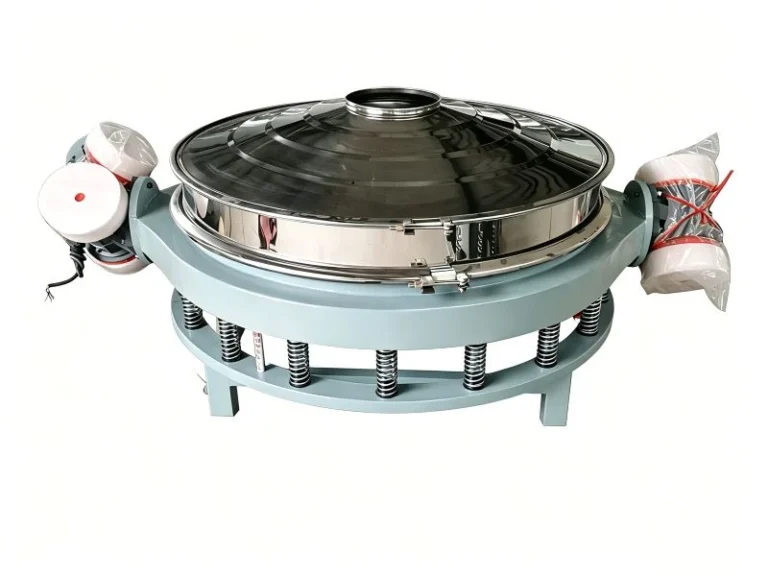
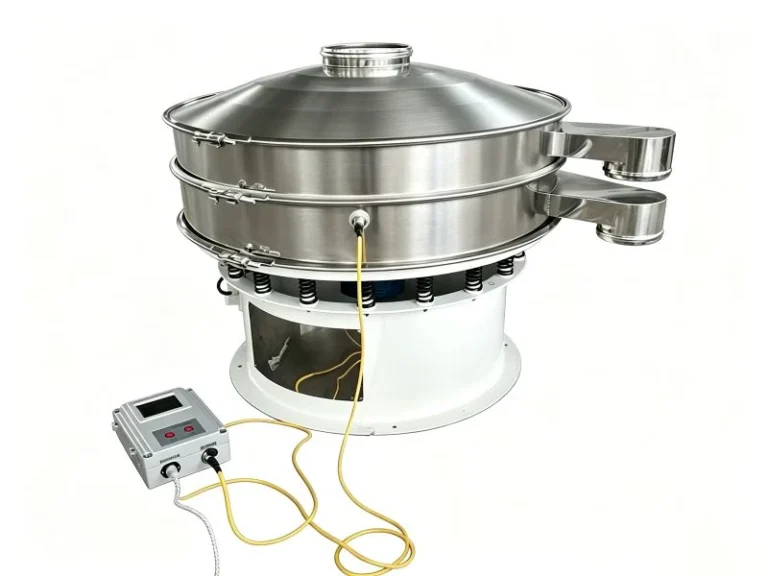
Ein kundenspezifisches rotierendes Vibrationssieb kann um das Material, die erforderliche Kapazität, die Partikelgröße und das Layout der Produktionslinie herum gebaut werden. Gängige Optionen umfassen Siebdurchmesser, Maschinenmaterial, Anzahl der Siebböden, Maschenweite, Reinigungssystem sowie Einlass- und Auslassdesign.
Eine Lebensmittelpulverlinie kann eine SS304-Konstruktion und eine hygienische Oberfläche erfordern. Pharmazeutische Anwendungen können SS316L und eine versiegelte Struktur erfordern. Feine Pulver können eine Ultraschall-Maschenreinigung benötigen, während eine Produktion mit hoher Kapazität eine größere Siebfläche oder mehrere Siebböden erfordern kann.
Was kann an einem rotierenden Vibrationssieb individuell angepasst werden?
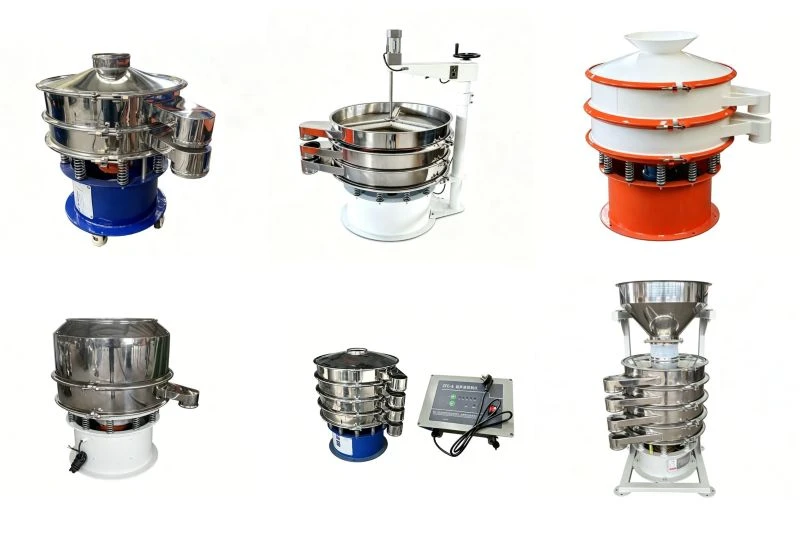
Ein kundenspezifisches Rundschwingsieb kann auf verschiedene Weise konfiguriert werden, um das Material und den Produktionsprozess zu passen.
Die Hauptoptionen umfassen Siebdurchmesser, Maschinenkonstruktionsmaterial, Anzahl der Siebböden, Siebgewebe und Öffnungsgröße, Maschenreinigungssystem, Zufuhreinlass und Austragsauslass, Abdichtung und Staubkontrolle sowie Motor- und Elektrokonfiguration.
Der Siebdurchmesser steht hauptsächlich in Bezug zur Siebfläche und zum erforderlichen Durchsatz. Die Materialauswahl basiert auf dem zu siebenden Produkt und der Arbeitsumgebung. Die Anzahl der Siebböden hängt davon ab, wie viele Größenfraktionen getrennt werden müssen.
Die Maschenreinigung ist ebenfalls wichtig. Springbälle sind für viele Standardanwendungen geeignet, während Ultraschall oder Bürstenreinigung für feine oder klebrige Pulver erforderlich sein kann.
Wenn die Maschine mit vorhandener Ausrüstung verbunden werden muss, können der Einlass und der Auslass des kundenspezifischen rotierenden Vibrationssiebs so gefertigt werden, dass sie zur Produktionslinie passen.
Zugehörige Videos
Wie wählt man die richtige Siebgröße und Kapazität?
Die Größe eines kundenspezifischen rotierenden Vibrationssiebs sollte entsprechend der erforderlichen Kapazität, den Materialeigenschaften, der Maschenweite und dem verfügbaren Installationsraum ausgewählt werden.
Ein größeres Sieb bietet mehr Siebfläche und kann einen höheren Durchsatz bewältigen. Der Siebdurchmesser allein bestimmt jedoch nicht die Kapazität. Materialeigenschaften, Maschenweite, Feuchtigkeit und Zufuhrbedingungen beeinflussen alle den tatsächlichen Durchsatz.
Siebdurchmesser und Siebfläche
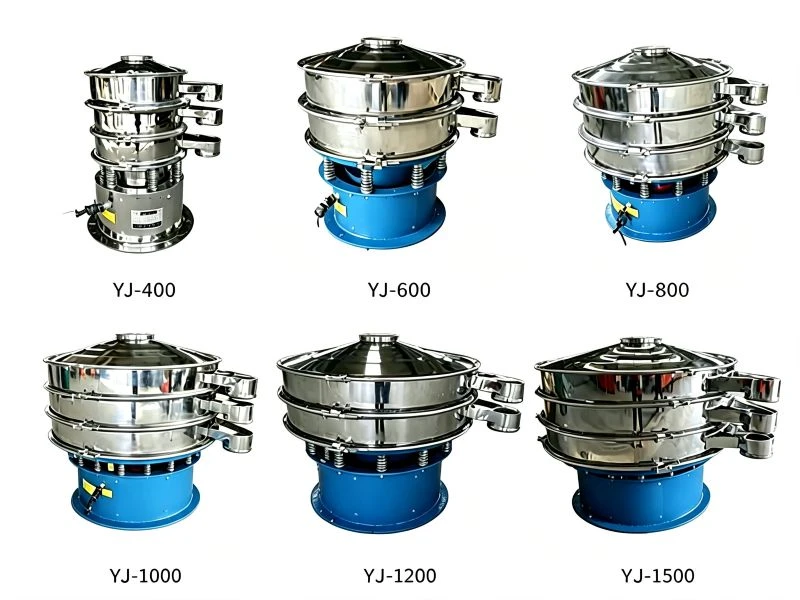
Gängige Durchmesser von rotierenden Vibrationssieben umfassen 600, 800, 1000, 1200 und 1500 mm. Größere Größen sind für Anwendungen mit höheren Kapazitätsanforderungen erhältlich.
Eine größere Siebfläche gibt dem Material mehr Raum, sich über das Siebgewebe zu bewegen. Dies ist nützlich für feines Pulver, bei dem Partikel genügend Zeit benötigen, um durch kleine Öffnungen zu gelangen.
Der Installationsraum muss ebenfalls überprüft werden, bevor der Durchmesser gewählt wird. Die Fabrik sollte genügend Platz um die Maschine herum haben für Zufuhr, Austrag, Reinigung, Siebwechsel und routinemäßige Wartung.
Für ein kundenspezifisches rotierendes Vibrationssieb sollte der Durchmesser zusammen mit der erforderlichen Kapazität ausgewählt werden und nicht als separate Spezifikation.
Kapazitätsanforderungen
Die tatsächliche Siebkapazität wird durch Materialtyp, Partikelgröße, Feuchtigkeitsgehalt, Maschenweite, Zufuhrrate, erforderliche Siebgenauigkeit und Anzahl der Siebböden beeinflusst.
Zum Beispiel hat feines Pulver normalerweise eine niedrigere Kapazität als grobe Granulate auf demselben Sieb. Feine Partikel bleiben eher auf dem Siebgewebe oder blockieren die Öffnungen, insbesondere wenn ein feines Sieb verwendet wird.
Wenn Sie ein kundenspezifisches rotierendes Vibrationssieb anfragen, geben Sie die erforderliche Kapazität in kg/h oder Tonnen/h an. Dies gibt dem Hersteller einen nützlichen Ausgangspunkt für die Auswahl des Siebdurchmessers und der Konfiguration.
Wann benötigen Sie ein größeres Sieb?
Ein größeres industrielles Vibrosieb wird normalerweise verwendet, wenn der erforderliche Durchsatz hoch ist oder wenn das Material mehr Siebfläche benötigt.
Feines Pulver ist ein häufiger Fall. Eine größere Siebfläche kann helfen, die Produktionskapazität bei Verwendung eines feinen Siebgewebes aufrechtzuerhalten.
Wenn die Bodenfläche begrenzt ist, kann ein Mehrboden-Design eine praktische Alternative sein. Mehrere Siebstufen können in einer Maschine installiert werden, ohne einfach den Maschinendurchmesser zu vergrößern.
Die Maschine sollte auch innerhalb ihres geeigneten Kapazitätsbereichs betrieben werden. Kontinuierliche Überlastung kann die Siebleistung verringern und den Verschleiß des Siebgewebes und der Maschinenkomponenten erhöhen.
Welches Material und welche Siebbodenkonfiguration sollten Sie wählen?
Das Material eines kundenspezifischen rotierenden Vibrationssiebs sollte zum Produkt und den Arbeitsbedingungen passen.
Kohlenstoffstahl wird üblicherweise für allgemeines industrielles Sieben verwendet, einschließlich Mineralien, Sand und Schleifmaterialien. SS304 wird weit verbreitet für Lebensmittelpulver und Anwendungen mit allgemeinen Hygieneanforderungen verwendet. SS316L ist besser geeignet für pharmazeutische Pulver, hochreine Produkte und einige korrosive Materialien. PP kann auch für bestimmte chemische Anwendungen in Betracht gezogen werden.
Die Anzahl der Siebböden basiert auf der erforderlichen Trennung. Ein Einzelboden-Sieb ist geeignet, wenn nur eine Größe entfernt oder getrennt werden muss. Ein Mehrboden-rotierendes Vibrationssieb kann mehrere Größenfraktionen in einer Maschine produzieren.
| Siebanforderung | Empfohlene Konfiguration | Typische Anwendungen |
| Allgemeines industrielles Sieben | Kohlenstoffstahl | Mineralien, Sand, Schleifmaterialien |
| Lebensmittelpulver-Sieben | SS304 | Mehl, Stärke, Zucker, Gewürze |
| Pharmazeutisches Pulver-Sieben | SS316L | Pharmazeutische Pulver, Feinchemikalien |
| Korrosive Materialien | SS316L oder PP | Chemische Pulver, korrosive Materialien |
| Eine GrößenTrennung | Single deck | Removing oversize or fine particles |
| Two or more size fractions | Multi-deck screen | Powder and granule classification |
| Feinputver-Siebung | Fine mesh + ultrasonic cleaning | Fine chemicals, coating powder, battery materials |
| Sticky or easy-to-clog materials | Brush or ultrasonic cleaning | Sticky powder, fine powder |
| High-capacity screening | Larger screen diameter | Continuous production, high-output lines |
| Limited installation space | Compact or multi-deck design | Small production lines, space-limited plants |
Unsere 20-unit rotary vibrating screen project illustrates how 316L stainless steel contact parts and screen configurations were specified for a customer’s abrasive screening requirements.
For a practical two-deck example, see our magnesium granule screening case, using 2mm and 0.5mm screen openings to obtain the required ≤0.5mm fraction.
Which Cleaning System Is Right for Your Material?
The cleaning system of a custom rotary vibrating screen should be selected according to the material and mesh size. Its main purpose is to reduce mesh blockage and keep the screening process stable.
Bouncing Ball Cleaning
Bouncing balls are installed underneath the screen mesh. During operation, they move with the vibration of the machine and knock particles away from the mesh.
This is a simple option for common powders, granules, food ingredients, and other dry materials. It works well when mesh blockage is not a major problem.
Ultraschallreinigung
An ultrasonic system adds high-frequency vibration to the screen mesh. It helps fine particles pass through the openings and reduces mesh blockage.
It is often used for fine chemical powders, pharmaceutical powders, coating powders, and other materials that are difficult to screen through fine mesh.
When a fine mesh is required and bouncing balls are not enough to keep the openings clear, an ultrasonic system can be added to the custom rotary vibrating sifter.
Brush Cleaning
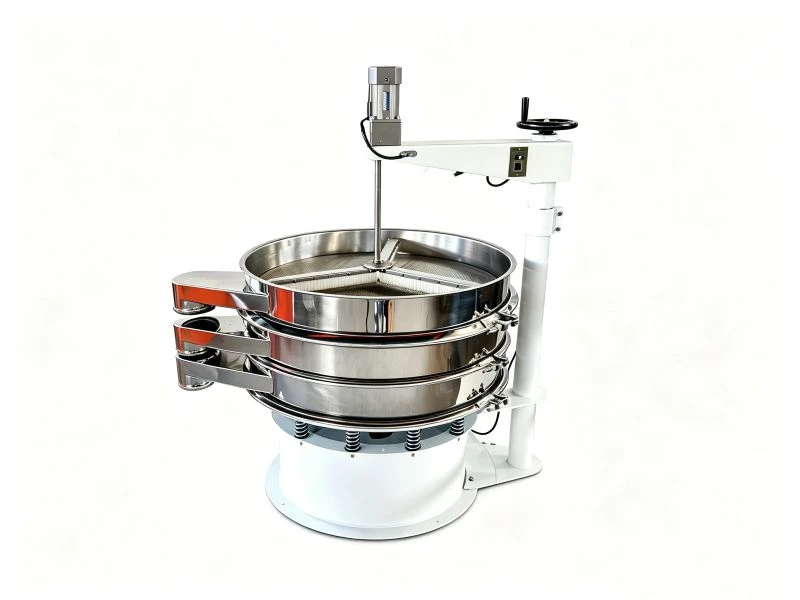
A brush cleaning system uses brushes to remove material from the screen surface. It is useful for sticky powders and lightweight materials that tend to remain on the mesh.
For sticky powder screening, brush cleaning can help reduce material build-up and keep the screening rate more stable.
What Custom Designs Are Available for Different Applications?
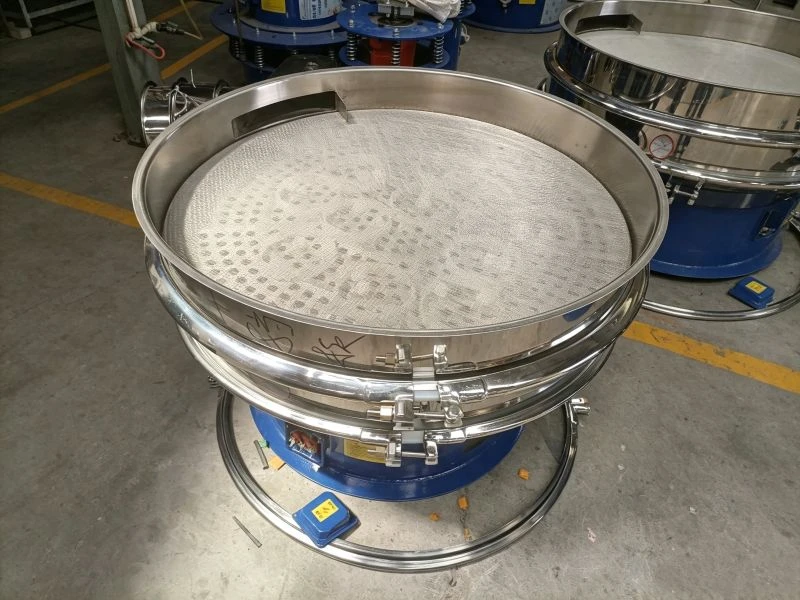
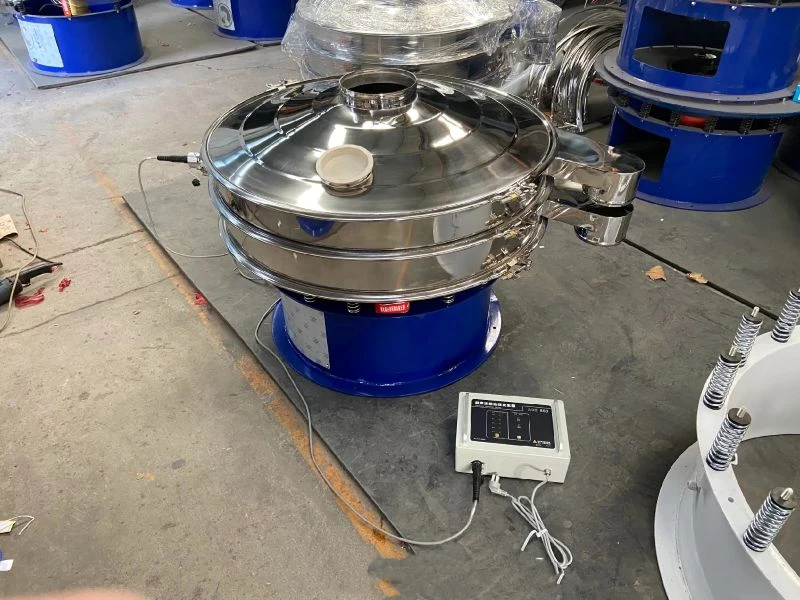
Some applications need changes beyond screen diameter and mesh size. A custom rotary vibrating screen can also be built around hygiene requirements, dust control, material properties, and the layout of the production line.
Food and Pharmaceutical Applications
Food and pharmaceutical powder screening commonly uses SS304 or SS316L construction.
Material-contact parts can be made from stainless steel with a suitable surface finish for easier cleaning. Pharmaceutical and high-purity applications may require SS316L, a sealed structure, and a suitable surface finish to reduce contamination and simplify cleaning.
Dust-Tight and Sealed Design
Fine powders can produce dust during feeding and screening. A sealed rotary vibrating screen helps keep the material inside the screening chamber and reduces powder leakage.
This type of design is commonly used for fine chemical powders, food powders, pharmaceutical powders, coating powders, and other dusty materials.
A dust collection system can also be connected when required by the production process.
Customized Inlet and Outlet
The inlet and outlet of a custom rotary vibrating screen can be positioned and sized to suit the existing production line.
The feed inlet may need to connect with a hopper, feeder, or conveyor. The discharge outlet may need to line up with a conveyor, storage bin, or downstream processing equipment.
This type of customization is useful when replacing an existing screen without making major changes to the surrounding equipment.
Corrosion-Resistant Construction
SS316L or PP can be considered when the material is corrosive.
The final material selection should take into account the chemical properties of the product, operating temperature, cleaning method, and expected service conditions.
For food, pharmaceutical, and chemical applications, surface finish is also important. The surface should be easy to clean and suitable for the working environment.

What Information Is Needed for a Custom Rotary Vibrating Screen?
Before selecting a custom rotary vibrating screen, the following information should be provided.
Material
State the material name and describe any important properties, such as moisture, stickiness, abrasiveness, or corrosiveness.
Particle Size
Provide the feed particle size and the required separation size. If the required mesh size or micron size is already known, include it.
Kapazität
Provide the required processing capacity, such as 500 kg/h, 2 tons/h, or 10 tons/h.
Number of Size Fractions
State how many particle sizes need to be separated. One separation may only require a single deck, while several fractions may require a multi-deck screen.
Construction Material
Specify whether the machine should be made from carbon steel, SS304, SS316L, PP, or another material.
Cleaning System
Bouncing balls are suitable for many standard materials. Fine or sticky powders may require ultrasonic or brush cleaning.
Production Line Layout
If the custom rotary vibrating screen will be installed in an existing line, provide the inlet and outlet dimensions, connection positions, and available installation space.
Special Requirements
Also provide any special requirements, such as dust-tight or fully enclosed design, explosion-proof motor, sanitary construction, corrosion-resistant construction, special surface finish, customized voltage, and special inlet or outlet position.
A standard vibro sifter machine is suitable for many routine screening jobs. A custom rotary vibrating screen is more useful when the material is difficult to screen, the required capacity is high, the mesh is very fine, or the machine needs to connect directly with an existing production line.
For equipment selection, the most useful information is the material, particle size, required capacity, mesh size, number of fractions, and installation requirements. These details give the manufacturer a clear starting point for selecting the screen size and configuration.
Fazit
When selecting a screening system, simply grasp the three core principles: “Material Characteristics – Type Matching,” “Production Requirements – Model Selection,” and “Operating Environment – Material Determination.” This will allow you to quickly find the most suitable screening equipment and achieve efficient and stable production.
If you are unsure which configuration you need, send us your material, particle size, required capacity, mesh size, number of screening fractions, and installation requirements. Our team can recommend a suitable screen size and configuration based on your application.
Contact us to discuss your screening requirements and obtain a custom rotary vibrating screen solution.