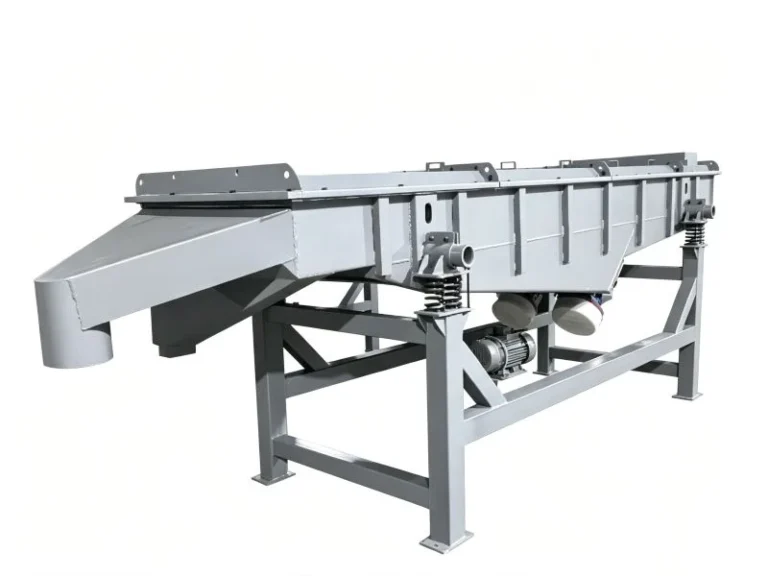
How to Choose a Vibrating Screen Manufacturer for Your Production Line
Si el presupuesto de una criba vibratoria indica una capacidad de 000 kg/h, esa es la cifra que yo marcaría primero. ¿Es el peso que se puede introducir en la máquina en una hora o el peso del producto del tamaño correcto que se puede enviar al envasado? Si su línea de envasado necesita una tonelada por hora, pregunte al fabricante de la criba vibratoria a qué corresponde la cifra indicada, con qué abertura de malla y bajo qué condiciones de alimentación.
Mientras tiene el presupuesto abierto, consulte el plano de disposición. Siga el recorrido del material desde la tolva de alimentación hasta la criba y, después, desde cada salida hasta su contenedor. Si no puede identificar qué salida alimenta la línea de envasado, aclárelo antes de aprobar el plano.
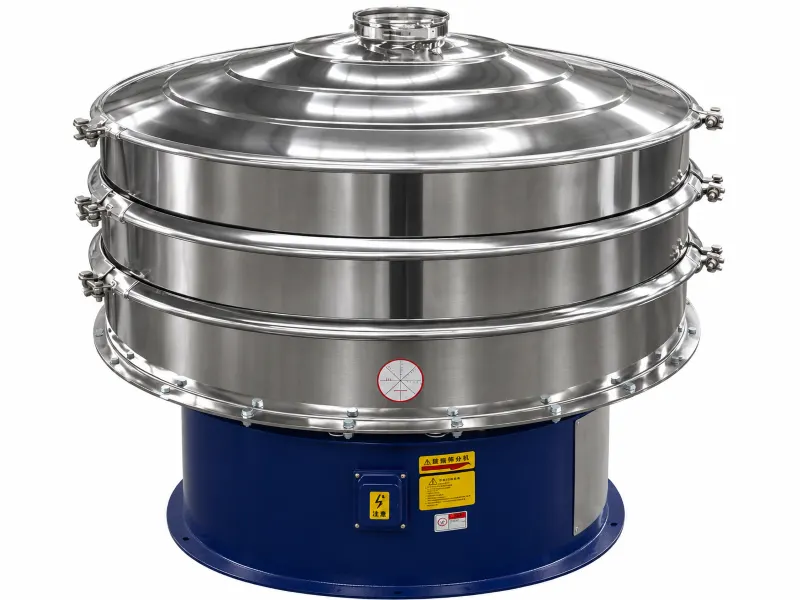
¿Cómo puede comprobar las capacidades de un fabricante de cribas vibratorias?
Averigüe quién se encarga de modificar los planos
Supongamos que su equipo de mantenimiento vuelve a medir la tolva de alimentación y descubre que está 100 mm más baja de lo que indica el plano. Pida al fabricante de la criba vibratoria que le explique cómo gestionaría ese cambio. ¿Qué plano revisado le enviarán para su aprobación? ¿Quién comprueba que la altura final de la entrada coincide con la versión que usted firmó?
Descripción general de la fabricación y los servicios de Yuanjing describe el trabajo de la empresa en diseño, fabricación e instalación. Cuando hable de la disposición de su propia línea, pida el nombre de la persona que se encargará de revisar los planos. Así, su equipo de mantenimiento tendrá un contacto si cambia otra dimensión antes de la fabricación.
Qué buscar en una referencia de un proyecto de cribado
Una fotografía de un proyecto puede mostrar por dónde entra el material y cómo están dispuestas las salidas. Para determinar si la máquina es adecuada para su línea, fíjese en qué material se procesó y qué quería recoger el cliente.
En el proyecto de proyecto de cribado de cuatro pisos para partículas de coco seco, el cliente solicitó 1,200 kg/h para material con una densidad aparente de 400 kg/m³. Los cuatro pisos se especificaron con mallas de 6, 12, 14 y 18 mesh. Esas cifras describen los requisitos del cliente. Si su material es más denso o solo necesita dos tamaños de producto terminado, pregunte qué partes de esa configuración cambiaría el proveedor para su línea y por qué.
¿Se ajustará la criba propuesta a su línea de producción?
Empiece por el producto que desea conservar
En una línea de polvo con una criba justo antes del envasado, la mayor parte del material alimentado debe pasar a través de la malla. El operario necesita un lugar para recoger los grumos ocasionales y espacio suficiente para inspeccionarlos. Indique al proveedor aproximadamente cuánto material sobredimensionado observa en un turno y si el equipo anterior alimenta la criba de forma continua o descarga un lote en la tolva.
La elección se vuelve más compleja cuando la fracción de tamaño intermedio es el producto que vende. Indique al fabricante de la criba vibratoria ambos límites de tamaño, la producción por hora que necesita obtener entre ellos y los porcentajes de finos y material sobredimensionado que aceptará su comprador. Si la máquina propuesta es un separador de criba vibratoria rotativa, pida al proveedor que indique en el plano la fracción que transporta cada salida. El instalador debe poder identificar la salida del producto terminado sin tener que adivinar.
Deje espacio para la persona que cambia la malla
Una criba puede encajar perfectamente debajo de una tolva y no dejar al operario ningún lugar donde colocar la tapa. Entregue el plano a la persona que cambia la malla. Pídale que marque dónde se situará, hasta qué altura necesita levantar el piso superior y dónde lo apoyará. Compruebe esos espacios con los contenedores de descarga y los transportadores en sus posiciones de trabajo.
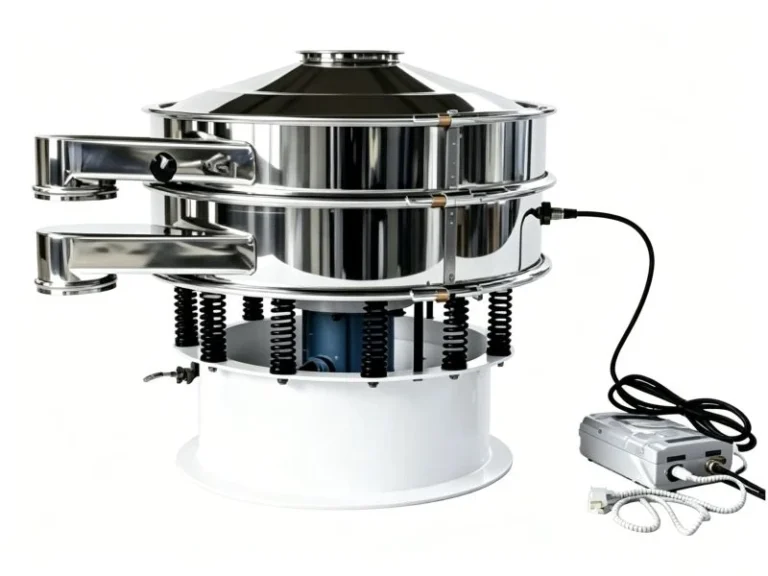
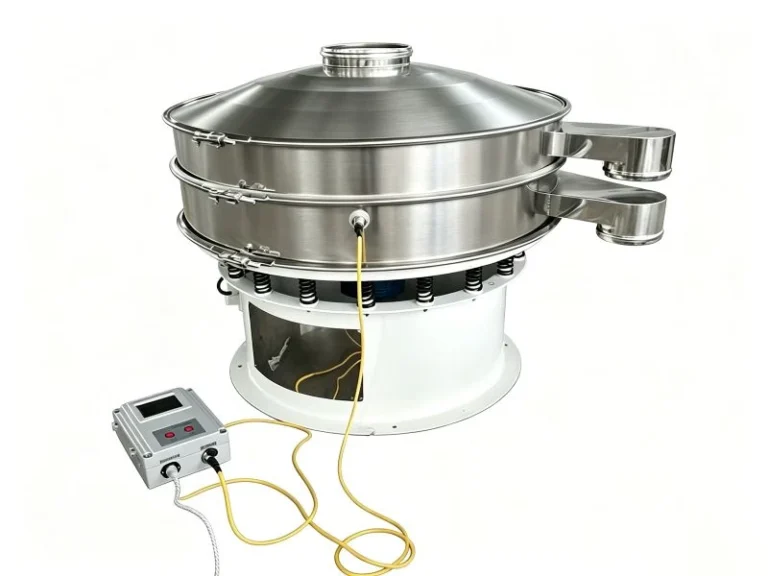
Para una máquina circular, la guía de Yuanjing sobre tamaños de cribas rotativas y opciones de configuración abarca el diámetro, el número de pisos y la construcción. Incluya la altura de entrada que haya medido y el espacio disponible para cambiar la malla cuando solicite el plano definitivo.
¿Qué Significa Realmente la Capacidad de Cribado Indicada en la Cotización?
Distinga la tasa de alimentación de la producción comercializable
Pida al fabricante de la criba vibratoria que indique dónde mide la capacidad. Una pregunta suele aclararlo: Con la abertura de malla que hemos especificado, ¿los kg/h cotizados se refieren al material que entra en la máquina o al producto terminado que cumple nuestros límites de tamaño?
Supongamos que una criba recibe 000 kg en una hora, and 850 kg llegan a la salida prevista para el producto durante esa hora. La tasa de alimentación fue de 000 kg/h. La tasa de recogida en esa salida fue de 850 kg/h. Aún necesita comprobar el tamaño de las partículas de una muestra representativa de la salida para saber qué proporción del material recogido cumple las especificaciones de su comprador.
Acuerde el registro de la prueba antes de enviar una muestra
Si un fabricante de cribas vibratorias se ofrece a probar su material, acuerde qué datos registrará la fábrica antes de enviar la muestra. Un vídeo puede mostrar cómo se acumula polvo en un lado de la malla. Para evaluar el efecto en la producción, necesita los pesos y los tiempos de esa misma prueba.
| Detalles de la prueba | What to record |
|---|---|
| Estado de la muestra | Material, contenido de humedad y si la muestra representa un lote de producción normal |
| Configuración de la criba | Abertura en mm o µm de cada piso, número de pisos y sistema de limpieza de la malla |
| Feed | Peso alimentado, tiempo transcurrido y si la alimentación fue continua o intermitente |
| Producción | Peso recogido en cada salida y comprobación del tamaño de las partículas de una muestra representativa de la salida prevista para el producto |
| Changes during the run | When buildup or blinding appeared, whether the collection rate fell, and any stops for cleaning |
I’d look closely at when the outlet sample was taken. If your operators usually stop halfway through a shift to clear the mesh, a sample taken just after startup won’t tell you much about that problem. Ask how long the trial ran and whether the factory recorded the collection rate again after material had been on the screen for a while.
What Should You Compare in Two Vibrating Screen Quotes?
Send each vibrating screen manufacturer the same written specification. When the offers come back, put the following items side by side. If one supplier leaves the spare-screen entry blank, get it filled in while you can still amend the order.
| Quotation item | What to check |
|---|---|
| Aplicación de tamizado | Material condition, screen openings, feed rate, required finished grades, and output for the grade you sell |
| Machine configuration | Screen dimensions, number of decks, outlet arrangement, and mesh-cleaning system |
| Construction | Material grades for the mesh, frame, cover, outlets, and base |
| Spare parts | Quantity, specification, and part reference for replacement screens, seals, and other wear parts included |
| Delivery | Trade term, named delivery point, packing, freight covered by the price, and lead time |
| Servicio | Installation guidance, warranty coverage, and how to order replacement parts |
Check what “stainless steel” and “one spare screen” cover
If the quote says stainless steel construction, have the supplier identify the grade for each product-contact part and the material used for the base. Put those details on the configuration sheet both parties approve.
One spare screen also deserves a closer look. Will the factory send a piece of woven mesh or a framed assembly ready to install? The difference matters to the person doing the changeover. Ask for the part reference, replacement price, and lead time while the assembly drawing is in front of you.
Bring both prices to the same delivery point
One vibrating screen manufacturer may quote EXW at its factory while another includes freight to a named destination. Write the delivery point beside each price. If purchasing needs the cost of getting the machine to your plant, list the remaining transport and handling charges against each offer before comparing the totals.
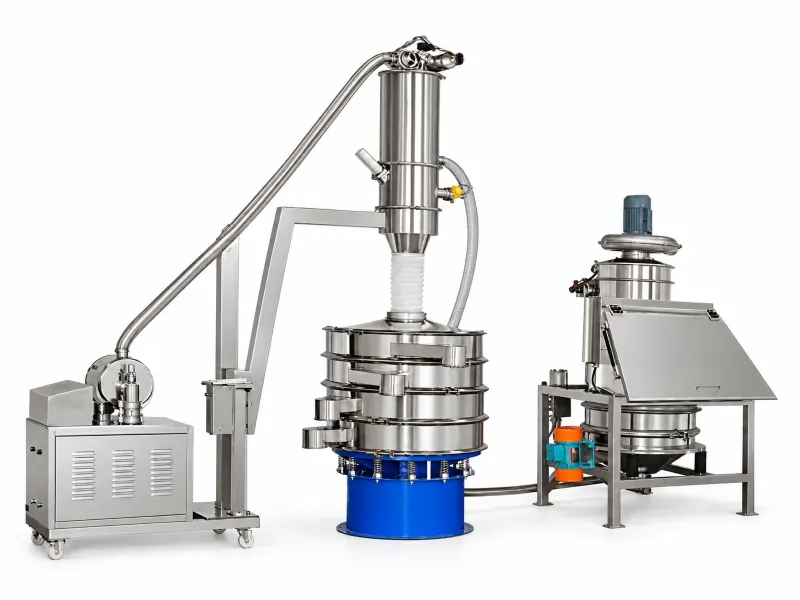
What Should You Send a Vibrating Screen Manufacturer for a Quote?
Describe the job in the operator’s words
“We stop twice per shift to clear the mesh” gives an engineer more to work with than “we need higher efficiency.” Include the material, target opening, required throughput, finished grades, and normal operating hours. For an existing screen, give the opening and feed rate you actually run. For a new line, mark the figures that are still design targets.
If the inlet and outlet positions are fixed, attach a dimensioned sketch. Mark the upstream equipment, the destination of each fraction, and any restriction on access for cleaning or screen changes.
Copy this inquiry and fill in your figures
We process [material] and need to [remove oversize / separate the feed into specified grades]. Our target feed rate is [kg/h]. The required opening for each deck is [list openings in mm or µm]. We need [kg/h, if known] of finished product within [size limits].
The screen will sit between [upstream equipment] and [downstream equipment]. The available installation height is [height]. Our main operating issue is [describe what happens and when].
Please recommend a model and explain how you determined its capacity for our material. Include a layout drawing with the outlets labeled, identify the spare parts and services covered by the price, and state the delivery terms and lead time.
To request a vibrating screen recommendation from Yuanjing, send the material details, screen openings, and hourly output your line needs. If you have a layout sketch or a recent screening record, include it with your inquiry.
Preguntas frecuentes
How can I verify that a vibrating screen manufacturer builds the quoted machine?
During a factory visit or live video call, ask to see the quoted model or a similar build. Compare the deck layout and outlet positions with your drawing. Ask which parts the factory makes in-house and who checks the final dimensions.
How much material should I send for a vibrating screen trial?
Ask the vibrating screen manufacturer for the trial feed rate, run time, and extra material needed for setup. Send a representative production sample. If your mesh usually clogs after 30 minutes, request a trial long enough to see whether output drops.
Do I need an ultrasonic vibrating sieve if my powder clogs the mesh?
First check whether fine powder coats the mesh or damp lumps arrive from the hopper. If your powder sieving machine manufacturer recommends ultrasonics, ask for trials with the system off and on. Compare the weight passing through the same mesh over equal periods at the same feed rate.
Can a one-tonne-per-hour vibrating screen deliver 1,000 kg/h of finished product?
If 000 kg/h is the feed rate and only 85% of the feed meets your size specification, the maximum on-spec output is 850 kg/h, even with full recovery. Ask the supplier to state the finished-product rate separately in the quote.
What dimensions does a supplier need to fit a vibrating screen into an existing line?
Provide the inlet and outlet heights measured from the same floor level, their horizontal positions, and the connection sizes. Mark any overhead beams or pipes so the supplier can check clearance both for installation and for lifting the deck during a mesh change.
What should I specify when ordering a replacement screen for a vibratory sifter?
Give the vibratory sifter manufacturer your model, deck position, and part number if available. Confirm the mesh opening, material, frame dimensions, and seal profile. Check whether the price covers loose mesh or a ready-to-install framed screen.