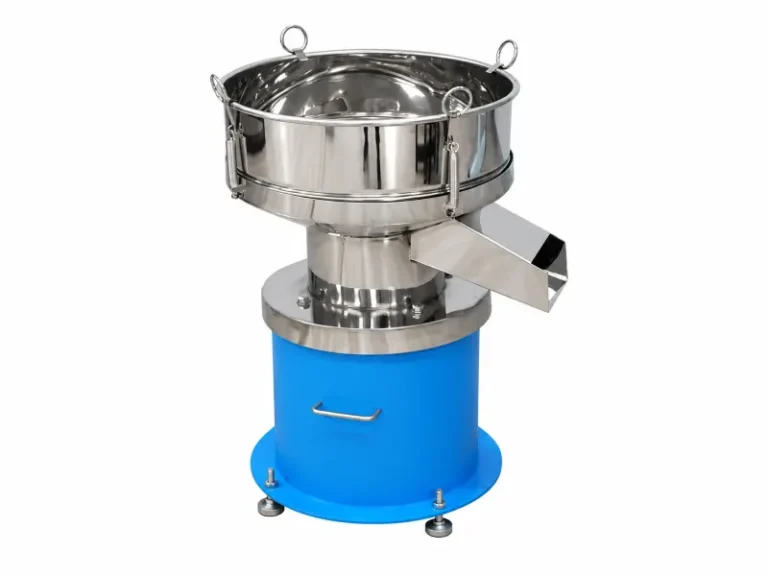
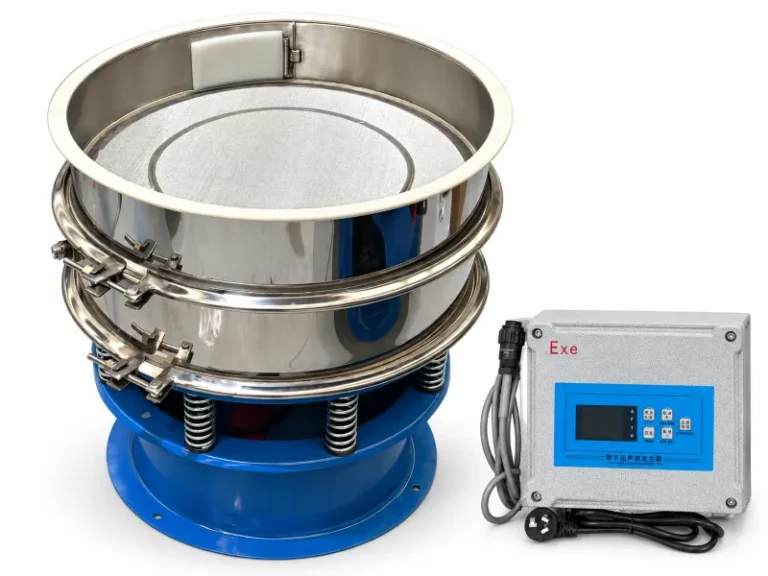
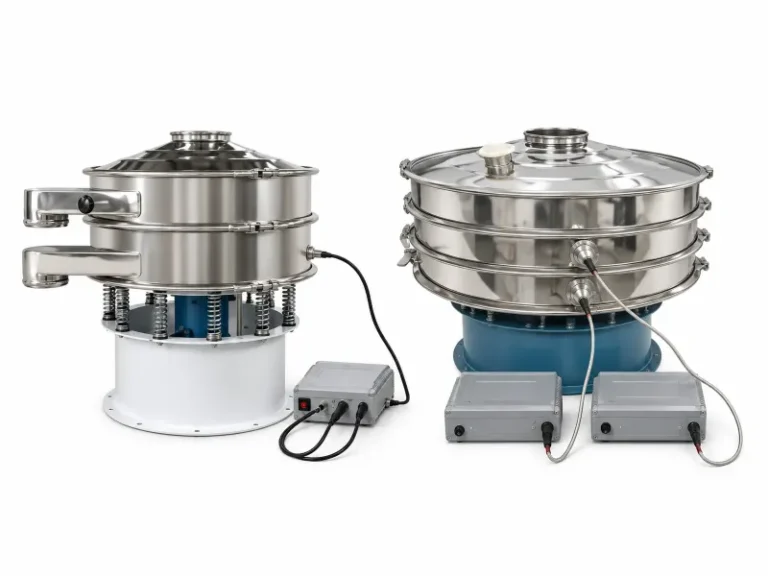
How to Choose a Vibrating Screen Manufacturer for Your Production Line
Si le devis d’un crible vibrant indique une capacité de 1,000 kg/h, c’est le chiffre que j’entourerais en premier. S’agit-il du poids que vous pouvez introduire dans la machine en une heure, ou du poids de produit correctement calibré que vous pouvez envoyer au conditionnement ? Si votre ligne de remplissage nécessite une tonne par heure, demandez au fabricant du crible vibrant quel chiffre il a indiqué, pour quelle ouverture de maille et dans quelles conditions d’alimentation.
Pendant que vous avez le devis sous les yeux, consultez le plan d’implantation. Suivez le parcours du produit depuis votre goulotte d’alimentation jusqu’au crible, puis de chaque sortie jusqu’à son bac. Si vous ne pouvez pas déterminer quelle sortie alimente la ligne de conditionnement, réglez ce point avant d’approuver le plan.
Comment vérifier les capacités d’un fabricant de cribles vibrants ?
Déterminez qui prend en charge une modification du plan
Supposons que votre équipe de maintenance mesure à nouveau la goulotte d’alimentation et constate qu’elle se trouve 100 mm plus bas que ne l’indique le plan. Demandez au fabricant du crible vibrant de vous expliquer comment cette modification sera traitée. Quel plan révisé vous sera soumis pour approbation ? Qui vérifie que la hauteur de l’entrée sur la machine terminée correspond à la version que vous avez signée ?
Présentation des activités de fabrication et de service de Yuanjing décrit les activités de l’entreprise en matière de conception, de fabrication et d’installation. Lorsque vous discutez de votre propre implantation, demandez le nom de la personne qui prendra en charge les révisions du plan. Votre équipe de maintenance disposera ainsi d’un contact si une autre dimension change avant la fabrication.
Que rechercher dans une référence de projet de criblage
Une photo de projet peut montrer où le produit entre et comment les sorties sont disposées. Pour juger si la machine convient à votre ligne, examinez le produit qui y a été traité et ce que le client souhaitait récupérer.
In Yuanjing’s projet de criblage à quatre plateaux pour des particules de noix de coco séchée, le client a demandé 1,200 kg/h pour un produit dont la masse volumique apparente est de 400 kg/m³. Les quatre plateaux étaient spécifiés avec des mailles de 6, 12, 14 et 18 mesh. Ces chiffres décrivent les exigences du client. Si votre produit est plus dense ou si vous n’avez besoin que de deux fractions de produit fini, demandez au fournisseur quels éléments de cette configuration il modifierait pour votre ligne et pourquoi.
Le crible proposé conviendra-t-il à votre ligne de production ?
Commencez par le produit que vous souhaitez conserver
Sur une ligne de traitement de poudre équipée d’un crible juste avant le remplissage, la majeure partie du produit alimenté doit passer à travers les mailles. L’opérateur a besoin d’un endroit où recueillir les quelques agglomérats présents et d’un espace suffisant pour les inspecter. Indiquez au fournisseur la quantité approximative de refus que vous observez pendant un poste et précisez si l’équipement en amont alimente le crible régulièrement ou vide un lot dans la goulotte.
Le choix devient plus complexe lorsque la fraction granulométrique intermédiaire est le produit que vous vendez. Communiquez au fabricant du crible vibrant les deux limites granulométriques, le débit horaire souhaité entre ces limites, ainsi que les pourcentages de fines et de refus que votre acheteur acceptera. Si la machine proposée est un séparateur à crible vibrant rotatif, demandez au fournisseur d’indiquer sur le plan la fraction évacuée par chaque sortie. Votre installateur doit pouvoir identifier la sortie du produit fini sans avoir à la deviner.
Prévoyez de la place pour la personne qui change la toile de criblage
Un tamis peut s’insérer parfaitement sous une goulotte sans laisser à l’opérateur d’endroit où poser le couvercle. Donnez le plan à la personne qui change la toile de tamisage. Demandez-lui d’indiquer où elle se tiendra, à quelle hauteur elle devra soulever l’étage supérieur et où elle le posera. Vérifiez ces dégagements avec les bacs de décharge et les convoyeurs en position de fonctionnement.
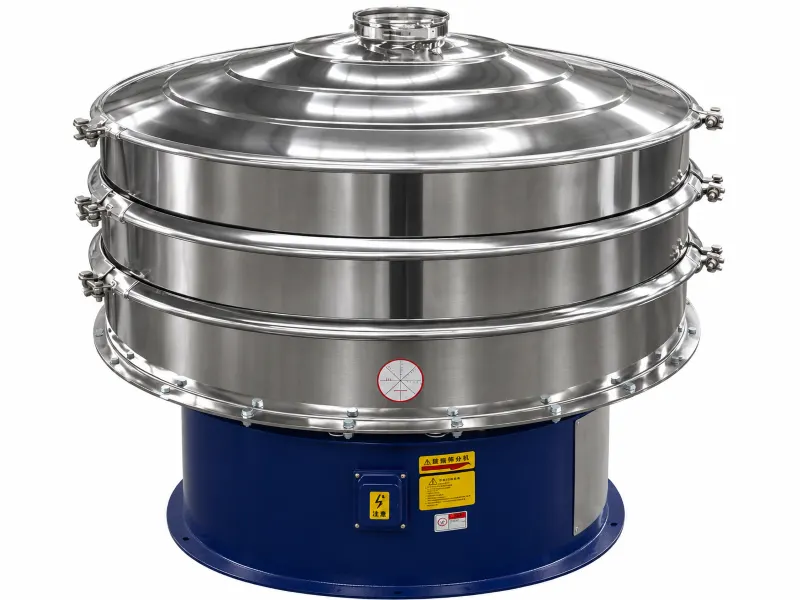
Pour une machine ronde, le guide de Yuanjing sur les dimensions et options de configuration des tamis rotatifs présente le diamètre, le nombre d’étages et la construction. Indiquez la hauteur d’alimentation que vous avez mesurée et l’espace disponible pour changer la toile lorsque vous demandez le plan définitif.
Que signifie réellement la capacité de tamisage indiquée dans le devis ?
Distinguer le débit d’alimentation du débit de produit commercialisable
Demandez au fabricant de tamis vibrants de préciser à quel point il mesure la capacité. Une question suffit généralement à clarifier ce point : Pour l’ouverture de maille que nous avons spécifiée, le débit indiqué en kg/h correspond-il à la matière entrant dans la machine ou au produit fini respectant nos limites granulométriques ?
Supposons qu’un tamis reçoive 1 000 kg en une heure, et 850 kg atteignent la sortie prévue pour le produit pendant cette heure. Le débit d’alimentation était de 1,000 kg/h. Le débit recueilli à cette sortie était de 850 kg/h. Vous devez encore effectuer une analyse granulométrique sur un échantillon représentatif prélevé à la sortie pour savoir quelle quantité de matière recueillie respecte les spécifications de votre acheteur.
Convenir du compte rendu d’essai avant d’envoyer un échantillon
Si un fabricant de tamis vibrants propose de tester votre matière, convenez des données que l’usine enregistrera avant d’expédier l’échantillon. Une vidéo peut montrer une accumulation de poudre d’un côté de la toile. Pour évaluer l’effet sur la production, vous avez besoin des poids et des durées relevés pendant ce même essai.
| Détail de l’essai | What to record |
|---|---|
| État de l’échantillon | Matière, état d’humidité et représentativité de l’échantillon par rapport à un lot de production normal |
| Configuration du tamis | Ouverture de maille en mm ou en µm pour chaque étage, nombre d’étages et dispositif de nettoyage des mailles |
| Feed | Poids introduit, temps écoulé et caractère continu ou intermittent de l’alimentation |
| Produit recueilli | Weight collected at each outlet and a particle-size check on a representative sample from the intended product outlet |
| Changes during the run | When buildup or blinding appeared, whether the collection rate fell, and any stops for cleaning |
I’d look closely at when the outlet sample was taken. If your operators usually stop halfway through a shift to clear the mesh, a sample taken just after startup won’t tell you much about that problem. Ask how long the trial ran and whether the factory recorded the collection rate again after material had been on the screen for a while.
What Should You Compare in Two Vibrating Screen Quotes?
Send each vibrating screen manufacturer the same written specification. When the offers come back, put the following items side by side. If one supplier leaves the spare-screen entry blank, get it filled in while you can still amend the order.
| Quotation item | What to check |
|---|---|
| Screening duty | Material condition, screen openings, feed rate, required finished grades, and output for the grade you sell |
| Machine configuration | Screen dimensions, number of decks, outlet arrangement, and mesh-cleaning system |
| Construction | Material grades for the mesh, frame, cover, outlets, and base |
| Spare parts | Quantity, specification, and part reference for replacement screens, seals, and other wear parts included |
| Delivery | Trade term, named delivery point, packing, freight covered by the price, and lead time |
| Service | Installation guidance, warranty coverage, and how to order replacement parts |
Check what “stainless steel” and “one spare screen” cover
If the quote says stainless steel construction, have the supplier identify the grade for each product-contact part and the material used for the base. Put those details on the configuration sheet both parties approve.
One spare screen also deserves a closer look. Will the factory send a piece of woven mesh or a framed assembly ready to install? The difference matters to the person doing the changeover. Ask for the part reference, replacement price, and lead time while the assembly drawing is in front of you.
Bring both prices to the same delivery point
One vibrating screen manufacturer may quote EXW at its factory while another includes freight to a named destination. Write the delivery point beside each price. If purchasing needs the cost of getting the machine to your plant, list the remaining transport and handling charges against each offer before comparing the totals.
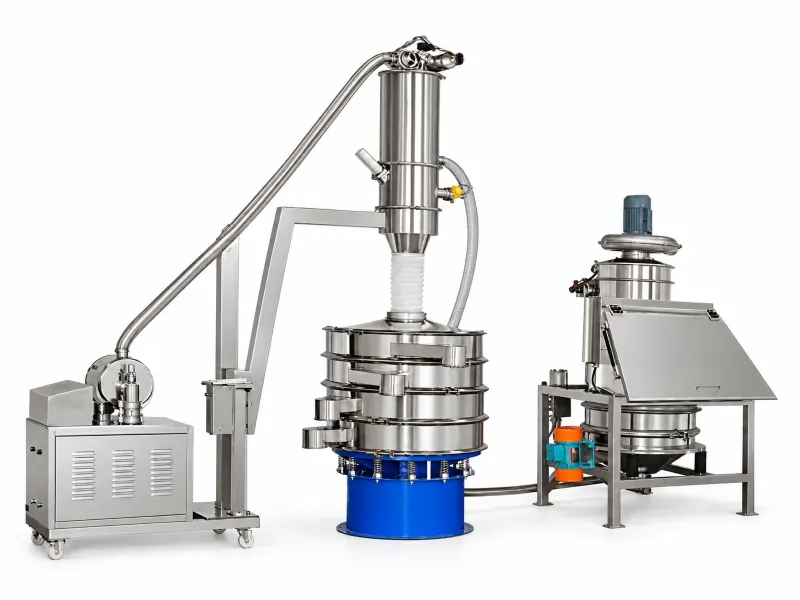
What Should You Send a Vibrating Screen Manufacturer for a Quote?
Describe the job in the operator’s words
“We stop twice per shift to clear the mesh” gives an engineer more to work with than “we need higher efficiency.” Include the material, target opening, required throughput, finished grades, and normal operating hours. For an existing screen, give the opening and feed rate you actually run. For a new line, mark the figures that are still design targets.
If the inlet and outlet positions are fixed, attach a dimensioned sketch. Mark the upstream equipment, the destination of each fraction, and any restriction on access for cleaning or screen changes.
Copy this inquiry and fill in your figures
We process [material] and need to [remove oversize / separate the feed into specified grades]. Our target feed rate is [kg/h]. The required opening for each deck is [list openings in mm or µm]. We need [kg/h, if known] of finished product within [size limits].
The screen will sit between [upstream equipment] et [downstream equipment]. The available installation height is [height]. Our main operating issue is [describe what happens and when].
Please recommend a model and explain how you determined its capacity for our material. Include a layout drawing with the outlets labeled, identify the spare parts and services covered by the price, and state the delivery terms and lead time.
To request a vibrating screen recommendation from Yuanjing, send the material details, screen openings, and hourly output your line needs. If you have a layout sketch or a recent screening record, include it with your inquiry.
FAQ
How can I verify that a vibrating screen manufacturer builds the quoted machine?
During a factory visit or live video call, ask to see the quoted model or a similar build. Compare the deck layout and outlet positions with your drawing. Ask which parts the factory makes in-house and who checks the final dimensions.
How much material should I send for a vibrating screen trial?
Ask the vibrating screen manufacturer for the trial feed rate, run time, and extra material needed for setup. Send a representative production sample. If your mesh usually clogs after 30 minutes, request a trial long enough to see whether output drops.
Do I need an ultrasonic vibrating sieve if my powder clogs the mesh?
First check whether fine powder coats the mesh or damp lumps arrive from the hopper. If your powder sieving machine manufacturer recommends ultrasonics, ask for trials with the system off and on. Compare the weight passing through the same mesh over equal periods at the same feed rate.
Can a one-tonne-per-hour vibrating screen deliver 1,000 kg/h of finished product?
If 1,000 kg/h is the feed rate and only 85% of the feed meets your size specification, the maximum on-spec output is 850 kg/h, even with full recovery. Ask the supplier to state the finished-product rate separately in the quote.
What dimensions does a supplier need to fit a vibrating screen into an existing line?
Provide the inlet and outlet heights measured from the same floor level, their horizontal positions, and the connection sizes. Mark any overhead beams or pipes so the supplier can check clearance both for installation and for lifting the deck during a mesh change.
What should I specify when ordering a replacement screen for a vibratory sifter?
Give the vibratory sifter manufacturer your model, deck position, and part number if available. Confirm the mesh opening, material, frame dimensions, and seal profile. Check whether the price covers loose mesh or a ready-to-install framed screen.