Tamis vibrant pour granulés plastiques : élimination des fines et classification des granulés
A vibrating screen for plastic pellets helps remove fines and broken particles while separating granules by size. In a linear vibrating screen, material moves across the screen surface: particles smaller than the openings pass through, while larger pellets continue to the discharge outlet. If the line also needs to reject oversized pellets, additional screening cuts can produce separate fines, acceptable pellet, and oversize streams. The right screen openings, number of decks, and feed rate depend on your pellet size range and required capacity.

Why Screen Plastic Pellets?
A vibrating screen for plastic pellets helps keep undersized fragments and oversized granules out of the acceptable product stream. For PE, PP, or recycled pellets, the screening goal depends on the size range the next process or customer requires. A vibrating screen separates material according to whether particles can pass through its openings; it does not identify a particle’s material or remove every contaminant.
Remove Fines and Broken Pellets
Pellet handling can generate small fragments and loose fines. With an appropriately sized screen, these smaller particles pass through while acceptable pellets travel toward the discharge outlet. This is useful before packaging or feeding pellets into the next process. Very fine dust that clings to pellets because of static electricity may also require dust extraction or another cleaning step.
Separate Acceptable Pellets from Oversized Granules
If the feed contains both undersized and oversized pieces, two screening cuts can divide it into three streams. For example, suppose the specified pellet size range is 2–4 mm:
| Material size | Screening goal | Discharge |
|---|---|---|
| Below the lower cut point | Remove fines and undersized fragments | Undersize outlet |
| Within the specified range | Keep acceptable pellets | Product outlet |
| Above the upper cut point | Reject oversized or joined pellets | Oversize outlet |
This is an illustrative layout, not a universal recommendation for 2 mm and 4 mm screen openings. Elongated pellets and particles close to an opening may behave differently from their nominal size.
Where Screening Fits in a Pellet Handling Line
A plastic pellet screen can be placed after pelletizing and cooling, or before storage, conveying, or packaging, depending on where fines and oversize are generated. Screening close to the final product transfer point helps control the size of pellets entering the next stage. The location should allow steady feeding and separate collection of each discharge stream.
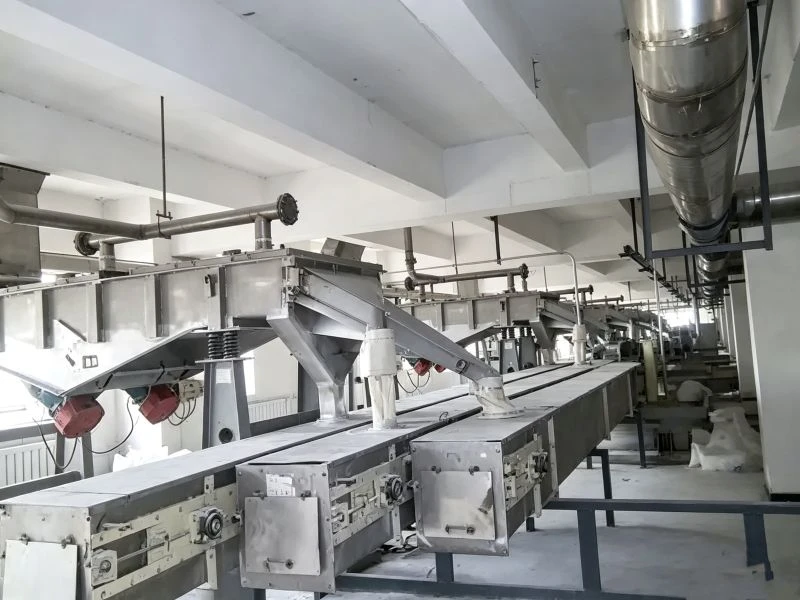

How Does a Vibrating Screen for Plastic Pellets Separate Fines?
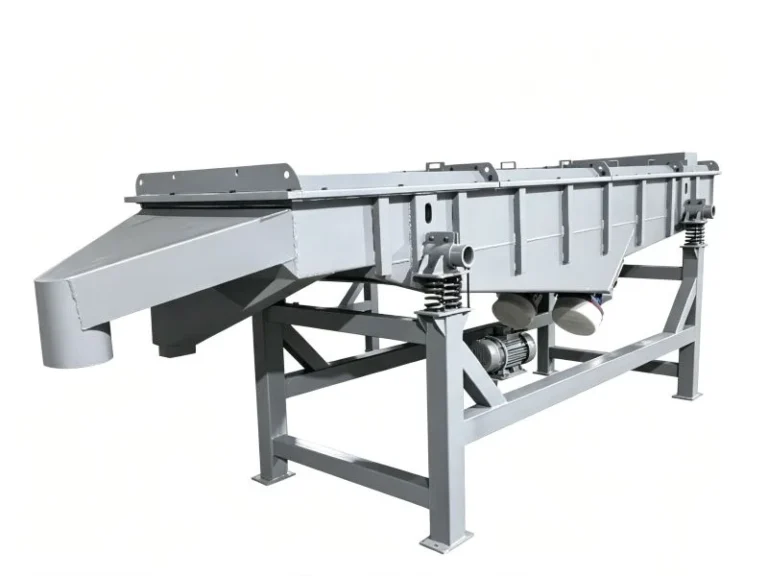
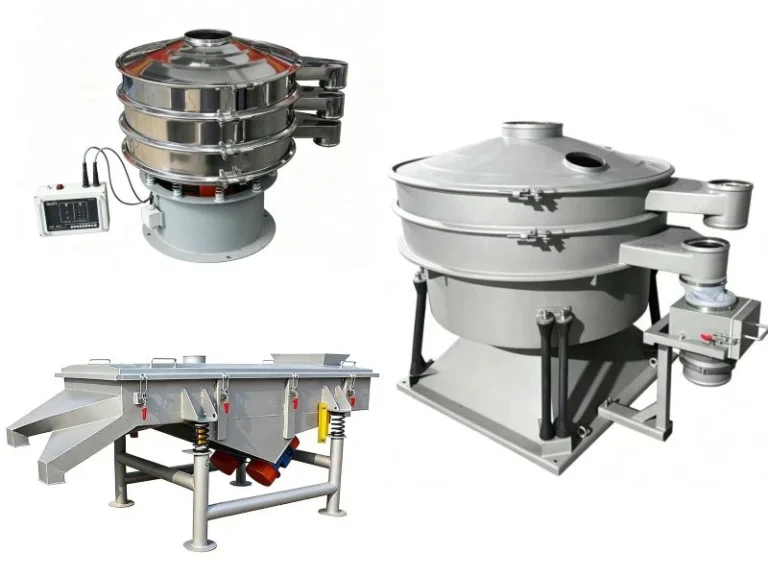
A linear vibrating screen moves plastic pellets across one or more screen decks. Each deck creates a size cut: particles small enough to pass through its openings move to the outlet below, while larger particles continue across the deck. The number of cuts depends on whether the line needs only fines removal or separate fines, acceptable pellets, and oversize.
How Pellets Move Across the Screen
Two counter-rotating vibration motors produce a forward, bouncing motion. As pellets travel across the screen, smaller particles have opportunities to pass through the openings. A steady feed helps spread material across the available screen area; where needed, a feed distributor can reduce concentrated impact at the inlet. Feed rate and vibration settings should suit the pellets so material moves forward without passing over the screen too quickly.
One Screen for Fines Removal
When the only goal is to remove undersized fragments, one screening cut may be enough. Fines pass through the screen, while pellets too large to pass continue to the product outlet. This setup does not separately reject oversized pellets: they remain with the retained product unless another screening cut is added.
Two Screening Cuts for Three Output Streams
To remove both oversize and fines, an upper deck first retains oversized pieces. Material passing through it reaches a lower deck, where acceptable pellets remain on the screen and fines pass through.
| Screening stage | Material separated | Outlet |
|---|---|---|
| Upper deck, retained | Oversized pellets or joined pieces | Oversize |
| Lower deck, retained | Acceptable pellets | Product |
| Lower deck, passed through | Fines and undersized fragments | Undersize |
Each outlet should be kept separate. An enclosed cover can also be specified with a connection to the plant’s dust extraction system when loose fines create dust during feeding and discharge.
What Affects Screening Capacity and Separation Quality?
The performance of a vibrating screen for plastic pellets depends on more than motor power. Feed rate, pellet size and shape, open screen area, and the way material moves across the deck all affect how many fines reach the openings before discharge. Settings that work for coarse PP pellets may not work for a feed containing much finer PC particles. When capacity falls or fines remain in the product, identify the cause before increasing vibration.
Feed Rate and Pellet Bed Depth
A heavy or uneven feed forms a deep layer of pellets. Fines trapped within that layer have fewer opportunities to reach the screen, so they may leave through the product outlet. Check whether material is spread across the full screen width. A feed distributor and a steadier feed rate can improve screen use without changing the motor settings.
Pellet Shape, Moisture, and Static Buildup
Round pellets, irregular recycled granules, and flat or elongated pieces do not pass through the same opening in exactly the same way. Damp or static-charged fines may cling to pellets or the screen rather than separate cleanly. Check the feed condition, control moisture where appropriate, and assess static control as part of the conveying and dust-handling system. A nominal pellet diameter alone does not determine the correct screen opening.
Near-Size Particles and Screen Blockage
Particles close to the opening size can lodge in the apertures. A compatible bouncing-ball cleaning system may help dislodge physically trapped particles. If fines mainly adhere because of static, mechanical cleaning alone may have limited effect; check equipment grounding and material-handling conditions. Our guide to industrial screen clogging explains other causes and cleaning options.
Screen Area, Vibration Settings, and Discharge Layout
Increasing vibration is not always the answer. If pellets move off the deck too quickly, fines have less time to pass through; if movement is too slow, material can build up and restrict capacity. Review screen area, feed distribution, material travel, and separation at each outlet together. Settings should suit the polymer, pellet size, and target throughput rather than follow one fixed configuration.
| Observed problem | Check first | Possible adjustment |
|---|---|---|
| Fines remain in the product | Feed depth and travel time | Spread or reduce the feed; review vibration settings |
| Good pellets enter the undersize outlet | Screen opening and pellet shape | Recheck the required size cut |
| Openings repeatedly block | Near-size particles, moisture, or static | Match the cleaning method to the cause |
| Capacity falls during operation | Blocked screen area or uneven feeding | Clear the blockage and stabilize the feed |
How to Specify a Plastic Pellet Vibrating Screen for Your Line
To specify a vibrating screen for plastic pellets, define three requirements first: the material being screened, the acceptable pellet size range, and the required hourly capacity. These determine the screen openings, number of decks, screen area, and discharge layout.
Information to Provide
Specify the polymer type, such as PE, PP, or ABS; whether the pellets are virgin or recycled; their size and shape; and any moisture or static problems. Include the proportion of fines and oversize, required capacity in kg/h or t/h, available installation space, and whether the screen must connect to a dust extraction system.
For example, a recycled-plastic line may need to reject pieces over 5 mm, collect 1–5 mm pellets as product, and discharge material below 1 mm as undersize. This is a separate example from the 2–4 mm specification above. If material below 0.5 mm must be recovered separately from the remaining undersize, it needs an additional size cut and outlet.
Configuration Points to Confirm
Choose screen openings according to the required cut points in millimeters, and match the number of decks to the number of output fractions. Confirm that each outlet can connect to the intended collection or conveying system. Also check contact materials, access for screen cleaning, and the dust connection.
Yuanjing’s linear vibrating screen for plastic granules supports different screen configurations for grading. The final arrangement should match the stated size range, capacity, and production-line layout.