Sulfur and Coal Powder Vacuum Feeding
Loading sulfur powder or coal powder into a mixer or elevated hopper often means lifting bags, pouring material, and cleaning dust around the inlet. An enclosed transfer line reduces these handling points and allows powder to move from a floor-level container to the receiving equipment.
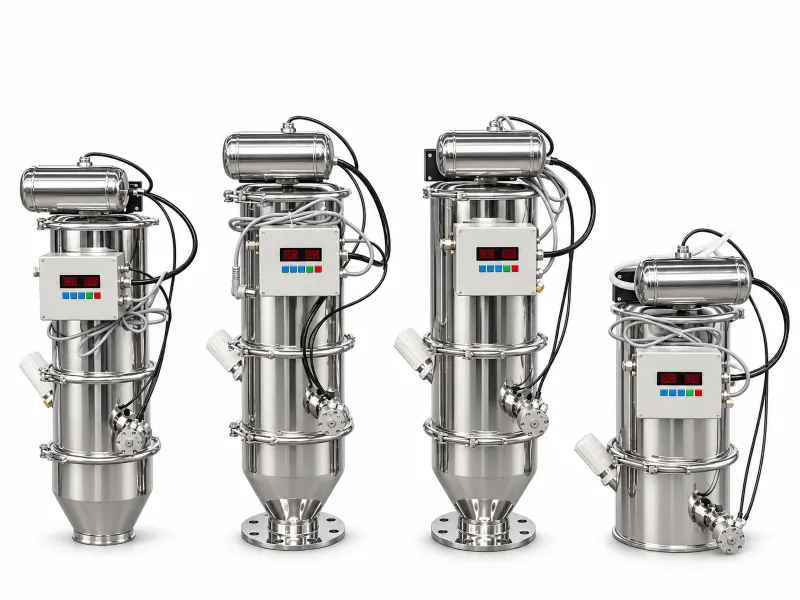
Sulfur and coal powder vacuum feeding uses suction to carry powder through a sealed pipeline into a receiver, which then discharges into the equipment below. In a pneumatic system, compressed air drives a Venturi vacuum generator.
The material name alone is not enough to select a feeder. Particle size, moisture, conveying distance, loading time, and combustible dust conditions all affect the configuration.
Where Enclosed Feeding Helps
Open pouring exposes powder at each transfer point. Fine particles can escape and settle on nearby equipment, adding to the cleaning workload.
Sulfur and coal powder vacuum feeding can reduce open handling between a container and a mixer, process hopper, or screening stage. Level signals can start and stop replenishment, reducing the need for repeated manual loading.
The enclosure helps contain dust, but combustible dust hazards can remain inside the equipment. Fine combustible material suspended in air can become explosible under suitable conditions. Dust containment and ignition control therefore need to be considered together.
How Sulfur and Coal Powder Vacuum Feeding Works
A typical single-receiver system repeats four steps.
1. Generate Vacuum
Compressed air passes through a Venturi vacuum generator, creating negative pressure in the receiving hopper.
The reference specification gives a vacuum range of −0.04 to −0.08 MPa. Check the pressure reference, measurement location, and operating conditions in the equipment documentation.
Compressed air supply pressure and conveying vacuum are different measurements. Both need to be checked.
2. Draw Powder into the Receiver
The pressure difference draws conveying gas and powder through the pickup point and pipeline.
Filters retain the powder inside the receiver while gas passes toward the vacuum source. Poor material flow, an unsuitable pickup, excessive pipeline resistance, or loaded filters can interrupt transfer.
3. Equalize Pressure and Discharge
When the suction period ends or the selected level is reached, vacuum generation stops. The receiver equalizes pressure, and the discharge valve opens.
The powder then falls into the downstream equipment. A single-receiver feeder normally discharges in batches; a process that needs steady feeding may require a buffer hopper or separate metering device.
4. Clean the Filter
A reverse pulse removes accumulated powder from the filter surface to help restore airflow. The cleaning medium and sequence depend on the material and equipment design.
de Yuanjing convoyeur d'alimentation à vide pneumatique uses this cyclic suction, discharge, and filter-cleaning arrangement.

Reference Parameters
The following sulfur and coal powder vacuum feeding figures are retained from the original specification for preliminary discussion. They are not verified performance guarantees for every material or installation.
Do not assume that maximum capacity, horizontal distance, and lifting height can be achieved simultaneously.
| Paramètre | Reference Value | What Needs Checking |
|---|---|---|
| Conveying capacity | 100–2,000 kg/h | Output with the actual powder and proposed route |
| Vacuum | −0.04 to −0.08 MPa | Measurement location and loaded operating condition |
| Distance de transport horizontal | Up to 30 m | Pipe diameter, bends, material properties, and required output |
| Vertical lifting height | Up to 10 m | Combined horizontal and vertical route |
| Matériau des pièces en contact avec le produit | 304 or 316L stainless steel | Corrosion, wear, and cleaning requirements |
| Filtration | Antistatic PTFE-coated filter elements | Compatibility, airflow, and cleaning performance |
| Filter efficiency | Above 99.9%, stated in the original specification | Test particle size, method, and conditions |
| Control | Pneumatic timing or PLC control | Sequence, sensors, and installation suitability |
| Grounding resistance | ≤4 Ω, stated in the original specification | Project requirements and electrical continuity |
Filter efficiency alone does not establish whole-system emissions performance. Seals, filter installation, operating conditions, and maintenance also affect containment.
Configuring the System for Combustible Powder
For sulfur and coal powder vacuum feeding, the safety review must cover the complete installation, including its connections to upstream and downstream equipment.
Pneumatic Drive Is Only Part of the Assessment
A compressed-air-driven vacuum generator avoids an electric motor at that point in the system. It does not remove other possible ignition sources.
Review powder-generated static electricity, electrical accessories, external ignition sources, and downstream interfaces.
Explosion-protection markings must match the actual environment and certificate scope. A marking for a gas atmosphere is not universal evidence of suitability for sulfur or coal dust.
Check the Entire Static Dissipation Path
Grounding the receiver alone does not confirm that the full transfer route has electrical continuity.
Inspect the pickup assembly, metal pipework, flexible hoses, connections, receiver, and downstream interfaces. OSHA guidance identifies conductive or static-dissipative construction, bonding, and grounding as relevant controls for conveying connections and hoses.
The original ≤4 Ω figure should be checked against project requirements. It is not a universal acceptance criterion and does not replace continuity checks between components.
Match Filters to the Material
Check particle size, fine-powder content, moisture, caking tendency, air permeability, and static-dissipative properties.
A filter that works with free-flowing granules may load quickly with cohesive sulfur powder or fine coal. Cleaning compatibility matters too.
Base Inerting on Material Data
Where nitrogen protection is required, the oxygen target must be based on the specific material’s limiting oxygen concentration, operating conditions, and an appropriate safety margin.
The original statement of “oxygen below 8%” is not a general safe limit for sulfur and coal powder. Monitoring, leakage, reverse-pulse gas, and control interlocks must also be considered.
Application Examples
The following sulfur and coal powder vacuum feeding examples describe application directions from the original material. They are not documented customer installations or measured production results.
Sulfur Powder Mixer Loading
Sulfur powder may need to move from a bag or floor-level container into a mixer above the working area. A sealed pickup, transfer line, and receiver reduce open handling along that route.
Confirm the amount required per batch and the available loading time. Then check particle size, moisture, caking tendency, mixer inlet dimensions, and operating pressure.
A feeder transfers material; recipe accuracy requires a weighing or metering arrangement.
Coal Powder Hopper Replenishment
Coal powder hopper feeding requires attention to moisture variation, particle size distribution, abrasive wear, and pipeline layout.
If the hopper connects to a furnace or another hot process, assess downstream pressure and temperature, isolation, and process interlocks.
Matching the required kg/h does not turn a general-purpose feeder into a complete furnace injection system.
Carbon Powder and Sulfur-Based Materials
Light, fine powders may produce unstable pickup, high filter loading, or incomplete discharge.
Check the material entry point, filter area, receiver geometry, and discharge arrangement together. Where blend consistency matters, compare representative samples before and after transfer. Claims of zero segregation or particle damage need test results.
Transfer Before Screening
A screening stage may be needed to remove foreign particles or separate material by size before mixing or packaging.
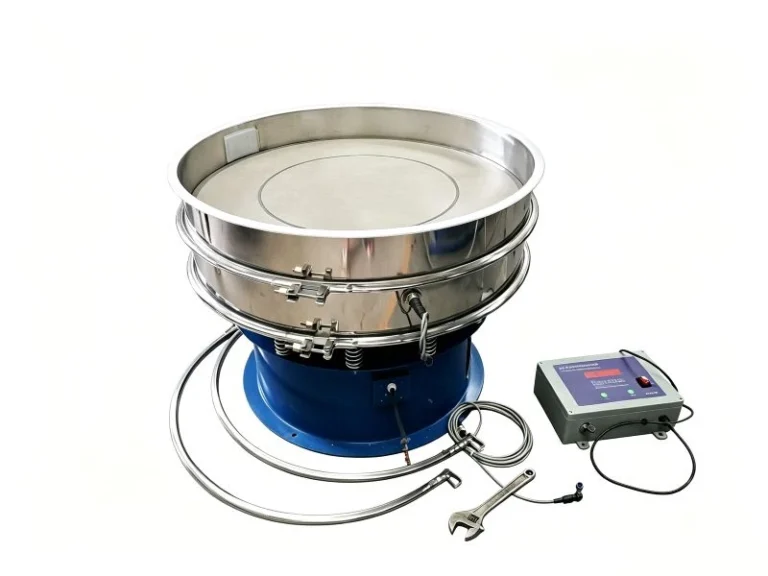
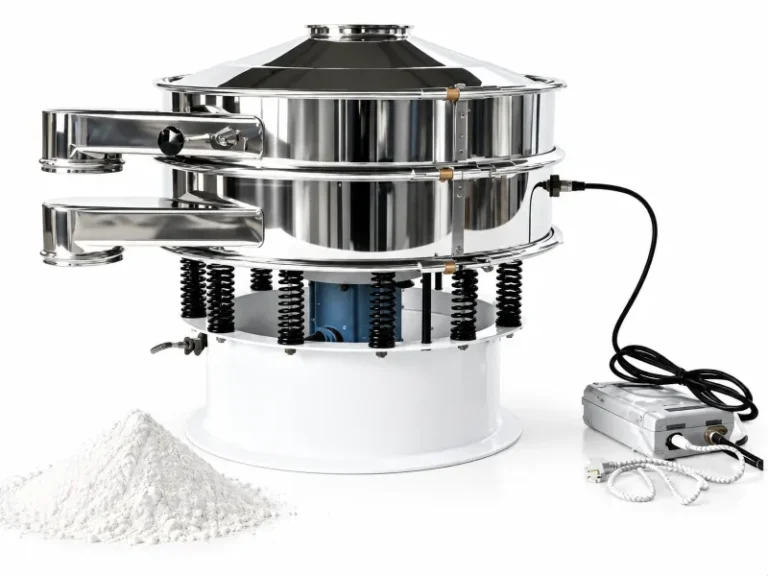
Yuanjing offers des tamis vibrants rotatifs et ultrasonic sieving machines for assessment against the powder and separation requirements.
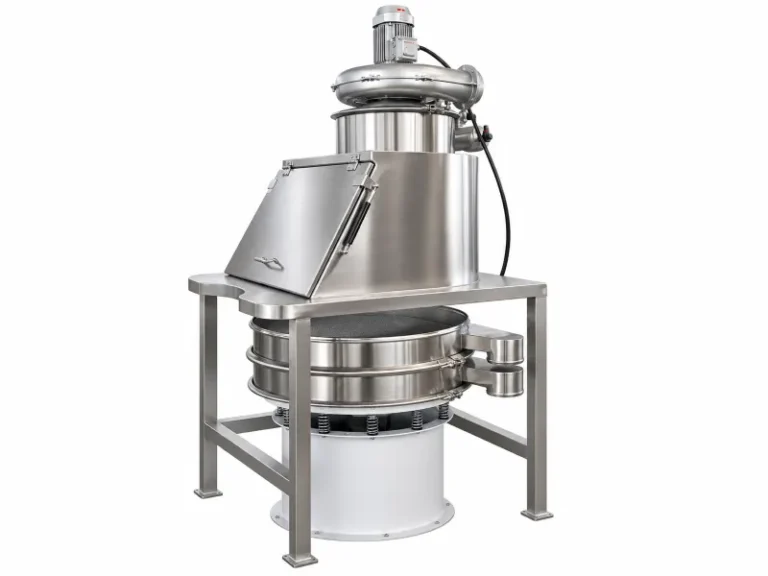
For sulfur and coal powder vacuum feeding ahead of a screen, check the quantity released in each discharge. An acceptable hourly average can still overload the screen briefly. The screening equipment also needs its own combustible dust suitability review.
Selecting the Right Configuration
Before sizing sulfur and coal powder vacuum feeding equipment, provide the supplier with the actual production requirements rather than an estimated hourly consumption alone.
Specify Batch Loading Time
Consider a process running two batches per hour, each requiring 250 kg of powder.
Average consumption is 500 kg/h. If each batch must be loaded within 10 minutes, the required average rate during that period is 1 500 kg/h. Discharge cycles and control delays also need to be allowed for.
This is a sizing example, not a measured machine result.
Provide the Pipeline Route
Include horizontal distance, vertical lift, number of bends, pickup details, and the receiving connection.
A larger pipe or higher vacuum is not automatically the answer to a difficult transfer. Pipe diameter and available airflow must be evaluated together.
Test Representative Powder
A useful sample should reflect normal production conditions: particle size, bulk density, moisture, and any lumps.
These properties influence pickup, filter loading, and discharge. A dry laboratory sample may not represent material stored in a humid production area.
Check Air Supply During Production
Confirm both supply pressure and available flow while other plant equipment is running.
Pressure may look adequate when the feeder is idle but become insufficient when several machines draw air simultaneously. Include compressed air consumption in the running-cost comparison.
Define the Receiving Process
Explain whether the downstream equipment needs level-controlled replenishment, batch weighing, steady feeding, alarms, pressure isolation, or start/stop interlocks.
These requirements determine whether the feeder can connect directly or needs a buffer hopper, metering device, or other equipment.
Send Your Requirements to Yuanjing
To discuss sulfur and coal powder vacuum feeding with Yuanjing, provide:
- Material name, particle size, bulk density, and moisture.
- Required output and batch loading time.
- Horizontal distance, vertical lift, and pipeline route.
- Compressed air supply conditions.
- Downstream equipment and inlet details.
- Material safety data and combustible dust test information, where available.
See the convoyeur d'alimentation à vide pneumatique for equipment details. Confirm the final configuration and output using representative material and the proposed conveying conditions.
FAQ
Does Sulfur and Coal Powder Vacuum Feeding Need a Separate Pump?
A Venturi-driven pneumatic feeder normally generates vacuum directly from compressed air, so a separate electric vacuum pump is not required.
If the proposed arrangement cannot meet the capacity or route requirements, other vacuum sources can be compared through a complete system calculation.
Does the Powder Contact Air?
Usually, yes. Powder travels with a conveying gas stream and separates from it inside the receiver.
The compressed air driving the vacuum generator is generally separate from the suction stream. Reverse-pulse gas may contact the powder, so confirm each gas path and its quality requirements.
Can It Handle Damp or Caked Material?
Slightly cohesive powder may need a different pickup, flow assistance, or a revised discharge arrangement.
Highly sticky material should be tested before specifying a standard dry-powder feeder.
Is Static Control Still Needed with Pneumatic Drive?
Yes. Powder movement and friction can generate electrostatic charge. Component materials, bonding, grounding, and continuity checks remain relevant.
Is Sulfur and Coal Powder Vacuum Feeding Completely Dust-Free?
Negative pressure helps reduce outward leakage along the suction route during normal operation.
Dust may still escape at bag-opening points, discharge interfaces, damaged seals, or during maintenance.
What Maintenance Is Required?
Inspect filters, seals, valves, hoses, and pneumatic components. Check filter cleaning, leakage, wear, and grounding connections.
The vacuum generator may have a simple construction, but the complete system is not maintenance-free.
How Do Pneumatic and Electric Vacuum Systems Compare on Cost?
Compare them using the same powder, conveying route, and required output.
Include purchase price, compressed air consumption, electricity, maintenance, and annual operating hours. Initial equipment cost alone does not establish the lower-cost option.