Alimentação a vácuo de enxofre e carvão em pó
Carregar pó de enxofre ou de carvão em um misturador ou em uma tremonha elevada geralmente envolve levantar sacos, despejar o material e limpar o pó ao redor da entrada. Uma linha de transferência fechada reduz esses pontos de manuseio e permite transportar o pó de um recipiente ao nível do chão até o equipamento receptor.
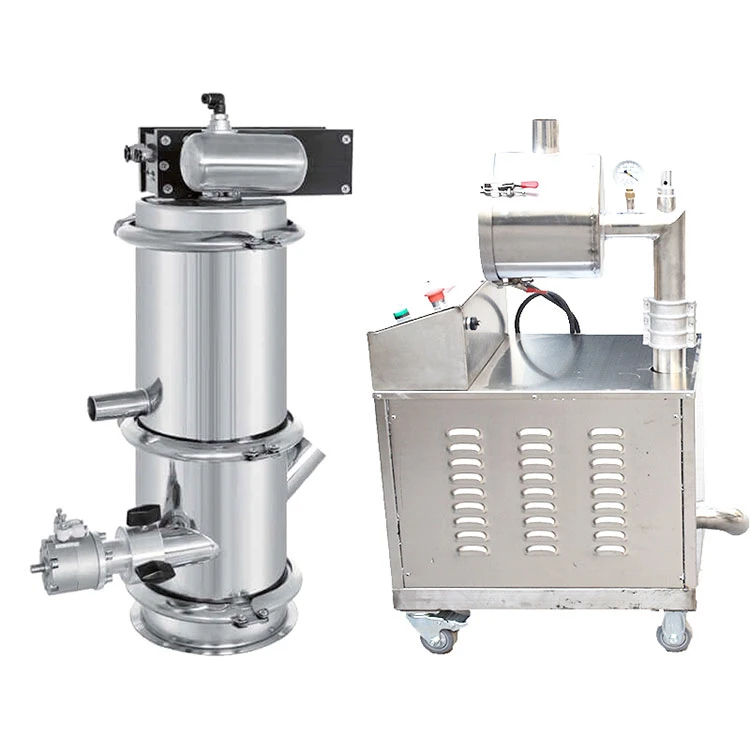
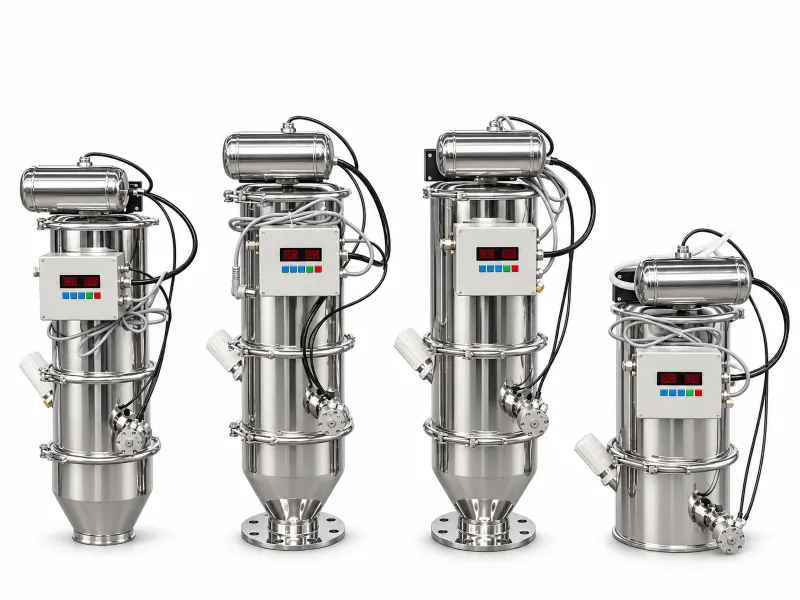
A alimentação a vácuo de enxofre e carvão em pó utiliza sucção para transportar o pó por uma tubulação vedada até um recipiente coletor, que então o descarrega no equipamento abaixo. Em um sistema pneumático, o ar comprimido aciona um gerador de vácuo Venturi.
O nome do material, por si só, não basta para selecionar um alimentador. O tamanho das partículas, a umidade, a distância de transporte, o tempo de carregamento e as condições relacionadas a poeiras combustíveis afetam a configuração.
Onde a alimentação em sistema fechado ajuda
O despejo aberto expõe o pó em cada ponto de transferência. Partículas finas podem escapar e se depositar nos equipamentos próximos, aumentando o trabalho de limpeza.
A alimentação a vácuo de pó de enxofre e de carvão pode reduzir o manuseio aberto entre um recipiente e um misturador, uma tremonha de processo ou uma etapa de peneiramento. Sinais de nível podem iniciar e interromper o reabastecimento, reduzindo a necessidade de carregamento manual repetido.
O sistema fechado ajuda a conter o pó, mas os riscos associados à poeira combustível podem permanecer dentro do equipamento. Material combustível fino suspenso no ar pode se tornar explosivo em condições favoráveis. Por isso, a contenção do pó e o controle de fontes de ignição devem ser considerados em conjunto.
Como funciona a alimentação a vácuo de pó de enxofre e de carvão
Um sistema típico com um único receptor repete quatro etapas.
Gerar vácuo
O ar comprimido passa por um gerador de vácuo Venturi, criando pressão negativa na tremonha receptora.
A especificação de referência indica uma faixa de vácuo de −0,04 a −0,08 MPa. Verifique a referência de pressão, o local de medição e as condições de operação na documentação do equipamento.
A pressão de alimentação do ar comprimido e o vácuo de transporte são medições diferentes. Ambas precisam ser verificadas.
Aspirar o pó para o receptor
A diferença de pressão aspira o gás de transporte e o pó pelo ponto de captação e pela tubulação.
Os filtros retêm o pó dentro do receptor enquanto o gás segue em direção à fonte de vácuo. O fluxo inadequado do material, uma captação inadequada, resistência excessiva na tubulação ou filtros saturados podem interromper a transferência.
Equalizar a pressão e descarregar
Quando o período de sucção termina ou o nível selecionado é atingido, a geração de vácuo para. A pressão no receptor é equalizada e a válvula de descarga se abre.
O pó então cai no equipamento a jusante. Um alimentador com um único receptor normalmente descarrega em lotes; um processo que exige alimentação contínua pode precisar de uma moega pulmão ou de um dispositivo dosador separado.
Limpar o filtro
Um pulso reverso remove o pó acumulado na superfície do filtro para ajudar a restabelecer o fluxo de ar. O meio e a sequência de limpeza dependem do material e do projeto do equipamento.
A linha da Yuanjing transportador de alimentação a vácuo pneumático utiliza este sistema cíclico de sucção, descarga e limpeza do filtro.

Parâmetros de referência
Os valores de referência a seguir para a alimentação a vácuo de pó de enxofre e de carvão foram mantidos da especificação original para discussão preliminar. Eles não são garantias de desempenho verificadas para todos os materiais ou instalações.
Não presuma que a capacidade máxima, a distância horizontal e a altura de elevação possam ser alcançadas simultaneamente.
| Parâmetro | Valor de referência | O que precisa ser verificado |
|---|---|---|
| Capacidade de transporte | 100–2.000 kg/h | Vazão com o pó real e o percurso proposto |
| Vácuo | −0,04 a −0,08 MPa | Local de medição e condição de operação com carga |
| Distância de transporte horizontal | Até 30 m | Diâmetro da tubulação, curvas, propriedades do material e vazão necessária |
| Altura de elevação vertical | Até 10 m | Percurso combinado horizontal e vertical |
| Material em contato com o produto | Aço inoxidável 304 ou 316L | Requisitos de resistência à corrosão, ao desgaste e de limpeza |
| Filtração | Elementos filtrantes antiestáticos revestidos de PTFE | Compatibilidade, fluxo de ar e desempenho da limpeza |
| Eficiência de filtração | Acima de 99,9%, conforme indicado na especificação original | Tamanho das partículas, método e condições de teste |
| Control | Pneumatic timing or PLC control | Sequence, sensors, and installation suitability |
| Grounding resistance | ≤4 Ω, stated in the original specification | Project requirements and electrical continuity |
Filter efficiency alone does not establish whole-system emissions performance. Seals, filter installation, operating conditions, and maintenance also affect containment.
Configuring the System for Combustible Powder
For sulfur and coal powder vacuum feeding, the safety review must cover the complete installation, including its connections to upstream and downstream equipment.
Pneumatic Drive Is Only Part of the Assessment
A compressed-air-driven vacuum generator avoids an electric motor at that point in the system. It does not remove other possible ignition sources.
Review powder-generated static electricity, electrical accessories, external ignition sources, and downstream interfaces.
Explosion-protection markings must match the actual environment and certificate scope. A marking for a gas atmosphere is not universal evidence of suitability for sulfur or coal dust.
Check the Entire Static Dissipation Path
Grounding the receiver alone does not confirm that the full transfer route has electrical continuity.
Inspect the pickup assembly, metal pipework, flexible hoses, connections, receiver, and downstream interfaces. OSHA guidance identifies conductive or static-dissipative construction, bonding, and grounding as relevant controls for conveying connections and hoses.
The original ≤4 Ω figure should be checked against project requirements. It is not a universal acceptance criterion and does not replace continuity checks between components.
Match Filters to the Material
Check particle size, fine-powder content, moisture, caking tendency, air permeability, and static-dissipative properties.
A filter that works with free-flowing granules may load quickly with cohesive sulfur powder or fine coal. Cleaning compatibility matters too.
Base Inerting on Material Data
Where nitrogen protection is required, the oxygen target must be based on the specific material’s limiting oxygen concentration, operating conditions, and an appropriate safety margin.
The original statement of “oxygen below 8%” is not a general safe limit for sulfur and coal powder. Monitoring, leakage, reverse-pulse gas, and control interlocks must also be considered.
Application Examples
The following sulfur and coal powder vacuum feeding examples describe application directions from the original material. They are not documented customer installations or measured production results.
Sulfur Powder Mixer Loading
Sulfur powder may need to move from a bag or floor-level container into a mixer above the working area. A sealed pickup, transfer line, and receiver reduce open handling along that route.
Confirm the amount required per batch and the available loading time. Then check particle size, moisture, caking tendency, mixer inlet dimensions, and operating pressure.
A feeder transfers material; recipe accuracy requires a weighing or metering arrangement.
Coal Powder Hopper Replenishment
Coal powder hopper feeding requires attention to moisture variation, particle size distribution, abrasive wear, and pipeline layout.
If the hopper connects to a furnace or another hot process, assess downstream pressure and temperature, isolation, and process interlocks.
Matching the required kg/h does not turn a general-purpose feeder into a complete furnace injection system.
Carbon Powder and Sulfur-Based Materials
Light, fine powders may produce unstable pickup, high filter loading, or incomplete discharge.
Check the material entry point, filter area, receiver geometry, and discharge arrangement together. Where blend consistency matters, compare representative samples before and after transfer. Claims of zero segregation or particle damage need test results.
Transfer Before Screening
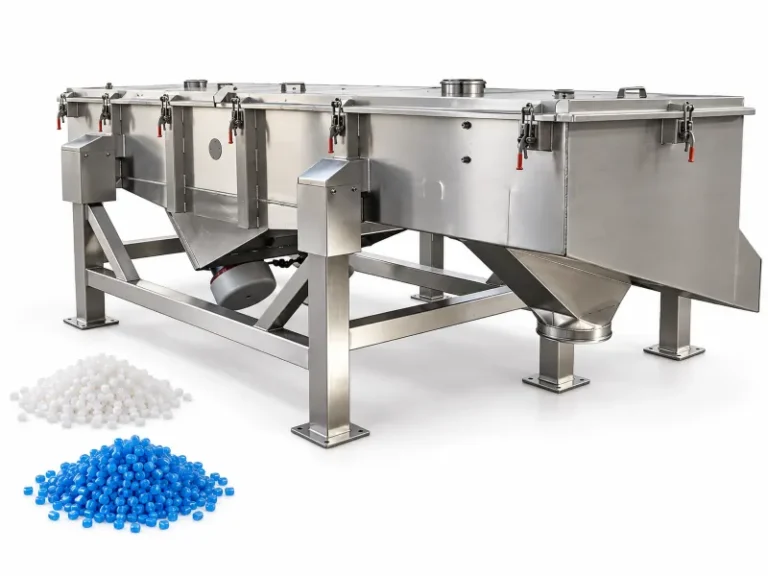
A screening stage may be needed to remove foreign particles or separate material by size before mixing or packaging.
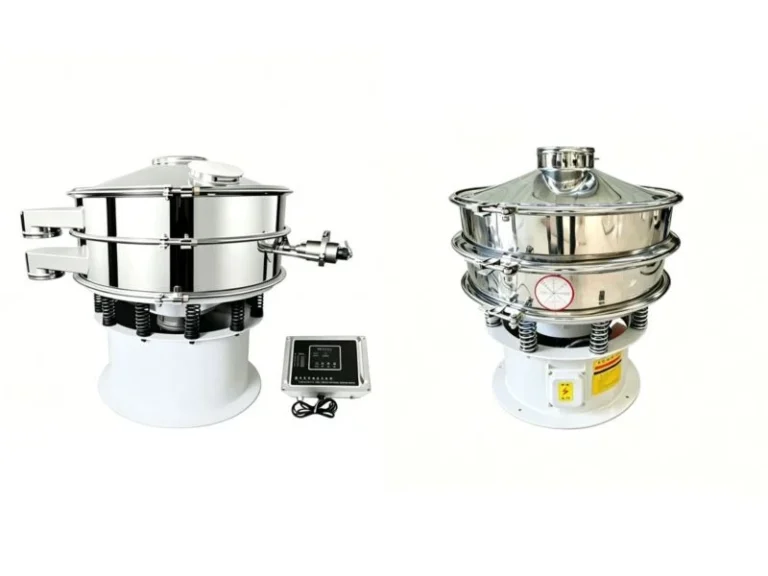
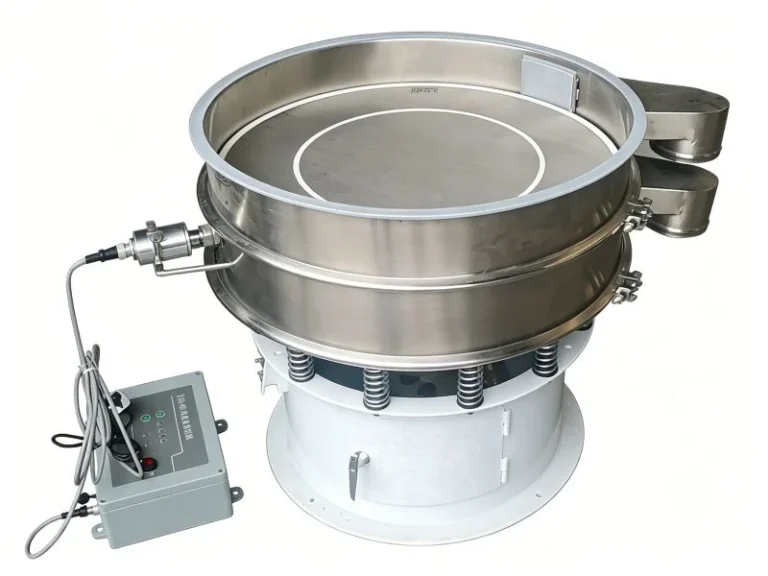
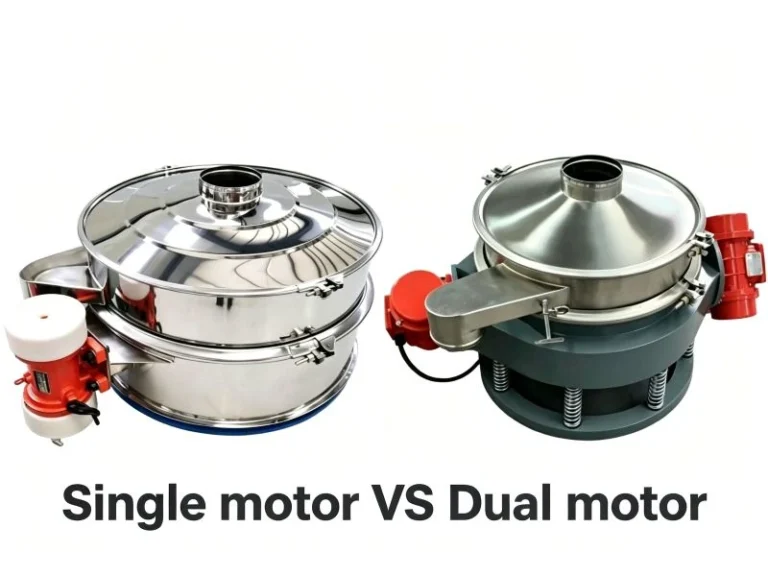
Yuanjing offers peneiras vibratórias rotativas e ultrasonic sieving machines for assessment against the powder and separation requirements.
For sulfur and coal powder vacuum feeding ahead of a screen, check the quantity released in each discharge. An acceptable hourly average can still overload the screen briefly. The screening equipment also needs its own combustible dust suitability review.
Selecting the Right Configuration
Before sizing sulfur and coal powder vacuum feeding equipment, provide the supplier with the actual production requirements rather than an estimated hourly consumption alone.
Specify Batch Loading Time
Consider a process running two batches per hour, each requiring 250 kg of powder.
Average consumption is 500 kg/h. If each batch must be loaded within 10 minutes, the required average rate during that period is 1,500 kg/h. Discharge cycles and control delays also need to be allowed for.
This is a sizing example, not a measured machine result.
Provide the Pipeline Route
Include horizontal distance, vertical lift, number of bends, pickup details, and the receiving connection.
A larger pipe or higher vacuum is not automatically the answer to a difficult transfer. Pipe diameter and available airflow must be evaluated together.
Test Representative Powder
A useful sample should reflect normal production conditions: particle size, bulk density, moisture, and any lumps.
These properties influence pickup, filter loading, and discharge. A dry laboratory sample may not represent material stored in a humid production area.
Check Air Supply During Production
Confirm both supply pressure and available flow while other plant equipment is running.
Pressure may look adequate when the feeder is idle but become insufficient when several machines draw air simultaneously. Include compressed air consumption in the running-cost comparison.
Define the Receiving Process
Explain whether the downstream equipment needs level-controlled replenishment, batch weighing, steady feeding, alarms, pressure isolation, or start/stop interlocks.
These requirements determine whether the feeder can connect directly or needs a buffer hopper, metering device, or other equipment.
Send Your Requirements to Yuanjing
To discuss sulfur and coal powder vacuum feeding with Yuanjing, provide:
- Material name, particle size, bulk density, and moisture.
- Required output and batch loading time.
- Horizontal distance, vertical lift, and pipeline route.
- Compressed air supply conditions.
- Downstream equipment and inlet details.
- Material safety data and combustible dust test information, where available.
See the transportador de alimentação a vácuo pneumático for equipment details. Confirm the final configuration and output using representative material and the proposed conveying conditions.
Perguntas Frequentes
Does Sulfur and Coal Powder Vacuum Feeding Need a Separate Pump?
A Venturi-driven pneumatic feeder normally generates vacuum directly from compressed air, so a separate electric vacuum pump is not required.
If the proposed arrangement cannot meet the capacity or route requirements, other vacuum sources can be compared through a complete system calculation.
Does the Powder Contact Air?
Usually, yes. Powder travels with a conveying gas stream and separates from it inside the receiver.
The compressed air driving the vacuum generator is generally separate from the suction stream. Reverse-pulse gas may contact the powder, so confirm each gas path and its quality requirements.
Can It Handle Damp or Caked Material?
Slightly cohesive powder may need a different pickup, flow assistance, or a revised discharge arrangement.
Highly sticky material should be tested before specifying a standard dry-powder feeder.
Is Static Control Still Needed with Pneumatic Drive?
Yes. Powder movement and friction can generate electrostatic charge. Component materials, bonding, grounding, and continuity checks remain relevant.
Is Sulfur and Coal Powder Vacuum Feeding Completely Dust-Free?
Negative pressure helps reduce outward leakage along the suction route during normal operation.
Dust may still escape at bag-opening points, discharge interfaces, damaged seals, or during maintenance.
What Maintenance Is Required?
Inspect filters, seals, valves, hoses, and pneumatic components. Check filter cleaning, leakage, wear, and grounding connections.
The vacuum generator may have a simple construction, but the complete system is not maintenance-free.
How Do Pneumatic and Electric Vacuum Systems Compare on Cost?
Compare them using the same powder, conveying route, and required output.
Include purchase price, compressed air consumption, electricity, maintenance, and annual operating hours. Initial equipment cost alone does not establish the lower-cost option.