Linear Vibrating Screen for Natural Fibers: A Middle East WPC Project
Aperçu du projet
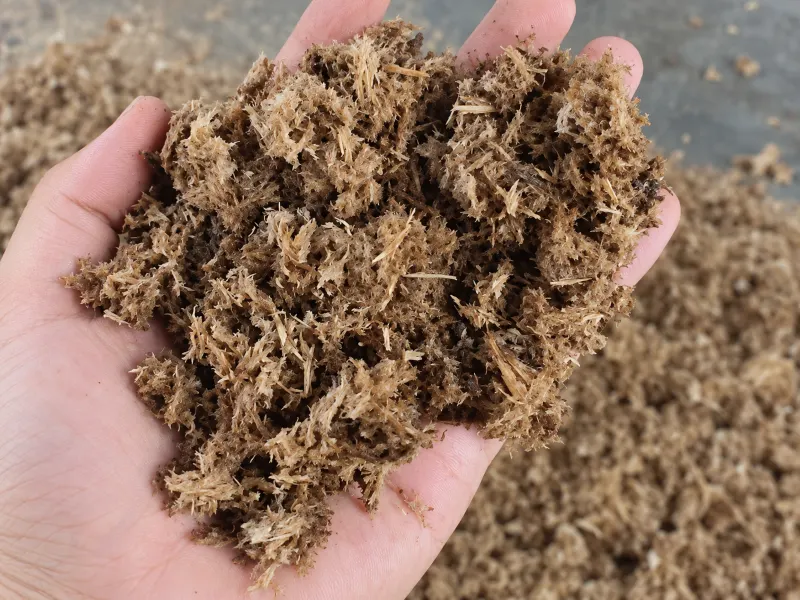
A natural fiber processor in the Middle East contacted us for a linear vibrating screen for natural fibers used in WPC production. The raw materials included mesquite branches, date palm leaves and doum palm leaves.
The customer needed to remove fine particles below 0.5 mm and oversized material above 20 mm, while keeping the middle fraction for further processing. Their required throughput was 1,000–1,500 kg/h.
The machine also had to suit the available space. The customer specifically requested a linear design, so this became a starting point for our recommendation.
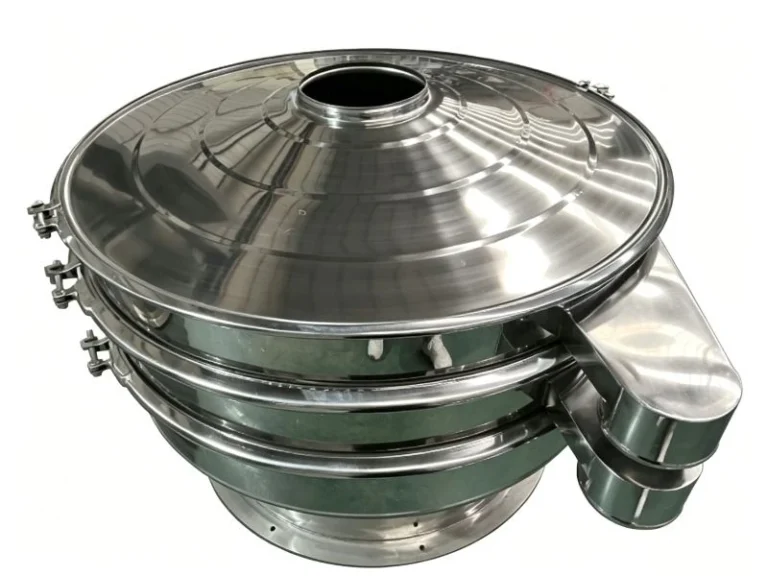
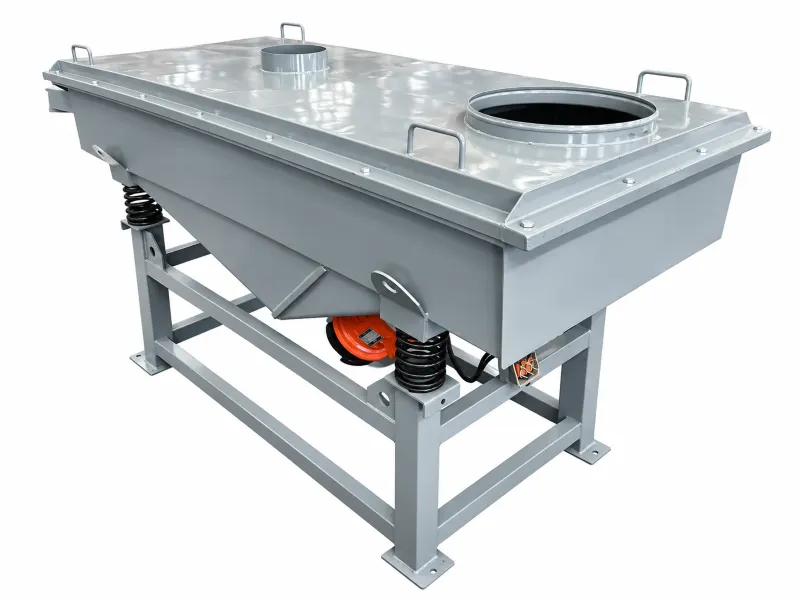
Based on these requirements, we proposed a YJZ-820-2 double-deck linear vibrating screen with carbon steel construction, a 20 mm perforated upper deck and a 0.5 mm woven wire lower deck with cleaning balls.
Exigences du client
The discussion covered both the material and the installation requirements. The customer supplied the target screening sizes, dry fiber capacity and bulk density information.
| Article | Customer Requirement |
|---|---|
| Application | Natural fiber preparation for WPC production |
| Raw materials | Mesquite branch fibers, date palm leaf fibers and doum palm leaf fibers |
| Material condition | Dry fibers |
| Required throughput | 1,000–1,500 kg/h |
| Fines to remove | Below 0.5 mm |
| Target fiber fraction | 0.5–20 mm |
| Oversized material to remove | Above 20 mm |
| Initial bulk density | 200 kg/m³ |
| Reference bulk density range | 120–350 kg/m³ |
| Machine type | Linear design to suit the site layout |
The bulk density helped put the capacity requirement into context. At 200 kg/m³, the requested throughput represents roughly 5–7.5 m³ of material per hour. This gave us a volume requirement to consider alongside the weight capacity.
The two screen openings served different purposes. The 20 mm deck would remove oversized material, while the 0.5 mm deck would separate fines from the fiber fraction the customer wanted to keep.
Our Solution: A Double-Deck Linear Vibrating Screen
For this project, we recommended the YJZ-820-2, a double-deck linear vibrating screen for natural fibers. The proposed machine uses carbon steel construction, a 20 mm perforated upper deck and a 0.5 mm woven wire lower deck with cleaning balls.
The proposed arrangement follows the customer’s process: remove oversized pieces first, then separate the fines.
Upper Deck: 20 mm Perforated Plate
The material enters the upper deck first. Pieces retained on the 20 mm perforated plate move toward the oversize outlet. Material that passes through drops onto the lower deck.
This deck handles the coarse separation stage before the material reaches the finer mesh.
Lower Deck: 0.5 mm Woven Wire Mesh
The lower deck uses woven wire mesh with 0.5 mm openings. Fine particles pass through the mesh and leave through the fines outlet. The retained fiber fraction moves toward its own discharge outlet.
The intended result is three separate streams: oversized material, the target fiber fraction and fines.
For fibrous materials, screen openings do not define the exact length of every separated fiber. Fiber shape and orientation affect passage through the screen, so a material trial is needed to check the final separation.
Cleaning Balls Beneath the Fine Mesh
We included bouncing balls beneath the 0.5 mm mesh to help keep the openings clear.
As the screen vibrates, the balls strike the underside of the mesh and help dislodge trapped material. This supports the fine screening stage, where blocked openings could limit material passage.
Equipment Specifications
| Article | Proposed Configuration |
|---|---|
| Equipment | Double-deck linear vibrating screen |
| Model | YJZ-820-2 |
| Construction material | Acier au carbone |
| Number of screening decks | Two |
| Upper deck | 20 mm perforated plate |
| Lower deck | 0.5 mm woven wire mesh |
| Lower-deck cleaning system | Bouncing balls |
| Discharge arrangement | Three outlets for oversize, target fibers and fines |
| Customer’s target throughput | 1,000–1,500 kg/h of dry fibers |
| Bulk density used for initial assessment | 200 kg/m³ |
| Reference bulk density range | 120–350 kg/m³ |
The throughput shown is the customer’s requirement. Actual capacity and separation quality need to be checked with the customer’s material.
Main Features of the Proposed Machine
Linear Layout
The linear design addresses the customer’s stated requirement for the installation area. Final dimensions and inlet and outlet positions should be checked against the site layout before production.
Site connections also shaped our linear vibrating screen project for glass and paper scrap, where discharge directions were a key part of the design.
Two Screening Stages in One Machine
The two decks provide coarse separation and fines removal within one unit. Each fraction has a separate outlet for collection or transfer to the next process.
Different Screen Types for Different Tasks
The upper deck uses a perforated plate for the 20 mm separation. The lower deck uses woven wire mesh for the 0.5 mm separation, with cleaning balls fitted beneath it.
Carbon Steel Construction
The proposed machine uses carbon steel construction. This forms part of the project specification alongside the screen openings, deck arrangement and cleaning system.
Customer Feedback During the Discussion
The customer’s message was clear: the machine had to be linear, fit the site and meet the required throughput and screen openings.
These points guided our recommendation. The proposed YJZ-820-2 brings them together in a two-deck arrangement, with a different screen type selected for each separation stage.
This case covers the requirements and equipment recommendation. Operating feedback is not yet available; the next step is to verify the layout and assess screening performance with the actual fibers.
Discuss Your Natural Fiber Screening Project
Are you preparing wood or palm fibers for WPC production?
Send us your material type, moisture content, bulk density, required capacity and target screen sizes. Photos, samples and a drawing of the installation area will also help us assess the application.
Need a linear vibrating screen for natural fibers? Send us your material details, target capacity, screen sizes and available installation space. Contact our team to discuss a suitable configuration for your WPC production line.