Linear Vibrating Screen for Feed Pellets: Removing Fines and Oversized Pellets
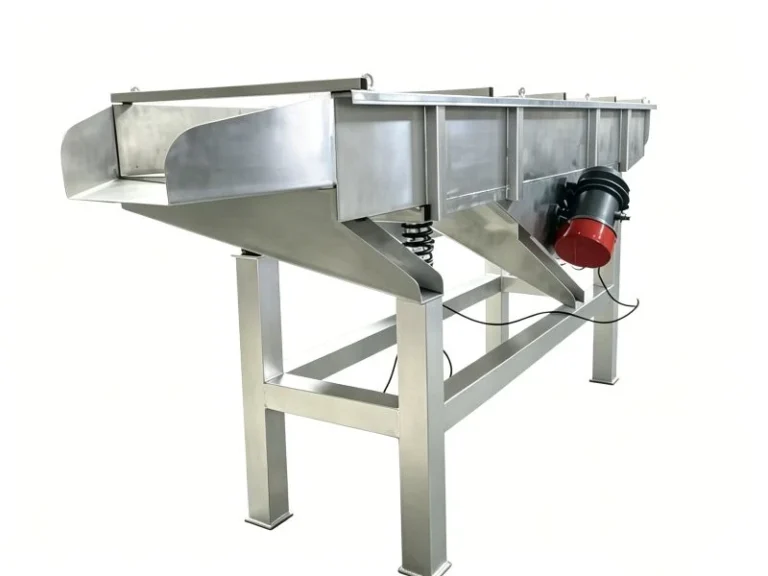
A linear vibrating screen for feed pellets removes loose fines, small fragments, and oversized pieces after cooling or before bagging. For feed pellet fines removal alone, one screen deck may be enough. Two decks separate fines, acceptable pellets, and oversized material into three outlets. The setup depends on pellet size and shape, moisture, and the line’s output. Feed rate also matters: the screen needs to handle production without causing unnecessary pellet breakage.

Why Screen Feed Pellets Before Storage or Bagging?
Raw ingredients and finished feed need different screening cuts. Before processing, the job is to remove coarse particles and oversized impurities. Before packaging, it is to keep fines, undersized fragments, and lumps out of the finished product.
Raw Feed Ingredients: Remove Coarse Particles and Impurities
Rice bran powder, grains, soybean meal, bone meal, calcium powder, and other mineral additives can be screened with a linear vibrating screen. Application figures include 10–80 mesh screens and processing quantities of 500–1,000 kg, depending on the material and separation required.
For grain ingredients, screening may take place before conditioning and dehulling, then again after grinding to remove remaining coarse material.
Feed Pellet Screening After Cooling and Before Bagging
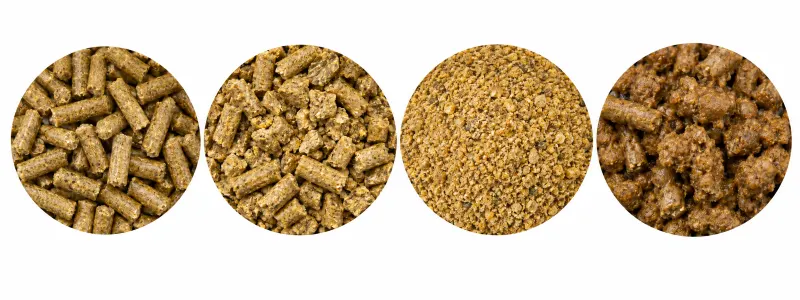
After cooling, a linear vibrating screen for feed pellets separates loose powder and small fragments from the product. Removing oversized pieces and lumps requires another screening cut. Pelleted, crumbled, and extruded feeds each need openings suited to their required size range.
Application figures list screen specifications from 1.5 mm to 60 mesh and processing quantities of 2–20 tonnes. These cover different feed products and machine configurations, rather than one setup for every line.
The quantities above have no stated time basis. Confirm whether they refer to hourly throughput or batch quantities before using them for equipment selection.
Set Different Size Limits for Pellets and Crumbled Feed
A fragment rejected from whole-pellet feed may be acceptable in crumbled feed. Crumbled feed screening should retain the required small particles while removing material above and below the specified range.
Set the size limits for the product being made, whether it is poultry, livestock, or aquatic feed, before choosing the screen openings.
How Does a Feed Pellet Screener Separate Fines and Oversized Pieces?
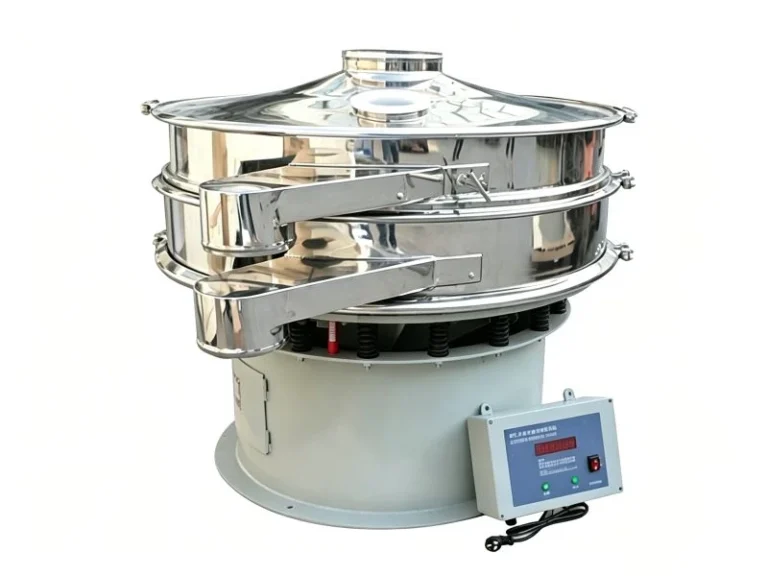
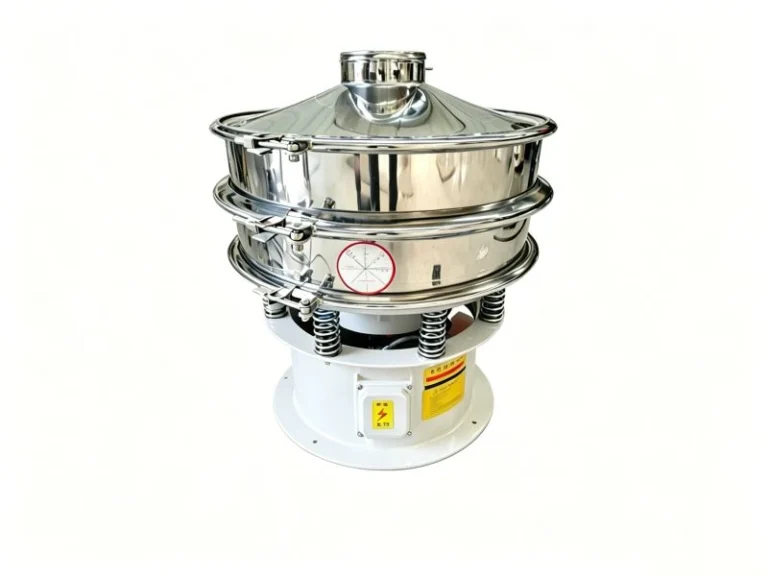
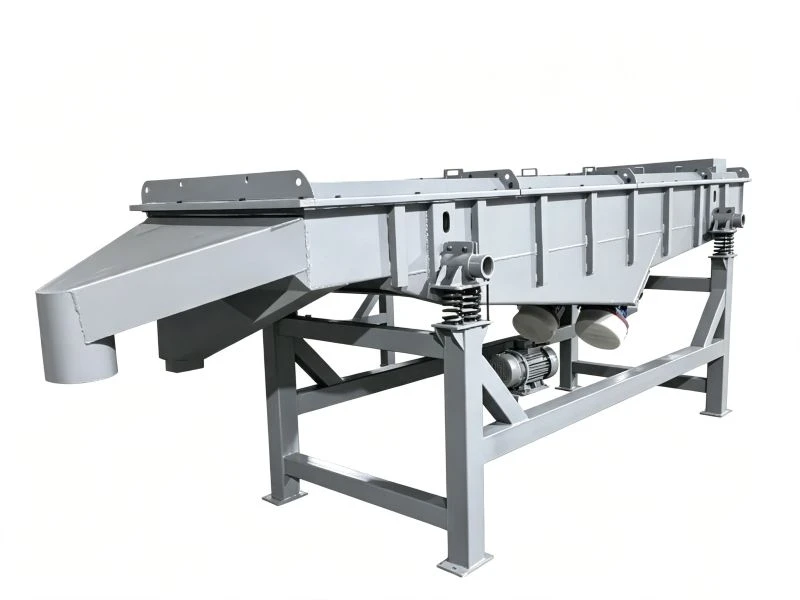
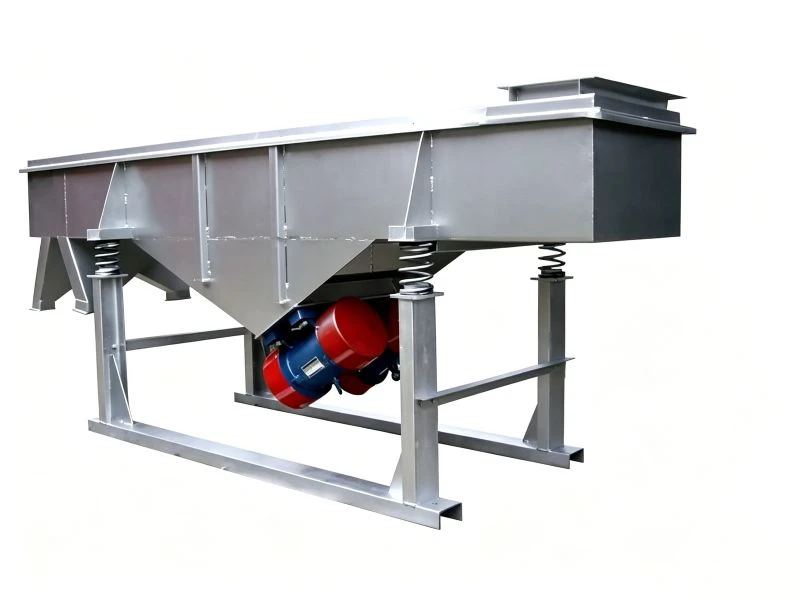
A linear vibrating screen for feed pellets moves material across a screen surface. Particles that fit through the openings fall through; retained material travels to a separate outlet.
Single-Deck Screening for Feed Pellet Fines Removal
Fines and small fragments pass through the screen. Pellets remain on top and move toward the discharge outlet.
Oversized pieces stay on the screen too. A single deck therefore cannot collect them separately from the acceptable pellets.
Double-Deck Feed Pellet Screener: Three Separate Outlets
The upper deck has larger openings and retains oversized pieces and lumps. Material passing through reaches the lower deck, where fines fall through and acceptable pellets remain.
| Screening Position | Separated Material | Outlet |
|---|---|---|
| Retained on the upper deck | Oversized pieces and lumps | Oversize |
| Retained on the lower deck | Acceptable pellets | Product |
| Passing through the lower deck | Fines and undersized fragments | Fines |
Can Screening Remove Overlong Feed Pellets?
A long, narrow pellet may pass through an opening end-first. Its diameter, length, and orientation all affect passage, as does the opening shape. If pellet length is a strict quality requirement, test representative samples to check whether screening can meet it.
How to Choose Screen Openings and Capacity for Feed Pellets
To size a linear vibrating screen for feed pellets, start with the required size cuts and the highest flow the screen will receive. Openings control which particles pass through. Screen area affects how much material the machine can handle. Both need to be checked with actual feed samples.
Define the Pellet Size and Screening Goal
Provide the pellet diameter and length range, acceptable product size, and the proportion of fines and oversized pieces.
The ranges below are starting references. Check them against the material and finished-product requirements before ordering a screen.
| Application | Reference Mesh Range | Screening Purpose |
|---|---|---|
| Raw ingredient cleaning: corn and soybean meal | 10–30 mesh | Remove oversized impurities, such as stones and lumps, where their size allows separation |
| Powdered feed grading | 60–120 mesh | Control powder fineness |
| Finished feed pellet grading | 8–40 mesh | Separate size fractions and remove fines |
| Fine grading and feed additives | 120 mesh and finer | Meet finer particle-size requirements |
Specify Screen Openings in Millimeters
A higher mesh count generally means smaller openings, but wire diameter and the mesh standard also affect the opening size. Specify the openings in millimeters and state whether they are square, round, or slotted.
A finer screen is not always a better choice. Smaller openings can reduce throughput and block more easily. With cylindrical pellets, check length and orientation as well as diameter.
For suitable feed products, openings within the 1.5–6 mm range can be evaluated. The final choice still depends on the required separation.
Size the Screener for Peak Feed Mill Output
Size the screen for the highest expected feed rate, including surges from upstream equipment. Account for fines content, moisture, and feed distribution across the deck. If the material forms a deep bed, fines may leave with the product before reaching the openings.
State capacity requirements in kg/h or t/h. A general machine rating does not guarantee the same throughput with feed pellets.
Check Fines Removal with a Material Trial
When testing a linear vibrating screen for feed pellets, run representative material at the required feed rate and sample every outlet.
| Test Item | What to Check |
|---|---|
| Residual fines in the product | Does the remaining fines content meet the product requirement? |
| Acceptable pellets in the fines outlet | How much usable product is being lost? |
| Material in the oversize outlet | Are oversized pieces being removed without excessive rejection of acceptable pellets? |
| Actual throughput and operating stability | Can the screen handle the required production flow consistently? |
| Pellet breakage before and after screening | Are screening or transfer conditions causing additional damage? |
Use these results to confirm the openings, number of decks, screen area, and operating settings. For a broader comparison of machine types and selection factors, see our screening equipment selection guide.
How to Reduce Pellet Breakage and Screen Blockage
Check moisture, oil content, and bulk density alongside throughput and separation requirements when choosing the screen area, contact materials, and vibration settings. During operation, watch how the feed spreads and moves across the deck.
Keep Feeding Even and Limit Transfer Drops
Spread feed across the screen width rather than letting it pile up at the inlet. Keep transfer drops short where practical to reduce impact damage.
For feed pellet screening before bagging, check the discharge chutes as well. Rough handling after the screen can create fresh fines just before packaging.
Send acceptable pellets to packaging and collect fines and oversized material separately. Before returning rejected material for reprocessing, check its condition and follow the plant’s rework procedure.
Adjust Vibration to Pellet Strength
On a linear vibrating screen for feed pellets, adjust vibration so pellets move steadily and fines have time to reach the openings. Too much vibration can increase breakage; too little material movement can cause buildup.
When adjusting the machine, sample each outlet. Look for additional fragments and acceptable pellets being discharged with the rejected material.
What Causes Feed Pellet Screen Blockage?
Moist or oily feed can coat the screen surface. Particles close to the opening size can become lodged in individual holes. These problems need different responses.
A compatible bouncing-ball cleaning system may dislodge trapped particles, but it may not clear sticky oil deposits. High-moisture or high-fat feeds may require changes to material conditioning and cleaning routines. Our guide to screen blockage causes and prevention covers further checks.
Keep the Screen Accessible for Maintenance
Consider 304 stainless steel for material-contact parts, with surfaces and joints that can be cleaned easily. Material grade alone does not establish compliance with feed hygiene requirements.
Leave access to the decks and outlets for inspection. Confirm enclosure and dust extraction connections where needed.
Record the following in a maintenance log:
- Daily checks: Loose mounting bolts, unusual noise, material buildup, and damaged seals.
- Screen condition: Tension, wear, and tears that could let material bypass the intended separation.
- Motor and bearings: Lubrication and inspections carried out according to the motor manufacturer’s instructions, including the specified grease type and service intervals.
- Operating current: Readings taken under comparable conditions. Investigate changes alongside feed load, vibration, and bearing temperature.
Screening separates material by size. Foreign objects that pass through the same openings as acceptable feed may remain in the product, so other contamination controls are still needed.
Need a linear vibrating screen for feed pellets? Discuss your screening requirements with us and provide your feed type, pellet dimensions, required throughput, and the sizes you need to remove.
FAQ
1. Can One Feed Pellet Screener Remove Both Fines and Oversized Pellets?
Yes. A double-deck feed pellet screener can separate material into three streams. The upper deck retains oversized pieces and lumps. The lower deck retains acceptable pellets while fines pass through. A single-deck screen used for fines removal cannot collect oversized pieces separately from the product.
2. What Screen Opening Should I Use for Feed Pellet Fines Removal?
Choose the opening according to the smallest acceptable particle size, then check it with actual feed samples. Pellet diameter, length, and shape affect passage. Specify the opening in millimeters and include the hole shape. Although 1.5–6 mm openings can be evaluated for suitable products, this range is not a recommendation for every feed.
3. Where Should a Feed Pellet Screen Be Installed: After Cooling or Before Bagging?
After cooling is a common position for removing fines and lumps from pelleted feed. Screening before bagging can help remove fragments generated during later handling. Choose the location based on where unwanted material appears, and keep transfers after screening short and gentle to avoid creating fresh fines.
4. Can the Same Screener Handle Whole Pellets and Crumbled Feed?
Yes, provided the screen openings and operating settings suit each product. Crumbled feed screening must retain smaller particles that might be rejected from whole-pellet feed. When changing products, review the required size range, replace screens where needed, and check samples from each outlet for product loss and remaining fines.
5. How Do I Choose Feed Pellet Screener Capacity for My Production Line?
Specify the peak feed rate in kg/h or t/h, including surges from upstream equipment. Fines content, moisture, bulk density, screen openings, and usable screen area all affect throughput. Confirm capacity with representative material while checking separation quality. A machine’s general capacity rating alone is not enough to select a model.
6. Why Are Fines Still Present After Feed Pellet Screening?
Check for uneven feeding, a deep material bed, blocked openings, or damaged screens. Fines may leave with the pellets if they cannot reach the openings before discharge. Compare samples at the screen outlet and bagging point as well: if fines increase between them, downstream handling may be breaking the pellets.