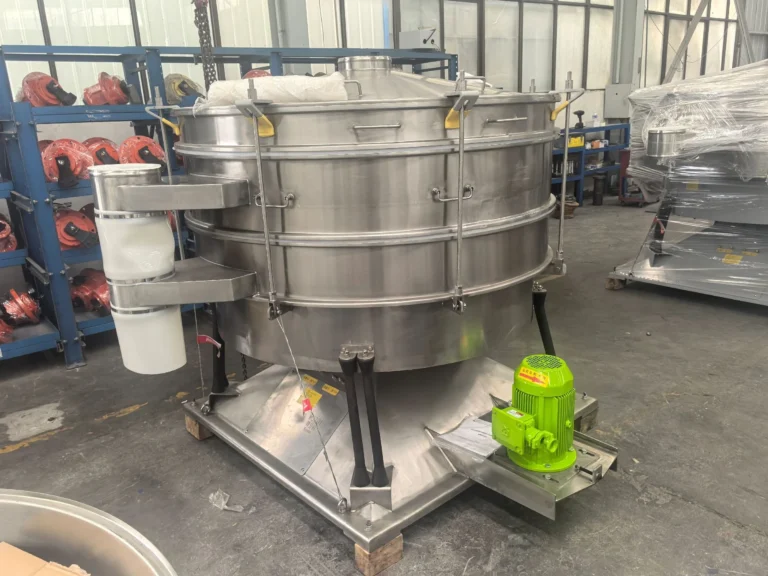
超音波スクリーニングシステムとは何ですか?
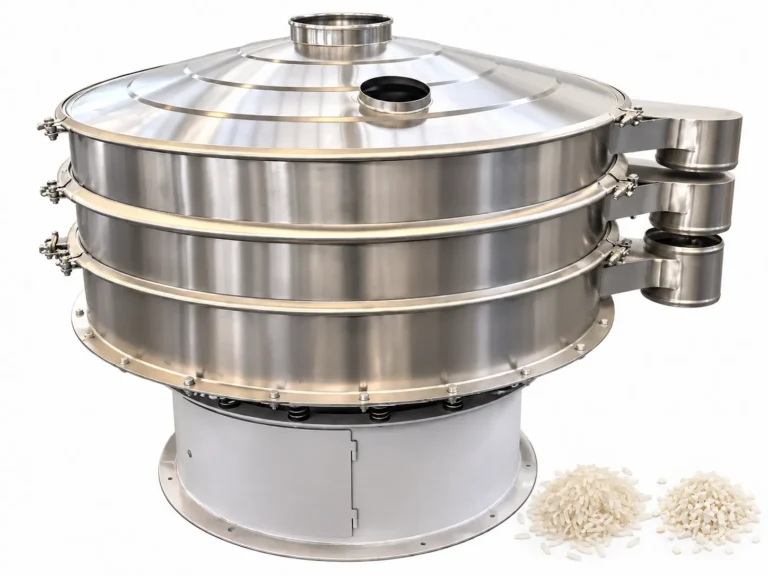
超音波ふるい分けシステムは、網目の目詰まりを軽減し、ふるい分け効率を向上させるために設計された、実用的で信頼性の高いふるい分けソリューションです。主に、従来の振動ふるいでは材料の付着、凝集、静電気、網目の目詰まりなどの問題が生じやすい、微細材料や超微細材料のふるい分けに使用されます。
ふるい面に超音波振動を加えることで、ふるい分け効率を約2~3倍に向上させることができます。食品、医薬品、冶金、化学、鉱物処理など、微細なふるい分けやろ過を必要とするさまざまな産業で広く使用されています。
超音波ふるい分けシステムは、微粉末やふるい分けが困難な材料に特に適しています。ふるい分け精度を向上させ、凝集、静電気、強い付着、網目の目詰まりによる問題を効果的に解決できます。
超音波ふるい分けシステムの仕組み
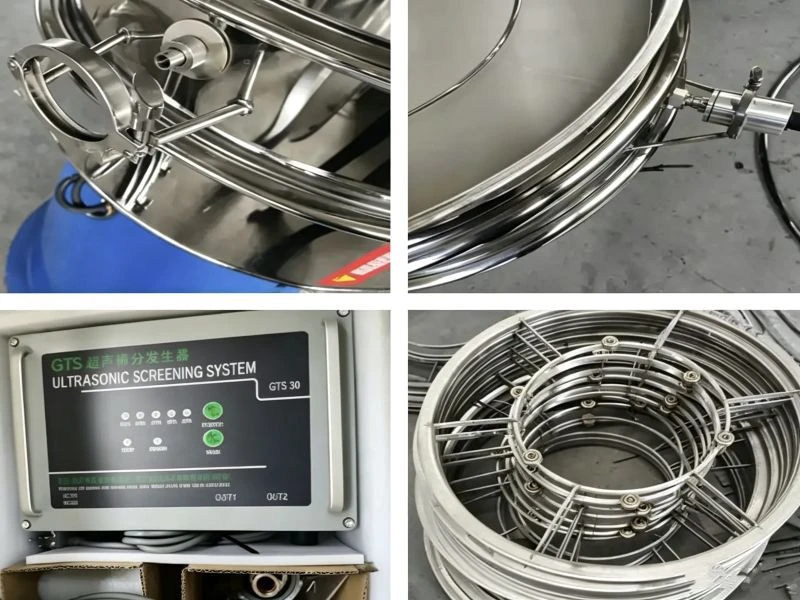
超音波ふるい分けシステムは、主に超音波発振器、振動子、共振リングで構成されています。
超音波発振器は高周波の振動を発生させます。振動子はこの振動を高周波の縦方向の正弦波振動に変換します。この振動波は共振リングに伝わり、共振を生じさせ、超音波振動をふるい面に均一に伝えます。
ふるい分け中、ふるい網に超音波振動が加えられると同時に、材料は振動ふるいの三次元振動によって移動します。
この複合振動により、網目の目詰まりを防ぎ、ふるい分け能力と品質を向上させることができます。
For dry gelatin, the first step in troubleshooting screen blinding is to check whether lumps are already present at the feed inlet or individual granules are lodging in the mesh.
超音波ふるい分けシステムはミクロンレベルのふるい分け用に設計されており、目開きが100 μm未満のふるいを通過する材料の通過率を大幅に向上させることができます。
超音波ふるい分けシステムの主な特長
超音波ふるい分けシステムの主な利点は次のとおりです。
高いふるい分け効率
超音波振動は、次の問題の軽減に役立ちます。 網目の目詰まり 微粉末による目詰まりを防ぎ、ふるい分け効率を向上させます。
高いふるい分け精度
このシステムは、微細な材料を高精度に分級できます。提供された用途データによると、ふるい分け精度は最大70%向上し、処理能力は通常のふるい機の2~10倍に達します。
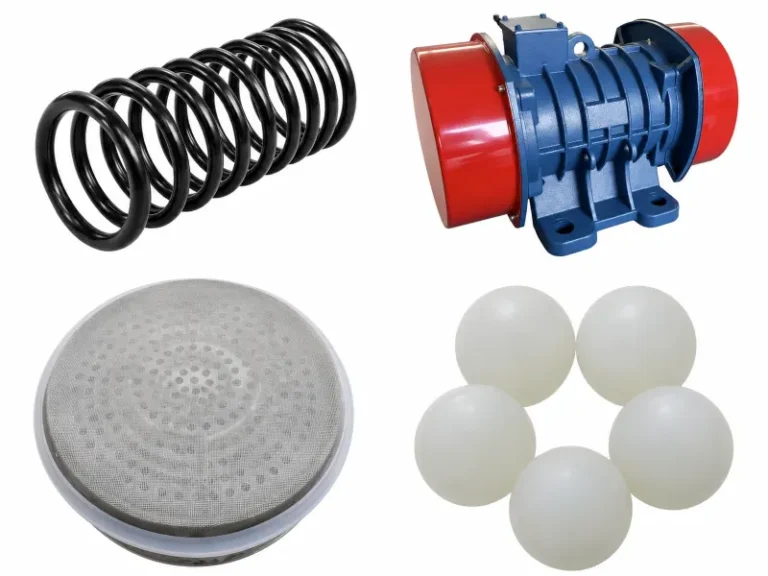
当社の用途ガイドでは、 ソーダ灰の超音波による目詰まり防止, について解説しており、ボールによる清掃方式を置き換えたことで清掃のための停止頻度が減少した、80メッシュの軽質ソーダ灰設備の事例も紹介しています。
低いエネルギー消費
従来の 振動ふるい機, と比べ、超音波ふるい分けシステムは少ないエネルギー消費で運転できます。
よりクリーンなふるい分け
このシステムは、ふるい分け時の粉じんの飛散を抑え、作業環境の改善に役立ちます。
ふるい網の長寿命
その は、微細粉体を従来の振動ふるいでスクリーニングするのが困難な場合に、より良い選択です。 は摩耗しにくく、より長い耐用年数が期待できます。
ふるい網は最大 635 mesh, まで対応可能で、自己洗浄効果を得ながら運転できます。これにより、付着性が強い、凝集しやすい、粒子が非常に細かい、高密度、または比重が小さい材料のふるい分けにおける難題の解決に役立ちます。
超音波ふるい分けシステムの構造とは?
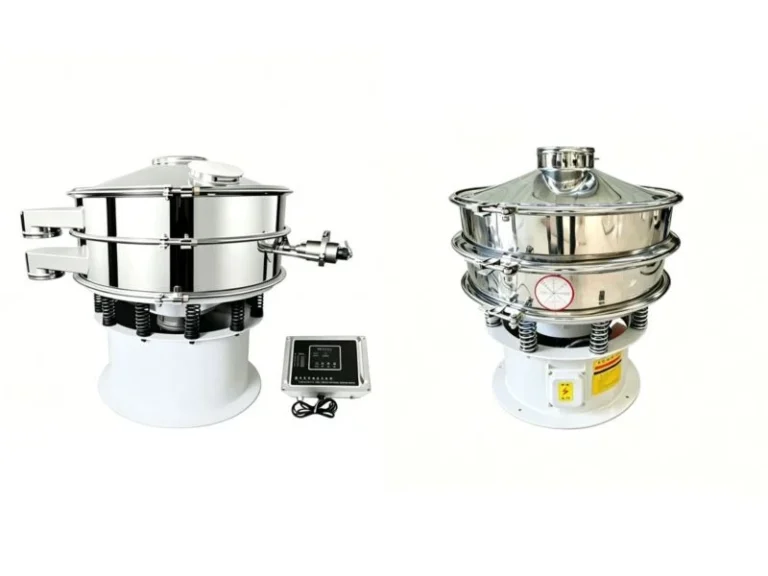
一般的な超音波ふるい分けシステムは、以下の構成部品で構成されています。
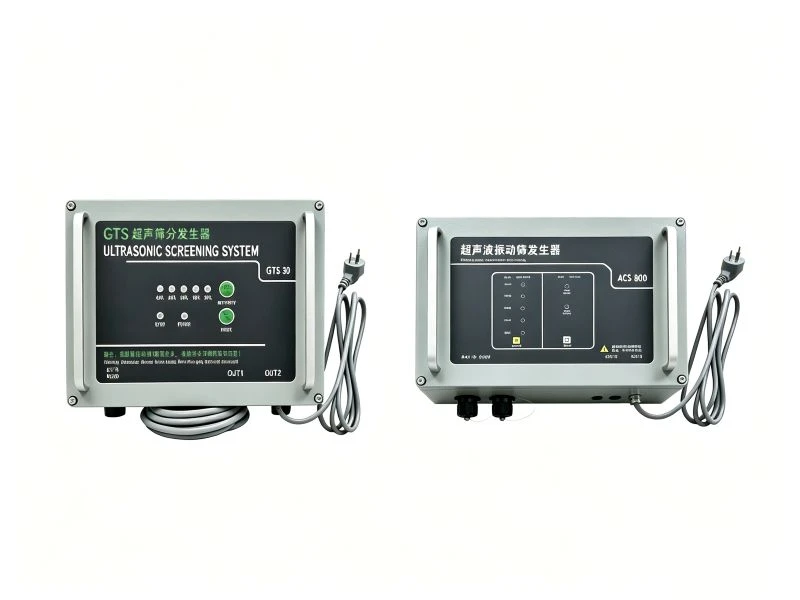
超音波コントローラー
超音波コントローラーは、マイコンチップを内蔵した高周波超音波発振器です。超音波システムの運転状態に応じて周波数をデジタル方式で自動追跡し、手動調整の必要性を低減します。
高周波ケーブル
高周波ケーブルは、超音波振動子と超音波コントローラーを接続します。
コネクター
システムの構成部品間の接続には、航空用コネクターを使用します。
振動子
振動子は、電気エネルギーを超音波振動に変換する高周波超音波振動子です。
The transducer can sit inside or outside the screening chamber. Our guide to internal and external ultrasonic transducers explains how that position affects powder exposure and access for servicing.
超音波ふるい枠
超音波ふるい枠は、外枠と共振リングで構成されています。
スクリーンメッシュ
このシステムは、以下の範囲のメッシュのふるい網に対応しています: 10 mesh to 635 mesh.
超音波ふるいシステムではどのような材料をふるい分けできますか?
微粉末用の超音波ふるいシステムは、静電気の発生、凝集、付着、または網目の目詰まりが起こりやすい材料に適しています。
代表的な材料には以下のものがあります:
- Graphite powder
- Conductive powder
- Lithium iron phosphate (LFP)
- Pigment powder
- Dye powder
- Resin powder
- Phosphor powder
- Ultra-fine traditional Chinese medicine powder
- デンプン
- Iron powder
- Aluminum powder
- 銅粉
These materials are commonly found in battery materials, chemical products, pharmaceuticals, metallurgy, and other fine powder processing applications.
What Mesh Range Can an Ultrasonic Screening System Handle?
The anti-clogging screening range of the ultrasonic system is 20 mesh to 635 mesh.
その 20–200 mesh range is mainly used for conventional coarse and fine particle screening.
The main advantage of the system is in the 200~635メッシュ range, where ultra-fine screening becomes more difficult for ordinary vibrating screens.
For ultra-fine powders above 200 mesh, traditional screening equipment may have difficulty maintaining stable production. An ultrasonic screening system can be used for continuous screening at 200, 300, 400, 500, and 635 mesh.
It helps maintain stable screening accuracy while reducing mesh clogging and material waste.

What Should You Consider When Choosing an Ultrasonic Screening System?
When selecting an ultrasonic screening system, several factors should be considered:
- Screen mesh size
- Processing capacity
- Ultrasonic power
- Required screening precision
The equipment should be installed horizontally to ensure proper operation.
During operation and maintenance, the screen tension and working condition of the ultrasonic transducer should be checked regularly. The screen should also be cleaned regularly to prevent material accumulation from affecting screening performance.
Ultrasonic Screening System Application Case
A practical application is the screening of lithium iron phosphate powder.The application uses a 400-mesh screen with a Φ1200 ultrasonic vibrating screen.
Before installing the ultrasonic system, the machine needed to stop every 45–60 minutes for screen cleaning. Effective operating time was only 4.5 hours, actual capacity was 110 kg/h, and the powder screening pass rate was 67%.
After adding the ultrasonic cleaning system and an anti-static screen, the machine no longer needed to stop for intermediate screen cleaning and could operate continuously for 24 hours.The actual capacity increased to 180 kg/h, while the powder screening pass rate increased to 93%.
The screen service life increased to 24 days, and material loss decreased to 2.1%. The finished material particle size D50 deviation was controlled within ±0.3 μm, meeting the quality inspection requirements for lithium battery raw materials.
結論
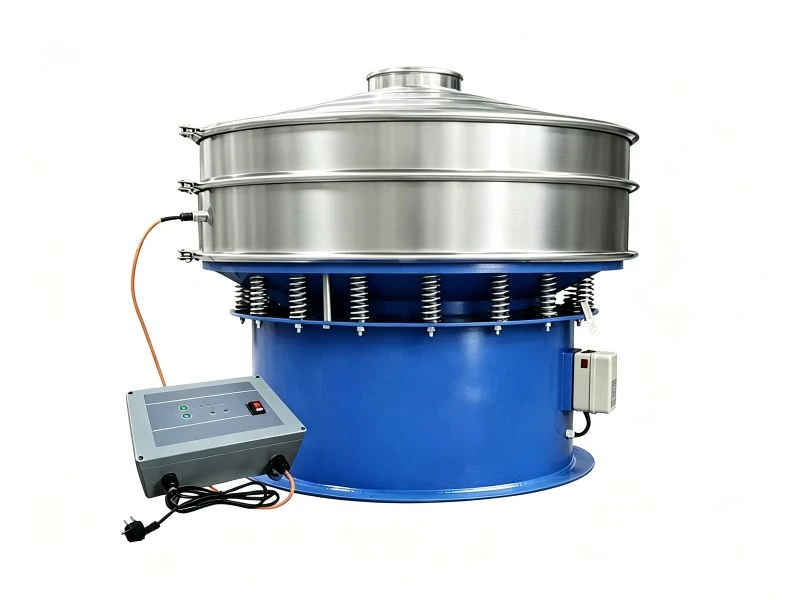
An ultrasonic screening system is a screening solution designed for fine and ultra-fine materials where mesh clogging is a major problem.
It combines an ultrasonic generator, transducer, resonance ring, screen frame, and screen mesh to add high-frequency vibration to the screening process. This helps reduce mesh blockage, improve screening efficiency and precision, and support continuous screening of fine powders.
With a screening range of 20–635 mesh and an advantage in ultra-fine screening from 200~635メッシュ, the system can be used for materials such as graphite powder, lithium iron phosphate, pigment powder, starch, iron powder, aluminum powder, and copper powder.