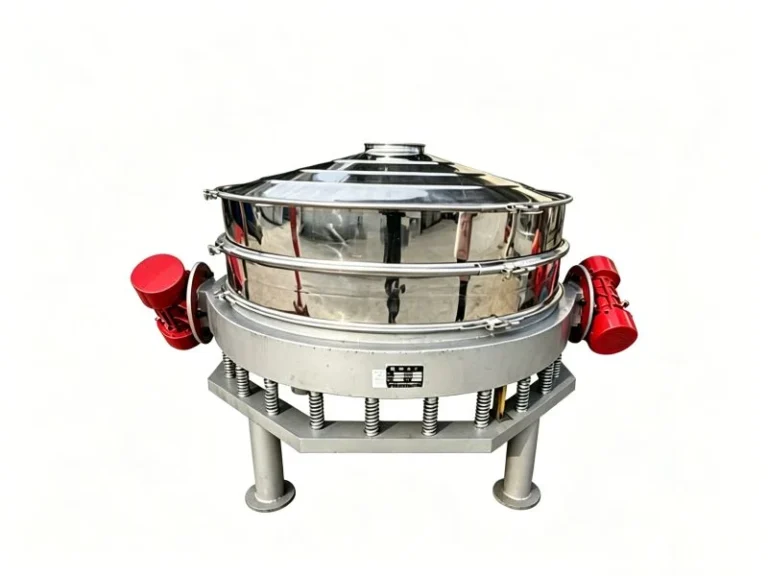
초음파 스크리닝 시스템이란 무엇인가?
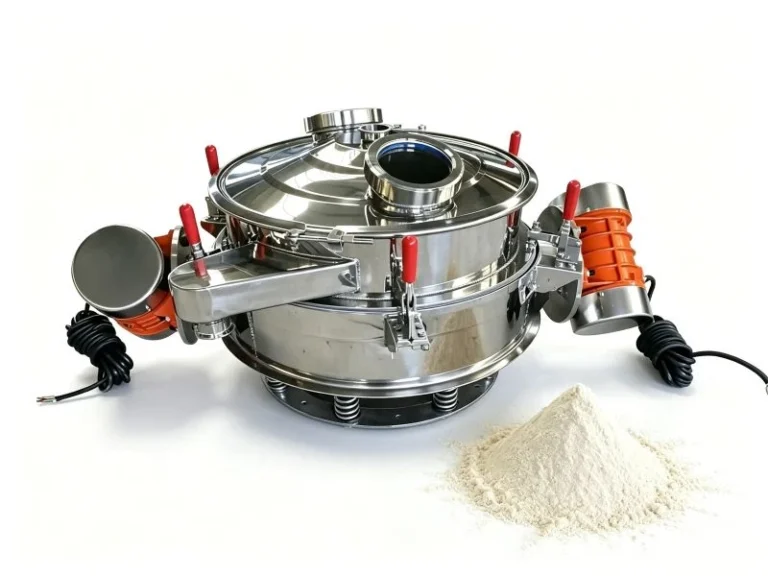
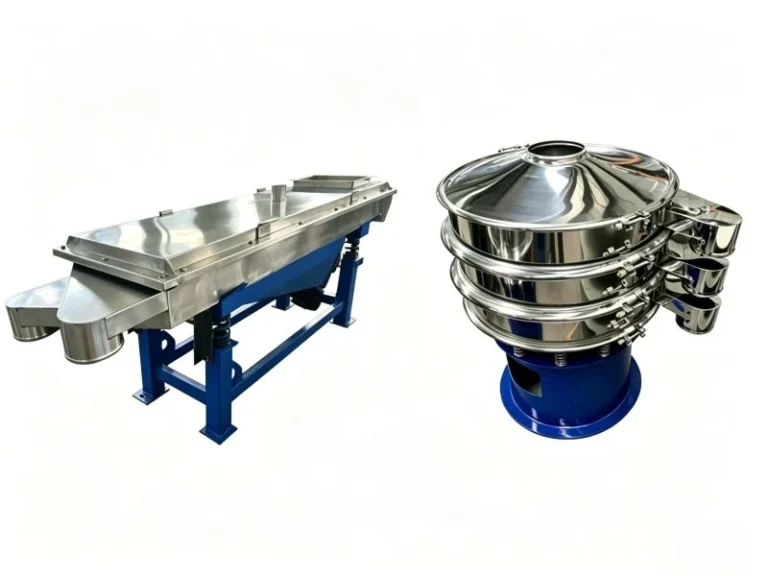
An ultrasonic screening system is a practical and reliable screening solution designed to reduce mesh clogging and improve screening efficiency. It is mainly used for fine and ultra-fine material screening where conventional vibrating screens may face problems such as material adhesion, agglomeration, static electricity, and mesh blockage.
By adding ultrasonic vibration to the screen surface, the system can improve screening efficiency by about 2–3 times. It is widely used in food, pharmaceutical, metallurgy, chemical, mineral processing, and other industries that require fine screening and filtration.
The ultrasonic screening system is especially suitable for fine powders and materials that are difficult to screen. It can improve screening accuracy and effectively solve problems caused by agglomeration, static electricity, strong adhesion, and mesh clogging.
How Does an Ultrasonic Screening System Work?
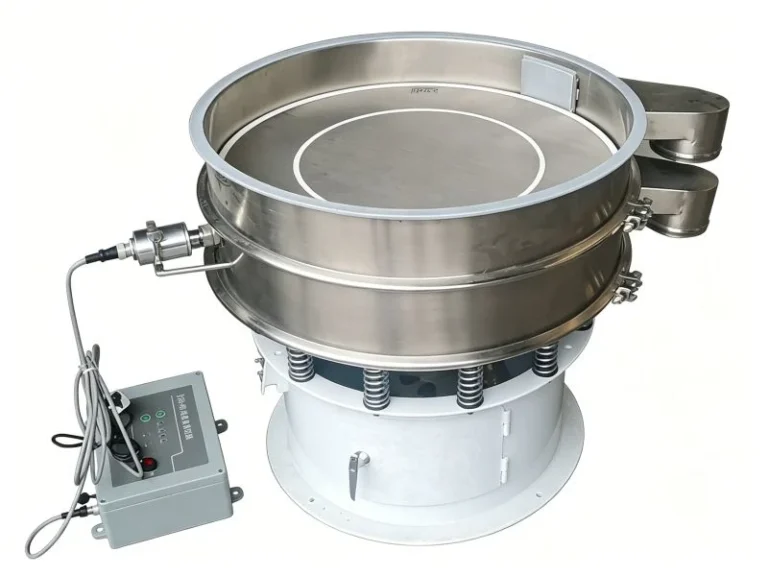
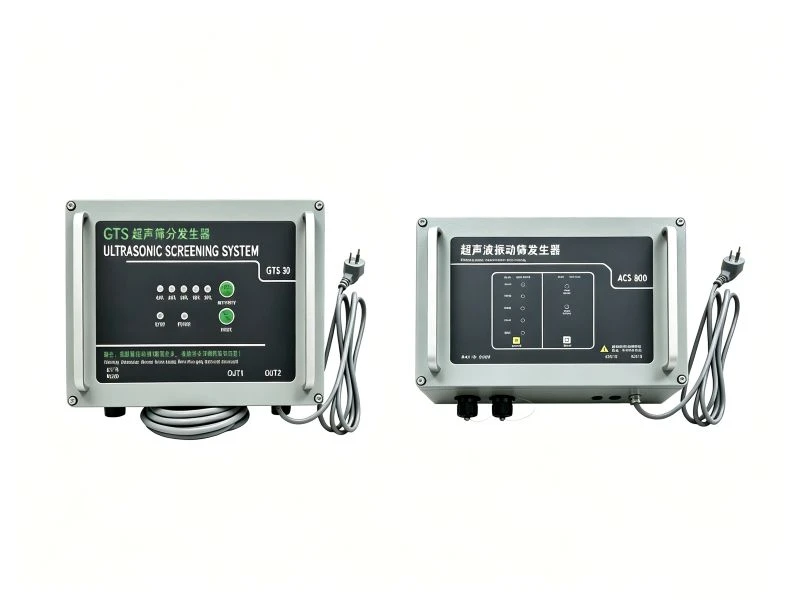
An ultrasonic screening system consists mainly of an ultrasonic generator, transducer, and resonance ring.
The ultrasonic generator produces high-frequency oscillation. The transducer converts this oscillation into high-frequency longitudinal sinusoidal vibration waves. These vibration waves are transferred to the resonance ring, which generates resonance and evenly transfers the ultrasonic vibration to the screen surface.
During screening, the material moves with the three-dimensional vibration of the vibrating screen while ultrasonic vibration is added to the screen mesh.
This combined vibration helps prevent mesh clogging and improves screening capacity and quality.
The ultrasonic screening system is designed for micron-level screening and can significantly improve the penetration rate of materials passing through screens below 100 μm.
What Are the Main Features of an Ultrasonic Screening System?
The main advantages of an ultrasonic screening system include:
1. High Screening Efficiency
Ultrasonic vibration helps reduce mesh blockage caused by fine powders and improves screening efficiency.
2. High Screening Precision
The system can achieve high-precision classification of fine materials. According to the provided application data, screening precision can be improved by up to 70%, while processing capacity can reach 2–10 times that of ordinary screening machines.
3. Low Energy Consumption
Compared with traditional vibrating screens, an ultrasonic screening system can operate with lower energy consumption.
4. Cleaner Screening
The system helps reduce dust flying during screening and can improve the working environment.
5. Long Screen Life
그 ultrasonic vibrating sieve is less prone to wear and can provide a longer service life.
The screening mesh can reach 635 mesh, and the screen can operate with a self-cleaning effect. This helps solve difficult screening problems involving strong adhesion, easy agglomeration, high fineness, high density, and low specific gravity materials.
What Is the Structure of an Ultrasonic Screening System?
A typical ultrasonic screening system consists of the following components:
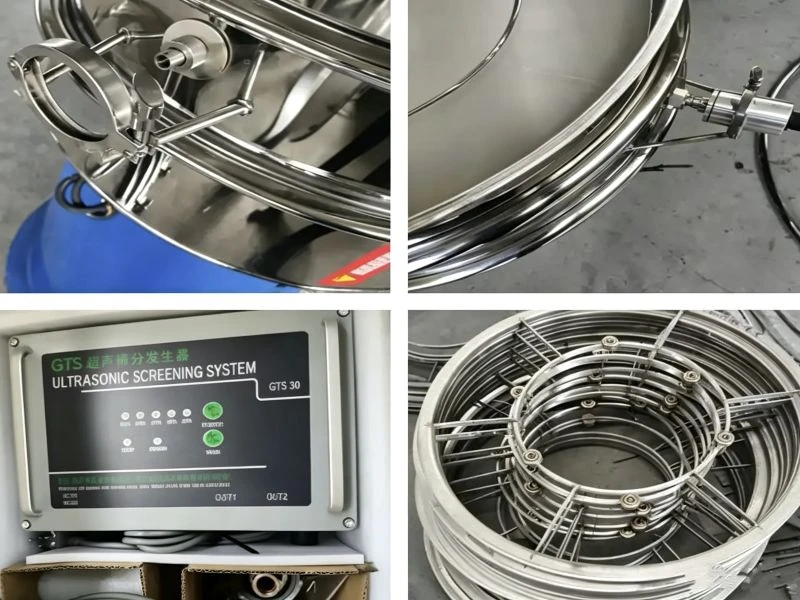
Ultrasonic Controller
The ultrasonic controller is a high-frequency ultrasonic generator with a built-in microcomputer chip. It can automatically track the digital frequency according to the operating condition of the ultrasonic system, reducing the need for manual adjustment.
High-Frequency Cable
The high-frequency cable connects the ultrasonic oscillator and ultrasonic controller.
Connector
An aviation connector is used for the connection between the system components.
Transducer
The transducer is a high-frequency ultrasonic transducer that converts electrical energy into ultrasonic vibration.
Ultrasonic Screen Frame
The ultrasonic screen frame consists of an outer frame and a resonance ring.
스크린 메시
The system can be used with screen meshes ranging from 10 mesh to 635 mesh.
What Materials Can an Ultrasonic Screening System Screen?
An ultrasonic screening system for fine powder screening is suitable for materials that are prone to static electricity, agglomeration, adhesion, or mesh clogging.
Typical materials include:
- Graphite powder
- Conductive powder
- Lithium iron phosphate (LFP)
- Pigment powder
- Dye powder
- Resin powder
- Phosphor powder
- Ultra-fine traditional Chinese medicine powder
- Starch
- Iron powder
- Aluminum powder
- Copper powder
These materials are commonly found in battery materials, chemical products, pharmaceuticals, metallurgy, and other fine powder processing applications.
What Mesh Range Can an Ultrasonic Screening System Handle?
The anti-clogging screening range of the ultrasonic system is 20 mesh to 635 mesh.
그 20–200 mesh range is mainly used for conventional coarse and fine particle screening.
The main advantage of the system is in the 200–635 메시 range, where ultra-fine screening becomes more difficult for ordinary vibrating screens.
For ultra-fine powders above 200 mesh, traditional screening equipment may have difficulty maintaining stable production. An ultrasonic screening system can be used for continuous screening at 200, 300, 400, 500, and 635 mesh.
It helps maintain stable screening accuracy while reducing mesh clogging and material waste.

What Should You Consider When Choosing an Ultrasonic Screening System?
When selecting an ultrasonic screening system, several factors should be considered:
- Screen mesh size
- Processing capacity
- Ultrasonic power
- Required screening precision
The equipment should be installed horizontally to ensure proper operation.
During operation and maintenance, the screen tension and working condition of the ultrasonic transducer should be checked regularly. The screen should also be cleaned regularly to prevent material accumulation from affecting screening performance.
Ultrasonic Screening System Application Case
A practical application is the screening of lithium iron phosphate powder.The application uses a 400-mesh screen with a Φ1200 ultrasonic vibrating screen.
Before installing the ultrasonic system, the machine needed to stop every 45–60 minutes for screen cleaning. Effective operating time was only 4.5 hours, actual capacity was 110 kg/h, and the powder screening pass rate was 67%.
After adding the ultrasonic cleaning system and an anti-static screen, the machine no longer needed to stop for intermediate screen cleaning and could operate continuously for 24 hours.The actual capacity increased to 180 kg/h, while the powder screening pass rate increased to 93%.
The screen service life increased to 24 days, and material loss decreased to 2.1%. The finished material particle size D50 deviation was controlled within ±0.3 μm, meeting the quality inspection requirements for lithium battery raw materials.
결론
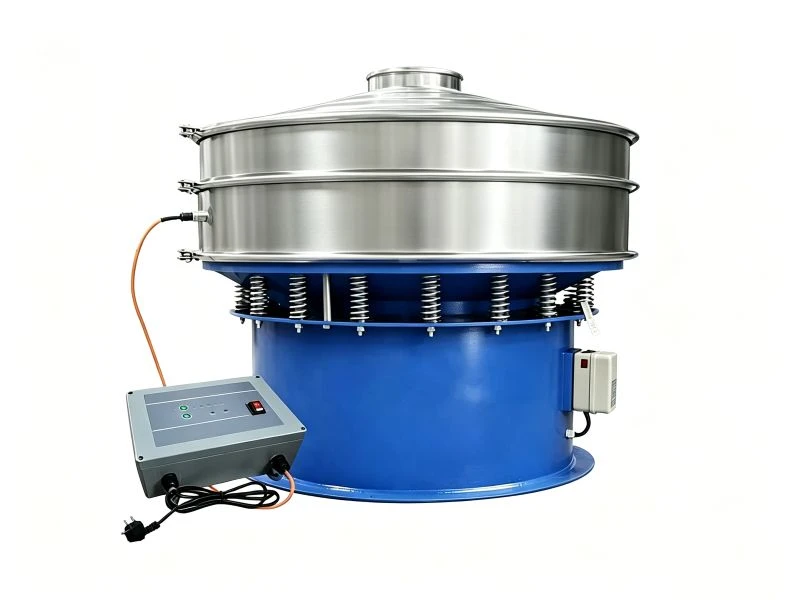
An ultrasonic screening system is a screening solution designed for fine and ultra-fine materials where mesh clogging is a major problem.
It combines an ultrasonic generator, transducer, resonance ring, screen frame, and screen mesh to add high-frequency vibration to the screening process. This helps reduce mesh blockage, improve screening efficiency and precision, and support continuous screening of fine powders.
With a screening range of 20–635 mesh and an advantage in ultra-fine screening from 200–635 메시, the system can be used for materials such as graphite powder, lithium iron phosphate, pigment powder, starch, iron powder, aluminum powder, and copper powder.