메쉬 수 대 미크론 크기: 산업용 체 스크린을 올바르게 지정하는 방법
메시 수와 마이크론 크기의 차이를 이해하면 산업용 체망을 주문할 때 실수를 피할 수 있습니다. 메시 번호만으로는 개구 크기를 완전히 지정할 수 없습니다. 필요한 개구 크기를 마이크론 단위로 먼저 정한 다음, 와이어 지름, 재질, 개구 허용오차 및 체망 치수를 공급업체에 확인하세요.

메시 수와 마이크론 크기: 무엇이 다를까요?
메시 수는 직조 체망의 선형 인치당 개구 수를 나타냅니다. 마이크론 크기는 와이어 사이의 실제 개구 크기를 나타냅니다. 둘은 서로 관련되어 있지만, 그 관계는 와이어 지름에 따라 달라집니다.
메시 수는 무엇을 측정하나요?
메시 수는 체망의 1인치(25.4 mm) 길이에 있는 개구의 수입니다. 100메시 체망은 제곱인치당 개구가 100개가 아니라 선형 인치당 개구가 100개입니다.
재료 규격에서 “200메시 분말”과 같은 용어는 해당 체를 통과한 재료를 의미하는 경우가 많습니다. 그렇다고 모든 입자의 크기가 같다는 뜻은 아닙니다. 기준이 되는 체와 통과해야 하는 재료의 비율을 명시하세요.
체망에서 마이크론 크기는 무엇을 의미하나요?
μm로 표기하는 마이크론은 1밀리미터의 1,000분의 1입니다:
1 mm = 1,000 μm
체망에서 마이크론 크기는 인접한 와이어 사이의 실제 개구 크기를 의미합니다. 예를 들어 75 μm 개구는 0.075 mm입니다.
같은 메시 수에서도 개구 크기가 다를 수 있는 이유는 무엇인가요?
두 직조 체망은 메시 수가 같아도 와이어 지름이 다를 수 있습니다. 메시 수가 같을 때 와이어가 두꺼우면 개구가 작아지고, 와이어가 가늘면 개구가 커집니다.
일반적으로 메시 수가 높을수록 개구가 작아지지만, 메시 번호는 와이어 지름이나 지정된 체 표준과 함께 확인해야 합니다.
메시-마이크론 환산표: 올바르게 읽는 방법
메시-마이크론 환산표는 유용한 참고 자료이지만, 어떤 체 표준을 따르는지 확인해야 합니다. 표준 체 번호와 시판 체망 규격은 항상 서로 대체할 수 있는 것은 아닙니다.
일반적인 미국 표준 체 번호와 공칭 개구 크기
| 미국 표준 체 번호. | 공칭 개구 크기 (μm) |
|---|---|
| 40번 | 425 |
| 60번 | 250 |
| 100번 | 150 |
| 200번 | 75 |
| 325번 | 45 |
| 400번 | 38 |
이 값은 표준 시험체의 공칭 개구 크기를 나타내며, 동일한 메시 번호로 판매되는 모든 상업용 망의 개구 크기를 보장하지는 않습니다.
메시 수와 와이어 직경으로 개구 크기를 계산하는 방법
규칙적인 정사각형 직조망의 개구 크기는 다음과 같이 계산합니다.
개구 크기 (μm) = 25,400 ÷ 메시 수 − 와이어 직경 (μm)
예를 들어, 직경 100 μm의 와이어로 짠 100메시 망의 계산상 개구 크기는 다음과 같습니다.
25,400 ÷ 100 − 100 = 154 μm
이 계산은 해당 망의 기하학적 구조를 설명합니다. 실제 측정된 개구 크기나 시험체 표준의 준수 여부를 확인해 주지는 않습니다. 또한 더치 직조 필터망이나 규칙적인 정사각형 개구가 없는 다른 구조에는 직접 적용되지 않습니다.
표준 체 번호가 보편적인 메시 환산 기준이 아닌 이유
표준 체 번호는 지정된 공칭 개구 크기를 나타냅니다. 상업용 메시 수는 직조 밀도를 나타내므로 개구 크기는 와이어 두께에도 영향을 받습니다. 따라서 미국 표준 100번 체의 공칭 개구 크기는 150 μm인 반면, 위의 100메시 예에서는 154 μm가 나옵니다.
주문할 때는 필요한 개구 크기와 합의된 허용 오차를 기준으로 사용하십시오. 간이 계산식인 15,000 ÷ 메시 수 는 대략적인 추정치일 뿐이므로 구매 규격으로 사용해서는 안 됩니다.

메시 수 외에 중요한 체망 규격은 무엇인가요?
개구 크기를 아는 것은 산업용 체망의 규격을 정하는 과정 중 일부에 불과합니다. 와이어 직경, 직조 방식, 재질, 프레임 치수도 체망이 공정에 적합하고 장비에 맞는지에 영향을 미칩니다.
와이어 직경과 개구율
개구율은 메시 표면에서 물질이 통과할 수 있는 면적의 비율입니다. 개구율은 개구 크기와 와이어 직경에 따라 달라집니다.
같은 개구부 크기에서는 더 가는 와이어가 개구율을 높이지만, 재질과 구조가 같다면 일반적으로 마모와 기계적 손상에 대한 저항성은 낮습니다. 개구율이 높으면 처리량이 늘어날 수 있지만, 결과는 재료의 흐름, 막힘 및 투입물의 분포에도 좌우됩니다.
직조 방식과 스테인리스강 등급
재질뿐 아니라 직조 방식도 명시하세요. 평직 사각망과 더치 직조망은 개구 구조가 다르므로 서로 대체할 수 있는 것으로 취급해서는 안 됩니다.
스테인리스강 스크린의 경우 304 또는 316과 같이 필요한 등급을 명시하고, 제품 및 세척 화학물질에 적합한지 확인하세요. “스테인리스강 메쉬”라고만 기재하면 재질 사양이 불완전합니다.
적용 사례는 다음 가이드를 참조하세요. 향신료 가공을 위한 스크린 선택, 이 가이드에서는 개구부와 데크 선택을 재료의 거동 및 세척 요구사항과 연관 지어 설명합니다.
개구부 허용오차 및 검사 요구사항
공칭 개구부 크기가 모든 개구부의 크기가 정확히 같다는 뜻은 아닙니다. 허용되는 편차와 공급업체의 검증 방법을 합의하세요.
분리 정확도가 중요한 경우 개구부 검사 보고서나 관련 적합성 문서를 요청하세요. 해당 문서가 스크린 천을 대상으로 하는지, 완성된 시험체를 대상으로 하는지 확인해야 하며, 선별기 전체를 인증한다고 간주해서는 안 됩니다.
Screen Dimensions, Frame Fit and Support Mesh
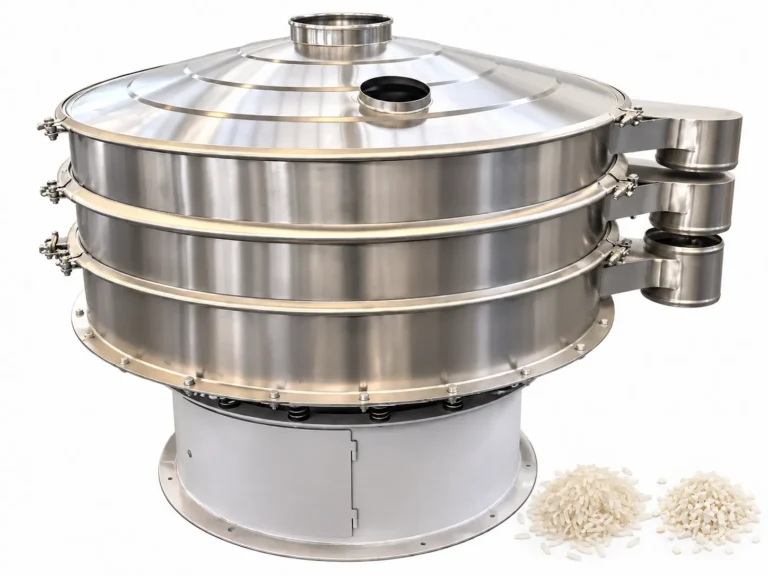
For replacement screens, provide a drawing or measurements of the existing assembly. Confirm screen diameter or length and width, frame profile, mounting method and seal arrangement. For a 진동 체 기계, check the existing frame details rather than relying on nominal machine diameter alone.
Also identify any support mesh beneath the screening cloth. Its purpose is to support the fine mesh, not provide another grading stage. Incorrect frame fit, tension or support can cause premature damage or allow material to bypass the screen.

How to Write an Industrial Sieve Screen Specification
An industrial sieve screen specification should describe the separation required and the screen to be supplied. Provide the known requirements and ask the supplier to confirm any missing parameters before ordering.
Define the Separation Requirement and Acceptance Criteria
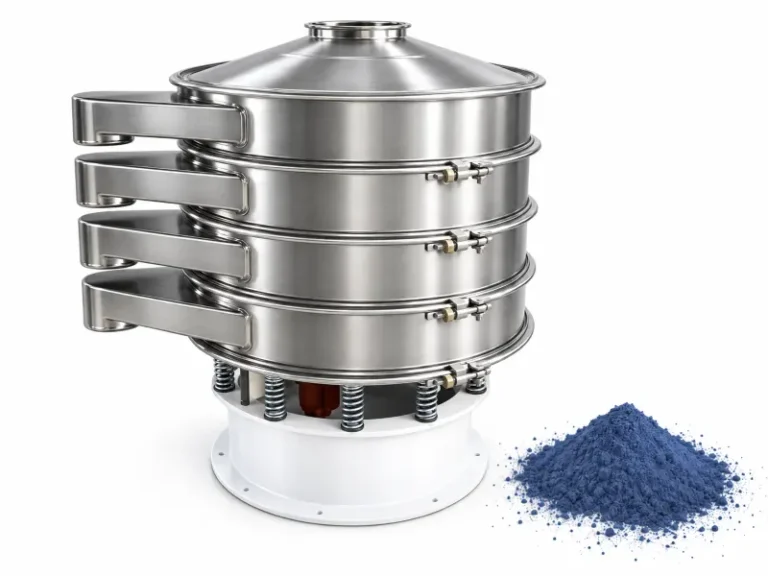
Start with what should pass through the screen and what should be retained. State whether the purpose is to remove oversized contamination or separate a product into size fractions. For several product grades, see our guide to 다층 체 진동기 구성.
Keep screen aperture and finished product requirements separate. A nominal 75 μm opening specifies the screen; it does not guarantee that the screened product will meet every particle size limit.
Specify the permitted oversize or fines, sampling procedure and test method. Where sieve analysis is suitable, a 실험실 체 진동기 with appropriate test sieves can help check the particle size distribution. Laboratory results do not establish production throughput, which requires a separate screening trial.
다음과 같은 screen aperture selection for calcium carbonate, provide the feed particle size distribution and permitted coarse residue. A commercial powder grade alone does not specify the screen opening needed for oversize removal.
For a practical example, see how to select a screen aperture for corn starch based on the oversized material to be removed and the required throughput.
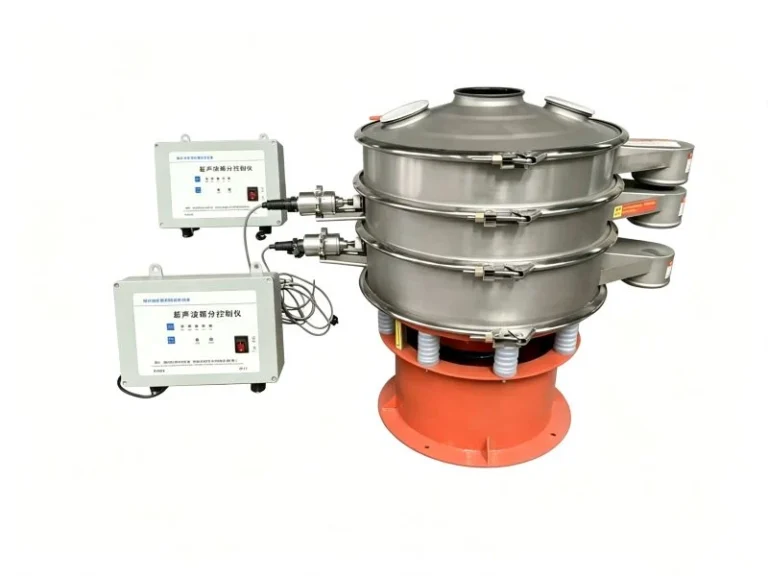
Specifying the aperture is only part of setting up a laboratory test. If fine powder sticks to the mesh, check when to use ultrasonic assistance in sieve analysis before deciding on the test setup.
Prepare a Screen Specification Checklist
Use the following checklist when requesting a new or replacement sieve screen.
| 매개변수 | Information to Provide or Confirm |
|---|---|
| Material and screening duty | Material name; what should pass, remain or be removed |
| Required aperture | Nominal opening in μm or mm |
| Mesh designation and reference | Mesh count or sieve number, with the applicable reference if used |
| Wire diameter, weave and open area | Required construction, or supplier to propose for approval |
| Material grade | Specified alloy, such as 304 or 316 stainless steel |
| 망눈 허용오차 | Permitted variation and inspection method; supplier to confirm if undecided |
| Dimensions and mounting | Screen or frame dimensions, drawing, fixing method and support mesh |
| Operating conditions | Dry or wet duty, temperature, target throughput and feeding method |
| Acceptance criteria | Product size limits, test method and any required inspection records |
For a replacement screen, include the machine model and an assembly drawing where available. A photograph helps identify the construction, but dimensions are still needed to confirm fit.
결론
Mesh count is a useful reference, but aperture, wire diameter and screen construction define what you are ordering. Confirm these details before purchasing to avoid mismatched screens.
Need help specifying a sieve screen? Email 위안징 your material, required opening size and throughput. For replacements, include the existing screen dimensions so we can check the fit.
자주 묻는 질문
What Is the Difference Between Mesh Count and Micron Size?
Mesh count is the number of openings per linear inch of woven screen cloth. Micron size measures the clear opening between the wires. When comparing mesh count vs micron size, remember that the aperture depends on both mesh count and wire diameter.
What Micron Size Is a 200-Mesh Screen?
A U.S. standard No. 200 test sieve has a nominal aperture of 75 μm. However, commercial cloth described as “200 mesh” may have a different opening depending on wire diameter. Confirm the aperture and reference standard before ordering.
Can I Use a Mesh to Micron Conversion Chart to Order a Screen?
A mesh to micron conversion chart is useful for identifying standard sieve openings, but it is not a complete purchasing specification. Confirm the required aperture, wire diameter, weave, material grade and opening tolerance with the supplier.
Does a Higher Mesh Count Always Improve Screening?
No. A higher mesh count generally means smaller openings, but a finer screen may retain useful product, increase blinding or reduce throughput. Choose the aperture according to the separation required, then test whether the screen meets both product quality and capacity targets.
Why Does a Replacement Sieve Screen Perform Differently at the Same Mesh Count?
The replacement may have a different wire diameter, aperture or open area. Differences in tension, support mesh and frame fit can also affect performance. Compare the complete screen specification with the original, and check whether feeding or material conditions have changed.
What Information Should I Send for an Industrial Sieve Screen Quotation?
Provide the material name, screening purpose, required aperture in microns and target throughput. Include operating conditions, screen material and any aperture tolerance requirements. For a replacement sieve screen, add the machine model, frame dimensions and a drawing or photograph of the existing assembly.