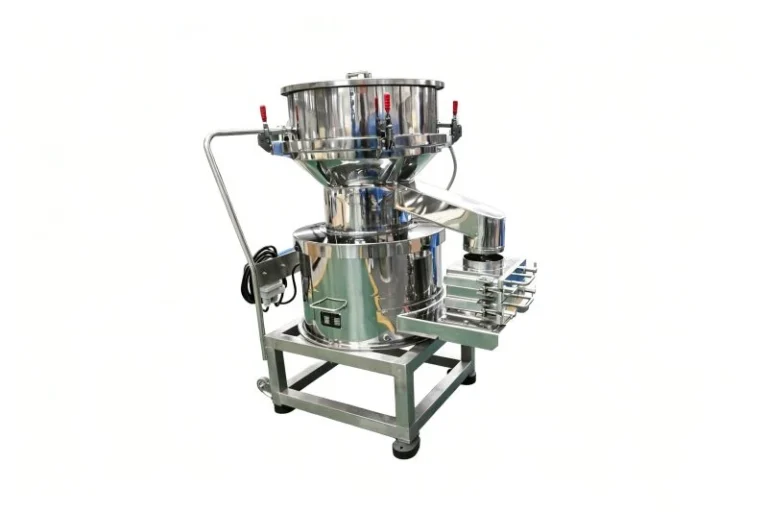
Przesiewanie szkliwa ceramicznego: Jak wybrać rozmiar siatki i sprzęt
Ceramic glaze sieving removes unwanted coarse particles, hard lumps and foreign matter from glaze slurry before application. Start with what must pass through and what must be retained. Then match the screen opening, slurry properties, cleaning system and sustained output to your production requirements.
A finer screen is not automatically a better choice. A 400-mesh screen may suit a particular face-glaze specification, but it is not a universal requirement. Selection should protect useful ingredients while limiting cleaning stops and maintaining acceptable screened output.
This guide focuses on ceramic glaze slurry. For broader liquid-processing considerations, see our guide to wet screening and liquid filtration.

What Mesh Size Should You Use for Ceramic Glaze Sieving?
Choose the opening according to the unwanted particles and the ingredients that must remain in the glaze. Confirm both the screened slurry and the retained material before approving a mesh specification.
Define What Must Pass and What Must Be Removed
Hard dried deposits, foreign fibers and unwanted coarse particles are different from useful pigments, frit particles or other formulation components. Inspect the screen residue rather than assuming everything retained is waste.
Soft agglomerates may disperse during screening, but the sieve should not be treated as a mill. Persistent hard lumps need separate assessment. If a finer screen retains useful ingredients, check whether the change affects glaze application, color or the fired finish.
The objective is to remove unwanted material while preserving the intended formulation.
Confirm Screen Openings in Microns
Mesh count alone does not fully describe an opening: wire diameter and the mesh standard also matter. Specify the aperture in microns alongside the mesh designation.
If your process specification gives a particle-size range such as 15–45 μm, first establish what it describes. A particle-size distribution, a maximum permissible particle size and a screen aperture are different requirements. Do not automatically convert that range into a sieve specification.
The rough calculation:
Mesh count × opening (μm) ≈ 15,000
is sometimes used for an initial estimate. It gives 37.5 μm at 400 mesh, but it is not a mesh standard or an acceptance criterion. Confirm the supplier’s actual aperture and wire diameter before ordering.
When Should You Evaluate 400-Mesh or Finer Screens?
Evaluate fine openings when the glaze specification requires removal of smaller oversize particles. Compare:
- The composition and quantity of retained material.
- Screened-product quality.
- Sustained flow throughout the run.
- Cleaning intervals and cleaning time.
- Useful ingredients lost with the rejected material.
A short run through a clean screen does not establish production capacity. Neither 400 nor 500 mesh alone determines the cleaning system required.

How Can You Reduce Clogging in Glaze Slurry Screening?
Identify the restriction before changing equipment. Mesh buildup, unstable feeding and restricted discharge can all reduce output, but they require different corrections.
Identify Buildup, Blinding and Flow Restrictions
Sticky deposits and retained particles can progressively reduce the open screening area. Uneven feeding may concentrate the load on one part of the mesh, while dried glaze residues can become difficult to remove.
If slurry accumulates while the screen is clean, inspect the outlet, downstream pipework and feed rate before treating the problem as mesh blinding.
Checking the location of the restriction helps avoid unnecessary changes to mesh size or vibration settings.
Compare Standard and High-Frequency Vibration
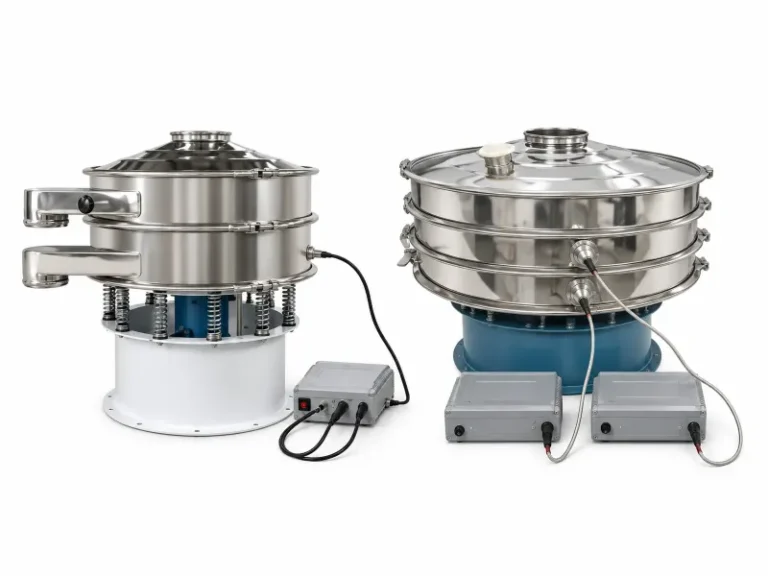
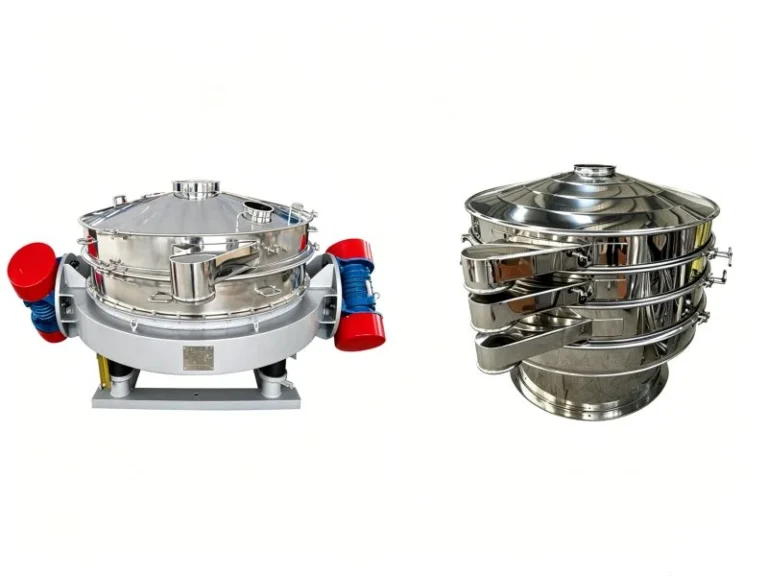
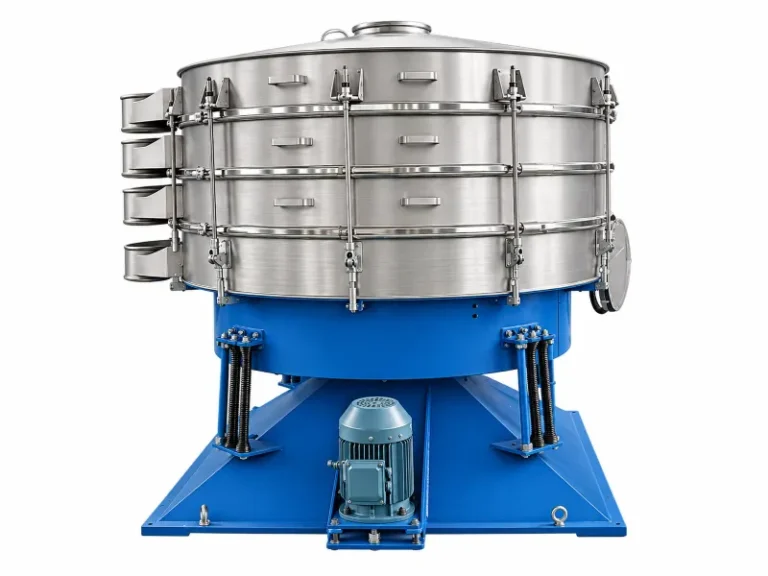
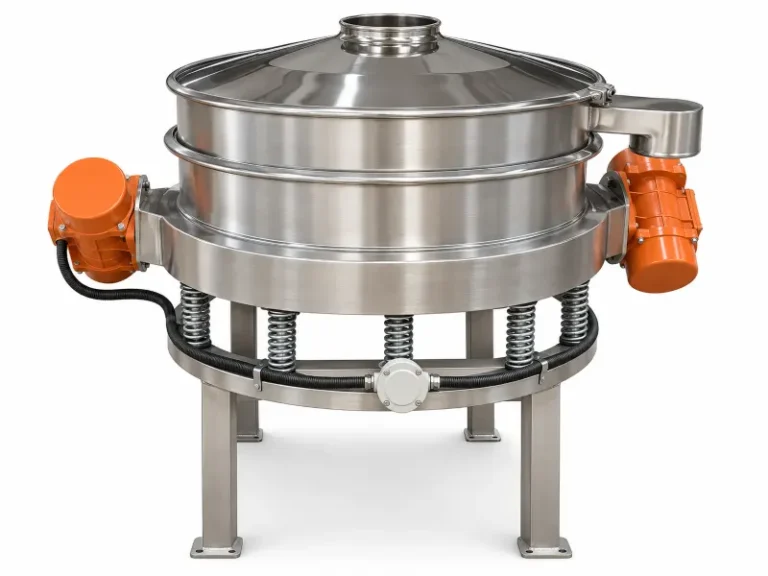
A przesiewacz wibracyjny obrotowy can be evaluated for glaze slurry that passes consistently at the required opening. For more demanding wet-screening duties, compare a sito wibracyjne o wysokiej częstotliwości under the same feed conditions.
Configurations may be described as approximately 1,500 r/min or 3,000 r/min. These are rotational speeds. With one excitation cycle per revolution, they correspond to approximately 25 Hz and 50 Hz respectively. Mechanical vibration and ultrasonic mesh vibration are separate parameters.
Frequency alone does not determine performance. Amplitude, screen support, slurry loading and machine construction must work together. Have the manufacturer match the configuration rather than increasing an existing machine’s speed without engineering review.
Evaluate Cleaning Systems Under Wet Conditions
Select a cleaning system by testing its performance with the actual glaze slurry.
| Option | What to Confirm with the Glaze Slurry |
|---|---|
| Conventional vibration | Whether sustained flow and residue removal remain acceptable throughout the run. |
| Ball cleaning | Wet-duty suitability, cleaning action, mesh support and compatibility of contact materials. |
| High-frequency configuration | Whether the selected vibration settings reduce buildup while maintaining separation quality. |
| Ultrasonic assistance | Wet-service compatibility and a measurable benefit in throughput or cleaning intervals. |
Ultradźwiękowe sito wibracyjne jest lepszym wyborem, gdy drobny proszek jest trudny do przesiewania za pomocą konwencjonalnego przesiewacza wibracyjnego. may be worth evaluating where persistent adhesion limits performance.
It is not automatically necessary above 500 mesh, and ball cleaning is not automatically sufficient below 400 mesh. Confirm the wet-duty arrangement and compare performance using the same slurry, aperture and feed conditions.
Control Feed Conditions Without Changing the Glaze Unnecessarily
Keep feeding steady and record slurry temperature, solids content and viscosity using a consistent measurement method. Any changes to water content or dispersant dosage should remain within the approved glaze formulation.
Concentration figures such as 30%–40% are meaningful only when their basis—such as solids by mass or volume—is stated. Do not use 40% as a universal clogging threshold or dilute every glaze to that range.
Establish an operating range for the formulation through trials, then monitor variations between batches.
Which Screen Materials and Machine Design Suit Your Glaze?
Choose the wetted materials and construction for the glaze chemistry, wear conditions, cleaning procedure and contamination limits.
Choose Wetted Materials for the Actual Formulation
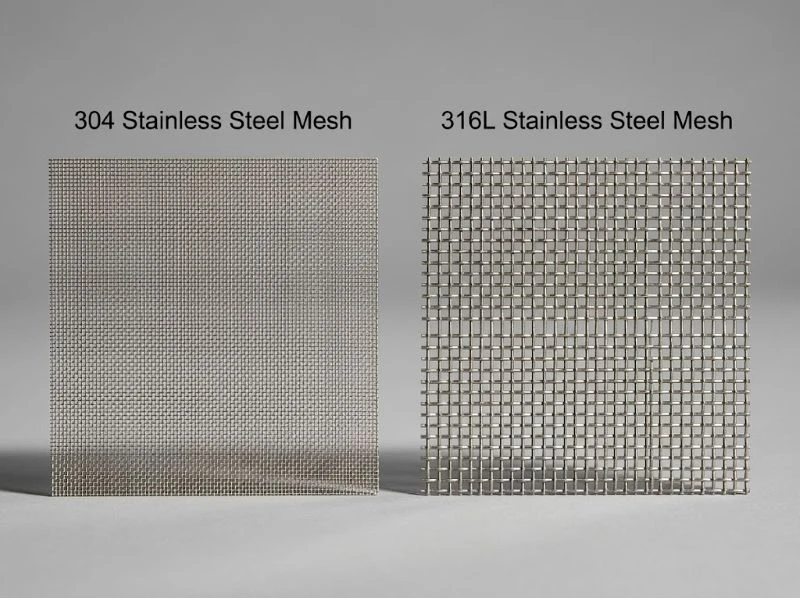
304 stainless steel is a common starting option. Consider 316L where the chemistry justifies it, but neither grade is suitable for every corrosive service.
Assess fluoride-containing, strongly acidic or strongly alkaline formulations individually, including the operating temperature and cleaning chemicals. Check the mesh, frame, seals and other wetted parts together.
Specialized ceramic or polymer media require separate confirmation of aperture availability, strength, temperature limits and machine compatibility. Do not assume that an abrasion-resistant material is suitable for a fine woven-mesh duty.
For the broader material comparison, read 304 vs 316 stainless steel mesh.
Match the Motor, Screen Frame and Sealing System
Motor power should suit the vibrating assembly and operating load. Higher power alone does not guarantee better screening. Include screen tension, support, vibration settings and structural condition in the assessment.
For glaze slurry service, check that the machine provides:
- Liquid-compatible seals and secure screen seating.
- Suitable feed distribution across the screening area.
- Adequate discharge capacity for slurry and retained solids.
- Access for draining, cleaning and screen inspection.
- A frame and support system matched to the operating load.
A carbon-steel support base is distinct from a wetted screen frame; specify contact materials separately. Enclosed construction does not by itself establish a pressure rating for a pump-fed installation.
Separate Laboratory Trials from Production Requirements
Laboratory trials and continuous production share the same separation objective, but their operating priorities differ.
| Aplikacja | Selection Priorities |
|---|---|
| Laboratory or formulation trials | Repeatable separation, residue inspection, ingredient retention and cleaning between samples. |
| Produkcja ciągła | Sustained accepted flow, peak feed handling, cleaning downtime, drainage and screen-change access. |
A successful small sample test helps identify a suitable opening, but it does not prove continuous-line capacity. Production trials must run long enough to reveal gradual buildup.
How Do You Size a Glaze Sieve for Effective Throughput?
Size the machine around accepted output over the production period, including cleaning interruptions. Do not substitute dry-powder or clean-water capacity for glaze-slurry performance.
Measure Accepted Output Across the Production Period
Use the following calculation:
Effective average throughput = Accepted screened slurry quantity ÷ Total elapsed time
Include cleaning and other interruptions within the measured period.
Record liquid output in L/h, or identify kg/h explicitly as wet-slurry mass. Dry-solids output is a separate measure. Check peak feed capacity as well as the average requirement: a machine that handles the average hourly volume may still overflow during a short feed surge.
400-Mesh Tile Glaze: A Reported Operating Example
A reference account describes a rustic-tile manufacturer screening face glaze at 400 mesh. The reported changes were:
| Pozycja | Reported Condition |
|---|---|
| Screening duty | 400-mesh face-glaze filtration |
| Original configuration | Conventional rotary vibrating screen |
| Original cleaning interval | A cleaning stop every 2 hours |
| Modified configuration | High-frequency vibration with ultrasonic mesh cleaning |
| Reported result | Cleaning reduced to once per shift |
This example comes from reference material supplied for this guide and has not been independently verified. Shift length, cleaning duration and accepted output were not provided, so the figures cannot establish a percentage capacity increase or a guaranteed result.
The practical lesson is to compare cleaning downtime alongside separation quality. Fewer cleaning stops may improve available screening time, but accepted output must still be measured.
What Should a Glaze Screening Trial Record?
A useful trial should document both the operating conditions and the results.
| Trial Item | What to Record |
|---|---|
| Specyfikacja sita | Mesh designation, actual aperture and effective screening area |
| Slurry condition | Solids content and its measurement basis, viscosity, test method and temperature |
| Podawanie | Normal and peak feed rates |
| Accepted output | Screened slurry meeting the agreed requirements |
| Retained material | Screen residue and useful material lost with rejects |
| Stabilność pracy | Cleaning intervals, cleaning duration and changes in flow |
| Stan sita | Buildup, tension, wear and damage after the run |
Use these results to select screen area and configuration. Our guide to przemysłowe próby przesiewania explains how to assess throughput, yield and separation quality together.
Ceramic Glaze Sieve Maintenance and Common Questions
How Often Should a Glaze Screen Be Replaced?
Replace it according to condition and performance rather than a fixed calendar. The 1–3 month interval mentioned in the supplied reference material is an unverified planning reference, not an established service-life standard.
Abrasion, mesh construction, tension, loading and cleaning practices all affect the interval. Maintain records by glaze formulation so that changes in wear or buildup can be identified.
A throughput drop of 20% or more under comparable conditions can be used as an investigation trigger. Inspect deposits, tension, wear and tears before deciding whether cleaning, adjustment or replacement is required.
How Should You Clean Screens Between Glaze Colors?
Remove residues before they harden, using a cleaning method compatible with the formulation and equipment.
Use an approved soft brush where appropriate and avoid scraping fine mesh with metal tools. Inspect gaskets, clamps, outlets and frame joints for retained color, since cleaning the mesh alone may leave material elsewhere in the machine.
Drain and dry components as required by the cleaning procedure before storage.
Does Lower Throughput Always Mean Screen Damage?
No. Changes in viscosity, temperature, feed rate, buildup or discharge conditions can reduce flow.
Weighing or flow records help reveal a change but cannot diagnose a torn mesh. Inspect the mesh and seals directly; a damaged screen may allow oversize through without reducing throughput.
Can Finer Sieving Eliminate Every Glaze Defect?
No. Sieving controls unwanted particles and some foreign matter. Pinholes, color variation and other surface defects can also involve formulation, application and firing conditions.
Confirm the cause before tightening the screen specification. An unnecessarily fine mesh may increase cleaning requirements or remove useful ingredients without resolving the original defect.
Need a ceramic glaze sieving configuration for your production line?
Send Yuanjing your glaze type, target opening, solids content, viscosity at operating temperature, required output and current screening problem. Include the existing mesh and cleaning interval if available so the configuration and trial requirements can be reviewed.
Contact Yuanjing about your glaze screening requirements.
Czy potrzebuję ultradźwiękowego przesiewacza wibracyjnego do drobnego proszku?
1. What mesh size should I use for ceramic glaze sieving?
The right mesh size depends on the unwanted particles you need to remove and the useful ingredients that must remain in the glaze. A 400-mesh screen may suit certain fine face-glaze applications, but it is not a universal requirement. Confirm the actual opening in microns, then evaluate screen residue, screened-glaze quality and sustained throughput.
2. Which vibrating screen is suitable for ceramic glaze slurry?
A rotary vibrating screen can be evaluated for glaze slurry that flows consistently through the required mesh. A high-frequency vibrating screen may be suitable when fine wet screening limits output. If persistent mesh adhesion causes frequent cleaning stops, consider ultrasonic assistance after confirming wet-service compatibility. Select the configuration through trials using your actual glaze.
3. How can I prevent a ceramic glaze sieve from clogging?
First identify whether reduced flow comes from mesh buildup, uneven feeding or a restricted outlet. Keep feed conditions stable, remove deposits before they harden and check screen tension. Persistent blinding may justify testing a suitable cleaning system or different vibration settings. Avoid changing glaze concentration without checking the approved formulation.
4. How do I determine the required capacity for glaze slurry screening?
Specify normal and peak feed rates, target screen opening, solids content and viscosity at operating temperature. Measure accepted screened slurry over the full operating period, including cleaning stops. This effective throughput is more useful for sizing than an initial clean-screen flow rate. Confirm capacity in L/h or clearly identified wet-slurry kg/h.
5. Should I choose 304 or 316L stainless steel for a ceramic glaze sieve?
304 stainless steel is a common starting option, while 316L may be considered where the formulation requires additional corrosion resistance. Selection depends on chemical composition, temperature and cleaning agents—not the glaze name alone. Check the mesh, frame and seals together, and assess particularly aggressive formulations individually.
6. When should I clean or replace a ceramic glaze screen?
Clean the screen when deposits restrict flow and during color changes, before residues harden. Replace it if inspection reveals tears, worn openings or damage that compromises separation. A throughput decline under comparable conditions should trigger checks for buildup, tension and upstream changes. Follow condition-based maintenance rather than relying on a fixed replacement interval.