
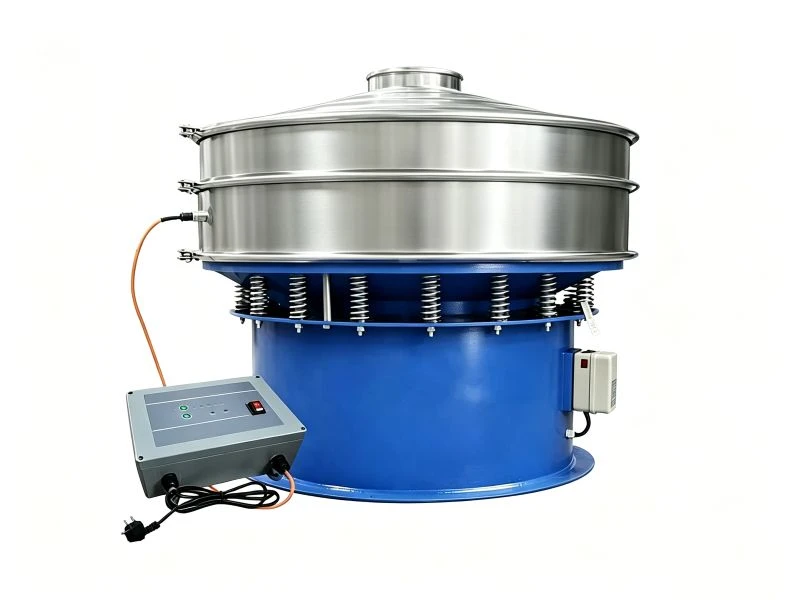
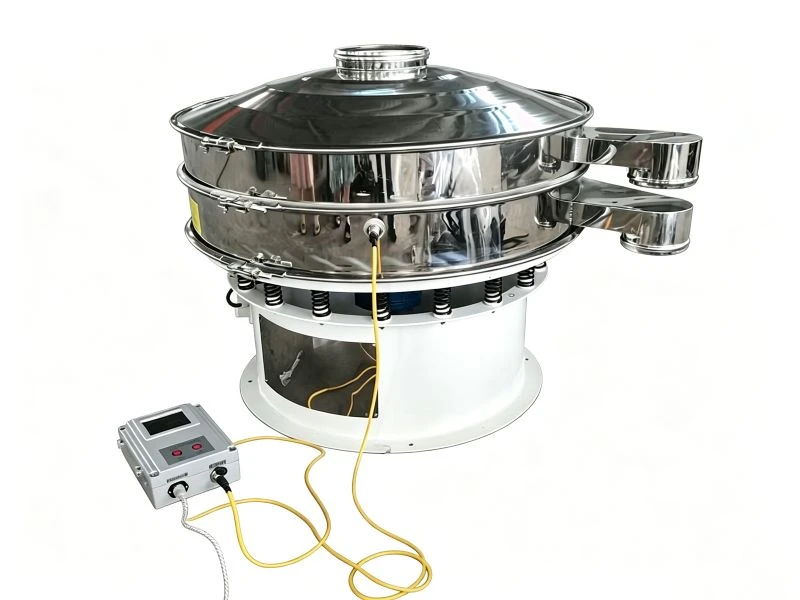
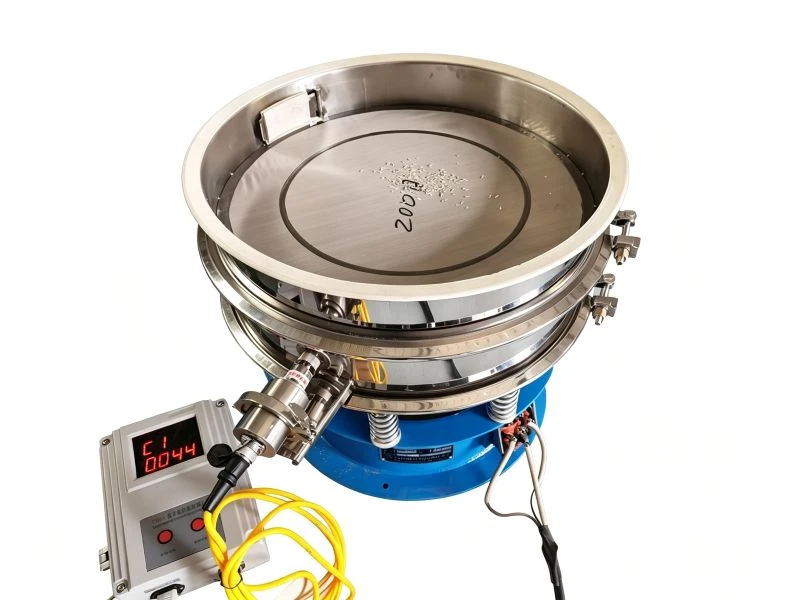
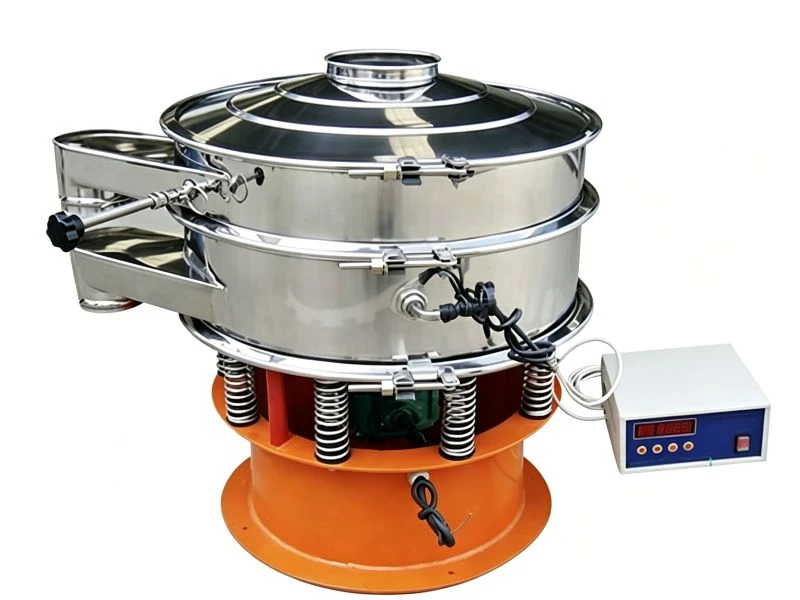
Ultrasonic Vibrating Sifter for Fine Powder Screening
Fine powders can be difficult to screen with a standard vibrating sifter. Fine particles may stick to the mesh, cause mesh clogging, and reduce screening efficiency. Our ultrasonic vibrating sifter adds high-frequency ultrasonic vibration to the screen mesh, helping fine and ultra-fine powders pass through the screen more easily.
It is suitable for fine powder screening, high-mesh screening, and materials that are prone to clogging or adhesion.It is capable of screening ultra-fine powders down to below 20 microns without experiencing mesh clogging or blinding. The ultrasonic sifter can be customized by screen size, mesh, number of decks, and material to fit different production needs.
What is an ultrasonic vibrating sifter?
An ultrasonic vibrating sifter is commonly used for screening and filtering materials that are highly adhesive, prone to agglomeration, highly electrostatic, very fine, high-density, or lightweight. When these materials are processed with a standard vibrating sifter, using bouncing balls alone for screen cleaning can easily cause the mesh to become blocked. This can reduce both screening capacity and screening accuracy.
To solve this problem, an ultrasonic system is added to improve screen penetration and reduce mesh clogging. Based on the standard three-dimensional vibration of the vibrating sifter, the system adds 18 kHz high-frequency ultrasonic vibration, which keeps the screen mesh vibrating at a small amplitude. This helps break up the surface tension of the powder and supports stable screening of 20 μm ultra-fine powders. Screening accuracy can be improved by up to 70%, while capacity can be several times higher than that of a standard vibrating sifter.
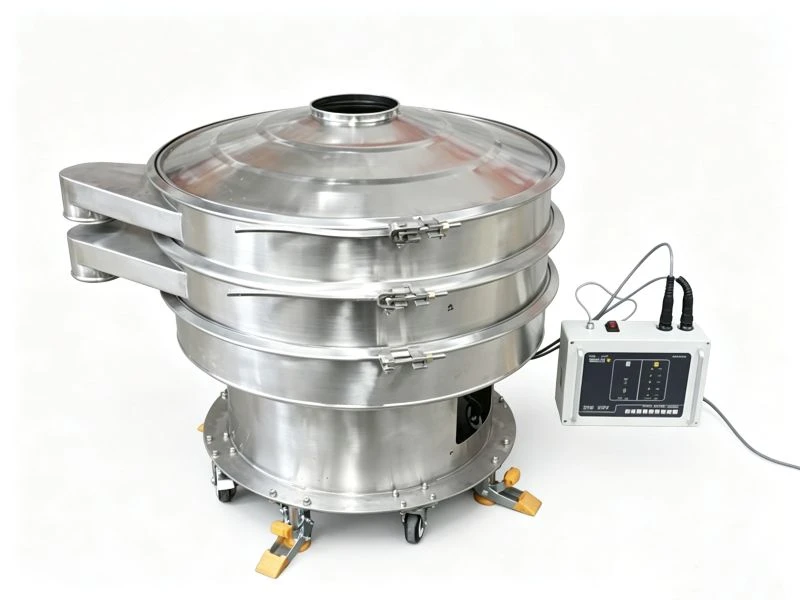
How Does an Ultrasonic Vibrating Sifter Work?
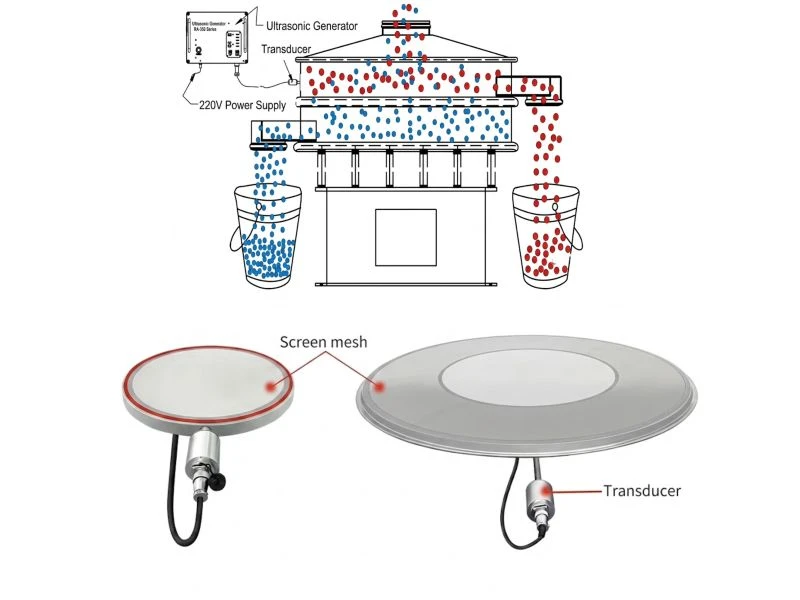
An ultrasonic vibrating sifter converts 220V, 50Hz or 110V, 60Hz electrical power into 18 kHz high-frequency electrical energy, which is then sent to the ultrasonic transducer and converted into 18 kHz mechanical vibration. A conventional vibrating sifter vibrates about 1,470 times per second, while an ultrasonic vibrating sifter reaches up to 36,000 vibrations per second. The two types of vibration work together, combining ultrasonic vibration with the regular vibration of the screen for more effective screening.
Ultra-fine powders receive a strong ultrasonic acceleration and remain suspended above the screen surface. This helps reduce adhesion, friction, flat settling, and particle wedging that can cause mesh clogging. As a result, an ultrasonic vibrating sifter can handle difficult screening applications involving highly adhesive, easily agglomerated, highly electrostatic, ultra-fine, high-density, and lightweight powders.
Why Use an Ultrasonic Vibrating Sifter?
Ultradźwiękowe sito wibracyjne ultradźwiękowego sita wibracyjnego is designed for fine powder and difficult-to-screen materials. It uses ultrasonic vibration to improve screen penetration, reduce mesh clogging, and keep screening more stable.
Effective Mesh Clogging Prevention
High-frequency ultrasonic vibration helps reduce mesh clogging caused by static electricity and sticky powders such as flour, titanium dioxide, and pharmaceutical powders. It can improve screen utilization by more than 50%.
Higher Screening Accuracy
Ultrasonic vibration reduces material bouncing and buildup on the screen surface, allowing fine particles to pass through the mesh more easily. Screening accuracy can improve by 1–3 levels. For example, a conventional sifter may reach about 90% accuracy with an 80-mesh screen, while an ultrasonic vibrating sifter can reach up to 98% under the same conditions.
Suitable for a Wide Range of Materials
The ultrasonic powder sifter is especially suitable for ultra-fine powders from 200 to 2000 mesh, as well as sticky, electrostatic, and easily agglomerated materials. Typical applications include resin powder, coating powder, plastic particles, lithium battery materials, metal powder, and food additives.
Longer Screen Mesh Life
Ultrasonic vibration helps prevent mesh clogging without relying on higher vibration amplitude to clean the screen. This reduces mechanical wear on the screen mesh and can extend its service life by 30–50%.
Related Videos
Applications of Ultrasonic Vibrating Sifter
1. New Energy & Lithium Battery Industry
Main Materials:
Lithium iron phosphate (LFP), ternary cathode materials, lithium cobalt oxide (LCO), synthetic graphite, natural graphite, metal powder ,conductive carbon powder
Material Characteristics:
Fine particle size, low bulk density, and strong static electricity. These powders easily stick to the screen mesh and cause clogging.
Screening Requirements:
Prevent mesh clogging, keep fine powders flowing through the screen, and avoid cross-contamination during screening. Enclosed screening is also important for clean production.
2. Fine Chemical & Coating Industry
Main Materials:
Chemical powder coatings, resin powder, pigment powder, sulfur powder, PVC micropowder, silicon dioxide, ultrafine calcium carbonate
Material Characteristics:
High adhesion and easy moisture absorption. The powders can form lumps and stick to the screen mesh during screening.
Screening Requirements:
Prevent powder from sticking to the mesh, break up lumps during screening, and achieve multi-size separation with one screening machine. For flammable or explosive powders, explosion-proof customization is available.
3. Powder Metallurgy & Superabrasive Industry
Main Materials:
Tungsten powder, molybdenum powder, nickel powder, copper-aluminum alloy powder, diamond micropowder, silicon carbide, alumina micropowder
Material Characteristics:
High hardness and sharp particles. Fine particles can easily become lodged in the mesh openings and cause blockage.
Screening Requirements:
Prevent mesh blockage without damaging the screen mesh or introducing foreign particles. The screening process needs to remove oversized particles while retaining qualified fine powders.
4. Pharmaceutical & Food Industry
Main Materials:
Ultrafine Chinese herbal powder, API powder, spore powder, vitamin powder, pharmaceutical excipients, broken-wall pollen, ultrafine starch, malt powder, seasoning powder, milk powder
Material Characteristics:
Drobne proszki with strict requirements for cleanliness and material integrity. Some materials are also prone to forming lumps.
Screening Requirements:
Keep the screening process clean and gentle, avoid contamination, and prevent damage to active ingredients. The screen should also effectively remove coarse fibers and lumps.
Technical Specifications
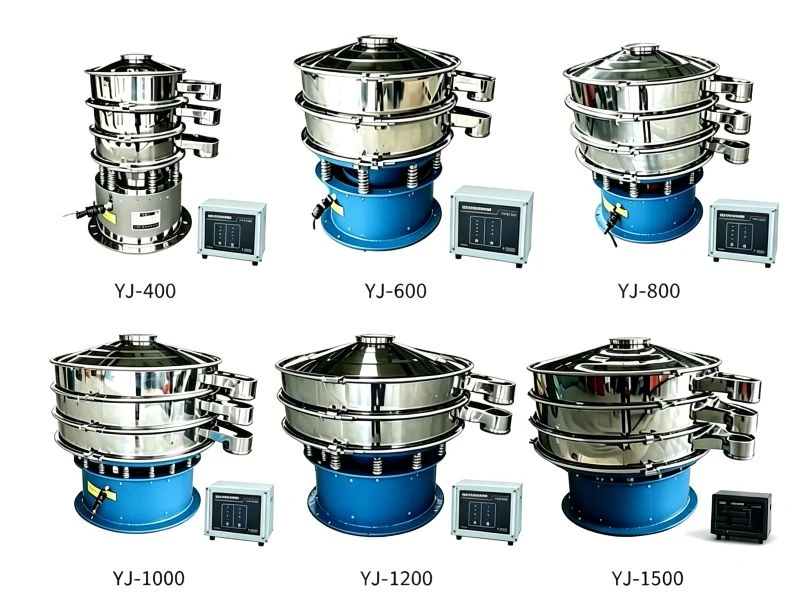
| Model | Diameter (mm) | (mm) | Decks | Power (kW) | Accuracy (%) | Capacity (kg/h) |
| YJ-400 | 400 | 340 | 1-6 | 0.25 | ≥95% | 50-200 |
| YJ-600 | 600 | 530 | 1-6 | 0.55 | ≥95% | 100-500 |
| YJ-800 | 800 | 720 | 1-6 | 0.75 | ≥95% | 200-800 |
| YJ-1000 | 1000 | 900 | 1-6 | 1.1 | ≥95% | 500-1200 |
| YJ-1200 | 1200 | 1100 | 1-6 | 1.5 | ≥95% | 800-2000 |
| YJ-1500 | 1500 | 1400 | 1-6 | 2.2 | ≥95% | 1000-3500 |
| YJ-1800 | 1800 | 1700 | 1-6 | 3 | ≥95% | 1500-5000 |
Ultrasonic Vibrating Sifter Customization Options
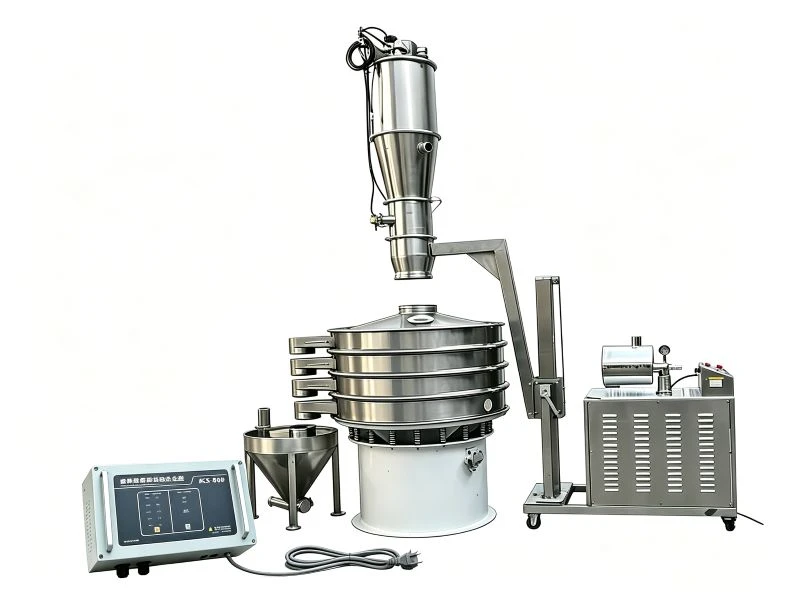
Our ultrasonic vibrating sieve can be customized to match different materials, screening requirements, and production lines. The main options include screen size, mesh, decks, machine material, inlet and outlet design, and ultrasonic system configuration.

Ultrasonic Vibrating Sifter vs Conventional Vibrating Sifter
Compared to conventional screening equipment, ultrasonic screening equipment offers higher screening precision and efficiency when processing fine powders and difficult-to-screen materials, while also reducing the problem of mesh clogging. The two are compared below based on their screening performance with various powders.
| Model | Test Material | Mesh Size | Conventional Vibrating Sieve | Ultradźwiękowe sito wibracyjne |
| YJ-1500-1S | Silicon Carbide | 500 mesh | Cannot be sieved | 1500 kg/h |
| YJ-1000-1S | Cathode and Anode Materials | 600 mesh | No fine powder separated after 15 minutes | 400 kg/h |
| YJ-600-1S | Proszek API | 100 mesh | 1 kg/h | 120–150 kg/h |
| YJ-800-1S | Malt Powder | 400 mesh | No fine powder separated after 15 minutes | Complete screening in 15 minutes |
| YJ-1000-1S | Tungsten Powder | 400 mesh | 10 kg/h | 300 kg/h |
| YJ-1200-1S | Quartz Powder | 300 mesh | 32.2% sieve residue after 30 minutes | 6.9% sieve residue after 30 minutes |
| YJ-1200-1S | Alloy Powder | 300 mesh | Cannot be sieved | 1300 kg/h |
| YJ-1000-1S | Coffee Powder | 80 mesh | 700 kg/h | 2000 kg/h |
Customer Case
Ultrasonic screening technology is commonly used for 300, 400, and 500-mesh screening of materials such as silicon carbide, alloy powders, molybdenum powder, stainless steel powder, tungsten powder, nickel powder, cobalt powder, powder coatings, quartz powder, dimethicone powder, malt powder, Ribavirin, coffee powder, electromagnetic powder, anode/cathode materials, and laser powders.For fine mesh applications, see our guide to 200–500 mesh ultra-fine powder screening.

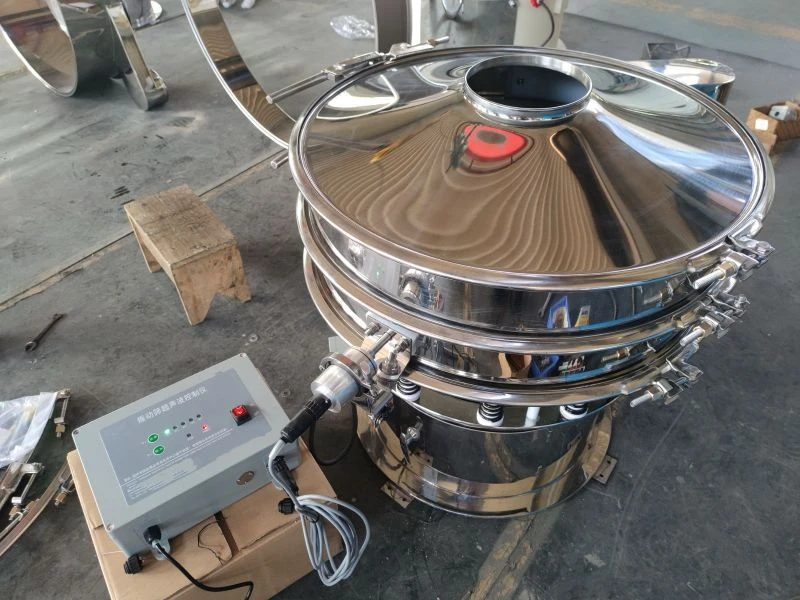


Ultrasonic Vibrating Sifter Manufacturer
Xinxiang Yuanjing Machinery Co., Ltd. is a manufacturer of ultrasonic vibrating screens, integrating R&D, production, and sales. The company holds ISO9001 and EU CE certifications, and its products serve markets across the globe. Yuanjing offers a comprehensive range of ultrasonic vibrating screen models and supports non-standard customization to meet specific user requirements. Additionally, the company provides a one-year warranty, lifetime maintenance, and the supply of genuine spare parts.

Related Products
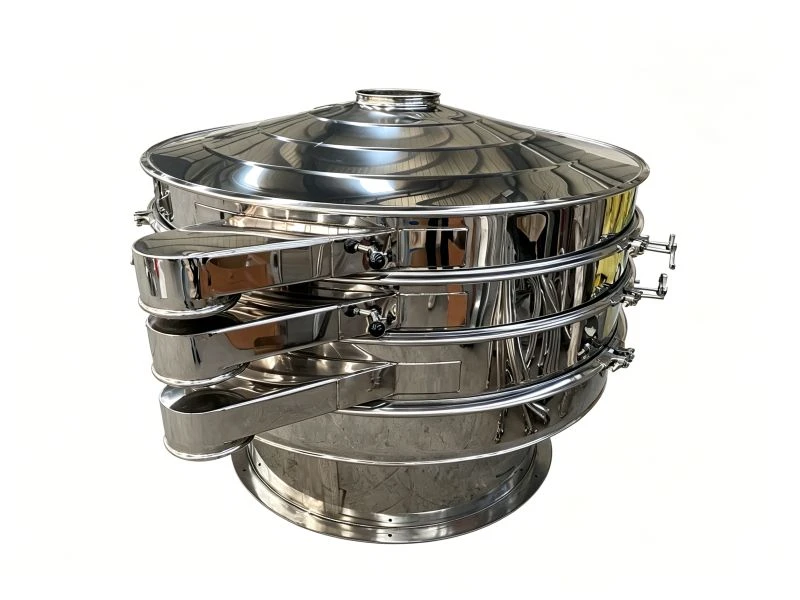
Przesiewacz wibracyjny obrotowy
Przesiewacz wibracyjny obrotowy | Przesiewacz wibracyjny Przesiewacz wibracyjny obrotowy jest zaprojektowany do wydajnej separacji proszków, granulatów i cieczy. Zapewnia stabilną wydajność, wysoką dokładność przesiewania i niezawodne działanie w ciągłej produkcji. Oferujemy elastyczne konfiguracje, w tym konstrukcje wielopokładowe, systemy ultradźwiękowe i materiały dopuszczone do kontaktu z żywnością, aby spełnić różne wymagania procesowe. YuanJing zapewnia praktyczne rozwiązania przesiewowe…Wibracyjny przesiewacz liniowy
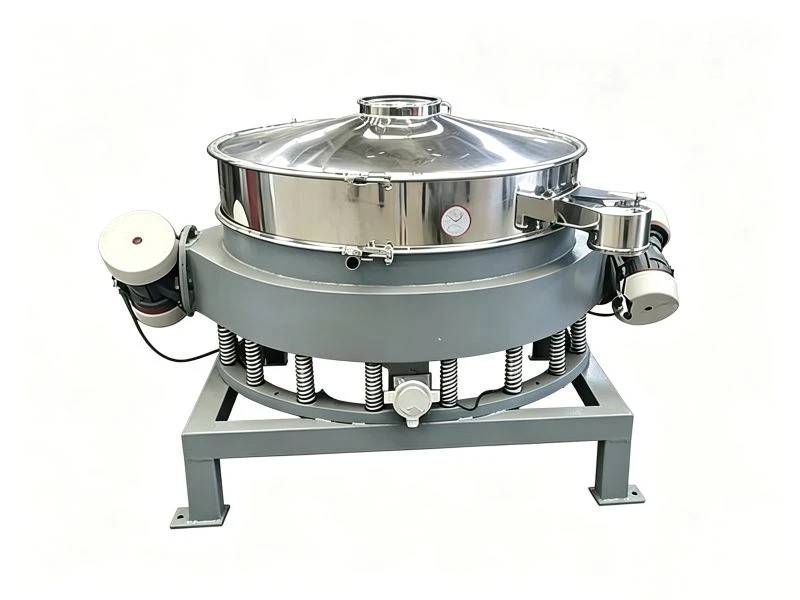
Przesiewacz wibracyjny inline do ciągłych linii produkcyjnych. Przesiewacze wibracyjne inline są zbudowane dla ciągłych linii produkcyjnych, umożliwiając bezpośrednie przesiewanie proszków i cieczy w rurociągu. Kompaktowa konstrukcja oszczędza miejsce, zachowując stabilną i dokładną wydajność separacji. Są szeroko stosowane w przetwórstwie spożywczym, farmaceutycznym i chemicznym. Czym jest przesiewacz wibracyjny inline?…Przenośnik ślimakowy
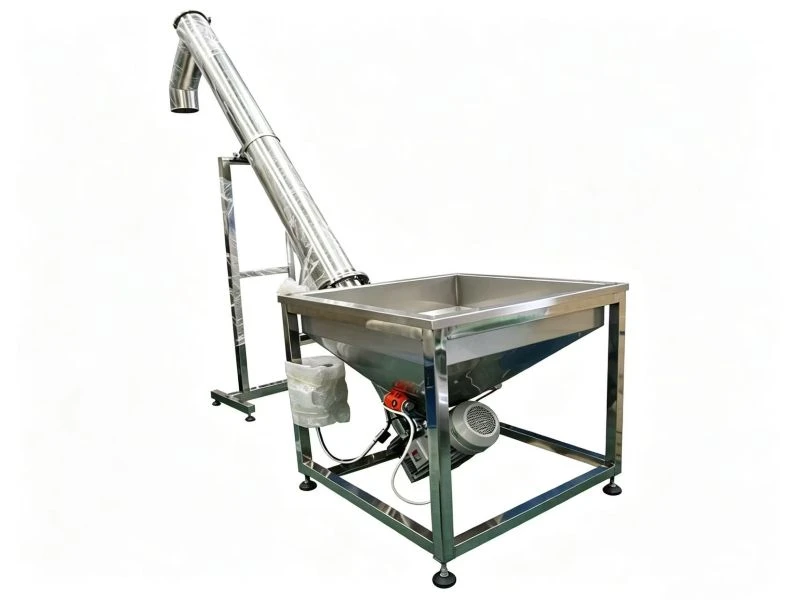
Przemysłowe systemy przenośników ślimakowych do transportu materiałów sypkich. Przemysłowe przenośniki ślimakowe są zaprojektowane do ciągłego, wydajnego transportu materiałów sypkich, takich jak proszki, granulaty i półciała stałe. Dzięki kompaktowej konstrukcji i zamkniętej obudowie zapewniają stabilną wydajność przenoszenia, zmniejszoną emisję pyłu i niskie koszty konserwacji w różnych zastosowaniach przemysłowych. YuanJing oferuje dostosowane rozwiązania przenośników ślimakowych w oparciu o…System podajnika przenośnika próżniowego
Przemysłowe rozwiązania systemów przenośników próżniowych dla proszków i materiałów sypkich. Systemy przenośników próżniowych automatycznie przenoszą różne materiały do lejów maszyn pakujących, wtryskarek i kruszarek. Mogą również podawać zmieszane materiały bezpośrednio do mieszalników (takich jak mieszalniki typu V, 2D i 3D), znacznie redukując pracę ręczną i eliminując rozsypywanie pyłu podczas podawania. Jako…
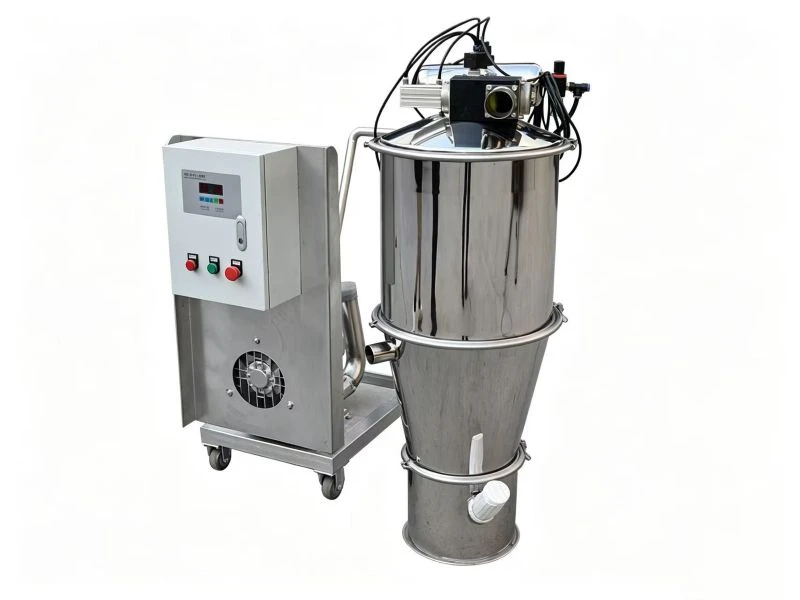
Vibrating Screen and Conveyor Machine Manufacturer & Supplier
Built for precision screening, reliable performance, and flexible industrial applications,
Yuanjing rotary vibrating screens are trusted by customers worldwide.

Global Project Experience
Yuanjing products are exported to 50+ countries and regions, serving industries including food, chemicals, pharmaceuticals, mining, and new energy.
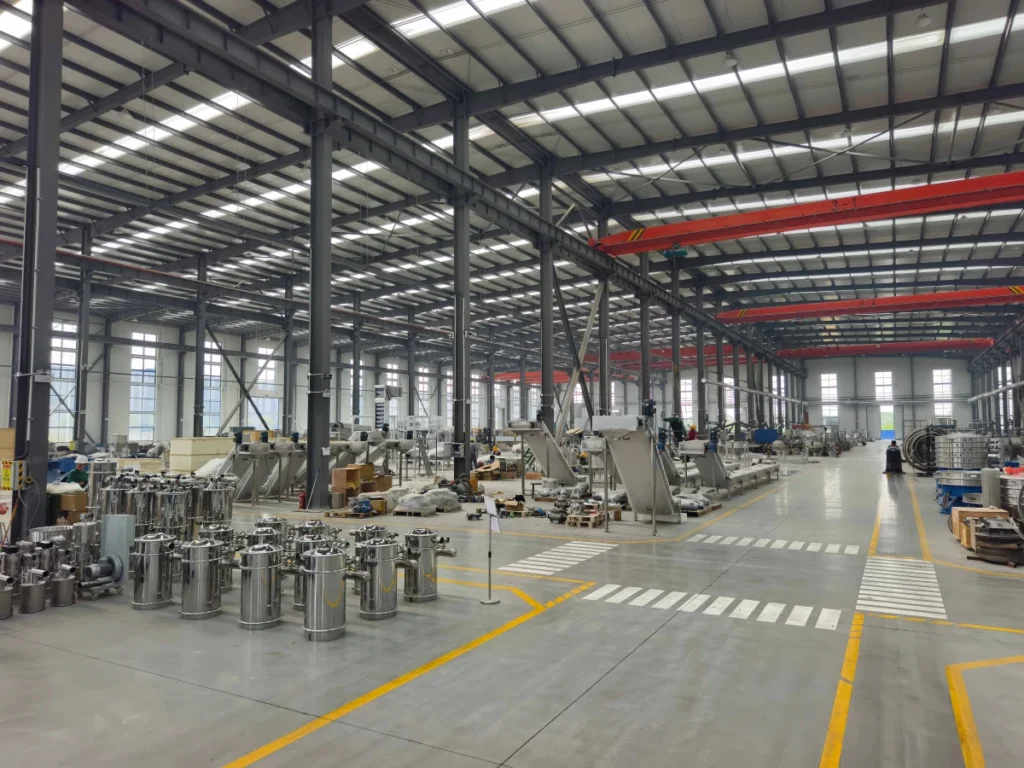
Strong Manufacturing Capability
Advanced production lines with laser cutting, CNC machining, automatic welding, and strict quality inspection ensure consistent product quality.
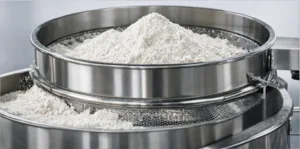
Accurate & Stable Separation
Optimized vibration design delivers even material flow, high screening accuracy, and stable long-term operation.
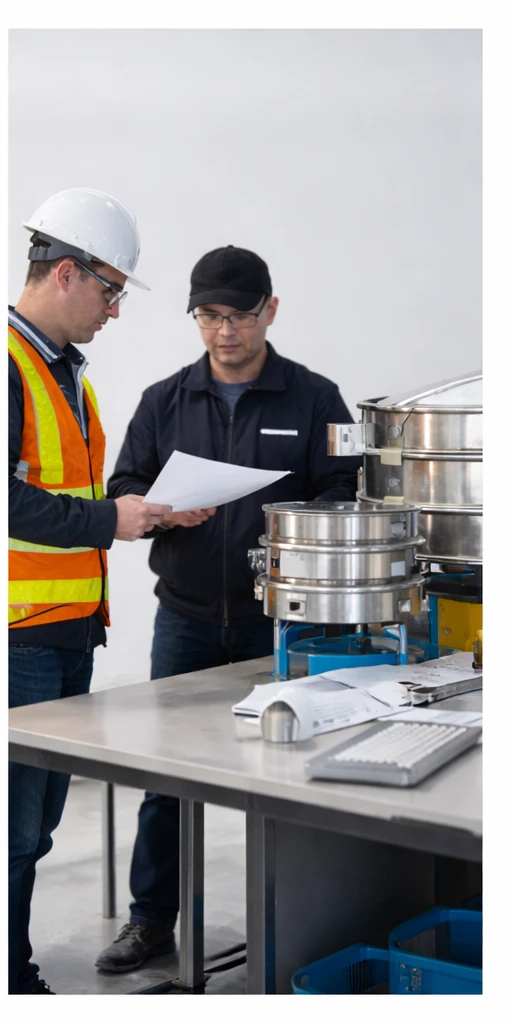
Dostosowane rozwiązania przesiewające
Yuanjing offers flexible configurations in diameter, mesh size, deck layers, and material options to fit your exact process requirements.
FAQs
Uzyskaj dostosowane rozwiązanie
Możemy zapewnić dostosowane rozwiązania w zakresie sprzętu do przesiewania i transportu, dopasowane do różnych materiałów i wymagań produkcyjnych.
Prześlij nam swoje wymagania, a nasz zespół zapewni odpowiednie rozwiązanie i szybką wycenę w ciągu 24 godzin.