Peneira Vibratória Ultrassônica vs Peneira Vibratória Tradicional: Qual é Melhor?
Traditional vibrating screens are suitable for general screening of free-flowing powders and granules, while ultrasonic vibrating screens are better for fine powders that cause mesh blinding, static adhesion, or low throughput.
The better choice depends mainly on mesh size, material characteristics, required capacity, and whether mesh clogging occurs.
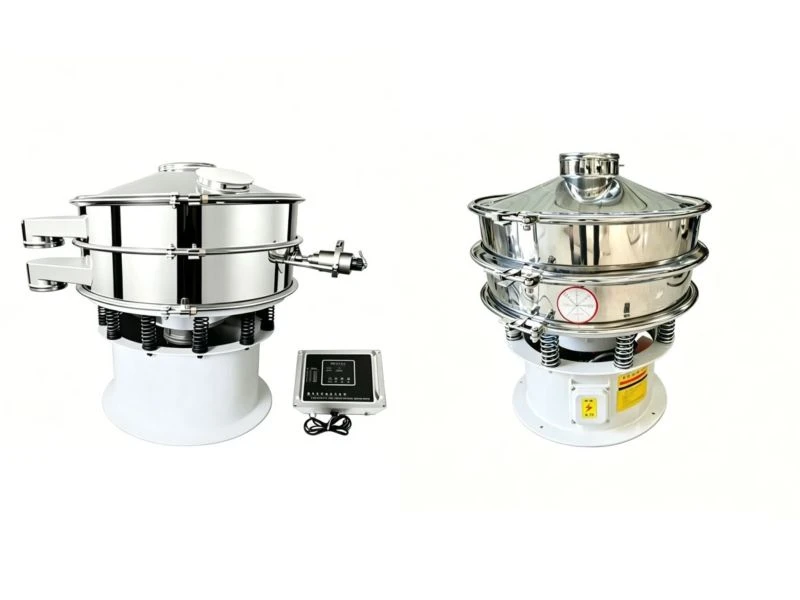
Ultrasonic Vibrating Screen vs Traditional Vibrating Screen: Quick Comparison
| Comparação | Peneira Vibratória Tradicional | Peneira Vibratória Ultrassônica |
| Vibration System | Single low-frequency motor vibration | Low-frequency motor + 36 kHz ultrasonic vibration |
| Mesh Cleaning | Rubber bouncing balls clean the mesh through mechanical impact | Continuous ultrasonic self-cleaning minimizes mesh blinding |
| Recommended Mesh Range | 2–500 mesh (coarse to medium materials) | 20–635 mesh (fine to ultra-fine powders) |
| Key Benefits | Cost-effective, simple design, high capacity for general screening | High precision, anti-clogging, improved throughput, extended mesh life |
| Limitations | Prone to mesh blinding when screening fine powders | Higher initial purchase cost |
| Aplicações Típicas | Grain, sand, aggregates, plastic pellets, fertilizers, and bulk chemicals | Battery materials, pharmaceuticals, food powders, metal powders, ceramics, and fine chemicals |
| Best For | General-purpose screening and free-flowing materials | Fine powders and difficult-to-screen materials |
| Initial Cost | Lower initial investment | Higher initial investment due to the ultrasonic system |
How Ultrasonic and Traditional Vibrating Screens Differ
The main difference between ultrasonic and traditional vibrating screens is how they handle fine and difficult-to-screen powders. Traditional vibrating screens work well for general screening, while ultrasonic systems provide better performance when mesh clogging, static adhesion, or low throughput becomes a problem.
1. Vibration Method
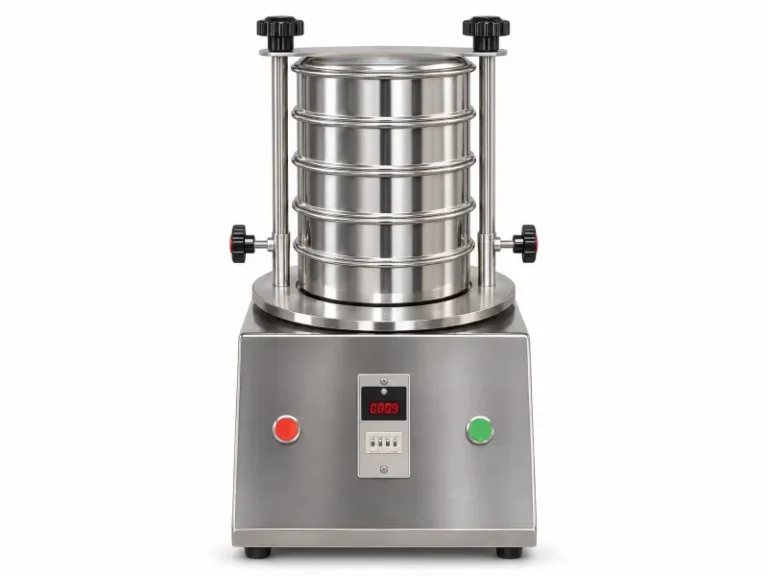
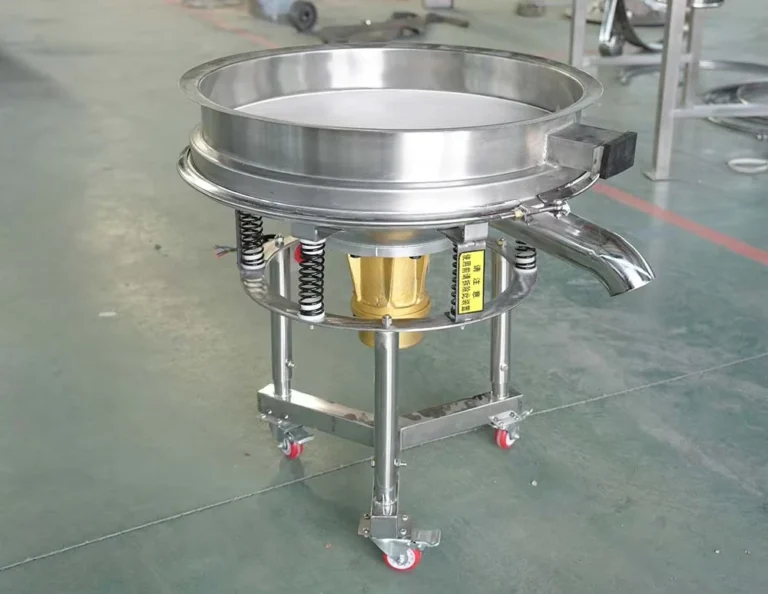
A traditional vibrating screen relies on mechanical vibration to move and separate materials.
An ultrasonic vibrating screen adds high-frequency vibration directly to the screen mesh. This helps fine particles pass through the mesh and reduces powder buildup.
2. Mesh Clogging and Blinding
Mesh clogging is one of the main differences between the two systems.
Traditional screens may experience frequent mesh blinding when processing fine, static, sticky, or agglomerated powders. Ultrasonic vibration keeps fine particles moving on the mesh surface, reducing particle adhesion and blocked openings.
This makes ultrasonic screening more suitable when frequent mesh cleaning interrupts production.
Nosso guia sobre reducing mesh blockage in fine SiC powder explains how ultrasonic movement helps loosen adhered fines and dislodge angular particles caught in screen openings.
3. Fine Powder Screening
Traditional vibrating screens are usually sufficient for coarse or free-flowing materials. As the powder becomes finer and the mesh opening becomes smaller, screening becomes more difficult.
For fine and high-mesh screening, ultrasonic vibration helps keep more mesh openings clear and allows fine particles to pass through more easily.
However, an peneira vibratória ultrassônica para pós finos is not always necessary. If a traditional screen can maintain the required capacity without frequent clogging, it may still be the more economical choice.
4. Screening Efficiency and Throughput
For easy-to-screen materials, both systems can provide stable screening capacity. The difference becomes more noticeable when fine mesh, static electricity, or particle adhesion limits material passage.
Tests from our ultrasonic vibrating sifter applications show the difference with difficult-to-screen powders:
| Material | Tamanho da Malha | Peneira vibratória convencional | Peneira Vibratória Ultrassônica |
|---|---|---|---|
| Tungsten Powder | Malha 400 | 10 kg/h | 300 kg/h |
| Cathode and Anode Materials | 600 mesh | No fine powder separated after 15 min | 400 kg/h |
| Alloy Powder | 300 mesh | Cannot be sieved | 1300 kg/h |
Actual screening capacity depends on the material properties, mesh size, machine size, and operating conditions.
5. Screening Accuracy
Both systems can provide accurate particle separation when the material flows well and the mesh remains open.
For difficult fine powders, however, blocked mesh openings can affect screening stability. Ultrasonic vibration helps keep the screen surface clear, making it easier to maintain consistent separation during continuous production.
6. Cleaning and Maintenance
Traditional vibrating screens commonly use rubber bouncing balls or other mechanical methods to clean the mesh. Fine powders may still require periodic manual cleaning when serious mesh blinding occurs.
An ultrasonic system continuously cleans the mesh during screening, reducing clogging and cleaning frequency. However, it also adds components such as an ultrasonic generator and transducer, making the system more complex than a traditional vibrating screen.
When to Choose an Ultrasonic Vibrating Screen
Choose an sistema de peneiração ultrassônica when conventional screening struggles with fine powders, mesh clogging, or unstable separation. It is especially suitable for materials that are difficult to screen at fine mesh sizes.
- Fine powders: Suitable for fine and ultra-fine powders, especially when fine mesh sizes are required. For more specific mesh selection, see our Guia de peneiramento de pós em malhas de 200 a 500.
- Frequent mesh clogging: Helps reduce blinding and blockage when particles build up on the screen mesh.
- Static or agglomerated materials: Useful for powders that stick to the mesh or form small agglomerates during screening.
- High screening accuracy: A good choice when consistent particle separation is important.
- Difficult-to-screen materials: Commonly used for lithium battery materials, metal powders, pharmaceutical powders, graphite, and fine food powders.
If fine powder causes frequent mesh clogging or unstable screening, an ultrasonic vibrating screen is usually the better choice.
For a material-specific example, explore choosing a vibrating screen for powder coatings, including when conventional screening is sufficient and when ultrasonic assistance is worth considering.
For gypsum powder, see our gypsum powder screening and cleaning guide for checks on moisture and mesh buildup, cleaning options and advice on when to consider ultrasonic assistance.
See when alumina powder needs ultrasonic sieving for a material-specific comparison of mesh blockage, cleaning frequency, fine powder recovery, and equipment cost.
When Traditional Vibrating Screening Is Enough
Traditional vibrating screens are suitable for coarse, free-flowing materials that do not easily clog the mesh. They are a practical choice for general screening where ultra-fine separation is not required.
- Coarse particles and granules
- Sand, gravel, and aggregates
- Grain and seeds
- Plastic pellets
- Fertilizers and bulk chemicals
- Materials without serious mesh clogging
If the material flows well and does not clog the mesh, a traditional vibrating screen is usually sufficient.
How Do the Two Screening Systems Work?
Both systems use vibration to separate materials by particle size, but they apply vibration to the screen mesh in different ways.
Peneira Vibratória Tradicional
A peneira vibratória tradicional uses a vibration motor to move material across the screen surface. Particles smaller than the mesh openings pass through, while larger particles remain above the screen.
This method works well for general screening and free-flowing powders or granules where mesh clogging is not a major problem.
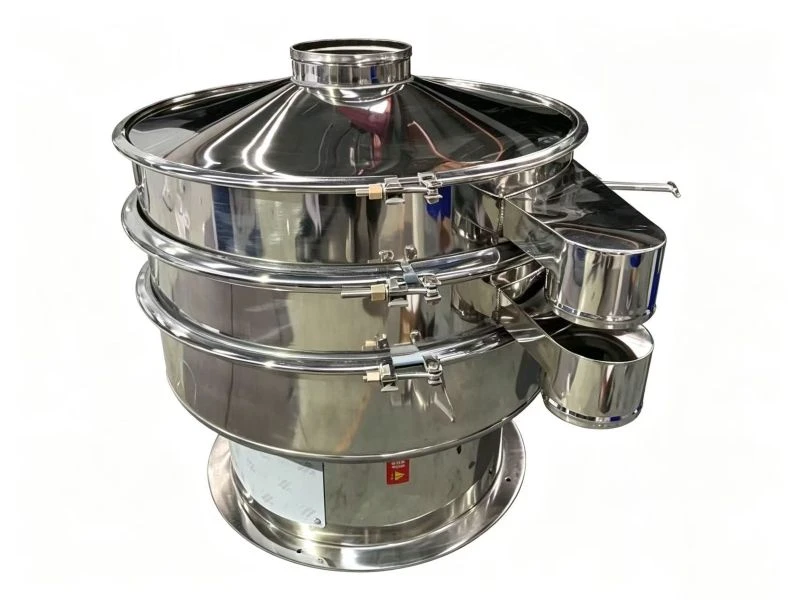
Peneira Vibratória Ultrassônica
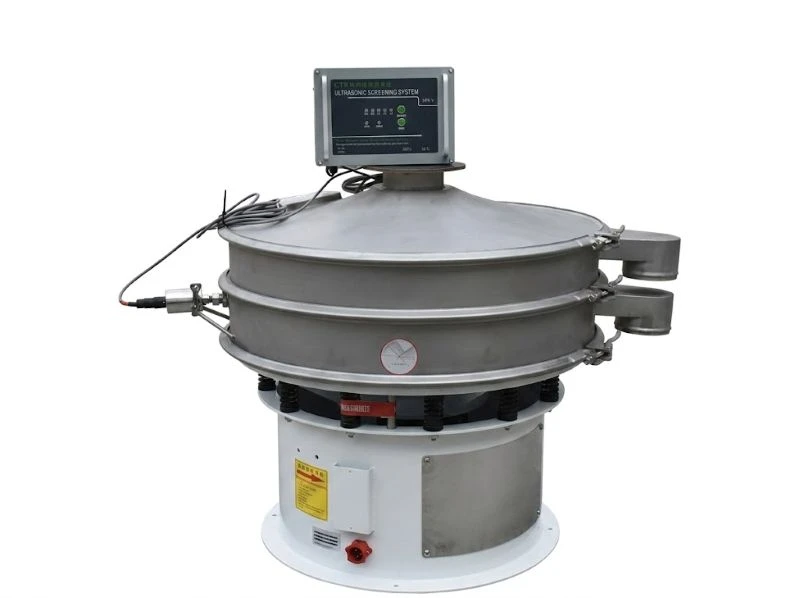
Uma peneira vibratória ultrassônica combines mechanical vibration with high-frequency ultrasonic vibration applied to the screen mesh. The ultrasonic system helps reduce particle adhesion and keeps fine mesh openings clear during screening.
It is mainly used for fine powders that are difficult to screen with conventional vibration, especially when mesh blinding, static buildup, or low throughput affects production.
Cost and Maintenance Comparison
| Cost Factor | Traditional | Ultrasonic |
|---|---|---|
| Initial equipment cost | Menor | Maior |
| System complexity | Simple | More components |
| Mesh cleaning | May require more cleaning | Reduced cleaning for difficult powders |
| Downtime from clogging | Higher for difficult fine powders | Usually lower |
| Best economic use | General screening | Difficult fine powder screening |
Ultrasonic screening is not automatically more economical. Its higher initial cost is mainly justified when mesh clogging, cleaning downtime, or throughput loss becomes a significant production problem.
How to Choose Between Ultrasonic and Traditional Vibrating Screens
The right screening method depends on the material, mesh size, required capacity, and whether clogging occurs during screening. A traditional vibrating screen is usually sufficient for free-flowing materials, while ultrasonic screening is more suitable when fine powder causes mesh blinding, static buildup, or reduced throughput.
| Screening Condition | Recommended Screen |
|---|---|
| Coarse or free-flowing material | Traditional |
| Fine powder but no serious clogging | Traditional may be sufficient |
| Cegamento frequente da malha | Ultrasonic |
| Static powder sticks to mesh | Ultrasonic |
| Throughput drops significantly with fine mesh | Ultrasonic |
| High-mesh fine powder screening | Ultrasonic |
| Low initial investment is priority | Traditional |
| Frequent cleaning causes production downtime | Ultrasonic |
Fine powder does not always require ultrasonic screening. If a traditional vibrating screen can achieve the required capacity and screening accuracy without frequent mesh clogging, there is usually no need to add an ultrasonic system.
See when calcium carbonate needs an ultrasonic sieve for checks on repeated mesh blockage, cleaning interruptions and fine powder retained in the oversize fraction.
Conclusion
Traditional vibrating screens are a practical choice for general screening, especially for free-flowing materials where clogging is not a major issue. Ultrasonic vibrating screens are more suitable for fine powders, high-mesh screening, and materials that cause mesh blinding or static buildup.
The right choice depends on your material, mesh size, required capacity, and screening conditions. Send us these details, and we can help you select a suitable screening solution.