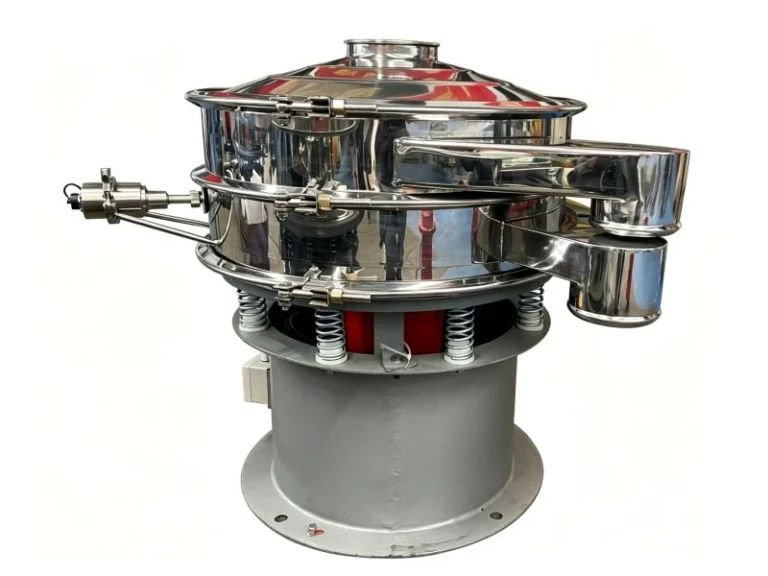
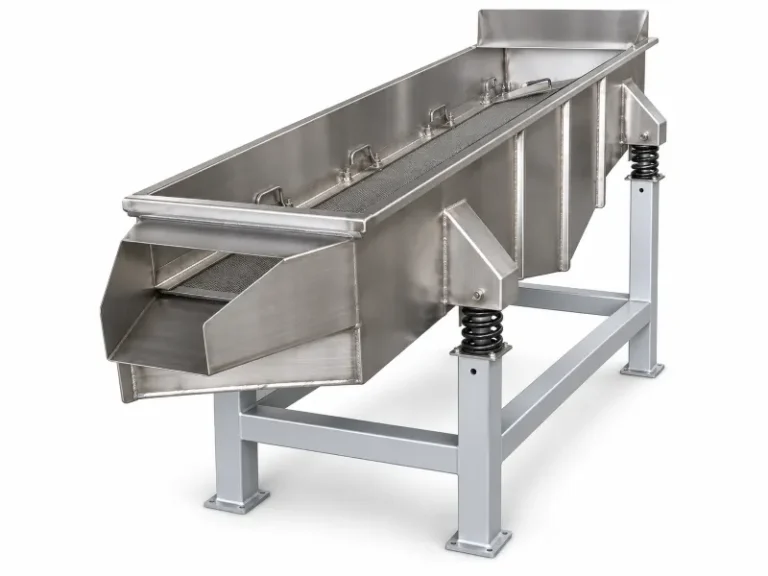
Выбор линейного вибрационного сита для специй: материалы и защита от засорения
Порошок чили может налипать на сетку. Молотый сычуаньский перец может оставлять маслянистые отложения. При переходе линии с одной смеси приправ на другую порошок, оставшийся внутри машины, может передать свой вкус следующей партии.
Эти проблемы не менее важны, чем производительность, указанная в коммерческом предложении. При выборе линейное вибрационное сито для специй, проверьте материалы деталей, контактирующих с продуктом, систему очистки сетки, размер ячеек и количество ярусов. Затем выясните, сможет ли машина обеспечить необходимую производительность при работе с вашей специей.

Что такое линейное вибросито для специй?
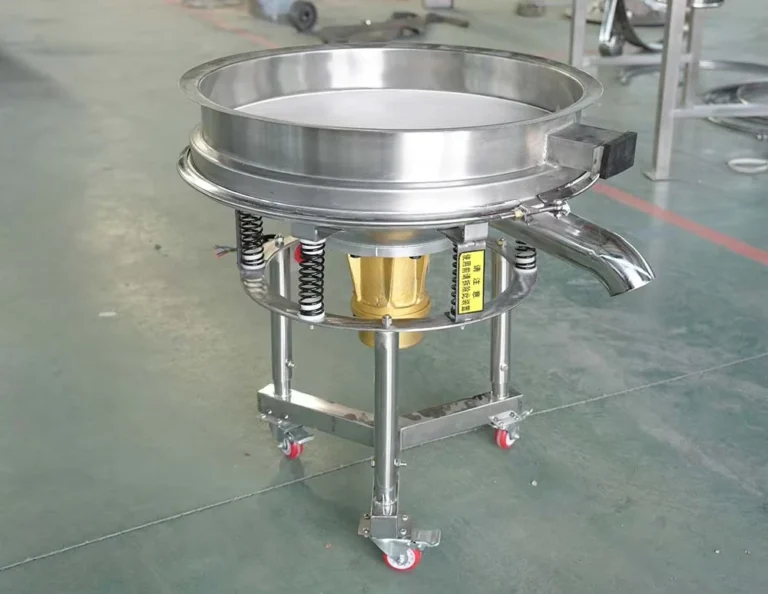
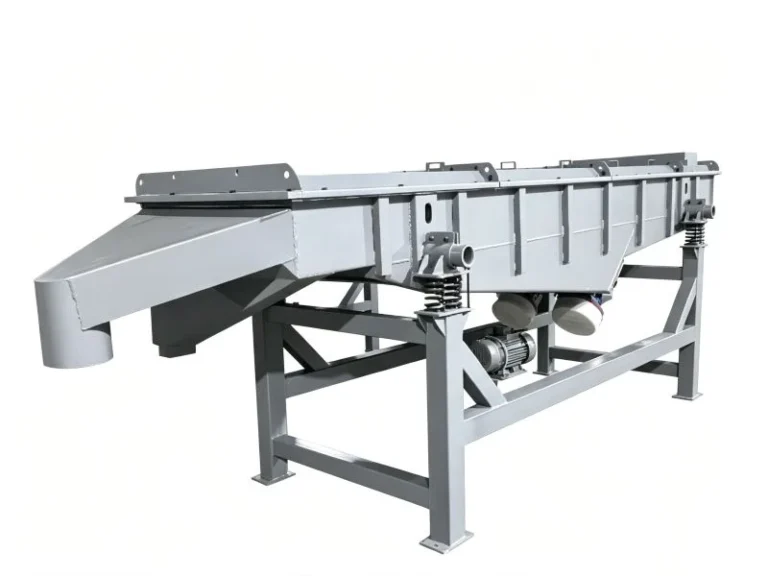
Машина разделяет семена специй, измельчённое сырьё и подходящие порошки по размеру. Вибрация перемещает материал вдоль сита. Частицы, достаточно мелкие для прохождения через ячейки, выходят через патрубок мелкой фракции; задержанный материал поступает к отдельному выпускному отверстию.
Специи могут содержать масла, впитывать влагу или образовывать комки. Поэтому машине необходимы подходящие материалы контактирующих с продуктом деталей и доступ для очистки. Кожух помогает сдерживать пыль, но остатки всё равно необходимо удалять с рамок, уплотнений и выпускных отверстий между партиями.
Целые семена и сушёные кусочки обычно ведут себя иначе, чем мелкие порошки, прилипающие к сетке. Для мелких или липких порошков специй необходимо провести испытание, чтобы проверить прохождение через сито и накопление отложений при работе.
Наше линейное вибрационное сито страница содержит сведения об оборудовании и его конфигурации.
Как выбрать подходящее сито для ваших специй
Шаг 1: Проверьте материалы и доступ для очистки
Укажите марку материала каждой детали, контактирующей с продуктом
Для линейное вибрационное сито для специй, спецификация материалов должна охватывать короб сита, сетку, рамку, входной и выходные патрубки. Нержавеющая сталь 304 — распространённый выбор. Рассмотрите марку 316L, если продукт, чистящие средства или условия эксплуатации требуют повышенной коррозионной стойкости.
Решение зависит от содержания масла, влажности и процедур очистки, а не просто от того, будет ли машина экспортироваться. Формулировка “нержавеющая сталь” также слишком общая, чтобы определить гигиенические характеристики оборудования.
Контактные поверхности из углеродистой стали могут создавать риск загрязнения ржавчиной. Углеродистая сталь с покрытием может подходить для оснований и опор, не контактирующих с продуктом, при условии, что покрытие и окружающая конструкция не ухудшают качество продукта.
Уплотнения и очистительные шарики тоже требуют внимания. Их материалы должны подходить для предполагаемых условий контакта с пищевым продуктом и очистки.
Загляните внутрь машины
Внутренние поверхности должны быть гладкими и доступными, сварные швы — обработанными, а мест, где может скапливаться порошок, должно быть как можно меньше. Зеркальная обработка поверхности может быть уместна при определённых требованиях к очистке, но её следует указывать при наличии оснований, а не считать гарантией гигиеничности.
Порошок, оставшийся внутри, может попасть в следующую партию. Если он отсыреет, то может также испортиться. Это особенно важно, когда одна и та же машина используется для порошка чили, молотого сычуаньского перца и смеси пяти специй.
Перед покупкой проверьте:
- Как снимаются рамки сит.
- Могут ли операторы добраться до пространства под сеткой, пазов уплотнений и выпускных отверстий.
- Видны ли остатки продукта при осмотре.
- Какая разборка требуется при переходе на другой продукт.
Машину, которая снаружи кажется простой в очистке, может быть неудобно очищать вокруг рамки и выпускных отверстий.
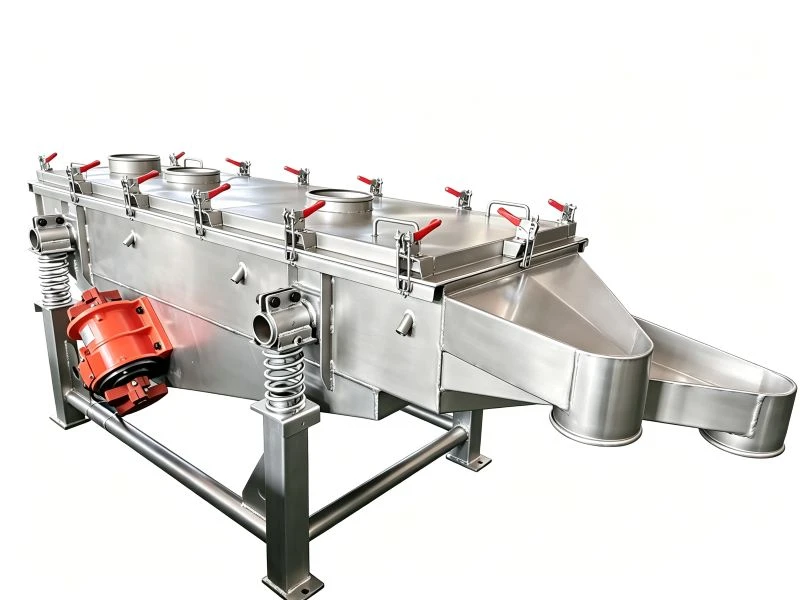
Шаг 2: Выберите очистительное оборудование с учётом фактической причины засорения
Прежде чем выбирать оборудование для предотвращения забивания сетки для линейное вибрационное сито для специй, выясните, что именно забивает сетку.
Частицы могут застревать в ячейках. Мелкий порошок может прилипать к проволоке, а влага или масла могут способствовать образованию отложений и комков. По мере сужения ячеек производительность снижается, а пригодный порошок может уходить вместе с крупной фракцией.
Очистка прыгающими шариками
Прыгающие шарики располагаются под ситом и во время работы ударяют по сетке, помогая выбивать застрявшие частицы.
Они широко применяются там, где механическая очистка подходит для данного материала. Важны материал и расположение шариков, а также их взаимодействие с сеткой. Узнайте, как проверяют и заменяют шарики, и оцените их работу во время испытания. Одного упоминания шариков в коммерческом предложении недостаточно.
Ультразвуковая очистка при устойчивом забивании сетки мелким порошком
Если мелкий порошок продолжает прилипать к сетке после проверки обычных способов очистки, возможно, стоит испытать ультразвуковую очистку. Она передаёт сетке высокочастотные колебания, помогая уменьшить некоторые виды налипания и забивания отверстий.
Она не обеспечит свободное прохождение любых специй. Влажные комки, маслянистые отложения и сильное слёживание по-прежнему требуют внимания к материалу и его обработке на предыдущих этапах.
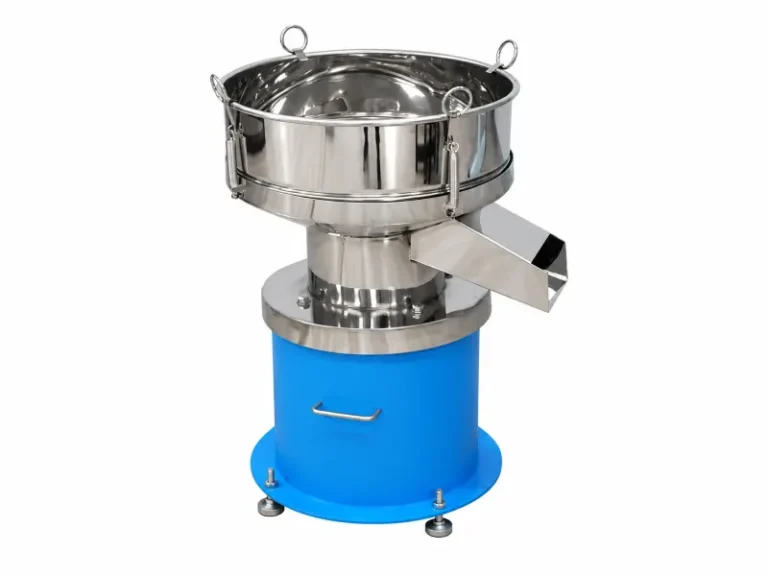
Производитель должен подтвердить совместимость ультразвуковой системы с выбранным линейным ситом. В некоторых случаях полезно сравнить предлагаемую машину с ультразвуковое вибрационное сито, используя один и тот же материал и целевой размер отверстий.
Проверьте подачу перед установкой дополнительного оборудования для очистки
Если одновременно поступает слишком много материала, на сетке может образоваться толстый слой. В этом случае частицы нужного размера могут уйти вместе с крупной фракцией, не успев достичь отверстий.
Проверьте скорость подачи и равномерность распределения материала по сетке. Оборудование для очистки не компенсирует перегрузку сита.
Шаг 3: Определите размеры отверстий и количество дек
Размеры отверстий и количество дек линейное вибрационное сито для специй зависят от того, что необходимо собирать на каждом выходе.
Для удаления крупных комков или задерживаемых сеткой посторонних включений перед следующим этапом процесса может быть достаточно одной деки. Кроме того, при переналадке потребуется очищать меньше компонентов.
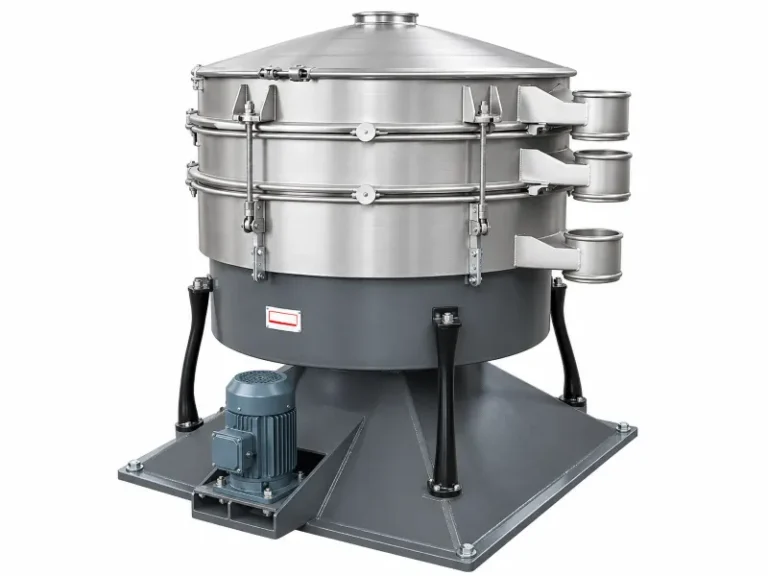
Обычная двухдечная схема позволяет получить три фракции по размеру: крупную, среднюю и мелкую. Добавляйте деки только тогда, когда процесс требует дополнительных ступеней разделения. Каждая дополнительная дека добавляет ещё одну поверхность, на которой может остаться материал.
Перед заказом определите:
- Что должно проходить через сетку.
- Что должно задерживаться или удаляться.
- Нужен ли вам один сорт готового продукта или несколько фракций по размеру.
- Фактический размер отверстия в микронах или миллиметрах.
Mesh count is a useful reference, but the opening also depends on wire diameter and screen specifications. Our guide to mesh count vs. micron size explains the difference.
With seasoning blends, examine the retained material. A coarse ingredient that belongs in the recipe should not be rejected simply because it remains on the screen.
Step 4: Check Capacity with Your Own Spice
Start sizing a линейное вибрационное сито для специй with the required hourly throughput, then assess it against the aperture, material condition and machine configuration.
Width and length determine the available screen area. They do not, by themselves, tell you how much spice the machine will process. Whole cumin seeds, crushed chili and finely ground chili powder can give very different results on the same equipment.
Provide bulk density, target aperture, moisture condition and required throughput. Also make clear whether your figure means feed entering the machine or acceptable finished product leaving it.
The feeding method and bed depth should be agreed before purchase. If the bed is too deep, usable fines can travel into the oversize discharge, reducing recovery.
Where possible, run representative material continuously and check:
- Whether the machine maintains the required throughput.
- Whether the screened product meets the particle-size specification.
- How much acceptable fine powder leaves with the oversize.
- Whether blinding or deposits develop as the run continues.
- How long cleaning and screen replacement take.
Allow for feed fluctuations using the trial results. A nominal catalog capacity is not enough to establish sustained output with a particular spice.
Selection Reference for Common Spices
The table below gives starting points for material and mesh-cleaning selection. Final choices depend on the actual fineness, moisture condition and throughput requirement.
| Spice Type | Material Characteristics and Screening Concerns | Mesh-Cleaning Options to Evaluate | Suggested Product-Contact Construction |
|---|---|---|---|
| Chili powder and paprika powder | Fine powder may develop static adhesion, agglomeration and mesh blinding. Check coarse-particle removal and fine-powder passage. | Evaluate bouncing-ball cleaning where appropriate. Compare ultrasonic assistance if fine powder continues to adhere. | Consider 304 stainless steel, with removable screen frames and accessible outlets. |
| Ground Sichuan pepper | Oils may contribute to screen deposits or caking. Watch for buildup during continuous operation. | Evaluate bouncing-ball cleaning. Persistent oily deposits also call for a check of material condition and trial performance. | Consider 304 stainless steel. Inspect internal walls, welds and seal grooves for residue. |
| Star anise powder and cinnamon powder | Coarse and fine grades behave differently. Fibrous particles may affect passage through the mesh. | Evaluate bouncing-ball cleaning for coarse grades. Test other arrangements for fine powder or persistent blinding. | Consider 304 stainless steel, with mesh and frames that are easy to inspect and replace. |
| Five-spice blends and curry powder | Particle size, oil content and moisture sensitivity vary with the recipe. Residue can carry flavor between batches. | Evaluate bouncing-ball or ultrasonic-assisted screening according to the formulation and observed adhesion. | Consider 304 stainless steel, smooth internal surfaces and finished welds, with few places for powder to collect. |
| Целые семена кумина | Typical duties include grading and separating larger debris and smaller particles. Seed shape affects separation. | Decide whether bouncing balls are needed by checking for particles lodged in the openings. | Consider 304 stainless steel contact parts and a frame that allows convenient screen changes. |
| Crushed chili | Irregular pieces, skin fragments and seeds may overlap in size. | Evaluate mechanical cleaning according to the aperture and observed plugging. | Consider 304 stainless steel. Check feed distribution and access to the discharge outlets. |
These material suggestions apply to product-contact parts. Cleaning chemicals, operating conditions and customer specifications may change the choice. Ultrasonic compatibility must be confirmed for the selected machine; another screen type may need to be tested.
For export orders or demanding hygiene specifications, agree on material documentation, seals, surface finish and cleaning acceptance criteria. Neither export use nor a higher hygiene requirement automatically calls for 316L or ultrasonic cleaning.
When screening ground paprika, distinguish coarse particles from fine powder that has formed lumps. The two may need different handling. See paprika powder sieving after grinding.
Selection Example: Two-Deck Screening of Whole Cumin Seeds
An Indian spice processor needed to screen dry whole cumin seeds at 600 kg/h using 3 mm and 1 mm openings. The customer also wanted convenient access for inspection and screen replacement.
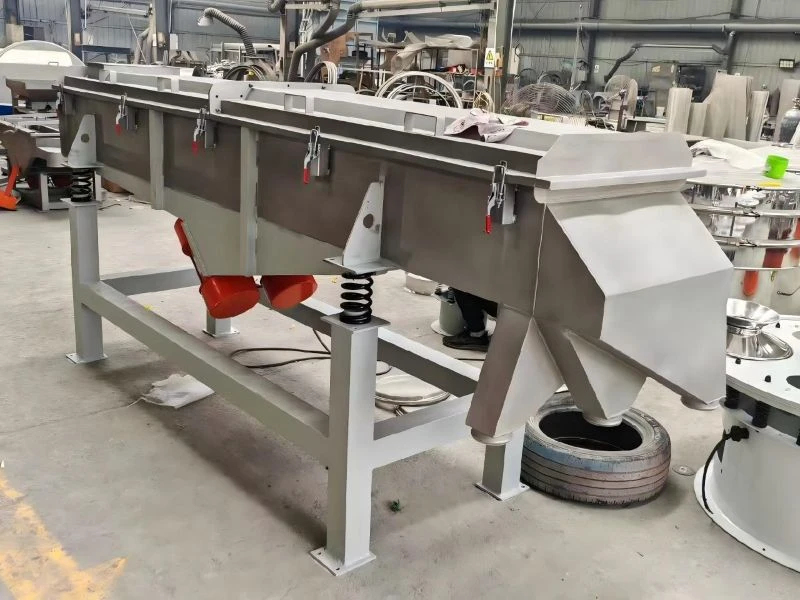
After reviewing the material, screening requirements and workshop layout, the project specified a YJZ-820-2 two-deck linear screen. Product-contact parts were stainless steel; the remaining supporting structure was carbon steel. A quick-release frame provided access to the screens.
Those specifications apply to this whole-cumin application. They should not be used to predict the capacity for fine chili powder or ground Sichuan pepper.
Эта cumin seed screening case study includes the full configuration.

What to Confirm Before Ordering
A quotation for a линейное вибрационное сито для специй should describe both the machine being supplied and the conditions behind its stated performance.
Material Specifications
“Stainless steel machine” leaves too much open to interpretation. Identify the grade and the components it covers, along with the required material documentation.
Where necessary, agree on a verification method before delivery. Check that a lower price does not involve substituting materials for the grade you requested.
What the Mesh-Cleaning System Includes
Confirm the proposed cleaning method, whether it is included in the price, and how its components are inspected, cleaned and replaced.
An unsuitable arrangement can mean frequent stops and additional labor. Resolve these details before the machine arrives.
Access to Residue Traps
Pay attention to welds, frame edges, seal grooves and outlets. Ask for photographs or a video showing disassembly and access to these areas. Exterior machine photographs will not tell you much about the cleaning work involved.
The Basis of the Capacity Figure
The quoted capacity should identify the material, aperture and operating conditions. A short run on a clean screen can miss the gradual blinding that occurs during production.
Agree on throughput, finished-product requirements and acceptance methods before purchase.
Discuss Your Spice Screening Requirements
If you are considering a линейное вибрационное сито для специй, contact Yuanjing Machinery with your spice type, required hourly throughput, target aperture and current screening problem.
For a line that handles several spices, include the product changeover and cleaning requirements as well. These details help us assess the configuration and identify what needs to be checked in a trial.
FAQ
Can a Spice Linear Vibrating Screen Handle Fine Chili Powder?
It may be suitable, depending on the aperture, flowability, moisture condition and adhesion. Use representative material to test sustained throughput. If fine powder keeps adhering to the mesh, compare ultrasonic assistance or another machine type.
Should I Choose 304 or 316L Stainless Steel?
304 is a common choice. Consider 316L where the product, cleaning chemicals, environment or customer specification requires greater corrosion resistance. Export use alone does not determine the grade.
How Do I Choose Between Bouncing Balls and Ultrasonic Cleaning?
Check what is causing the blockage. Bouncing balls may dislodge trapped particles; ultrasonic assistance may help with persistent fine-powder adhesion. Test the result and confirm compatibility with the proposed machine.
How Many Decks Are Needed for Coarse, Medium and Fine Fractions?
A conventional two-deck arrangement can produce three size streams. The final configuration also depends on the specified size ranges, acceptable carryover and cleaning requirements.
What Information Should I Provide for a Quotation?
Send the spice name and physical form, target aperture or finished-product specification, hourly throughput, bulk density and any moisture or adhesion concerns. Include the required fractions, power supply and available installation space. If you are investigating an existing problem, photographs of the powder and screen retentions are useful.