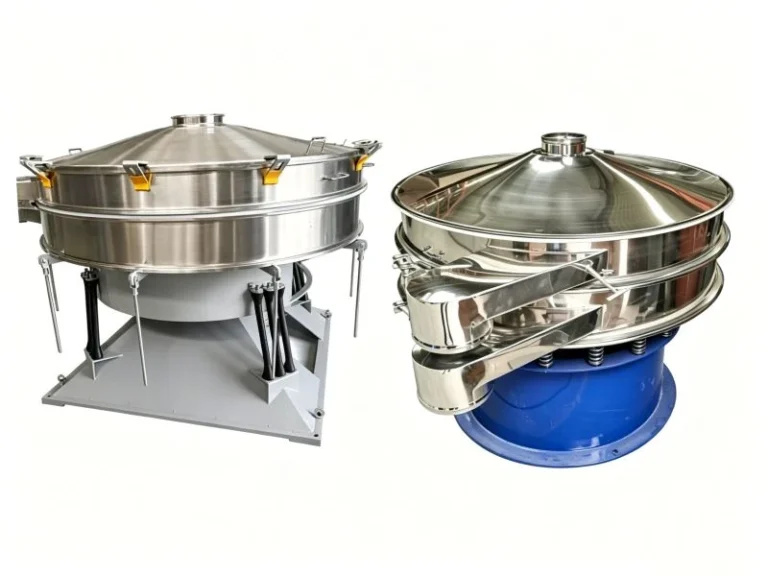
Ultrasonik Titreşimli Elek ile 200–500 Mesh Toz Eleme
Giriş
200–500 mesh powder screening can be difficult with a standard vibrating screen. Fine particles may stick to the mesh, form small agglomerates, or build up static, causing mesh blinding and lower screening capacity.
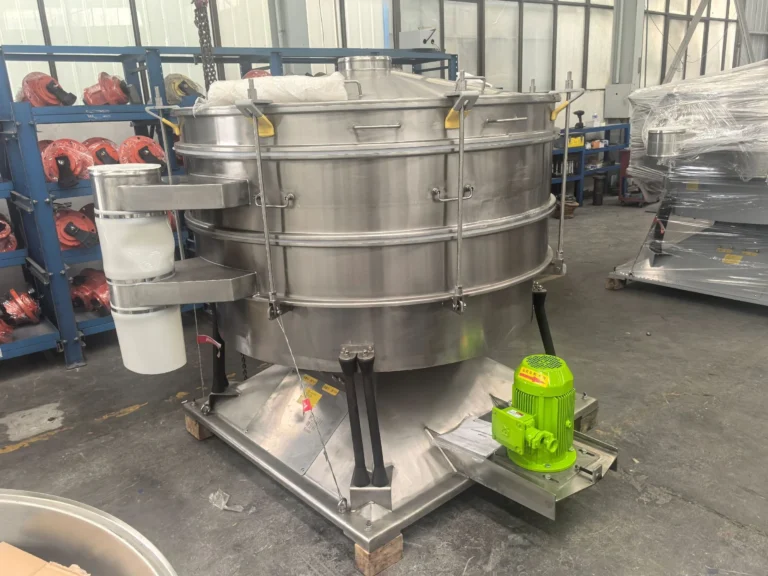
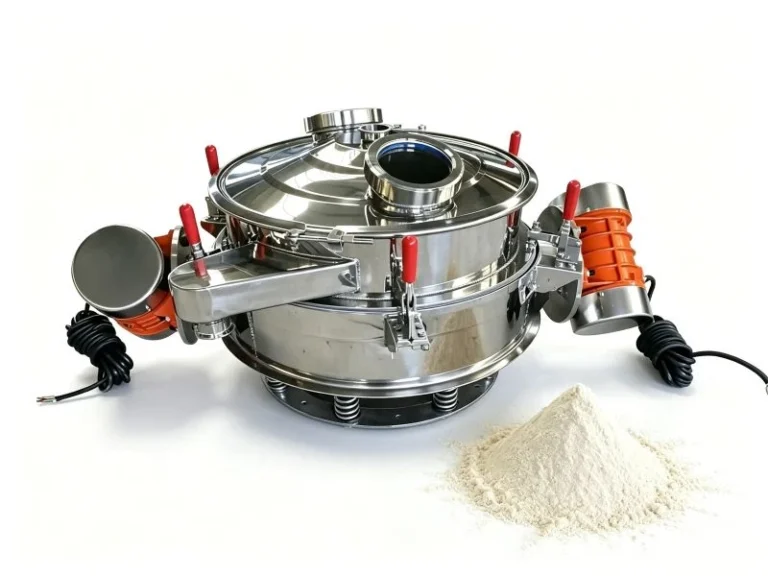
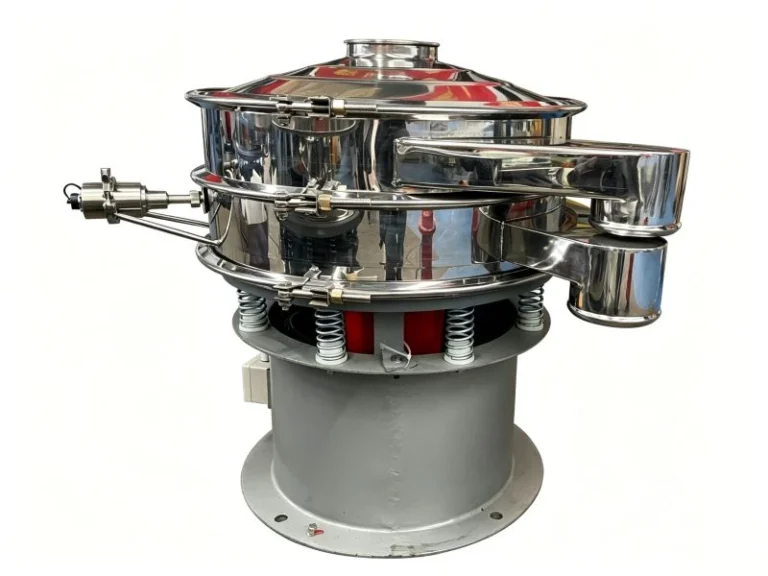
Bir ultrasonik titreşimli elek adds high-frequency vibration to the screen mesh to reduce blockage and help fine powder pass through more smoothly. It is especially useful for fine mesh screening of metal powder, graphite, chemical powder, and other materials that are difficult to screen.
The right screening solution depends on the target mesh size, powder characteristics, required capacity, and how the material behaves on the screen.

Why Is 200–500 Mesh Powder Screening Difficult?
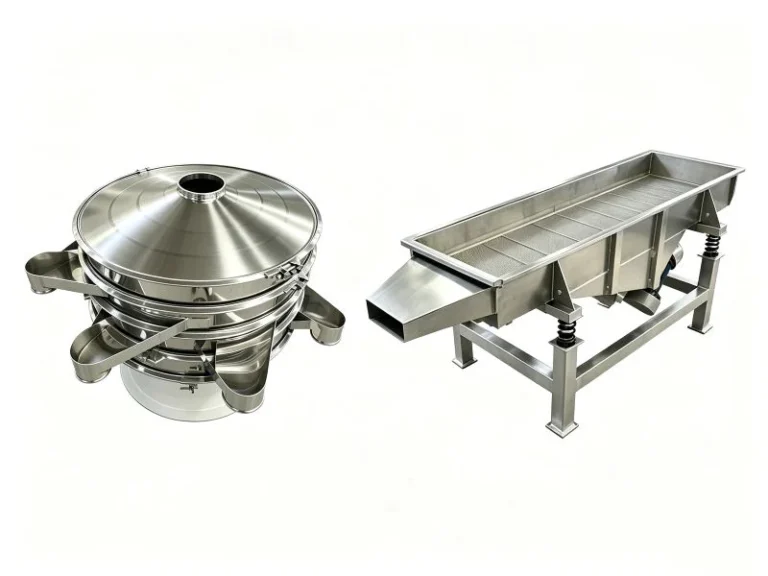
As the mesh becomes finer, the screen openings become smaller and powder is more difficult to pass through. For 200–500 mesh powder screening, the main problems are mesh blinding, particle adhesion, static, and lower throughput. These problems are more common with fine, light, or cohesive powders.For a broader comparison, see our ultrasonic vs traditional vibrating screen guide.
Mesh Blinding and Particle Adhesion
Fine particles can stick to the screen surface or become trapped in the mesh openings. Near-size particles may also block the apertures during continuous screening. This reduces the open screening area and makes fine mesh screening less efficient.
Static and Powder Agglomeration
Ultra-fine powder can build up static or form small agglomerates during screening. Metal powder, graphite, and some chemical powders are more likely to have these problems. The particles may stick together or to the mesh instead of passing through it.
Lower Throughput at Finer Mesh Sizes
Screening capacity usually becomes harder to maintain as the mesh becomes finer. A 400 or 500 mesh screen has much smaller openings than a 200 mesh screen, so powder passes through more slowly. Actual throughput also depends on particle size, bulk density, flowability, feed rate, and screen diameter.
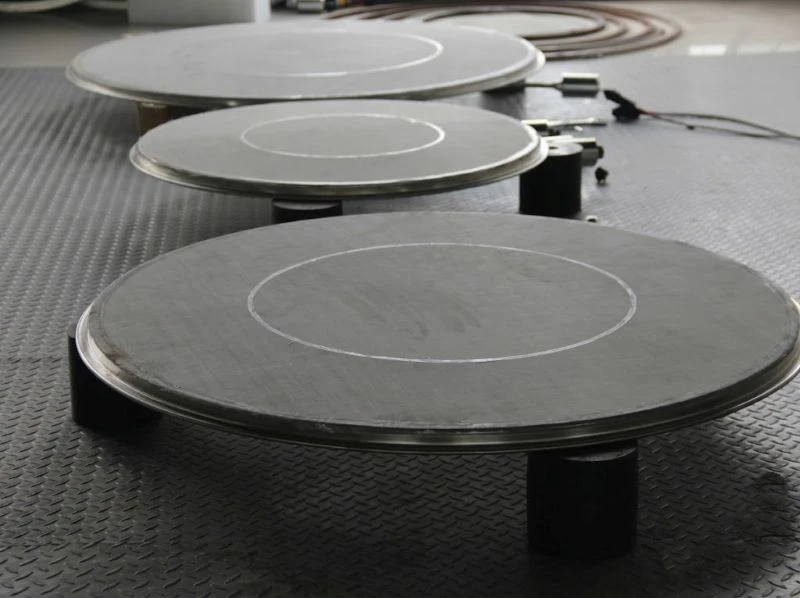

How Ultrasonic Screening Improves Fine Powder Screening
Ultrasonic screening applies high-frequency vibration to the screen mesh, helping reduce powder adhesion and allowing fine particles to pass through the mesh continuously. This is especially effective for screening 300–500 mesh ultra-fine powder.
Reduces Mesh Blinding
Fine powders above 200 mesh, such as metal powder, silicon carbide, lithium iron phosphate, and pharmaceutical materials, can easily block a conventional screen. The high-frequency vibration of an ultrasonik eleme sistemi helps break up adhered and agglomerated powder while keeping the mesh openings clear.
Improves Fine Powder Passage
Keeping the screen mesh clear allows fine and easily agglomerated powders to pass through more smoothly. Compared with conventional vibrating screening, ultrasonic vibration helps keep fine mesh openings clear, allowing difficult powders to pass through more consistently.
Maintains Stable Screening
Ultrasonic screening does not change the properties of the material and is especially effective for difficult-to-screen powders. The system does not increase the operating temperature and can work continuously. Less mesh blinding also reduces the need to stop frequently for screen cleaning, helping maintain stable fine powder screening.
200 vs 300 vs 400 vs 500 Mesh: What Changes?
As mesh size increases, the screen openings become smaller and ultra-fine powder becomes more difficult to screen. From 200 to 500 mesh, problems such as powder adhesion, static, and mesh blinding become more common. Ultrasonic screening is more useful when these problems affect powder passage or screening capacity.
| Elek Boyutu | Approx. Opening | Tipik Uygulamalar | Screening Notes |
| 200 mesh | 75 μm | Metal powder, ceramic powder, fine pharmaceuticals | Conventional screening may work for free-flowing powder |
| 300 mesh | 48 μm | Battery materials, coatings, pigments | Ultrasonic screening helps with adhesion and mesh blinding |
| 400 mesh | 38 μm | 3D printing metal powder, ultra-fine graphite | Ultrasonic screening is preferred for difficult powders |
| 500 mesh | 25 μm | Ultra-fine powder, high-purity chemical materials | Ultrasonic screening helps reduce severe mesh blockage |
Which Ultra-Fine Powders Benefit From Ultrasonic Screening?
Ultrasonic screening is suitable for fine powders that are easy to stick, agglomerate, build up static, or block the screen mesh. It is commonly used for 200–500 mesh ultra-fine powder screening, especially for metal powders, battery materials, chemical powders, and other difficult-to-screen materials.
Metal and Alloy Powders
Fine metal powders often have high screening accuracy requirements and can easily cause mesh blinding. Typical materials include stainless steel powder, nickel powder, alloy powder, graphite, battery materials, silicon carbide, alumina, and fine chemical powders.
Battery and Carbon Materials
Fine battery materials may stick to the mesh or form agglomerates during screening. Lithium battery cathode materials, anode materials, graphite powder, and carbon powder are common applications for ultrasonic screening.
Chemical and Mineral Powders
Silicon carbide, quartz powder, powder coatings, and other fine chemical powders can be difficult to screen at fine mesh sizes. Ultrasonic vibration helps keep the mesh openings clear and improves powder passage.
Food and Other Fine Powders
Ultrasonic screening can also be used for fine and lightweight materials such as malt powder and spore powder, especially when conventional screening causes frequent mesh blockage.

How to Choose an Ultrasonic Vibrating Screen for 200–500 Mesh Powder
Choosing an ultrasonik titreşimli elek for fine powder depends on the required mesh size, powder properties, screening capacity, and machine size. For 200–500 mesh powder, these factors should be confirmed before selecting the equipment.
Confirm the Target Mesh Size
First, confirm the required particle size or screen mesh, such as 200, 300, 325, 400, or 500 mesh. Finer mesh usually requires better control of mesh blinding and powder adhesion.
Check the Powder Characteristics
Consider the particle size, bulk density, flowability, moisture, static, and agglomeration of the powder. Materials with poor flowability or strong adhesion usually benefit more from ultrasonic screening.
Determine the Required Capacity
Mesh size alone cannot determine screening capacity. Actual output also depends on the material, bulk density, feed rate, powder properties, and screen diameter.
Select the Screen Diameter and Material
Choose the screen diameter according to the required capacity and working conditions. 304 or 316 stainless steel can be selected based on the material and hygiene requirements. For difficult 200–500 mesh ultra-fine powder, The screen diameter should match the required capacity. For difficult ultra-fine powders, material testing is recommended before confirming the final screen size.
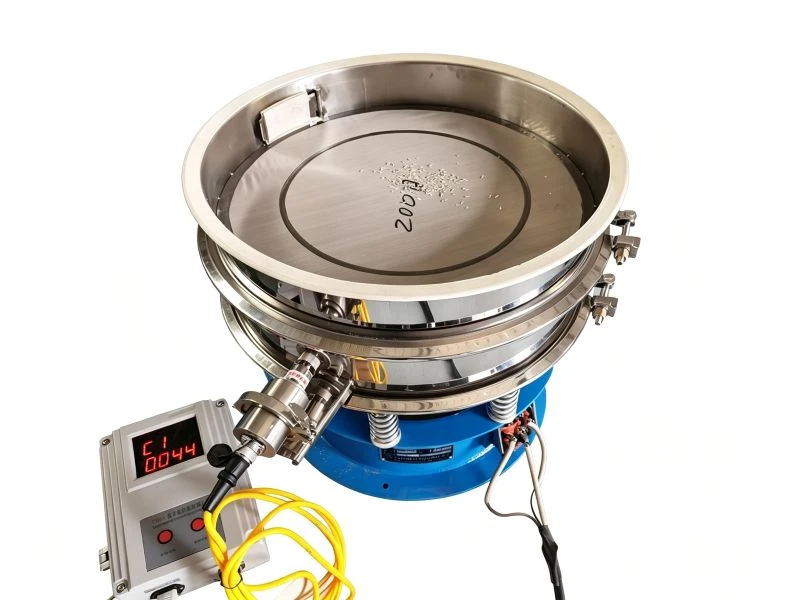
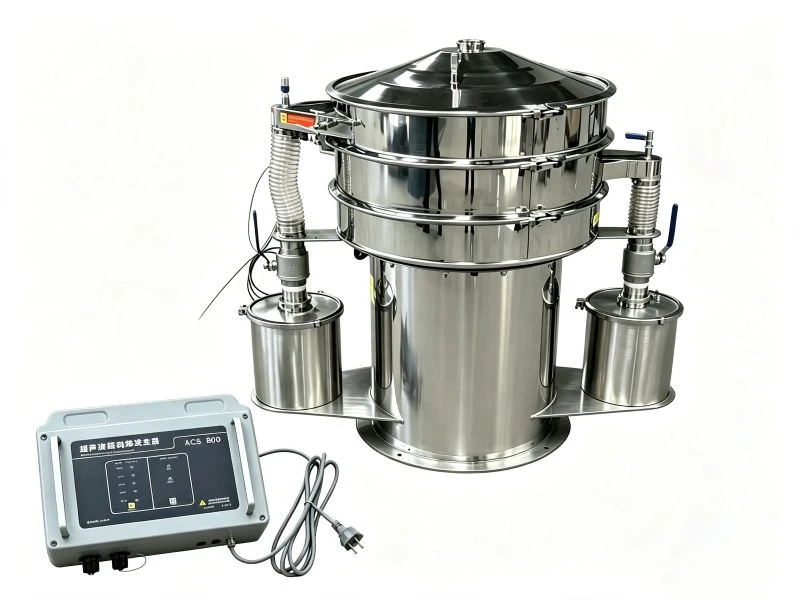
How to Improve 300–500 Mesh Screening Performance
For 300–500 mesh ultra-fine powder, stable feeding, correct screen tension, and proper machine settings help reduce mesh blinding and maintain stable screening.
Keep the Feed Rate Stable
Feed the powder evenly and avoid overloading the screen. Too much material on the mesh can reduce screening efficiency.
Maintain Proper Screen Tension
The screen mesh should have proper and even tension. A loose screen can affect ultrasonic transmission and screening performance.
Adjust Vibration and Ultrasonic Settings
Set up and adjust an ultrasonic vibrating screen according to the powder and mesh size. Proper settings help keep the mesh clear and improve fine powder screening.
Typical Screening Capacity Reference
| Malzeme | Elek Boyutu | Approx. Particle Size | Typical Capacity | Notlar |
| Talk Tozu | 200 mesh | 74 μm | Approx. 800 kg/h | Typical range: 600–1,200 kg/h |
| Ferromagnetic / Mineral Powder | 300 mesh | 48 μm | 300–800 kg/h | Fine powder screening |
| Fine Metal / Herbal Powder | 400 mesh | 38 μm | 150–400 kg/h | Suitable for powders prone to mesh blinding |
| Alümina Tozu | 500 mesh | 25 μm | Approx. 200 kg/h | Typical range: 80–200 kg/h |
Note: Screening capacity varies depending on material density, particle size distribution, moisture content, screen diameter, mesh size, and operating conditions. The above data is for reference only.