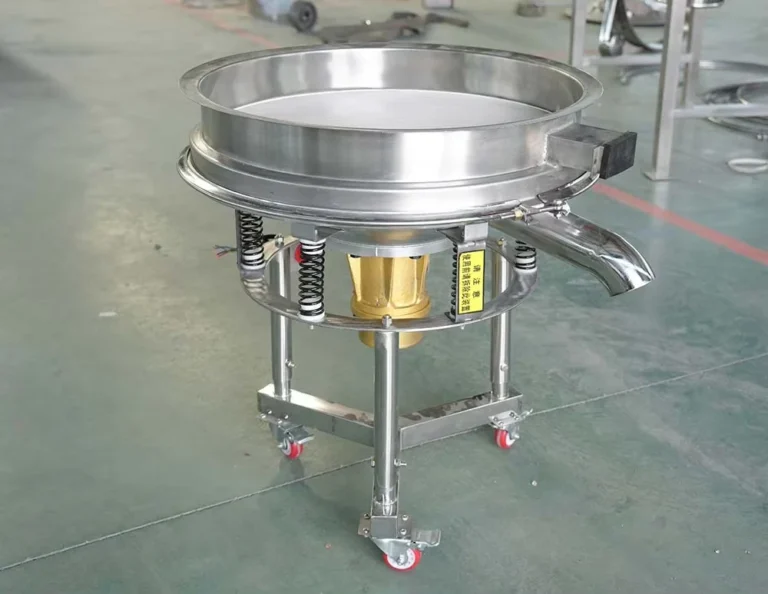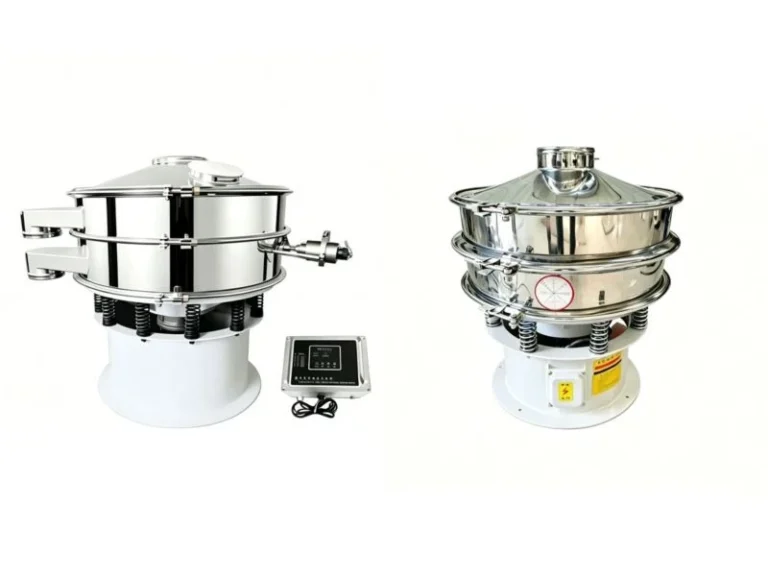
Công suất sàng rung nội tuyến: Điều gì quyết định sản lượng sàng?
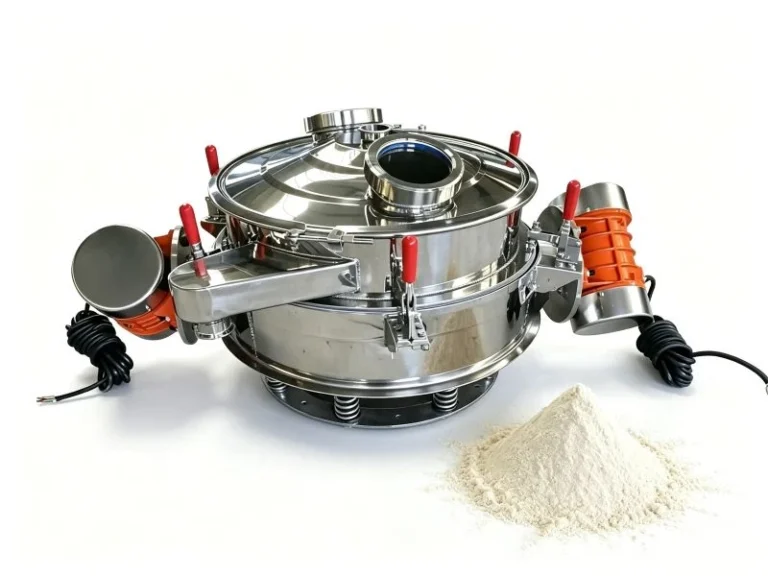
The capacity of an inline vibratory screen is not a fixed value. Even when the same screen diameter and motor configuration are used, actual throughput can change significantly depending on the material, mesh size, feed rate, flowability, and screening conditions.
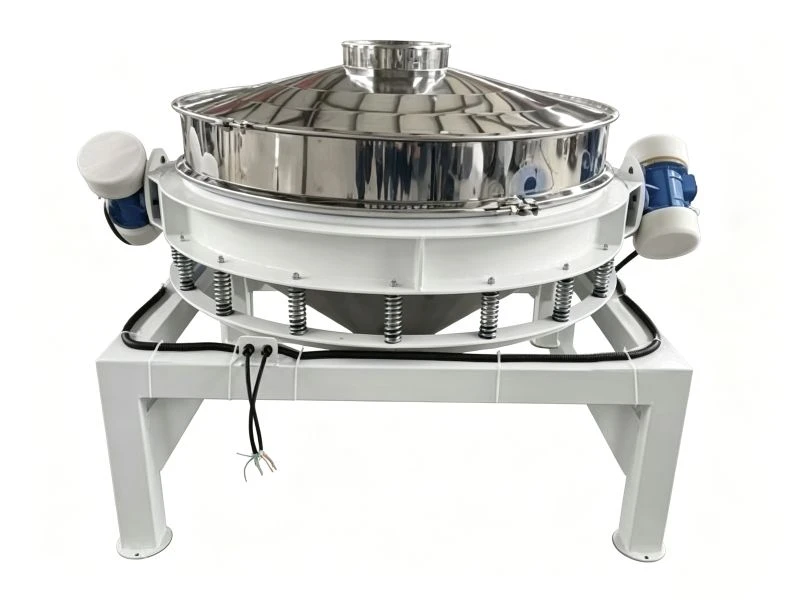
What Is the Typical Capacity of an Inline Vibratory Screen?
Inline vibratory screen capacity varies with the material and screening conditions. There is no single output range that applies to every application. Coarse, free-flowing materials usually allow higher throughput, while fine or poorly flowing powders are more difficult to screen.
Actual throughput depends on several factors, including material bulk density, mesh size, screen diameter, feed rate, and material flowability. For example, coarse and free-flowing materials usually pass through the screen faster, while fine or poorly flowing powders may have a lower screening capacity.
For this reason, inline vibratory screen capacity should be evaluated based on the actual material and production requirements. When selecting a screen for a powder processing or production line, the required capacity in kg/h or t/h should be considered together with the target mesh size and material properties.
The following inline vibratory screen capacity test data shows how screen diameter, material type, and mesh size can result in different screening outputs under actual working conditions.
| Đường kính sàng | Vật liệu | Kích thước lưới | Tested Capacity |
| 600 mm | Starch | 60 lỗ | 800 kg/h |
| 1000 mm | Wheat flour | 24 mesh | 1500 kg/h |
| 1500 mm | Salt | 80 lưới | 4.5 t/h |
| 800 mm | Chemical resin | 50 lỗ | 1600 kg/h |
| 1200 mm | Fertilizer | 8 mesh | 12 t/h |
| 1500 mm | Metal powder | 100 lưới | 2200 kg/h |
The tested inline vibratory screen capacity is for dry material under normal working condition. Actual output depends on material moisture, impurity ratio and feeding method.For flour applications, mesh size, material properties and production-line configuration should be considered together. Read our guide to selecting an sàng rung nội tuyến để sàng bột mì for more details.
6 Factors That Affect Inline Vibratory Screen Capacity
Inline vibratory screen capacity depends on both the material and the screening conditions. Even with the same screen size, actual throughput can change when the material, mesh size, feed rate, or vibration settings are different. The following six factors have the greatest effect on screening output.
1. Material Bulk Density
Bulk density directly affects screening output measured in kg/h or t/h. Even when the same volume of material passes through the screen, materials with different bulk densities can have very different weight-based capacities. Therefore, the material parameters should be confirmed before estimating inline vibratory screen capacity.
2. Mesh Size
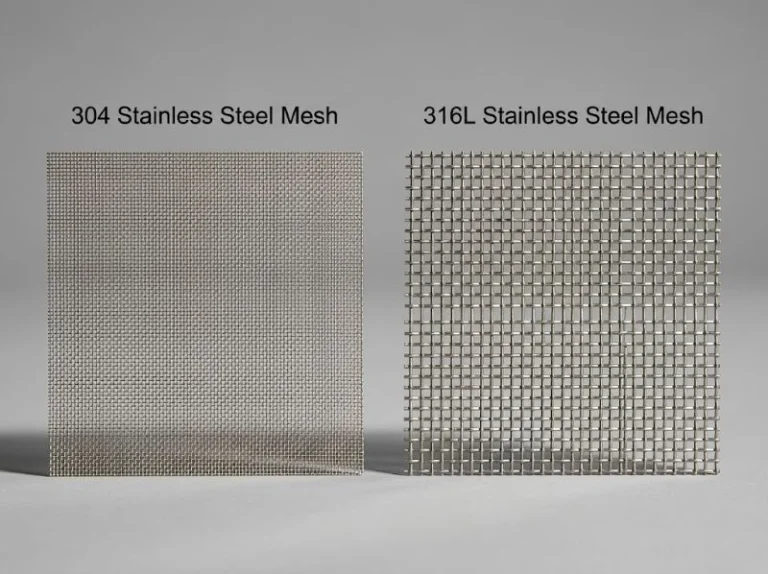
Mesh size directly affects how easily the material passes through the screen. Coarse mesh has larger openings and usually allows higher throughput. Fine mesh has smaller openings, making fine powder screening more difficult and generally resulting in lower screening capacity.
3. Screen Diameter and Effective Screening Area
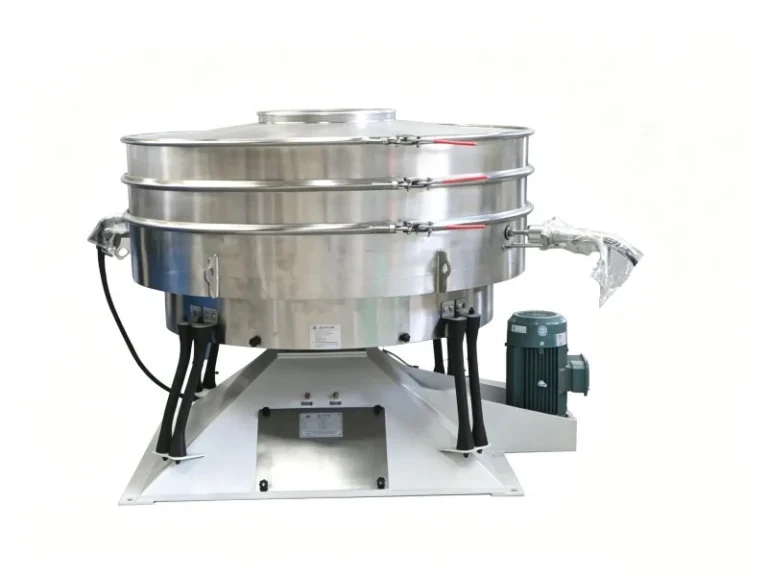
A larger screen diameter provides a larger screening area and can support higher throughput. Yuanjing manufactures inline vibratory screens with standard diameters from 600 mm to 1500 mm. Custom sizes of 400 mm, 1800 mm, and 2000 mm are also available to meet different production capacity requirements.
4. Feed Rate
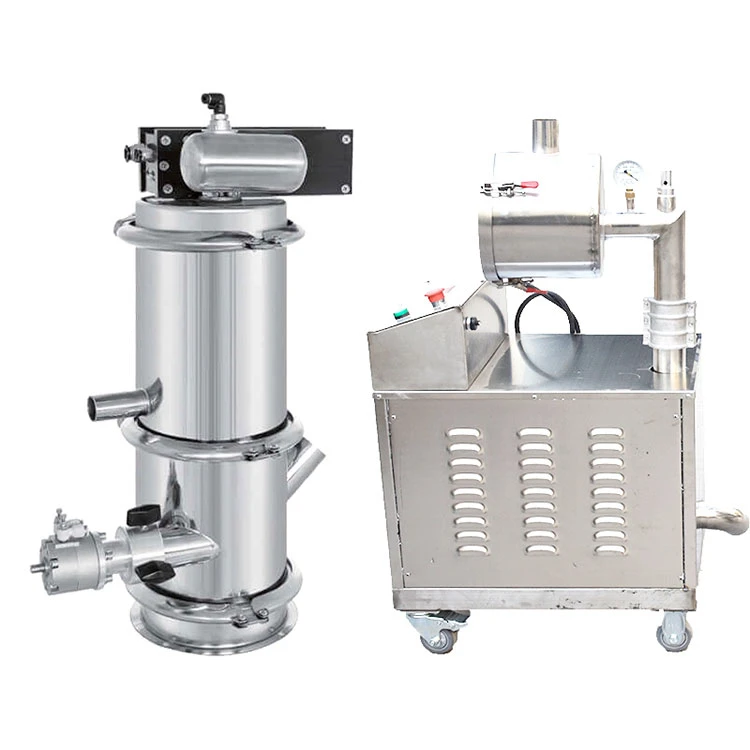
A stable feed rate helps maintain consistent screening output. Uneven feeding can create a thick material layer on the screen and reduce screening efficiency. Mechanical feeding equipment is recommended whenever possible to provide a steady and even material flow. For a continuous production line, equipment such as a vacuum feeding conveyor should match the processing capacity of the inline vibratory screen.
5. Material Flowability
Dry powders and granules with good flowability usually move more easily across the screen surface. Fine, sticky, moist, or poorly flowing powders may remain on the mesh for longer periods, reducing screening capacity. For these difficult-to-screen materials, an ultrasonic system can be added to improve mesh cleaning and reduce screen blinding.
6. Vibration Force
Vibration force affects how the material moves across the screen surface. A higher vibration frequency increases material movement and can improve throughput. The vibration amplitude should remain within a suitable range. If the amplitude is too high, the material has less contact with the screen mesh. If it is too low, the material moves slowly or may not move effectively. Both conditions can reduce screening capacity.
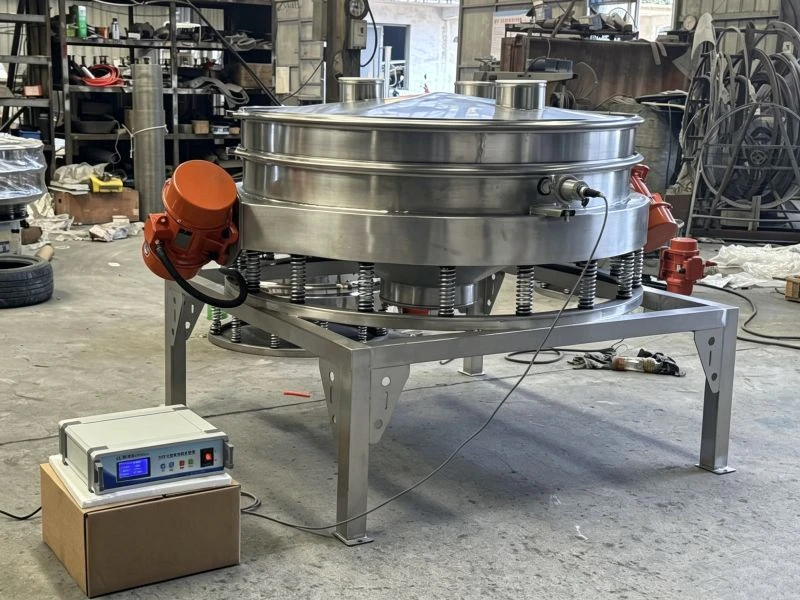
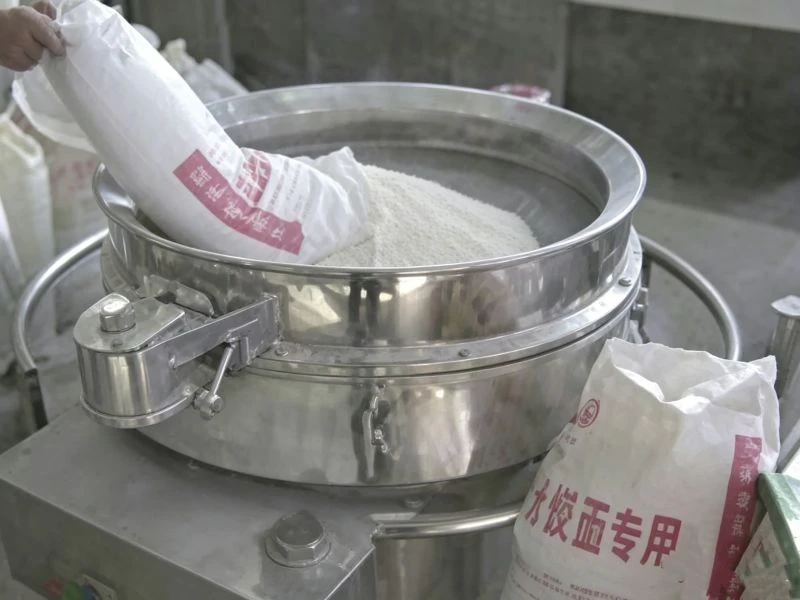
How Mesh Size Affects Screening Capacity
Mesh size has a direct effect on screening capacity. In general, larger mesh openings allow material to pass through more easily, resulting in higher throughput. As the mesh becomes finer, the openings become smaller and the screening difficulty increases.
| Mesh Requirement | Screening Difficulty | Expected Throughput |
| Coarse screening | Low | Higher |
| Medium screening | Medium | Moderate |
| Fine powder screening | High | Lower |
Fine powders are also more likely to block or blind the mesh, reducing the effective screening area and actual throughput. This is why mesh size and required capacity should be considered together when selecting an inline vibratory screen. Fine powders are also more likely to block or blind the mesh, reducing the effective screening area and actual throughput. This is why mesh size and required capacity should be considered together when selecting an inline vibratory screen. For sàng bột mịn, material flowability and the need for a mesh cleaning system should also be evaluated.
Does a Larger Screen Diameter Always Increase Capacity?
Not necessarily. A larger screen diameter provides more screening area and can support higher throughput, but diameter is not the only factor that determines screening capacity.
The actual capacity of an inline vibratory screen also depends on mesh size, material properties, feed rate, flowability, and vibration settings. For example, a large screen processing fine or sticky powder may have a lower throughput than a smaller screen handling coarse, free-flowing material.
When selecting a vibratory screen size for the required capacity, the material should also be considered. Flour, starch, metal powder, and other materials have different flowability and particle size distributions, so their actual screening output will vary. An oversized screen also increases equipment cost. For low-capacity applications, a very thin material layer on the screen may reduce screening efficiency.
Single-Motor vs Dual-Motor: Does Motor Configuration Affect Capacity?
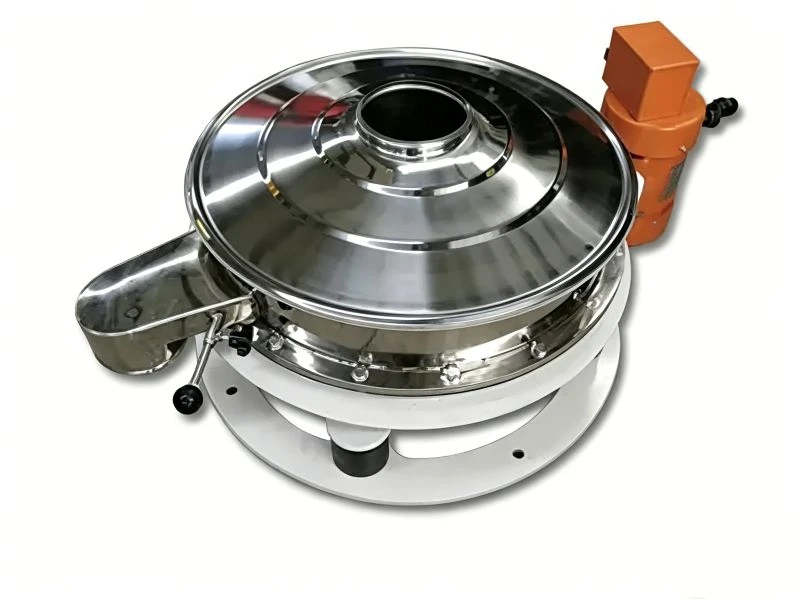
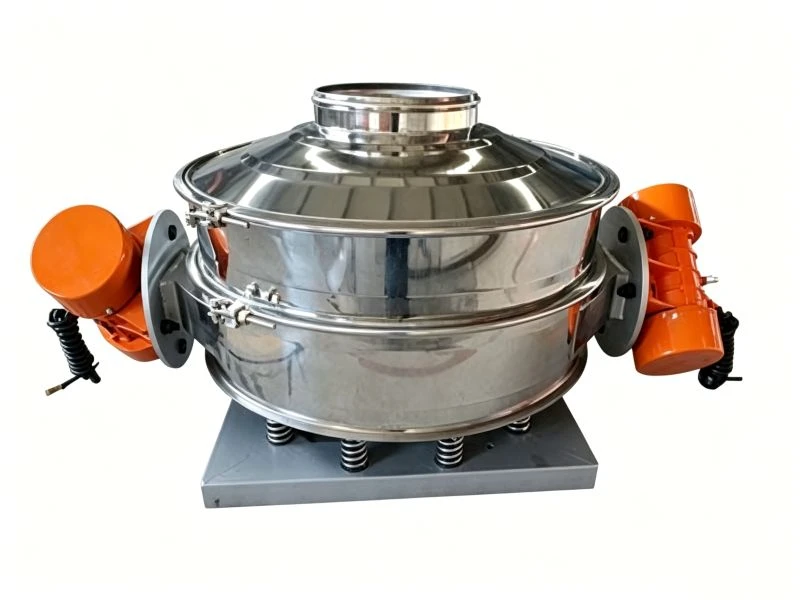
Yes. Motor configuration can affect the screening capacity of an inline vibratory screen. A single-motor design provides a simpler vibration pattern and is suitable for many standard screening applications. A dual-motor design provides stronger and more adjustable vibration, which can improve material movement and support higher throughput in some applications.
However, dual motors do not always mean higher capacity. Actual screening output still depends on the material, mesh size, feed rate, and screen diameter. Motor configuration should be selected based on the material characteristics, required throughput, and production conditions.
How to Select the Right Inline Vibratory Screen Capacity
To select the right inline vibratory screen, the required capacity should match the actual material and production conditions. Before choosing a machine, confirm these key parameters:
Material name: such as flour, starch, chemical powder, plastic powder, or metal powder.
Khối lượng riêng khối: helps estimate the actual throughput in kg/h or t/h.
Required capacity: the amount of material the production line needs to process per hour.
Mesh size or particle size: determines the required screening accuracy and affects throughput.
Material condition: flowability, moisture, stickiness, and other properties can affect screening performance.
Feeding method: manual feeding, screw conveyor, vacuum conveyor, or other continuous feeding systems.
With this information, the manufacturer can recommend a suitable screen diameter, mesh specification, motor configuration, and expected screening capacity. For materials that are difficult to screen or projects with strict capacity requirements, a material test can help confirm the actual throughput before equipment selection.
For an inline vibratory screen for production lines, matching the machine to the material and required output is more important than simply choosing a larger screen.
For more details on screen size, mesh selection, motor configuration, and production line requirements, see our inline vibratory screen selection guide.
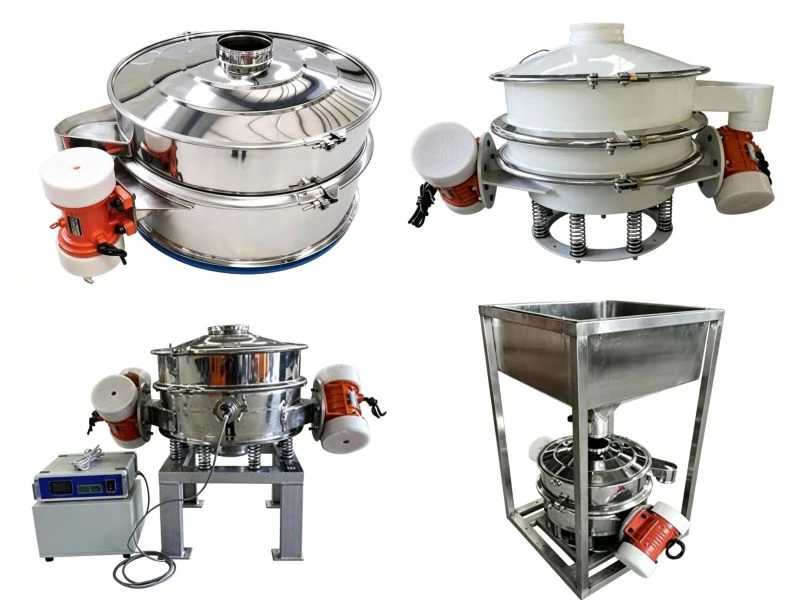
Contact us for a screening solution
If you are selecting an inline vibratory screen for a powder processing or production line, send us your material, target mesh size, and required capacity (kg/h or t/h). We can recommend a suitable screen diameter and configuration for your application.