Tamizado de polvo cosmético: cómo reducir el sobretamaño y el arrastre de color
Cosmetic powder sieving removes unwanted coarse particles and lumps from loose powder, blush and eyeshadow formulations. The right screen opening and steady feeding help limit the loss of usable powder. Color carryover needs a different control: removing previous-batch residue before the next shade enters the equipment. This guide covers screening adjustments, cleaning checks and material trials for both problems.
What Causes Oversize and Color Carryover in Cosmetic Powders?
Coarse particles may enter with raw materials or form when powder clumps during storage and handling. Color carryover occurs when residue from an earlier batch enters the next one. Identifying the source helps avoid unnecessary changes to the screen or formulation.
Oversized Particles, Soft Agglomerates and Hard Lumps
Material retained on a sieve can include:
- Partículas de tamaño excesivo: Individual particles larger than the selected screen opening.
- Soft agglomerates: Fine particles held loosely together, some of which may separate during screening.
- Hard lumps: Compacted or strongly bonded material that normal sieving may not break apart.
These materials should not all be treated as waste or automatically returned to production. Their condition determines whether further screening or another process is appropriate.
Previous-Batch Residue or Poor Pigment Dispersion?
Emptying the machine does not remove powder trapped in joints and contact parts. Even small residues can become visible when switching from dark blush or eyeshadow to a lighter shade.
Color spots can also come from uneven pigment dispersion in the current formulation. Compare powder before and after sieving to narrow down the source.
| What You See | Possible Cause | First Check |
|---|---|---|
| Hard particles retained on the mesh | Coarse raw material or hardened lumps | Incoming powder and retained material |
| Fine powder building up on the screen | Blocked openings or excessive feeding | Mesh condition and feed rate |
| Off-color spots after a shade change | Previous-batch residue | Equipment cleaning and batch records |
| Color spots already present before sieving | Poor pigment dispersion or pigment agglomerates | Incoming blend and mixing records |
These observations guide the investigation; they do not confirm the cause on their own.

How to Reduce Oversized Particles During Cosmetic Powder Sieving
Start with the required separation size, then adjust feeding and screen conditions. The goal is to remove unwanted coarse material while allowing suitable ingredients to pass.
Match the Screen Opening to the Product
Select the aperture from the powder’s particle-size distribution and finished-product requirements. Record the actual opening in microns (μm), along with the mesh count and screen specification.
A finer screen may reduce output and retain usable ingredients. In pearl-effect eyeshadow, for example, larger mica or effect particles may be intentional. Check both the screened powder and retained fraction before choosing the final aperture.
Keep Feeding Steady and Check for Bypass
Spread powder evenly across the screen. Dumping a large batch onto one area creates a deep bed, reducing particle contact with the mesh.
If coarse particles appear immediately after sieving, inspect the screen for tears, loose mounting and gaps around the seals. Material passing through damaged mesh and powder bypassing the screen at its edges require different repairs. Increasing vibration will not correct either fault.
Inspect Retained Powder Before Reprocessing
Collect a sample of the retained material. If it contains usable fine powder, check for blocked openings, excessive feeding or insufficient screening time.
Separate hard lumps, foreign material and off-color particles for assessment. Return material to production only when its identity and quality meet the batch requirements.
Consider Ultrasonic Assistance for Persistent Blinding
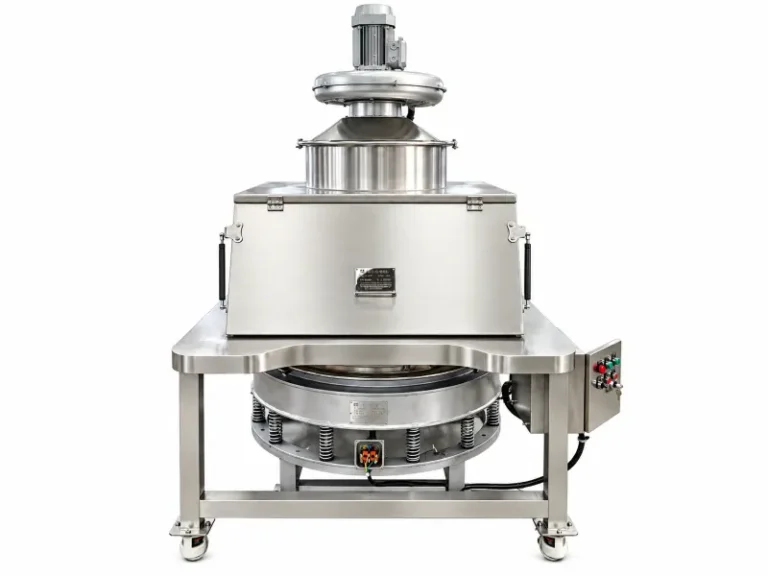
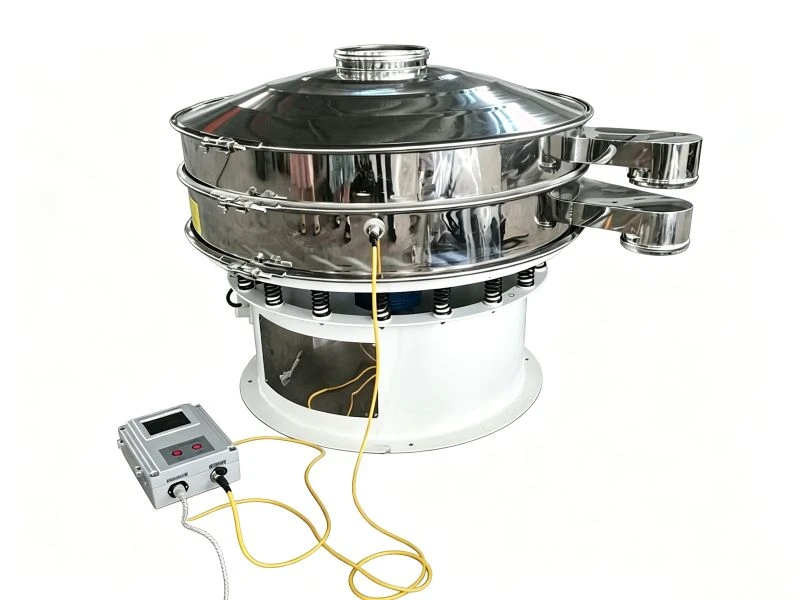
Un máquina de tamizado ultrasónico is worth testing when fine powder repeatedly sticks to the mesh, lowers output or causes frequent cleaning stops. High-frequency vibration applied to the mesh helps keep openings clear and may assist the separation of loose agglomerates.
For a broader diagnosis, see our guide to cegamiento de la malla con polvo fino. Ultrasonic de-blinding works during screening; it does not replace cleaning between colors.
How to Reduce Color Carryover Between Cosmetic Powder Batches
Effective color changeover covers the full powder path, including feeding equipment and collection containers. Cleaning only the visible screen surface can leave residue elsewhere in the system.
Plan Shade Changes and Dedicated Parts
Where formulations and schedules allow, processing lighter shades before darker ones may make changeovers easier. Cleaning is still required between batches.
For strongly colored powders or frequent shade changes, consider dedicated screens, seals or containers. Label these parts and store them clean and covered.
Clean and Inspect Powder-Contact Areas
Stop and isolate the equipment before dismantling it according to the manufacturer’s instructions. Choose a cleaning method compatible with the formulation and contact materials. After wet cleaning, remove cleaning residues and dry parts fully before reassembly.
Use the following checklist to cover common retention points:
| Area | Qué verificar |
|---|---|
| Mesh and screen edges | Adhering powder, trapped residue and damage |
| Seal grooves and frame joints | Powder deposits, wear and cracks |
| Discharge outlets and flexible connections | Residue in corners, folds and joints |
| Feeding equipment, containers and tools | Remaining powder, incorrect labels or mixed-use items |
Replace damaged parts that cannot be cleaned properly or that allow powder to bypass the screen.
Verify Cleaning Before Restarting
Inspect defined locations using visual checks, wipe checks or other suitable methods under the site’s cleaning procedure. Record the results against established acceptance limits.
Check the first portion of the next batch for off-color particles or shade differences before release. Running the sieve empty does not demonstrate that the equipment is clean.
How to Specify and Test a Cosmetic Powder Sieving Machine
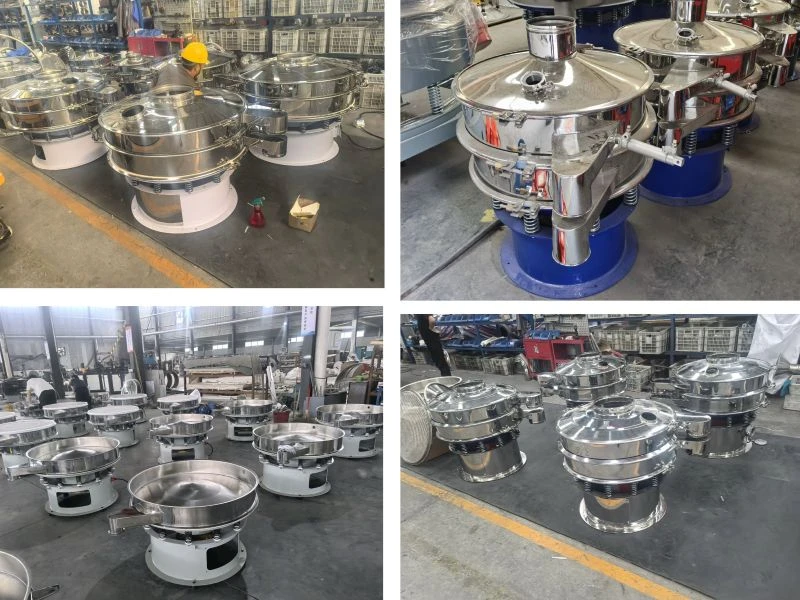
Equipment selection should account for powder behavior, required output and changeover frequency. A setup that works for loose face powder may need different settings for an oil-containing blush or mica-based eyeshadow.
Check Cleaning Access Alongside Screening Performance
During equipment evaluation, check how easily operators can remove the screen, inspect seals and reach the outlet. Include dismantling, cleaning and reassembly in the trial.
Test representative formulations separately. For blends containing pearl pigments or other effect particles, confirm that screening preserves the intended composition and appearance.
Cosmetic Raw Material Screening Examples
The following application examples illustrate different screening duties. Reported results relate to those examples and should not be treated as guaranteed performance for other formulations.
Succinic acid powder: 80-mesh preliminary screening
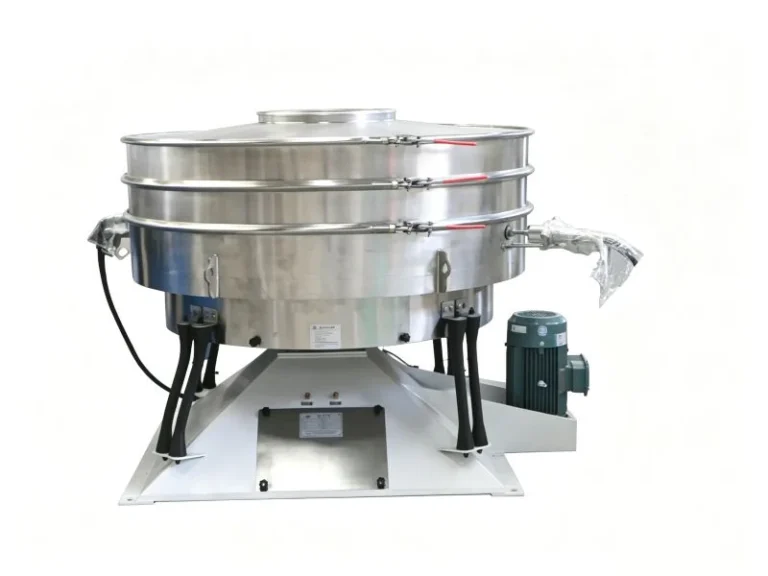
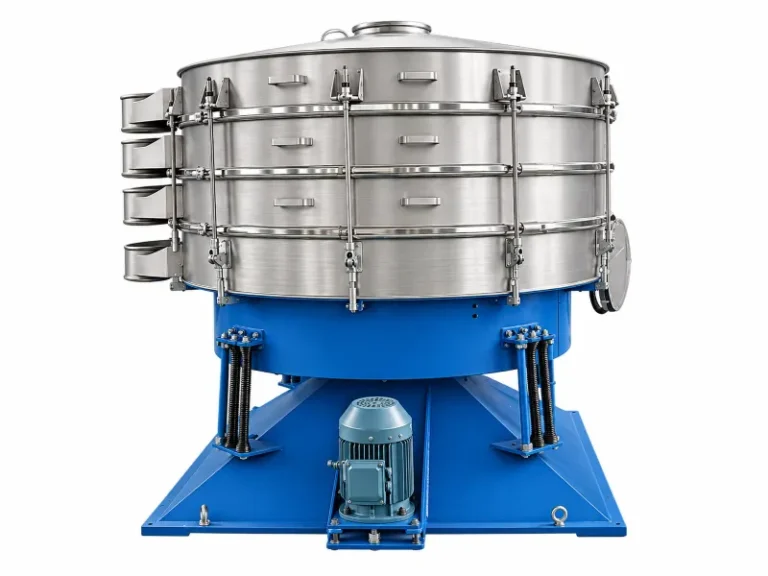
A producer used a three-dimensional vibrating sieve with an 80-mesh screen during raw-material pretreatment to remove coarse material. Final screening used different screen specifications according to customer requirements. The enclosed system reportedly reduced airborne dust during processing.
This example shows why preliminary screening and final product screening may require different apertures. It does not establish 80 mesh as a standard for cosmetic powders.
Talc powder: ultrasonic screening at 38 kHz
A cosmetic powder application used an ultrasonic vibrating sieve operating at 38 kHz to screen talc. The case reported a 50% improvement in screening efficiency and improved powder fineness.
The comparison conditions and definition of efficiency were not specified. A production trial should therefore measure actual throughput and powder quality before adopting the same configuration.
Mica powder: anti-static screening with ultrasonic assistance
A mica powder application combined an anti-static screen with ultrasonic vibration to address difficult screening behavior. The case reported 98% particle-size uniformity.
Because the measurement method was not specified, this figure should not be read as 98% screening accuracy. Define the target particle-size range and test method before comparison. Static control and ultrasonic de-blinding also need separate assessment.
Record Results Under Comparable Conditions
When comparing equipment or settings, keep the powder, aperture and feed conditions consistent.
| Elemento de la prueba | Qué registrar |
|---|---|
| Throughput | Actual kg/h at the selected aperture and feed rate |
| Material retenido | Percentage retained and whether it contains lumps, contaminants or usable ingredients |
| Product quality | Particle-size results, visible coarse particles and relevant appearance checks |
| Changeover time | Time to dismantle, clean, inspect and reassemble the equipment |
A higher output is useful only if the screened powder still meets the product specification.
Conclusión
Controlling oversize depends on the screen aperture, feeding conditions and equipment integrity. Reducing color carryover depends on thorough cleaning and verification across the powder path. Material trials bring these requirements together before equipment selection.
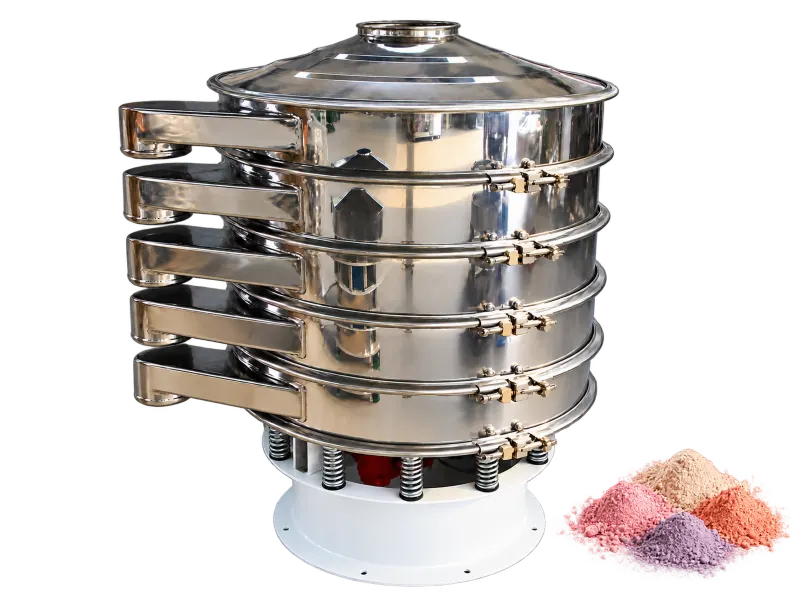
For help selecting a cosmetics powder sieving machine, send Yuanjing your powder type, target screen opening, required output in kg/h, batch size and color-change frequency. Include your current screening problem so we can discuss a configuration suited to your production needs.
Preguntas frecuentes
Can Sieving Remove Pigment Contamination from Another Color?
A sieve separates particles by size, not color. Fine pigment from a previous batch can pass through with the intended powder. If contamination has already occurred, hold the affected material for quality assessment rather than relying on another screening pass.
What Mesh Size Is Suitable for Cosmetic Powder Sieving?
There is no single mesh size for loose powder, blush and eyeshadow. Choose the aperture around the required separation and intended ingredients, then verify it with a representative sample. The 80-mesh succinic acid example above applies to that preliminary screening duty only.
Why Can Coarse Particles Appear After a Successful Screening Check?
Powder may form new agglomerates during transfer or storage. Compare samples taken directly at the sieve outlet with samples collected downstream. If the problem appears later, investigate handling and storage conditions as well as the screening equipment.
Is Ultrasonic Sieving Necessary for Every Cosmetic Powder?
No. A conventional vibrating sieve may be sufficient when powder flows freely and the mesh remains open. Evaluate ultrasonic assistance when repeated adhesion or blockage prevents the required output, using a controlled comparison with the actual formulation.
Does Ultrasonic De-blinding Clean the Sieve Between Colors?
No. It helps keep mesh openings clear during operation but does not remove all powder from seals, frame joints or outlets. Color changeovers still require a suitable cleaning procedure and checks before the next batch starts.
What Information Is Needed to Select a Cosmetic Powder Sieving Machine?
Provide the powder type, target aperture, required kg/h, batch size and shade-change frequency. Describe current problems such as lumps, sticking or excessive rejects. A representative sample helps establish suitable equipment and realistic operating conditions.