Cosmetic Powder Sieving: How to Reduce Oversize and Color Carryover
Przesiewanie proszku kosmetycznego usuwa niepożądane grube cząstki i grudki z luźnych formuł proszku, różu i cieni do powiek. Właściwy otwór sita i równomierne podawanie pomagają ograniczyć straty użytecznego proszku. Przenoszenie koloru wymaga innej kontroli: usunięcia pozostałości poprzedniej partii przed wprowadzeniem następnego odcienia do urządzenia. Ten przewodnik obejmuje regulacje przesiewania, kontrole czyszczenia i próby materiałowe dla obu problemów.
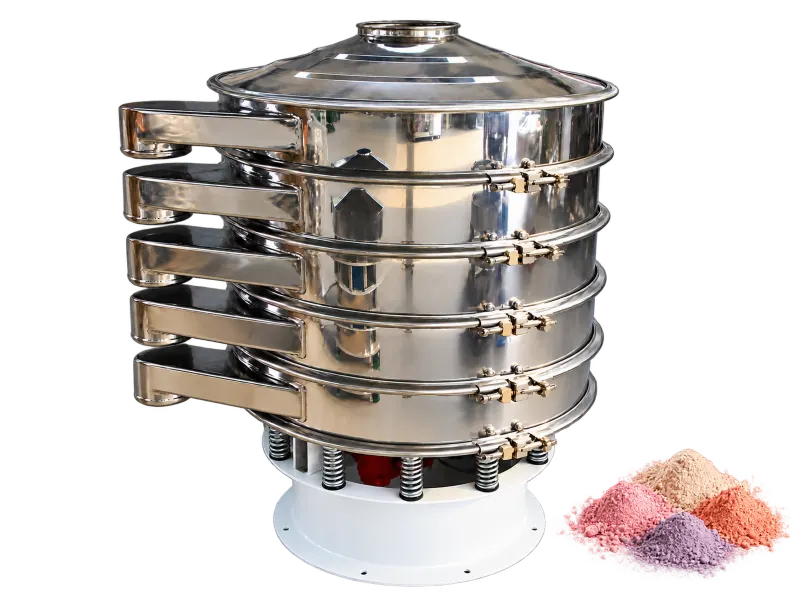
Co powoduje nadwymiarowe cząstki i przenoszenie koloru w proszkach kosmetycznych?
Grube cząstki mogą przedostawać się z surowcami lub tworzyć się, gdy proszek zbryla się podczas przechowywania i obsługi. Przenoszenie koloru występuje, gdy pozostałości z wcześniejszej partii przedostają się do następnej. Zidentyfikowanie źródła pomaga uniknąć niepotrzebnych zmian w sicie lub formule.
Nadwymiarowe cząstki, miękkie aglomeraty i twarde grudki
Materiał zatrzymany na sicie może obejmować:
- Nadwymiarowe cząstki: Pojedyncze cząstki większe niż wybrany otwór sita.
- Miękkie aglomeraty: Drobne cząstki luźno ze sobą związane, z których część może rozdzielić się podczas przesiewania.
- Twarde grudki: Zbity lub silnie związany materiał, którego normalne przesiewanie może nie rozbić.
Te materiały nie powinny być traktowane jako odpady ani automatycznie zawracane do produkcji. Ich stan określa, czy dalsze przesiewanie lub inny proces jest odpowiedni.
Pozostałości poprzedniej partii czy słaba dyspersja pigmentu?
Opróżnienie maszyny nie usuwa proszku uwięzionego w połączeniach i częściach kontaktowych. Nawet niewielkie pozostałości mogą stać się widoczne przy zmianie z ciemnego różu lub cienia do powiek na jaśniejszy odcień.
Plamy koloru mogą również pochodzić z nierównomiernej dyspersji pigmentu w bieżącej formule. Porównaj proszek przed i po przesiewaniu, aby zawęzić źródło.
| Co widać | Możliwa przyczyna | Pierwsza kontrola |
|---|---|---|
| Twarde cząstki zatrzymane na sicie | Gruby surowiec lub stwardniałe grudki | Proszek przychodzący i materiał zatrzymany |
| Drobny proszek gromadzący się na sicie | Zablokowane otwory lub nadmierne podawanie | Stan sita i szybkość podawania |
| Plamy o innym kolorze po zmianie odcienia | Pozostałości poprzedniej partii | Czyszczenie urządzeń i zapisy partii |
| Plamy koloru obecne już przed przesiewaniem | Słaba dyspersja pigmentu lub aglomeraty pigmentu | Mieszanka przychodząca i zapisy mieszania |
Te obserwacje kierują dochodzeniem; same nie potwierdzają przyczyny.

Jak ograniczyć nadwymiarowe cząstki podczas przesiewania proszku kosmetycznego
Zacznij od wymaganego rozmiaru separacji, następnie dostosuj podawanie i warunki sita. Celem jest usunięcie niepożądanego grubego materiału przy jednoczesnym przepuszczeniu odpowiednich składników.
Dopasuj otwór sita do produktu
Wybierz aperturę na podstawie rozkładu wielkości cząstek proszku i wymagań produktu gotowego. Zapisz rzeczywisty otwór w mikronach (μm), wraz z liczbą oczek i specyfikacją sita.
Drobniejsze sito może zmniejszyć wydajność i zatrzymać użyteczne składniki. W cieniu do powiek o efekcie perłowym, na przykład, większe cząstki miki lub efektu mogą być zamierzone. Sprawdź zarówno przesiany proszek, jak i frakcję zatrzymaną przed wyborem ostatecznej apertury.
Utrzymuj równomierne podawanie i sprawdzaj obejście
Rozprowadź proszek równomiernie na sicie. Wsypanie dużej partii na jeden obszar tworzy głęboką warstwę, zmniejszając kontakt cząstek z sitem.
Jeśli grube cząstki pojawiają się natychmiast po przesiewaniu, sprawdź sito pod kątem rozdarcia, luźnego mocowania i szczelin wokół uszczelnień. Materiał przechodzący przez uszkodzone sito i proszek omijający sito na jego krawędziach wymagają różnych napraw. Zwiększenie wibracji nie naprawi żadnej z tych usterek.
Sprawdź zatrzymany proszek przed ponownym przetworzeniem
Pobierz próbkę zatrzymanego materiału. Jeśli zawiera użyteczny drobny proszek, sprawdź zablokowane otwory, nadmierne podawanie lub niewystarczający czas przesiewania.
Oddziel twarde grudki, materiały obce i cząstki o innym kolorze do oceny. Zwróć materiał do produkcji tylko wtedy, gdy jego tożsamość i jakość spełniają wymagania partii.
Rozważ wspomaganie ultradźwiękowe przy uporczywym zatykaniu
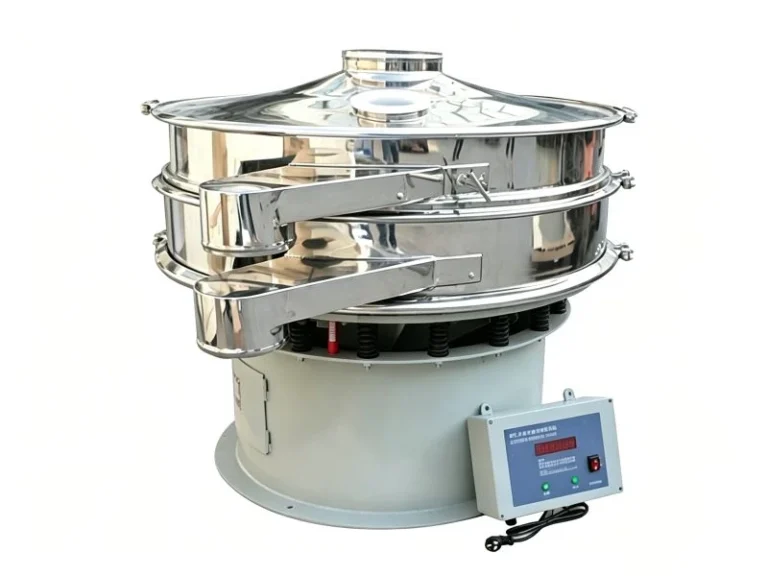
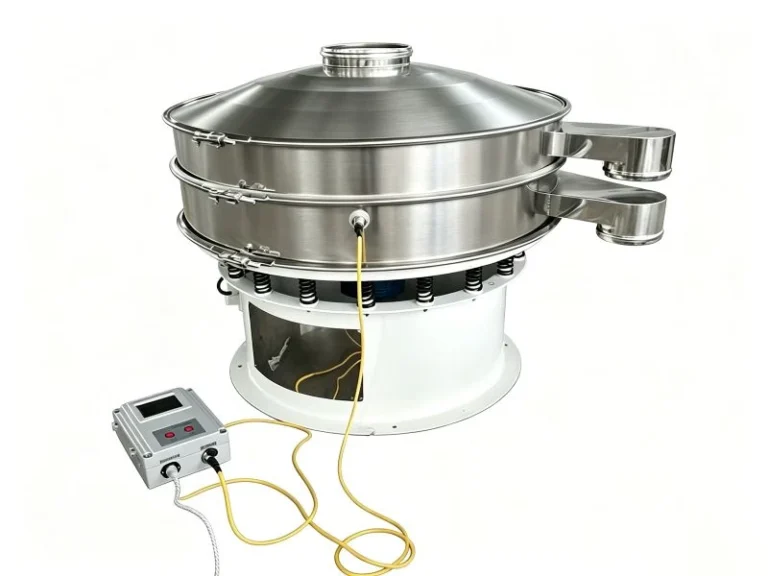
Ultradźwiękowe sito wibracyjne przesiewacz ultradźwiękowy jest wart przetestowania, gdy drobny proszek wielokrotnie przykleja się do sita, obniża wydajność lub powoduje częste przerwy na czyszczenie. Wibracja wysokiej częstotliwości zastosowana do sita pomaga utrzymać otwory drożne i może wspomagać separację luźnych aglomeratów.
Aby uzyskać szerszą diagnozę, zobacz nasz przewodnik po zatykanie sit drobnym proszkiem. Ultradźwiękowe odtykanie działa podczas przesiewania; nie zastępuje czyszczenia między kolorami.
Jak ograniczyć przenoszenie koloru między partiami proszku kosmetycznego
Skuteczna zmiana koloru obejmuje całą ścieżkę proszku, w tym urządzenia podające i pojemniki do zbierania. Czyszczenie tylko widocznej powierzchni sita może pozostawić pozostałości w innych miejscach systemu.
Planuj zmiany odcieni i dedykowane części
Where formulations and schedules allow, processing lighter shades before darker ones may make changeovers easier. Cleaning is still required between batches.
For strongly colored powders or frequent shade changes, consider dedicated screens, seals or containers. Label these parts and store them clean and covered.
Clean and Inspect Powder-Contact Areas
Stop and isolate the equipment before dismantling it according to the manufacturer’s instructions. Choose a cleaning method compatible with the formulation and contact materials. After wet cleaning, remove cleaning residues and dry parts fully before reassembly.
Use the following checklist to cover common retention points:
| Area | Co sprawdzić |
|---|---|
| Mesh and screen edges | Adhering powder, trapped residue and damage |
| Seal grooves and frame joints | Powder deposits, wear and cracks |
| Discharge outlets and flexible connections | Residue in corners, folds and joints |
| Feeding equipment, containers and tools | Remaining powder, incorrect labels or mixed-use items |
Replace damaged parts that cannot be cleaned properly or that allow powder to bypass the screen.
Verify Cleaning Before Restarting
Inspect defined locations using visual checks, wipe checks or other suitable methods under the site’s cleaning procedure. Record the results against established acceptance limits.
Check the first portion of the next batch for off-color particles or shade differences before release. Running the sieve empty does not demonstrate that the equipment is clean.
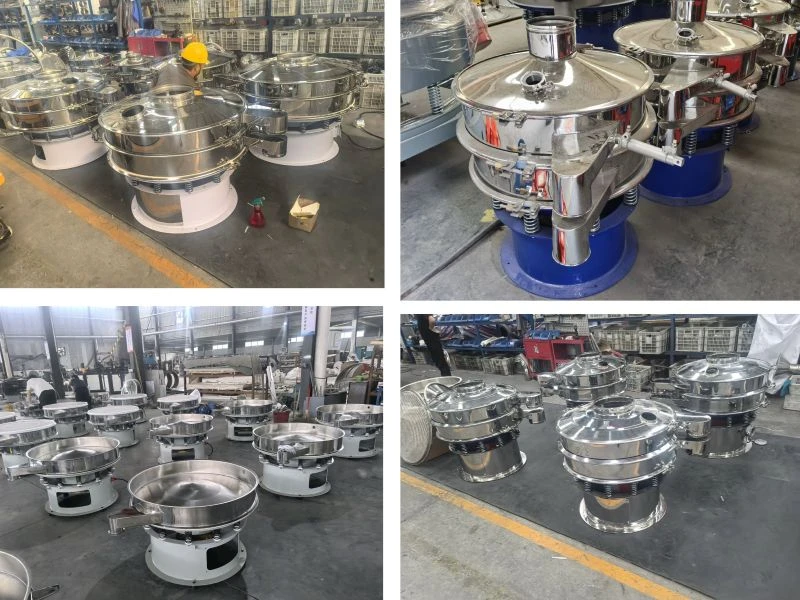
How to Specify and Test a Cosmetic Powder Sieving Machine
Equipment selection should account for powder behavior, required output and changeover frequency. A setup that works for loose face powder may need different settings for an oil-containing blush or mica-based eyeshadow.
Check Cleaning Access Alongside Screening Performance
During equipment evaluation, check how easily operators can remove the screen, inspect seals and reach the outlet. Include dismantling, cleaning and reassembly in the trial.
Test representative formulations separately. For blends containing pearl pigments or other effect particles, confirm that screening preserves the intended composition and appearance.
Cosmetic Raw Material Screening Examples
The following application examples illustrate different screening duties. Reported results relate to those examples and should not be treated as guaranteed performance for other formulations.
Succinic acid powder: 80-mesh preliminary screening
A producer used a three-dimensional vibrating sieve with an 80-mesh screen during raw-material pretreatment to remove coarse material. Final screening used different screen specifications according to customer requirements. The enclosed system reportedly reduced airborne dust during processing.
This example shows why preliminary screening and final product screening may require different apertures. It does not establish 80 mesh as a standard for cosmetic powders.
Talc powder: ultrasonic screening at 38 kHz
A cosmetic powder application used an ultrasonic vibrating sieve operating at 38 kHz to screen talc. The case reported a 50% improvement in screening efficiency and improved powder fineness.
The comparison conditions and definition of efficiency were not specified. A production trial should therefore measure actual throughput and powder quality before adopting the same configuration.
Mica powder: anti-static screening with ultrasonic assistance
A mica powder application combined an anti-static screen with ultrasonic vibration to address difficult screening behavior. The case reported 98% particle-size uniformity.
Because the measurement method was not specified, this figure should not be read as 98% screening accuracy. Define the target particle-size range and test method before comparison. Static control and ultrasonic de-blinding also need separate assessment.
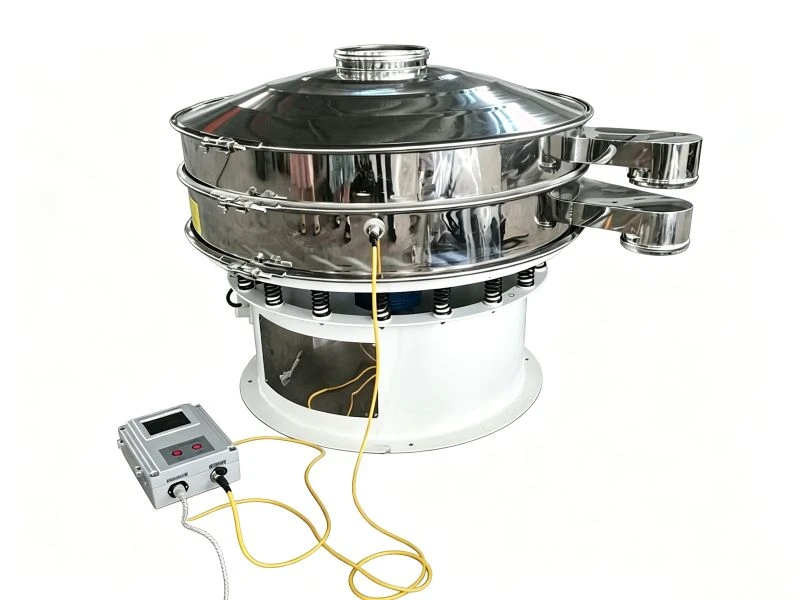
Record Results Under Comparable Conditions
When comparing equipment or settings, keep the powder, aperture and feed conditions consistent.
| Trial Item | What to Record |
|---|---|
| Throughput | Actual kg/h at the selected aperture and feed rate |
| Retained material | Percentage retained and whether it contains lumps, contaminants or usable ingredients |
| Product quality | Particle-size results, visible coarse particles and relevant appearance checks |
| Changeover time | Time to dismantle, clean, inspect and reassemble the equipment |
A higher output is useful only if the screened powder still meets the product specification.
Wnioski
Controlling oversize depends on the screen aperture, feeding conditions and equipment integrity. Reducing color carryover depends on thorough cleaning and verification across the powder path. Material trials bring these requirements together before equipment selection.
For help selecting a maszyna do przesiewania proszku kosmetycznego, send Yuanjing your powder type, target screen opening, required output in kg/h, batch size and color-change frequency. Include your current screening problem so we can discuss a configuration suited to your production needs.
Czy potrzebuję ultradźwiękowego przesiewacza wibracyjnego do drobnego proszku?
Can Sieving Remove Pigment Contamination from Another Color?
A sieve separates particles by size, not color. Fine pigment from a previous batch can pass through with the intended powder. If contamination has already occurred, hold the affected material for quality assessment rather than relying on another screening pass.
What Mesh Size Is Suitable for Cosmetic Powder Sieving?
There is no single mesh size for loose powder, blush and eyeshadow. Choose the aperture around the required separation and intended ingredients, then verify it with a representative sample. The 80-mesh succinic acid example above applies to that preliminary screening duty only.
Why Can Coarse Particles Appear After a Successful Screening Check?
Powder may form new agglomerates during transfer or storage. Compare samples taken directly at the sieve outlet with samples collected downstream. If the problem appears later, investigate handling and storage conditions as well as the screening equipment.
Is Ultrasonic Sieving Necessary for Every Cosmetic Powder?
No. A conventional vibrating sieve may be sufficient when powder flows freely and the mesh remains open. Evaluate ultrasonic assistance when repeated adhesion or blockage prevents the required output, using a controlled comparison with the actual formulation.
Does Ultrasonic De-blinding Clean the Sieve Between Colors?
No. It helps keep mesh openings clear during operation but does not remove all powder from seals, frame joints or outlets. Color changeovers still require a suitable cleaning procedure and checks before the next batch starts.
What Information Is Needed to Select a Cosmetic Powder Sieving Machine?
Provide the powder type, target aperture, required kg/h, batch size and shade-change frequency. Describe current problems such as lumps, sticking or excessive rejects. A representative sample helps establish suitable equipment and realistic operating conditions.