
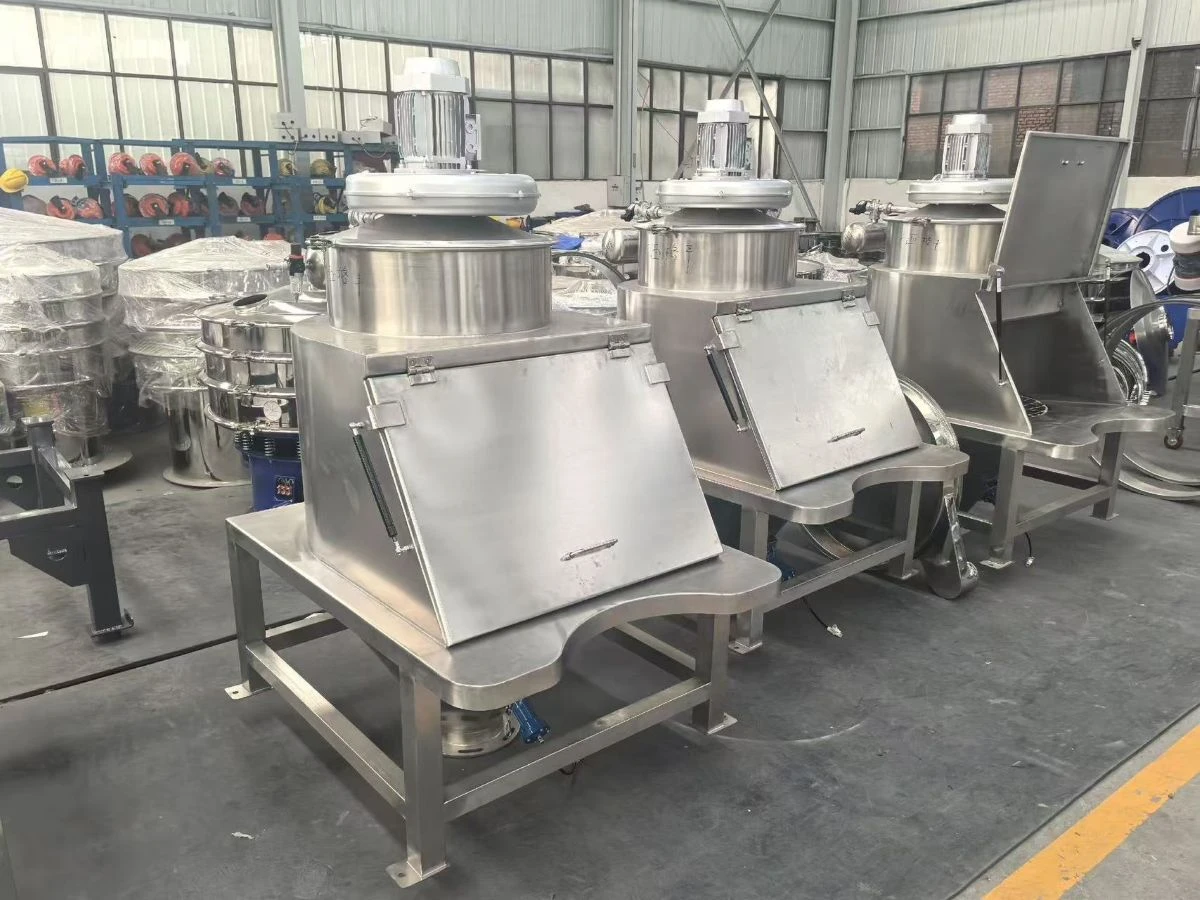
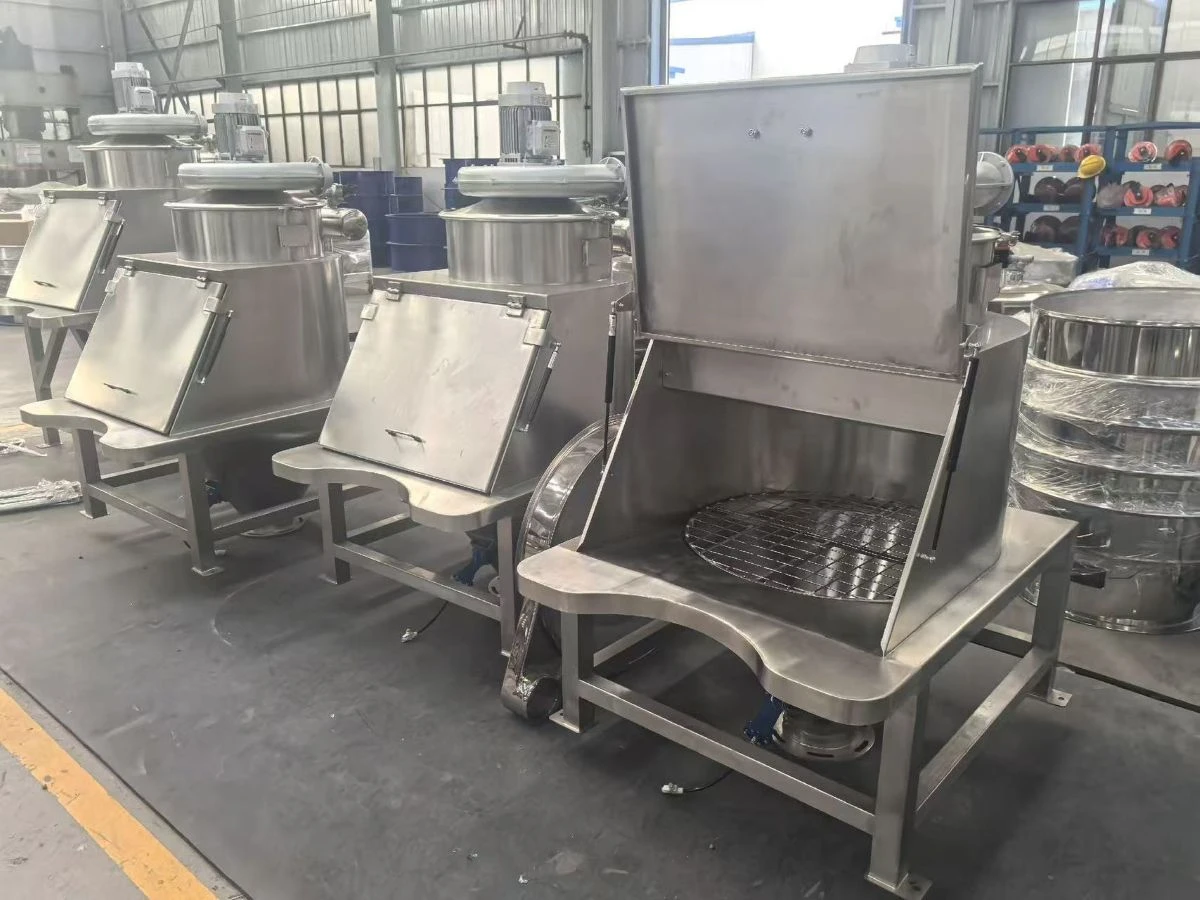
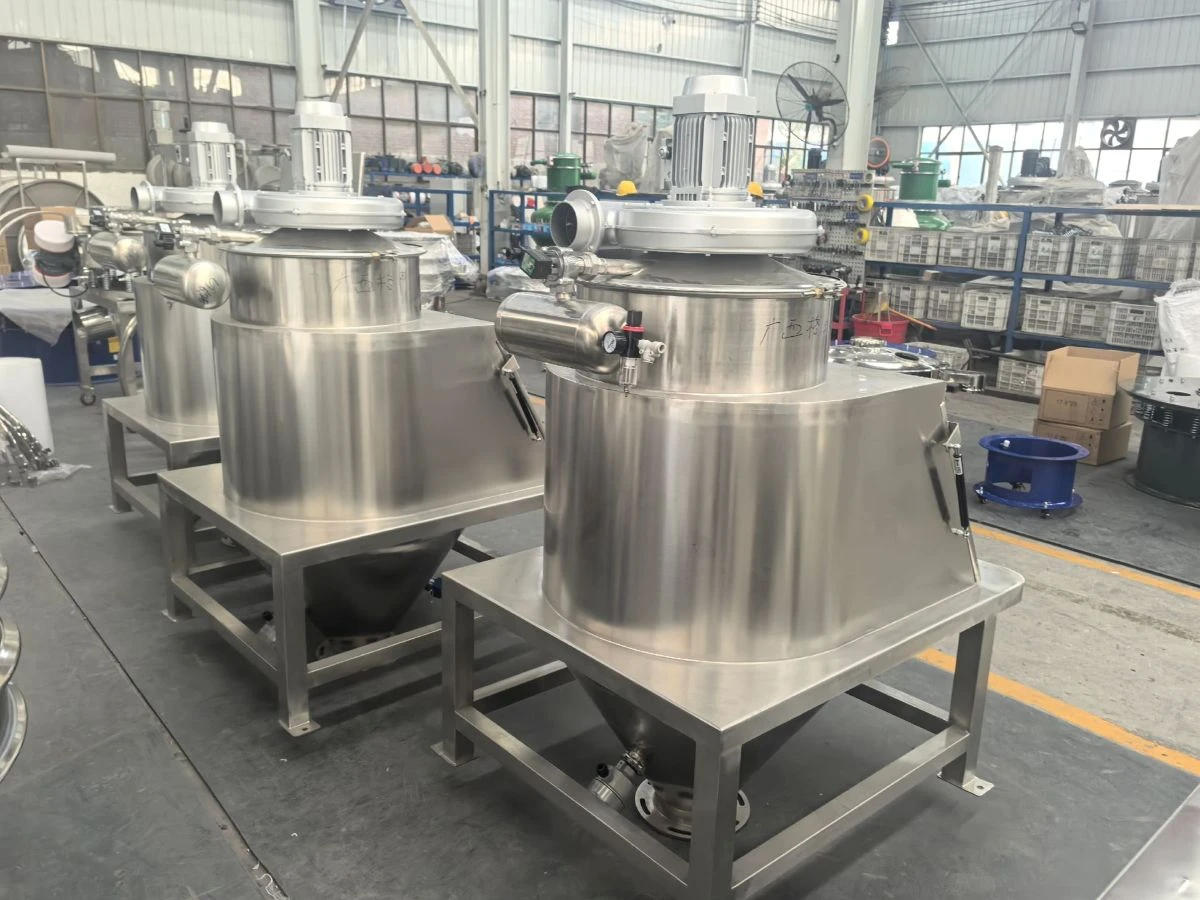
Maximise Efficiency with Dust Free Bag Dump Station
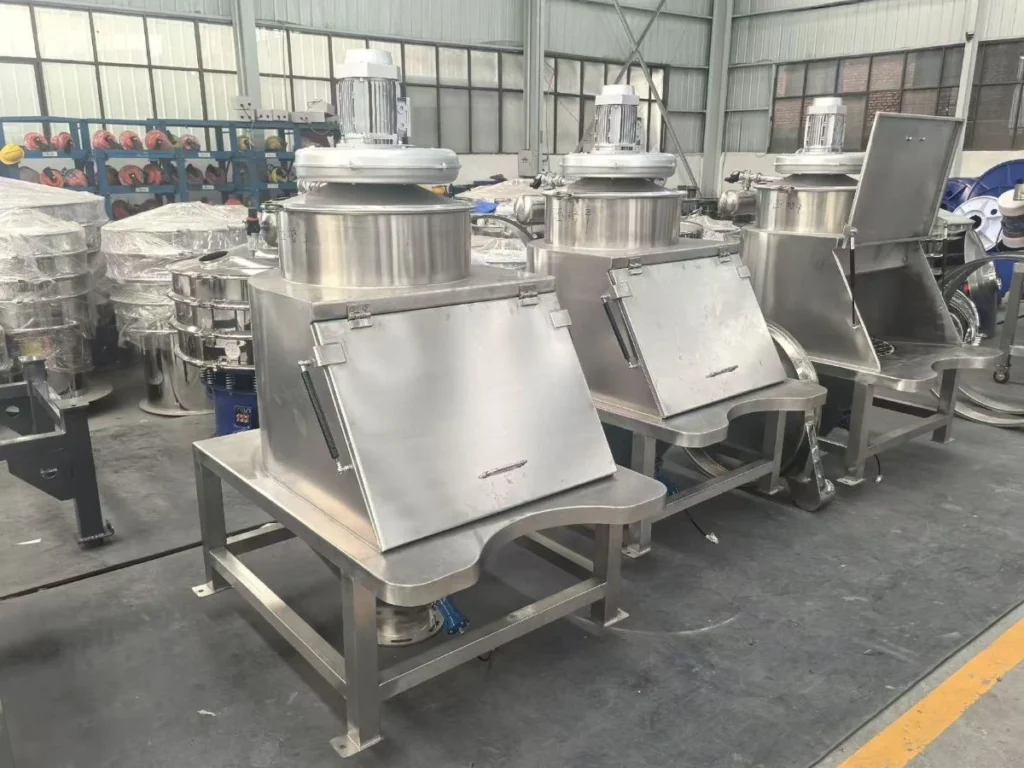
The dust free bag dump station is capable of handling the unpacking, unloading, and conveying of bulk materials in the form of powders, granules, and small chunks from ton bags. It is widely used in industries such as petrochemicals, active pharmaceutical ingredients (APIs), plastics, carbon black, mining, food additives, and cement.
Overall, as an environmentally friendly piece of equipment, the dust-free bag dump station offers the advantage of effectively controlling dust dispersion, protecting the work environment, reducing labour intensity, improving production efficiency, lowering labour costs, and minimising environmental pollution. In the future, with the development of industry and increased environmental awareness, dust-free bag dump stations will play a vital role in an even wider range of industries.
What is a Dust Free Bag Dump Station?
A dust free bag dump station is a transfer device that utilises negative-pressure dust collection. It is designed for opening bags and feeding materials during the production process. It allows materials to be stored before conveyance and, when used in conjunction with a dust collection system, effectively prevents dust from becoming airborne. It effectively isolates dust and powder generated during feeding from related equipment and personnel. Under the negative pressure created by the fan, dust and powder are drawn into the filtration system, separating the gas from the material. When a sufficient amount of material accumulates, it falls into the hopper due to its own weight.
Working Principle of Dust Free Bag Dump Station
Feeding
The operator places the raw material at the feed inlet of the feeding station. When the raw material enters the feed inlet, compressed air inside the feeding station blows it up and conveys it through the pipeline to the designated location.
Conveyance
The raw material is conveyed through the pipeline by compressed air. During this process, friction between the raw material and the inner walls of the pipeline is minimal, reducing material loss and dust generation.
Separation
When the raw material reaches the designated location, the separation device inside the feeding station separates the material from the air. The separated material is collected, while the air is expelled from the equipment.
Collection
The separated material is collected and transported via piping to the next stage of production.
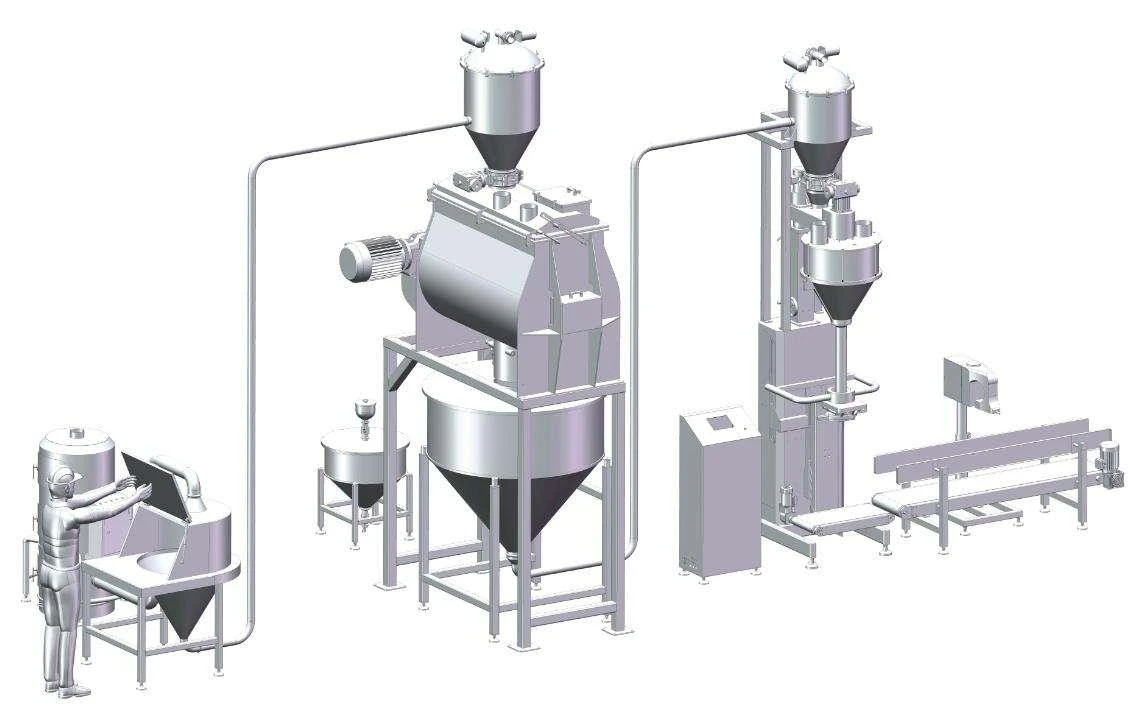
Structure of Dust Free Bag Dump Station
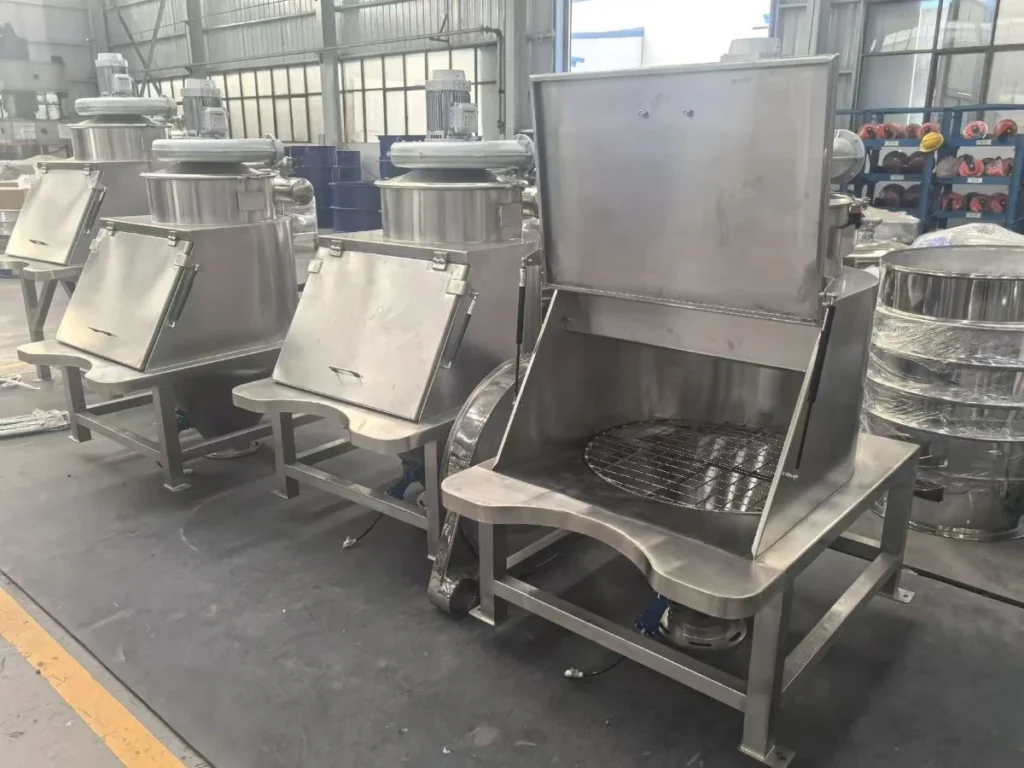
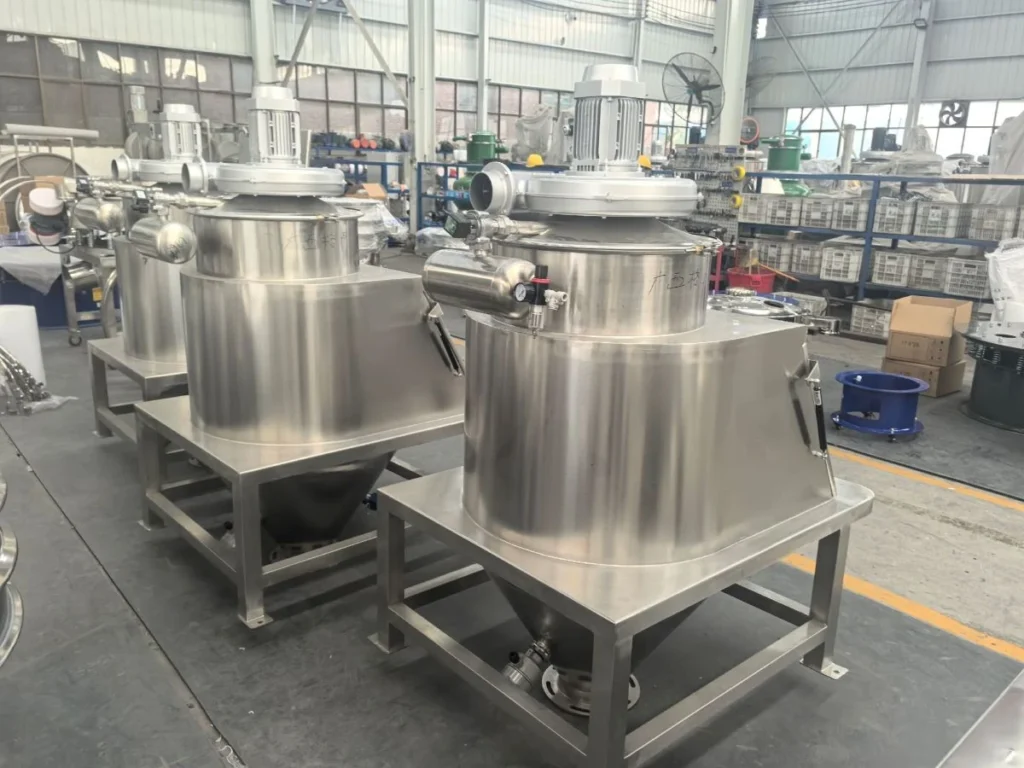
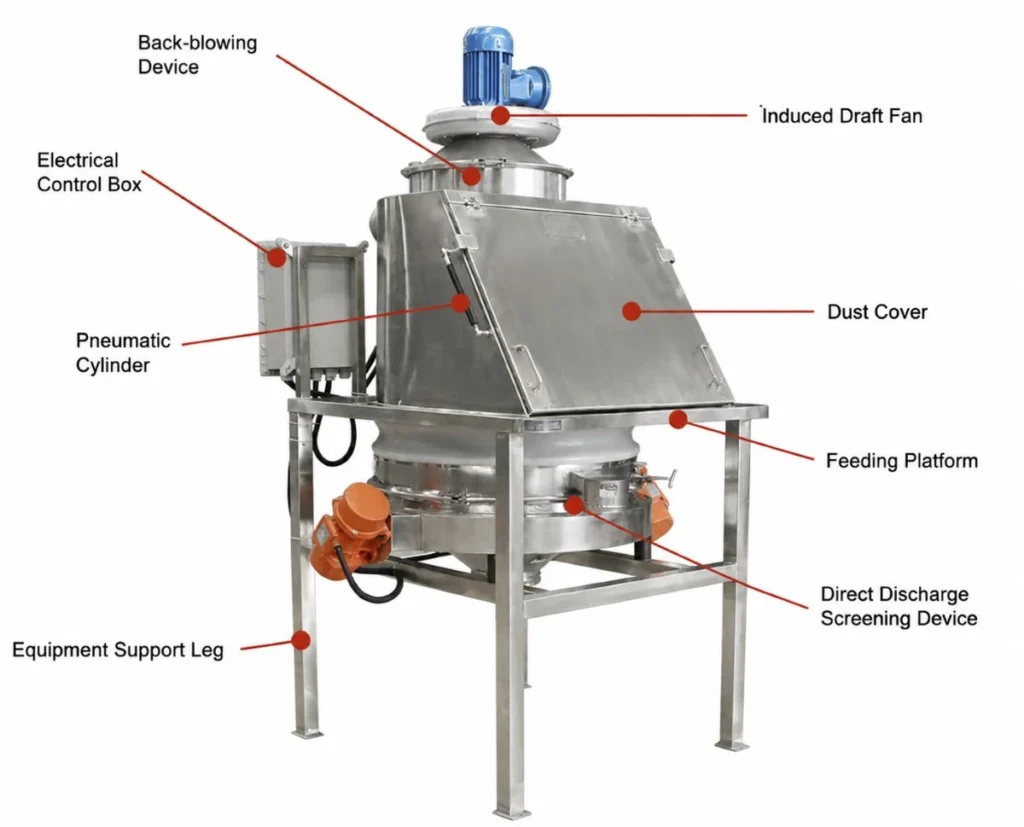
1. The dust free bag dump station consists of two main components: an upper section dedicated to dust collection, and a lower section dedicated to raw material screening or conveying.
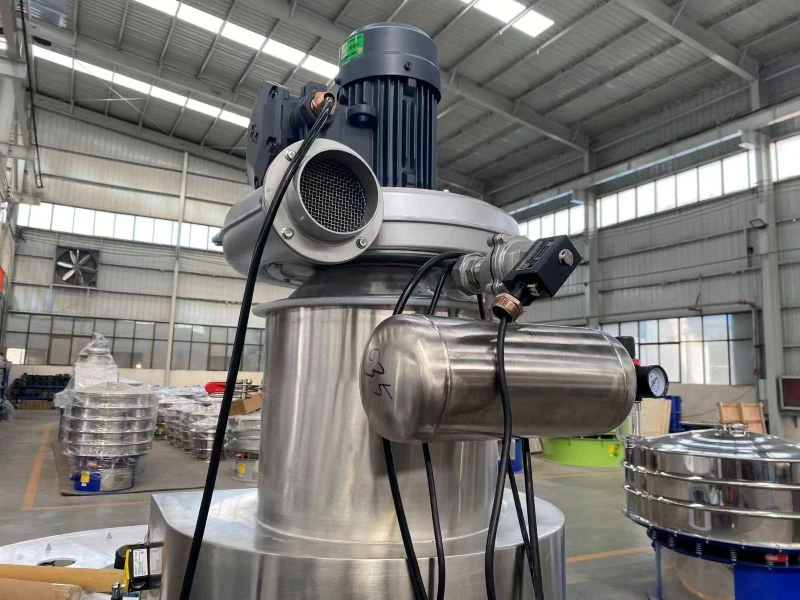
2. In the upper section, a negative-pressure blower draws airborne dust into high-density filter cartridges. After a period of operation, a pulse-jet system initiates a back-flushing sequence to clean the cartridges; the dislodged dust falls back down into the lower section to undergo screening via a direct-discharge sieve. This back-flushing mechanism enables the recovery and reuse of materials, thereby ensuring that no raw materials are lost.
3. Lower Screening Equipment: The unit can be integrated with various downstream devices, including inline vibratory screens, rotary vibrating screens, ultrasonic vibrating screens, screw conveyors, as well as positive-pressure or vacuum conveying systems.
4. The specific configuration is determined based on the client’s requirements regarding the suitability of the material screening process and the method of material reception.
Features
1.High Efficiency
The dust free bag dump station employs a highly efficient feeding system that quickly and accurately conveys and dispenses materials, thereby improving production efficiency.
2. Safety
The dust free bag dump station’s enclosed feeding method prevents dust leakage, reduces the risk of production accidents, and ensures operator safety.
3.Environmental Friendliness
The dust free bag dump station’s negative-pressure gas adsorption technology effectively reduces dust emissions, minimising environmental pollution.
4. Flexibility
The bulk bag dump station features a flexible structural design that can be customised to meet different production requirements, offering strong adaptability.
Technical Parameters
The following are standard dust free bag dump station specifications; we also offer customised non-standard solutions tailored to your specific material characteristics and operating conditions.
| Model | Length × Width (mm) | Capacity | Dust Collector Power (kW) | A (mm) | B (mm) | C (mm) |
| YJ-800 | 800 × 800 | 1T | 1.1 | 2000 | 1530 | 3650 |
| YJ-1000 | 1000 × 1000 | 2T | 1.1 | 2270 | 1530 | 4200 |
| YJ-1400 | 1400 × 1400 | 2T | 1.1 | 2500 | 1930 | 4500 |
Applications
Food Industry
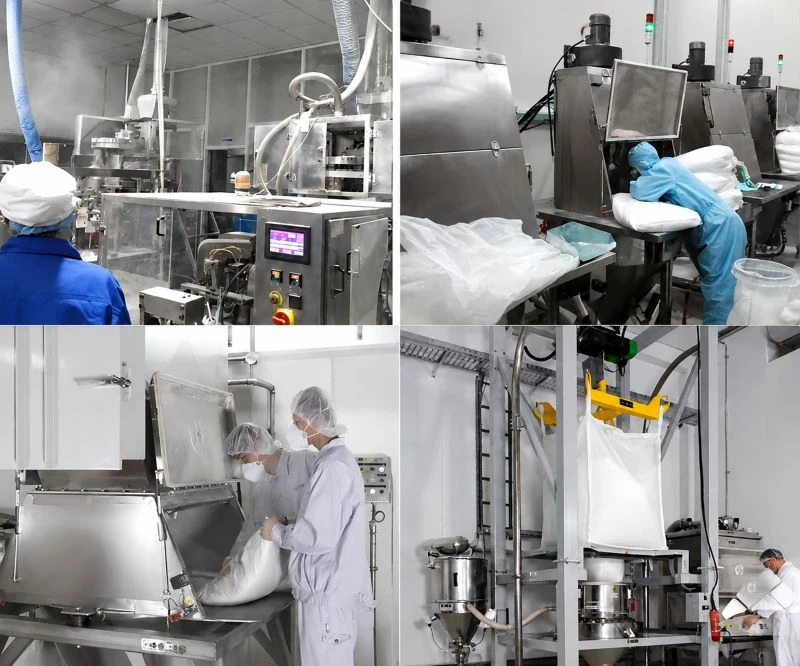
Ensure hygienic, dust-free handling of powders, flour, and ingredients while maintaining product quality and operator safety.
Pharmaceutical Industry
Safely unload powders and active ingredients with zero contamination risk, complying with strict GMP standards.
Chemical & Powder Handling
Minimise dust emission and material loss during the unloading of chemicals, powders, and granules, improving workplace safety.
Cosmetics & Nutraceuticals
Maintain product purity and protect operators while efficiently handling fine powders used in cosmetics and supplements.
Dust Free Bag Dump Station Selection Guide
The dust free feeding station is a critical piece of equipment for resolving issues related to airborne dust and material contamination during the powder feeding process; it is widely utilised across industries such as chemicals, lithium batteries, food, and pharmaceuticals. When selecting a unit, the following key factors must not be overlooked:
Dust Collection System
Opt for a design featuring negative-pressure dust extraction combined with pulse-jet back-flushing. This configuration ensures high dust removal efficiency, thereby effectively preventing dust spillage and ensuring compliance with environmental regulations and GMP standards.
Materials and Workmanship
It is recommended that all parts in direct contact with the material be constructed from 304 or 316 stainless steel. For the food and pharmaceutical sectors, a sanitary-grade polished finish is mandatory to prevent material contamination and corrosion; equipment should be fabricated in strict accordance with specific client requirements.
System Integration & Scalability
The equipment must be compatible with auxiliary systems—such as pneumatic vacuum conveying,vacuum conveyor feeder system and screw conveyors—to facilitate automated feeding operations and minimise the need for manual intervention.For cleaner powder handling, see our guide to dust control in conveying and sieving systems.
Customisation and After-Sales Support
Given the nature of non-standardised equipment, adaptability is paramount. Select a manufacturer capable of providing customised solutions tailored to the specific characteristics of your materials and operational environment, while also prioritising a provider known for rapid and responsive after-sales service.
Details
 Back-blowing Bag
 Electrical Control Cabinet
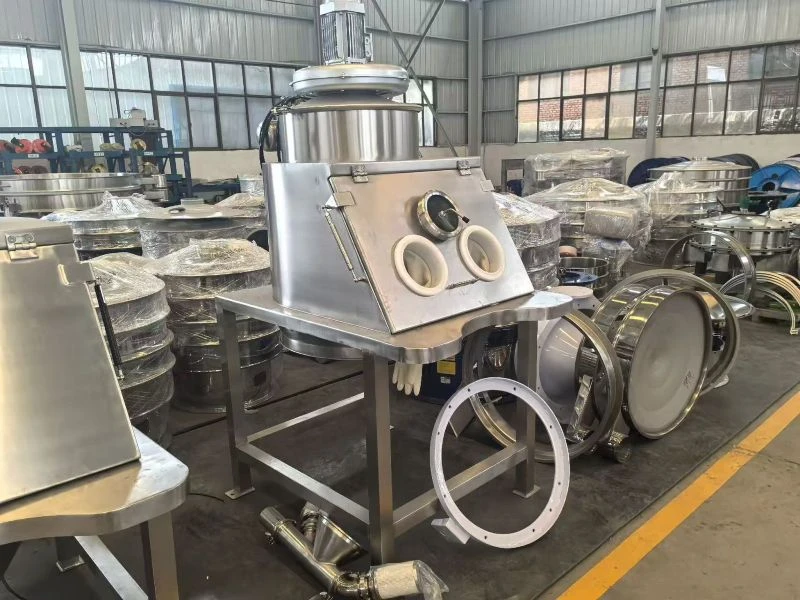
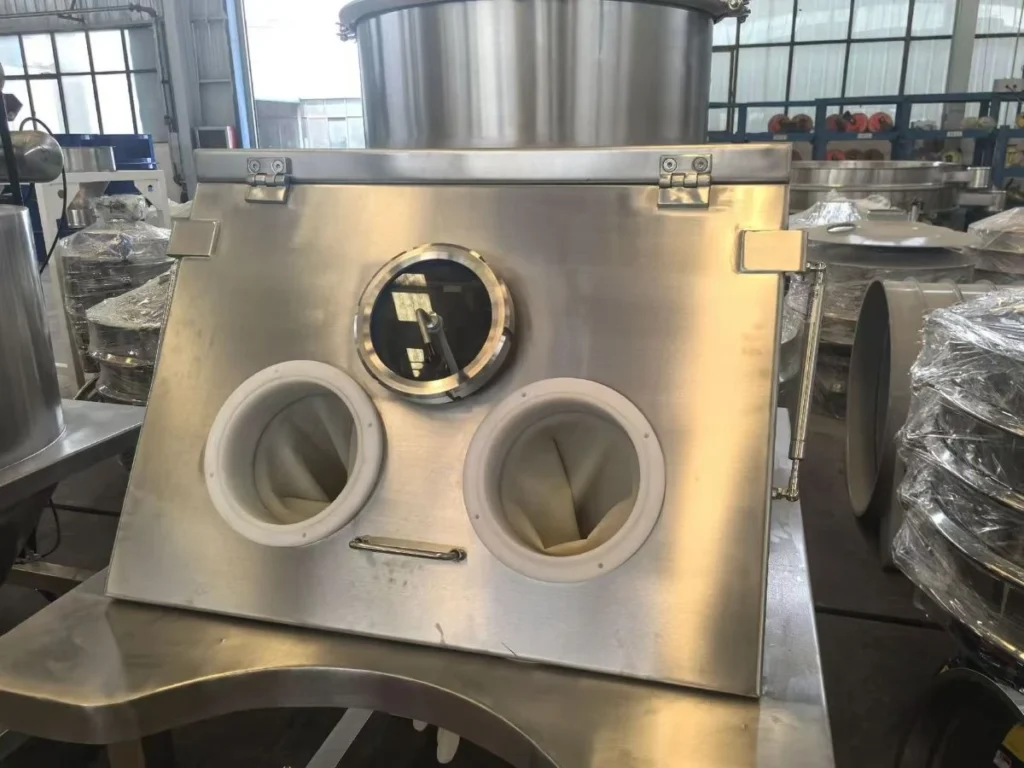 Glovebox
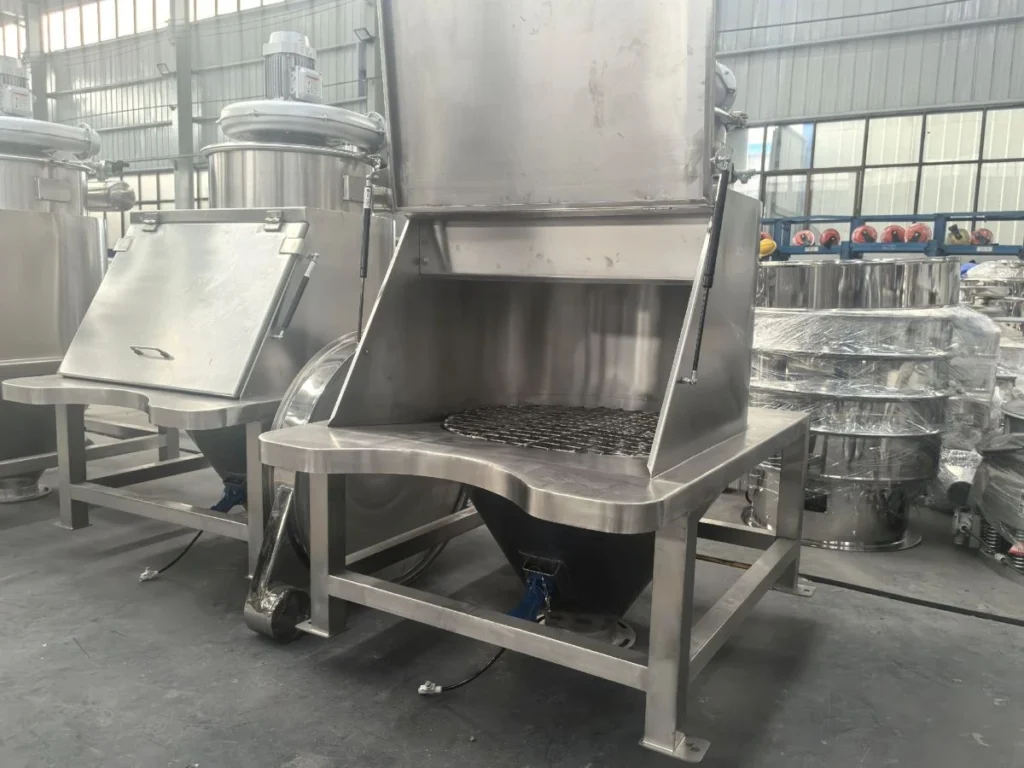 Space Frame
Maintenance & Care
To ensure the long-term, stable operation of the dust Free bag dump station, regular maintenance and care are required. Specific procedures include:
1.Periodically inspect the fasteners on all equipment components for looseness; tighten them promptly if necessary.
2. Periodically clean out accumulated material from the interior of the equipment to maintain internal cleanliness.
3. Check the operational status of the dust collection system to ensure it is functioning correctly.
4. Lubricate the equipment at regular intervals to ensure smooth and proper operation.
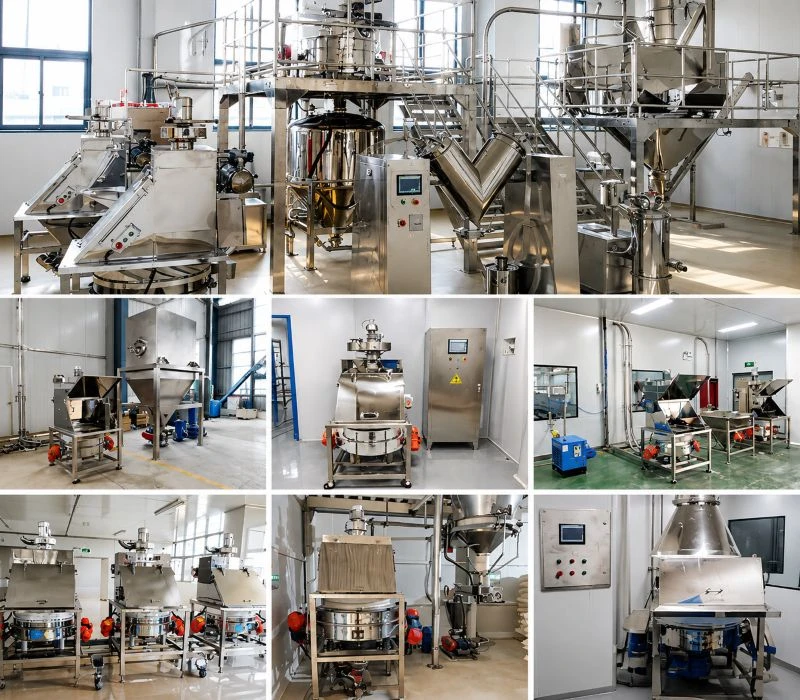
Case
Related Products
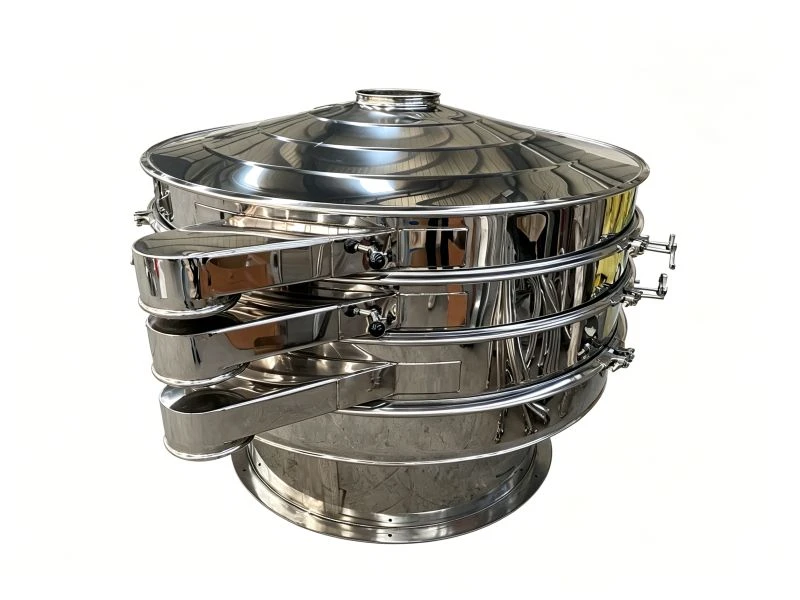
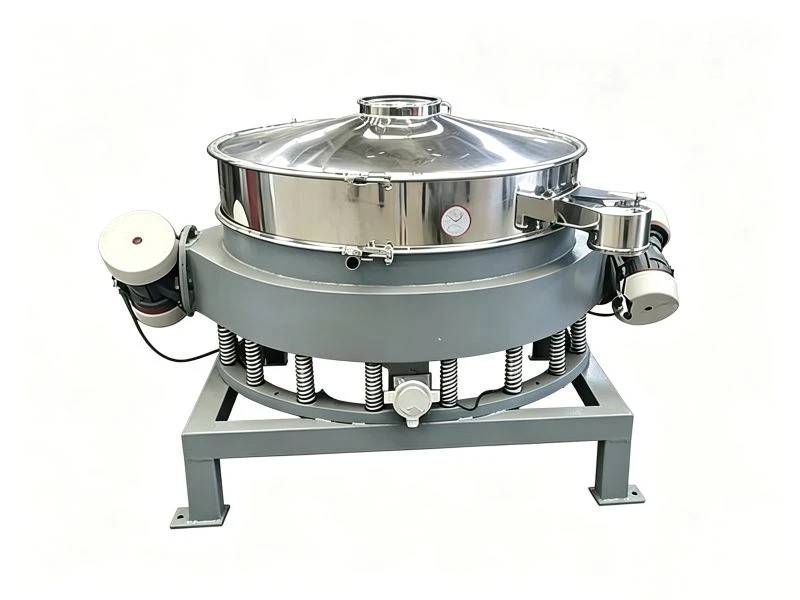
Rotary Vibrating Screen
Rotary Vibrating Screen | Vibro Sifter The rotary vibrating screen is designed for efficient separation of powders, granules, and liquids. It delivers stable performance, high screening accuracy, and reliable operation in continuous production. We offer flexible configurations, including multi-deck designs, ultrasonic systems, and food-grade materials to meet different processing requirements. YuanJing provides practical screening solutions…Inline Vibratory Screen
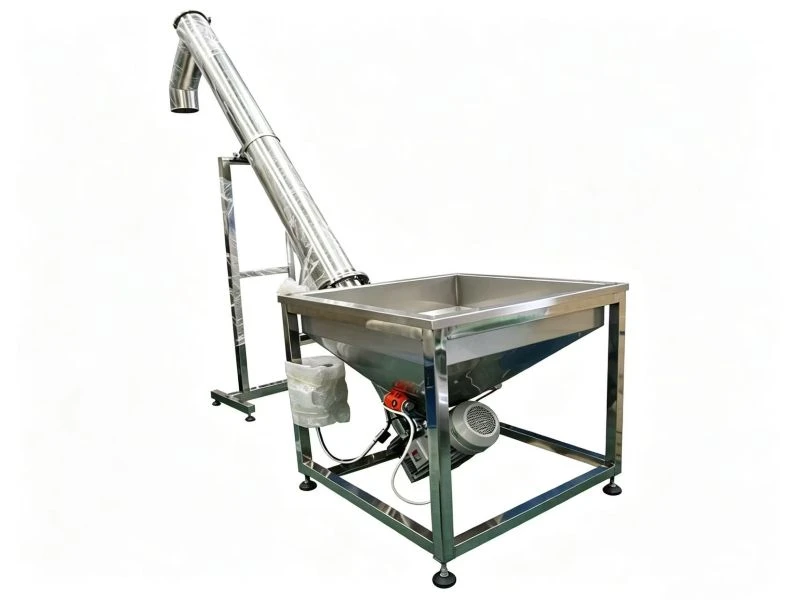
Inline Vibratory Screen for Continuous Production Lines Inline vibratory screens are built for continuous production lines, allowing powders and liquids to be screened directly in the pipeline. The compact design saves space while maintaining stable and accurate separation performance. They are widely used in food, pharmaceutical, and chemical processing. What is an inline vibratory screen?…Screw Conveyor
Industrial Screw Conveyor Systems for Bulk Material Handling Industrial screw conveyors are designed for continuous, efficient handling of bulk materials such as powders, granules, and semi-solids. With a compact structure and enclosed design, they ensure stable conveying performance, reduced dust emission, and low maintenance in various industrial applications. YuanJing provides customised screw conveyor solutions based…Vacuum Conveyor Feeder System
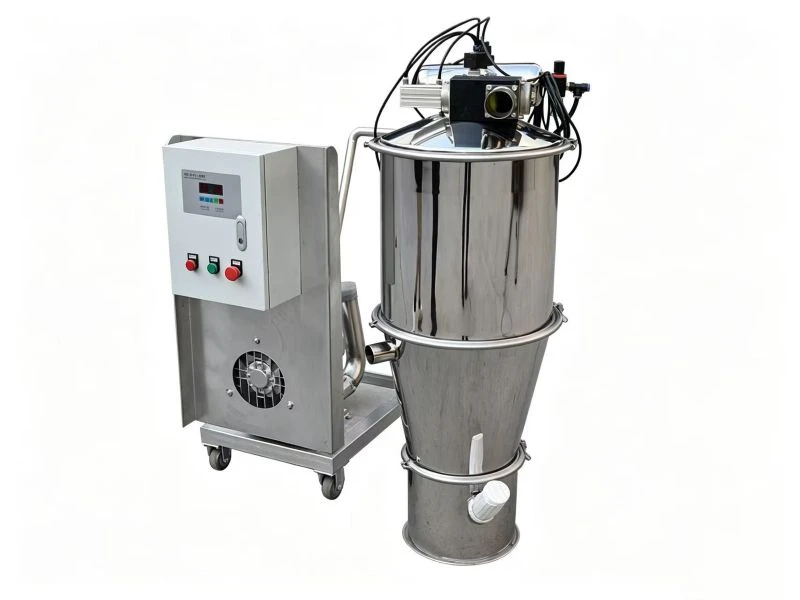
Industrial Vacuum Conveyor System Solutions for Powder & Bulk Materials Vacuum conveyor systems automatically transfer various materials into the hoppers of packaging machines, injection molding machines, and crushers. They can also feed mixed materials directly into mixers (such as V-type, 2D, and 3D mixers), significantly reducing manual labor and eliminating dust spillage during feeding. As…
Vibrating Screen and Conveyor Machine Manufacturer & Supplier
Built for precision screening, reliable performance, and flexible industrial applications,
Yuanjing rotary vibrating screens are trusted by customers worldwide.

Global Project Experience
Yuanjing products are exported to 50+ countries and regions, serving industries including food, chemicals, pharmaceuticals, mining, and new energy.
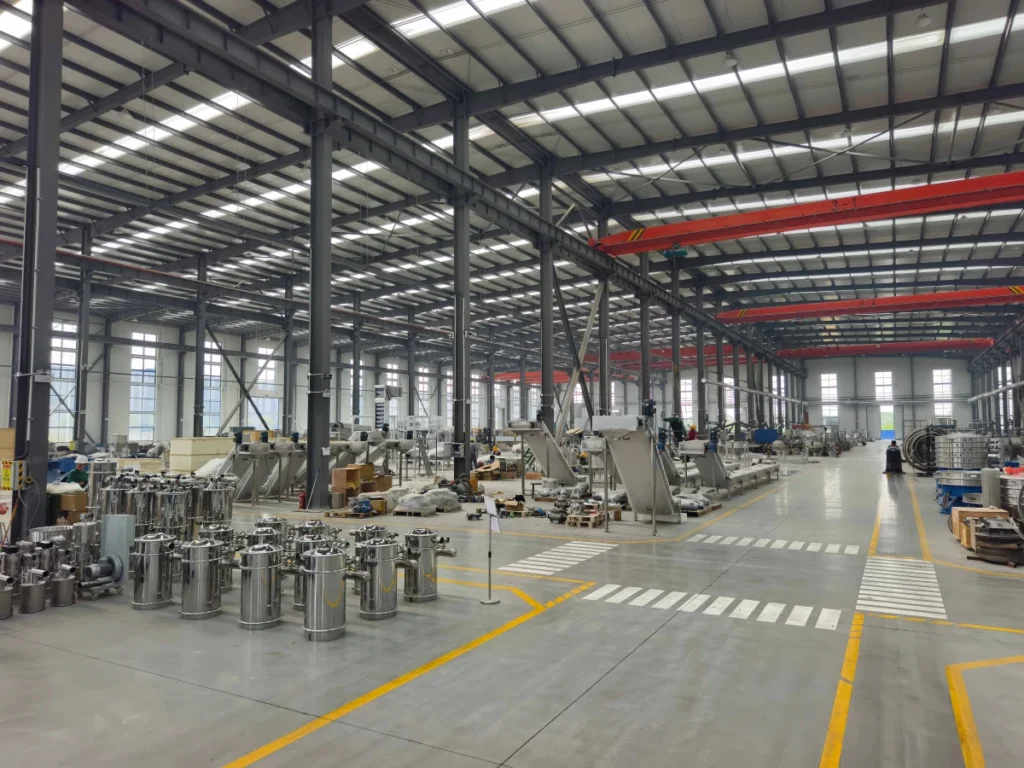
Strong Manufacturing Capability
Advanced production lines with laser cutting, CNC machining, automatic welding, and strict quality inspection ensure consistent product quality.
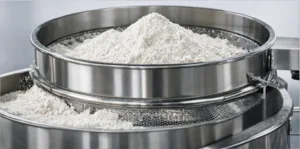
Accurate & Stable Separation
Optimized vibration design delivers even material flow, high screening accuracy, and stable long-term operation.
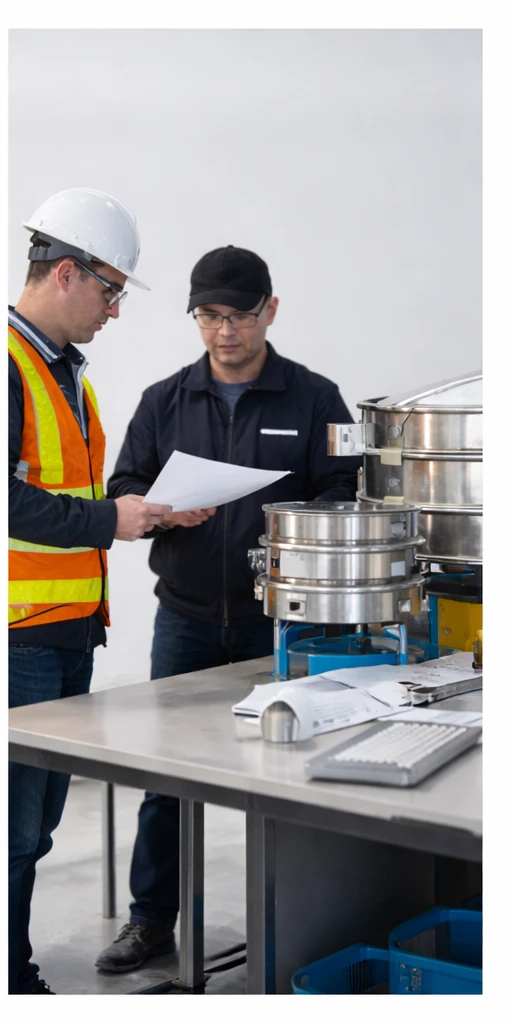
Customized Screening Solutions
Yuanjing offers flexible configurations in diameter, mesh size, deck layers, and material options to fit your exact process requirements.
FAQs
Get Custom Solution
We can provide customised screening and conveying equipment solutions tailored to different materials and production requirements.
Send us your requirements, and our team will provide the right solution and a fast quotation within 24 hours.