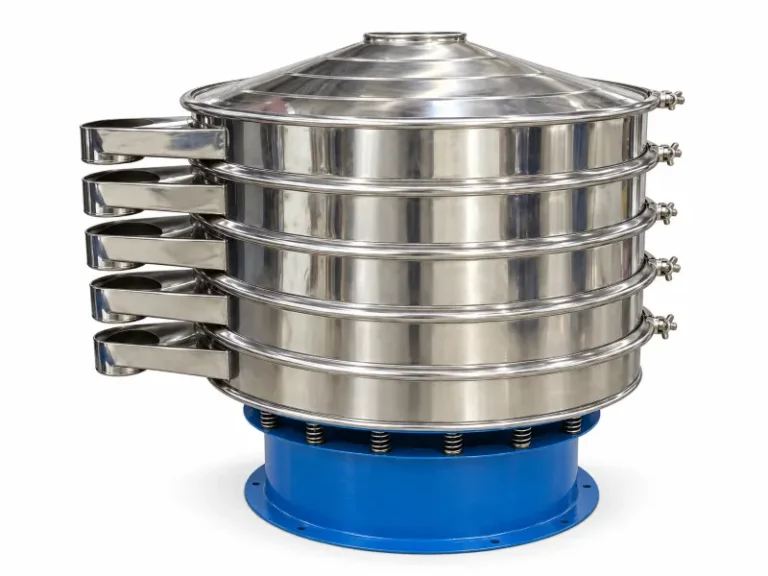
コーンスターチのふるい分け:混合・梱包前の塊の除去
乾燥コーンスターチの塊は、ミキサーや包装機への供給を妨げることがあります。コーンスターチをふるい分けすることで、粉末がいずれかの工程に入る前に、大きすぎる塊やふるいに捕捉される夾雑物を除去できます。適切な設備構成は、除去する物質、必要な処理量、コーンスターチの状態によって異なります。.

なぜ混合・包装前にコーンスターチをふるい分けするのか?
混合または包装前にコーンスターチをふるい分けすることで、大きすぎる塊や異物を確認・除去できます。ふるいの目開きによって、次の工程に通過するものと、除去のためにふるい上に残るものが決まります。.
保管・輸送中に生じた塊を除去する
コーンスターチは、湿気にさらされたり、保管・輸送中に圧縮されたりすると、塊になることがあります。このような塊は供給を妨げるほか、次の工程で分散しにくい場合があります。混合前にコーンスターチをふるい分けすると、選定したふるいの目開きより大きな塊が分離され、ミキサーに入る大きすぎる物質の量を減らせます。塊の形成が続く場合は、保管条件や原料の取り扱いも見直す必要があります。.
大きすぎる異物を分離する
木片、石、金属片などの異物は、その大きさによってふるいを通過できない場合、ふるい上に捕捉されます。これにより、製品への異物混入や後工程の設備損傷のリスクを低減できます。ただし、目開きより小さい粒子や、一部の薄い破片や細長い破片は通過することがあります。そのため、ふるい分けは、生産ラインに適した他の異物対策と併用する必要があります。.
求められるサイズ規格を満たす
工程で所定のサイズ分離が求められる場合は、その規格に合わせてふるいの目開きを選定し、実際の原料を用いた試験で確認します。包装前のコーンスターチのふるい分けでは、通常、デンプンを狭い粒度範囲ごとに分級するのではなく、大きすぎる塊や夾雑物を除去することが主な目的です。.

コーンスターチ用振動ふるいとは?その仕組みは?
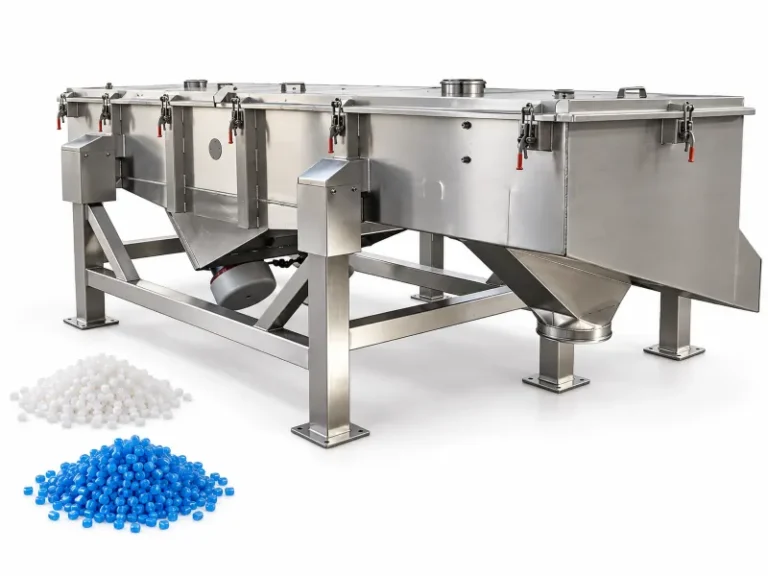
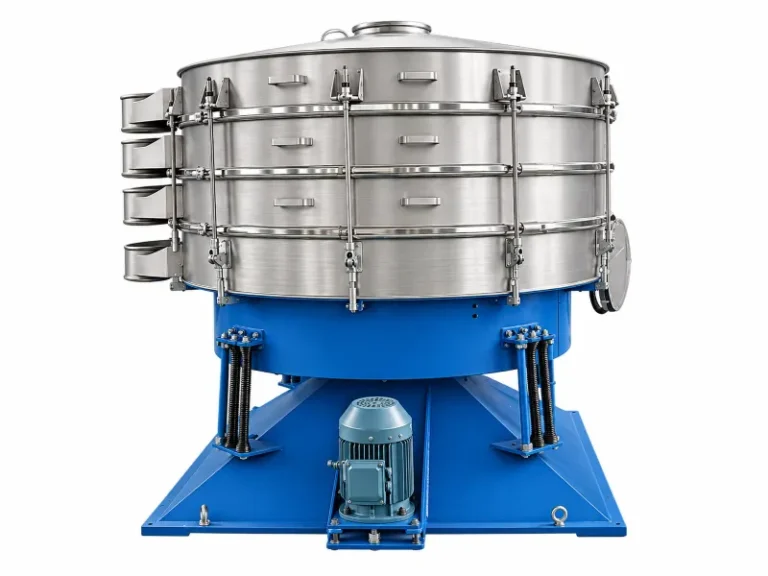
コーンスターチ用振動ふるいは、乾燥したデンプンを、スクリーン上に残る粗大な塊や異物から分離します。振動によって粉体がふるい面を移動し、開口部を通過した材料が次の工程へ送られます。.
乾燥コーンスターチのふるい分けに適した装置設計
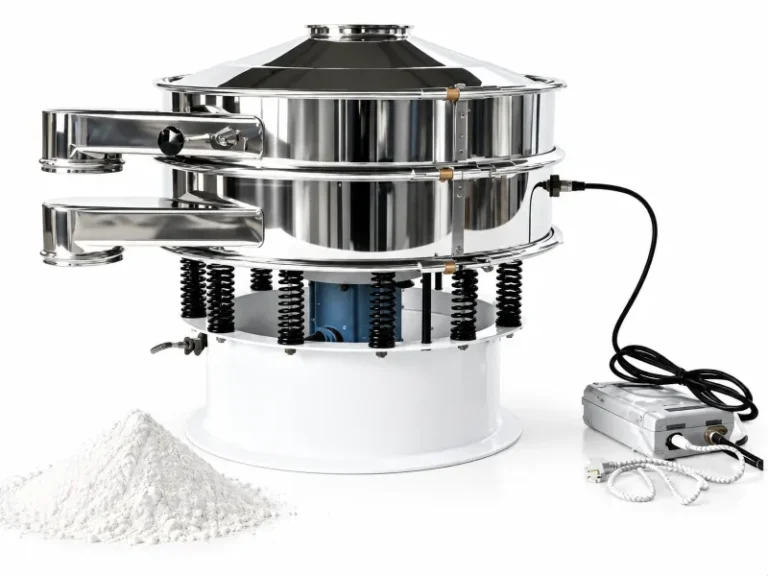
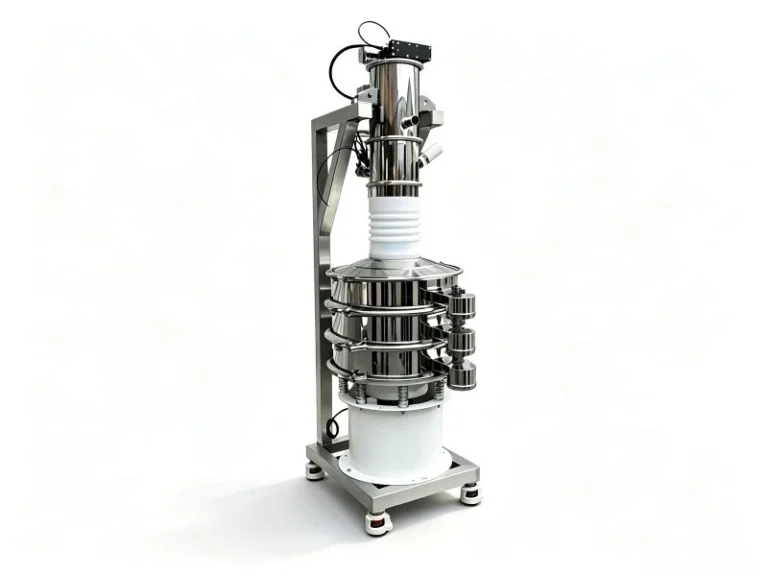
A 回転振動スクリーン は、この用途における選択肢の一つです。振動モーターがスクリーンを振動させ、供給されたデンプンを網面全体に広げるとともに、網上に残った材料を粗大物排出口へ運びます。.
密閉式の本体は粉じんの飛散を抑えるのに役立ち、食品加工用途では材料との接触面にステンレス鋼が採用されることが一般的です。コーンスターチ用ふるい分け装置を選ぶ際は、必要な材料グレード、表面仕上げ、シール、清掃のしやすさを確認してください。構成は製品および工場の衛生要件に適合している必要があります。.
供給、ふるい分け、粗大物の排出
ふるい分け工程には、主に3つの段階があります。
- 供給: 乾燥したコーンスターチが投入口から入ります。安定した供給により、粉体がふるい面全体に分散しやすくなります。.
- ふるい分け: 振動によって粉体が網面に接触します。開口部を通過した材料は、下部の回収部に落下します。.
- 粗大物の排出: ふるいの設計に応じて、網上に残った塊や異物は別の排出口へ移動するか、取り除かれるまで網上に残ります。.
振動ふるいは、網上に残った塊を粉体の流れから分離します。硬い塊を粉砕して再び使用できるデンプンに戻す用途には適していません。.
塊の除去と粒度分級の違い
スクリーンの仕様は、工程で何を分離する必要があるかによって異なります。.
| ふるい分け目的 | スクリーン選定の基準 |
|---|---|
| コーンスターチからの塊の除去 | 許容できる粉体を通過させ、不要な粗大物を網上に残す |
| 粒度分級 | 定められた粒度要件に基づいて材料を分離し、試験によって性能を確認する |
コーンスターチ用ふるい分け装置とスクリーン開口寸法の選び方
除去する物質、必要な処理能力、設置条件に合わせて、コーンスターチ用のふるい機を選定してください。メッシュ数だけでは設備を選定できません。.
ふるい分けの目的と目開きを決める
ダマを除去する場合は、許容できるコーンスターチを通過させ、不要な粗大物を保持できる目開きを選んでください。粗大物を除去する一次ふるいには20メッシュが候補となり、60メッシュはより小さい目開きです。これらは検討の出発点であり、最終的には製品仕様と実材料での試験に基づいて選定してください。.
メッシュ数と適用規格に加え、目開きをミクロン単位で指定してください。当社のガイド メッシュ数とミクロンサイズ では、目開きを明確に指定する方法を説明しています。工程で粒度ごとに分級する必要がある場合は、複数のスクリーン段を使用してください。.
実際のコーンスターチで処理能力を確認する
例えば、ラインに2,000~3,000 kg/hの処理能力が必要な場合は、使用するコーンスターチと選定した目開きでその処理量を達成できるか、サプライヤーに確認を依頼してください。供給の安定性、水分、ダマの含有量、有効ふるい面積は、いずれもコーンスターチのふるい分け能力に影響します。機械の直径やカタログの一般的な定格値だけでは、必要な処理量を確保できるか判断できません。.
材質、洗浄、接続を確認する
製品接触面にはステンレス鋼を指定し、製品、洗浄薬品、工場の要件に応じて304または316Lを選択してください。スクリーンに点検・交換しやすくアクセスでき、シールや表面を容易に洗浄できることを確認してください。.
注文前に、投入口と排出口のサイズ、排出高さ、設置スペース、ミキサーまたは包装ラインとの接続を確認してください。.
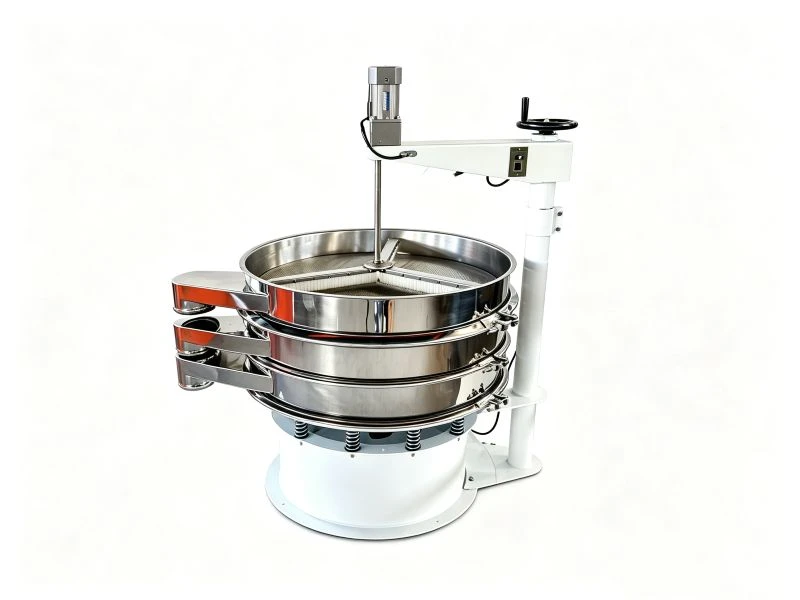
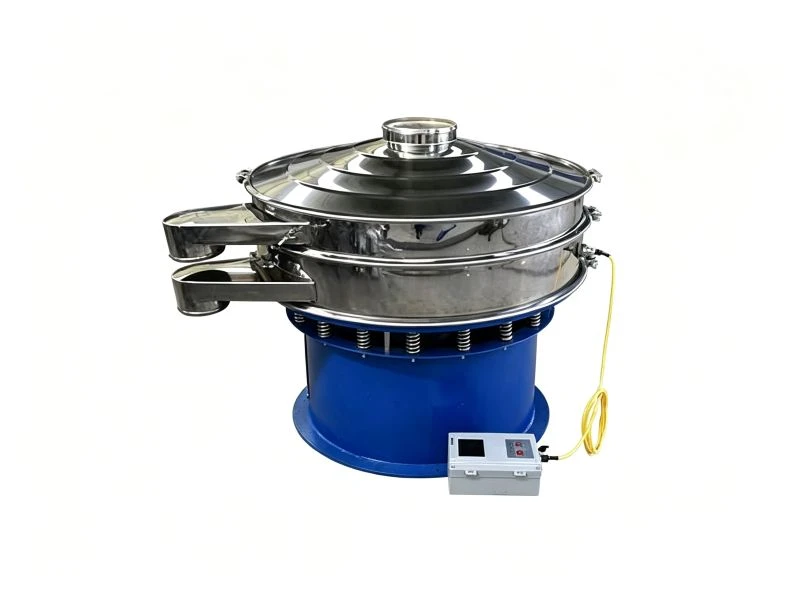
メッシュの目詰まりと処理量の低下への対処方法
粉体がメッシュに堆積したり、ダマが目を塞いだりすると、コーンスターチのふるい分け能力が低下することがあります。水分、静電気による付着、供給の偏りが原因となる場合があります。機械の設定を変更したり、洗浄システムを追加したりする前に、材料とスクリーンの状態を確認してください。.
原料と供給条件を確認する
ロットを切り替えた後に処理量が低下した場合は、でんぷんの水分状態とダマの含有量を前のロットと比較してください。湿った凝集塊はスクリーン上にたまり、微粉は静電気によって網に付着することがあります。.
供給量を一定に保ち、ふるい面全体に原料を行き渡らせてください。供給口の下にでんぷんが堆積する場合は、供給量を減らし、原料の分布を確認してください。.
スクリーンと既存の清掃装置を点検する
網目の詰まり、網の緩み、シールの損傷、スクリーンの摩耗を確認する前に、機械を停止して電源を遮断してください。適切な方法で網を清掃し、網目の大きさがふるい分け要件に合っていることを確認してください。.
バウンシングボールが取り付けられている場合、スクリーンの裏面をたたいて詰まった粒子を取り除きます。ボールの状態と動きを確認してください。網目の詰まりを解消するのに役立ちますが、硬いまたは湿ったでんぷんのダマを砕く手段として頼るべきではありません。.
Test Ultrasonic Deblinding for Persistent Blockage
For fine-mesh corn starch sifting, an 超音波ふるい分け機 is an option when powder adhesion continues to restrict output. It applies high-frequency vibration to the mesh to reduce particle buildup and keep more openings available for screening.
Compare cleaning options using the same starch, screen aperture, and feed conditions. Record sustained throughput, screen buildup, and acceptable starch lost with the oversize material. Choose the configuration that maintains the required separation during a representative production run.
What Information Should You Provide Before Requesting a Quote?
To request a quote for a corn starch screening machine, provide your material condition, screening objective, and required throughput. Include installation details so the supplier can specify a machine that fits your process.
Corn Starch Screening Specification Checklist
| 情報 | Details to Provide |
|---|---|
| 原料の状態 | Dry corn starch, moisture content if known, and whether lumps are present |
| Screening objective | Lump removal, check screening, or particle size classification |
| Required capacity | Normal and peak throughput in kg/h |
| ふるいの仕様 | Aperture in microns, or mesh count with the applicable standard |
| 供給方法 | Manual bag tipping, hopper feeding, or conveyor feeding |
| 設置スペース | Available dimensions, inlet and outlet heights, and connection sizes |
| Materials and cleaning | Product-contact material, cleaning method, and plant hygiene requirements |
| 電源 | Voltage, frequency, and number of phases |
| Supporting information | Representative starch sample, site photos, or a process layout |
If the screen aperture is undecided, describe what must pass through and what needs to be removed. Include whether the sieve will operate before mixing or packing.
Confirm the Configuration with a Material Trial
For corn starch screening trials, use a sample that reflects normal production, including typical lumps. Record the sample condition, screen aperture, feeding method, test duration, and achieved throughput. Check the retained material for unwanted lumps and acceptable starch carried out with them.
These results give the supplier a basis for recommending the screening area and cleaning system.
Request a corn starch screening quotation with your target throughput, screen requirements, and installation details. If the screen aperture is undecided, describe the lumps or oversized material you need to remove.
微細粉体に超音波振動ふるいが必要ですか?
What mesh size is suitable for corn starch screening?
The right mesh size depends on what you need to remove. A 20-mesh screen may suit larger lumps, while a 60-mesh screen retains smaller oversized material. Neither is a universal specification for corn starch. Confirm the actual opening in microns and test whether it passes acceptable starch while retaining the unwanted material.
Which vibrating sieve is suitable for dry corn starch?
A rotary vibrating sieve is one option for removing lumps from dry corn starch. Choose the screening area, mesh opening, and cleaning system around your required throughput and material condition. If fine powder repeatedly blinds the screen, test an ultrasonic configuration before deciding which machine to use.
Can a corn starch screening machine handle 2,000–3,000 kg/h?
That throughput needs to be confirmed for the proposed machine using your starch and screen aperture. A capacity quoted for a coarse screen may not apply to a finer one. Ask the supplier for a material trial that records sustained throughput, screen buildup, and the amount of acceptable starch discharged with the rejects.
Why does corn starch clog the sieve mesh?
Moisture-related agglomerates, fine powder adhesion, and particles lodged in the openings can reduce the available screening area. Excessive or uneven feeding can make the problem worse. Check the starch condition, feed distribution, and screen cleanliness first, then assess whether the existing cleaning system is adequate.
Does corn starch sifting require an ultrasonic sieve?
Not every application needs ultrasound. Mechanical cleaning, such as bouncing balls, may be sufficient for the selected mesh and feed conditions. An ultrasonic sieve is worth testing when persistent powder adhesion or fine-mesh blinding prevents the machine from maintaining the required output. Mesh count alone does not determine the need.
Can a vibrating sieve remove all foreign material from corn starch?
No. A vibrating sieve retains material that cannot pass through its openings. Smaller contaminants and some thin fragments may pass through with the starch. Use screening alongside the