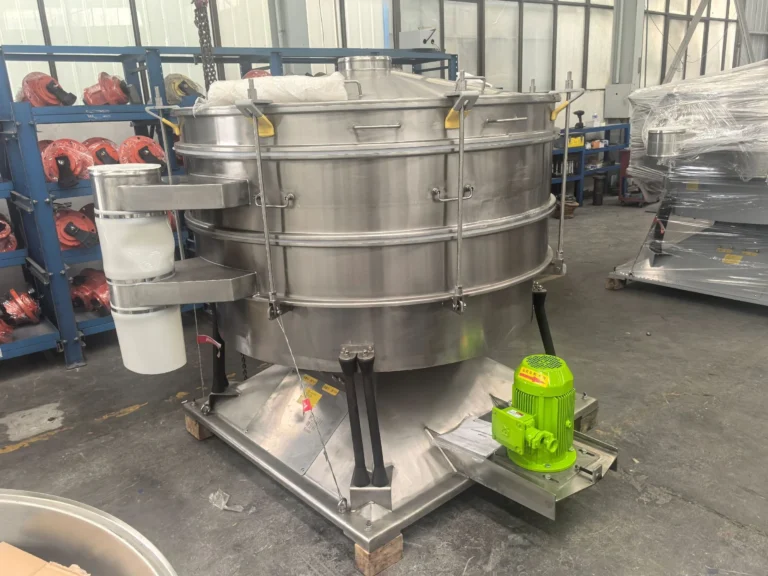
シングルモーター vs デュアルモーター インラインバイブレーティングスクリーン:どちらを選ぶべきか?
はじめに
Inline vibratory screens can be configured with either a single vibration motor or dual motors, and the right configuration depends on more than motor quantity. Capacity requirements, material flow, installation space, and the characteristics of the powder all affect the final choice.
A single-motor design is often preferred where compact installation and straightforward operation are priorities, while a dual-motor design can provide a different vibration pattern for applications requiring stronger material movement or higher throughput.
This guide compares single-motor and dual-motor inline vibratory screens to help you select a suitable configuration for your production line.
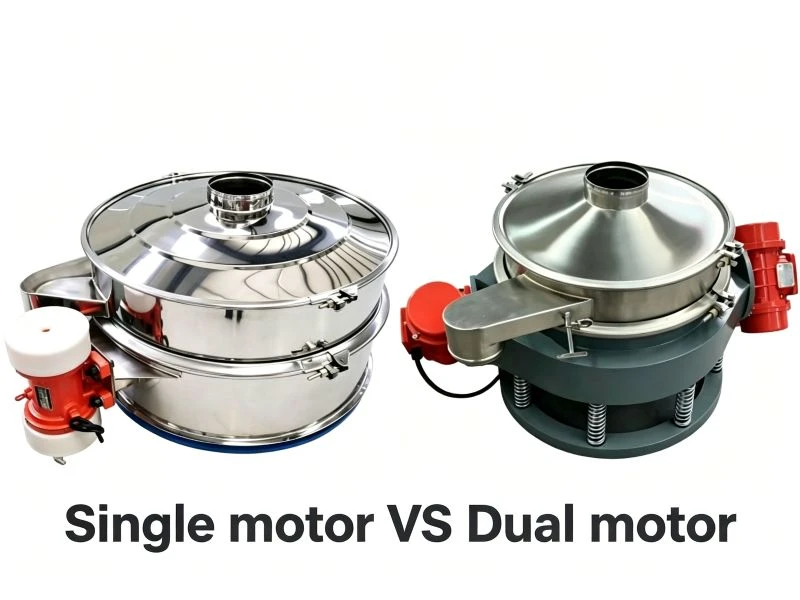
単モーター vs 双モーター インライン振動スクリーン
The main difference between single-motor and dual-motor inline vibratory screens is how the vibration force is generated and applied to the material. This affects material movement, screening capacity, installation, and the applications each configuration is better suited for.
Single-Motor Design
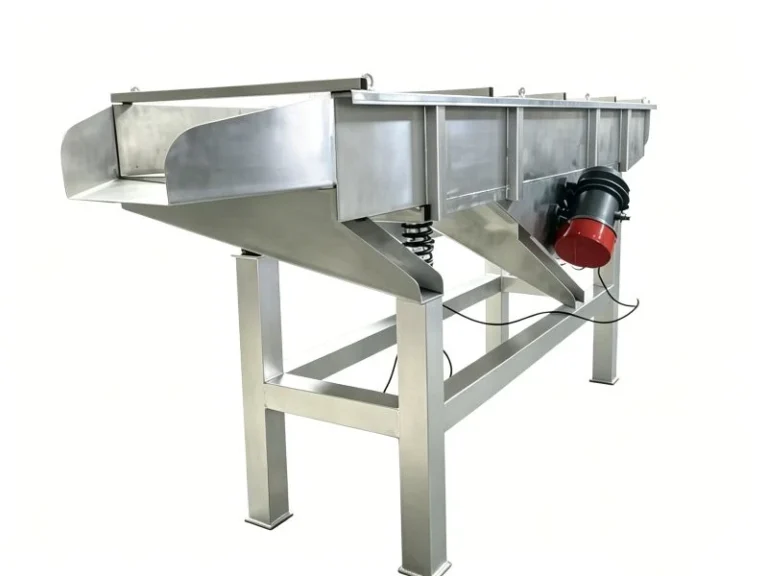
A single-motor inline vibratory screen uses one vibration motor as its vibration source. The motor generates the screening force that helps material pass through the mesh as it moves downward through the machine.
With one vibration source, the vibration pattern is relatively simple and consistent. This design is compact and is generally suitable for free-flowing powders, stable feeding conditions, and applications with moderate capacity requirements.
Dual-Motor Design
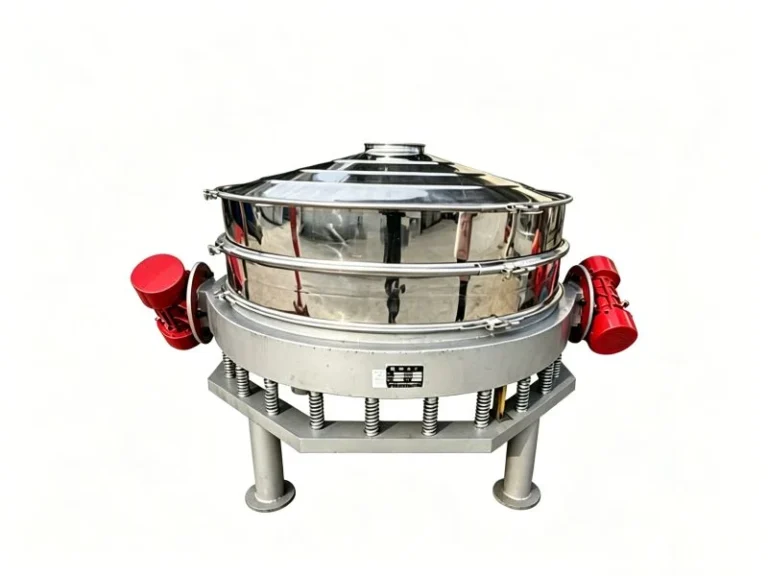
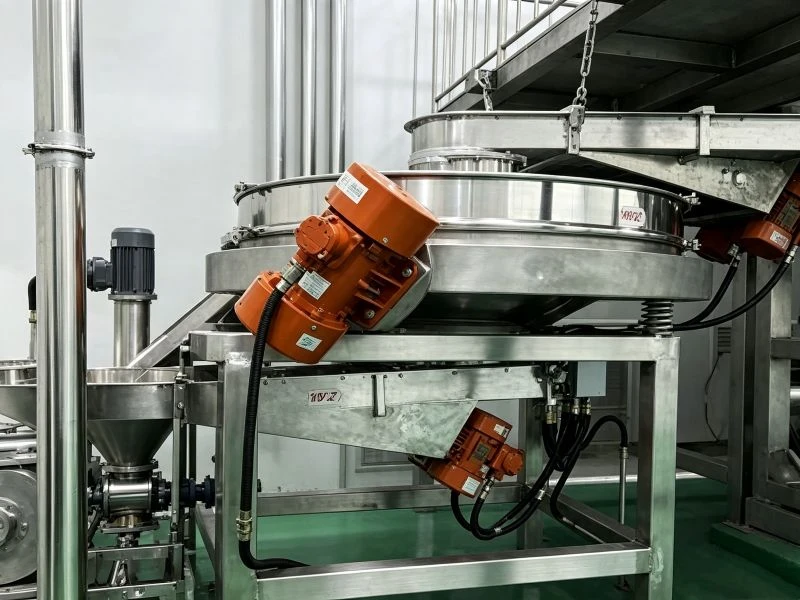
A dual-motor inline vibratory screen uses two vibration motors, typically installed on opposite sides of the machine. Working together, the two motors generate stronger and more controlled vibration, increasing material movement across and through the screen.
The vibration parameters can be adjusted according to the screening requirement, making the dual-motor configuration more suitable for higher throughput, faster material discharge, or materials that require stronger screening action.
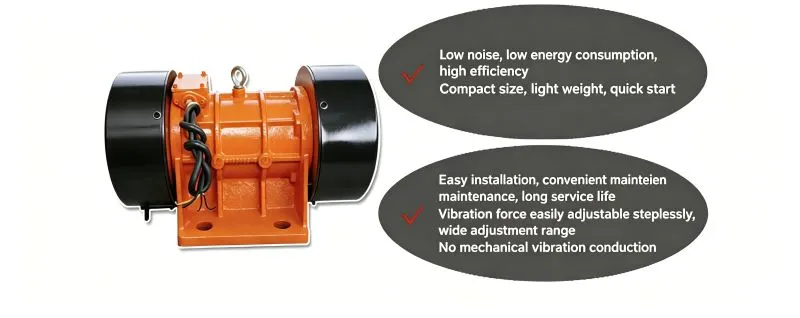
Single-Motor vs Dual-Motor Comparison
The two configurations differ mainly in vibration force, material movement, capacity, and installation requirements.
| Factor | Single-Motor Design | Dual-Motor Design |
| Motor configuration | One vibration motor | Two motors mounted on opposite sides |
| Vibration pattern | Fixed, consistent vibration | Stronger vibration with more adjustment flexibility |
| Screening capacity | Suitable for moderate throughput | Better suited to higher throughput |
| Material flow | Suitable for stable, free-flowing materials | Stronger material movement and faster discharge |
| Installation | Compact and easier to integrate | Requires space for two side-mounted motors |
| Suitable materials | Free-flowing powders and granules | Materials requiring stronger screening action |
| Typical use | General safety screening and compact production lines | Higher-capacity or more demanding screening duties |
Motor quantity alone does not determine screening performance. Material properties, mesh size, feed rate, required capacity, and available installation space should all be considered when selecting the motor configuration.
How Motor Configuration Affects Screening Performance
Motor configuration affects vibration force and material movement, but it is only one factor in screening performance. Mesh size, material properties, feed rate, and screen size also affect the final capacity.
Screening Capacity
A single-motor design is generally suitable for moderate throughput and stable feeding. A dual-motor design provides stronger vibration and is better suited to higher-capacity applications or materials that require more active movement across the screen.
Two motors, however, do not mean twice the capacity. Actual output depends on the material, mesh size, feed rate, screen size, and operating conditions. For a detailed explanation of these factors, see our inline vibratory screen capacity guide.
Material Flow
Vibration force and direction affect how quickly material moves across and through the screen. Free-flowing powders usually require less vibration force, while materials that tend to accumulate may need stronger vibration to improve discharge and reduce material buildup.
Proper vibration adjustment is also important. Too little force can cause a thick material layer and reduce screening efficiency, while excessive vibration can increase screen wear and may not improve screening results.
Operation and Energy Use
A single-motor design has fewer drive components, making operation and maintenance relatively simple. A dual-motor configuration offers greater vibration force and adjustment flexibility but requires two motors to operate and maintain.
The motor configuration should therefore be selected according to the required screening performance rather than motor quantity alone.
Installation and Application Considerations
Installation space and connection method should be considered when choosing between single-motor and dual-motor designs.
設置スペース
The screen should be installed on a level, stable support. Leave enough space around the machine for motor inspection, screen replacement, and cleaning. Dual-motor models also need clear space on both sides for the motors and maintenance.
When connecting the inlet and outlet to a hopper, pipe, or other equipment, use flexible connections where needed. This helps prevent vibration from being transferred to the production line.
After installation, check all connections and fasteners before running the machine without material. Make sure the vibration is stable and there is no unusual noise.
Screen size, feeding method, and connections with upstream and downstream equipment should also be considered when planning the installation. See our inline vibratory screen selection guide for more details on production line integration.
典型的なアプリケーション
Both configurations can be used for safety screening, impurity removal, and continuous powder processing. The more important selection factors are the material properties, required capacity, mesh size, feeding method, and available installation space.
For example, a compact production line handling a free-flowing powder at a moderate feed rate may favor a single-motor design. A line requiring higher throughput or stronger material movement may require a dual-motor configuration.
For a practical application example, see how an inline vibratory screen for flour screening is selected based on capacity, mesh size, and production requirements.

Which Motor Configuration Should You Choose?
A single-motor inline vibratory screen is generally suitable for lower to moderate throughput, free-flowing materials, and applications where a compact, simple structure is preferred.
For higher throughput or materials that require stronger and more adjustable movement, a dual-motor design is usually the better option. The two motors work together to provide greater flexibility in controlling material flow across the screen.
The final configuration should be based on your material, mesh size, required capacity, feed rate, and installation conditions—not motor quantity alone.
If you are unsure which configuration fits your process, provide these operating details and we can recommend a suitable インラインバイブレーティングスクリーン for your production line.