リチウム電池材料のスクリーニングにPTFEコーティング超音波振動スクリーンを使用する理由は何ですか?
はじめに
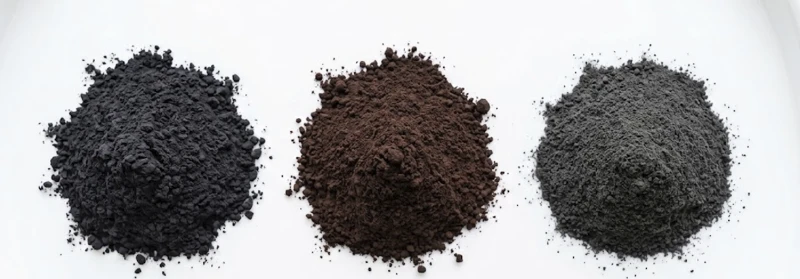
Lithium battery materials, such as graphite powder, polysilicon, and precursor materials, are highly sensitive to metal contamination. Contact with metals like copper and zinc may cause oxidation reactions, affecting material purity and reducing battery performance. In addition, fine powders such as graphite, lithium carbonate, and electrode materials are easy to stick to the screen mesh, leading to mesh clogging and lower screening efficiency.
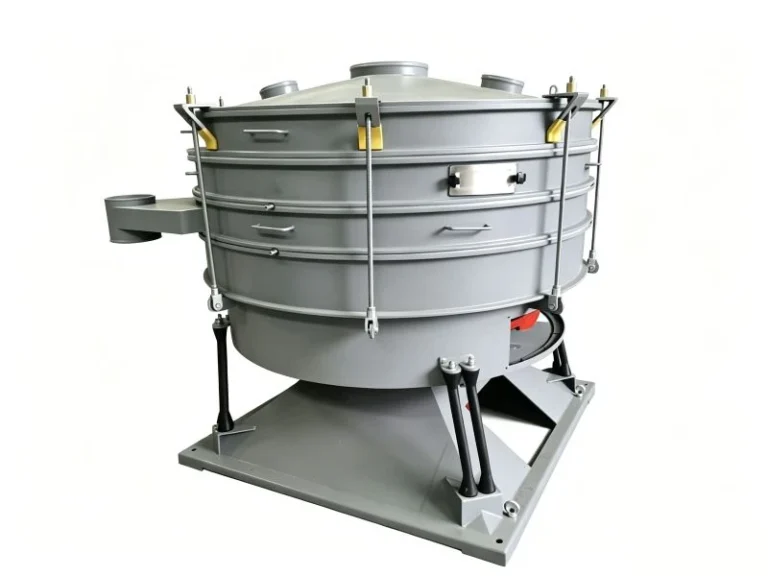
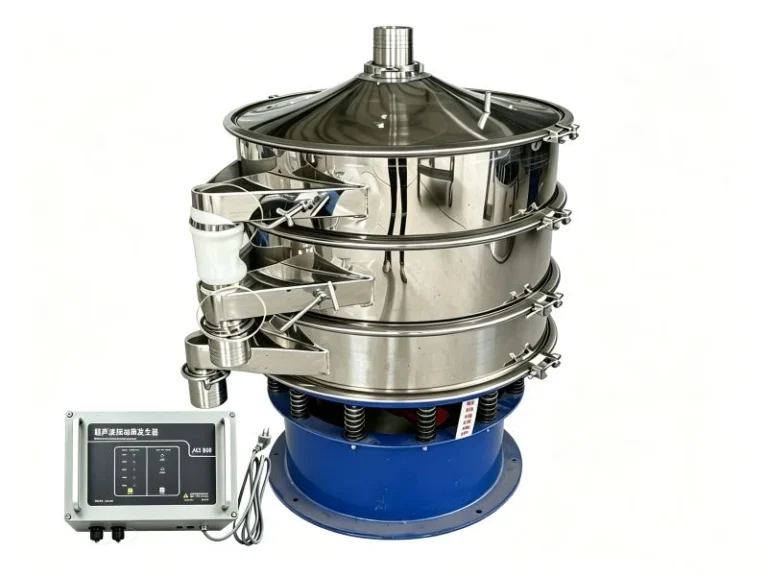
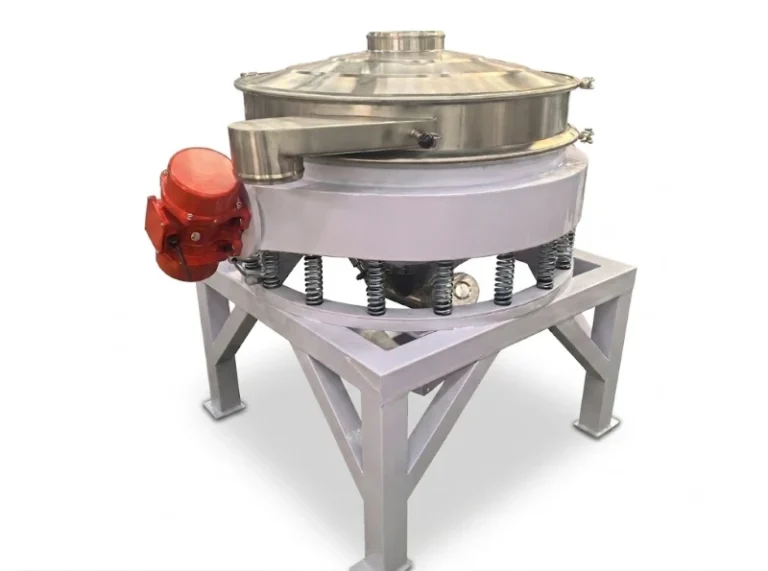
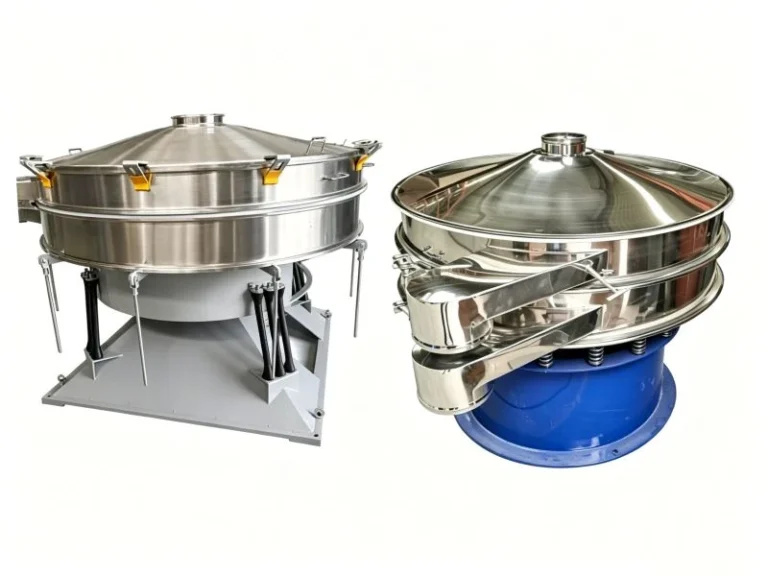
The PTFE coated 超音波振動ふるい combines ultrasonic vibration technology with a low-friction PTFE surface to improve powder separation, reduce material adhesion, and prevent screen blockage. It provides a reliable solution for lithium battery material screening and meets the strict requirements of fine powder processing.
Challenges in Lithium Battery Material Screening
1. Strict Material Protection Requirements
Lithium battery materials must avoid contact with metal and other materials during the screening process. Even small amounts of metal contamination may affect material properties and battery performance.
The PTFE coated 超音波振動分離機 uses a PTFE-coated screen frame and mesh, which helps prevent material contamination and protects the original properties of lithium battery materials during screening.
2. High Screening Accuracy Requirements
For lithium battery materials, screening accuracy is one of the most important requirements. Most battery powders, such as cathode materials and anode materials, require fine screening, usually around 325 mesh. Traditional vibrating screens often cannot achieve the required precision.
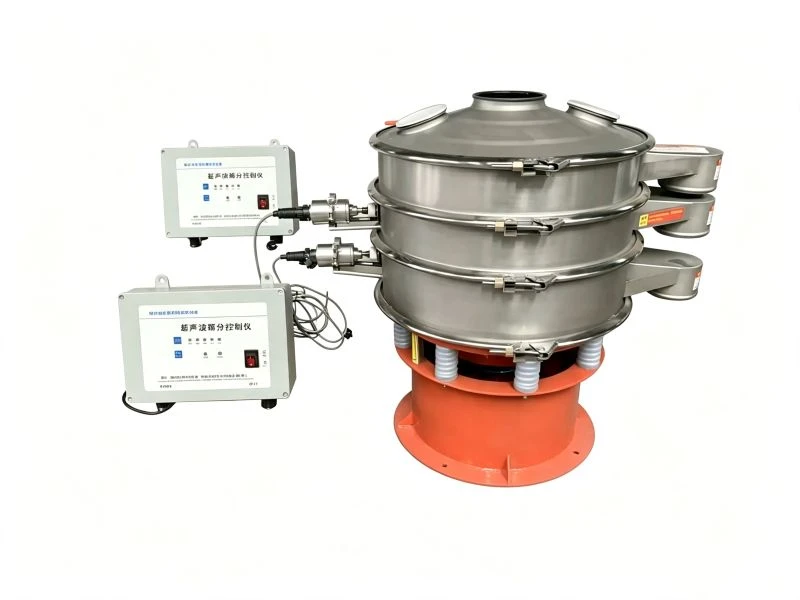
The ultrasonic vibrating screen for lithium battery materials uses an 超音波ふるい分けシステム. During operation, the screen mesh performs three-dimensional vibration while receiving high-frequency and low-amplitude ultrasonic waves. The fine powder remains slightly suspended above the screen surface, which improves screening efficiency and effectively prevents mesh clogging.
3. High Production Capacity Requirements
High accuracy is important, but production capacity is also a key factor, especially for continuous battery material production lines.
Lithium battery powders usually have static electricity, which makes it difficult for traditional vibrating screens to clean the mesh effectively. The ultrasonic cleaning system on the battery material screening equipment continuously removes powder blockage and maintains stable screening performance.
Compared with conventional vibrating screens, ultrasonic vibrating screens can achieve much higher processing capacity and improve production efficiency by up to 5–10 times in suitable applications.
Why Add PTFE Coating to a Vibrating Screen?
1. Excellent Corrosion Resistance
PTFE coating provides excellent corrosion resistance and is almost unaffected by most solvents. It can effectively resist damage from acids, alkalis, and other corrosive substances.
In industries such as chemical processing, pharmaceuticals, and lithium battery manufacturing, materials may contain corrosive components that require high equipment durability. A PTFE coated vibrating screen helps protect the screening equipment from corrosion, extends service life, and ensures stable production.
2. High Wear Resistance
During the screening process, materials constantly rub and impact against the screen mesh, which can cause wear and deformation over time.
The smooth and durable surface of PTFE coating reduces friction between materials and the screen mesh. This helps minimize screen wear, maintain stable screening performance, and extend the service life of the ultrasonic vibrating screen.
3. Excellent High Temperature Resistance
PTFE coating can maintain stable physical and chemical properties under high temperatures.
During lithium battery material production, some processes require high-temperature operation. A PTFE coated ultrasonic vibrating screen can maintain screen stability in high-temperature environments, preventing deformation and damage while ensuring continuous production.
4. Non-Stick Surface and Easy Cleaning
PTFE coating has excellent non-stick properties, making it difficult for fine powders to stick to the screen surface.
This feature reduces material buildup and screen blockage during fine powder screening, improving screening efficiency and reducing cleaning frequency and downtime. In addition, the oil-resistant and water-resistant surface helps prevent material contamination and ensures product quality.
5. Improved Screening Efficiency
The low friction and self-lubricating properties of PTFE coating allow materials to move more smoothly during screening.
Combined with ultrasonic vibration technology, the PTFE coated ultrasonic vibrating screen provides efficient and accurate screening for fine powders, improving processing capacity and screening quality. It is especially suitable for demanding applications such as lithium battery material screening.
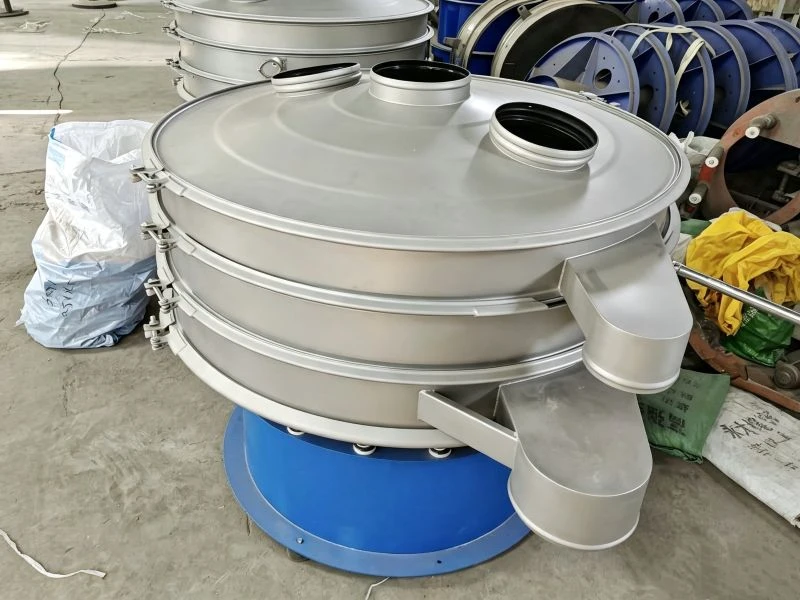
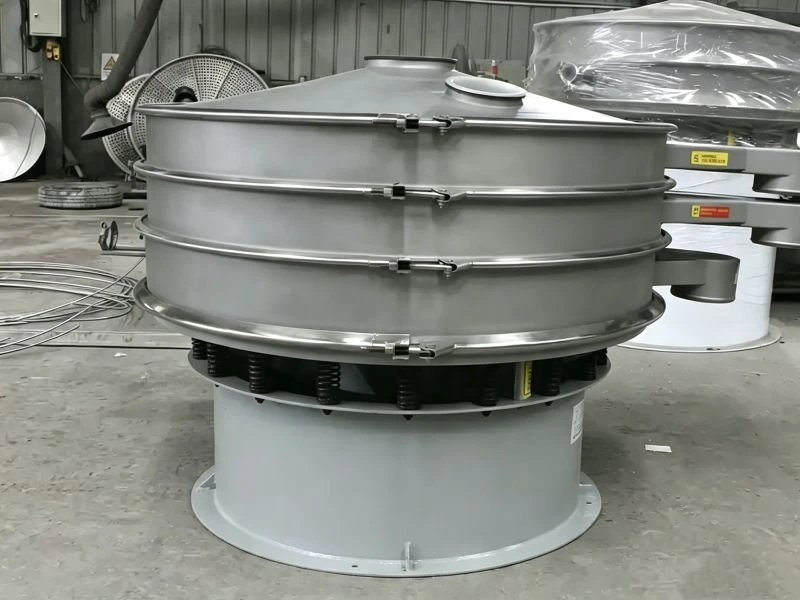
Working Principle of PTFE Coated Ultrasonic Vibrating Screen
1. Three-Dimensional Vibrating Screening
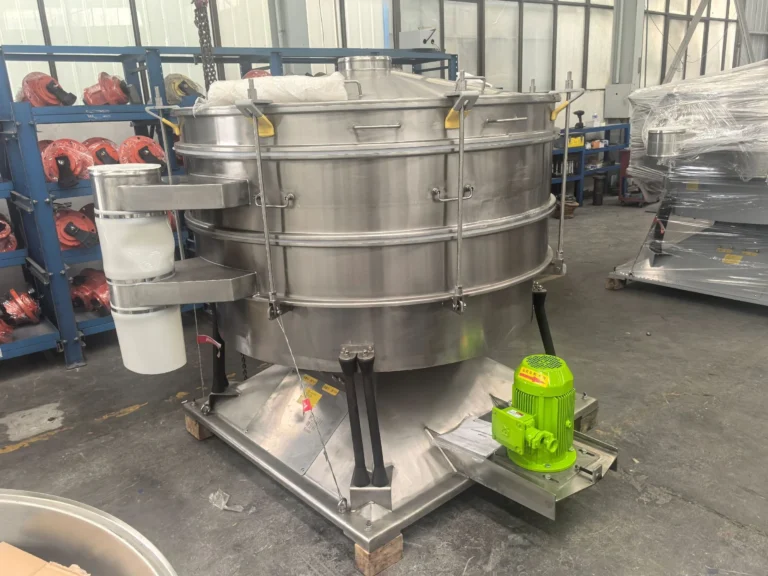
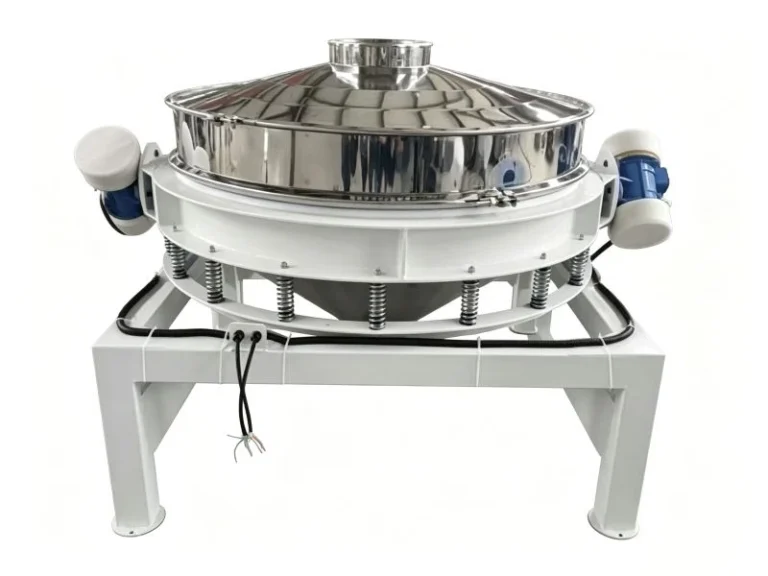
The vertical vibration motor generates three-dimensional vibration force, causing materials to move in a spiral pattern across the screen surface. Different particle sizes are separated through continuous movement, which is similar to the working principle of a traditional rotary vibrating screen.
This basic vibration motion allows the PTFE coated ultrasonic vibrating screen to achieve efficient particle classification for different materials.
2. Ultrasonic Mesh Cleaning System
The independent ultrasonic generator produces high-frequency signals (20–40 kHz), which are converted into mechanical vibrations through the ultrasonic transducer and directly transferred to the screen mesh.
During fine powder screening, the high-frequency vibration breaks up powder agglomeration, prevents particles from blocking the mesh openings, and improves screening performance. This ultrasonic anti-clogging system helps maintain stable screening efficiency for materials that are difficult to process, such as lithium battery powders.
3. Material Compatibility Design
スクリーンメッシュ
The screen mesh can be made with PTFE coating or stainless steel materials, providing both wear resistance and non-stick performance. The PTFE surface helps reduce material adhesion and improves screening stability.
Machine Structure
The main body is built with 304 stainless steel, while key areas are coated with PTFE to meet the requirements of chemical processing and new energy industries, including lithium battery material screening.
Sealing Design
Food-grade silicone sealing rings are available for pharmaceutical and food applications. Explosion-proof designs can also be provided for battery material production environments to ensure safe and clean operation.
関連動画
Advantages of PTFE Coated Ultrasonic Vibrating Screens for Lithium Battery Materials
1. Prevent Material Contamination: PTFE Coating Avoids Metal Contact
Lithium battery materials, such as graphite powder, polysilicon, and precursor materials, are highly sensitive to metal contamination. Contact with metals like copper and zinc may cause oxidation reactions, affecting material purity and reducing battery performance.
The PTFE coated ultrasonic vibrating screen applies a PTFE layer on the screen frame and bottom cover, creating a protective barrier between the material and metal surfaces. This design prevents direct contact with steel components and helps maintain the purity of battery materials during screening.
2. High Precision Screening: Accurate Particle Size Control
Lithium battery production requires strict particle size control. For example, cathode materials often need to be controlled within a specific particle size range to ensure battery performance.
The ultrasonic vibrating screen for lithium battery materials uses high-frequency vibration (18–38 kHz) to create three-dimensional material movement. Combined with the self-cleaning performance of the PTFE coated screen mesh, it can achieve precise screening for fine powders, with improved accuracy compared with traditional vibrating screens.
This high precision screening technology helps improve product consistency and supports stable battery material production.
3. Anti-Clogging Performance: High-Frequency Vibration Prevents Mesh Blocking
Lithium battery materials, such as lithium cobalt oxide and lithium manganese oxide, are often difficult to screen due to static electricity, strong adhesion, and powder agglomeration.
The ultrasonic anti-clogging vibrating screen adds high-frequency ultrasonic vibration to the screen mesh, providing additional energy to separate fine particles and reduce material buildup. This helps prevent powder adhesion, keeps the mesh open, and maintains stable screening performance even during fine powder screening applications.


Applications of PTFE Ultrasonic Vibrating Screens in Battery Industry
1. Cathode Material Screening
Cathode active materials, such as lithium cobalt oxide (LCO), lithium iron phosphate (LFP), and ternary materials (NMC), often form lumps after high-temperature sintering. They need to be crushed, separated, and classified through a vibrating screening process.
The PTFE coated 超音波振動ふるい helps prevent hard materials from damaging the screen mesh while reducing the risk of metal contamination. This ensures stable material quality and supports consistent battery performance.
2. Anode Material Processing
Anode materials, including natural graphite and synthetic graphite, can easily cause dust pollution during screening.
The lithium battery material screening equipment adopts a closed structure with a negative pressure dust collection system to reduce powder leakage and maintain a cleaner working environment. At the same time, the PTFE coating reduces material adhesion on the screen mesh, improving graphite powder screening efficiency and production stability.
3. Precursor Material Classification
Precursor materials, such as nickel cobalt manganese hydroxide (NCM precursor), require strict particle size control and uniform distribution.
The ultrasonic vibrating screen for battery materials uses high-frequency vibration to achieve accurate particle classification. It helps ensure that precursor particle size distribution meets battery manufacturing requirements and improves battery consistency.

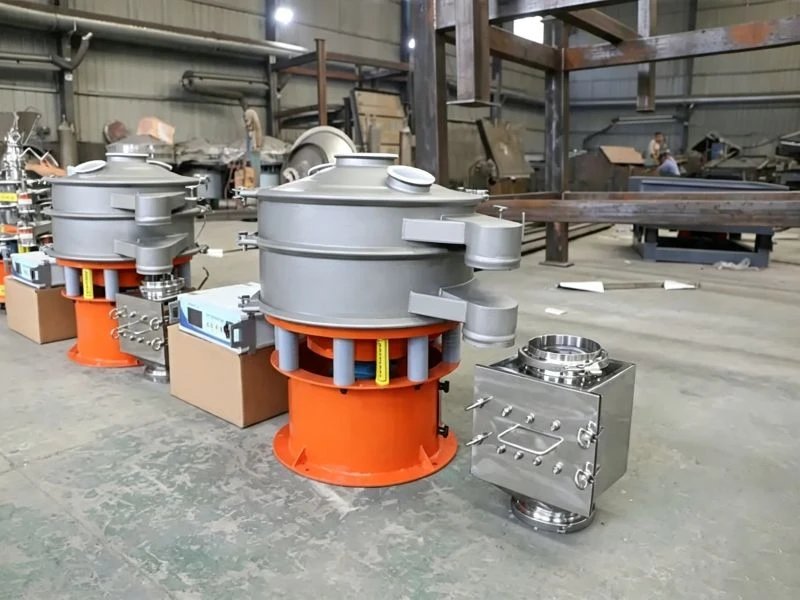
Operation and Maintenance of Teflon-Coated Ultrasonic Vibrating Screens
1. Pre-start Checks
Ensure the Teflon coating is intact and the screen mesh is securely installed.
Check the grounding protection of the ultrasonic generator’s power supply to prevent electrical leakage risks.
Clear debris from the feed hopper to prevent clogging at the discharge outlet.
2. Operating Parameter Adjustment
Upon startup, set the ultrasonic intensity to maximum and run for 2–3 minutes before starting the vibrating screen motor.
Adjust vibration frequency and amplitude based on material characteristics; for instance, highly adsorbent materials require higher frequencies.
3. Routine Maintenance
Regularly inspect the screen mesh for wear; the lifespan of a 500-mesh screen can be 3–5 times that of a standard screen.
Avoid using hard tools to scrape the Teflon coating during cleaning to prevent the coating from peeling off.
During continuous operation, check the transducer temperature every 8 hours to ensure stable equipment performance.
結論
PTFE coated ultrasonic vibrating screens provide an effective solution for the strict screening requirements of lithium battery materials. By combining PTFE non-stick coating with ultrasonic vibration technology, the equipment helps prevent metal contamination, reduce powder adhesion, and maintain stable screening performance for fine powders such as graphite, cathode materials, and precursor materials.
Looking for a reliable screening solution for lithium battery materials? Contact us to discuss your material characteristics and get a customized PTFE coated ultrasonic vibrating screen solution for your production needs.