Vibrating Sieves and Sifters for the Chemical Industry: How to Choose the Right Equipment
소개
Chemical powders can vary widely in particle size, flowability, moisture content, and chemical properties, making the right screening equipment important for consistent product quality. A vibrating sieve or sifter can be used for materials such as pigments, resin, fertilizers, additives, coatings, and other fine chemicals, but the best configuration depends on the material and production requirements. Mesh size, screening capacity, stainless steel construction, dust control, and the need for ultrasonic screening should all be considered before selecting a machine. This guide explains the main factors to help you choose the right vibrating sieve for chemical powder screening.
Chemical Materials That Require Vibrating Sieving
Chemical powders differ in particle size, flowability, and handling requirements, so the screening method needs to match the material. Vibrating sieves are commonly used for pigments, resin, fertilizers, additives, coatings, and fine chemicals to remove oversized particles, break up agglomerates, or classify powders by size.
Pigments and Dyes
Pigments and dyes often require fine and consistent particle separation. An industrial vibratory sieve can remove agglomerated or oversized particles before the next production stage.
Resin and Plastics
Resin powders can be sticky or prone to electrostatic buildup, which may cause screen clogging. Proper mesh selection and, for fine powders, ultrasonic screening can help maintain stable screening performance.
Fertilizers and Chemical Additives
Fertilizers and chemical additives may require higher screening capacity and continuous operation. The sieve should be selected according to the material size, required output, and target particle classification.
Coatings and Fine Chemicals
Coating powders and fine chemicals often require fine mesh screening and good separation accuracy. For difficult-to-screen fine powders, an ultrasonic vibrating sieve can improve material flow through the mesh.
Corrosive Chemical Powders
Corrosive materials require suitable contact materials to prevent premature equipment wear. Stainless steel construction, such as SS304 or SS316L, can be selected according to the chemical properties of the material.
In practice, the right chemical powder screening machine depends on the material, particle size, required capacity, mesh size, and any special requirements such as corrosion resistance or ultrasonic screening.
관련 동영상
How to Choose a Vibrating Sieve for Chemical Powders
Choosing a vibrating sieve for chemical powders depends on more than the machine size. Particle size, mesh size, required capacity, material compatibility, and dust control all affect screening performance. The right combination helps maintain stable throughput and consistent separation.
Particle Size and Mesh Selection
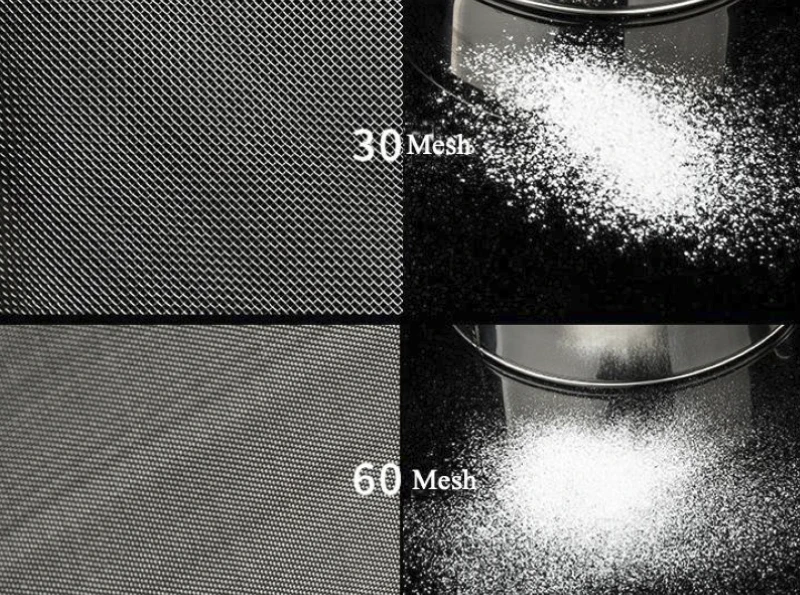
First, the required particle size and screening range should be clearly defined. Coarse materials can usually be screened using standard mesh, combined with bouncing balls for screen cleaning, while fine or ultrafine powders may require finer mesh and higher screening accuracy. For materials around 200 mesh, 325 mesh, or finer, ultrasonic screening technology can help reduce mesh clogging and improve powder flow through the screen.
Capacity and Screening Requirements
Screening capacity depends on material characteristics, mesh size, bulk density, feed rate, and the number of screening layers. For different chemical powders, the equipment size should be selected according to the actual required output per hour. For example, when screening titanium dioxide, a Φ400–600 mm rotary vibrating sieve is sufficient for 300 kg/h, while 1.5 tons/h requires a Φ1500–1800 mm machine. Note that the actual capacity can drop significantly when screening ultrafine powders. For example, when screening 600-mesh tungsten powder, a Φ1000 machine may process only about 30 kg/h. Therefore, equipment selection should be based on the finest required mesh size, with an additional 20%–30% capacity margin.
Material and Corrosion Resistance
The materials used for parts that come into contact with the product should match the chemical properties of the material being screened. For product-contact parts, 304 or 316L stainless steel is preferred for corrosion resistance and to help prevent contamination. For materials that are acidic, alkaline, or contain chloride ions, 316L stainless steel should be selected. For highly abrasive materials, polyurethane or ceramic liners can be added to the product-contact areas.
Dust Control and Enclosed Screening
Fine chemical powders may generate dust during feeding and discharge. An enclosed vibrating sieve equipped with a sealing cover and suitable dust collection connections can help reduce powder leakage and keep the working environment clean. For flammable or explosive chemical powders, such as aluminum powder and magnesium powder, explosion-proof equipment must be selected.
When Should You Use an Ultrasonic Vibrating Sieve?
For general chemical powders, a standard vibrating sieve with mechanical screen cleaning may be sufficient. An ultrasonic vibrating sieve is more suitable when the powder is very fine, easily sticks to the mesh, builds up static electricity, or causes frequent screen clogging. The ultrasonic system adds high-frequency vibration directly to the screen mesh, helping fine particles pass through the openings more smoothly and improving screening stability.
When Conventional Screening Is Not Enough
Ultrasonic screening is worth considering when:
The material requires fine or ultrafine screening, especially around 200 mesh, 325 mesh, or finer.
Fine powder causes frequent mesh clogging or screen blinding.
The material is prone to electrostatic adhesion or agglomeration.
Conventional vibrating screening cannot maintain the required screening accuracy or capacity.
The process involves fine chemical powders such as pigments, resin powders, coatings, or other difficult-to-screen materials.
YuanJing’s ultrasonic sieving machines are available in different diameters and configurations, with 1–6 screening layers, 2–635 mesh options, and 304 or 316L stainless steel construction. For corrosive chemical materials, the external transducer configuration can also be considered for easier maintenance and better protection of the ultrasonic components.
Use a standard vibrating sieve for conventional chemical powder screening, and consider ultrasonic screening when fine particles, mesh clogging, static electricity, or agglomeration becomes the main screening problem.
Which Vibrating Sieve Is Right for Your Chemical Application?
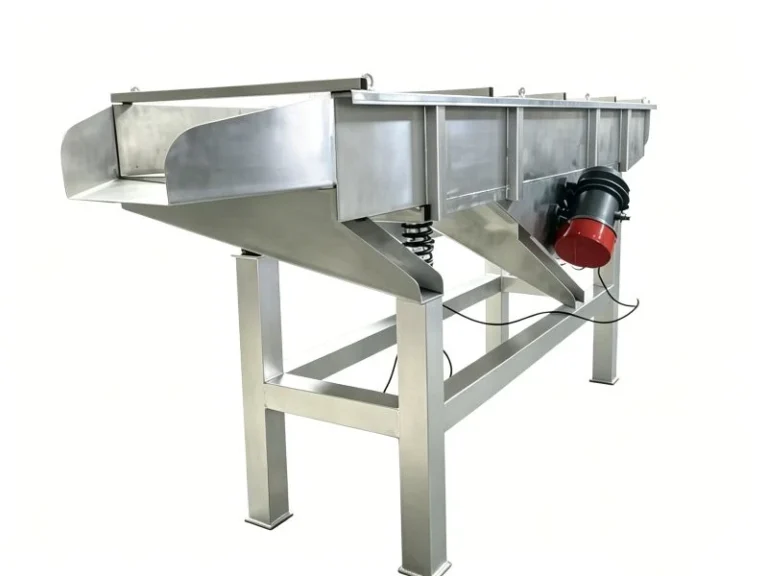
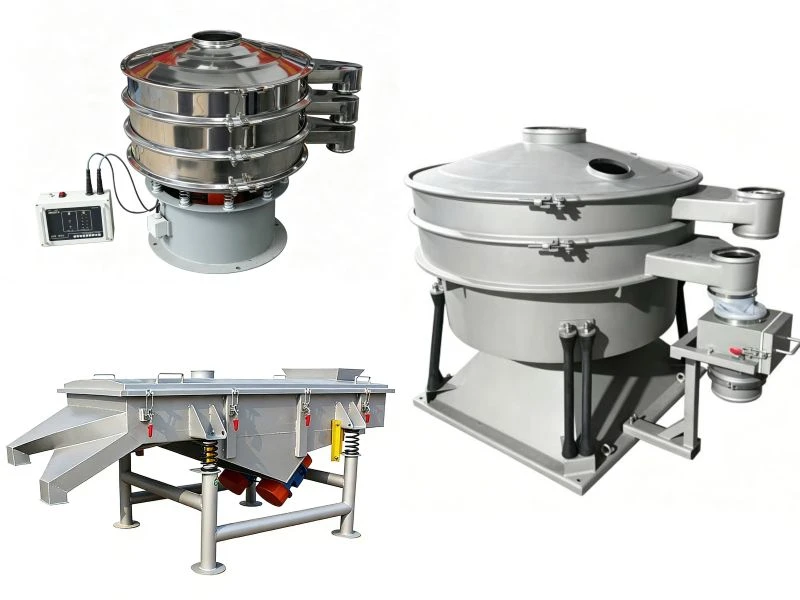
Different chemical materials require different screening methods. A standard rotary vibrating sieve (Vibro Sifter) is suitable for most powder screening and classification tasks, while fine or difficult-to-screen powders may require an ultrasonic system. For large-volume continuous production, a linear vibrating sieve is suitable for high-capacity requirements. When high-precision screening is required, a circular tumbler screen can achieve screening accuracy of up to 99%. Equipment selection should be based on the material properties, particle size, mesh size, required capacity, and production process.
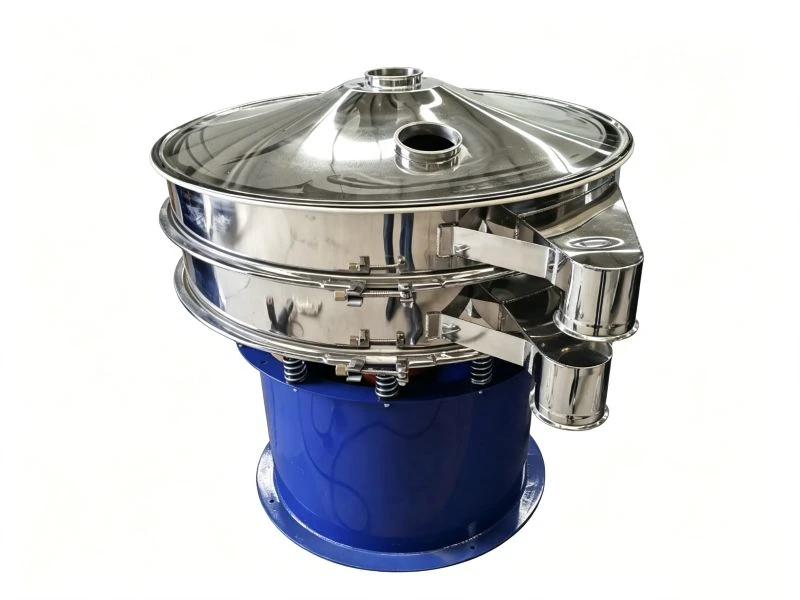
진동 체
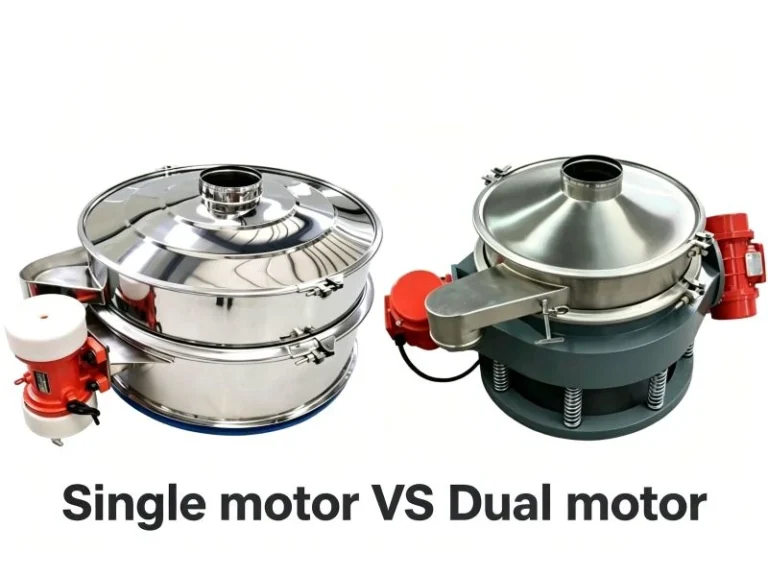
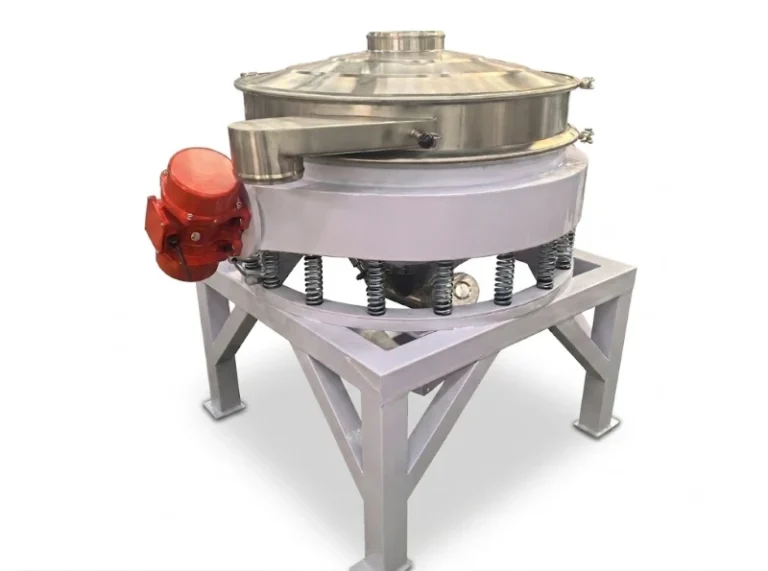
A vibro sifter machine is suitable for the classification and impurity removal of conventional chemical powders and granules. Different mesh sizes and screening layers can be configured for particle classification, removal of oversized particles, and impurity separation. It is suitable for pigments, resin powders, additives, and other chemical materials, providing accurate separation and flexible screen configurations.
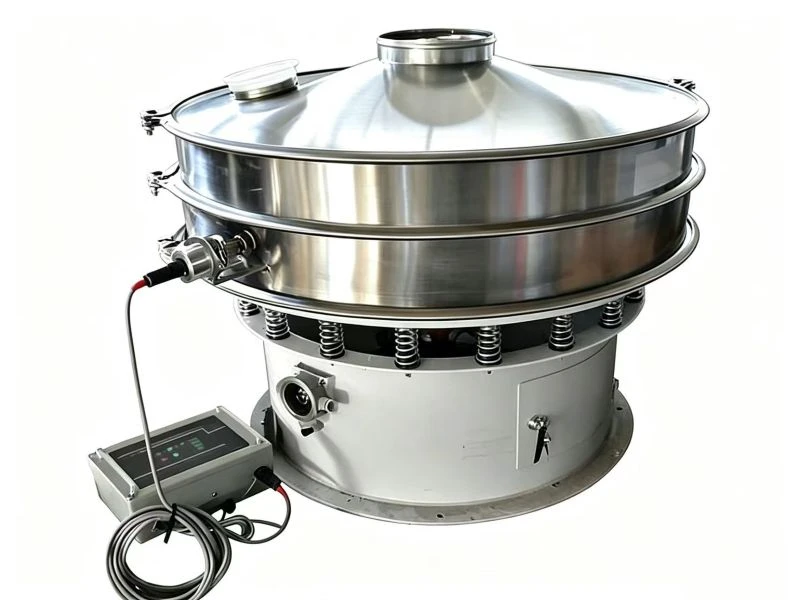
초음파 진동 체
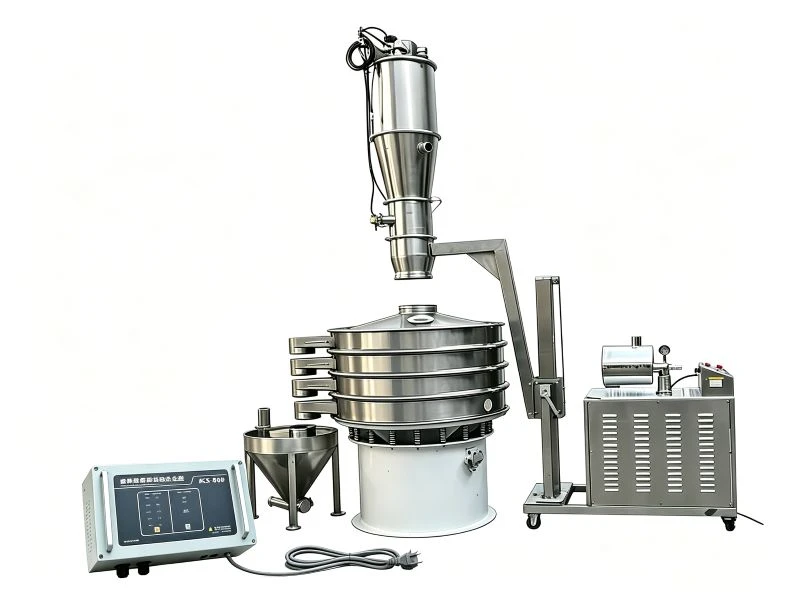
하나의 ultrasonic vibrating sieve is designed for fine and difficult-to-screen powders. It is particularly effective when fine particles cause mesh clogging, electrostatic adhesion, or agglomeration. Its chemical applications include pigments, resin powders, coating powders, and other fine chemical materials. The current ultrasonic series supports screening up to 635 mesh, with 1–6 screening layers and 304 or 316L stainless steel options.
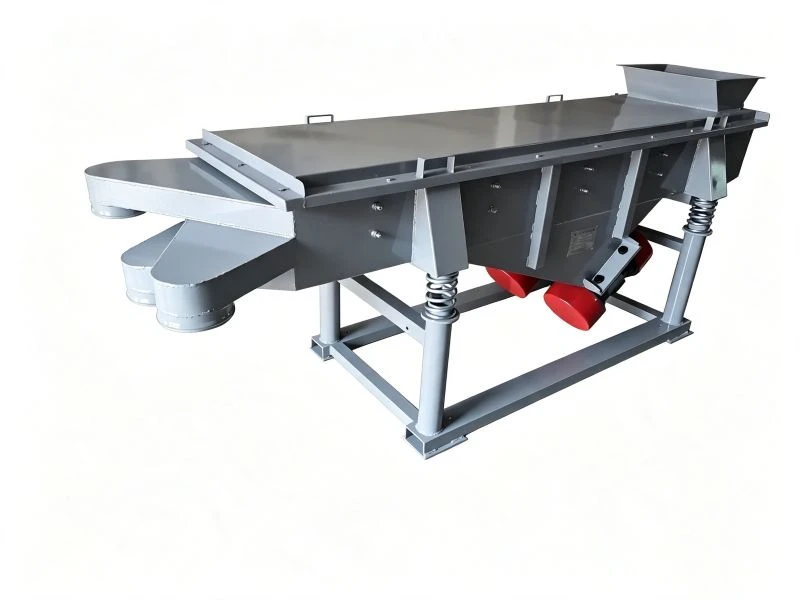
선형 진동 체
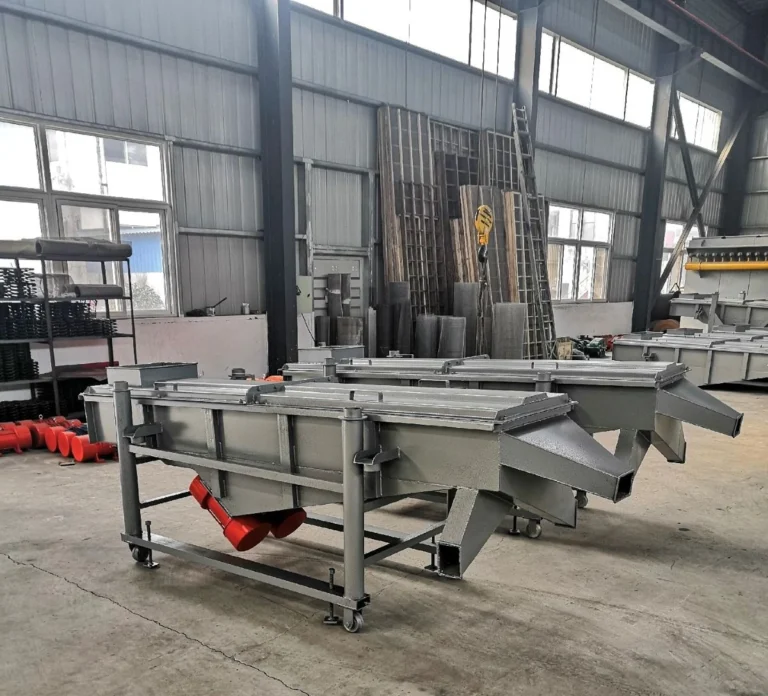
A 선형 진동 스크린 is more suitable for high-capacity and continuous screening operations. It is commonly used for large volumes of chemical powders and granules, including fertilizer materials. This series supports 1–6 screening layers, 2–500 mesh, and capacities ranging from 10 kg/h to 10 t/h. Fully enclosed and explosion-proof configurations are also available for specific application requirements.
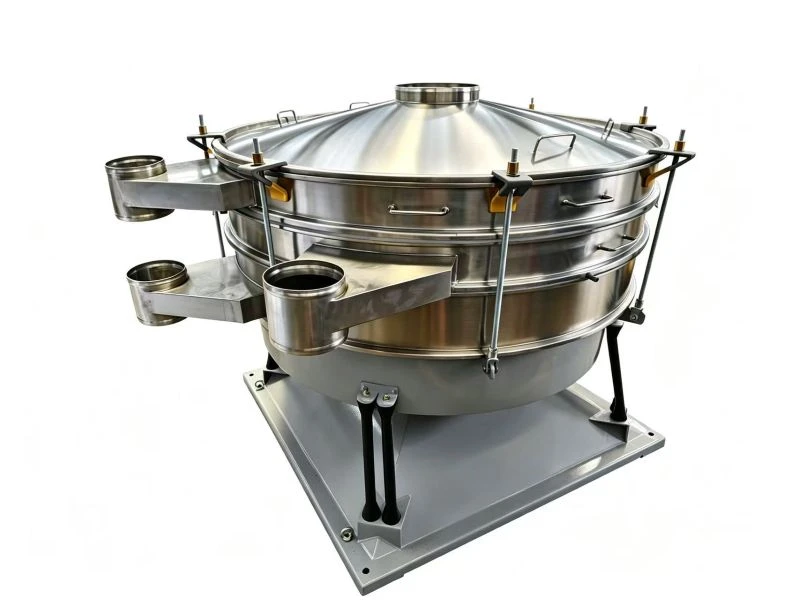
Circular Tumbler Screen
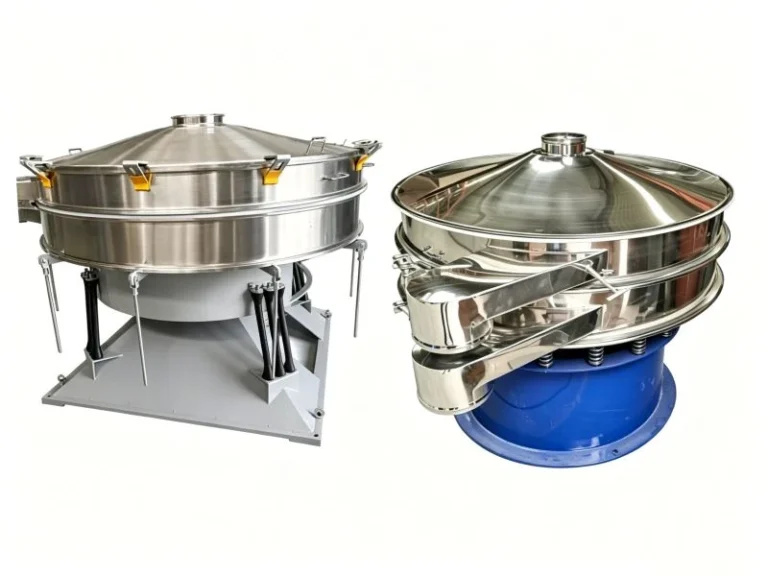
A tumbler screening machine uses an artificial three-dimensional tumbling motion. Its low-speed operation produces less impact on chemical powders, resulting in a lower material breakage rate. It can achieve high-precision, multi-stage fine classification, with a much higher capacity per unit screen area than conventional vibrating sieves. For chemical powder applications requiring high precision, low material breakage, and fine classification, it is one of the most established screening solutions available.
Chemical Powder Screening: Fast Selection Guide
| Equipment | Chemical Applications | Advantages | Limitations |
| 진동 체 | Pigments, resin powders, additives, coating materials, and general chemical powders | Compact design; flexible screen and deck configurations; suitable for conventional powder and particle screening; easy to clean | Capacity may be limited for some high-throughput applications |
| 초음파 진동 체 | Fine chemicals, pigments, resin powders, coating powders, and fine powders from 200 to 635 mesh | Improves the passage of fine powders through the screen; reduces screen clogging; suitable for electrostatic and difficult-to-screen powders; supports fine-mesh screening | Higher purchase and maintenance costs than standard vibrating screens |
| 선형 진동 스크린 | Fertilizers, chemical granules, large-volume powders, and continuous production lines | High capacity; suitable for continuous operation and large-volume material processing; available with fully enclosed and explosion-proof configurations | Less suitable for ultrafine powders requiring very high screening precision |
| Circular Tumbler Screen | Fine classification, high-precision screening, and chemical powders where low material breakage is required | Low-speed three-dimensional tumbling motion; gentle handling with low impact on materials; high screening precision; supports multi-stage classification; low material breakage | Requires relatively more floor space and has a higher cost than standard vibrating screens |
결론
Choosing a vibrating sieve for chemical powders depends on the material, particle size, mesh size, capacity, and production requirements. A Vibro Sifter suits general chemical powders, while an ultrasonic vibrating sieve is better for fine or difficult-to-screen powders. For high-capacity production or high-precision classification, a linear vibrating sieve or circular tumbler screen may be more suitable.
If you are not sure which chemical powder screening machine fits your material, send us your material type, target mesh size, and required capacity. Our team can recommend a suitable screening solution based on your actual application.