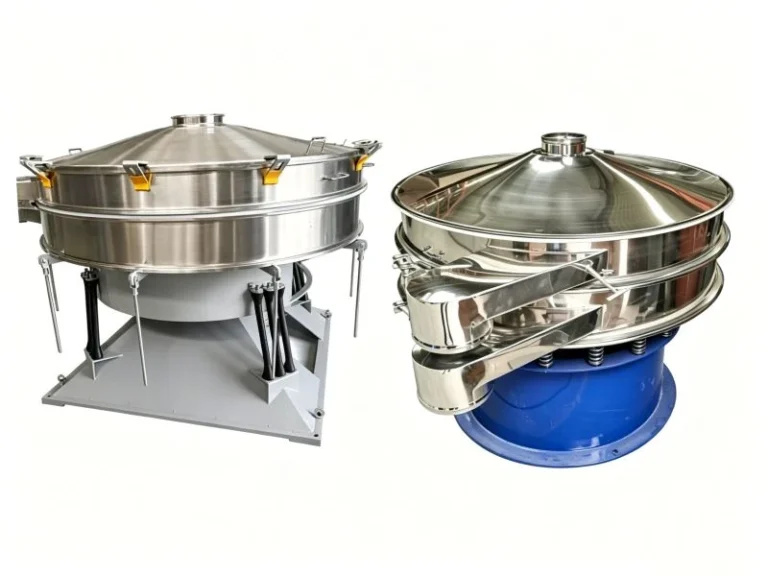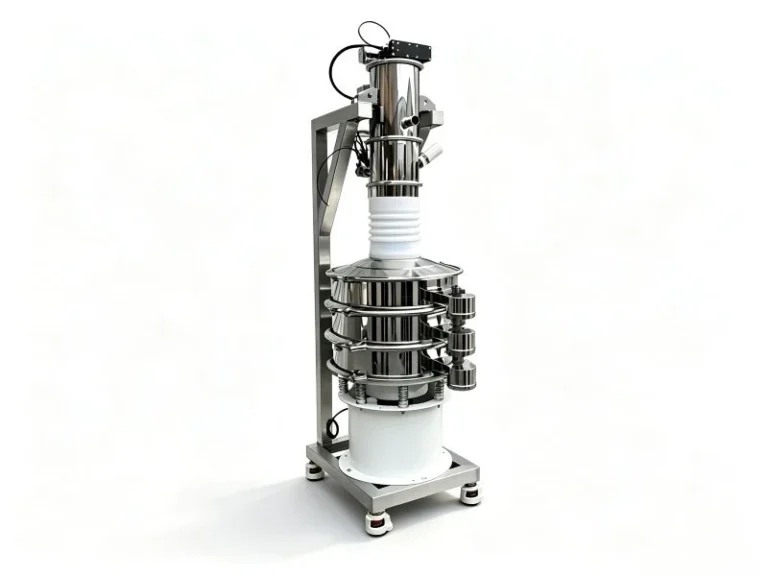
Przesiewanie proszku metalowego: Jak wybrać rozmiar oczek, typ sita i system ochrony
Wybór systemu przesiewania proszku metalowego wymaga więcej niż dopasowania proszku do numeru sita. Właściwe rozwiązanie zależy od docelowego rozkładu wielkości cząstek, płynności proszku, wymaganej wydajności, limitów zanieczyszczeń oraz ryzyka, takiego jak utlenianie, elektryczność statyczna lub pył palny. Konwencjonalne sita wibracyjne są ogólnie odpowiednie dla proszków swobodnie płynących i grubszego rozdzielania, podczas gdy systemy ultradźwiękowe są skuteczniejsze dla proszków drobnych, kohezyjnych lub elektrostatycznych. Proszki reaktywne mogą również wymagać szczelnej konstrukcji, ochrony gazem obojętnym, uziemienia i komponentów zabezpieczonych przed wybuchem.
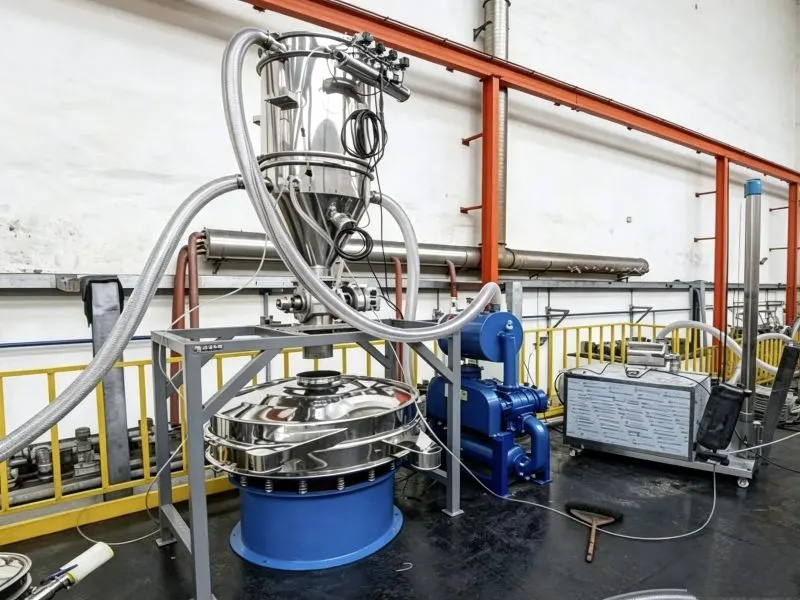
Co to jest przesiewanie proszku metalowego?
Przesiewanie proszku metalowego służy do kontroli wielkości cząstek i utrzymania proszku w czystości i spójności. Usuwa materiały obce i cząstki nadwymiarowe, rozbija miękkie grudki i rozdziela proszek na wymagany zakres wielkości. Może również odzyskiwać proszek wielokrotnego użytku i chronić późniejsze procesy, takie jak prasowanie, spiekanie, natryskiwanie cieplne i produkcja addytywna.
Klasyfikacja, przesiewanie bezpieczeństwa i odzyskiwanie proszku
Przesiewanie proszku metalowego generalnie służy trzem celom:
- Klasyfikacja: Rozdziela proszek na różne zakresy wielkości cząstek, aby spełnić wymagania produkcyjne.
- Przesiewanie bezpieczeństwa: Usuwa materiały obce, duże cząstki i niepożądane aglomeraty przed następnym procesem.
- Odzyskiwanie proszku: Odzyskuje użyteczny proszek pozostały po druku 3D lub innych procesach produkcyjnych, pomagając zmniejszyć marnotrawstwo materiału.
Wymagany rozmiar sita i metoda przesiewania zależą od właściwości proszku, docelowej wielkości cząstek, wydajności produkcji i wymagań bezpieczeństwa.
Jakie informacje są potrzebne przed wyborem systemu przesiewania?
Przed wyborem systemu przesiewania proszku metalowego należy zrozumieć zarówno właściwości proszku, jak i wymagania produkcyjne. Czynniki te determinują prawidłowy rozmiar sita, typ sita, wydajność maszyny i system ochrony. Wybór sprzętu wyłącznie na podstawie nazwy metalu lub docelowego sita może skutkować niską wydajnością, zablokowaniem sita lub problemami z bezpieczeństwem.
Właściwości proszku metalowego
Różne proszki metalowe zachowują się różnie podczas przesiewania. Ważne właściwości obejmują:
- Gęstość nasypowa: Wpływa na obciążenie sita, ruch materiału i wymagany rozmiar maszyny.
- Płynność: Proszki swobodnie płynące są łatwiejsze do przesiewania, podczas gdy proszki słabo płynące mogą pozostawać na powierzchni sita.
- Kształt cząstek: Cząstki kuliste, nieregularne i płatkowe przechodzą przez sito w różny sposób.
- Elektryczność statyczna: Drobne proszki mogą przywierać do sita i zmniejszać wydajność.
- Aglomeracja: Miękkie grudki mogą blokować sito lub wpływać na dokładność wielkości cząstek.
- Ryzyko utleniania: Aluminium, magnez, tytan i inne reaktywne proszki mogą wymagać szczelnego sprzętu lub ochrony gazem obojętnym.
- Wartość materiału: Proszki stopowe o wysokiej wartości lub proszki metali szlachetnych mogą wymagać zamkniętego systemu, aby zmniejszyć straty materiału i zanieczyszczenie.
Wielkość cząstek i wymagania produkcyjne
Wymagany zakres wielkości cząstek i cel produkcyjny również muszą być potwierdzone. Ważne informacje obejmują:
- Aktualny rozkład wielkości cząstek, w tym D10, D50 i D90
- Wymagany punkt odcięcia w mikronach
- Akceptowalne poziomy cząstek nadwymiarowych i podwymiarowych
- Wymagana wydajność na godzinę
- Liczba frakcji wielkości cząstek
- Praca wsadowa lub ciągła
- Limity czystości i zanieczyszczeń krzyżowych
Informacje te stanowią podstawę do wyboru rozmiaru sita, sprzętu przesiewającego i systemu ochrony.
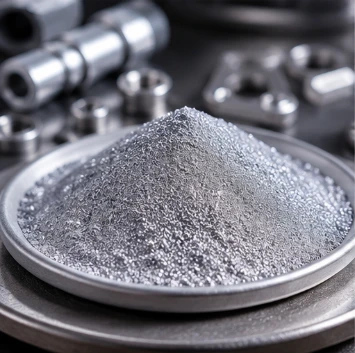
Jak wybrać odpowiedni rozmiar sita
Właściwy rozmiar sita zależy od docelowej wielkości cząstek, rozkładu proszku i wymaganej wydajności. Najpierw zdecyduj, które cząstki powinny przejść przez sito, a które powinny zostać usunięte. Następnie wybierz otwór sita w mikronach. Dla drobnych proszków metalowych rozmiar w mikronach jest zwykle dokładniejszy niż numer sita.
Proszki metalowe można opisać według ich wielkości cząstek:
- Proszek konwencjonalny: 50–1 000 μm
- Proszek drobny: 10–50 μm
- Proszek bardzo drobny: 0.5–10 μm
- Ultrafine powder: Below 0.5 μm
- Nano powder: 0.1–100 nm
These ranges are general references and may vary between industries.
Mesh Size vs Micron Size
Mesh number shows how many openings are present in one inch of screen. A higher mesh number normally means a smaller opening. Micron size shows the actual opening or particle size more directly.
The same mesh number may have slightly different opening sizes because of wire diameter and screen standards. For this reason, fine metal powders should be specified in microns whenever possible.
Common Mesh-to-Micron Reference
| Mesh | Microns (μm) | Mesh | Microns (μm) |
|---|---|---|---|
| 20 mesh | 830 | 200 mesh | 75 |
| Siatka 40 mesh | 380 | 325 mesh | 45 |
| 60 mesh | 250 | 400 mesh | 38 |
| 80 mesh | 180 | 500 mesh | 25 |
| 100 mesh | 150 | 800 mesh | 18 |
| 140 mesh | 106 | 1,000 mesh | 13 |
The values are for general reference. Always confirm the actual screen opening before ordering.
Choose Mesh Based on Particle Size Distribution
Mesh size can be selected in three steps:
- Define the target particle size. Confirm the largest acceptable particle and the required powder range.
- Choose a starting mesh. A coarse mesh can remove large impurities, while a fine mesh can control smaller particles.
- Check the particle-size distribution. Use D10, D50 and D90 data when the powder size must be controlled more accurately.
Mesh size only defines the screen opening. It cannot fully describe the particle-size distribution. For example, metal powder used in additive manufacturing may have a specified range such as 15–53 μm. In this case, the complete particle-size distribution should be considered instead of converting the whole range into one mesh number.
Why Finer Mesh Is Not Always Better
A finer mesh does not always produce a better result. If the opening is too small, several problems may occur:
- Fine particles can block the screen.
- Screening capacity can fall.
- More usable powder may remain above the screen.
- The screen may require frequent cleaning.
- Very fine woven mesh may have a low open area.
For screening above 325–400 mesh, it is usually clearer to specify the required opening in microns. Fine, electrostatic or easily agglomerated metal powders may also require an ultrasonic vibrating sieve to reduce screen blockage and maintain a stable screening rate.
How to Choose the Right Screen Type
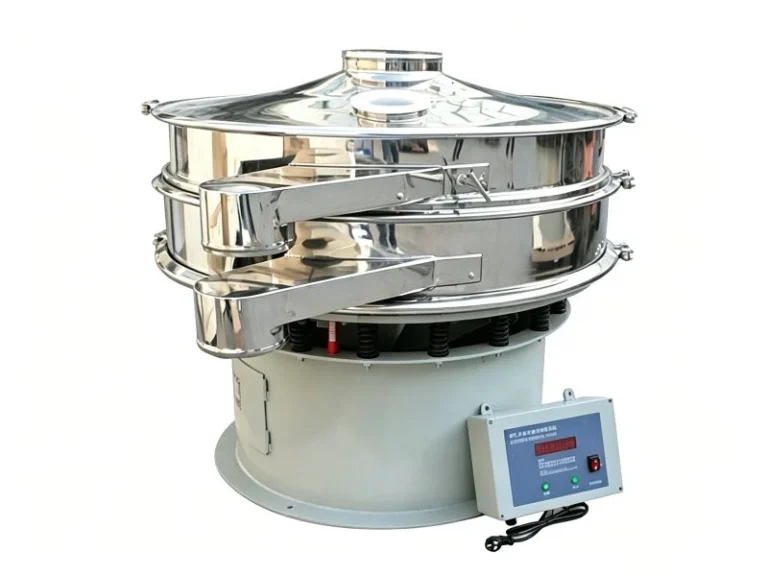
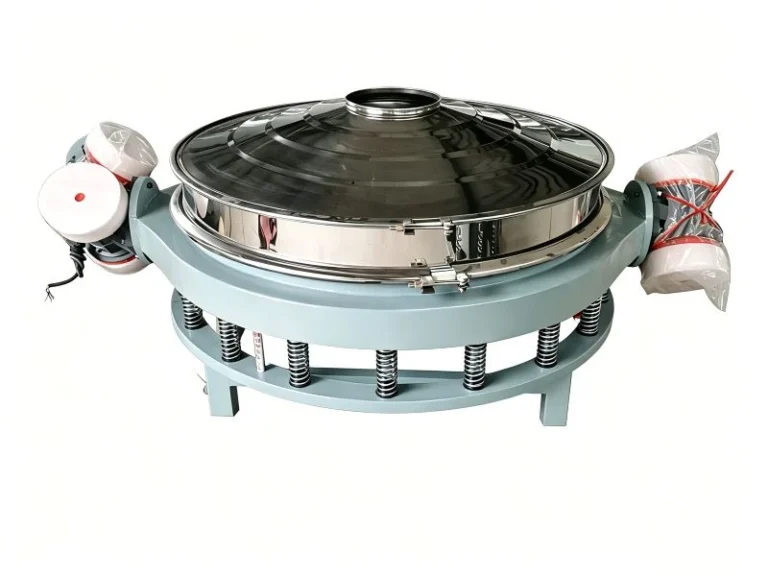
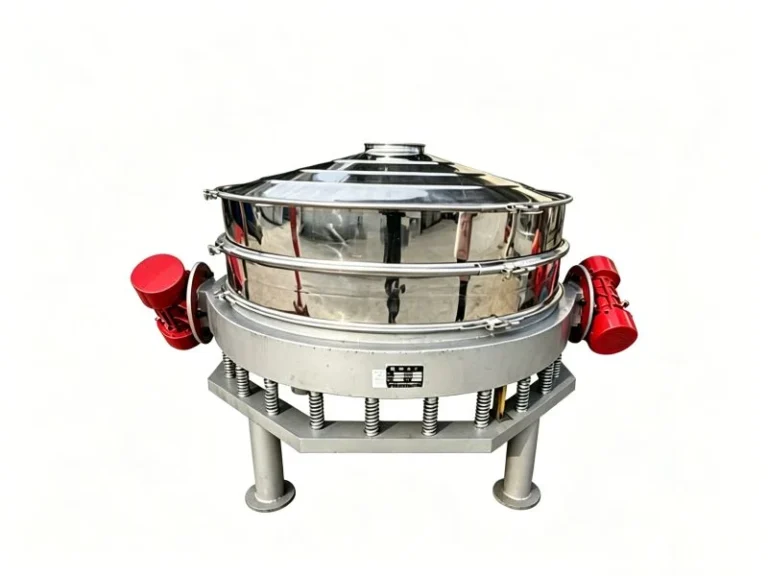
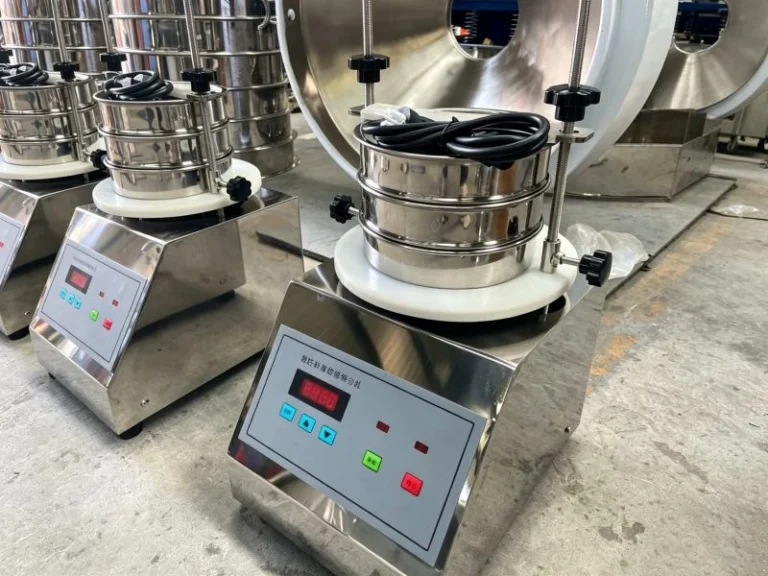
The right screen type depends on the powder size, flowability, required capacity and production process. Rotary vibrating screens are suitable for general screening, while ultrasonic vibrating sieves are better for fine powders that easily block the mesh. Linear and inline screens are used for higher capacities or continuous production lines.You can also compare different types of vibrating sieving machines before selecting a model for your process.
Przesiewacz wibracyjny obrotowy
A rotary vibrating screen is suitable for free-flowing metal powders and general particle classification. It has a compact design and can separate the powder into one or more particle size ranges.
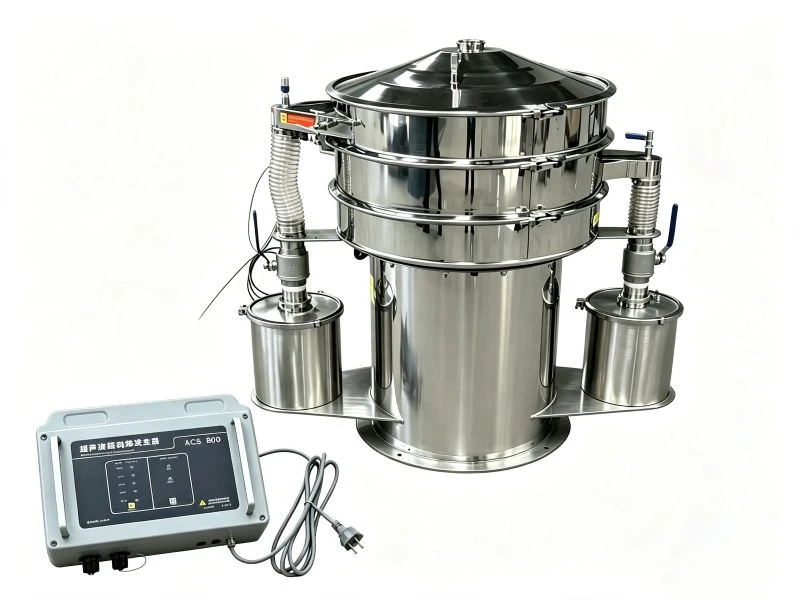
Ultradźwiękowe sito wibracyjne
Ultradźwiękowe sito wibracyjne jest lepszym wyborem, gdy drobny proszek jest trudny do przesiewania za pomocą konwencjonalnego przesiewacza wibracyjnego. is suitable for fine, electrostatic or easily agglomerated powders. The ultrasonic system reduces mesh blockage and improves screening efficiency.
Linear and Inline Vibrating Screens
A linear vibrating screen is suitable for high-capacity screening of coarse powders and particles. An inline vibrating screen is mainly used for safety screening in continuous production lines.
Single-Deck vs Multi-Deck Screen
A single-deck screen separates the powder into two particle sizes. A multi-deck screen can produce three or more particle size ranges in one process.
How to Choose a Protection System
The protection system should be selected according to the powder’s oxidation risk, dust characteristics, corrosion and safety requirements. A suitable system can reduce powder leakage, contamination, material loss and operating risks.
Sealed and Dust-Tight Design
Fine metal powders can easily escape into the working area. A fully enclosed screen with sealed inlets, outlets and covers helps control dust and prevents outside material from entering the product.
Inert Gas Protection
Aluminum, magnesium, titanium and some alloy powders may react with oxygen. For these materials, a sealed screening system can be filled with nitrogen or argon to reduce contact with air.
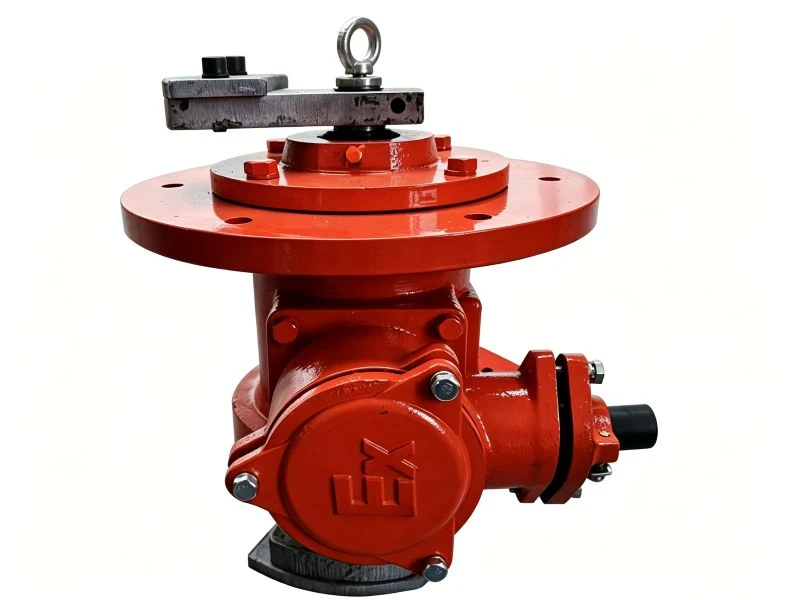
Explosion Protection and Static Control
Combustible metal powders may require explosion-protected motors and electrical parts. The machine, pipelines and connected equipment should also be properly grounded to reduce static buildup.
Contact Material and Contamination Control
Product-contact parts are commonly made of 304 or 316L stainless steel for corrosion resistance and easy cleaning. The screen should also be checked regularly for wear or damage to prevent particle mixing and product contamination.
Recommended Solutions for Common Metal Powders
| Powder or application | Main challenge | Recommended screen | Protection system |
|---|---|---|---|
| Iron and stainless steel powder | High density and screen wear | Rotary or linear vibrating screen | Dust-tight design and wear-resistant screen |
| Aluminum and titanium powder | Oxidation, static and combustible dust | Enclosed ultrasonic vibrating sieve | Inert gas, grounding and explosion-protected parts |
| Fine alloy powder | Agglomeration and mesh blockage | Ultrasonic vibrating sieve | Sealed design and static control |
| Additive manufacturing powder | Fine particle range and high recovery requirement | Precision ultrasonic vibrating sieve | Closed system and contamination control |
| Battery material powder | Fine particles, static and strict purity requirements | Ultrasonic vibrating sieve | Sealed construction and clean contact parts |
The final configuration should be based on the powder’s particle-size distribution, flowability, required capacity and safety assessment.More metal powder screening solutions are available for iron, copper, nickel, alloy and other metallurgical materials.
Wnioski
Choosing a metal powder sieving system starts with three key decisions: mesh size, screen type and protection system. The mesh should match the target particle size, while the screen type should suit the powder’s flowability, fineness and required capacity. For reactive or combustible powders, sealing, grounding, explosion protection or inert gas may also be required.
Because every metal powder behaves differently, the final configuration should be confirmed through material data or a screening test.
Contact us with your powder type, target particle size and required capacity. Our engineers will recommend a suitable metal powder sieving machine for your production process.
Czy potrzebuję ultradźwiękowego przesiewacza wibracyjnego do drobnego proszku?
What mesh size is suitable for metal powder?
The correct mesh size depends on the target particle size and particle-size distribution. Coarse screening may use 20–100 mesh, while fine metal powder screening may require 200–635 mesh. For better accuracy, use the required opening size in microns.
When is an ultrasonic vibrating sieve required?
An ultrasonic vibrating sieve is recommended for fine, electrostatic or easily agglomerated metal powders. It helps prevent mesh blockage and improves the screening of powders below 75 μm.
Which screen type is best for metal powder?
A rotary vibrating screen is suitable for general metal powder sieving. An ultrasonic sieve is better for fine powders, while a linear vibrating screen is suitable for higher-capacity screening of coarser materials.
How can mesh blockage be prevented?
Mesh blockage can be reduced by controlling the feeding rate, selecting the correct mesh and using an ultrasonic de-blinding system. Powder moisture, static electricity and agglomeration should also be checked.
Does metal powder sieving require inert gas protection?
Not every metal powder requires inert gas protection. Reactive powders such as aluminum, magnesium and titanium may need a sealed system with nitrogen or argon to reduce contact with oxygen.
Is an explosion-proof metal powder sieving machine required?
Explosion protection may be required when processing combustible metal powder. The system may include explosion-protected electrical parts, dust-tight construction and proper grounding. The final design should follow the powder safety data and local regulations.